By Georg Predota, Interlude
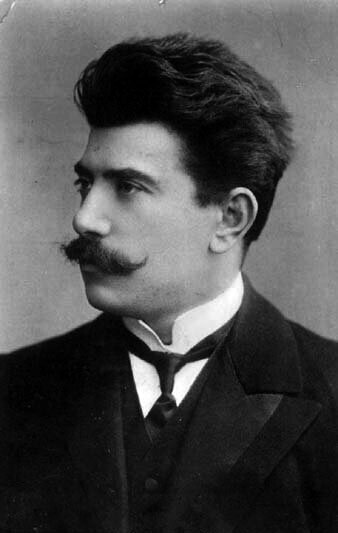
The Young Reinhold Gliére
Composed in 1943, the Concerto in F Minor for Coloratura Soprano and Orchestra unfolds in two movements. Glière does not provide instruction about the type of sounds required, and there are no provisions in the score for actually taking a breath. In the absence of text, musical expression is left entirely up to the soprano. In fact, the whole composition is conceived as though the voice were an instrument of almost limitless possibilities. Composing a concerto for voice is one thing; writing one for Alphorn presents some very special challenges.
Jean Daetwyler: Alphorn Concerto
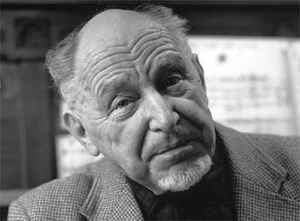
Jean Daetwyler
The Swiss composer Jean Daetwyler (1907-1994), who had studied with Vincent d’Indy at the Paris Conservatoire, took on that enormous challenge. Traditionally used as a signaling instrument in the alpine regions of Europe, the Alphorn is of phenomenal size. The instrument consists of a straight several-meter-long wooden natural horn of conical bore. The composer writes, “it is very difficult to write music for the alphorn. The instrument, in spite of its size, has only five notes that can be used to write a melody… For me, the alphorn represents solitude, man alone before Nature. With its five notes but above all with its powerful and magnificent sound, the instrument demands of the composer the greatest simplicity in evoking feelings of the deepest truth.”
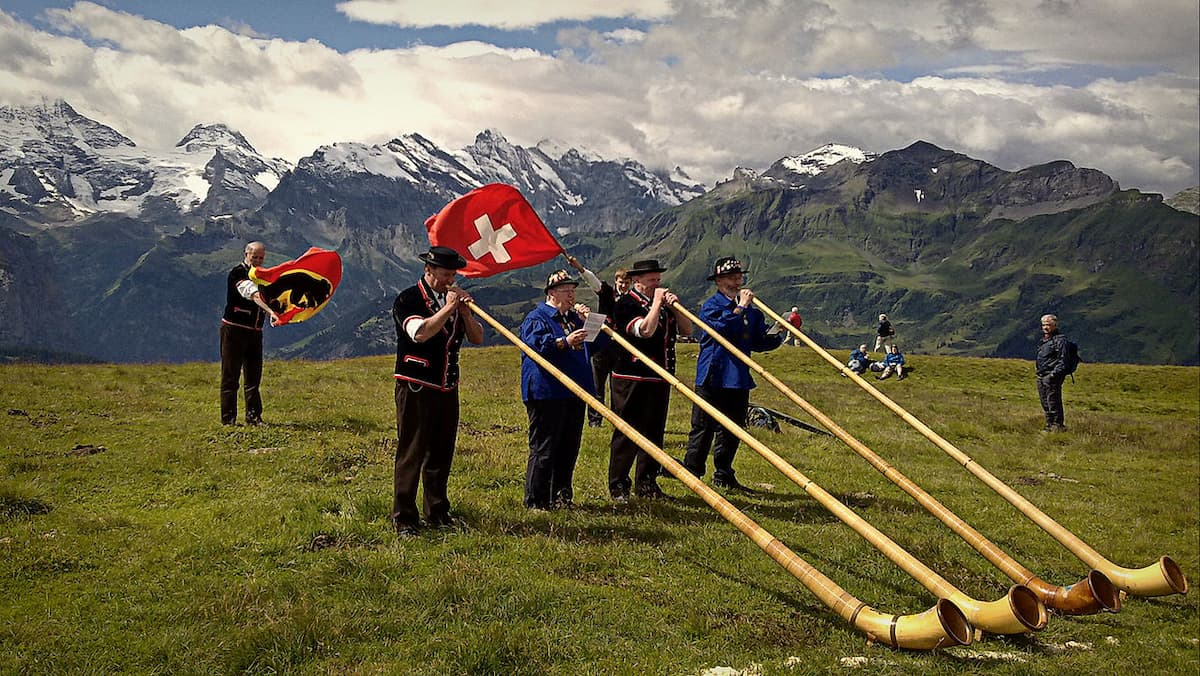
Alphorns
Joseph Horovitz: Euphonium Concerto
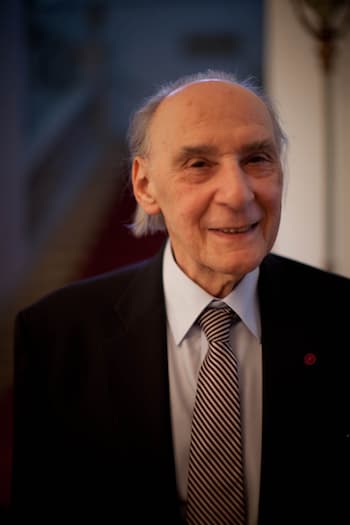
Joseph Horovitz
The non-transposing brass instrument called euphonium was invented in the early 19th century. Its name derives from an Ancient Greek word meaning “well-sounding” or “sweet-voiced.” The instrument was made possible by the invention of the piston valve system, which allowed brass instruments with an even sound the facility of playing in all registers. A number of euphonium variants with either three or four valves were constructed, but the fingerings on the euphonium are the same as those on a trumpet. Often mistaken for a baritone horn, the euphonium produces a darker tone and a gentle sound. It still plays an important role in military and brass bands around the world. While most euphoniums can be played from a sitting position, a slight change in design also allows the instrument to be easily carried while marching. The instrument has always played an important role in ensembles. As such, solo literature was slow to appear and Joseph Horovitz composed the first concerto for the euphonium only in 1972.
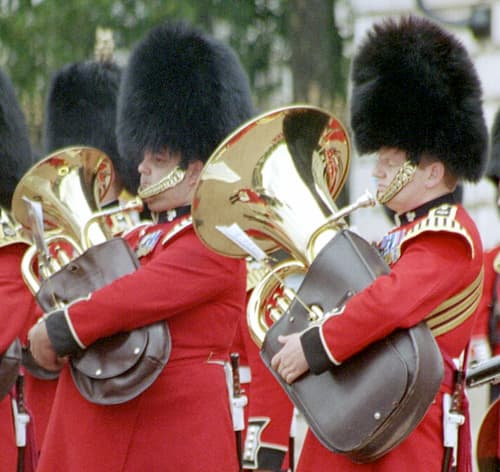
The Euphonium and Tuba
Horovitz was born in Vienna in 1926 and emigrated to England in 1938. Throughout his long and productive career, he composed twelve ballets, nine concertos, two one-act operas, chamber music, works for brass and wind bands, film, television and radio, and choral works. His compositions have always been known for their melodic richness, its energy, and its craftsmanship. His Euphonium Concerto set “the benchmark” for future generations of soloists and composers, and Horowitz propelled the euphonium as a solo instrument towards international popularity.
Heitor Villa-Lobos: Concerto for Harmonica
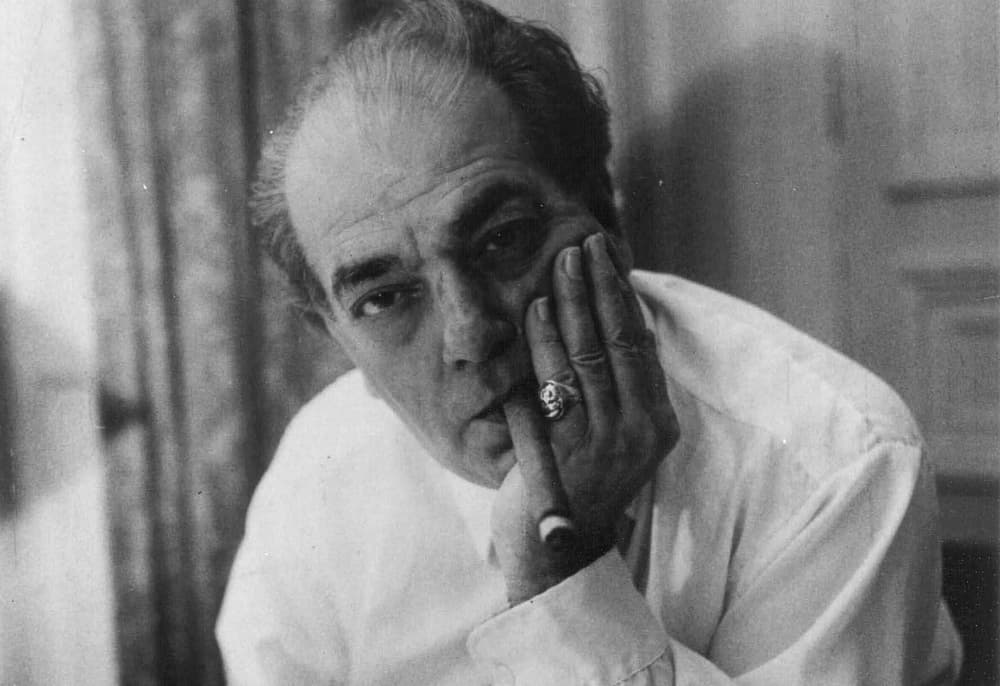
Heitor Villa-Lobos
The harmonica, also known as the mouth organ, is a free-reed wind instrument developed in Europe in the early part of the 19th century. Christian Friedrich Ludwig Buschmann is often cited as the inventor of the harmonica in 1821, and the first harmonicas produced by clockmakers appeared in Vienna shortly thereafter. Joseph Richter invented the blow and draw mechanism that allows players to activate twenty differently tuned reeds by inhaling and exhaling. These diatonic harmonicas were primarily designed to play folk music, and by mid-century, the instrument was being mass-produced. The invention of the chromatic harmonica by Hohner in 1924 created new possibilities for the instrument, and it appeared in a variety of musical styles, including American folk music, blues, jazz, country, and rock. Heitor Villa-Lobos (1887-1959) composed a substantial number of concertos for famous performers. This was certainly the case with the famous harmonica player John Sebastian, who enjoyed a long career as a soloist that started in Philadelphia in the early 1940s. Sebastian commissioned a harmonica concerto from Villa-Lobos in 1955, and he premiered the work in Jerusalem with the Kol Israel Orchestra in 1959. The concerto is packed with technical challenges for the soloist, including octaves and chords, but Villa-Lobos also highlights the powerfully expressive qualities of the instruments. Villa-Lobos and Sebastian are essentially responsible for introducing the harmonica into the concert hall.
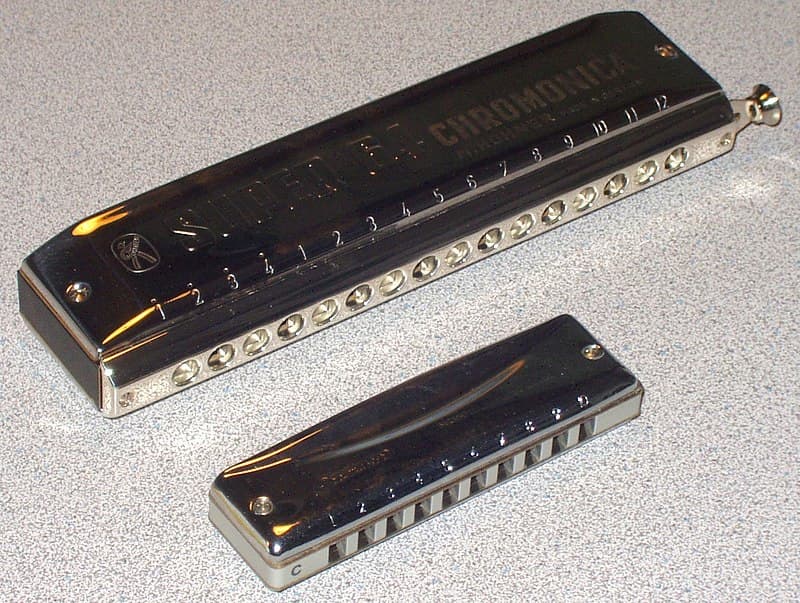
Harmonica
Emma Lou Diemer: Concerto in One Movement for Marimba
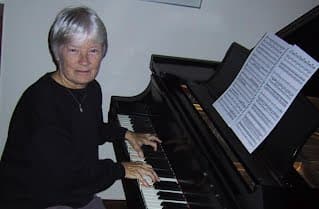
Emma Lou Diemer
The marimba is a percussion instrument that features a set of wooden bars arranged like the keys of a piano. Resonators are typically suspended underneath the bars to amplify the sound produced by striking the bars with yarn or rubber mallets. The ancestry of the instrument can be traced to Sub-Saharan Africa, and it rapidly spread to Central and South America. Today, marimbas are widely popular around the world and Darius Milhaud introduced the instrument into Western classical music with a Concerto for Marimba and Vibraphone in 1947. Ever since, composers like Leoš Janáček, Carl Orff, Karl Amadeus Hartmann, Hans Werner Henze, Pierre Boulez, and Steve Reich have found new and exciting ways of using the marimba. That also includes the Concerto in One Movement for Marimba by American composer Emma Lou Diemer. A native of Kansas City, Diemer is a keyboard performer, and she has engaged with an eclectic style of composition. She has composed traditional, experimental, and electronic works using tonal and atonal musical languages. Commissioned by the Women’s Philharmonic of San Francisco, the Marimba Concerto premiered on 21 March 1991 at Mills College with JoAnn Falletta conducting and Deborah Schwartz as the featured soloist. A reviewer wrote, “This was a premiere worth waiting for… A stirring score that explores the colors of the marimba in glorious detail… The composer and soloist have taken an inert instrument of wooden bars and metal tubes and given it a human throat with which to sing. Marimbists around the world have cause to celebrate.”
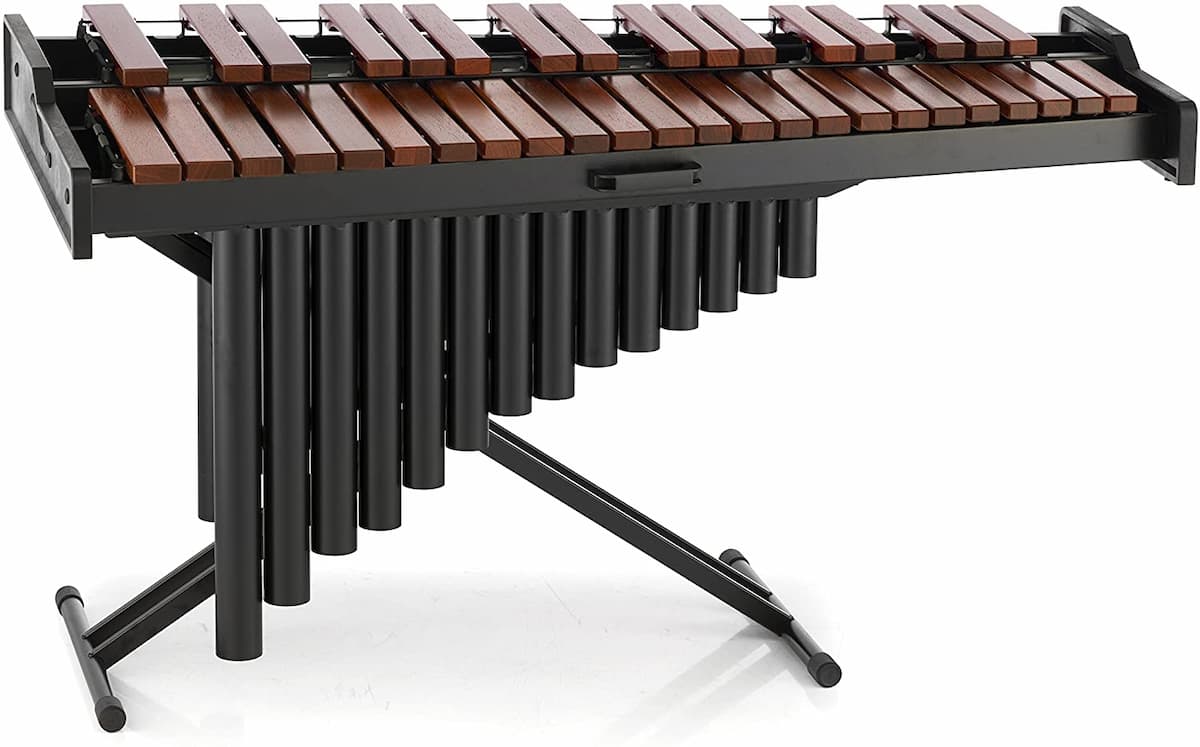
Marimba
Andy Akiho: Ricochet “Ping Pong Concerto”
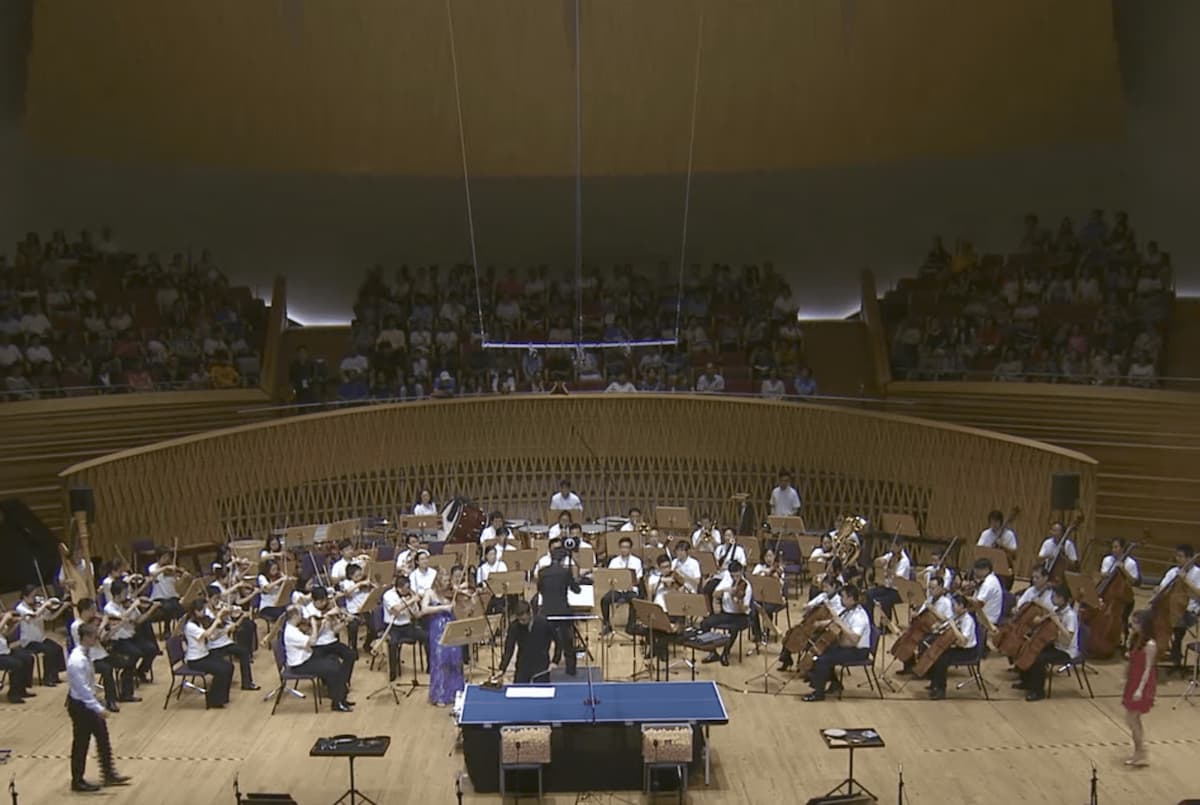
Ping Pong Concerto
Andy Akiho is a composer of contemporary classical music. He is a virtuoso percussionist based in New York City, and his primary performance instrument is steel pans. In fact, he took several trips to Trinidad after graduating from college in order to learn and play music. His compositional interest was peeked by participating in the “Bang on a Can” Festivals in 2007 and 2008. Akiho developed a reputation for writing music that makes use of metallic sounds and incorporates elements of theatre. Concertos are generally written to highlight a virtuoso soloist or two, but there are no specifications as to what kind of instruments are to be used. Theoretically, they can be written for anything that produces sound.

Andy Akiho
Such is the case in Akiho’s Ricochet, a triple concerto for violin, percussion, and ping-pong players. Working in his preferred instrumental medium, Akiho incorporates a ping-pong tournament into his concerto score. The violinist opens the piece with a solo and is soon joined by a percussionist who turns the ping-pong table into an instrument. But we quickly realize that a game of ping-pong is the major component. Commissioned by the Beijing Music Festival in 2015, the ping-pong soloists at the premier performance are both accomplished athletes. Michael Landers and Ariel Hsing are the youngest U.S. Women’s and Men’s table tennis champions, and Hsing competed in the 2012 London Olympics. A reviewer wrote, “So riveting was this piece as a visual theatre that no one seemed to keep score.”


