by Georg Predota February 15th, 2026
For young musicians, competitions have become a near-default mechanism for visibility, professional validation, and career advancement, often functioning as gateways to management, recording opportunities, and concert engagements.

Judgement is typically concentrated in high-pressure final performances, leaving limited room to assess long-term musical development, adaptability, or interpretive growth. Against this backdrop of high-pressure and outcome-driven instrumental competitions, the Prix de Lausanne occupies a distinctive position within the ecosystem of performing arts.
Potential over Polish
© Gregory Batardon
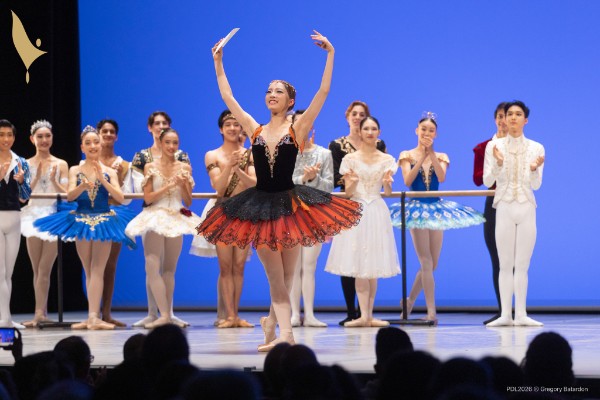
The Prix de Lausanne is an international ballet competition for young dancers founded in 1973 by Philippe Braunschweig and held annually in Lausanne, Switzerland. While undeniably high-stakes, the Prix de Lausanne is structured less as a test of finished brilliance than as an evaluative process aimed at identifying potential and long-term artistic promise.
The competition is open to dancers between the ages of fifteen and eighteen, a demographic that places participants at a formative stage of technical and artistic development. The repertoire focus is classical ballet, supplemented by a contemporary component introduced in the 1980s.
This dual emphasis reflects both the enduring centrality of classical technique within professional ballet training and the increasing importance of stylistic versatility in contemporary ballet careers. Crucially, however, the Prix de Lausanne is not defined solely by what it asks dancers to perform, but by how it chooses to evaluate them.
Learning in Action
© Gregory Batardon
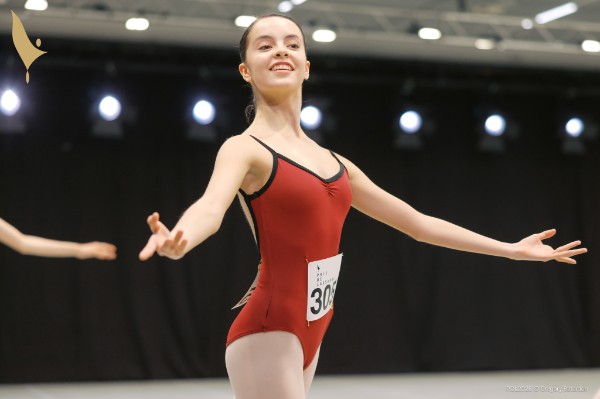
Unlike competitions that concentrate judgment into a single final appearance, the Prix de Lausanne assesses dancers continuously over the course of an entire week. Participants are observed in daily classical ballet classes, contemporary classes, coaching sessions, rehearsals, and stage performances.
The jury’s role is therefore not limited to ranking outcomes, but extends to observing behaviour, responsiveness, and development under professional conditions. Dancers work with unfamiliar teachers and adapt to new material, all activities that mirror the realities of professional training.
This emphasis on observation “in process” is central to the competition’s philosophy. The Prix de Lausanne explicitly prioritises learning capacity and coachability alongside technical proficiency. Musical sensitivity, physical coordination, stylistic awareness, and personal discipline are evaluated as evolving qualities.
In this respect, the competition aligns itself more closely with conservatoire admissions or company auditions than with the winner-takes-all spectacle often associated with competitive performance culture.
Process as Criterion
© Gregory Batardon
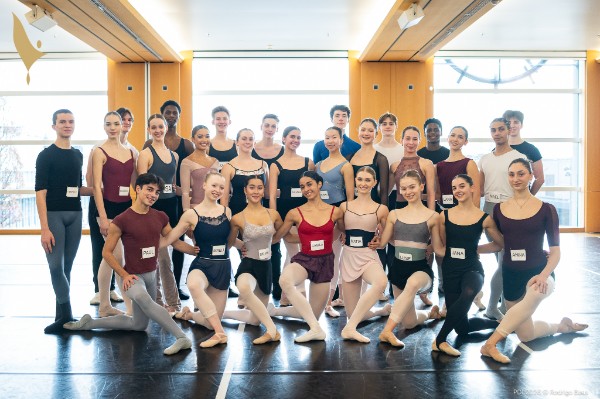
The nature of the prize reinforces this orientation. Rather than offering cash awards or symbolic trophies, the Prix de Lausanne provides scholarships to leading ballet schools and opportunities for apprenticeships or contracts with major ballet companies. These include institutions such as the Royal Ballet School and the Paris Opera Ballet School, among others.
Many participants who do not place among the winners nonetheless receive offers from schools or companies observing the event. The Prix de Lausanne thus functions as a global audition platform, bringing together young dancers and decision-makers within a structured and pedagogical setting.
This structure gives the Prix de Lausanne a distinctive identity. It is unquestionably demanding and competitive, yet it avoids the gladiatorial ethos that can characterise some international contests. The competition does not present itself as a definitive measure of artistic worth, nor does it promote the notion of a single, triumphant outcome. Instead, it frames competition as a mechanism for identifying and supporting long-term development.
Rewarding Potential
© Gregory Batardon
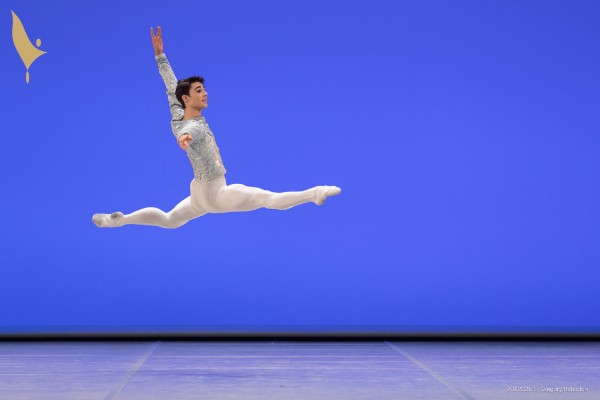
Over the course of five decades, the Prix de Lausanne has played a formative role in shaping the international ballet pipeline. Its alumni include dancers who later attained principal positions at major institutions such as the Royal Ballet, the Paris Opera Ballet, and American Ballet Theatre.
Yet the competition does not market itself through the cultivation of star narratives or the celebration of prodigious virtuosity. Its public identity emphasises professional continuity rather than exceptionalism.
This approach has made the Prix de Lausanne a frequent point of reference in discussions about competition across the performing arts, particularly in comparison with instrumental music competitions for piano or violin. In such contexts, the competition is often cited as an alternative model, one that rewards potential rather than finish.
Where many music competitions privilege technical perfection and immediate impact, the Prix de Lausanne acknowledges that artistry, especially in youth, is inherently developmental. In short, its model suggests that competition need not be opposed to pedagogy, and that rigorous evaluation can coexist with institutional care and long-term responsibility.


