Total Pageviews

Friday, February 20, 2026

Musicians and Artists: Tōru Takemitsu and Cornelia Foss


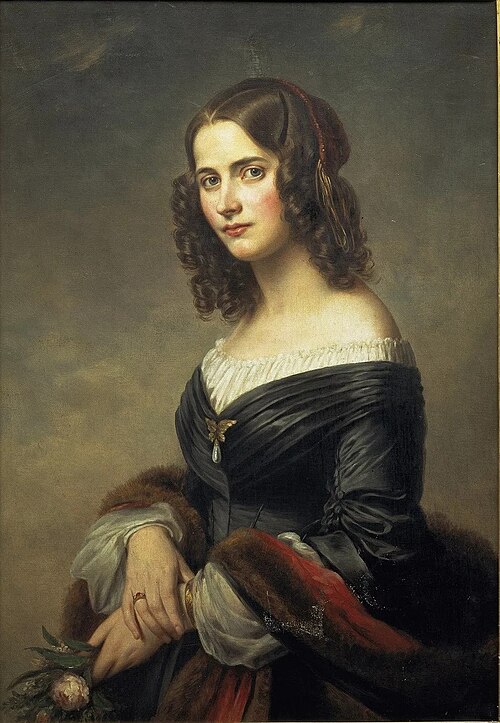
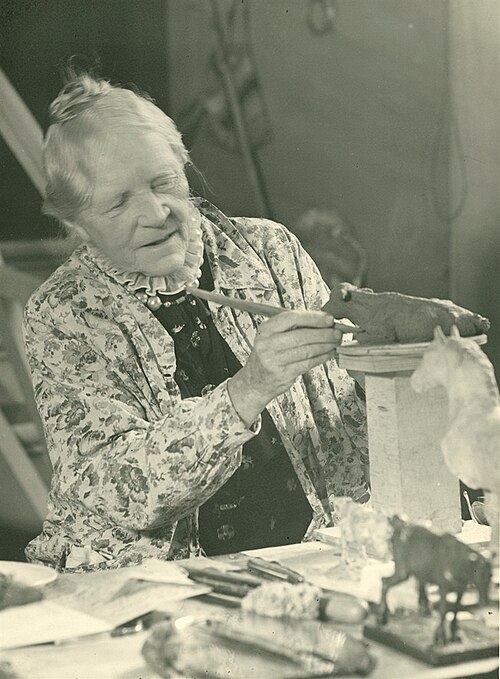
Cornelia Foss

Cornelia Foss

The landscape depicts the flat terrain of the area, historically used for potato or corn fields. The area was settled by English immigrants in the early 18th century and Wainscott is named after the village in Kent, England, where many people came from.

Foss has painted Wainscott Pond for over half a century, and her work shows the pond in different lights, from different angles, and at different times of the year. In the first picture, you can see the dunes that separate the pond from the sea.

Foss: Wainscott Pond I

Foss: Wainscott Pond I


Foss: Wainscott Pond II

Foss: Wainscott Pond II


Foss: Wainscott Pond, 2006

Foss: Wainscott Pond, 2006

Her work inspired the Japanese composer Tōru Takemitsu (1930–1996) in writing his last work for guitar, an instrument he was fond of. At the end of his life, he became fascinated with the sea, creating a 3-note motive (E-flat – E – A) or in German (Es – E -A) to set the basis for his ‘tonal sea’. His final work, written from his hospital bed, Mori no naka de (In the Woods) uses water images.

Tōru Takemitsu (photo by Kiyotane Hayashi)

Tōru Takemitsu (photo by Kiyotane Hayashi)

The first movement, Wainscot Pond (after a painting by Cornelia Foss) was dedicated to the guitarist John Williams. The rippling and reflective movement of the water is carried through the guitar line.  

The second movement, Rosedale, is dedicated to the Japanese guitarist Kyoshi Shomura, who gave the premieres of and performed many of Takemitu’s guitar works. It has been described as ‘a trek uphill and downhill in scintillating light.’

The final movement, Muir Woods, is dedicated to the guitarist Julian Bream. It is this final movement that takes Takemitsu to his beloved sea. He starts on the California coast in the mighty and ancient redwood forests of Muir Woods, he meets a whale that plunges into the sea only to emerge off the coast of Spain and then leaves a fading whirlpool as it dives again to return to the depths of the sea.

Muir Woods, 2022 (photo by Marty Aligata)

Muir Woods, 2022 (photo by Marty Aligata)


The première of Wainscot Pond, performed by Norio Sato, took place at the funeral service for Tōru Takemitsu in Tokyo on 29 February 1996 and Julian Bream gave the first performance of Muir Woods in London on 4 October 1996. The work in its entirety, including Rosedale, was first played by Kiyoshi Shomura in Tokyo on 15 October 1996.

We don’t know which of Foss’ many Wainscott Pond paintings gave inspiration to Takemitsu, but the end result is a beautiful and thoughtful reflection on music and nature.

The Prix de Lausanne: A Different Model of Competition

 by Georg Predota  February 15th, 2026


For young musicians, competitions have become a near-default mechanism for visibility, professional validation, and career advancement, often functioning as gateways to management, recording opportunities, and concert engagements.

Prix de Lausanne 2026

Judgement is typically concentrated in high-pressure final performances, leaving limited room to assess long-term musical development, adaptability, or interpretive growth. Against this backdrop of high-pressure and outcome-driven instrumental competitions, the Prix de Lausanne occupies a distinctive position within the ecosystem of performing arts.


Potential over Polish

Prix de Lausanne 2026

© Gregory Batardon

The Prix de Lausanne is an international ballet competition for young dancers founded in 1973 by Philippe Braunschweig and held annually in Lausanne, Switzerland. While undeniably high-stakes, the Prix de Lausanne is structured less as a test of finished brilliance than as an evaluative process aimed at identifying potential and long-term artistic promise.

The competition is open to dancers between the ages of fifteen and eighteen, a demographic that places participants at a formative stage of technical and artistic development. The repertoire focus is classical ballet, supplemented by a contemporary component introduced in the 1980s.

This dual emphasis reflects both the enduring centrality of classical technique within professional ballet training and the increasing importance of stylistic versatility in contemporary ballet careers. Crucially, however, the Prix de Lausanne is not defined solely by what it asks dancers to perform, but by how it chooses to evaluate them.

Learning in Action

Prix de Lausanne 2026

© Gregory Batardon

Unlike competitions that concentrate judgment into a single final appearance, the Prix de Lausanne assesses dancers continuously over the course of an entire week. Participants are observed in daily classical ballet classes, contemporary classes, coaching sessions, rehearsals, and stage performances.

The jury’s role is therefore not limited to ranking outcomes, but extends to observing behaviour, responsiveness, and development under professional conditions. Dancers work with unfamiliar teachers and adapt to new material, all activities that mirror the realities of professional training.

This emphasis on observation “in process” is central to the competition’s philosophy. The Prix de Lausanne explicitly prioritises learning capacity and coachability alongside technical proficiency. Musical sensitivity, physical coordination, stylistic awareness, and personal discipline are evaluated as evolving qualities.

In this respect, the competition aligns itself more closely with conservatoire admissions or company auditions than with the winner-takes-all spectacle often associated with competitive performance culture.

Process as Criterion

Prix de Lausanne 2026

© Gregory Batardon

The nature of the prize reinforces this orientation. Rather than offering cash awards or symbolic trophies, the Prix de Lausanne provides scholarships to leading ballet schools and opportunities for apprenticeships or contracts with major ballet companies. These include institutions such as the Royal Ballet School and the Paris Opera Ballet School, among others.

Many participants who do not place among the winners nonetheless receive offers from schools or companies observing the event. The Prix de Lausanne thus functions as a global audition platform, bringing together young dancers and decision-makers within a structured and pedagogical setting.

This structure gives the Prix de Lausanne a distinctive identity. It is unquestionably demanding and competitive, yet it avoids the gladiatorial ethos that can characterise some international contests. The competition does not present itself as a definitive measure of artistic worth, nor does it promote the notion of a single, triumphant outcome. Instead, it frames competition as a mechanism for identifying and supporting long-term development.

Rewarding Potential

Prix de Lausanne 2026

© Gregory Batardon

Over the course of five decades, the Prix de Lausanne has played a formative role in shaping the international ballet pipeline. Its alumni include dancers who later attained principal positions at major institutions such as the Royal Ballet, the Paris Opera Ballet, and American Ballet Theatre.

Yet the competition does not market itself through the cultivation of star narratives or the celebration of prodigious virtuosity. Its public identity emphasises professional continuity rather than exceptionalism.

This approach has made the Prix de Lausanne a frequent point of reference in discussions about competition across the performing arts, particularly in comparison with instrumental music competitions for piano or violin. In such contexts, the competition is often cited as an alternative model, one that rewards potential rather than finish.

Where many music competitions privilege technical perfection and immediate impact, the Prix de Lausanne acknowledges that artistry, especially in youth, is inherently developmental. In short, its model suggests that competition need not be opposed to pedagogy, and that rigorous evaluation can coexist with institutional care and long-term responsibility.

6 of the Most Romantic Symphonies in Classical Music History


For one, a symphony can be stylistically of the Romantic Era – Romantic-with-a-capital-R, full of sweeping melodies, warm orchestral colour, and heart-tugging harmonies.

But a symphony can also be romantic in a more personal sense: when it springs from a composer’s love for someone – or even somewhere.

Today, we’re looking at six symphonies that are Romantic in both senses of the word: stylistically of the era, and emotionally rooted in a love story.

All six of these works remain among the most popular romantic symphonies in the classical repertoire.

Romantic classical symphonies

Berlioz – Symphonie fantastique (1830)

The Love Story

This symphony’s autobiographical program was directly inspired by Berlioz’s own tumultuous love life and romantic fixations.

In 1827, after seeing Irish actress Harriet Smithson perform the role of Ophelia in Shakespeare’s Hamlet, Berlioz became obsessively infatuated with her.

Although the production was in English, Smithson’s performance was so gripping that it electrified Parisian audiences.

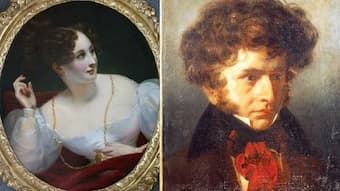
Hector Berlioz in 1832

Hector Berlioz in 1832

One audience member in particular was electrified: Hector Berlioz.

He fell in love not with Smithson as a person – he wouldn’t get to know her for quite some time – but rather with her talent and appearance, as well as the many Romantic Era ideals she represented.

While in the throes of this fixation, Berlioz channeled his infatuation into a symphony.   

The music is programmatic and, in Berlioz’s own words, follows a “young artist of morbidly sensitive temperament” (a not-so-subtle stand-in for himself) as he plunges from ardent passion into the depths of delusion.

The beloved’s tender theme (idée fixe) is first heard in the symphony’s opening movement, but it later curdles into a vulgar fiddle tune in the witches’ sabbath, symbolising how his idealised love has turned into a nightmare.

The orchestration here is noteworthy, featuring an expanded percussion section, new instruments like the English horn, and striking effects like col legno bowing, where string players tap the wood of their bows on the strings to create spooky sounds.

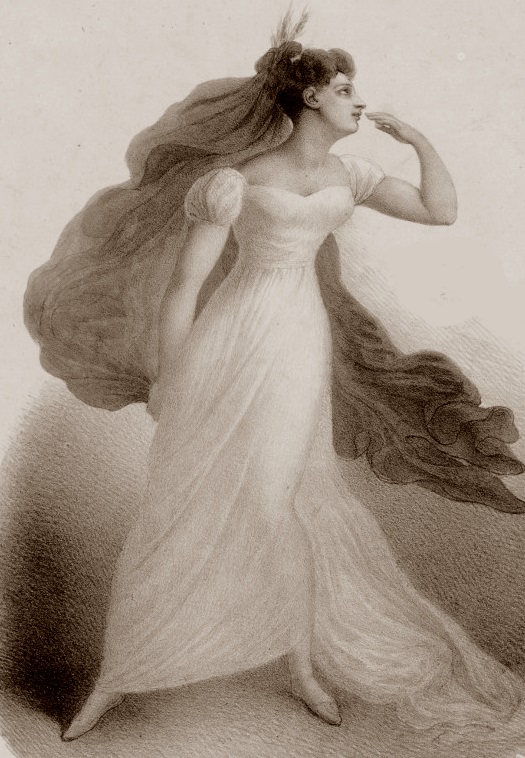
Harriet Smithson

Harriet Smithson

Berlioz kept trying to get Smithson’s attention. He sent her numerous letters and even went so far as to stalk her lodgings, to no avail. In fact, she didn’t even attend the symphony’s 1830 premiere.

However, two years later, she finally heard a performance. She was astonished that she had inspired such a work, and they soon began dating.

They married in 1833. The marriage collapsed within a matter of years. But this symphony, the spark of inspiration that signaled the start of their relationship, remains a revolutionary Romantic Era statement that out-survived their love – and them.

Mendelssohn – Symphony No. 4, “Italian” (1833)

The Love Story

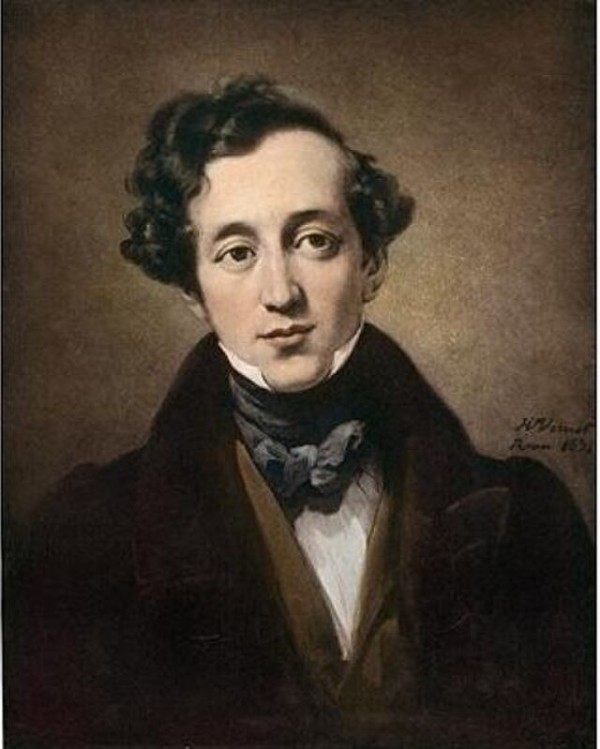
Horace Vernet: Felix Mendelssohn, 1831

Horace Vernet: Felix Mendelssohn, 1831

Felix Mendelssohn was not undergoing a tortured love affair while writing the Italian Symphony.

In fact, this work is more influenced by a place he loved than a person: the “romance” here is between the composer and Italy itself.

Mendelssohn’s letters from his 1830–31 Italian journey are ecstatic in their admiration.

“This is Italy! … the supreme joy in life. And I am loving it,” he wrote to his family.   

Each movement of the symphony takes on a different aspect of the life he observed in Italy. The joyful first movement is followed by a slow movement reflecting a religious procession he saw in Naples. The dance of the third movement is a standard minuet and trio, and the final movement incorporates two different Italian dances, the quick Roman saltarello (a jumping dance), and the Neapolitan tarantella.

Its joy makes it one of the most “Romantic” – if not overtly romantic – symphonies of the era. Read more about Mendelssohn’s Symphony No. 4.

Schumann – Symphony No. 1 “Spring” (1841)

The Love Story

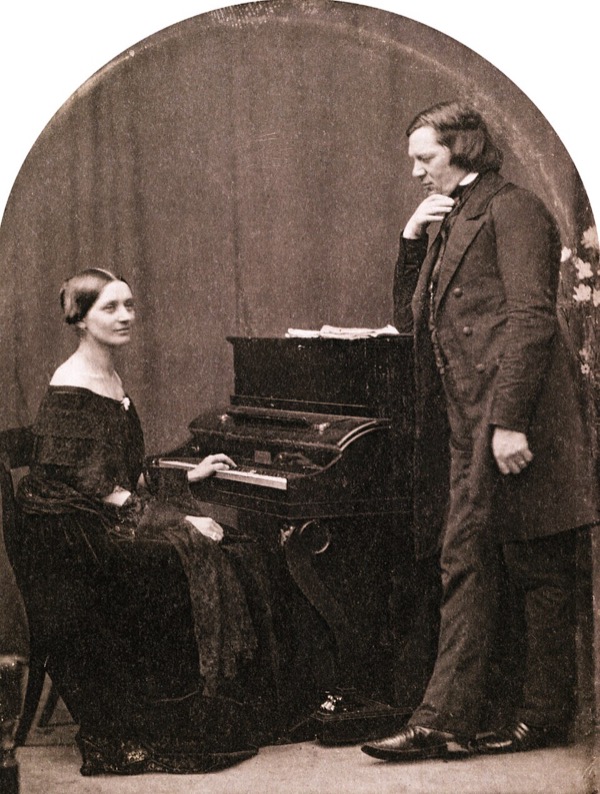
Robert and Clara Schumann

Robert and Clara Schumann

The “Spring” Symphony emerged from the happiest period of Robert Schumann’s life: his first year of marriage to pianist Clara Wieck.

After years of struggling to win the approval of Clara’s father, the star-crossed lovers were finally able to marry in September 1840.

This personal triumph sparked an extraordinary burst of creativity. 1840 had been Robert’s “Year of Song,” when he poured his love into over a hundred love songs.

But by 1841, with Clara’s encouragement, he had turned to the symphony.

She wrote in her diary:

“It would be best if he composed for orchestra; his imagination cannot find sufficient scope on the piano… His compositions are all orchestral in feeling… My highest wish is that he should compose for orchestra – that is his field! May I succeed in bringing him to it!”

As for his part, Robert later said that the work was inspired not just by spring’s external imagery but by his own “spring of love” (“Liebesfrühling”).   

Astonishingly, Schumann sketched this symphony out over just four days in January 1841. It exudes all of the exuberance you might expect from such an energetic start.

Schumann wanted the opening trumpet fanfare “to sound as if it came from on high, like a summons to awakening,” heralding spring’s (and love’s) arrival. This motto theme, bold and hopeful, recurs as a unifying idea.

He crafted music that somehow sounds like spring, featuring buoyant rhythms, anticipatory tremolo passages in the strings, and woodwind passages that resemble birdsong.

Throughout, the symphony’s tone is one of youthful hope, excitement, and, importantly, satisfaction. It’s very much in line with Romantic Era ideas and idealism about the rejuvenating power of both love and nature.

Tchaikovsky – Symphony No. 4 (1877)

The Love Story

Tchaikovsky with his wife Antonina Milykova

Tchaikovsky with his wife Antonina Milykova

Few symphonies are as closely tied to a composer’s personal emotional life as Tchaikovsky’s Fourth.

Written in 1877, it coincided with a period of acute turmoil in Tchaikovsky’s romantic and emotional life.

That year, against his better judgment, Tchaikovsky entered into a hasty marriage with a young conservatory student, Antonina Miliukova – a marriage that proved disastrous and lasted only weeks before he fled her forever.

Tchaikovsky may have hoped marriage might quell rumours about his homosexuality, but the reality drove him to a nervous breakdown.   

During the aftermath of this catastrophic marriage, Tchaikovsky poured his inner despair and conflict into his fourth symphony.

He described the opening fanfare as the “Fate” that hangs over a person’s life: a concept that colored the entire symphony.

In a candid letter to his patroness and confidante, Nadezhda von Meck, Tchaikovsky admitted: “I was very depressed last winter when writing the symphony, and it is a faithful echo of what I was experiencing.”

Madame von Meck, who became Tchaikovsky’s benefactor in 1877, actually played a critical role in the symphony’s creation and the composer’s life at that particular time.

She provided financial support so he could quit teaching, along with an emotionally intimate – if strictly epistolary – friendship.

Nadezhda von Meck

Nadezhda von Meck

The dedication of the fourth symphony even reads “To my best friend”: Tchaikovsky’s tribute to von Meck, and a thank-you for helping to usher him through an especially trying time in his life.

It’s ironic that one of the most infamous marital breakdowns in classical music history inspired one of the standout symphonies of the Romantic Era.

Mahler – Symphony No. 5 (1901–02)

The Love Story

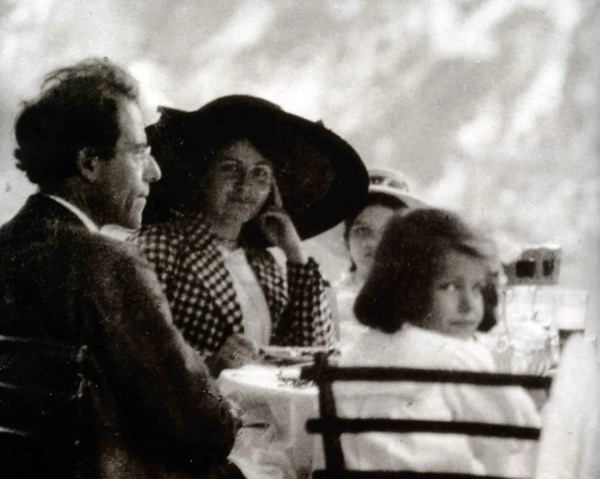
Alma Schindler in 1902

Alma Schindler, 1902

The years 1901–1902, when Mahler composed his Fifth Symphony, were momentous in his personal life, especially in terms of romantic love.

In November 1901, Gustav Mahler met Alma Schindler, a young composer and socialite from Vienna.

Their whirlwind courtship was intense; by March 1902, they were married. (Alma was pregnant at their wedding.)

This intense new love had a profound impact on Mahler, and we see its reflection most clearly in the symphony’s Adagietto.   

According to Alma’s testimony, the Fifth’s Adagietto (which starts at the 46:15 mark in the video above) was Mahler’s love song to her.

Historians have noted that Alma’s picturesque storytelling isn’t always strictly accurate, but the following story remains persuasive. Apparently, he left her a small poem with the Adagietto’s manuscript, saying: “How much I love you, my sun, I cannot tell you in words – only my longing and my love and my bliss.”

Today, the Adagietto is regarded as the wordless love letter from Mahler to his new wife, communicating in music what he felt he was unable to say in words.

It provides a transcendent counterbalance to the earthiness of the rest of the symphony, enhanced by its orchestration for strings and harp alone.

Rachmaninoff – Symphony No. 2 (1907)

The Love Story

Sergei Rachmaninoff and Natalia Satina

Sergei Rachmaninoff and Natalia Satina

The creation of his Symphony No. 2 marked a particularly redemptive chapter in Rachmaninoff’s professional life: one shaped by the support and love he found in his marriage.

A decade earlier, in 1897, Rachmaninoff’s first symphony had premiered to disastrous reviews (one critic likened it to “a program symphony about the Ten Plagues of Egypt”).

The fiasco of that premiere sent the young composer into a deep depression and a creative block. He recovered only with the help of therapy and through composing his successful Second Piano Concerto (1901).

During that same period, he fell in love with and became engaged to Natalia Satina, his cousin and childhood sweetheart.

After overcoming significant obstacles (including family disapproval and Orthodox Church restrictions on cousin marriage), Sergei and Natalia married in 1902 on a rainy spring day.

By the time he was writing the second symphony in 1906, Rachmaninoff had been happily married for a few years and was a father. His first daughter, Irina, was born in 1903, and his second, Tatiana, was born in 1907.

Enjoying such a stable, loving home life provided Rachmaninoff with a foundation of emotional security that was crucial to his productivity after the turmoil of his earlier years.  

In late 1906, he and Natalia moved to Dresden specifically to escape the pressures of Moscow so that he could focus on composition in peace.

There, with his wife and daughter by his side, he worked on the symphony – though not without bouts of self-doubt.

At one point, he nearly abandoned the score, calling it “boring and repulsive” in a typical burst of self-criticism, before eventually returning to it.

It’s easy to imagine that the heartfelt outpouring of the symphony – especially its incandescent Adagio – was nurtured by the contentment and warmth of Rachmaninoff’s married life.

The triumphant premiere of the symphony in early 1908 in St. Petersburg was a vindication; the public and critics hailed it, and it earned Rachmaninoff a prestigious Glinka Award.

Today it remains one of the symphonic highlights of the late Romantic Era, beloved for its lush string writing and deeply felt, warmly expressed emotion.

Conclusion

Romanticism in symphonic music wasn’t just an artistic movement; it was also a way for composers to transform their private longing, devotion, and emotional crisis into publicly performed art.

From Berlioz’s hallucinatory passion in the Symphonie fantastique to Rachmaninoff’s newfound confidence in his Second, these six works reveal how love – fulfilled, frustrated, or otherwise – shaped some of the most powerful music of the Romantic Era.

Taken together, they show just how deeply composers’ love stories shaped their compositions, and why these pieces remain so easy to love even today.

The Year of the Fire Horse Energy and Progress


It’s all about medieval warfare, and unable to flee the Tudor cavalry, he would be captured or killed very soon. No wonder he was desperate enough to hypothetically trade his crown and kingdom for a horse.

Year of the Fire Horse

There is no such desperation in 2026, when the Horse becomes the zodiac for the Chinese New Year, running from 17 February 2026 to 5 February 2027.

Recent years of the Horse have included 2014, 2002, 1990, 1978, 1966, and 1954. And the next Horse year will be celebrated in 2038. So, let’s have a look at the 7th animal in the cycle of the Chinese zodiac signs.  

Galloping into Greatness

According to Chinese astrology, Horses are confident, agreeable, and responsible, although they also tend to dislike being reined in by others. They are fit and intelligent, adore physical and mental exertion, yet they are also easily swayed and impatient.

Even more significantly, this will be the year of the Fire Horse. This promises a year of positivity because movement is always considered good. This year is for progress, a new start, bold decisions and dramatic shifts.

It’s certainly best to ignore the curse of the Fire Horse, a superstition that holds that women born in that specific year are ill-tempered, headstrong, and fated to bring ruin to their families or cause their husbands’ deaths.   

Finance and Opportunities

Year of the Fire Horse 2026

In terms of career and finance, there are new opportunities waiting. That may include career shifts; however, be careful with impulsiveness or emotions taking centre stage. This is particularly true around mid-year, as mental and emotional breakdowns may present challenges.

Keep up the constant networking, acquire new skills, and effective time management is a powerful catalyst for overall success. You must be mindful of impulsive financial decisions, however. Avoid overspending on vacations, gifts for yourself and others.

Don’t borrow or lend out large sums of money, otherwise your long-term economic success will be in jeopardy. For 2026, consistent savings and long-term risk-averse investments are your ticket to wealth.   

Love and Lovers

Year of the Fire Horse

The Year of the Fire Horse may hold surprises and excitement in the romance department. Since Horses are energetic, lively, and generous, they are certainly popular in the romance department. When it comes to love compatibility, their hot temper and stubborn nature means that they tend to gravitate towards romantic partners who are more easy-going and gentle.

Tigers and Horses are temperamental, hot-headed, and often cocky, but in the love department, they bring out the best in each other and allow the other to grow. It’s as if both the Tiger and the Horse finally have someone who can keep up with their own breakneck speed.

Dogs and Goats are also beautiful matches for the passionate Horse. However, you must stay away from the Rat and the Ox. Such relationships result in frequent conflicts that neither will bother to resolve. Horse loves freedom, which makes Ox feel insecure. What started quickly as a passionate love affair is more likely to result in a bitter breakup rather than a happy marriage.  

Wellbeing and Luck

When it comes to health, Horses are very healthy, most likely because they hold a positive attitude towards life. However, heavy responsibility or pressure from their jobs may make them weak. As such, Horses shouldn’t do overtime very often or go home late. They should also refuse some invitations to parties at night.

Lucky numbers in the Year of the Horse are 2, 3, and 7, and numbers that contain them. For your lucky colours, look towards green and yellow, and your lucky flowers are calla lily and jasmine. As for lucky directions, always head east, west, and south.

You should definitely avoid the unlucky colours of blue and white, and your unlucky numbers are 1, 5, and 6. And if you’re on the go, avoid moving north and northwest. And finally, know that you are in good company as famous people born in the Year of the Horse include Isaac Newton, Neil Armstrong, James Cameron, and Max Planck.

To all Interlude readers, we wish you a wonderful Year of the Fire Horse, Gong Hei Fat Choy!

Saturday, February 14, 2026

Remembering Dinu Lipatti

 Remembering Dinu Lipatti

🌟 ❤️ 🎹 💐
"Dinu Lipatti is a unique figure in the pantheon of pianists. His international fame is due almost exclusively to the widespread distribution of recorded output that was in the words of his producer Walter Legge, “small in output but of the purest gold.” When Lipatti died of Hodgkin’s Lymphoma at the age of 33 in December 1950, he left behind little more than three and a half hours of recordings for EMI’s Columbia label. Since that time, those recordings have been published in the catalogue the world over and gradually supplemented by a handful of highly prized unpublished concert and broadcast performances. Six decades after Lipatti’s death, the search for more examples of his playing continues, and indeed more treasures are coming to light."
May be a black-and-white image of piano
All reactions:
255