 / @musicforthesoul1m
 Friday, January 23, 2026
The most beautiful melody in the world! This music can be listened to forever
/ @musicforthesoul1m 
Franz Schubert’s Illness: The Melancholy of an Autumnal Sunset
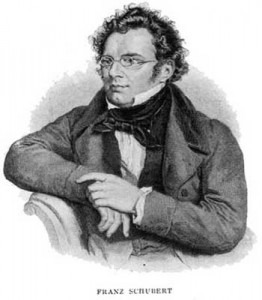
“I am the most unhappy and miserable person in this world… my health will never improve, and in such despair, things will only become worse instead of better…” – Franz Schubert
Austrian Composer Franz Schubert (1797-1828) is enshrined as the pillar of Romantic Western Classical Music who follows after Beethoven*. He had completed a tremendous collection of hundreds of lieder, symphonies, operas, and a large body of chamber and piano music that adds up to over 1000 works during his career. This was prolific for a man who only lived for 31 years. Franz Liszt described him as “the most poetic musician who ever lived.” On his deathbed, Beethoven is said to have looked into some of the younger man’s works and exclaimed, “Truly, the spark of divine genius resides in this Schubert!”
Yet, a number of Schubert’s musical works such as ‘Winter Journey’, ‘the Unfinished Symphony’ and ‘Death and the Maiden’ are said to be filled with elements of death. Indeed, Schubert’s despair during his life is reflected in his own writing, “the brightest hopes have come to naught, to whom the joy of love and friendship can offer nothing but pain at most… Every night as I retire to my bed, I always hope that I would not wake up. Yet every day, the morning breaks into the pains of yesterday’s wounds.”
Why was Schubert so sad?
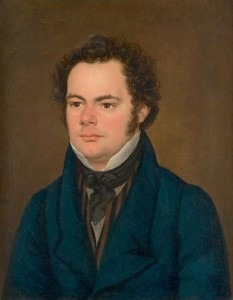 For most of his adult life, Schubert suffered from cyclothymia, a mental illness that resulted in severe mood swings that fluctuated between hypomanic and depressive episodes. His condition became far more extreme during his mid-twenties, and his friends reported periods of dark despair and violent anger.
Physically, Schubert’s life was haunted by varying periods of sickness. In 1822, Schubert began to suffer from headaches, intermittent fever and skin rash. The next year, his scalp began to itch so intensely, that he had his patchy head shaved and bought a wig. He was subsequently admitted to Vienna General Hospital, where he wrote part of ‘Die schöne Müllerin’. Hence began the battle with the illness throughout his life.
Schubert was also an introvert personality who was not considered very attractive. Standing at barely five feet tall, he was a shy, stumpy person whose facial features included a round nose, a long oval face and a deeply cleft chin, topped off by very severe short-sightedness. Romance was hence difficult for the composer, and it is said that was why he turned to prostitutes. This may explain why, at the young age of only 21, he had contracted the sexually transmitted disease syphilis. Although syphilis was prevalent in Vienna at that time, the secondary effects of the disease were so stigmatizing that after his death, Schubert’s friends burnt his letters and diaries so that the true nature of his illness could never be officially announced.
As a composer, Schubert’s work received little recognition during his lifetime. The only two operas he composed were poorly received by the critics. One of them only managed a mere 6 shows before it was forced to close down. Publishers were reluctant to print his works, because he was fairly unknown at the time. As a result, Schubert had no choice but to turn to friends to print his works, but the royalties he could collect were barely enough for even one meal. It was only until Schuman and Franz Liszt performed his work after his death that his work became known.
The Treatment that killed Franz Schubert
In today’s world, people often disregard syphilis, because an early prescription of penicillin is sufficient to treat the condition. Unfortunately for Schubert, the popular treatment by physicians then was to place the patient in a sealed room, and cover the patient’s body with mercury. The patients were therefore forbidden to change their underwear or bed sheets.
The treatment would cause the mouth cavity to heat up and taste of metal, which adversely affected the patient’s appetite. The consequences included mouth cavity pains, difficulty swallowing, excessive drooling, diarrhea, vomiting and excess urination. The doctors explained to the patients that these were simply the side effects of effective treatment. But in fact, these are symptoms of mercury poisoning.
Schubert lived his final days in one of these tightly sealed rooms, and by then he had lost his appetite for more than 10 days. After his death, many articles claim that he died of ‘typhus abdominalis’, but such a disease was not prevalent in Vienna then, nor did he possess the symptoms typical of typhus abdominalis.
Therefore, although Schubert did in fact contract syphilis, it was the mistreatment of his disease that really killed him. Schubert passed away in Vienna in 1828 at the age of only 31.
Music critic Philip Hale’s take on Schubert’s work quite accurately concludes the composer’s life, “when Schubert smelled the mould and knew the earth was impatiently looking for him…it is the melancholy of an autumnal sunset, of the ironical depression due to a burgeoning noon in the spring, the melancholy that comes between the lips of lovers.”
Jazz Funk,Soul,Boogie & Dance
Jazz Funk,Soul,Boogie & Dance
The Emotions ~ BEST OF MY LOVE
Sheila Hutchinson-Witt (born January 17, 1953) is an American soul and R&B singer-songwriter, best known as the lead vocalist and a founding member of the Grammy Award-winning vocal group The Emotions.
She is celebrated for her powerful, clear soprano and was a driving force behind the group’s transition from gospel roots to international pop stardom in the 1970s.
Sheila was born in Chicago, Illinois, the youngest of three sisters born to Joseph and Lillian Hutchinson. Her musical journey was a family affair from the beginning:
#thehutchinsonsunbeams: Under the mentorship of their father, a guitarist, Sheila and her sisters (Wanda and Jeanette) began performing gospel music as children.
They were so talented that by the late 1950s, they were already appearing on television (such as The Jerry Van Dyke Show) and opening for gospel legend #mahaliajackson.
In the late 1960s, the sisters transitioned to secular R&B and renamed themselves The Emotions.
They signed with Stax Records, where Sheila’s songwriting talent emerged. At just 16 years old, she wrote the group's first major hit, "So I Can Love You" (1969). They toured with many of the Stax artists, including #thestaplesingers and others including the Jackson 5, #slyandthefamilystone, The O'Jays and Stevie Wonder.
Their career reached its peak in the mid-70s when they began collaborating with Maurice White - EWF Legacy.
Major career highlights included:
"Best of My Love" (1977): This disco-infused track, primarily handled by Wanda Hutchinson, with strong harmonies and contributions from her sisters Sheila and Jeanette Hutchinson, and youngest sister Pamela Hutchinson, who joined for this hit, creating that iconic layered sound, spent five weeks at #1 on the Billboard Hot 100 and won a Grammy Award for Best R&B Vocal Performance.
"Boogie Wonderland" (1979): A massive collaboration with Earth, Wind & Fire that cemented the group's place in music history.
Beyond her group work, Sheila's voice has been sought after for guest features, including #garryglenn’s "Feels Good to Feel Good" (1987).
Sheila Hutchinson is often cited as one of the most influential female vocalists of the "Girl Group" era. Her ability to blend gospel-inflected "call and response" with sophisticated R&B arrangements became a template for future stars like Mariah Carey (who famously sampled "Best of My Love" for her hit "Emotions").
"Best of My Love" is a song by American band the Emotions from their fourth studio album Rejoice (1977). It was composed by Maurice White and Al McKay of Earth, Wind & Fire, and produced by White and Clarence McDonald.
Released as the album's lead single on June 9, 1977, the song topped both the US Billboard Hot 100 and US Billboard R&B charts. It also reached the top five in the UK and Canada, the top 10 in New Zealand, and the top 20 in Australia.
"Best of My Love" won a Grammy at the 20th Annual Grammy Awards (1977) for Best R&B Performance By A Duo Or Group With Vocals; it also won an American Music Award for Favourite Soul/R&B Single.
"Best of My Love" has been covered by Mary J. Blige, #ellaeyre, #SheenaEaston, #Unchain and #samanthajade. It has been sampled by #delasoul, Lisa Lisa and #cultjam, Girl Talk, #kylieminogue, #candcmusicfactory, #KeyshiaCole, #mariahcarey and #Tamia. The song was also sampled in #PaulRussell's 2023 single, "Lil Boo Thang".
Maurice White and McKay wrote "Best Of My Love" specifically for the group. For White, writing this song was a way of expressing a positive feeling in a style much better suited for The Emotions than for his band. White says he would have never written this song for Earth, Wind & Fire.
That's Wanda Hutchinson going after the big high notes in this song. Maurice White had her sing an octave higher than what she was used to. Said Hutchinson, "When my range got higher, the intensity of my vibrato sharpened a little."
This was featured in the films Boogie Nights (1998) and Summer Of Sam (1999).
Songwriter Maurice White sued Mariah Carey and C+C Music Factory for plagiarizing this song for Mariah's 1991 #1 hit "Emotions" (C+C produced the song for Mariah). Said White, "Sampling is one thing, but she took the whole song." The lawsuit was settled out of court."
Song: Best Of My Love
Artist: The Emotions
Album: Rejoice
Label: Columbia
Released: June 9, 1977
Genres: Funk/Soul, R&B, Pop
Style: Disco, Disco Gospel, Dance-Pop, Chicago Soul.
Written By: Maurice White, Al McKay.
Producers: Maurice White, Clarence McDonald.
Personnel:
Lead Vocals: Wanda Hutchinson
Backing Vocals, Harmonies: Sheila Hutchinson, Jeanette, Pamela
Clarence McDonald: Piano, Clavinet
Paulinho da Costa: Percussion
Al McKay:Guitar
Larry Dunn: Synthesizer
Verdine White: Bass
Fred White: Drums
Tom Tom 84 (Thomas Washington): String and Horn Arrangements.

Subscribe to:
Comments (Atom)