At the heart of this vision are the people shaping its programming and outreach. We spoke in particular to Katharina Kloss, head of European Offers, who oversees content in English, Spanish, Polish, Italian, and Romanian; Sophie Roche, project manager for ARTE Concert; and Thomas Hammer, social media manager, driving engagement across YouTube, Facebook, and Instagram.
About 56% of the programmes are documentaries, 19% feature films, drama and series, 14% news-related programmes, while 5% feature music and other performing arts.
The programming and outreach team embody ARTE’s mission to unite audiences across borders through innovative storytelling. In our conversation, we explore how the network’s unique Franco-German roots and pan-European outlook continue to influence its programming philosophy, and what it takes to bring culture to life for a continent.
Arte Concert
Culture Without Borders
Talking to the people behind ARTE, you sense immediately that this is not a platform built by committee, but by conviction. What began as a Franco-German cultural experiment has, over the past decade, quietly become one of Europe’s most ambitious shared spaces for art, ideas, and storytelling.
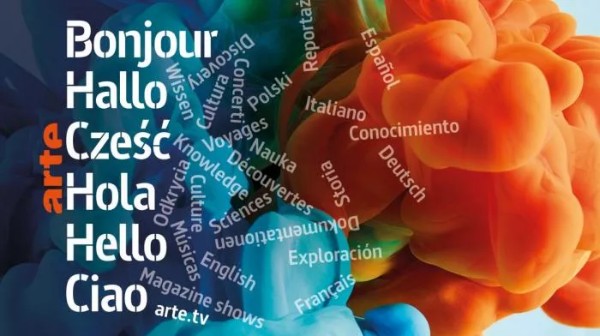
With support from the European Union since 2015, ARTE has moved decisively beyond its original axis, opening itself to audiences in English, Spanish, Polish, Italian, and Romanian.
The result is not merely a broader reach, but a different way of thinking. Culture no longer exported from a centre, but shaped through many voices at once. Today, roughly three-quarters of Europeans can encounter ARTE’s programmes in their own language, a radical concept in a media landscape still largely divided by borders.
That multilingual ambition is not merely a technical add-on, but it informs how ARTE curates, commissions, and frames its work. Opera seasons stream live from houses across the continent, while ArteKino gives arthouse cinema, so often squeezed out of commercial circuits, the visibility and care it deserves.
Between Tradition and Urgency
© Michel NICOLAS
Emerging directors sit alongside canonical filmmakers, and contemporary social questions coexist with lovingly restored classics. Long-form documentaries remain central, lingering on human stories that resist simplification and refuse to stay neatly within national lines.
When Europe fell silent during the pandemic, ARTE did not retreat into archival comfort. Instead, it leaned into the possibilities of the moment. Daniel Hope’s Christmas Home Concerts offered intimacy at a time of isolation, while United We Stream turned shuttered clubs into unlikely stages, broadcasting electronic music from empty rooms in Berlin, Barcelona, New York, and Detroit.
These options were not substitutes for live culture, but acts of cultural solidarity, essentially reminders that shared experience could survive even enforced distances.
When Culture Goes Live
ARTE Concert, launched long before livestreaming became ubiquitous, embodies this spirit most clearly. Nearly 900 performances a year, spanning opera, classical music, jazz, pop, metal, hip-hop, and experimental forms, unfold not as disposable content, but as events.
Often they are framed in unexpected ways with musicians performing among museum artworks, artists interacting with visual installations, or concerts that incorporate live sign-language translation as a creative presence rather than an afterthought.
Emerging artists such as Hania Rani or Amaia are featured not at the end of a hype cycle, but at the moment when local recognition begins to ripple outward across Europe.
Unity Through Curiosity
At the heart of all this lies a stubbornly unfashionable idea. Culture should be public, ad-free, and accessible, not because it is profitable, but because it is a shared good.
In an age of algorithmic acceleration, misinformation, and shrinking attention spans, ARTE’s commitment to editorial independence and artistic risk feels quietly radical. Public media here is not a defensive gesture, but a forward-looking one.
If ARTE succeeds, it is because it understands something easily forgotten. Europe is not unified by sameness, but by curiosity. Culture still has the power to resonate and connect, just as democracy requires spaces for complexity, imagination, and trust.


No comments:
Post a Comment