Today, we’re looking at eight compositions with particularly weird titles, from Mozart’s cheeky “Leck mir den Arsch” to La Monte Young’s “Composition 1960 #7: to be held for a long time.”
We’re also looking at the fascinating stories behind them.
Wolfgang Amadeus Mozart: Leck mir den Arsch fein recht schön sauber (Lick my Arse for Six Voices) (ca. 1782)
Wolfgang Amadeus Mozart loved two things especially dearly: composing and scatological humour.
In fact, so much scatological humour appears in his letters that some scandalised editors of his correspondence actually scrubbed it from their editions!
Occasionally, his sense of humour boiled over from his letter-writing into his compositions, like in his three-part canon “Leck mich im Arsch”, which was likely meant to be a silly party song for his friends.
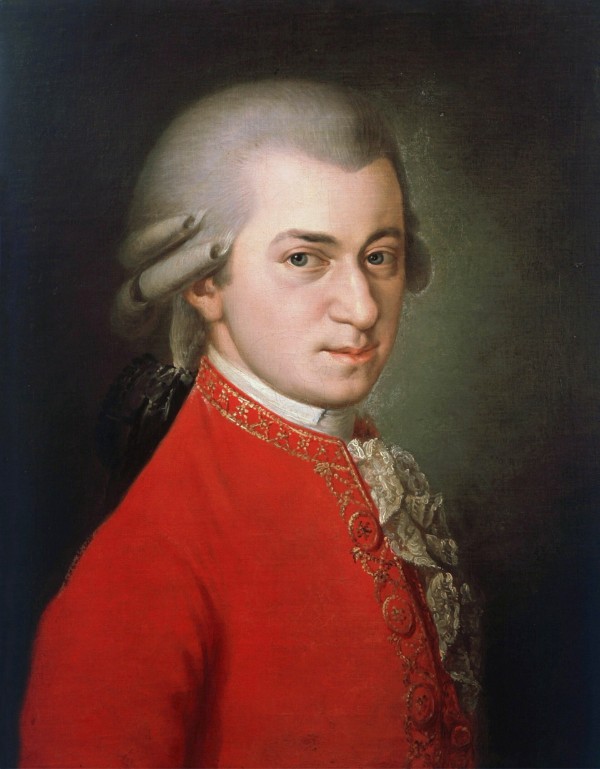
Wolfgang Amadeus Mozart
Translated to English, the expression “Leck mich im Arsch” means something equivalent to “kiss my ass.”
It’s a phrase that has no right to be arranged so cleverly or to sound so good…which of course is part of the joke!
Charles-Valentin Alkan: Funeral March on the Death of a Parrot (1859)
Composer Charles-Valentin Alkan is one of the most intriguing figures in classical music history.
He was a piano prodigy born in 1813 who, in the 1830s, was often mentioned in the same breath as Chopin and Liszt.
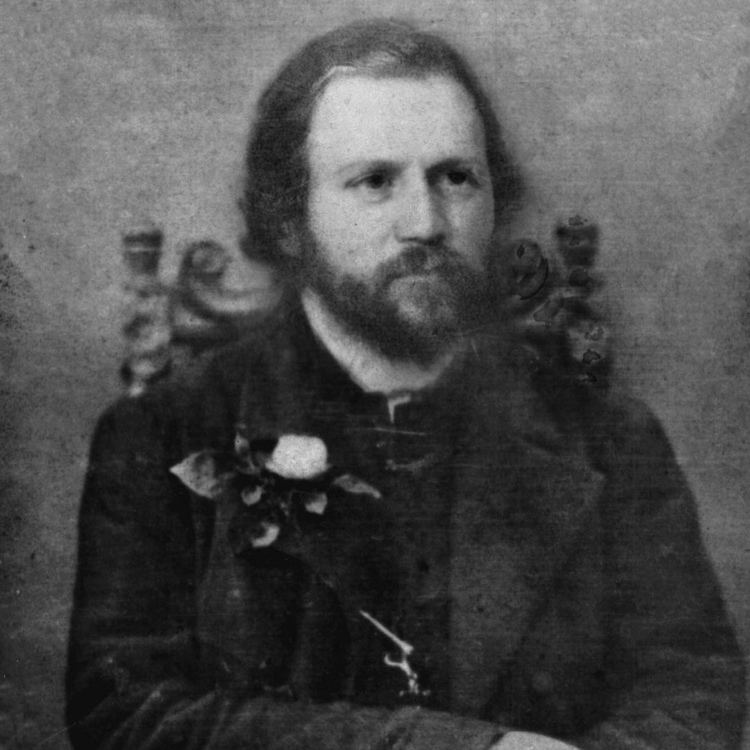
Charles-Valentin Alkan
However, after Alkan had a son out of wedlock in his mid-twenties, he withdrew from the concert stage for a time. He resumed his performing career in the mid-1840s. But after losing a prestigious job at the Paris Conservatoire and the devastating early death of Chopin, Alkan withdrew from public life again, focusing on studying and composing.
In 1859, Alkan wrote this parody funeral march, drawing from the pompous tradition of grand opera. It was composed for four voices, three oboes, and one bassoon.
The lyrics translated are “Have you eaten, Jaco? And what? Ah!” This is the French equivalent of the English expression “Polly wants a cracker?”
Alkan takes himself so seriously that if you just heard the music alone, you’d never guess the gentle, winking absurdity of the premise.
Erik Satie: Trois morceaux en forme de poire (Three Pieces in the Form of a Pear) (1903)
Composer Erik Satie specialised in absurdity, and his four-hand piano suite “Trois morceaux en forme de poire” offers absurdity in abundance.
The first joke is that, despite the title, the suite consists of seven pieces, not three.
According to legend, the “pear” part of the title originated with a criticism Claude Debussy leveled at Satie: namely, that Satie didn’t pay enough attention to form.
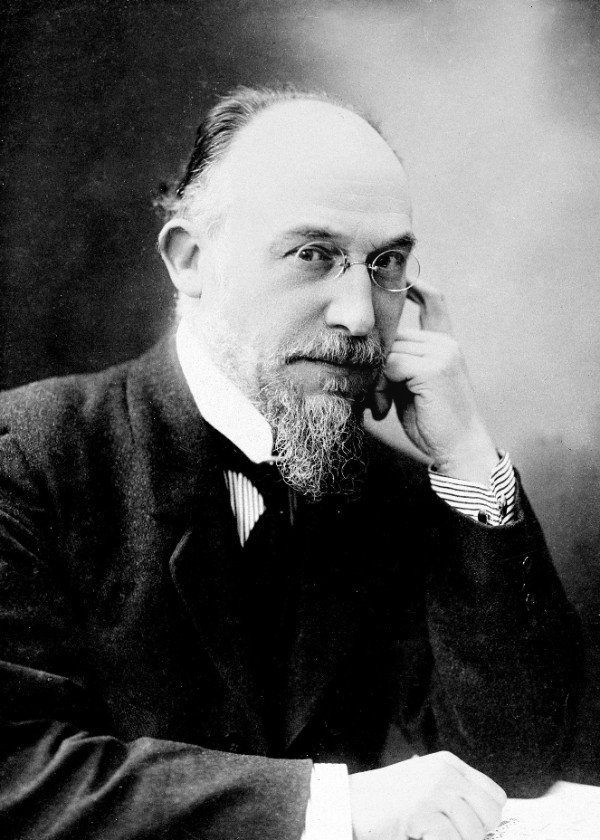
Erik Satie
Satie then chose a deliberately absurd shape so he could answer any criticism by Debussy by saying, “but it’s in the form of a pear!”
In France, pears also have a cultural connotation with the archetype of a fool or simpleton, meaning the joke may have been on Debussy, Satie himself, or maybe both!
Alexander Scriabin: The Poem of Ecstasy (1905-08)
Composer Alexander Scriabin believed that his life’s mission extended far beyond writing music.
In 1903, he began writing a work called Mysterium, which he continued working on for over a decade, until his death.
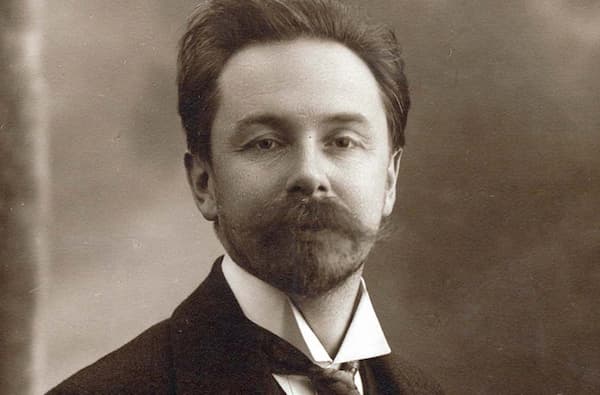
Alexander Scriabin
He wanted to stage a performance of it during a weeklong festival in the foothills of the Himalayas, after which he believed the end of the world would come, and human consciousness itself would shift.
In 1905’s The Poem of Ecstasy, we get a taste of his intense conviction and creative energy in a work that was actually finished. The narrative of the Poem follows a spirit achieving consciousness.
Scriabin wrote in his own notes for the piece:
“When the Spirit has attained the supreme culmination of its activity and has been torn away from the embraces of teleology and relativity, when it has exhausted completely its substance and its liberated active energy, the Time of Ecstasy shall arrive.”
Charles Ives: Like a Sick Eagle (c. 1906)
Charles Ives’s brief song “Like a Sick Eagle” contain just the first five lines of John Keats’s poem “On Seeing the Elgin Marbles”:
My spirit is too weak—mortality
Weighs heavily on me like unwilling sleep,
And each imagined pinnacle and steep
Of godlike hardship tells me I must die
Like a sick eagle looking at the sky.
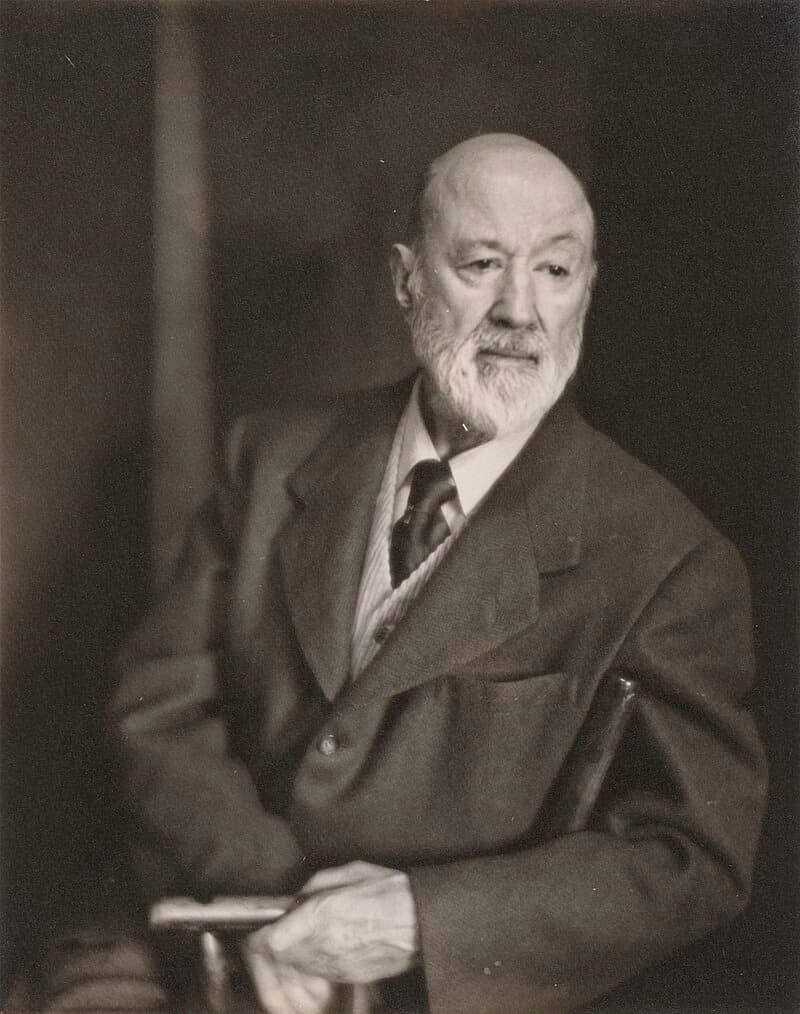
Clara Sipprell: Charles Ives (Washington, DC: National Portrait Gallery, Smithsonian Institution)
Ives conveys the staggering weakness of the once-mighty bird through a spare accompaniment and ghostly vocal line.
The end result is deeply haunting and unsettling.
Darius Milhaud: Le Boeuf sur le toit (The Ox on the Roof) (1919-20)
During World War I, composer Darius Milhaud served in the French diplomatic service, spending two years in Brazil. Not surprisingly, the rich musical culture of South America rubbed off on Milhaud’s music.
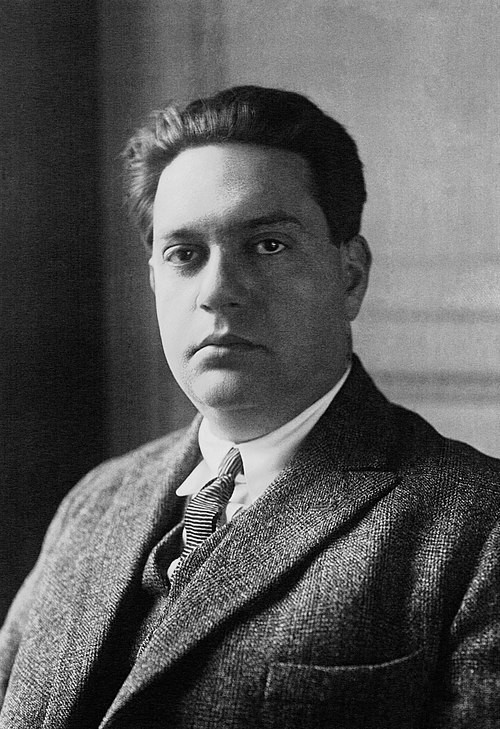
Darius Milhaud
Milhaud himself once claimed that the title “Le Boeuf sur le toit” (which translates to “The Ox on the Roof”) was a reference to a Brazilian folk song.
However, there are potential alternate explanations, too:
- It’s the name of an imaginary cafe and dance hall (a real version opened a couple of years after Milhaud’s score was staged as a ballet).
- There is an old Parisian legend of a man who adopted a calf and brought it into his apartment, where it grew too large to be moved.
- Among musicians, the phrase “faire un boeuf” was slang for “to have a jam session.” When a cafe hosting a jam session was too small to host a group, musicians would be directed to the roof.
Regardless of exactly what the title refers to, the phrase is playful and evocative.
Paul Hindemith: Overture to the Flying Dutchman as Sight-read by a Bad Spa Orchestra at 7 in the Morning by the Well (c. 1925)
Composer and violinist/violist Paul Hindemith had a tongue-in-cheek sense of humour, as evidenced by this work, which is exactly what it sounds like: Hindemith’s idea of what an under-rehearsed ensemble might sound like while sight-reading Wagner’s Flying Dutchman Overture.
In it, he pokes fun at out-of-practice musicians trying to play a work beyond their technical abilities.
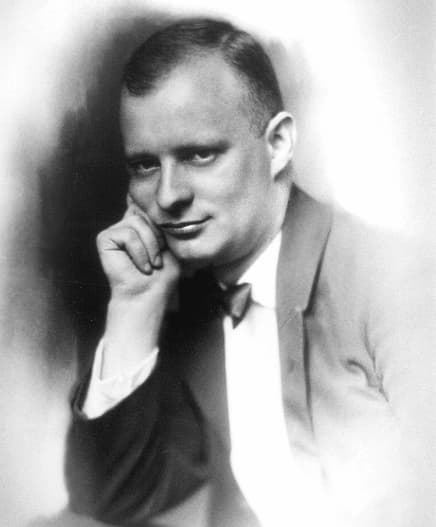
Paul Hindemith, 1923
You can hear their struggles: intonation issues, accidental entrances, wobbly cues.
At the end, the players inexplicably launch into a rendition of Émile Waldteufel’s The Skater’s Waltz.
La Monte Young: Composition 1960 #7: to be held for a long time (1960)
American composer La Monte Young was born in 1935. He is widely recognised as one of the first minimalists, and he has a special interest in sustained tones and musical drones.
The only instructions for the piece are that a B and an F-sharp are to be held “for a long time”. How long? It’s up to the performers – and perhaps the audience – to decide.
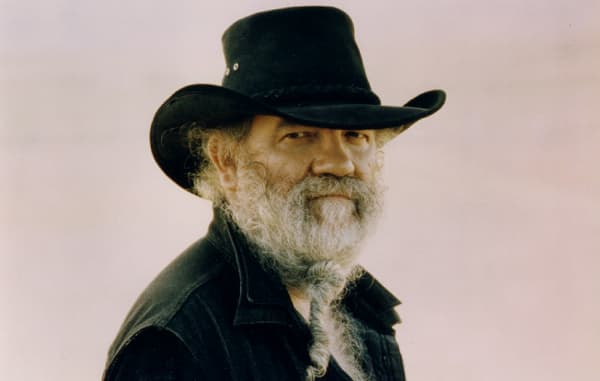
La Monte Young
Conclusion: The Weird and Witty World of Classical Music
Whether channeling apocalyptic mystical forces or memorialising a dead parrot, all of the composers above embraced a spirit of weirdness when it came to conceiving and naming their works.
These weird names pique our curiosity and invite us to listen with curiosity and fresh ears. Share with your music-loving friends, and let us know which one of these quirky works is your favorite.


