The string section has always been the heart of the orchestra.
From creating intimate chamber-like textures to cathedral-scale climaxes, composers have relied on stringed instruments for centuries to communicate grief, devotion, joy, radiance, and transcendence.
Today, we’re looking at some of the most beautiful orchestral string writing ever composed – and why each piece of writing is so effective.
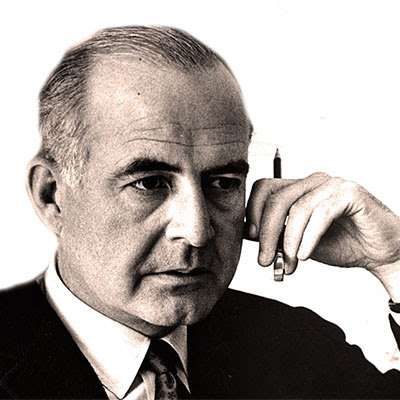
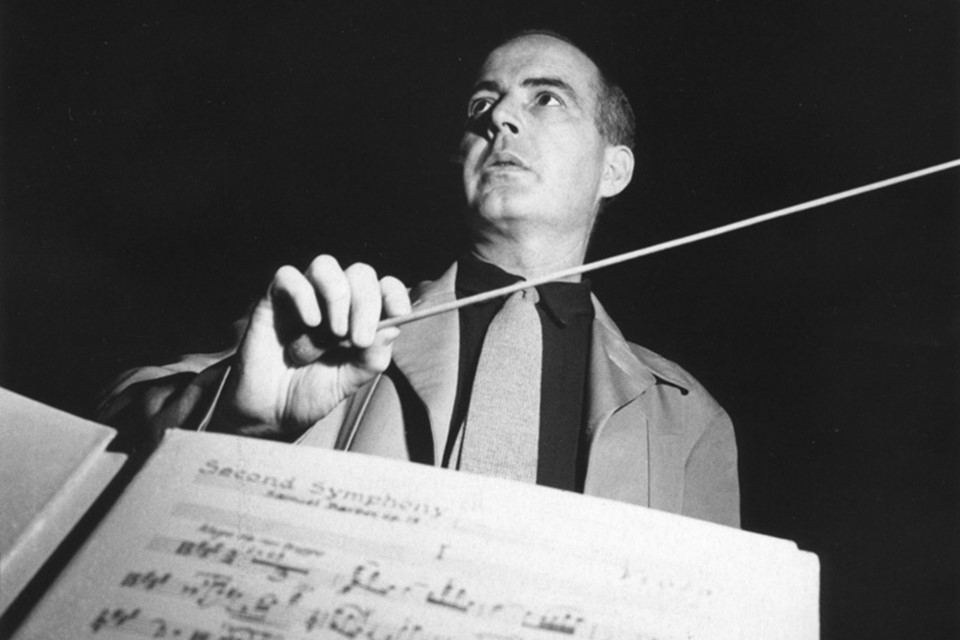
Samuel Barber‘s famous Adagio was originally the slow movement of his String Quartet in B minor.
In 1938, he arranged it for string orchestra and sent the score to legendary conductor Arturo Toscanini, who premiered it with the NBC Symphony Orchestra.
Samuel Barber
It quickly became one of the defining American works of the 20th century, and an unofficial anthem of national mourning, performed after the deaths of President Roosevelt, President Kennedy, and even Samuel Barber himself.
The beauty of its writing is due to its simplicity: one long, arching violin line climbs in incremental steps, before reaching a shattering dissonance and collapsing into silence.
It is also extremely exposed for the players – a quality that heightens its intimacy and vulnerability.
Gustav Mahler – Symphony No. 5, Adagietto
Mahler composed his Fifth Symphony during a period of personal upheaval and transformation, shortly after surviving a near-fatal haemorrhage and during his courtship of his future wife, Alma.
The Adagietto, scored for strings and harp, is often interpreted as a wordless love letter to Alma.
It has also become synonymous with elegy and mourning ever since conductor Leonard Bernstein programmed it at the funeral of Senator Robert F. Kennedy.
Clearly, this is poignant string writing that can express both love and grief.
The harp supports the strings subtly from below, creating a luminous cushion of sound on which the string writing floats.
For long stretches, phrases hover just at the edge of resolution, requiring extraordinary bow control.
The resulting ache of restraint is palpable – whether you interpret the music as a love letter or a eulogy.
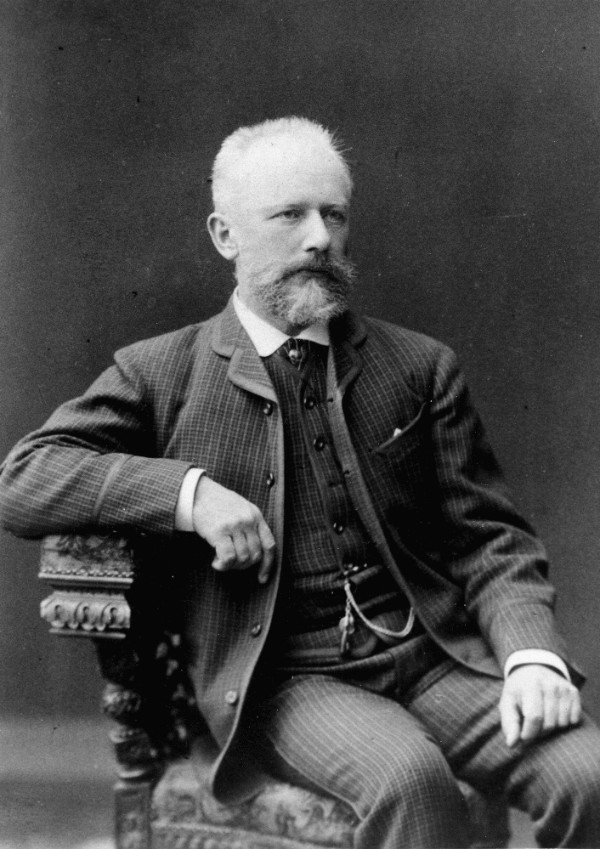
Pyotr Ilyich Tchaikovsky – Symphony No. 6, Finale
Premiered just nine days before Tchaikovsky‘s death, the “Pathétique” Symphony broke convention by ending not in triumph, but in tragedy.
Given the proximity of the symphony’s premiere and Tchaikovsky’s death, the two events are inextricably linked in music lovers’ minds.
Another reason why it leaves such an indelible impression is the intensity of its string writing. The finale, marked Adagio lamentoso, entrusts its most emotionally charged material to the strings.
Pyotr Ilyich Tchaikovsky
Descending sighs, throbbing lower strings, and increasingly fragile, fractured textures combine to create a heavy sense of exhaustion and resignation.
By the last bars, the music seems to lose its strength entirely.
Claude Debussy – La Mer
Debussy began composing La Mer (The Sea) while living in Burgundy, far from the ocean that inspired it.
Premiered in 1905, the work initially puzzled audiences accustomed to traditional symphonic form.
The strings in La Mer rarely carry long Romantic melodies. Instead, Debussy uses divided sections, tremolos, harmonics, and shifting textures to imitate the colour and motion of water. The effect is iridescent – less about narrative, more about atmosphere.
Ralph Vaughan Williams – Fantasia on a Theme by Thomas Tallis
Premiered at the 1910 Three Choirs Festival in Gloucester Cathedral, Vaughan Williams‘s Fantasia marked a turning point in English music.
Drawing on a 16th-century hymn tune by Thomas Tallis, Vaughan Williams divided the string orchestra into separate groups to take full advantage of the Gloucester Cathedral’s acoustics. The call and response between the parts is deeply moving.
This string writing glows from within, suggesting a sacred character. Meanwhile, the modal harmonies somehow come across as both ancient and modern.
Richard Strauss – Metamorphosen
Strauss wrote Metamorphosen in the final months of World War II after witnessing the destruction of German cultural centers, including the Munich Opera House.
Scored for 23 solo strings, the work is dense, contrapuntal, and deeply introspective.
Near the end, Strauss quotes the funeral march of Beethoven‘s third symphony – a gesture many listeners interpret as a funeral march for an entire era in European culture.
The string writing is intensely personal. Each player has an individual line, but all are woven into a single lament.
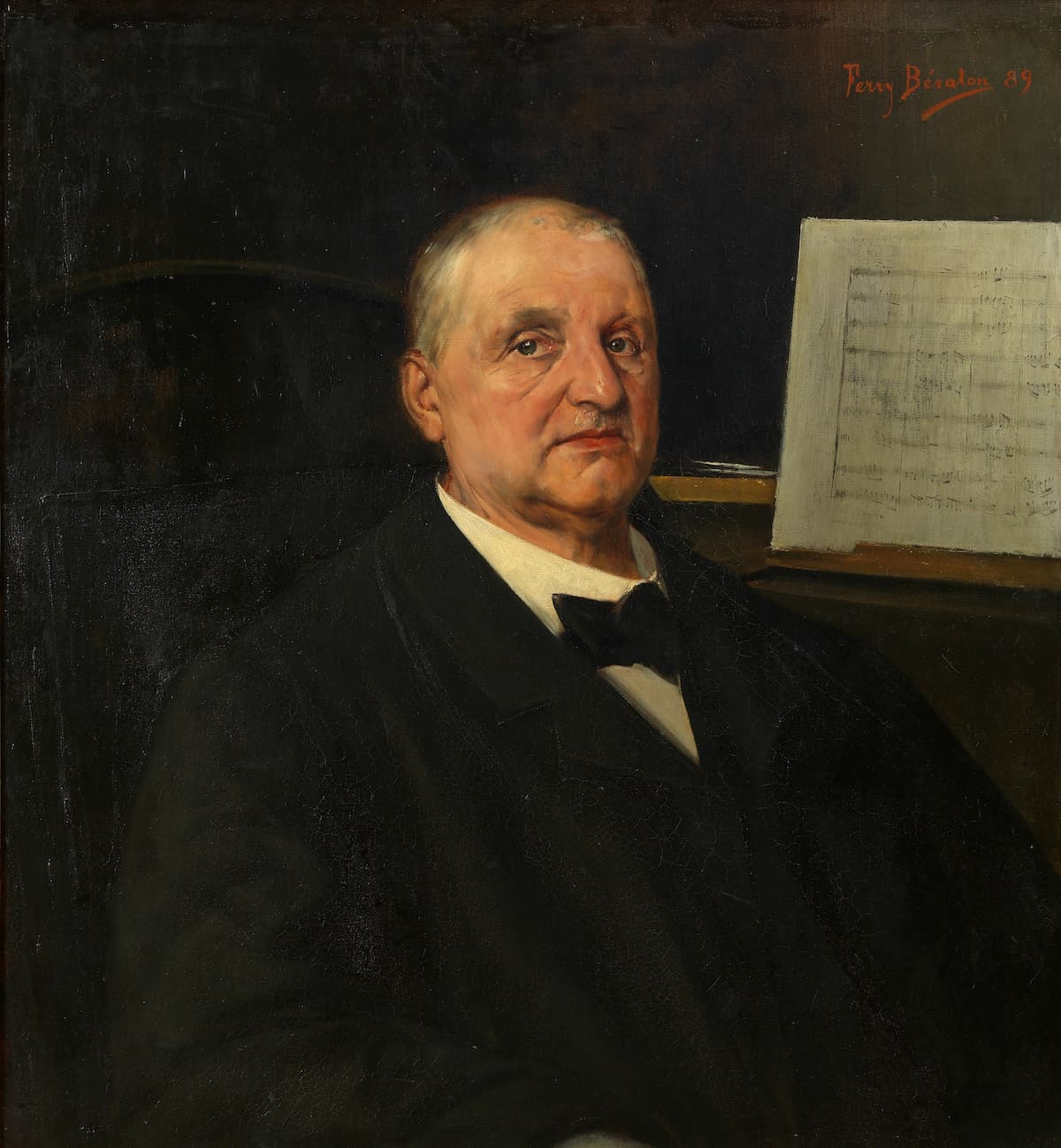
Anton Bruckner – Symphony No. 8, Adagio
Bruckner struggled for years with his Eighth Symphony, revising it extensively after early criticism. Its adagio ended up being one of his greatest compositional achievements.
Anton Bruckner, 1889
The movement unfolds in vast, patient arcs. High violin lines shimmer above deep harmonic foundations provided by the brass, building toward monumental climaxes.
It is music that calls to mind both sacred architecture and faith. It is transcendent.
Antonín Dvořák – Serenade for Strings
Dvořák composed the Serenade as a young man, shortly after receiving support from Johannes Brahms and a crucial Austrian state stipend that helped launch his international career.
Unlike the tragic intensity of some works on this list, the Serenade radiates warmth and a sense of lyric generosity. The melodies flow naturally, and the inner string voices are crafted with affectionate care.
The beauty here is human and grounded, proving that strings don’t need to be playing angsty music to be incredibly memorable.
Conclusion
From Barber’s exposed lament to Debussy’s iridescent textures and Dvořák’s warmth, the greatest orchestral string writing demonstrates just how expressive the section can be.
Strings can convey sorrow, joy, and everything in between with unmatched subtlety. They are capable of both monumental grandeur and fragile intimacy.
It is no accident that composers so often entrust their most beautiful music to the strings: they are – and always have been – the heart and soul of the symphony orchestra.