by
The French composer Charles Gounod (1818–1893) met Faust in 1859. His opera, first given at the Théâtre Lyrique as an opéra comique, i.e., an opera with dialogue, in 1859, evolved over the next decade to have recitatives added (Strasbourg 1860), scenes removed (La Scala, 1862), and dances added (Paris Opéra, 1869). In working with Goethe’s text, Gounod slimmed down the number of characters and conflated them to better serve as opera. Opera moves more slowly than a play, so refining is always necessary.
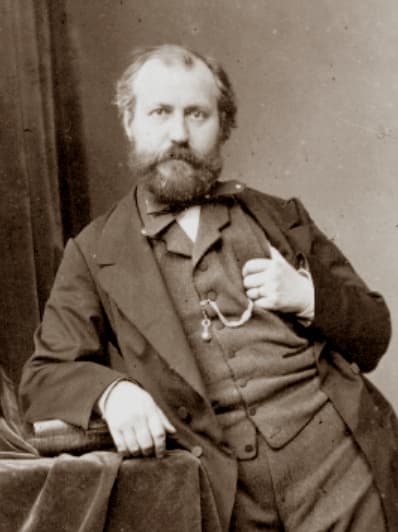
Bayard & Bertall: Charles Gounod, 1860
The addition of ballet music was required for performance at the Paris Opéra. At first, Gounod didn’t want to write it and asked his student, Camille Saint-Saëns, to do it. Saint-Saëns, appalled at the request, went straight to Gounod to change his mind. Gounod finally agreed and created a score that more often had a life separate from the opera.
The ballet section was inserted into the first scene of the final act for the Paris Opéra performance, and that final addition made the former opéra comique a grand opera. It became the most frequently performed opera in Paris.
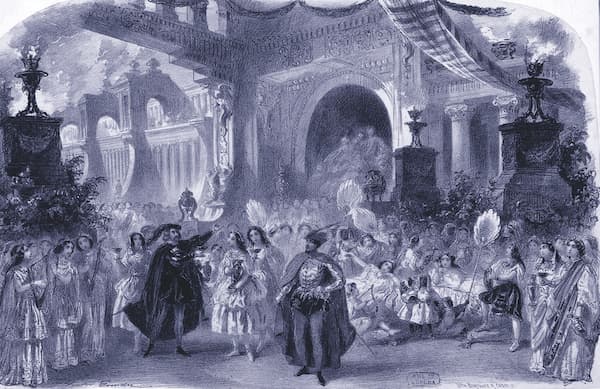
Charles-Antoine Cambon and Victor Coindre: The palace of Méphistophélès, Faust, 1859 (Paris: Bibliothéque national)
At the start of the last act, Méphistophélès and Faust are in the Harz Mountains on Walpurgis Night. An ‘orgiastic ballet’ becomes the focus for the revelry and concludes with Phrynes’s Dance. Phryne was an (in)famous Greek courtesan from the 4th century who was very wealthy. Put on trial for impiety, for profaning the Eleusinian Mysteries, she was acquitted when the jury saw her bare breasts.
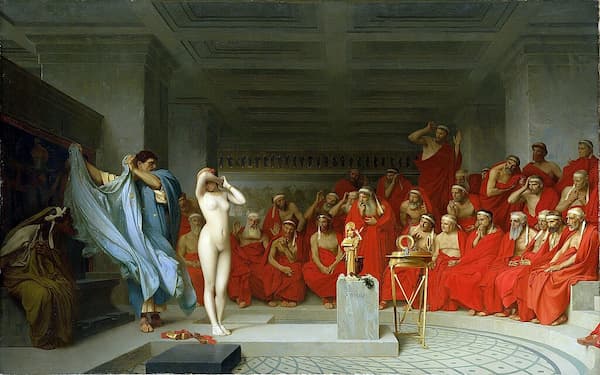
Jean-Léon Gérôme: Phryne before the Areopagus, ca 1861 (Hamburger Kunsthalle)
Other dances in the ballet are by Nubian slaves, Cleopatra, and Trojan Women, all strong and well-known ideals of women that would appeal to Faust. It’s Phryne’s Dance that closes the ballet sequence.
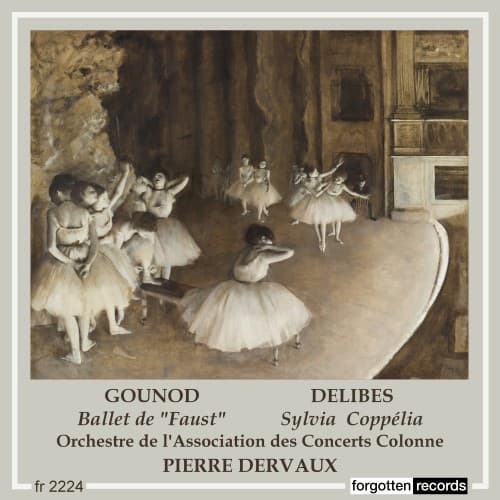
This 1958 recording was made by the Orchestre de l’Association des Concerts Colonne, led by Pierre Dervaux. The Colonne Orchestra was founded in 1873 by the violinist and conductor, Édouard Colonne. Colonne wanted an orchestra that could play contemporary music (Saint-Saëns, Massenet, Charpentier, Fauré, d’Indy, Debussy, Ravel, Widor, Enescu, Dukas, Chabrier, and the like), as well as the big German composers such as Wagner and Richard Strauss.
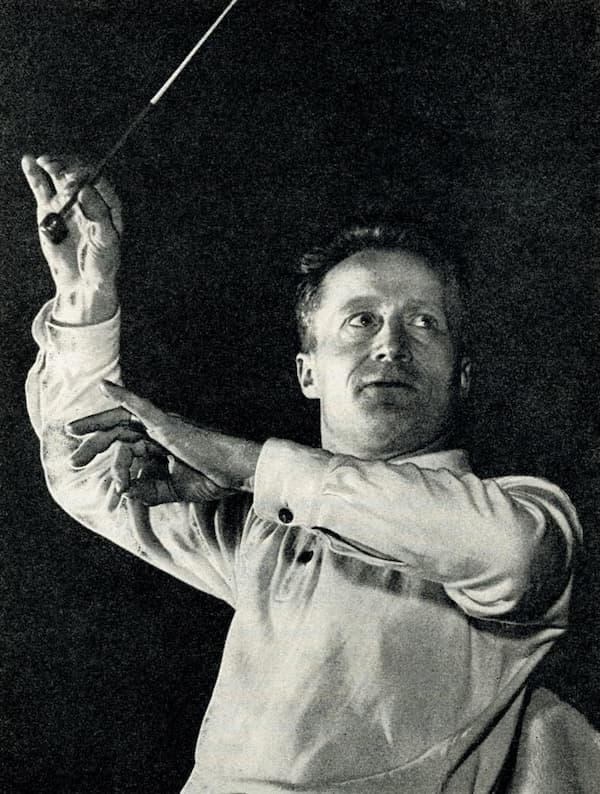
Pierre Dervaux
Pierre Dervaux (1917–1992) was President and Chief conductor of the Colonne orchestra from 1958 to 1992, starting his career as principal conductor of the Opéra-Comique (1947–53), and the Opéra de Paris (1956–72). He led many of France’s finest orchestras, including the Concerts Pasdeloup (1949–55) and was Musical Director of the Orchestre des Pays de Loire (1971–79) as well as holding similar posts at the Quebec Symphony Orchestra (1968–75), and the Nice Philharmonic (1979–82). He taught at the École Normale de Musique de Paris (1964–86) and the Conservatoire de musique du Québec à Montréal (1965–72).
Performed by
Pierre Dervaux
Orchestre de l’Association des Concerts Colonne
Recorded in 1958
Official Website
For more of the best in classical music, sign up for our E-Newsletter


