It's all about the classical music composers and their works from the last 400 years and much more about music. Hier erfahren Sie alles über die klassischen Komponisten und ihre Meisterwerke der letzten vierhundert Jahre und vieles mehr über Klassische Musik.
Total Pageviews
Sunday, January 4, 2026
Dvořák: Symphony No. 9 From the New World
Friday, January 2, 2026
Grant Us Peace A New Year’s Journey Through Music and Hope
Although it first appeared in the “Agnus Dei” of the Roman Catholic Mass, this plea has travelled far beyond the walls of any church, finding its way into music across centuries and styles.

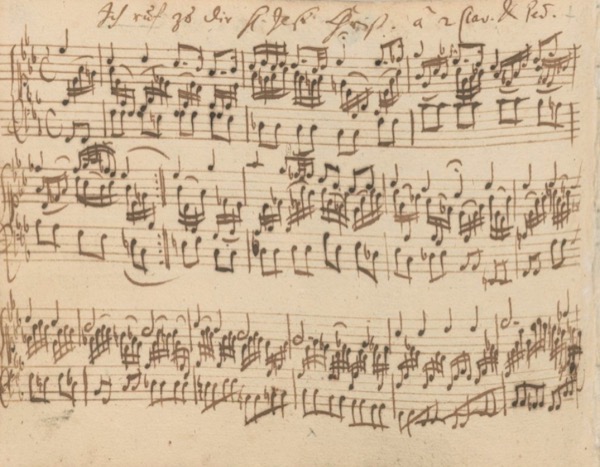
Bach’s writing of “Dona nobis pacem”
From the serene rounds of the medieval era to the soaring polyphony of the Baroque, the impassioned mass settings of the Romantic period, and the stirring cantatas of the twentieth century, composers have returned again and again to this three-word invocation.
It is at once humble and transcendent, a lyrical prayer for our collective hopes, our sorrows, and our longing for a world at rest. As the calendar turns, let us carry “dona nobis pacem” not just as a musical motif, but as a prayer and a promise.
A Single Line
When we look at the diversity of settings, we first look at the dual identities of the text. In fact, it is both a liturgical fragment and a stand-alone musical symbol.
Musically, dona nobis pacem has been composed as a canon, a choral movement within a mass, a large‑scale choral‑orchestral work, and even modern arrangements for handbells and secular choirs.
Through these settings, composers have revealed not only their personal reflections on peace but also the cultural, social, and historical currents that shaped their lives. Each interpretation becomes a mirror of its time. In every era, “Dona nobis pacem” has offered musicians a way to translate human longing into sound.

Statue of Mozart in Salzburg
Maybe the famous “Dona nobis pacem” sound isn’t actually by Mozart, but it captures something people long to associate with Mozart. Clarity without coldness, elegance without effort, and the quiet miracle of voices joining, one after another, to ask for peace.
Two Visions of Peace
Once we move beyond the intimacy of a simple canon, the Renaissance gave “dona nobis pacem” architectural weight and spiritual depth. The plea for peace, as in the masses of Palestrina, is not whispered but carefully built.
The phrase, within the polyphonic Mass, becomes the destination. It is the final space where all preceding musical thought comes to rest. Peace is embodied rather than described, as the music suggests that peace arises through balance, restraint, and communal listening.
For Johann Sebastian Bach, the final “Dona nobis pacem” is both culmination and transformation. The chorus unfolds in dense, purposeful imitation, propelled by orchestral energy, and the prayer expands beyond a personal plea into collective affirmation.
This is peace earned through striving, and order forged from complexity. Where the Renaissance offers calm equilibrium, Bach offers radiant conviction. His vision of peace is not stillness, but moral triumph. It is hard-fought, structured, and ultimately luminous.

Giovanni Pierluigi da Palestrina
Peace as Architecture of Faith

Joseph Haydn
As we move through societal changes and developments, the plea for peace transcends from a communal ritual to an inward, almost existential longing. The words remain the same, but the musical attitude does not. For Joseph Haydn, “dona nobis pacem” belongs to the architecture of faith.
In his late masses, the final Agnus Dei/Dona nobis pacem often begins in gravity or tension and then resolves into buoyant affirmation.
Haydn’s musical language here is public and ceremonial. Rhythmic vitality, clear tonal direction, and bright orchestration suggest peace not as fragile or doubtful, but as something bestowed.
Peace, for Haydn, is communal and stabilising. It belongs to a world where faith, reason, and social order ultimately align. The music reassures, as the pleas for peace have been heard.
The Fragile Plea for Peace
With Mozart, the plea for peace steps out of ceremony and into lived experience. The plea for peace no longer sounds like a confident conclusion to a ritual already understood, but like a moment of exposure.
Rather than pressing toward emphatic resolution, Mozart allows vulnerability to linger. His lines unfold with a natural, almost conversational lyricism, as if the music itself were breathing alongside the listener.
This is peace understood as a moral and human ideal rather than a guaranteed outcome. Peace in this music is not proclaimed, but carefully and almost shyly, offered. His settings acknowledge that peace is something we long for precisely because it is so easily broken.
Mozart’s Enlightenment spirit comes fully into focus. Faith remains, but it is infused with empathy. Even when he writes for grand forces, the plea for peace feels intimate. It is music that does not assume peace as a conclusion, but asks for it gently and earnestly.
The Music of Hesitation

Franz Schubert © Hadi Karimi
Once we make it to Franz Schubert, ” Dona nobis pacem ” has crossed a threshold. In his late masses, the plea no longer feels assured of fulfilment. Schubert often avoids emphatic closure, favouring suspended harmonies, unexpected modulations, and an almost questioning tone.
Schubert’s Dona nobis pacem can feel hesitant, inward, and searching. The music does not declare peace so much as hope for it. The sense of consolation is fragile and provisional. A Romantic consciousness is emerging.
Faith exists, but certainty does not. Peace here is not guaranteed by divine order nor resolved through classical balance. It is something yearned for by an individual soul, aware of loss, mortality, and distance from transcendence.
Schubert turns it inward, allowing doubt and longing to remain unresolved. What begins as a liturgical formula becomes, by Schubert’s time, a mirror of changing human self-understanding. The words never change, but the music tells us that we might never fully possess peace.
A Universal Cry for Peace

E.O. Hoppé: Vaughan Williams, 1920
While settings throughout the 19th century often remained within liturgical boundaries, the 20th century witnessed a dramatic reimagining of this plea for peace as a large-scale artistic statement about war and peace, reaching far beyond liturgical roots.
Probably the most significant example emerges courtesy of Ralph Vaughan Williams’s 1936 cantata Dona nobis pacem. Commissioned for the centenary of the Huddersfield Choral Society, this work blends the Latin Mass text with poetry by Walt Whitman, Biblical passages, and political speech excerpts to produce a sweeping plea for peace during a period of escalating global tension.
Vaughan Williams’ setting opens with the familiar “Agnus Dei” prayer and then moves into movements based on Whitman’s vivid war poetry, which dramatise the intrusion of war into everyday life and explore the emotional and moral complexities of conflict.
Ultimately, the piece returns to the prayer, asserting peace not merely as a liturgical desire but as a deeply human imperative. The work exemplifies how the theme evolved in modern times. Vaughan Williams transforms a liturgical fragment into a political and emotional epic, situating the plea for peace within a universal conversation about war.
The Enduring Human Plea
In our time, Dona nobis pacem continues to appear in countless settings beyond traditional choral liturgy or large orchestral works. Composers and arrangers have crafted versions for smaller ensembles, educational choirs, and instrumental groups.
Even in secular popular culture, the phrase often appears in contexts divorced from strict liturgy. Its presence in hymnals, children’s choir pieces, and recordings of Christmas and peace songs suggests that Dona nobis pacem has entered the broader cultural imagination as a universal symbol of hope.
Across the centuries, Dona nobis pacem has never belonged to a single style or moment. It has lived as a simple round sung together, as intricate polyphony, as a radiant mass finale, and as an urgent modern cry. Each setting reflects its time, yet all return to the same fragile truth. Peace is never assumed, only asked for.
Perhaps that is why these words continue to move us. In singing “grant us peace”, we hear generations before us voicing the same hope we carry today. Music gives us the hope, if only for a moment, to believe that by listening together, and by singing together, we might edge a little closer to the harmony we so deeply desire.
Friday, October 17, 2025
Eight of the Saddest Piano Concerto Slow Movements
by Emily E. Hogstad
If you’re a classical music fan drawn to sad, slow movements in piano concertos, this is the list you’ve been looking for.
Whether it’s Chopin’s gentle melancholy, Ravel’s elegant wistfulness, or Rachmaninoff’s romantic despair, each of these slow movements paints a picture of a particular kind of sadness.

© chopinacademy.com
Although every ranking having to do with classical music is subjective, we numbered our picks anyway, from least sad to saddest. Find out which concerto we’ve dubbed the saddest at the end.
8. Chopin: Piano Concerto No. 1, Mov. 2
Chopin wrote this concerto in 1830 when he was just twenty years old.
The inspiration behind this piece is unclear…but we know there was one.

Frédéric Chopin in 1849
In a letter, Chopin wrote a cryptic observation to his best friend (and potential crush or even lover) Tytus Woyciechowski:
“Here you doubtless observe my tendency to do wrong against my will. As something has involuntarily crept into my head through my eyes, I love to indulge it, even though it may be all wrong.”
It’s a mysterious confession. Some believe he’s referring to his other crush, singer Konstancja Gładkowska. Others wonder if he’s referring to Woyciechowski, with whom he exchanged a number of romantic letters as a young man.
Chopin wrote to Woyciechowski about the slow movement in particular:
“It is not meant to create a powerful effect; it is rather a Romance, calm and melancholy, giving the impression of someone looking gently towards a spot that calls to mind a thousand happy memories. It is a kind of reverie in the moonlight on a beautiful spring evening.”
The specific sadness of this music is a gentle, possibly flirtatious melancholy.
7. Brahms: Piano Concerto No. 2, Mov. 3
Brahms’s second piano concerto covers similar emotional territory to the Chopin Romance. Save for a brief stormy interlude in the centre of the movement, this is not overtly tragic music: it’s more brooding, repressed melancholy.

Johannes Brahms, ca 1875
The movement begins with a soulful cello solo (an idea that Brahms may have lifted from his dear friend Clara Wieck Schumann, who had included similar instrumentation in the piano concerto she’d written as a teenager decades earlier).
The final portion of the movement, where the cello returns again and moves with the piano through a number of keys together, is the absolute epitome of bittersweet regret.
6. Bartók: Piano Concerto No. 3, Mov. 2
Béla Bartók composed his third piano concerto in 1945 when he was 64 years old. He was terminally ill with leukaemia at the time.
That October, his wife, pianist Ditta Pásztory-Bartók, was set to celebrate her 42nd birthday. He began working on a third piano concerto for her as a birthday present. He was hopeful that after his death, whenever it occurred, she could tour with it and make money.

Béla Bartók in the 1920s
Tragically, he died in late September, a month before her birthday. Fortunately, the piano concerto, save for the final seventeen measures, was completed.
The slow movement of this concerto feels like a hushed, tender, intimate goodbye. Regret and wistfulness are mixed in with profound gratitude.
5. Ravel: Piano Concerto, Mov. 2
Ravel wrote of his piano concerto:
“My only wish…was to write a genuine concerto, that is, a brilliant work, clearly highlighting the soloist’s virtuosity, without seeking to show profundity. As a model, I took two musicians who, in my opinion, best illustrated this type of composition: Mozart and Saint-Saëns…”

Maurice Ravel
In particular, he looked to Mozart’s clarinet quintet for inspiration. That melody is an unusual twenty measures long. In his concerto, Ravel’s melody is an astonishing thirty-four.
“That flowing phrase!” he wrote later. “How I worked over it bar by bar! It nearly killed me!”
This long melody calls to mind a long, wistful train of thought from the middle of the night, when nothing in the darkness interrupts the thought.
This music is sad in a restrained way. A listener can feel a great depth of sorrow hiding just beneath the surface.
4. Shostakovich Piano Concerto No. 2, Mov. 2
Shostakovich wrote his second piano concerto for his pianist son Maxim’s nineteenth birthday in 1957. Maxim premiered it at his graduation concert at the Moscow Conservatory that May.
Over the past few years, father and son had suffered a great deal together. In 1954, Maxim’s physicist mother, Nina, had died suddenly. Maxim was just sixteen. Shostakovich was forced to become a single father overnight: a role he was completely unprepared to play.

Dmitri Shostakovich
The slow movement of this concerto evokes emotions that a father and son might feel upon seeing a son graduate after the death of a beloved wife and mother: pride, yearning, and a sadness that is simultaneously quiet and deeply intimate.
3. Mozart: Piano Concerto No. 23, Mov. 2
Mozart wrote his 23rd piano concerto in early 1786, two months before the premiere of one of his best-loved operas, The Marriage of Figaro.
A listener can immediately hear the influence of opera here. It’s especially dramatic because the piano is alone when it enters with its atmospheric, aria-like, minor-key melody.

Croce: Mozart Family Portait (detail), 1781
Starting the movement with a solo part creates a kind of sudden, intense intimacy between the soloist, composer, and audience.
2. Beethoven: Piano Concerto No. 4, Mov. 2
The orchestral introduction to this slow movement is loud and brutally unforgiving. The piano answers with a sense of quiet despair.
That conflict and dialogue create the narrative that drives the entire movement.

Beethoven in 1803
Three movements into their unnerving conversation, the piano takes over for a solo turn. We discover that the piano still has fight in it, with a series of loud ringing trills, before sinking back down into a whisper again.
When the orchestra returns, it is also quiet, witnessing the piano’s unraveling.
1. Rachmaninoff: Piano Concerto No. 2, Mov. 2
Here it is: the saddest slow movement of a piano concerto: the Adagio sostenuto from Rachmaninoff’s second piano concerto.
This movement begins with slow, hushed chords in the strings, followed by a mournful chain of arpeggios in the piano.
The winds contribute hushed fragments of a heartbreaking theme to the steady accompaniment of the piano.
When the soloist and the orchestra players begin interacting with one another, it feels like a confessional conversation. The music conveys all kinds of sadness: grief, regret, yearning, and more, appearing in all different types of musical colours and textures.

Kubey-Rembrandt Studios: Sergei Rachmaninoff, 1921
Rachmaninoff wrote his second piano concerto while coming out of a severe period of depression. For a while, he was seeing a therapist daily. It seems that writing this concerto helped him to process what he needed to.
His composing career continued for decades afterwards, and this work became one of the most beloved piano concertos ever written. It’s sad music…but it had a happy ending.