by Emily E. Hogstad September 19th, 2026
But which ones have actually captured the most listeners there? And which one is the most watched of all?
We ranked the seven most-viewed “Clair de Lune” performances on YouTube (as of 2026) and listed them in reverse order, saving the most popular for last.
The results may surprise you. The list includes a violin, a theremin, a classical guitar, and an audience of elephants.
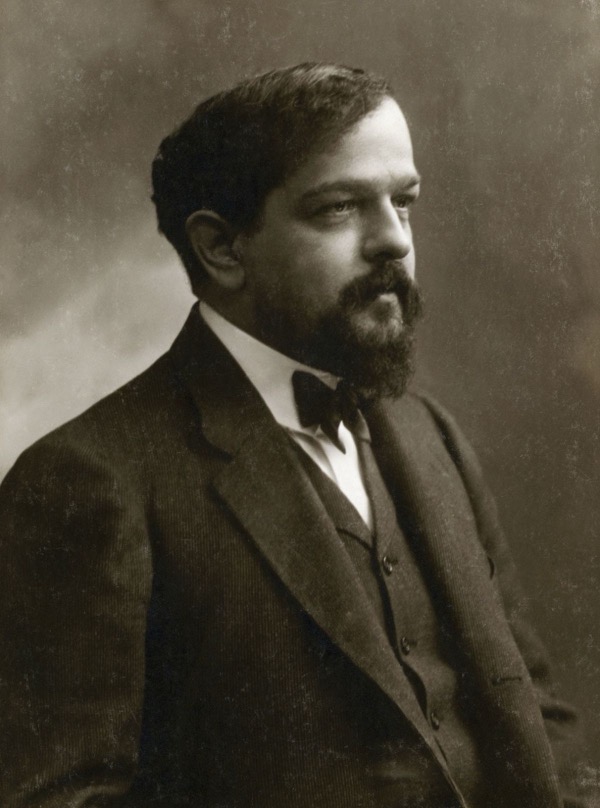
Claude Debussy, ca. 1908, photo by Félix Nadar
Only three of the seven performances are for solo piano. What they all share is the breathless beauty that makes “Clair de Lune” one of the most beloved – and ubiquitous – pieces of classical music ever written.
7. David Oistrakh
4.5 million views
As we mentioned, not all of the performances on this list are for solo piano. One breathtaking example: this violin-and-piano performance by David Oistrakh, recorded in Paris in 1962 with Frida Bauer at the piano.
Oistrakh was one of the great Soviet Russian violinists of the 20th century, and everything that made him legendary is present here: the tonal warmth, the complete absence of ego, the sense that the music is simply passing through him rather than being performed.
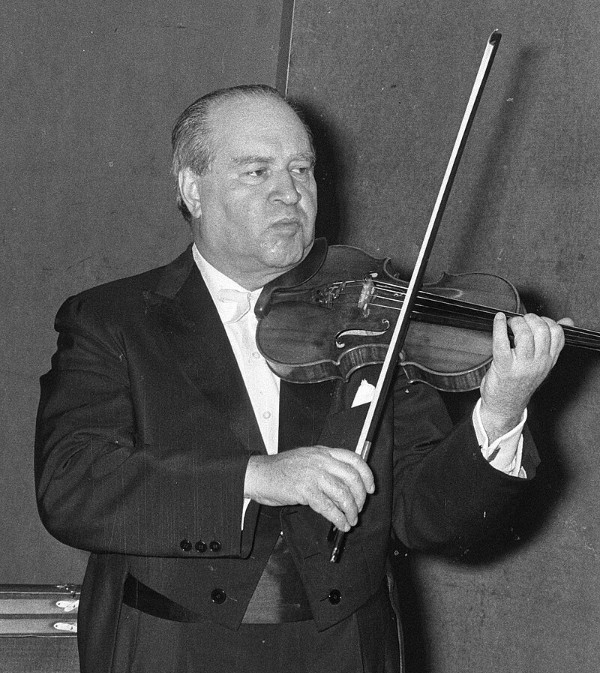
David Oistrakh, 1972
The violin carries the melody with a breathy vocal quality that a solo piano can’t replicate.
This was one of the first great violin performances ever uploaded to YouTube (all the way back in September 2006), and it inspired and influenced an entire generation of violin lovers. It is a fitting performance to kick off this list.
6. Gregoire Blanc
5.9 million views
The second performance on the list isn’t for the piano; it’s for the theremin. The theremin is a deeply odd instrument. Invented in 1920, it is played entirely without touch. Instead, the performer’s hands move through open air to shape pitch and volume.

Leon Theremin playing a theremin
The theremin’s tone meshes intriguingly with Debussy‘s liquid melody; both exist somewhere between the corporeal and ethereal.
Blanc plays with complete emotional commitment, never letting the instrument’s inherent strangeness become the point.
It’s also worth noting that in 2020, he pinned a frustrated comment:
Claravox Centennial | “Clair de Lune” Performed by Grégoire Blanc & Orane Donnadieu
Whether you check out the original viral video or his updated version, take a listen. It’s spooky, a little comical, and deeply moving all at once – and proves that Debussy’s music can survive all kinds of adaptations and reinventions.
5. Roxane Elfasci
11 million views
Roxane Elfasci studied business at the prestigious HEC Paris before switching careers and devoting herself to the guitar. Judging by this recording, it was a solid choice.
“Clair de Lune” is a difficult lift for guitarists. The original piano writing can be dense, and the voicing is spread across a wide range that the guitar was never designed to handle.

Roxane Elfasci
However, Elfasci makes the challenges sound easy. Her virtuosic approach to the arrangement creates an almost spectral shimmer.
Eleven million views later, this performance demonstrates decisively that a talented guitarist’s interpretation can rightfully earn its place beside pianists’.
4. Seong-Jin Cho
11 million views
Seong-Jin Cho is the first pianist on this list.
In 2015, he won the International Chopin Competition – arguably the most prestigious piano competition in classical music – and was signed by Deutsche Grammophon, home to many of history’s great pianists.
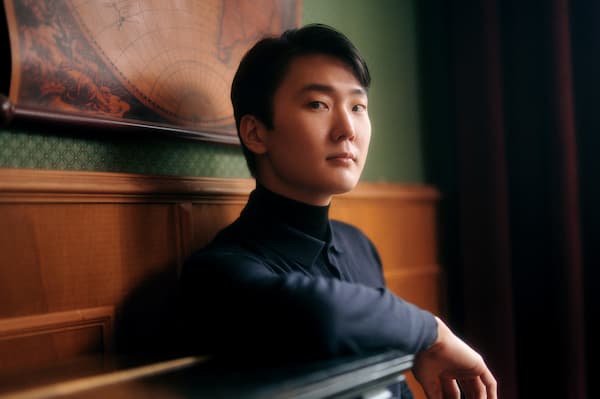
Seong-jin Cho (photo by Christoph Köstlin)
This recording comes from his 2017 Debussy album on DG, released on the eve of the composer’s death centenary.
It is an immediate argument for why a Chopin specialist makes an ideal Debussy interpreter: the touch is exquisite, the voicing luminous, the control of colour absolute.
The tempo is more relaxed than many interpretations. In 2018, he told YourClassical, “I listened again after I played it and my producer said, ‘Oh, you play a little bit slower than the others,’ and then I still felt this is the right tempo for me. Perhaps I will play differently in ten years, but for now I think this is the right tempo.”
This extra space allows every harmonic shift to breathe and settle. The result is a “Clair de Lune” that possesses an almost spiritual gravity.
3. Menahem Pressler
12 million views
Few pianists have lived as cinematic a life as Menahem Pressler.
He was born in Magdeburg, Germany, in 1923, fled the Nazis in 1939, and in 1946 won the Debussy International Piano Competition – a competition named after the same composer whose music he would return to again and again for the rest of his life.
This particular performance, made when Pressler was nearly 90, was filmed in Paris in 2012.
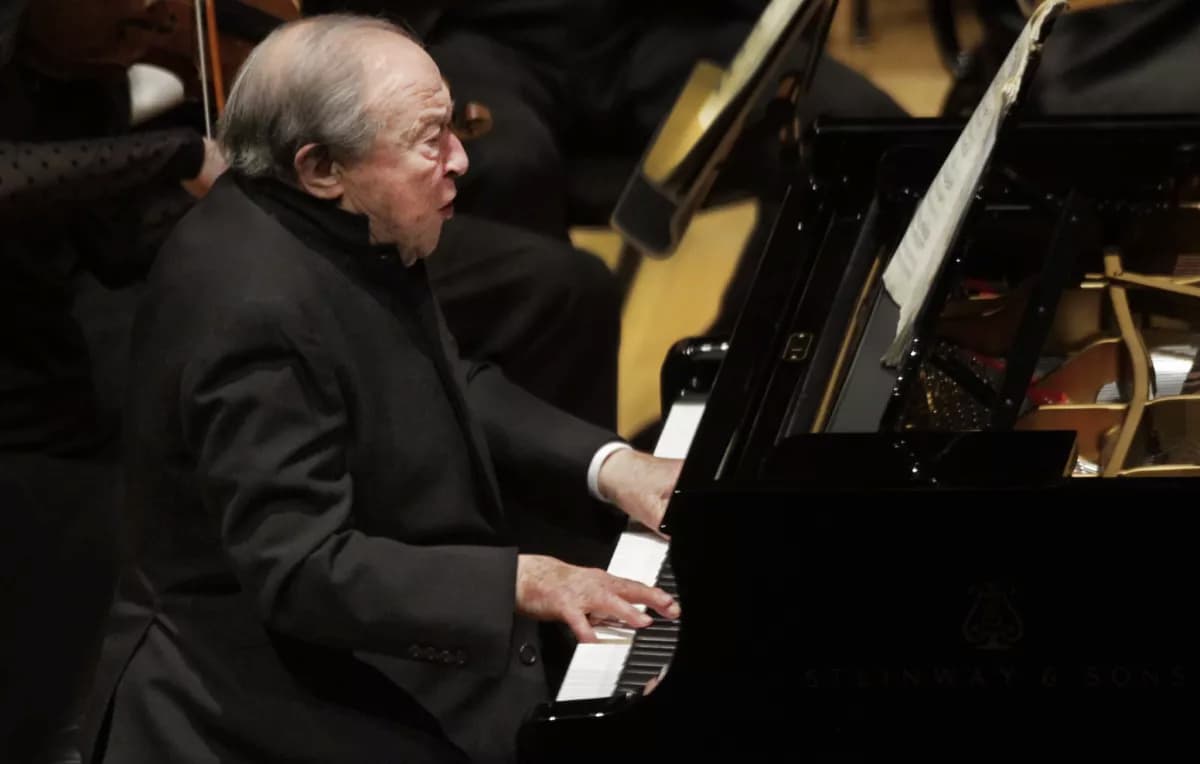
Menahem Pressler
His playing here conveys an overwhelming sense of love, generosity, profound empathy, and wisdom. This is someone who has lived with this music for decades; it has clearly become a kind of second skin for him.
After a long and celebrated career, Pressler died in 2023 at the age of 99.
2. Paul Barton
15 million views
This is the only entry on this list where the audience matters as much as the performer.
Paul Barton studied art at the Royal Academy of Arts in London before pursuing a career as a concert pianist – a career he eventually set aside when he travelled to Thailand in the 1990s to teach piano.
While there, he became involved with Elephants World, a sanctuary for rescued logging and trekking elephants, and began bringing his piano to play for them.
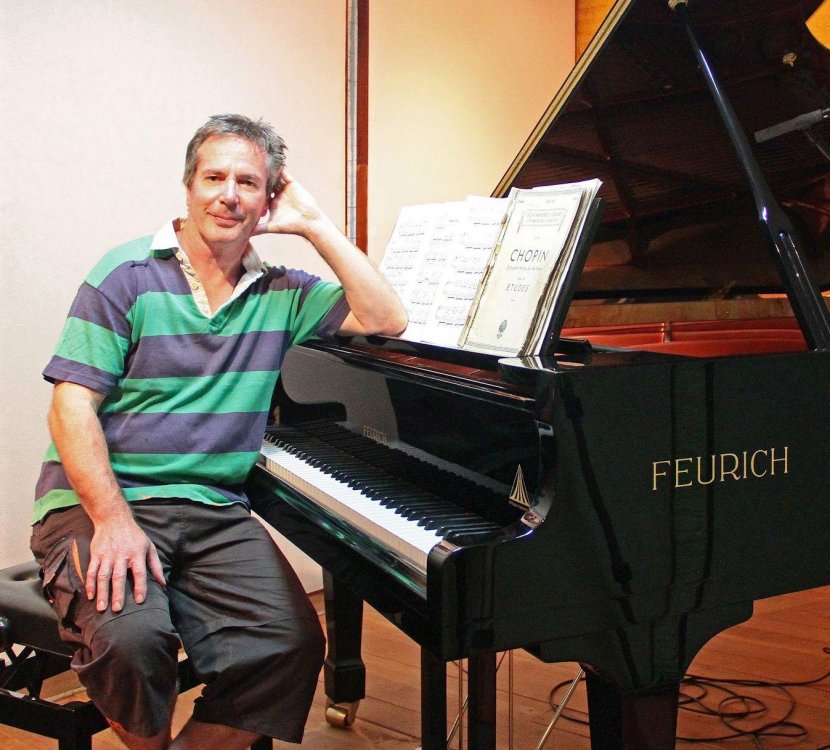
Paul Barton © bach-cantatas.com
In this video, his audience is Ampan, a gentle 80-year-old elephant with impaired sight. As soon as Barton begins playing, Ampan starts wagging her ears – an elephant’s way of saying, “I am intrigued by this.”
“Their breathing actually slows down when you play, which tells me they are relaxed and happy,” Barton has said.
“Clair de Lune” has moved many millions of humans over the past century-plus. It’s heartwarming to realise it has also delighted other animals, too.
1. Rousseau
69 million views
At 69 million views, this is the most-watched performance on this list by a significant margin – and it belongs to someone who has never shown their face.
Rousseau is an anonymous American pianist who launched their YouTube channel in March 2018 and built one of the largest classical music audiences on the internet almost entirely through a single innovation: a reactive visualizer that accompanies each performance, lighting up keys as notes are struck.
The effect is somewhere between a piano recital and a meditation. The visualizer makes the architecture of the music visible, the voices separating into colour, the harmonies blooming across the keyboard.
Tens of millions have watched this performance of “Clair de Lune,” proving that the music itself and its visible structure are deeply intriguing to viewers.
Conclusion
Together, these seven performances have accumulated well over 128 million views – a number that says something significant about “Clair de Lune” itself. Few pieces are as beloved.
Whether it’s a 1962 violin recording, an anonymous pianist with a light show, or a concert pianist playing for an elderly elephant, the music retains its magic.
If there’s a takeaway from this list, it is that there is no single definitive “Clair de Lune.” Only the versions that find you at the right moment matter. We hope one of them has touched your heart.