Showing posts with label Mozart and more: My passion of music. Show all posts

Friday, August 7, 2026

How Constanze Mozart Saved Mozart’s Music in Her Widowhood

 by Emily E. Hogstad  August 6th, 2026


On the morning of 5 December 1791, composer Wolfgang Amadeus Mozart died in Vienna at the age of 35. He had only been ill for two weeks.

His widow Constanze was 29 years old. She had been at his bedside through his illness, nursing him through his final days.

“Words fail me…to describe how his devoted wife in her utter misery threw herself on her knees and implored the Almighty for His aid,” her sister Sophie wrote in a letter years later.

Completely grief-stricken, Constanze was unable to attend his funeral.
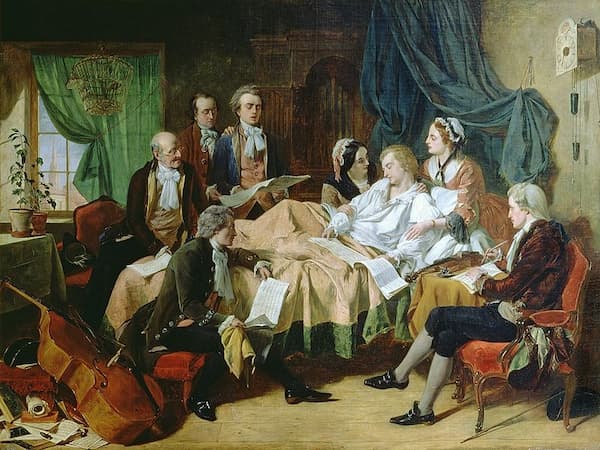
Henry Nelson O'Neil: The Last Hours of Mozart, 1860s

Henry Nelson O’Neil: The Last Hours of Mozart, 1860s

The obstacles she’d face in her widowhood would be staggering. Mozart had died with substantial debts. There was no inheritance to speak of, only a chaotic collection of musical manuscripts. Plus, she had two surviving children to care for: Karl Thomas, age seven, and Franz Xaver, just five months old.

It would have been understandable for Constanze to crumble, but she did not. On the contrary, over a period of decades, she would oversee the canonisation of her husband – and ensure that her husband’s music would outlast them both.

Escaping Poverty: Constanze’s Early Widowhood (1791–1797)
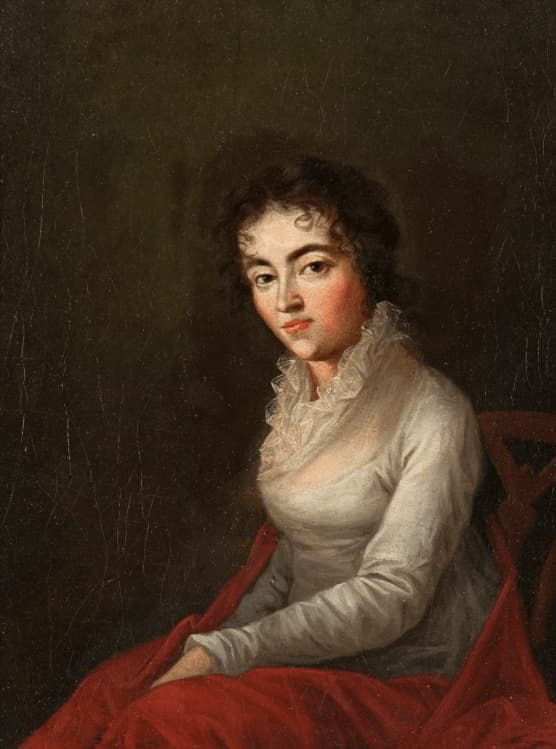
Constanze Mozart as portrayed in 1782 by her brother-in-law Joseph Lange

Constanze Mozart as portrayed in 1782 by her brother-in-law Joseph Lange © Wikipedia

In an era before reliable social safety nets and few professional opportunities for young widows and mothers, Constanze knew she had to move quickly after Wolfgang’s death to stabilise her finances.

She began by petitioning Emperor Leopold II for a widow’s pension. Granted within weeks, it provided a modest but essential lifeline, thanks to Mozart’s position as imperial chamber composer.

Friends, family members, and admirers also helped out, organising benefit concerts in Vienna and Prague. Constanze’s sister Aloysia – a well-known singer – performed at one, as did a young Ludwig van Beethoven.  

Crucially, Constanze arranged to have Mozart’s Requiem finished quickly – while shaping the narrative around it.

The work had been commissioned by Count Franz von Walsegg, an amateur composer known for passing off commissioned works as his own. To prevent this, Constanze hired composers Joseph von Eybler and Franz Xaver Süssmayr to complete the score. She then presented it as entirely Mozart’s, allowing her to claim the commission fee – and, importantly, block Walsegg from taking credit.

She also circulated the claim that Mozart believed he had been poisoned. Whether she truly believed this or used it as a form of myth-making remains unclear, but the story helped fuel 19th-century fascination with Mozart and continues to shape his legacy today.

At the same time, Constanze recognised the financial value of Mozart’s manuscripts. As their sole custodian, she sold them strategically and negotiated major editions with the Leipzig publisher Breitkopf & Härtel. These editions became foundational to later scholarship and performance.  

A trained soprano, Constanze also returned to the stage. In 1794, she organised benefit performances of La clemenza di Tito in Vienna and elsewhere, singing the role of Vitellia while Aloysia performed Sextus.

In 1795–1796, the sisters undertook an ambitious concert tour of northern Germany, promoting Mozart’s music. The tour proved both artistically and financially successful, helping to enhance his reputation across Europe.

By the late 1790s, thanks to her persistence and strategic thinking, Constanze had stabilised her financial situation.

Meeting the Tenant Who Became Her Husband: Georg Nikolaus von Nissen
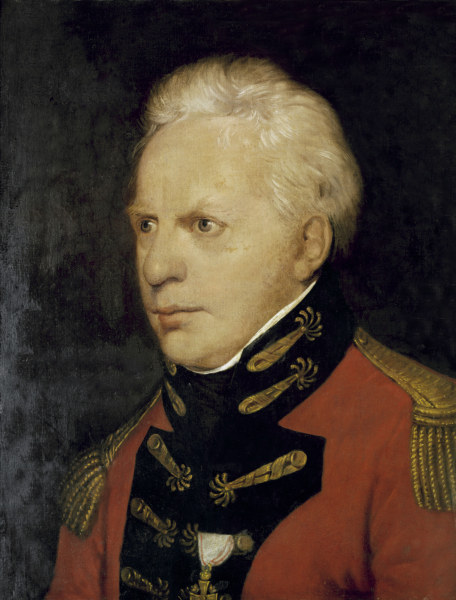
Georg Nikolaus Nissen; painting by Ferdinand Jagemann, 1809

Georg Nikolaus Nissen; painting by Ferdinand Jagemann, 1809

Around 1797, in her mid-30s, Constanze began taking in boarders to supplement her income.

One of them was Georg Nikolaus von Nissen, a Danish diplomat and writer with a deep interest in music. The two grew close, and by September 1798 were living together as a couple.

In June 1809, they travelled to Pressburg (modern-day Bratislava) to marry.

Like her first marriage, this one was reportedly happy. Both of Mozart’s sons were fond of Nissen.

In 1810, the couple moved to Copenhagen, where they remained for a decade. After further travels, they settled in Salzburg – Mozart’s birthplace – in 1824. By then, Constanze was in her early sixties.

There, they began work on what would become one of the earliest major Mozart biographies.

How She and Her Second Husband Wrote the Definitive Mozart Biography

Nissen devoted years to the biography, drawing on family letters, interviews with contemporaries, and, above all, Constanze’s firsthand knowledge.
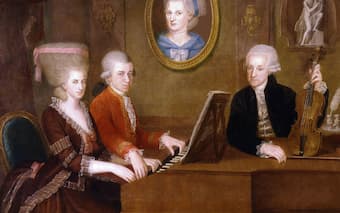
Wolfgang, Nannerl and Leopold Mozart

Wolfgang, Nannerl and Leopold Mozart

A key contribution came from Mozart’s sister Nannerl, who provided approximately 400 family letters. Although she and Constanze had not been close during Mozart’s lifetime, they reconnected in later years.

Nissen died on 24 March 1826 before completing the manuscript. Once again, Constanze stepped in – hiring Johann Heinrich Feuerstein to finish the work, much as she had arranged for the completion of the Requiem.

The biography was published by Breitkopf & Härtel in Leipzig in 1828 and became enormously influential.

Constanze’s Final Years in Wolfgang’s Hometown of Salzburg
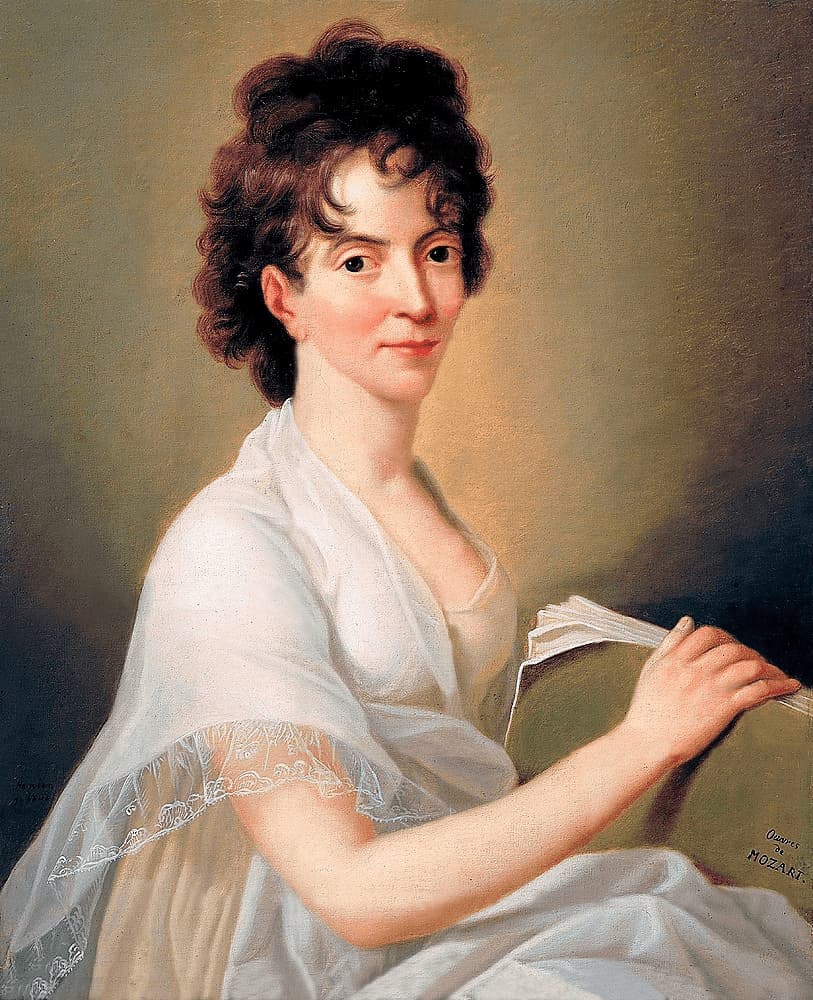
Constanze Weber in 1802, portrait by Hans Hansen

Constanze Mozart in 1802, portrait by Hans Hansen © Wikipedia

After Nissen’s death, Constanze remained in Salzburg.

Her sisters Aloysia and Sophie joined her there, and all three Weber sisters ultimately spent their final years as widows in the same city.

In later life, Constanze suffered from severe arthritis and became largely housebound. Even so, she maintained correspondence with her sons, with Nannerl – by then blind – and with the growing network of Mozart scholars seeking her insight.

Before her death, she and her sons donated the family’s collection of manuscripts, letters, and memorabilia to what would become the Mozarteum Foundation Salzburg.

That bequest remains one of the most important archives in classical music.

Death and Burial
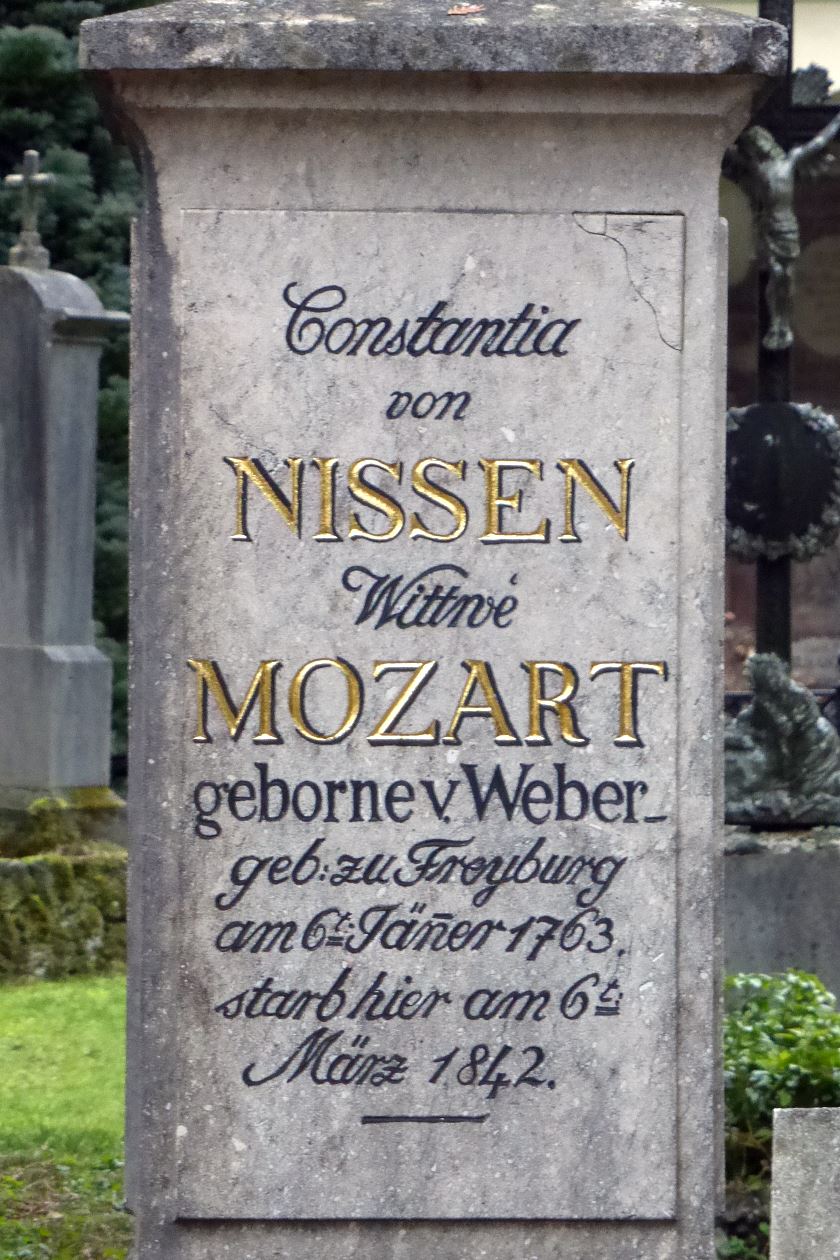
Tombstone of Constanze Mozart, cemetery of Sebastian Church, Salzburg

Tombstone of Constanze Mozart, cemetery of Sebastian Church, Salzburg

Constanze Mozart died on 6 March 1842 in Salzburg at the age of 80.

She was buried beside Georg Nikolaus von Nissen. She could not be buried alongside Mozart, who – like most middle-class Viennese of his time – had been placed in a common grave.

She had survived him by 51 years – and spent those years ensuring his legacy endured.  

The Legacy of Constanze Mozart

Constanze Mozart has long been a controversial figure.

Nineteenth-century biographers, influenced in part by Mozart’s father Leopold – who never fully approved of the marriage – portrayed her as shallow, extravagant, and unreliable.

Modern scholars have pushed back on that characterisation. As feminist musicologist Eva Rieger noted in 1991, the charges levelled against Constanze – that she was a poor housekeeper, that she was flighty or frivolous, that she was too often ill, that Mozart was settling when he married her – dissolve under scrutiny.

A woman who bore six children in eight years, managed an unstable household income, and then rebuilt her life after being widowed at 29 was neither passive nor incompetent.

Today, her achievements are clearer: she preserved Mozart’s manuscripts, shaped his posthumous reputation, and laid the groundwork for modern Mozart scholarship.

If she contributed to certain myths, it was within the constraints of a society hostile to unmarried women – and in service of her family’s survival. At the same time, she safeguarded the very documents that later allowed those myths to be questioned.

The lucrative global legacy of Mozart today – the recordings, performances, scholarship – rests in no small part on decisions Constanze began making in the winter of 1791, when she was 29 years old, newly widowed, and left with little more than her last name and a pile of manuscripts.

Thursday, March 5, 2026

Tschaikowsky, Mozart and more: My passion of music


Yes, this first piano concerto by Tschaikowsky still brings tears into my eyes. 

Tchaikovsky (or Tschaikowsky) was the second of six surviving children of Ilya Tchaikovsky, a manager of the Kamsko-Votkinsk metal works, and Alexandra Assier, a descendant of French émigrés. He manifested a clear interest in music from childhood, and his earliest musical impressions came from an orchestra in the family home.

He had a few close friends that he held onto for his entire life, including his brother Modest. This shows a fiercely loyal and devoted side of his personality. Tchaikovsky was also a bit of a perfectionist, and was known to literally tear apart his own compositions if he found them unsatisfactory.

Peter Iljitsch Tschaikowsky was born on May 7, 1840 in Wotkinsk and passed away in Saint Petersburg / Russia. His father was technical director in Saint Petersburg. Tschaikowsky ignored his musical talent for a long time and got shattered when his beloved mother died so early because of cholera.

Tschaikowsky studied law and was employed in different public offices. But all those tasks had been unsuitable for him. At the age of 23, he started to study music. The overture "Romeo and Juliet" from 1869 made him popular. But the continuing popularity didn't ease his melancholy and depression. Tschaikowsky lived mostly in the province of Saint Petersburg as well as in France and Italy.

Tschaikowsky was terribly shy and afraid of his popularity. Main works have been his six symphonies as well as his incredible and unique "Piano Concerto in b-flat major" from 1875 and the "Violin Concerto in d-major" from 1878. Wonderful music treasures are also his "1812 Overture" (1880), the "Italian Capriccio" (1880) and the "String Serenade in c-major".

Tschaikowsky has been a fantastic ballet maestro - unbelievable and seldom reachable by other composers during that period. Up to now "Swan Lake", "Nutcracker" or "The Sleeping Beauty" have been unforgettable.

Tschaikowsky also composed nine operas, but only two are still known: "Eugene Onegin" (1877) and "Pique Dame" (1890).


It was a long time ago. November 1986. I have been invited by Radio Moscow, German Language Department to join a radio program. It was really difficult taking photos during that time as a tourist in Moscow. But, I did it.

Tschaikowsky was part of the then radio program. I was somehow honored to join that broadcasting then.

Back from Moscow. I tried to reshape my life. After Russian classics,  I found myself back in Wolfgang Amadeus Mozart. 

Wolfgang Amadeus Mozart (27 January 1756 – 5 December 1791), baptised as Johannes Chrysostomus Wolfgangus Theophilus Mozart, was a prolific and influential composer of the Classical period.

Born in Salzburg, in the Holy Roman Empire, Mozart showed prodigious ability from his earliest childhood. Already competent on keyboard and violin, he composed from the age of five and performed before European royalty, embarking on a grand tour. At 17, Mozart was engaged as a musician at the Salzburg court but grew restless and travelled in search of a better position.

While visiting Vienna in 1781, he was dismissed from his Salzburg position. He chose to stay in Vienna, where he achieved fame but little financial security. During his final years in Vienna, he composed many of his best-known symphonies, concertos, and operas, and portions of the Requiem, which was largely unfinished at the time of his early death at the age of 35. The circumstances of his death are largely uncertain, and have thus been much mythologized.

Despite his short life, his rapid pace of composition resulted in more than 600 works of virtually every genre of his time. Many of these compositions are acknowledged as pinnacles of the symphonic, concertante, chamber, operatic, and choral repertoire. He is considered among the greatest classical composers of all time,[ and his influence on Western music is profound, particularly on Ludwig van Beethoven. His elder colleague Joseph Haydn wrote: "posterity will not see such a talent again in 100 years".

Mozart and his simple classical music yet deafening music fascinated me then. Simple? Well. Can you compare Mozart with Beethoven, Wagner, Chopin and other classical composers?

Why is Mozart music good for the brain?

The study found the subjects who listened to Mozart showed significantly increased spatial reasoning skills for at least 10-15 minutes. The finding led crèches in the United States to start playing classical music to children.

While studying during my high school time, I really found out that listening to Mozart was indeed a great help.

The Mozart effect is the theory that listening to Mozart's music can induce a short-term improvement on the performance of certain kinds of cognitive tasks and processes. ... The researchers found that listening to Mozart's music did enhance word memory across positive, negative and neutral words.

One of the most tenacious myths in parenting is the so-called Mozart effect, which says that listening to music by the Austrian composer Wolfgang Amadeus Mozart can increase a child's intelligence.

Claudia Hammond wrote about it in 2013: "It is said that classical music could make children more intelligent, but when you look at the scientific evidence, the picture is more mixed.

You have probably heard of the Mozart effect. It’s the idea that if children or even babies listen to music composed by Mozart they will become more intelligent. A quick internet search reveals plenty of products to assist you in the task. Whatever your age there are CDs and books to help you to harness the power of Mozart’s music, but when it comes to scientific evidence that it can make you more clever, the picture is more mixed".

Well, after a short period of time, I really looked "for more". And suddenly "Master" Ludwig van Beethoven stepped into my musical life". "Dadadadaan..."

I strongly agree with François Mai, who wrote: "Beethoven was the first of the romantic period composers who dominated classical music during the 19th century. He himself was a passionate man who carried his feelings on his sleeve. He had episodes of depression accompanied by suicidal ideas, and rarer episodes of elation with flights of ideas. The latter are reflected in some of his letters. He had a low frustration tolerance and at times would become so angry that he would come to blows with others such as his brother Carl, or he would throw objects at his servants. Although he never married, he had several affairs, including one with a married woman who has come to be known to posterity as ‘the Unknown Beloved’. To her he wrote three love letters that are filled with affection and feeling. He much enjoyed wine and this resulted in hepatic cirrhosis that caused his premature death at the age of 56.

This moodiness is reflected in his music. The ‘Marches Funébres’ of his Third Symphony (Eroica) and the Piano Sonata, op. 26, no. 12, are poignant and powerful portrayals of grief and bereavement. The final movement of the String Quartet, no. 6, op. 18 (La Malinconia) has sudden and alternating changes of tempo and rhythm that depict, in musical terms, the mood changes that occur in bipolar disorder. The pace and fortissimo dynamics of both his Rondo a Capriccio for piano, op. 129 and the storm movement of his Sixth Symphony (Pastoral Symphony) beautifully (or perhaps one should also say fearfully) display anger and agitation.

Beethoven's and my moodiness remain the same until today.

Well, during the last 60 years, I met most of my classical masters. This could be a never- ending story. My passion for music is a part of my life's part. Maybe, the main part.