Across his nocturnes, preludes, mazurkas, ballades, and other works, Chopin returned again and again to expressing emotions of longing and resignation.
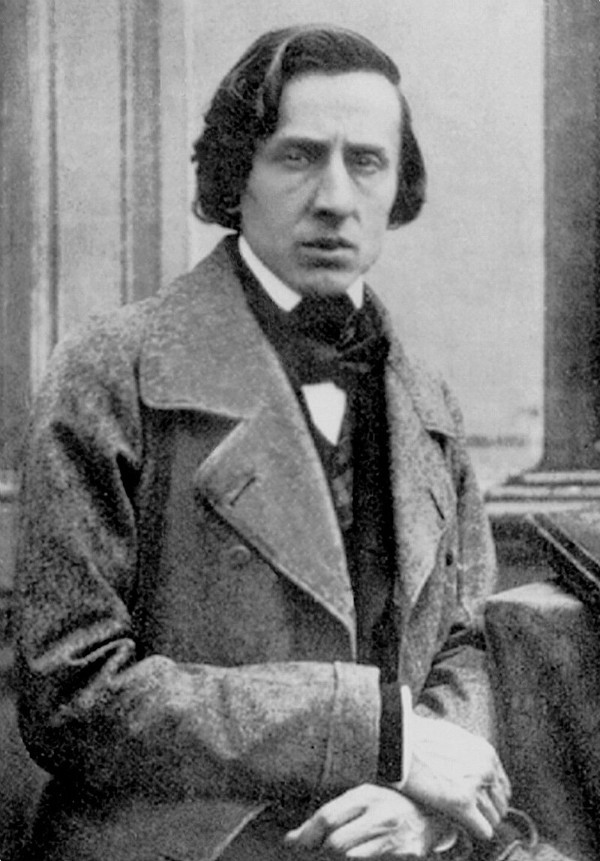
Frédéric Chopin
Those feelings were shaped by exile, chronic illness, and a persistent sense of isolation.
Today, we’re looking at ten of Chopin’s saddest pieces and tracing how he portrayed all the different shades of sadness: melancholy, grief, bitterness, and even numbness.
Few pieces in the piano repertoire sound as immediately personal as this nocturne.
Its almost unbearable intimacy makes sense given its background: it was composed when Chopin was just twenty years old as an exercise for his beloved pianist sister Ludwika, who was about to embark on a study of his second concerto.
It would remain a private shared statement of grief between them for 45 years, only being published in 1875.
The only reason it survives at all is that Ludwika ignored her brother’s dying wishes to burn his unpublished manuscripts, meaning its very existence is a poignant symbol of a sister’s belief in her late brother’s talent.
This prelude is part of a set of 24 preludes, one in each major and minor key.
Its right-hand melody is relatively static. The real movement here comes in the left-hand harmonies, constantly changing and slipping despairingly downward.
That steady sinking motion creates a sense of inevitability, as though the music already knows how it will end: on a quiet, heartbroken – although maybe reluctantly accepting – note.
Waltzes are famous for being light and joyful dances. Therefore, at first glance, this waltz might seem to not belong on this list.
However, the more you listen, the more you hear emotions here that are usually not associated with dance music. This waltz has a sarcastic character and mocking undertone.
Chopin allows for a number of subtleties, tugging around the tempo in such a way that would make it very difficult to actually dance to. As a result, this is less a practical waltz and more a bitter portrait of one.
Throughout his life, Chopin’s depression was often triggered by feeling like an outsider – culturally homeless and distanced from family and friends.
These emotions were especially strong during his first years in Paris in the early 1830s, after the failed November Uprising in Poland, which left him feeling unsafe returning home to Warsaw.
Here he channelled those emotions into a stylised version of a famously Polish dance: the mazurka.
Like the waltz in C-sharp minor, this is less a practical dance than a dance-tinged meditation on what it feels like to remember a lost place and time.
Chopin continued writing mazurkas throughout his life; this one was written the year of his death, when it was becoming increasingly clear that he’d never see his beloved Poland again.
This final mazurka feels both more mature and cynical than the earlier one in A minor. This is the work of a composer who, over the years, had learned how to box up his emotions in a supremely artful fashion.
Taken together, these two mazurkas tell a story about how Chopin’s relationship with the mazurka and his exile changed: it’s the same sorrow, but he has lived nearly two decades with it, and the edges have softened.
This brief prelude – under two minutes long – transforms sadness into something more monumental.
Its stark chordal writing and unyielding marchlike rhythm make that emotion feel massive: heavy, immovable, unconquerable.
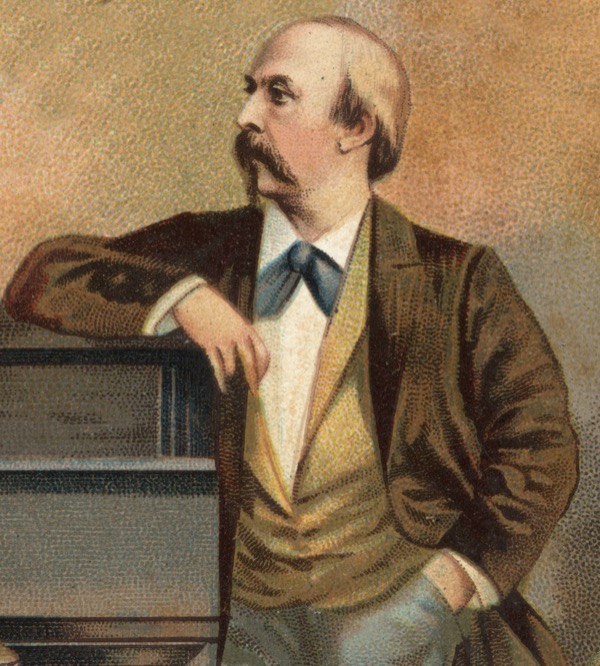
Hans von Bülow
Conductor and pianist Hans von Bülow went so far as to nickname this prelude the Funeral March.
Pay attention to the pattern of the notes in the bass. That particular pattern is known as the “lament bass”, and you can hear it in other famous works like Henry Purcell‘s “Dido’s Lament” from his opera Dido and Aeneas.
However, unlike Purcell, here Chopin employs it in a context without words, leaving the listener to imagine their own tragic narrative.
Unlike the introverted intimacy of the C-sharp minor nocturne that opened this list, this nocturne in C minor turns into the equivalent of a scream in a crowded room.
Pianist Theodor Kullak wrote of this nocturne, “The design and poetic contents of this nocturne make it the most important one that Chopin created; the chief subject is a masterly expression of a great powerful grief.”
At the work’s midpoint, its central climax swells into something truly operatic, requiring the performer to employ desperate octaves. This is loud, virtuosic grief, verging on crazed.
Chopin’s first ballade is the most narrative-driven work on this list. It lasts around ten minutes, giving Chopin the time and freedom to craft an entire story.
Here, the grief and sadness are no longer static, like in some of the shorter works on this list. Instead, it evolves with all kinds of colours and shades of grief and pain.
Moments of lyric calm become overwhelmed by turbulence, and the ending is both virtuosic and catastrophic.
This is Chopin at his most dramatic.
Chopin’s “Funeral March” (the third movement of his second piano sonata) is undoubtedly the most famous expression of grief in his entire output. In fact, its opening theme has become a cultural shorthand for death.
That memorable main theme comes across as monotone, calling to mind a mourner at a funeral who is feeling deeply emotional but numbly holding it together for the sake of ritual. The intensity of the delivery of the theme ebbs and flows.
In between, there are contrasting sections that call to mind that same mourner daydreaming of happier times.
Polonaises – like mazurkas – are another uniquely Polish genre, tied closely to Chopin’s identity and his lifelong emotions of alienation and depression.
Some of Chopin’s polonaises are heroic. (One – his Polonaise in A-flat major – is actually outright nicknamed the “Heroic.”)
By contrast, this one feels tragic. The harmonies are dark; the chordal writing is thick in the bass.
Any sense of celebratory national pride is replaced by sadness and disillusionment. Pianist Arthur Rubinstein went so far as to call this polonaise a symbol of Polish tragedy.
However, its grief is not localised to a specific time or location; it is timeless. It portrays the kind of empty sadness everyone feels after the worst of acute grief has passed, in the numb, messy aftermath.
This was always one of Chopin’s greatest gifts as a musician: the ability to turn the sadness of his unique experiences into expressions of both sadness and beauty.
Conclusion
Sadness in Chopin’s music never registers on a single emotional register, but rather encompasses an entire spectrum of feelings. It can be confessional or ceremonial, restless or resigned, private or collective.
Taken together, these ten pieces offer a portrait of a composer who experienced sadness as a whole rainbow of emotions: a quality that has ensured his music’s relatability and popularity for nearly two hundred years.
That emotional breadth is what continues to draw listeners back to Chopin’s music – often at moments when they are searching for language for their own sadness.