by
He is frequently described as a phenomenon, and Marin Alsop, who chaired the Cliburn jury and conducted his winning performance, described him as “a musician way beyond his years.” Certainly, Yunchan is shy and soft-spoken, and his monk-like devotion lends him a sense of wisdom and spiritual purity.
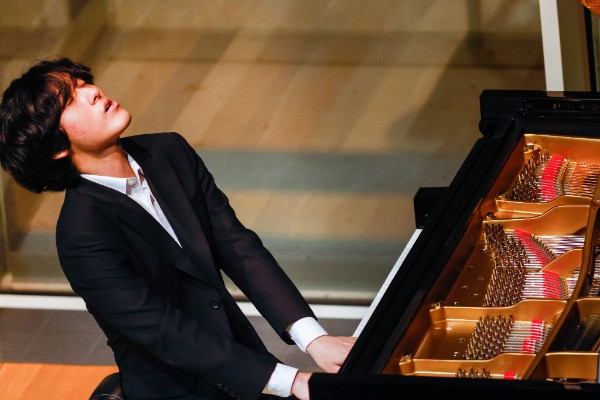
Yunchan Lim
As we celebrate Yunchan Lim’s 22nd birthday on 20 March 2026, we might well ask a deeper question. Could these extraordinary qualities of a young man be the result of growing up in the intensely success-driven culture of his native South Korea?
Candid Revelation
Yunchan Lim has recently drawn public attention not only for his playing, but also for the comments he made to an Italian newspaper. In an interview published in La Repubblica he disclosed that his teenage years in South Korea had been painful and suffocating.
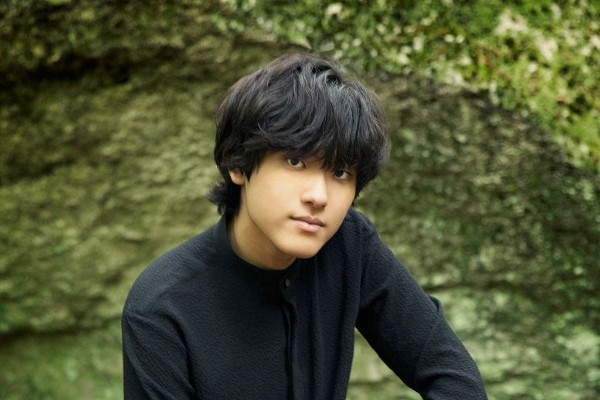
Yunchan Lim
As he explained, “South Korea is small and densely populated, so competition is fierce. Everyone wants to get ahead, and sometimes that means hurting others.” This intensely competitive culture caused deep distress during his youth.
He also recalled that when his talent began to attract attention at 17, “even politicians and business figures pressured me unnecessarily, which caused great sadness.” As such, he doesn’t miss living in his home country at all, but only returns when he has concerts there. (Jang, The Korea Biz Wire, 2025).
Gwageo 2.0
For South Korea, the intense pressure to succeed is often called education fever. It’s not a new trend but originated in the 14th century in response to the Civil Service examination (gwageo) for which students had to compete.
“Through the forceful behaviours of their parents, siblings, teachers, and professors, the education system in South Korea has led students to cram in tons of information, and endure hours and hours of practising and tutoring.” (Bradfield, Stand, 2025)
Lim’s comments reflect the relentless academic and social pressures that young people are subjected to in the South Korean educational system. And while many excel in their studies, the vast majority are dealing with significant mental health problems like anxiety and record levels of depression.
Rejecting the Noise
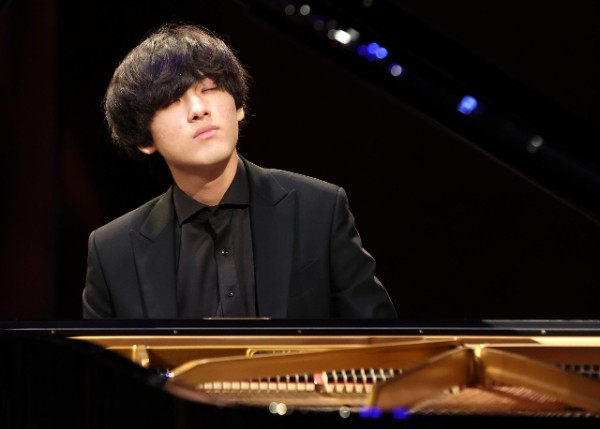
Yunchan Lim
Lim started playing the piano at age seven, and he quickly became immersed in his musical studies. At the age of 13, at the Korean National Institute for the Gifted in Arts, Minsoo Sohn, a prize-winning pianist in his own right, became his teacher and mentor.
The guiding influence of Sohn was instrumental in turning the piano into a sanctuary amid the pressures of the hyper-competitive culture and the overwhelming media landscape of the internet age.
Sohn’s philosophy of teaching is based on introspection and authenticity, and when asked about his process with Lim, he explained that most lessons start with the question, “Is this what you really want?” Sohn merely “tries to listen carefully to what their hearts wish to speak, and filter all unnecessary expressions out, letting the students find their own voice.”
Time Traveller
Growing up in the internet age, where everything is everywhere all at once, Lim severely limits his use of social media, because he “believes it is corrosive to creativity, ” and he “wants to live as much as possible as his favourite composers did.” (NYT, 9 May, 2023)
It’s hardly surprising that Sohn calls his student a “time traveller,” because his immersion in music reminds him of someone living in the 18th or 19th century. In fact, Lim has often expressed his wish to live in the mountains and just play the piano.
“I can learn so much from composers of the past,” Lim said. “Back then, they didn’t have smartphones, YouTube or access to the internet. All they had were the scores. It would’ve given them a lot of time, time to contemplate music and find new things from the music. I think that’s why their music is so creative and so original.”
Beyond Rankings and Likes
Yunchan Lim has spent most of his life practising the piano and exploring music, which more recently includes jazz. He admires Art Tatum and Oscar Peterson, “I love to explore the way those two pianists played, their freedom of expression.” (Tilden, The Guardian, 2024)
In a press conference after the Cliburn competition, he said, “I made up my mind that I will live my life only for the sake of music, and I decided that I will give up everything for music.”
Lim has found in the piano an uncompromised space for inner peace. Imagining an ascetic lifestyle modelled after his favourite composers ultimately presents a deliberate refuge from the idea that self-worth is exclusively tied to achievement, status, and online followers.


