Total Pageviews

Friday, March 27, 2026

FAIL! – Onstage kind!


But no matter how prepared we are, unforeseen calamities can and do occur in performance. Batons, mutes and bows slip out of hands clattering and careening down the stage and sometimes into the audience.
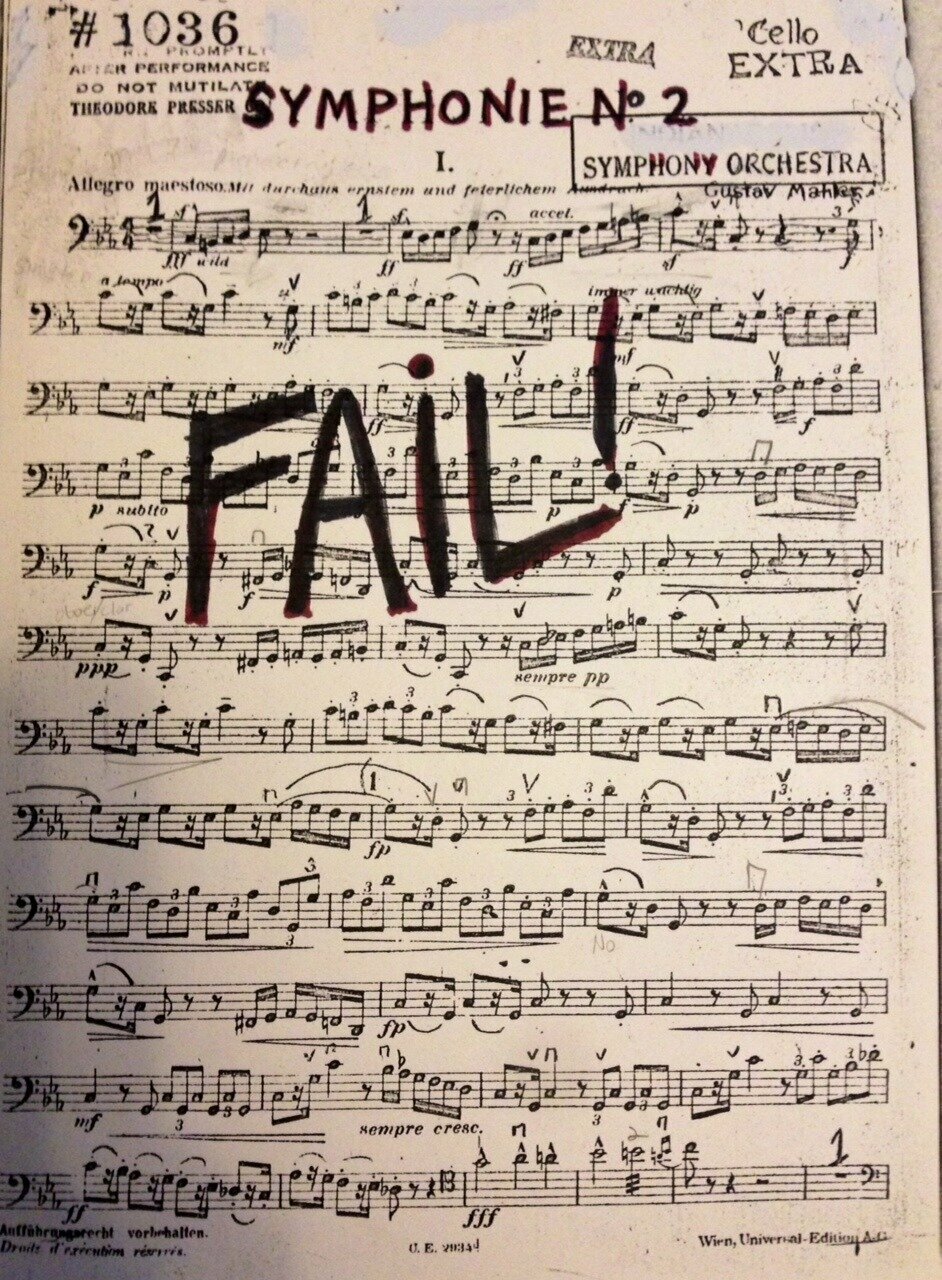
fail onstage performance

Usually we are prepared for the inevitable string snapping. If it is the soloist or concertmaster, someone will hastily trade violins and then a musician at the back will as unobtrusively and quickly as possible change the string. When it comes to a cello that is easier said than done. My six-foot-four stand partner had a knack for breaking even the thickest string—the C string causing an exploding sound, throwing the entire instrument out of whack. How did cellists react to broken strings on stage?

Guy Johnston BBC Young Musician of the Year 2000   
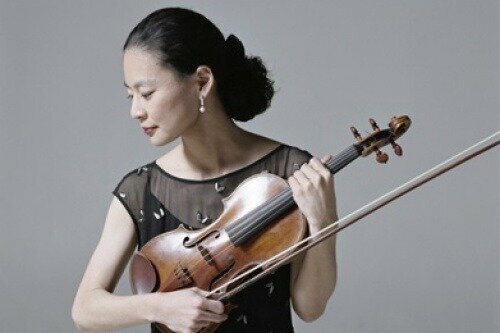
A famous “fail” occurred in 1985 when the then fourteen-year-old Midori had to swap her violin twice due to two broken strings during a performance with Leonard Bernstein. It was her Tanglewood debut with the Boston Symphony. She was performing the 5th movement of Bernstein’s own Serenade After Plato’s Symposium. In the heat of the action Midori broke the uppermost string—the E string. She quickly traded violins with the concertmaster. A few moments later she broke that violin’s E string. This time she was passed the associate concertmaster’s violin—all without missing a beat!

Midori “string fail”   

Certainly I’ve witnessed some startling equipment failures. Yuri Bashmet, world-renowned violist, had a spectacular “fail” during a concert. He was playing his 1758 Testore viola. Suddenly the entire bridge, which holds up all the strings, literally exploded. Dazed, all he could do was shrug.

Yuri Bashmet’s 1758 viola falls apart during performance!   

We musicians are often worried about falling: we might trip dodging all the onstage clutter of chairs, stands, microphones, instrument stands, and risers. Sadly, there have been several well-publicized falls of Maestros falling of their podiums James Levine included. Our principal guest conductor in the 1980’s, Klaus Tennstedt, who was a large man, once came tumbling off the podium toward me. I jumped up with my cello, and grabbed Tennstedt to steady him with the cello between us!

Conductor falls off podium   

It was particularly horrifying when Itzhak Perlman fell in front of our eyes. Fortunately he was not hurt. Another violinist had carried Perlman’s violin. Perlman refused anyone’s help, got up, and then played brilliantly.

Conductor “fails” are more common. They are known to lose their tempers but rarely do the sparks fly as they did with Arturo Toscanini the great Italian conductor of the NBC Orchestra, who threw temper tantrums regularly. There are two famous stories of him actually causing bodily harm. Once, trying to mediate between two feuding musicians, Toscanini started pummeling one of the players with a ferocious intensity. Another time in Turin, in 1919, Toscanini snapped a musician’s bow near the violinist’s face causing injuries and narrowly missing the player’s eye. Despite apologies and some financial compensation the musician sued. Toscanini was acquitted.

Audiences cause concert “fails” too. Recently at a Toronto Symphony concert an elderly gentleman turned up his hearing aids to better hear the mesmerizing opening of the Shostakovich Violin Concerto played by Julian Rachlin. The cellos and basses begin very softly and in a low register. Then the violinist entered playing without vibrato—starkly. A very loud high-pitched squealing ensued. The conductor stopped the soloist and the orchestra, as the ushers scrambled to find the perpetrator. We sat quietly waiting until finally the gentleman was located and led out of the hall saying, “What’s going on? I can’t hear anything!”

An orchestral concert is not usually the site of fistfights, but there have been two of late. In March of 2012 Maestro Riccardo Muti was conducting a performance of Brahms Symphony No. 2. One usually sits motionless and restrained in symphony concerts, but that evening two men started fighting in one of the boxes. A 30-year-old man started punching an older man over a disagreement regarding their seats. Muti continued the concert during the melee, turning around to throw irritated glares at the perpetrators until they could be subdued. No one was charged.

During the first twenty minutes at the Boston Pops’ opening night of 2007, a scream was heard. Conductor Keith Lockhart gave the signal for the orchestra to stop. A scuffle had broken out in the balconies apparently after one man told another to be quiet. “House security and Boston police stopped the fight, and the audience members were escorted out of the hall,” the Boston Symphony Orchestra said in a statement. The concert resumed with cheers from the audience.
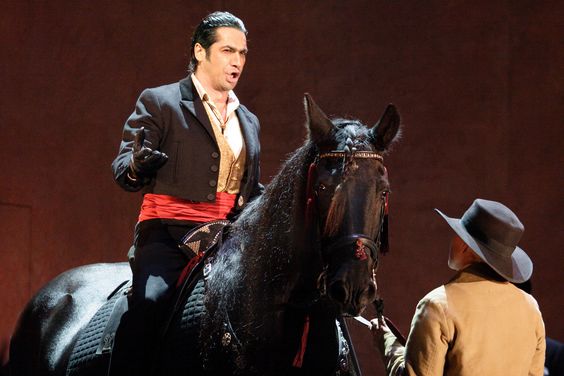
Opera with live animals

Ildebrando D’Arcangelo in Carmen © ROH/Catherine Ashmore, 2009

Opera patrons more often witness “fails.” One occurred during a performance with Sir Thomas Beecham who was known for his quick wit. In a 1930s production of Carmen at Covent Garden, live animals were part of the action. One of the horses proceeded to ‘do his business’ on the floor. “My God what a critic!” said Sir Thomas Beecham.

We try very hard to keep the show going on no matter what happens. The audience often is unaware of any mishaps onstage and they can enjoy the glorious music uninterrupted. But audiences do love the drama. Anything can happen at a concert hall!

Elgar’s Choral Music: Light out of Darkness


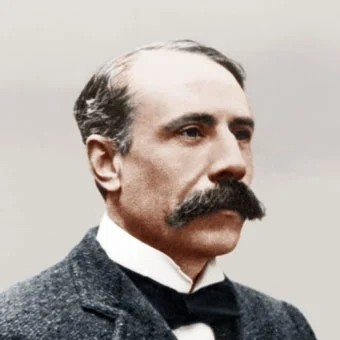
Edward Elgar

Edward Elgar

The young Edward Elgar’s first involvement with the organ was as a bellows boy, supplying the air for his father’s performances. Later, he would sit in for his father during services. When sermons were being read, he was composing music up in the loft. His first compositions for St George’s were three hymn tunes in 1878. He had already started by setting the hymn ‘O salutaris Hostia’ in 1877. He eventually made 7 different settings of this one hymn, dedicating his 1880 setting in E flat major to his father.

Eventually, his work with the publisher Novello got him involved in writing music for Anglican occasions, and he was an active contributor to the Anglican New Cathedral Psalter Chants, although his 1909 contributions were not published at that time.

It was in choral song that Elgar came to the fore. He set texts by the leading British poets, including Byron, Shelley, and Tennyson, although he rarely set their finest poetry. One example is his 1907 ‘How calmly the evening’. Written at the request of the editor of The Musical Times, the setting is simple but effective.   

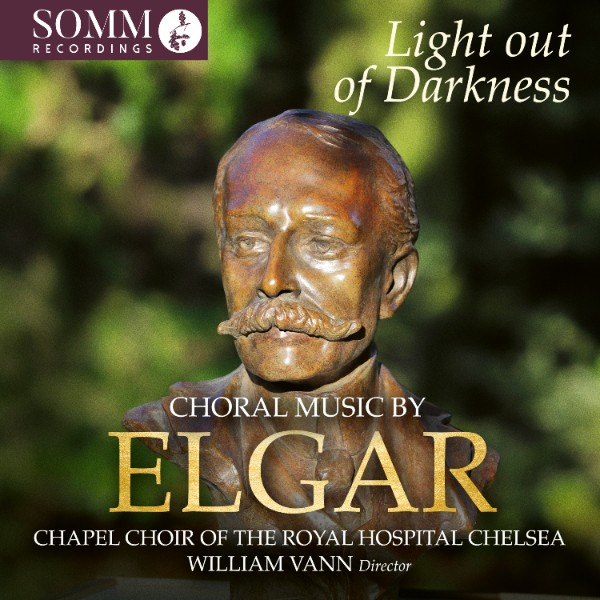
This recording, made by the Chapel Choir of the Royal Hospital Chelsea, features five works in their debut. We can hear choral works from Elgar’s earliest years as a choral composer and from his experienced hand. Through the recording, we get an education in the development of a composer.

After Elgar’s death in 1934, his music gradually faded away from the concert and cathedral halls. The Elgar Society was formed in 1951 at the behest of the conductor Sir Adrian Boult to encourage the promotion of the great composer’s works. In 2026, the Elgar Society celebrates its 75th anniversary of its creation and will hold a number of events throughout the year in commemoration.

Light out of Darkness: Choral Music by Edward Elgar album cover

Light out of Darkness: Choral Music by Edward Elgar

Chapel Choir of the Royal Hospital Chelsea; Callum Knox, organ; William Vann, director
SOMM Recordings SOMMCD0714

Official Website

ABSOLUTE HARMONY


💥ABSOLUTE HARMONY - what we all lack in today's world. Wolfgang Amadeus Mozart’s Piano Concerto No. 23, II. Adagio unfolds with intimate lyricism in Khatia Buniatishvili’s hands. Her delicate touch and expressive phrasing illuminate the movement’s serene melancholy, creating a deeply poetic and introspective atmosphere. https://www.ganjingworld.com/s/yEXjA9GY1A 

Khatia Buniatishvili and Renaud Capuçon

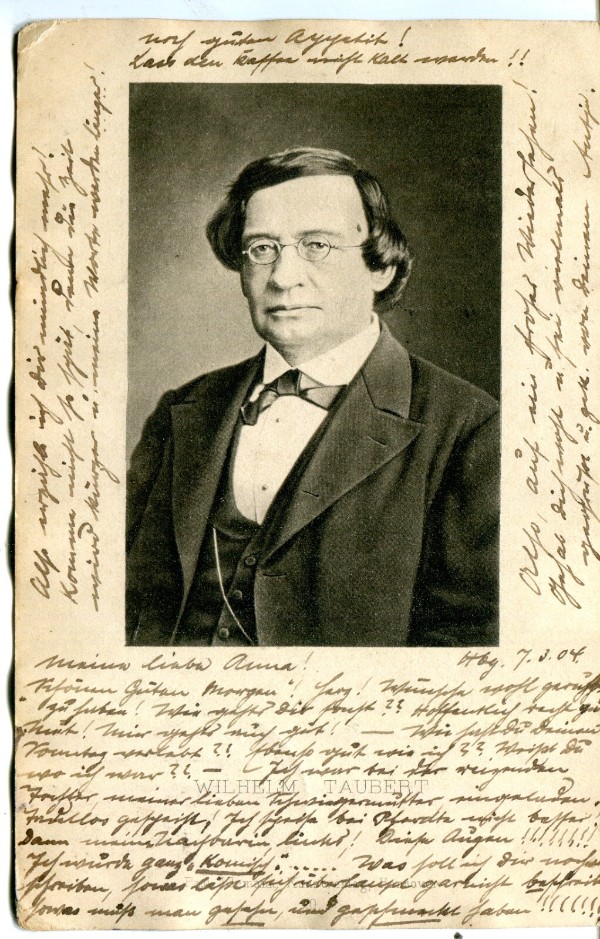
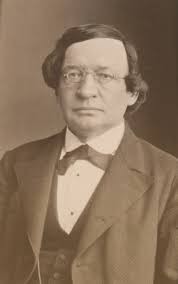
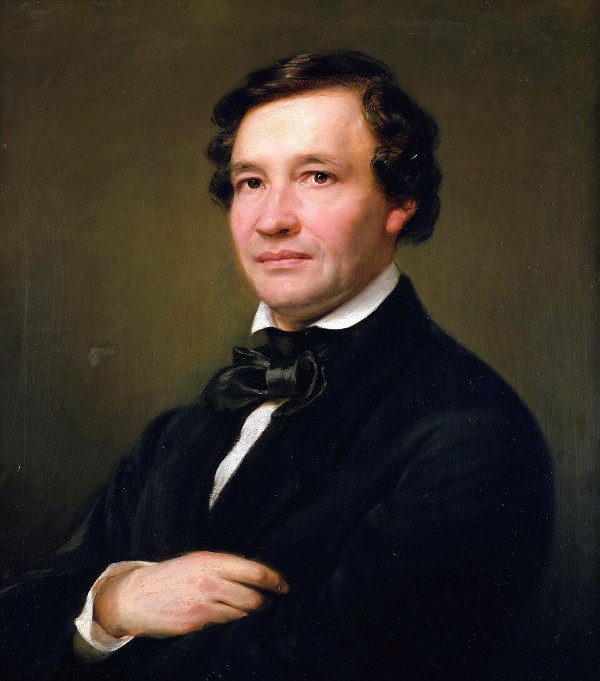
Wilhelm Taubert (Born on March 23, 1811) Berlin’s Hidden Romantic

 by Georg Predota  March 23rd, 2026


Wilhelm Taubert

Wilhelm Taubert

Mendelssohn and Taubert studied piano with Ludwig Berger, and they exchanged a number of letters. In one of these letters, Mendelssohn identifies “the lack and impetus of spirit which, for all of Taubert’s musicianship, refined taste and great industry, nevertheless hindered him from achieving complete success as a composer.” (Lindeman, Grove Music Online, 2001)

On the occasion of Taubert’s birthday on 23 March, let’s explore the life and works of a capable yet eclipsed composer whose prolific output was ultimately overshadowed by his more illustrious contemporaries.

Childhood Promise

Carl Gottfried Wilhelm Taubert was born into a middle-class family. His father may have held an administrative or civil service position, and he was exposed to Berlin’s vibrant musical and theatrical scene at an early age.

Taubert showed great early promise on the piano, and his first structured lessons came from August Neithardt and, most significantly, Ludwig Berger. Berger was a student of Muzio Clementi and even went with him to Russia.

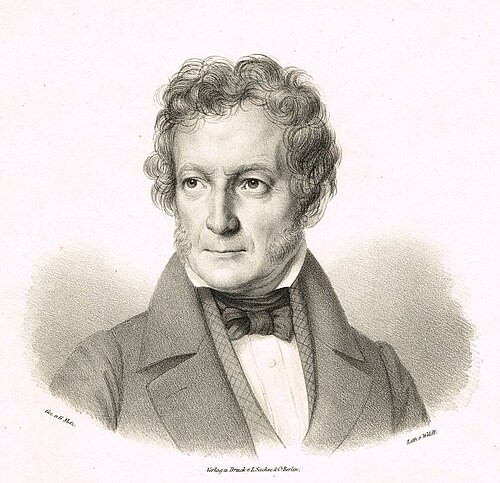
Ludwig Berger

Ludwig Berger

A capable composer and piano virtuoso, Berger built his reputation as a teacher, counting Felix and Fanny Mendelssohn, Dorn, August Wilhelm Bach, and Wilhelm Taubert among his most distinguished students.

Dual Path in Berlin

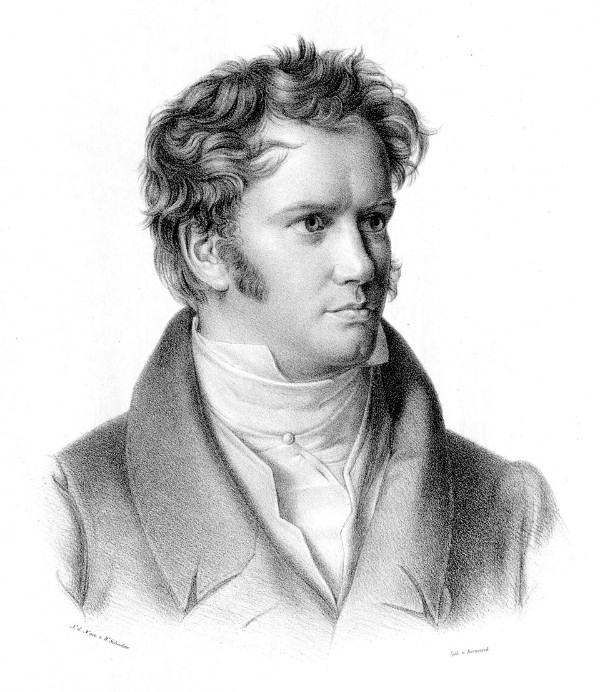
Bernhard Klein

Bernhard Klein

Under Berger’s guidance, Taubert progressed rapidly, and he was allowed to perform publicly as early as age 13. Taubert also studied composition with Bernhard Klein, himself a student of Luigi Cherubini, who held the professorship of composition at the Royal Institute for Church Music and served as music director at the University of Berlin.

Alongside music, Taubert also pursued philosophy studies at the University of Berlin, preparing for a dual path that shaped his refined taste and intellectual approach to music. Among his first compositions were small instrumental pieces and sets of songs which attracted favourable comments from Mendelssohn.

Mendelssohn and Taubert engaged in a busy exchange of letters that discussed various aspects of musicianship and artistry. When a critic highly praised the uniqueness of the overture to A Midsummer Night’s Dream, Mendelssohn wrote to Taubert, “…the first obligation of any artist should be to have respect for the great men and to bow down before them…and not try to extinguish the great flames in order that his own small candle can seem a little brighter.” (Green, Biography as Ethics, 2006). 

The Working Musician

Wilhelm Taubert

Wilhelm Taubert

At the age of 20, Taubert was appointed assistant conductor and accompanist for the Berlin court concerts. He would subsequently become associated with the Berlin Königliche Schauspiele under Mendelssohn and Meyerbeer, and served as Generalmusikdirektor there from 1845 until 1848.

Taubert also held the appointment of court Kapellmeister until 1869, and in this position, he would conduct the royal orchestra until 1883. As far as we can tell, Taubert was highly regarded as a teacher, instructing Theodor Kullak, among others, at the Royal Academy of Arts.

Taubert composed in a graceful and popular style, and he soon attracted the attention of Robert Schumann. As the editor of the Neue Zeitschrift für Musik, Schumann reviewed a great many of Taubert’s compositions, indicating his high regard. He even asked Taubert to contribute to the journal.  

Encounter with Schumann

In his early twenties, Taubert composed his Piano Concerto No. 1, dedicated to his piano teacher Ludwig Berger. Schumann heard the concerto performed by the composer in 1833, and three years later, after the score was published, he remembered many of the positive aspects of his first impression.

As Schumann writes in his 1836 review, “Without waxing lyrical, I could call this Concerto one of the most excellent.” (Lindemann, Hyperion, 2010) However, Schumann also found too many similarities to Mendelssohn’s Piano Concerto No. 1 in G minor, Op. 25. In the end, Schumann credits Mendelssohn as the original.

Challenges in Complexity

Wilhelm Taubert composed five symphonies that reveal the challenges of writing longer, more complex music. He also composed six operas that were all staged at the Königliches Theater in Berlin. “Although these works seem not to have stood the test of time, they were well received and often highly admired when written.” (Smith, Naxos, 2024)

In his compositional style, Taubert stayed close to the traditional models offered by Mendelssohn and Carl Maria von Weber. His music is highly diatonic and cadential, with chromaticism primarily reserved for modulatory passages.

As has been noted, Taubert’s music is full of graceful and gentle melodies of light lyrical charm, and therefore well adapted to smaller and more intimate musical forms. As such, it is hardly surprising that Lieder form an important part of his output.  

A Forgotten Footnote

For much of the 20th century, Wilhelm Taubert was little more than a forgotten footnote in music history. Overshadowed by Mendelssohn and Schumann, his extensive oeuvre was quickly forgotten after his death.

Mendelssohn’s assessment, quoted at the beginning, might well have played its part. While he praises Taubert’s technical skill and competence, and acknowledges his diligence and productivity, he pinpoints a core deficiency.

What Mendelssohn misses in Taubert’s music is the inner fire and passion, or, in other words, originality and creative energy. This isn’t just a mild criticism but a clear statement that Taubert might well have been a capable composer, albeit one without genius.   

21st-Century Revival

Wilhelm Taubert

Wilhelm Taubert

Fortunately, the 21st century has engaged in a quiet rediscovery that finally gives listeners a chance to hear this forgotten voice. Initially, Hyperion Records released Taubert’s two piano concertos as Volume 51 of its acclaimed “Romantic Piano Concerto” series.

However, the real breakthrough arrived in September 2025 when pianist Lucas Wong released the world-premiere recording of Taubert’s Piano Sonatas. Praising its pastoral charm, light virtuosity and intimate storytelling, critics have found great delight in the discovery of a once-neglected composer.

In an age hungry for fresh repertoire, the works of Wilhelm Taubert remind us of the vast untapped 19th-century music. While his symphonies and operas still await full revival, Taubert is finally restored to the broader narrative of 19th-century Romanticism.

10 of the Saddest Piano Pieces in Classical Music History

 by Emily E. Hogstad,  March 23rd, 2026


In addition to the inherent sadness of the music itself, we’re also going to look at what was happening in the lives of the composers around the time they wrote each of these pieces.

As you’ll see, many of the saddest piano pieces in classical music history were shaped by grief, upheaval, illness, exile, or personal crisis.

From Bach’s years in mourning, to Mozart’s frightening leap into independence, to Chopin’s terminal illness, to Brahms’s late-in-life loneliness, and to Rachmaninoff’s experience of the Russian Revolution, every piece on this list – whether deliberately or not – captures a composer’s reaction to a time when life got overwhelming.

J.S. Bach – Prelude in B-minor, arranged by Alexander Siloti (1722)   This piece has a unique background.

Nineteenth-century Russian pianist Alexander Siloti took Bach’s Prelude and Fugue in E-minor from the Well-Tempered Clavier and rearranged it in B-minor: a darker and more mysterious key.

Alexander Siloti

Alexander Siloti

Bach wrote the Well-Tempered Clavier in 1722, a pivotal year in his life.

It’s hard to say exactly what he was feeling emotionally at this time, because none of his personal letters or diaries has survived.

But his wife Maria Barbara had died shortly before, in the summer of 1720. She was only 35 years old and had given birth to seven of his children.

Maybe he drew on his grief when writing this particular movement. We’ll never know. But it’s certainly one of the most melancholy piano pieces ever written.

Mozart – Fantasy in D-minor, K. 397 (1782)   

This unfinished fantasy comes from 1782, the year after Mozart disobeyed his loving but controlling father’s wishes and relocated to Vienna to start a hugely risky freelance career.

To help support himself, he taught aristocratic patrons and wrote works to play in glittering salons to entertain them. There was no guarantee his plan was going to work.

The D-minor Fantasy captures emotions one might feel in a moment of transition: worry, restlessness, and a willingness to improvise.

If it seems unfinished, that’s because it is. We don’t know why, but Mozart abandoned the piece before completing it.

Another composer tacked on ten measures after Mozart’s death, making the work playable in concert and bringing the work to a close – albeit an abrupt one.

The fragmentary quality that results mirrors the unsettled, transitional quality of Mozart’s life in 1782…and the unsettled quality of any listener going through a similar life change.

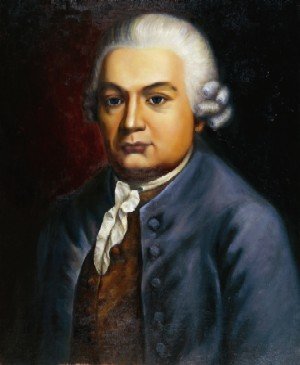
C.P.E. Bach – Fantasia in F-sharp-minor (c. 1787)   

The melancholic, virtuosic Fantasia in F-sharp-minor was written near the end of C.P.E. Bach’s career, while he was serving at the court of Frederick the Great.

By the mid-1780s, C.P.E. Bach had spent his entire career in the shadow of his father J.S. Bach, the greatest giant of the Baroque Era. (His mother, by the way, was the wife that Bach had lost in 1720.)

C.P.E. Bach

Carl Philipp Emanuel Bach

Meanwhile, his students would become well-known composers during the Classical Era.

He was one of the composers who had built a bridge between the two generations.

It’s very possible that he was reflecting on his life and legacy around the time he wrote this confessional fantasia, with its unpredictable surging sighs that ultimately all collapse into melancholy meanders.

Chopin – Nocturne No. 13 in C-minor, Op. 48, No. 1 (1841)  

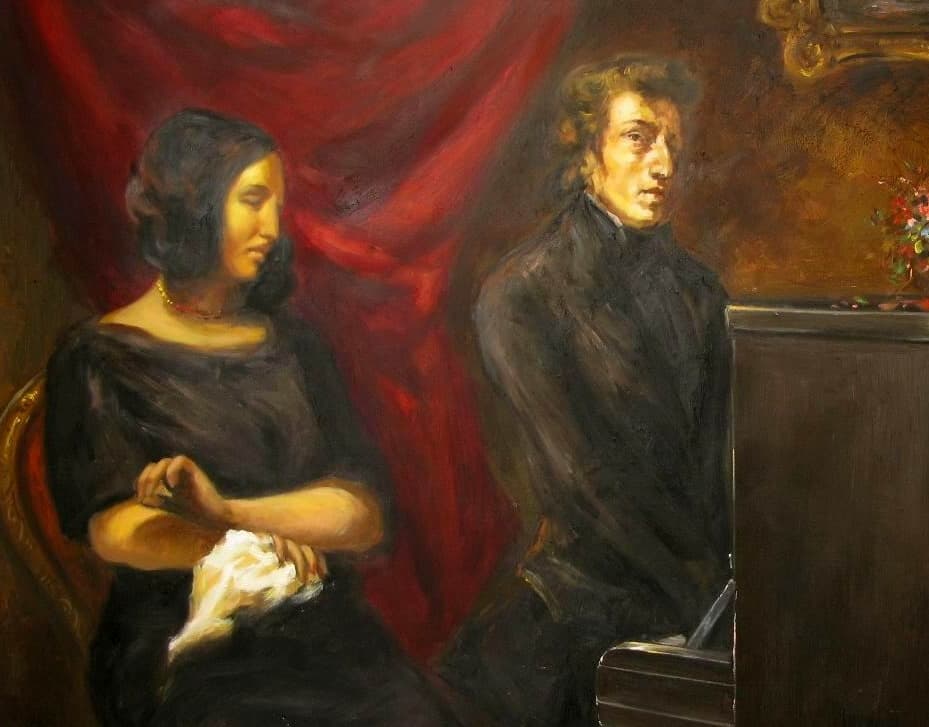
In 1841, Chopin was at the height of his artistic maturity, but facing increasing physical frailty, thanks to his tuberculosis diagnosis.

He and his lover, authoress George Sand, had settled into a domestic rhythm in Paris and at her family home in rural France.

Portrait of Frédéric Chopin and George Sand by Eugène Delacroix

Portrait of Frédéric Chopin and George Sand by Eugène Delacroix

But their relationship, and the relationship between Sand and her two teenage children, were all starting to show cracks.

Chopin was also deeply homesick for his Polish homeland, continually distressed by Polish politics and his status as a permanent exile.

The C-minor Nocturne is one of his darker pieces for solo piano: elegant and melancholy, but bitterly so.

Its quiet, contrasting middle section is a cry from the heart of a man who was feeling increasingly sick, isolated, and vulnerable.

Grieg – Lyric Pieces, Book I, Op. 12, No. 1, “Arietta” (c. 1866)  

Over the course of his career, between 1867 and 1901, Edvard Grieg published 66 “Lyric Pieces” for solo piano.

This brief “Arietta” was the very first one, written around the time of his marriage to his wife, soprano Nina Hagerup.

In 1901, a few years before his death, he reused the theme in his very last Lyric Piece, “Efterklang” (“Remembrances”).

Edvard Grieg | “Remembrances” Op. 71 No. 7 from “Lyric pieces” (by Vadim Chaimovich)   

Was he remembering a sad thing in particular? It’s possible: in 1868, the year after the lullaby-like Arietta was written, he and his wife had their only surviving baby, Alexandra.

Alexandra died of meningitis when she was still an infant, and the couple never had any more children.

That was just one of the many struggles that he and Nina survived as a married couple.

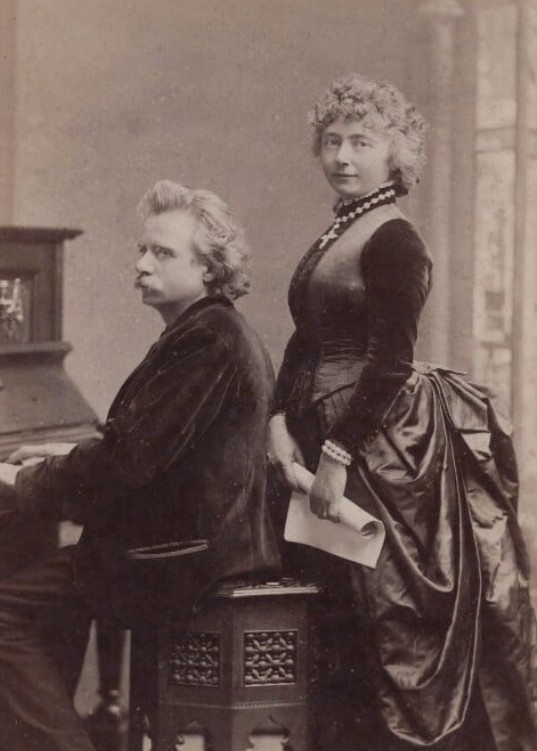
Edvard Grieg and Nina Hagerup Grieg

Edvard Grieg and Nina Hagerup Grieg

Although their relationship was occasionally rocky, they were married until he died.

Maybe turning a 35-year-old theme into a quiet waltz was his way of communicating that he – and they – had made it through decades of marriage, despite the troubles and tragedies they’d endured to get there.

Scriabin – Prelude in E minor, Op. 11, No. 4 (1888)   

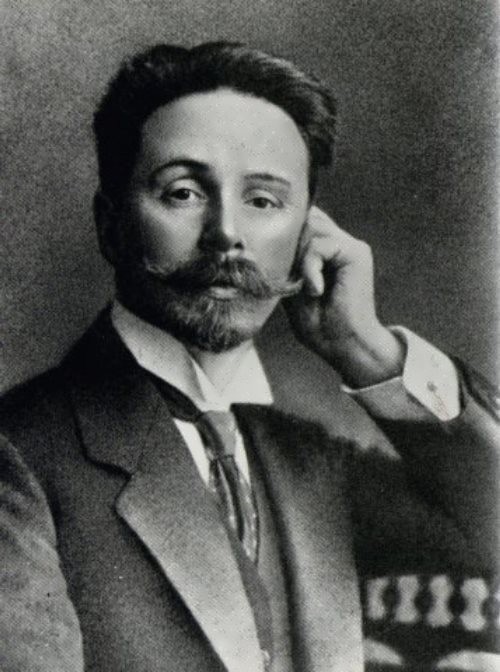
Alexander Scriabin was born into a noble Russian family in 1871. His mother was a concert pianist but, tragically, died when he was just a year old.

After he was widowed, Scriabin’s father decided to follow his own family’s tradition of joining the military, leaving his baby son with his grandmother, great-aunt, and aunt.

His aunt played piano, which little Alexander loved. As a child, he begged to be played with. He grew up to play the piano himself, studying under Rachmaninoff’s infamously strict teacher Nikolai Zverev.

Alexander Scriabin

Alexander Scriabin

At one point, Alexander tried to assemble an orchestra of local children to try his hand at conducting, but the venture ultimately failed, leaving him in tears.

In short, he was a wounded loner during his childhood, and you can perhaps hear some of that in this early Chopin-inspired prelude, written in 1888, the year he turned seventeen.

Rarely has teen angst been so elegantly channeled.

Brahms – Intermezzo in E-flat-minor, Op. 118, No. 6 (1893)   

The Op. 118 set of piano pieces is a product of Brahms’s final years: a period in which he was preoccupied with nostalgia and mortality. By 1893, Brahms was nearing sixty and contemplating retirement.

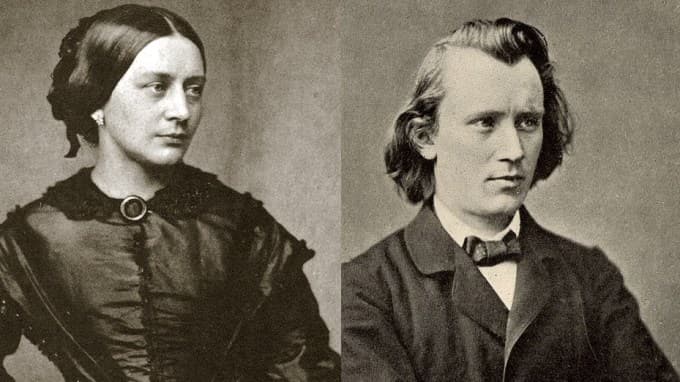
To make matters worse, pianist Clara Schumann, his musical soulmate who was thirteen years his senior, was in failing health. And they’d found themselves in a quarrel.

Black and white collage of composer Johannes Brahms and Clara Schumann

Clara Schumann and Johannes Brahms

Brahms wrote his Op. 118 and 119, in part, as a gruff but meaningful olive branch to her.

The E-flat-minor Intermezzo is one of his most despairing creations for solo piano. Many of Brahms’s works can feel emotionally subdued compared to more demonstrative contemporaries like Tchaikovsky or Dvořák, but this one is unusually frank about expressing sadness.

Happily, after receiving the scores for his Ops. 118 and 119, Clara Schumann wrote back to him, and they resolved their differences before their deaths, which would occur in 1896 and 1897, respectively.

Janáček – In the Mists: I. Andante (1912)   

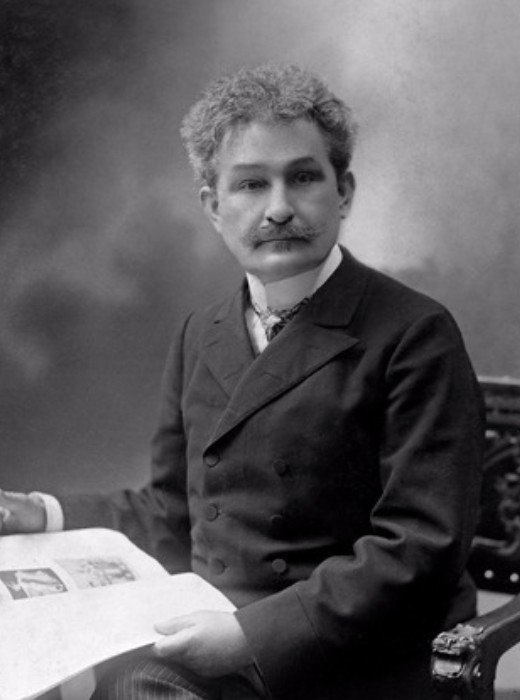
Janáček composed In the Mists during an agonising period of professional stagnation.

He was 58 and felt deeply alone. His beloved daughter Olga had died in 1903, and his marriage had been deeply strained ever since.

He was also having trouble getting his work performed. He feared that his composing career was coming to a close and that he hadn’t fulfilled his potential.

Leoš Janáček

Leoš Janáček

The first movement of In the Mists drifts through blurry, seemingly improvisatory harmonies.

It captures the emotions of a man facing professional disappointment and wandering through obscurity.

Rachmaninoff – Étude-tableau in E-minor, Op. 39, No. 5 (c. 1917)   

Rachmaninoff wrote his Op. 39 between 1916 and 1917, right as the world seemed to be collapsing around him.

World War I was ongoing, and revolution was coming. By 1917, it became clear to Rachmaninoff that the genteel aristocratic world he’d been born into was doomed – and never returning.

While writing this piece, he was struggling with fears about the safety of his family and friends, the necessity of exile and the loss of property and possessions, the end of his Russian career, and the fear of starting over in another country while in his mid-forties.

When he fled Russia later that year, he took these etudes with him. They are some of the last works he ever wrote on Russian soil, and they sound like an unhappy, unwilling goodbye.

Glass – Etudes: No. 5 (1994)   

Philip Glass’s official description of his first ten etudes is very matter-of-fact:

Book 1 (Etudes Nos. 1 through 10) had a twin objective – to explore a variety of tempi, textures, and piano techniques. At the same time, it was meant to serve as a pedagogical tool by which I would improve my piano playing. In these two ways, Book 1 succeeded very well. I learned a great deal about the piano, and in the course of learning the music, I became a better player.

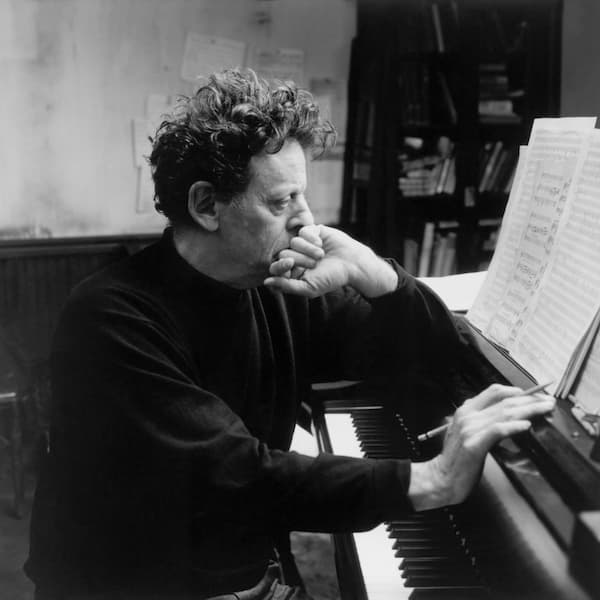
Philip Glass

Philip Glass

The first six etudes – including the fifth – were commissioned by conductor and pianist Dennis Russell Davies for his fiftieth birthday.

This piece was written during a difficult period in Glass’s life. His wife, artist Candy Jernigan, died of liver cancer in 1991, just weeks after being diagnosed. She was only 39.

“She was going to live forever, as far as I was concerned. It was a big shock for everybody, particularly the kids,” he told The Guardian in 2001.

It’s unclear whether Glass deliberately meant to portray this feeling in his fifth etude, but he captures the quiet repetitive numbness that a person can feel after the sudden death of a loved one.

Conclusion

Whether you’re searching for heartbreaking piano music, reflective pieces for difficult days, or just music to set a melancholy mood, these ten pieces stand apart. They are some of the saddest in the entire piano repertoire.

They all remind us of the humanity we share with the great composers, and testify to how music will always be one of the most powerful ways a person can process change, loss, disappointment, and grief.