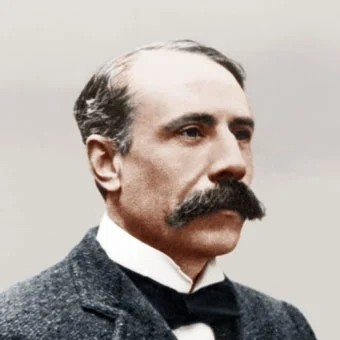
Edward Elgar
The young Edward Elgar’s first involvement with the organ was as a bellows boy, supplying the air for his father’s performances. Later, he would sit in for his father during services. When sermons were being read, he was composing music up in the loft. His first compositions for St George’s were three hymn tunes in 1878. He had already started by setting the hymn ‘O salutaris Hostia’ in 1877. He eventually made 7 different settings of this one hymn, dedicating his 1880 setting in E flat major to his father.
Eventually, his work with the publisher Novello got him involved in writing music for Anglican occasions, and he was an active contributor to the Anglican New Cathedral Psalter Chants, although his 1909 contributions were not published at that time.
It was in choral song that Elgar came to the fore. He set texts by the leading British poets, including Byron, Shelley, and Tennyson, although he rarely set their finest poetry. One example is his 1907 ‘How calmly the evening’. Written at the request of the editor of The Musical Times, the setting is simple but effective.
This recording, made by the Chapel Choir of the Royal Hospital Chelsea, features five works in their debut. We can hear choral works from Elgar’s earliest years as a choral composer and from his experienced hand. Through the recording, we get an education in the development of a composer.
After Elgar’s death in 1934, his music gradually faded away from the concert and cathedral halls. The Elgar Society was formed in 1951 at the behest of the conductor Sir Adrian Boult to encourage the promotion of the great composer’s works. In 2026, the Elgar Society celebrates its 75th anniversary of its creation and will hold a number of events throughout the year in commemoration.
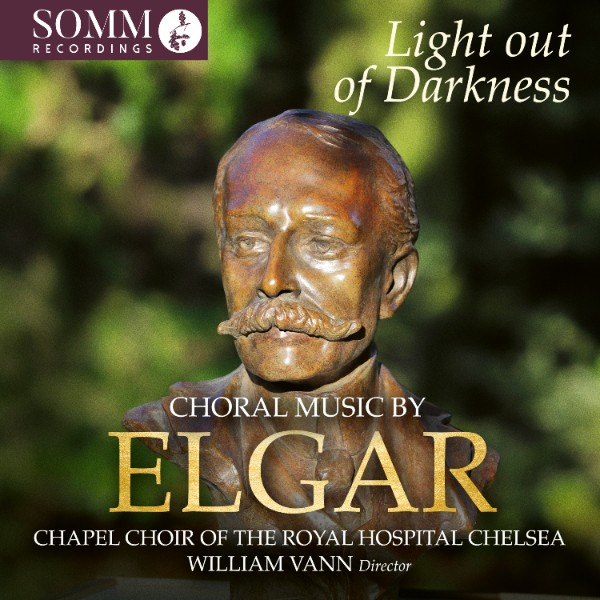
Light out of Darkness: Choral Music by Edward Elgar
Chapel Choir of the Royal Hospital Chelsea; Callum Knox, organ; William Vann, director
SOMM Recordings SOMMCD0714
Official Website


