Showing posts with label The Bach Family: Eight Fascinating Relatives of Johann Sebastian. Show all posts

Friday, October 30, 2026

13 Facts About Johann Sebastian Bach


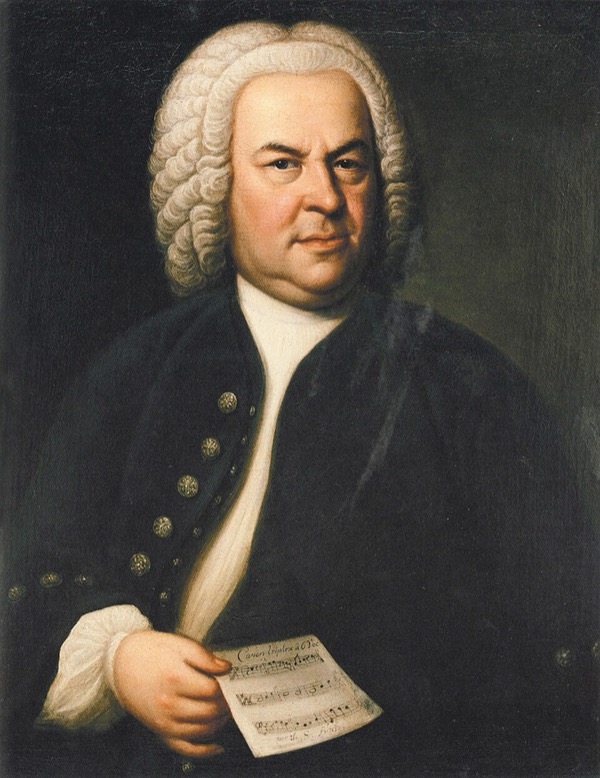
Johann Sebastian Bach

Johann Sebastian Bach

But the person behind the music was decidedly human. He was an orphan and a father of twenty – a hothead who had issues with authority that landed him in jail – an entertainer at a coffee-house – and a genius who died largely unpublished and half-forgotten.

Here are thirteen facts that reveal the man behind the masterpieces.

1. Bach and Handel were born a month apart in the spring of 1685 – but they never met.
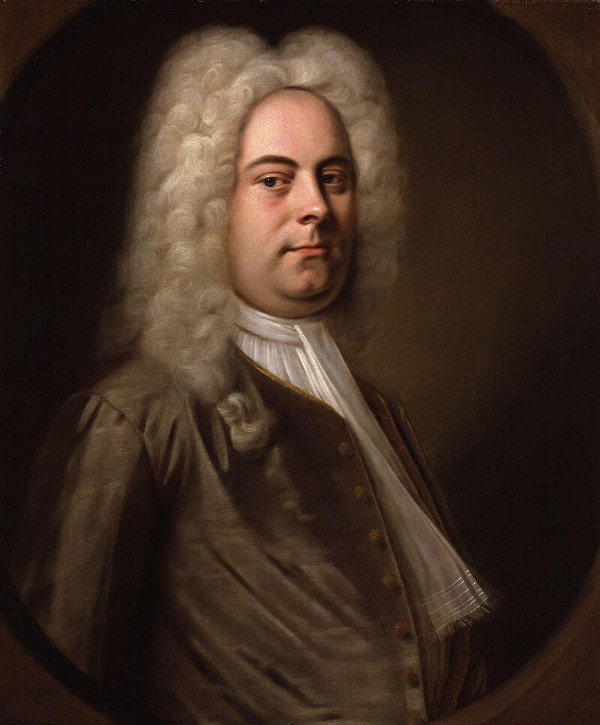
Balthasar Denner: George Frideric Handel, ca 1726–1728 (London: National Portrait Gallery)

Balthasar Denner: George Frideric Handel, ca 1726–1728 (London: National Portrait Gallery)

George Frideric Handel was born in Halle on 23 February 1685, while Johann Sebastian Bach was born in Eisenach on 31 March 1685 – five weeks and a little over 100 miles apart.

Although both became giants of the Baroque era, their paths never crossed. Handel settled down in London, while Bach stayed put in Germany.

Bach wanted to meet Handel when the latter visited Halle, but the timing never worked out.

In another twist of fate, both composers were operated on by the same quack surgeon toward the end of their lives – more on that below.

2. Bach’s mother died in 1694, and his father died in 1695. Bach was nine years old.
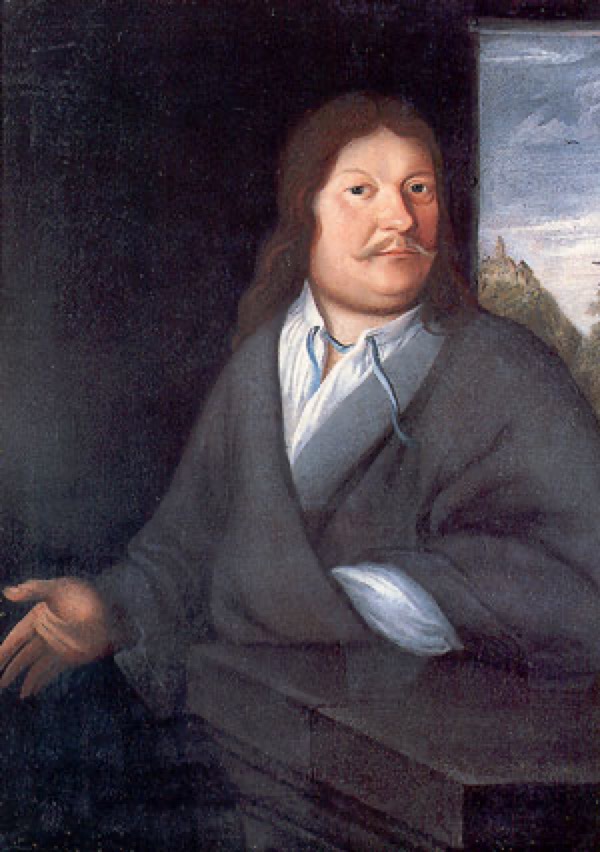
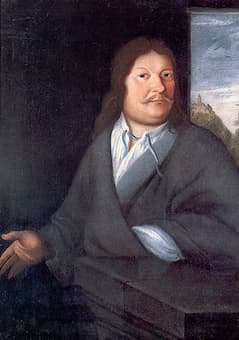
Johann Ambrosius Bach, J.S. Bach’s father

Johann Ambrosius Bach, J.S. Bach’s father

Bach’s childhood ended abruptly. His mother, Maria Elisabeth, died in the spring of 1694, and his father, Johann Ambrosius, a town musician, followed less than a year later, early in 1695.

Fortunately, the suddenly orphaned Bach – the baby of the family – was taken in by his eldest brother, Johann Christoph, an organist in Ohrdruf.

Johann Christoph oversaw Johann Sebastian’s upbringing and musical education.

3. As a boy, he copied out music secretly, because paper was expensive.

Money was tight in his brother’s household, and manuscript paper and printed scores were sought-after luxuries.

According to one early biographer, the young Bach longed to study a prized collection of keyboard pieces his brother kept locked away. Finally, he smuggled it out and copied it over six months’ worth of moonlit nights.

4. Bach walked 280 miles on foot to see composer and organist Dieterich Buxtehude perform – and stayed for four months, upsetting his employer. 

In 1705, when he turned twenty, Bach worked as an organist in the town of Arnstadt. He set out on foot for Lübeck – a 280-mile journey! – to hear his renowned colleague Dieterich Buxtehude.
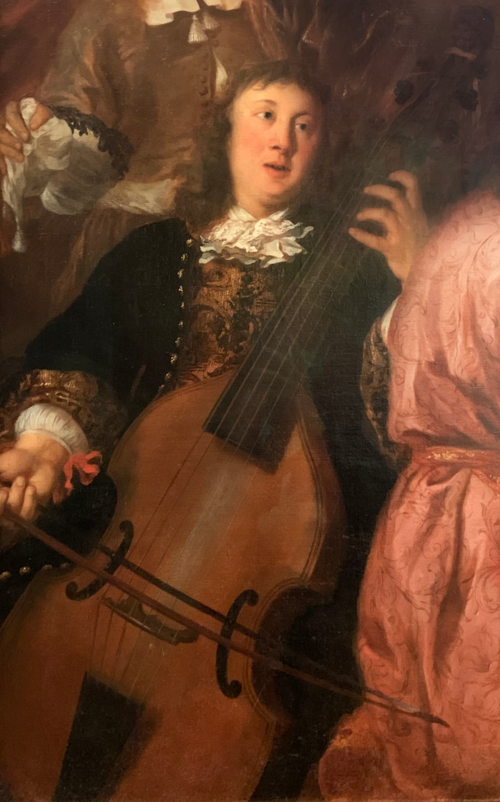
Depiction of the Danish baroque composer Dieterich Buxtehude in the painting "The Musical Party" 1674 by Johannes Voorhout

Depiction of the Danish baroque composer Dieterich Buxtehude in the painting “The Musical Party” 1674 by Johannes Voorhout

He’d been granted a four-week leave, but he stayed about four months. When he finally returned, his employers were understandably furious. It wouldn’t be the last time he’d experience friction with his employers.

5. Bach’s first wife died while he was on a business trip.  

Bach came from a close-knit family of professional musicians, so it is perhaps unsurprising that he married his second cousin Maria Barbara in 1707. The couple had seven children together.

In the summer of 1720, he followed his employer Prince Leopold to the spa town of Carlsbad. He returned to horrific news: Maria Barbara had died during his absence, and they’d been unable to wait to bury her.

Bach came home to find his wife gone and his surviving children motherless – a devastation from which the household recovered only slowly.

6. Bach had a set of twins.

The Bach family

The Bach Family © Oxford Bach Soloists

Bach had twenty (!) biological children over his two marriages. Among them were twins.

Maria Barbara gave birth to them in February 1713. They were named Johann Christoph and Maria Sophia.

The infant mortality rate of the era was high, and that risk only climbed with twins. Johann Christoph died the day he was born, and Maria Sophia died weeks later – just a few days before her father’s 28th birthday.

7. When trying to leave his job in Weimar, Bach was jailed for a month “for too stubbornly forcing the issue of his dismissal.”  

Bach was obstinate. In 1717, eager to leave the Weimar court for a better position in Cöthen, he pressed his request for release so insistently that the duke had him arrested.

He spent nearly a month in detention, from early November to early December. The court records noted that he was confined “for too stubbornly forcing the issue of his dismissal.”

8. He wrote a cantata about a caffeine-addicted woman, for performance in a local coffee house. It has become known as the Coffee Cantata. 

Bach never wrote an opera (he specialised in sacred vocal music), but the closest he came was his so-called Coffee Cantata, likely written around 1735.

In it, a young woman named Lieschen is scolded by her father for her caffeine habit and cheerfully refuses to give it up.

The piece also has a fun extramusical dimension: it was written for performance at Zimmermann’s coffee house in Leipzig, where Bach conducted a musical ensemble.

9. After struggling with his eyesight in his mid-sixties, he consented to an operation with John Taylor, a quack surgeon. He never recovered.  

In his mid-sixties, Bach’s eyesight failed: a devastating development for a composer who relied on it to work and to support his younger wife and minor children.

In 1750, he agreed to be treated by John Taylor, a flamboyant travelling English oculist now widely regarded as a quack.

Taylor operated twice. The surgeries and recovery left Bach blind and sick. He died on 28 July 1750 at the age of 65.

Taylor would later operate on Handel – and fail to restore his eyesight, too.

10. Only about a dozen of Bach’s works were published during his lifetime.
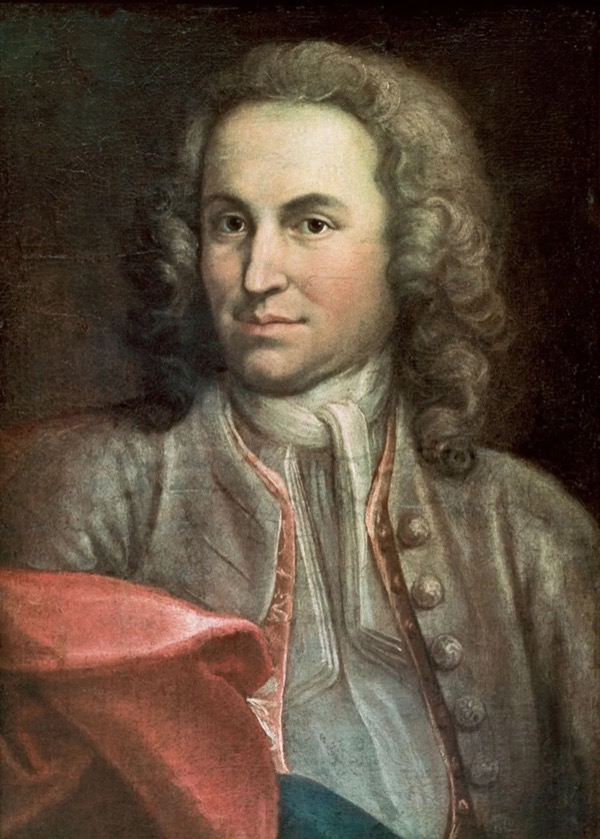
Johann Sebastian Bach

Johann Sebastian Bach

Given his later reputation as the ultimate titan of the Baroque era, Bach published surprisingly little during his lifetime.

Only about a dozen of his works appeared in print, mainly collections of keyboard and organ works.

The vast majority of his music, including the great Passions and hundreds of cantatas, circulated only in manuscripts.

11. Around half of Bach’s works have been lost.

Because so much of Bach’s music remained unpublished, much of his output was lost.

In fact, scholars estimate that roughly half of everything Bach wrote has vanished.

After his death, his manuscripts were divided among his sons and pupils. Many were sold off, scattered, or destroyed over the following decades.

It is mind-boggling to think that the works we have today represent only a fraction of what he actually wrote down.

12. Felix Mendelssohn developed a fascination with Bach as a teenager because his great-aunt had studied with one of Bach’s sons. He helped mount a Bach revival in the 1820s.   

Felix Mendelssohn’s great-aunt, an accomplished pianist named Sara Levy, had studied with Bach’s eldest son, Wilhelm Friedemann Bach.
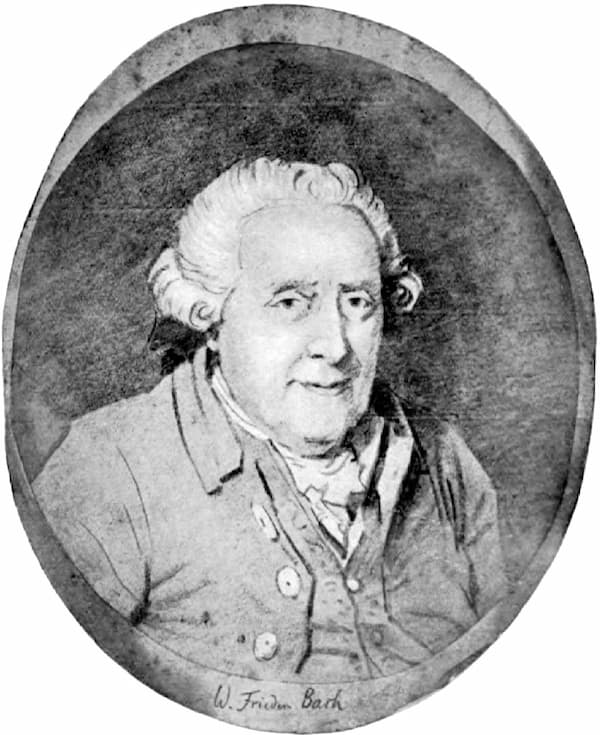
Wilhelm Friedemann Bach

Wilhelm Friedemann Bach

In 1824, she gave her prodigy nephew (and his equally talented sister Fanny) a copy of the St. Matthew Passion.

Felix spent years studying it. In 1829, when he was just twenty, he conducted a revival of the St. Matthew Passion in Berlin – its first major performance in decades.

From this point on, Bach’s place in the repertoire was secure.

13. Bach’s Prelude and Fugue in C major from the Well-Tempered Clavier is on the Voyager space probe’s Golden Record – meaning that Bach might be among the first composers that extraterrestrial life will hear.  

In 1977, NASA launched two Voyager probes, each carrying a gold-plated record of sounds from Earth, including recordings of human speech, nature sounds, and music.

Among the musical selections is the Prelude and Fugue in C major from Bach’s Well-Tempered Clavier.

He may well be among the very first composers any extraterrestrial listener ever hears. He’ll no doubt be popular on whatever planet his music lands on!

Conclusion

For someone who spent his entire life in Germany, Bach has covered an impressive distance since.

The stubborn organist who walked 280 miles to hear a concert is now regarded as the very bedrock of Western music.

And thanks to a golden record hurtling through interstellar space, he may yet become one of humanity’s first musical ambassadors to the aliens.

For more of the best in classical music, sign up for our E-Newsletter

Friday, April 25, 2025

The Bach Family: Eight Fascinating Relatives of Johann Sebastian


Many music history lovers know that Johann Sebastian Bach had many children: twenty kids by two wives.

What fewer people know is that the wider Bach family was famously fertile…as well as famously musical.

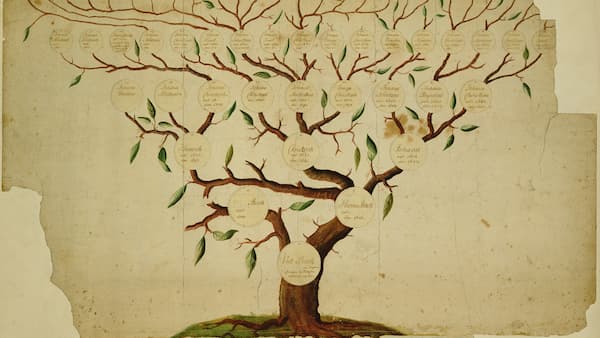
The Bach family tree

The Bach family tree © aco.com.au

In fact, the Wikipedia article on the Bach family includes over 75 names.

Many of these Bachs – who lived before, during, and after the lifespan of Johann Sebastian Bach – were professional musicians.

Today we’re taking a look at ten of the most interesting musical Bachs who weren’t Johann Sebastian or his children.

(If you want to find out what happened to Bach’s twenty children, we wrote an article about them here.)

Let’s get started!

Veit Bach (1550-1619)

Johann Sebastian Bach’s great-great-grandfather

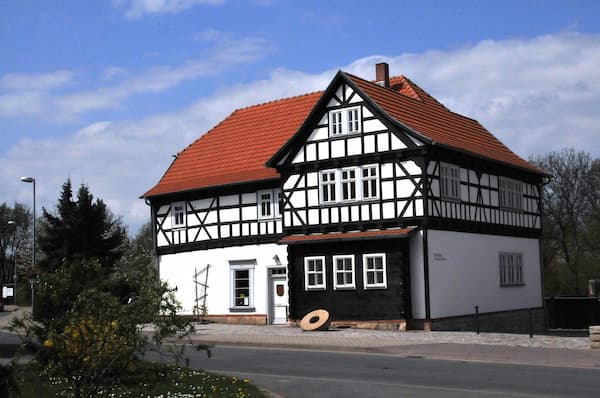
The Veit-Bach-Mill at Thuringia

The Veit-Bach-Mill at Thuringia

Veit Bach was born around 1550 near present-day Bratislava in the Kingdom of Hungary. He worked as a miller and a baker.

During his lifetime, the Kingdom of Hungary was under the control of the Vienna-based Hapsburg dynasty. The Hapsburgs were Catholic, while Veit was Protestant.

At the time, Protestantism was a relatively new movement. Martin Luther had released his famous Ninety-five Theses, a protest against what he viewed as Catholic corruption, in 1517, only a generation before Veit Bach was born.

To escape religious persecution, Veit Bach moved to Wechmar in the German state of Thuringia, almost halfway between the cities of Leipzig and Frankfurt.

He continued working as a miller after the move. According to local legend, he would play an instrument called the cythringen, a kind of Renaissance-era guitar-like instrument, in rhythm to the sounds of the mill.

Johannes Bach I (15?? – 1626)

Johann Sebastian Bach’s great-grandfather

Johannes Bach I was Veit Bach’s son and born in Wechmar. We’re not sure what year.

According to a family genealogy that Johann Sebastian Bach and his sons assembled generations later, Johannes began his professional life as a baker.

Later, however, he took an apprenticeship as a town piper in the town of Gotha, ten kilometers away from his birthplace.

Tragically, he died of the plague in 1626.

Interestingly, the eulogy for one of Johannes Bach I’s sons stated that his father had once been a carpet weaver. The early members of this musical dynasty clearly had non-musical day jobs to support themselves.

Christoph Bach (1613-1661)

Johann Sebastian Bach’s grandfather

Johannes Bach I had several musician sons. One of them was Christoph Bach, who was born in Wechmar, becoming a court musician there. His brothers also became musicians.

During his career, Christoph Bach took musical jobs in the neighboring towns of Erfurt and Arnstadt. (His famous grandson Johann Sebastian would work in Arnstadt, too.)

He married a woman named Maria Magdalena Grabler. She had three sons: Georg Christian Bach in 1642 and twins Johann Ambrosius Bach and Johann Christian Bach in 1645. (Twins ran in the Bach family!)

Christoph Bach died in 1661 in Arnstadt.

Johann Ambrosius Bach (1645-1695)

Johann Sebastian Bach’s father

Johann Ambrosius Bach, J.S. Bach's father

Johann Ambrosius Bach, J.S. Bach’s father

Johann Ambrosius Bach and his twin Johann Christoph were born in 1645, when their father was working as a musician in Erfurt.

Johann Ambrosius would have been surrounded by music at an early age. He ultimately followed in his father’s footsteps and became a professional violinist and trumpet player.

Tragically, Johann Ambrosius became an orphan when he was just 16. He and his twin moved in with an uncle until they could support themselves.

In 1668, when Johann Ambrosius was 23, he married a woman named Maria Elisabeth Lämmerhirt.

In 1671, the couple moved to Eisenach, forty kilometers from Wechmar, so that Johann Ambrosius could take a job as the town musician. Together they would have eight children, including Johann Sebastian in 1685.

Tragedy struck in the spring of 1694 when Maria Elisabeth died.

Johann Ambrosius, in desperate need of a wife to help raise his children, remarried that November.

But this union was doomed, too: he died in March 1695, making Johann Sebastian Bach an orphan just weeks before his tenth birthday.

Johann Christoph Bach (1645-1693)

Johann Sebastian Bach’s uncle

Johann Christoph Bach was Johann Ambrosius Bach’s twin.

One of Johann Sebastian Bach’s sons later wrote, “They loved each other tenderly, and looked so much alike that even their own wives could not distinguish them.”

Like his twin and their father, Johann Christoph became a professional musician, first working in the town band in Erfurt and later as a violinist in the Arnstadt court.

Johann Christoph had a volatile temper and lashed out at the musicians in Arnstadt. (Apparently, high tempers and perfectionism ran in the Bach family!) Things got so bad that he was fired.

In 1682, he got his job back, thanks to the intervention of Arnstadt-based Count Anton Günther II, a celebrated patron of music.

Johann Christoph’s biggest claim to fame might be that he introduced his nephew Johann Sebastian to the organ.

Johann Christoph Bach (1671-1721)

Johann Sebastian Bach’s brother

Here’s another Johann Christoph Bach! (The family loved reusing names.)

This particular Johann Christoph Bach was born in Erfurt in 1671, but raised in Eisenach, where his brother Johann Sebastian, fourteen years his junior, was born.

In 1686, as a teenager, he was sent back to Erfurt to apprentice under Johann Pachelbel. He worked as an organist in Erfurt and Arnstadt.

In 1690, he got a job playing organ in the nearby town of Ohrdruf. His and Johann Sebastian’s mother died in the spring of 1694, and their father less than a year later.

In between his parents’ deaths, Johann Christoph got married to a woman named Dorothea von Hof. This meant that after his father’s death, he was no longer a bachelor and was in a position to take in ten-year-old Johann Sebastian.

Not only did Johann Christoph take in Johann Sebastian, he also continued his musical education.

We don’t know exactly what their relationship was like, but Bach’s biographer Johann Nikolaus Forkel wrote in his 1802 biography:

The most renowned Clavier composers of that day were Froberger, Fischer, Johann Caspar Kerl, Pachelbel, Buxtehude, Bruhns, and Böhm. Johann Christoph possessed a book containing several pieces by these masters, and [Johann Sebastian] Bach begged earnestly for it, but without effect. Refusal increasing his determination, he laid his plans to get the book without his brother’s knowledge. It was kept on a book-shelf which had a latticed front. Bach’s hands were small. Inserting them, he got hold of the book, rolled it up, and drew it out. As he was not allowed a candle, he could only copy it on moonlight nights, and it was six months before he finished his heavy task. As soon as it was completed, he looked forward to using in secret a treasure won by so much labour. But his brother found the copy and took it from him without pity, nor did Bach recover it until his brother’s death soon after.

If the story is true, Johann Sebastian didn’t hold his brother’s strictness against him. He later composed a Capriccio in E major (BWV 993) in honor of Johann Christoph.

Johann Sebastian Bach: Capriccio in E Major, BWV 993 

Johann Ernst Bach I (1683-1739)

Johann Sebastian Bach’s cousin

Twins Johann Ambrosius Bach and Johann Christoph Bach both had children. The former fathered Johann Sebastian, while the latter fathered (among others) Johann Ernst Bach I.

Johann Ernst was born in Arnstadt in 1683. Johann Ernst’s father died ten years later. He moved to Ohrdruf to be near family.

After Johann Sebastian’s parents died and he also moved to Ohrdruf, the two musical cousins began going to school together.

He studied briefly in Frankfurt before securing a job there. A few years later, he moved back to Arnstadt and became Johann Sebastian’s organ-playing substitute.

After Johann Sebastian moved away in 1707, Johann Ernst applied for his vacated position. He won the job…but his salary was less than half of what his cousin’s had been.

He died in 1739 in his mid-fifties.

Wilhelm Friedrich Ernst Bach (1759-1845)

Johann Sebastian Bach’s grandson

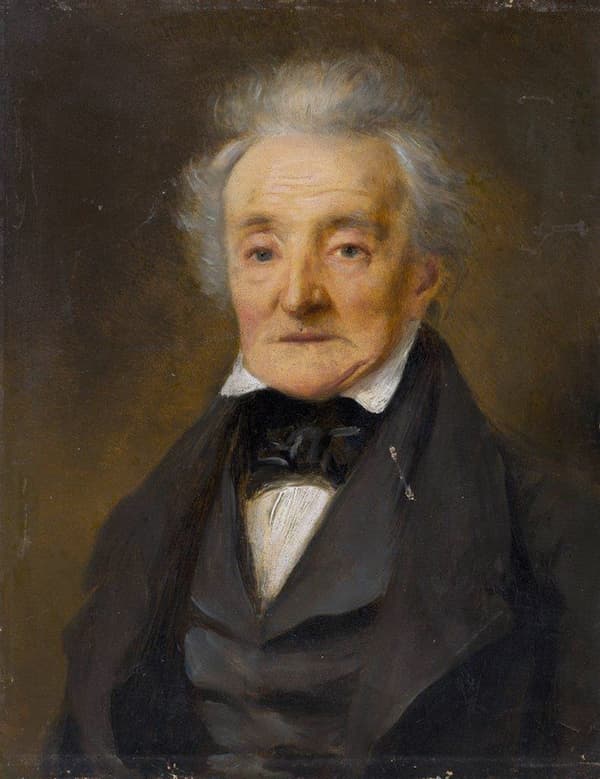
Wilhelm Friedrich Ernst Bach

Wilhelm Friedrich Ernst Bach

Wilhelm Friedrich Ernst Bach was the grandson of Johann Sebastian Bach, through Johann Christoph Friedrich Bach.

He was born in 1759 and received his initial musical training from two of his uncles, C.P.E. Bach and Johann Christian Bach.

When Johann Christian Bach, Johann Sebastian’s youngest son, died in 1782 in London, Wilhelm was present at his deathbed.

Between 1788 and 1811, he worked as Kapellmeister in Berlin at the court of Prince Frederick William II of Prussia. After he received a pension, he retired.

Wilhelm’s most famous piece is possibly the Dreyblatt, a titillating work for piano six hands. It requires one man sitting in the center of the piano bench, with a woman on either side of him. Over the course of the work, the man has to reach behind and around the women.

Dreyblatt für Klavier zu 6 Händen (William Friedrich Ernst Bach) 

In 1843, a monument to Johann Sebastian Bach was erected in Leipzig. Composer Robert Schumann was present, as was Wilhelm. Schumann described Wilhelm Friedrich Ernst as “a very agile old gentleman of 84 years with snow-white hair and expressive features.”

Wilhelm Friedrich Ernst Bach had four children. His eldest daughter Caroline died in 1871. She was the last surviving descendant of Johann Sebastian Bach.

He famously said of himself and his work, “Heredity can tend to run out of musical ideas.”