Showing posts with label by Emily E. Hogstad. Show all posts

Friday, October 9, 2026

Five Women Composers Who Studied at the Paris Conservatoire

The Paris Conservatoire was founded in 1795 after the French Revolution. Since then, many of classical music’s greatest figures have passed through its doors.

Initially, women weren’t allowed to benefit from the Conservatoire’s rigorous education. In fact, women weren’t admitted outside vocal classes until 1849, when French violin prodigy Camilla Urso broke that glass ceiling at the age of nine.

Urso proved to the institution that women could be extraordinary students, and hundreds of women followed in her footsteps.

Today we’re looking at five largely forgotten women composers who studied at the Paris Conservatoire.

Grace Becker Vamos
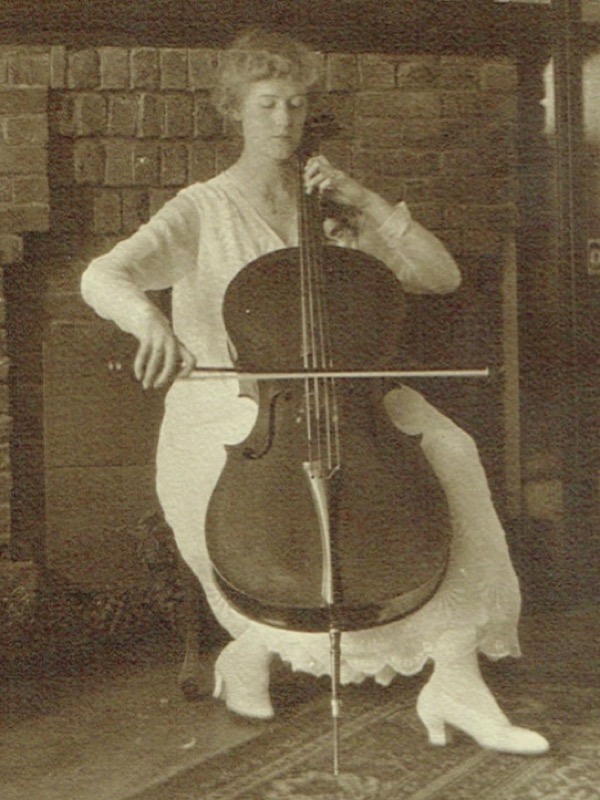
Grace Vamos

Grace Vamos

Fontainebleau Suite  

Grace Becker was born in 1898 in California to a violinist father and pianist mother. The musical couple had a spare cello that Grace started playing as a child.

As a young woman, she studied at the Paris Conservatoire and the Fontainebleau School of Music.

In 1937, she moved to Hungary to study with composer Zoltán Kodály, then returned to America when World War II broke out in the summer of 1939.

She spent most of the rest of her career in California, interspersed with frequent visits to Mexico.

Her piano concerto was the first orchestral piece ever written by a woman to be performed in California.

In addition to composing, she also founded a trio called the Trio Moderne, an all-woman ensemble featuring Becker Vamos, flautist Christine Howells Pfund, and harpist Marie Hughes Marguarrie.

In 1946, she married Ernest Vamos, a dentist and an amateur cellist. They never had any children. Instead, she focused on her career, teaching countless students and endowing multiple scholarships and competitions.

Today, the scores of Grace Becker Vamos’s works are available through Vamos Publishing.

Koharik Alis Gazarossian
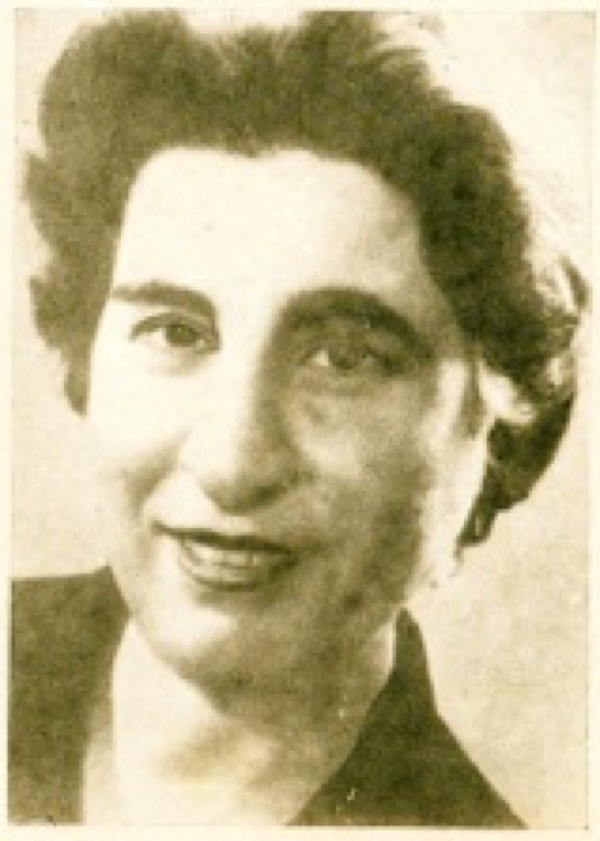
Koharik Alis Gazarossian

Koharik Alis Gazarossian

Koharik Alis Gazarossian was born to Armenian parents in Constantinople (present-day Istanbul) in 1907.

As a child, she took piano lessons from a former student of Franz Liszt.

In 1926, at nineteen, she moved to Paris and began studying at the Conservatoire.

Her piano teacher was Lazare Lévy, whose other pupils included John Cage, Clara Haskil, and Monique Haas.

She also studied composition with Paul Dukas, composer of the tone poem The Sorcerer’s Apprentice.

Her own work often drew upon Armenian folk influences. Among her fans was fellow Armenian composer Aram Khachaturian.

Her set of 24 Etudes, finished in 1958, covered the twelve major and minor keys. Each one is dedicated to a friend or pupil. Listeners can hear influences of pianists like Scriabin, Rachmaninoff, and Prokofiev.

These works were recorded in 2022 by Armenian pianist Naré Karoyan.

Jeanne Demessieux
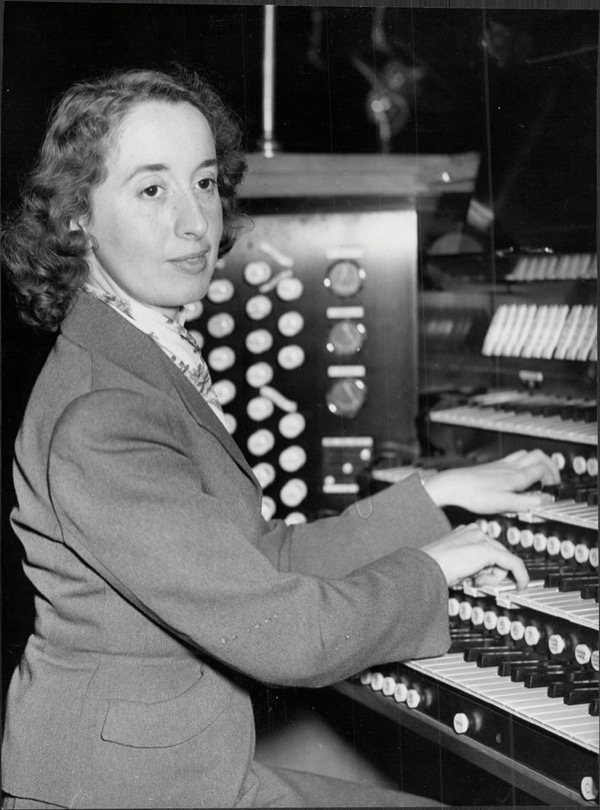
Jeanne Demessieux

Jeanne Demessieux      In 1933, at twelve, she began studying at the Paris Conservatoire. Three years later, she began studying organ with Marcel Dupré. The organ soon became her primary instrument.

In 1941, at the age of twenty, she earned a first prize in organ performance and improvisation at the Conservatoire.

In 1947, she became the first female concert organist to sign a record deal.

She was especially famous for her memory. Apparently, she memorised 2,500 pieces over her career, including the entire organ output of J.S. Bach.

She was also a composer, writing works for solo organ, piano, and vocal music.

She died in November 1968 of throat cancer. She was only 47 years old.

Sylvia Soublette
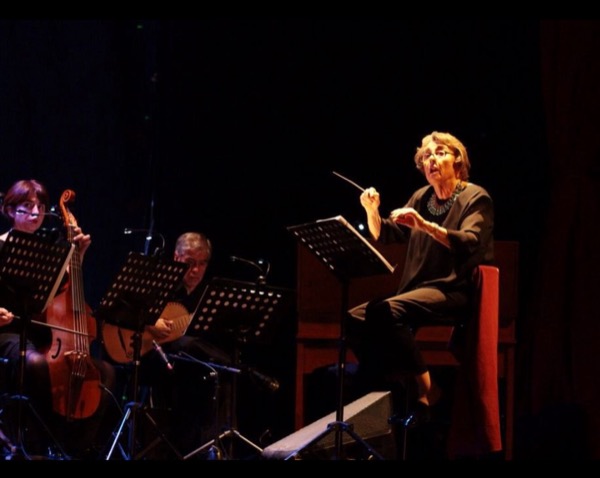
Sylvia Soublette

Sylvia Soublette

Pequeña Suite para Violín y Piano   

Sylvia Soublette was born in 1924 in Viña del Mar, Chile. Music ran in the family: both of her parents were musical, and her paternal grandmother was a composer.

In 1941, as a teenager in college, she founded the Coro Femenino Viña del Mar (the Viña del Mar Women’s Choir). She also began composing.

In 1951, she earned a scholarship from the French government to study at the Paris Conservatoire. While there, she studied under Milhaud and Messiaen.

After her studies in Paris, she returned to Chile. In 1960, she founded the Ancient Music Ensemble and led it until the 1973 military coup.

She married politician Gabriel Valdés in 1945, and he served as Chile’s Minister of Foreign Affairs from 1964 to 1970. After Pinochet came to power, Valdés, Soublette, and their four children travelled to the United States and Venezuela.

The family returned to Chile in 1981, and Soublette resumed her musical career there.

In 1991, she founded the Santiago Music Institute and toured internationally.

Toward the end of her long life, she said, “I am a composer, but from another time. Not from the 21st century, but from the 20th century. However, at this point, what I feel most like is an educator.”

She died in January 2020 at the age of 95.

Édith Canat de Chizy
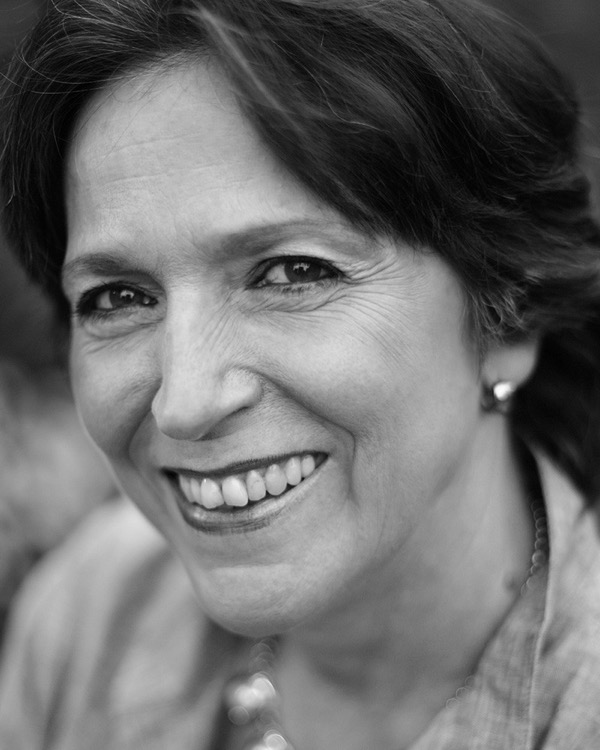
Édith Canat de Chizy

Édith Canat de Chizy

Édith Canat de Chizy was born in Lyon, France, in 1950.

As a college student, she studied at the Sorbonne and the Paris Conservatoire. She won half a dozen first prizes in analysis, composition, counterpoint, fugue, harmony, and orchestration.

In 2006, she began teaching at the Regional Conservatory of Paris. She has published over a hundred opus numbers’ worth of music.

In 2005, she became the first female composer to be elected to the prestigious Académie des Beaux-Arts.


The violin is her main instrument. Here’s her fourth quartet, “En noir et or” (In black and gold).

30 Pieces of Classical Music About Autumn

 by Emily E. Hogstad  September 2nd, 2024


Maple leaves

© Davidgn/Dreamstime.com

Today, we’re looking at almost four centuries of music. So grab a pumpkin spice latte, settle in, and enjoy these thirty pieces of classical music about autumn.

The 4 Seasons by Christopher Simpson (ca 1640s)   Christopher Simpson was an English composer and virtuoso viol player. (Viol instruments were predecessors to modern string instruments.)

Simpson wrote his Four Seasons for a treble instrument, two bass viols, and continuo. In each one, he included a fantasy, an air, and a galliard (a type of energetic dance).

Players also added their own ornamentation to the work to customize their interpretations.

Autumn from the Four Seasons by Antonio Vivaldi (1724)  

Let’s be honest…you knew this work would be on the list!

In 1724, composer and violinist Antonio Vivaldi wrote a set of violin concertos inspired by each of the four seasons.

He also included poetry in the score to describe in words what he was describing in music.

His autumn concerto portrays harvest celebrations and hunting parties.

Autumn from The Seasons by Joseph Haydn (1801)    ut in modern movie terms, The Seasons was a bit of a cash-grab sequel to Haydn’s wildly popular oratorio The Creation.

Unfortunately, like many sequels, it wasn’t as successful as the work that inspired it, but it’s still worth enjoying today.

The forces required to mount The Seasons include a large orchestra, a chorus, and three vocal soloists.

Like Vivaldi, Haydn chose to highlight harvest celebrations and hunting parties. The hunting chorus is one of the best of its era.

October from Das Jahr (The Year) by Fanny Mendelssohn Hensel (1841)   

Fanny Mendelssohn Hensel was composer Felix Mendessohn’s older sister, as well as a brilliant pianist and astonishingly productive composer.

Because she was a woman, many of her works never entered the standard repertoire in the way that her brothers did. Luckily for listeners, that’s beginning to change.

Das Jahr (The Year) is a set of piano pieces that trace the year month-by-month.

In a clever twist on the autumnal hunting motif, Hensel’s October’s piece features horn calls that turn out to be traveling minstrels. The deer in the forest may be startled, but the work ends with a happy flourish.

In Autumn by Edvard Grieg (1865)   

Norwegian composer Edvard Grieg was 22 when he wrote this overture. A fellow composer friend told him, “This is trash, Grieg; go home and write something better.”

So Grieg transcribed it for two pianos and submitted it to a composing competition…and that critical composer friend just happened to be on the jury! Amusingly, In Autumn ended up winning first prize.

E.Grieg Concert Overture “In Autumn” op.11 for piano 4 hands  

Autumn Song by Pyotr Ilyich Tchaikovsky (1876)   

In the 1870s, Tchaikovsky had the same idea as Fanny Mendelssohn Hensel: writing a series of piano works, one inspired by each month.

His October song begins with a snippet of poetry:

Autumn, our poor garden is all falling down,
the yellowed leaves are flying in the wind.

The music itself is a wistful, lovely sigh for solo piano, with the melancholy that is brought on by the season in full display. Anyone who has lived in a northern climate can relate!

Symphony No. 10: “To Autumntime” by Joseph Joachim Raff (1879)  

Joachim Raff was born in 1822 in Switzerland.

He worked with many of the big names of Romantic music (including Mendelssohn, Liszt, and Clara Schumann) and was widely acclaimed in his own time, but is rarely heard today.

This symphony has four movements, and each was published with subtitles:

I. Impressions & Feelings
II. Ghostly Round-Dance
III. Elegie
IV. Men Hunting

“Pensée d’automne” by Jules Massenet (1887)  

In the song Pensée d’automne, or Thoughts in Autumn, composer Jules Massenet set a poem by French poet Armand Silvestre to music.

The poem speaks of “grieving birds” and “withered flower cups.” The narrator wistfully invites a lover to return to the place where they courted in the springtime.

He then points out that his love for her has made the season irrelevant:

Let the beautiful days die! Let the harsh winter be born again!
Like a joyful hymn in the moaning wind,
A song of love emerges from my devoted heart!

Autumn: Etude de Concert No. 2, Op. 35 by Cécile Chaminade (1886)   

French composer Cécile Chaminade was one of the most popular composers of her era. She focused primarily on writing piano music and miniatures. They proved to be especially popular in the domestic sheet music market.

That popularity, combined with her sentimental romantic style as well as her gender, led her to be dismissed as an unserious artist.

This autumn-inspired etude challenges that assumption. It’s both achingly tender and technically challenging.

8 Characteristic Pieces, En Automne, by Moritz Moszkowski (1886)   Play

Moritz Moszkowski was a German pianist and composer of Polish origin. Although his work is rarely seen on programs today, he was very popular during his lifetime.

This work, from his set of eight Characteristic Pieces, seems to portray a chilly wind blowing leaves off the trees in colored swirls.

Four Sketches, op. 15: In Autumn by Amy Beach (1892)   

Amy Beach was a profoundly talented American composer and pianist. She began writing little waltzes for piano when she was only four years old.

After she got married at the age of eighteen, she focused on composition because it wasn’t seemly for a respectable wife of a doctor to tour as a piano soloist.

In 1892’s Four Sketches, written when she was twenty-five, a snippet of poetry appears at the “In Autumn” movement: “yellowing foliage on scattered lawns.” This is a quote from French poet and statesman Alphonse de Lamartine.    moods of autumn.

From Vivaldi’s lilting Four Seasons to Tchaikovsky’s melancholy “Autumn Song” to Musgrave’s grim fall hunt, classical music evokes the complex emotions brought about by the season in a way that no other art form can.