Total Pageviews

Showing posts with label Fanny Po Sim Head. Show all posts

Friday, January 16, 2026

Potpourri: Melodies in Medley


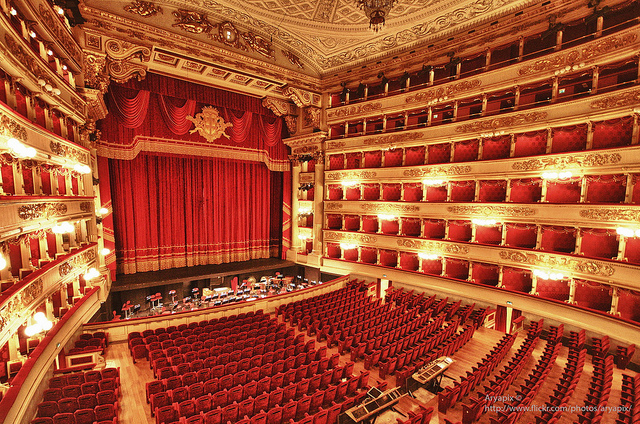
Opera house

© opera-diary.com

The potpourri appeared prominently in the late eighteenth and early nineteenth centuries, during a time when opera melodies circulated well beyond the theatre. Before recordings, audiences encountered favourite tunes through arrangements for salon performances, home music-making, and public concerts. Potpourris fulfilled a desire for musical recognition while allowing composers and performers to create new works that were both accessible and marketable. Unlike sonata-based forms, potpourris generally avoid motivic development. Instead, they feature a sequence of recognisable melodies, often linked by brief transitions and framed by a dramatic introduction and a virtuosic conclusion. This adaptable structure made the genre perfect for showcasing performers’ technical skills while ensuring immediate audience engagement.

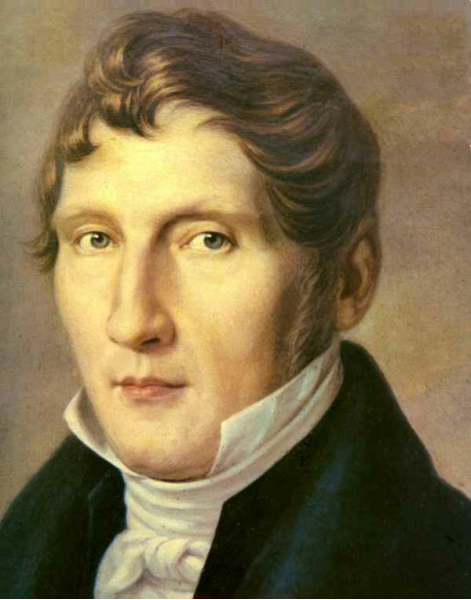
Louis Spohr

Louis Spohr

The early nineteenth century saw a flourishing of potpourris written for solo instruments with orchestra or chamber ensemble, frequently by composer-performers themselves. Louis Spohr’s Potpourri for Clarinet and Orchestra on Themes by von Winter in F major, Op. 80 exemplifies the genre’s elegance and balance. Drawing on melodies from Peter von Winter’s opera Das unterbrochene Opferfest (The Interrupted Sacrifice, 1811), Spohr transforms operatic arias into a clarinet showcase emphasising lyricism, agility, and expressive refinement.

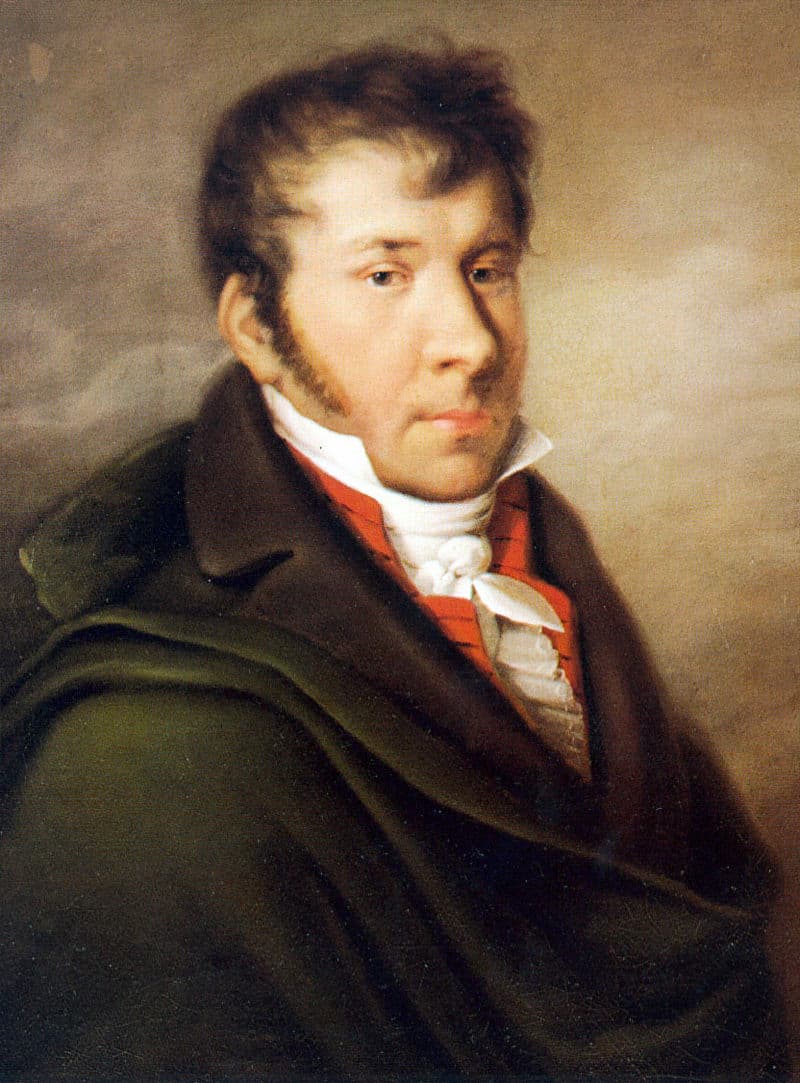
Johann Nepomuk Hummel, 1814

Johann Nepomuk Hummel, 1814

Johann Nepomuk Hummel’s Potpourri, Op. 94 (Fantasie) for Viola and Orchestra occupies a distinctive position in the repertoire. At a time when the viola was rarely featured as a solo instrument, Hummel uses the potpourri format to showcase the instrument’s warmth and agility without the formal weight of a concerto, demonstrating the genre’s adaptability. The work is also one of the earliest substantial pieces written specifically for viola solo with orchestral accompaniment, highlighting the instrument’s lyrical and virtuosic potential in a concert setting. It draws much of its melodic material from well-known opera themes by Mozart, particularly from Don GiovanniThe Marriage of Figaro, and The Abduction from the Seraglio, as well as from Rossini’s Tancredi. These familiar tunes are framed by newly composed introduction and finale sections, allowing Hummel to combine recognizability with virtuosic invention in a format characteristic of early nineteenth-century potpourri traditions.   

Mauro Giuliani: Grand Potpourri Op.53 for Flute and Guitar   

The potpourri also thrived in more intimate chamber settings. Mauro Giuliani’s Grand Potpourri, Op. 53 for Flute and Guitar reflects the vibrant salon culture of early nineteenth-century Vienna. Drawing on popular operatic melodies, the work unfolds as a dialogue between flute and guitar, with the flute carrying lyrical and decorative lines. In contrast, the guitar provides harmonic grounding and idiomatic figurations. Giuliani’s potpourri demonstrates how the genre could function effectively beyond orchestral contexts, appealing to audiences seeking refinement, intimacy, and melodic familiarity.


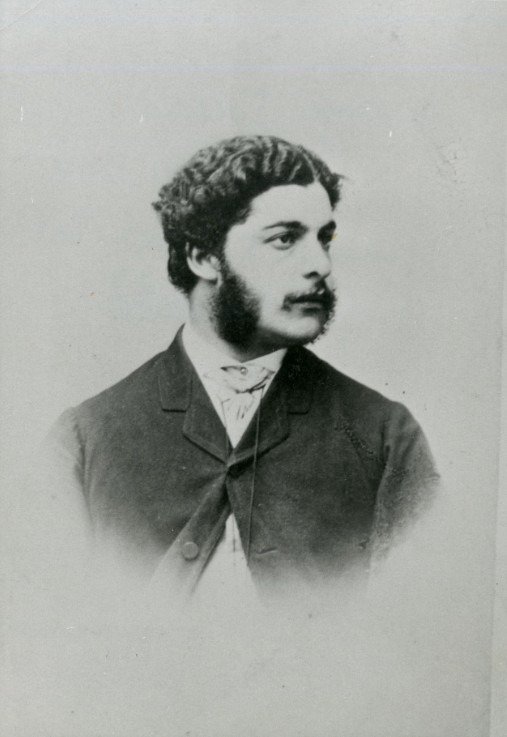
Arthur Sullivan

Arthur Sullivan

Arthur Sullivan’s operetta overtures exemplify potpourri practice, particularly in the overtures to H.M.S. PinaforeThe Pirates of Penzance, and The Mikado. These works present a sequence of the operetta’s main melodies with minimal thematic development, linked by brief transitions. The overture to The Pirates of Penzance (1879), largely orchestrated by Alfred Cellier under tight deadlines, strings together well-known tunes such as “Pour, O Pour the Pirate Sherry,” “I Am the Very Model of a Modern Major-General,” and “With Cat-Like Tread,” alternating lively comic passages with lyrical themes. Functioning as musical previews, these overtures rely on audience recognition and contrast, aligning closely with nineteenth-century potpourri tradition. In Sullivan’s hands, the potpourri becomes a theatrical device that shapes audience expectations while showcasing orchestral color, inventive instrumentation, and melodic wit.   

The potpourri flourished equally in dance and domestic contexts. Johann Strauss II’s Potpourri Quadrille reflects Vienna’s vibrant ballroom culture, in which popular tunes were repurposed for social dancing. These works blurred the boundary between popular entertainment and compositional craft. For keyboard music, Karol Kazimierz Kurpinski’s Potpourri or Variations on Various National Themes, composed for the seven-year-old pianist Józef Krogulski and published in 1813, blends classical form with Polish folk and dance elements. Its sections include a Poco adagio introduction, a lyrical Dumka, a stately polonaise (Alla polacca), a brief Krakowiak, and a virtuosic Mazur. The work exploits the piano’s full range of techniques while reflecting Kurpiński’s melodic inventiveness and commitment to Polish national style, making it both a virtuosic showcase and a culturally distinctive potpourri.

Franz Liszt’s Réminiscences de Norma, S. 394   

By the mid-nineteenth century, distinctions between potpourri, fantasy, and paraphrase became increasingly fluid. At its core, a potpourri presents a succession of recognizable melodies with minimal transformation. A fantasy typically offers greater freedom of form and more extensive thematic elaboration, while a paraphrase implies substantial recomposition, integrating operatic material into a newly conceived musical structure. Franz Liszt’s Réminiscences, including Réminiscences de Don JuanNorma, and Lucia di Lammermoor, represent the most ambitious evolution of the potpourri principle. Liszt assembles multiple operatic numbers into large-scale concert works, subjecting them to dramatic transformation, contrapuntal treatment, and symphonic pacing. Familiar melodies become vehicles for structural unity and expressive depth, transcending the genre’s earlier entertainment-driven aims.


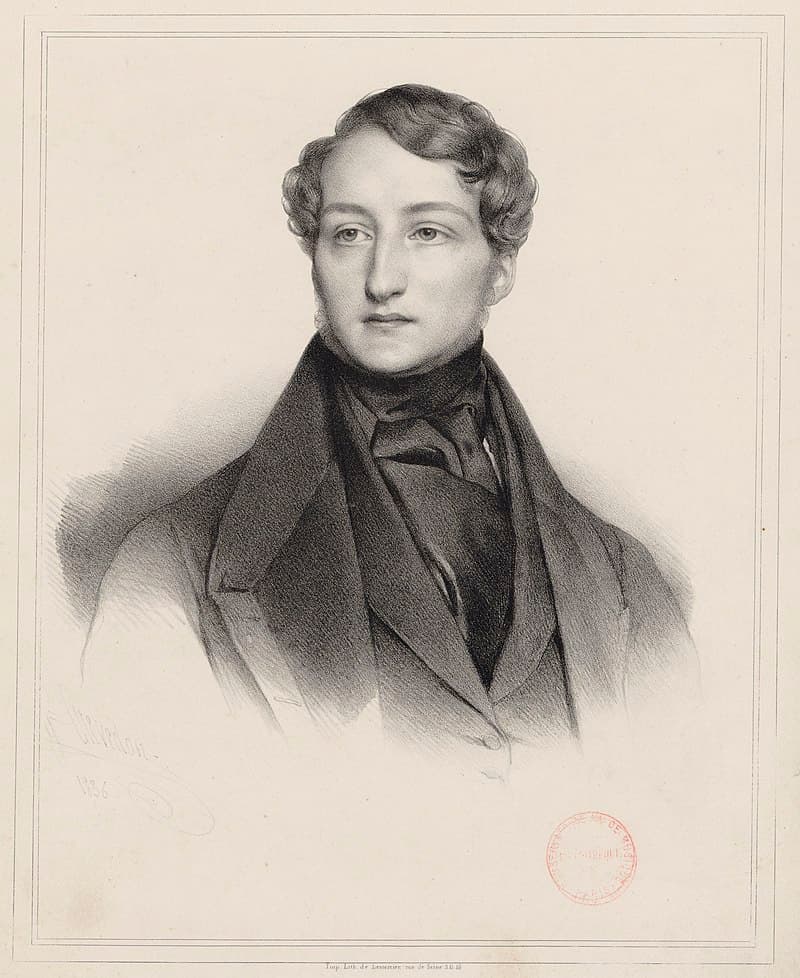
Henry Grevedon: Sigismond Thalberg, 1836 (Gallica, btv1b8425259g)

Henry Grevedon: Sigismond Thalberg, 1836 (Gallica, btv1b8425259g)

Sigismond Thalberg’s Grande Fantaisie sur Moïse de Rossini, Op.33, offers a more restrained but highly influential model. While the work features a potpourri-like collection of operatic themes, Thalberg unifies them through lyrical flow and his famous “three-hand effect,” showcasing the refined elegance of mid-century salon culture.

In the violin repertoire, Henryk Wieniawski’s Fantaisie brillante sur des thèmes de Faust shows how potpourri principles extended beyond the piano. Drawing from Gounod’s opera, Wieniawski links well-known melodies within a structure that remains essentially potpourri-based, yet transforms each theme into a display for virtuosity and expressive flair.   

By the twentieth century, the potpourri had largely fallen out of favour and was often associated with nostalgia or light entertainment. Nevertheless, some composers continued to engage with its collage-like principles in more reflective and stylistically complex ways. Ernst Krenek’s Potpourri, Op. 54 for Symphony Orchestra (1927) reimagines the genre within a modernist framework, employing fragmentation, sharp contrasts, and stylistic juxtaposition to evoke musical memory and historical continuity rather than simple melodic recognition.

R. Strauss: Die schweigsame Frau – Potpourri, Op.80 (1935)   

A similarly late but highly sophisticated rethinking of the genre appears in Richard Strauss’s Die schweigsame Frau – Potpourri, Op. 80 (1935). Drawn from his comic opera Die schweigsame Frau, with a libretto by Stefan Zweig based on Ben Jonson’s Epicoene, the work assembles the opera’s principal themes into a continuous orchestral concert piece. Unlike nineteenth-century potpourris that prioritise immediate familiarity and lightness, Strauss’s treatment is symphonic in scope, with dense orchestration, harmonic complexity, and fluid transitions characteristic of his mature style. While the piece still functions as a concert synopsis of the opera, it simultaneously showcases Strauss’s mastery of orchestral colour, rhythmic vitality, and ironic wit.

Although often marginalised in narratives of “serious” music, the potpourri played a central role in nineteenth-century musical life. It shaped how audiences encountered opera outside the theatre, fueled the rise of instrumental virtuosity, and connected public concert culture with salon and domestic music-making. From Spohr, Hummel, and Giuliani to Sullivan, Strauss, Liszt, Thalberg, and Wieniawski, and finally to Krenek and Richard Strauss, the potpourri emerges not as a peripheral curiosity but as a flexible and enduring practice, one that continually adapted to changing tastes, performance contexts, and aesthetic priorities.

Friday, January 31, 2025

Decoding My Playlist: What Does My Music Player Think I Like?

With technological advancements, our music players can now generate a list of music tailored to our preferences, matching our usual choices at different times of the day. It is both bizarre and fascinating to discover what our music player thinks we like. Sometimes, these suggestions reveal patterns we didn’t consciously notice, offering a fresh perspective on our musical inclinations.

listening to headphones with music

© az616578.vo.msecnd.net/

When I decided to write an article about my favorite composers and their piano compositions, I scrolled through the selections my music player suggested. To my surprise—or perhaps not—I genuinely enjoyed many of them. The curated playlists seemed to echo my preferences, yet they also introduced me to pieces I hadn’t considered in a long time, sparking new reflections on familiar music.

My favorite composer is J.S. Bach, and my music player often includes a piece or two of his. At the top of my list is one of his 1741 compositions, the Goldberg Variations. I am captivated by its simple, delicate, and somewhat moody opening. Named after one of Bach’s pupils, who is said to have played the variations to help his noble employer sleep, the work never fails to draw me in. Its seamless blend of technical brilliance and emotional depth make it an enduring masterpiece. Each time it appears on my playlist, it feels like a trusted companion, affirming my deep connection to Bach’s artistry.

Bach’s Goldberg Variations [Glenn Gould, 1981 record] (BWV 988) 

Recently, I have been revisiting another Bach masterpiece: English Suite No. 2 in A Minor, BWV 807: I. Prélude. This piece took on a new context for me when I learned it was featured in a chilling film scene where a Nazi officer played the Prelude while the SS officers massacred Jewish residents who refused to relocate to concentration camps. The juxtaposition of this serene, intricate music with such horrific imagery is deeply unsettling. The music player’s suggestion of this piece prompted me to reflect on the complex history of classical music and its associations.

English Suite No. 2 in A Minor, BWV 807: I. Prélude 

Watch the scene (content warning):

While this association is haunting, it does not diminish the intrinsic beauty of the piece for me. Bach’s music often transcends time and context, resonating with listeners across centuries. My music player’s inclusion of this work made me appreciate anew its timeless appeal.

Moving on to Beethoven, the last movement of his Op. 109 is one of my favorite piano works. It has a unique quality—simultaneously static and profoundly moving. The intertwining themes and variations create a meditative yet dynamic experience, showcasing Beethoven’s unparalleled genius in blending structure with emotion. Its frequent appearance on my playlist often feels like an invitation to pause and immerse myself in its profound serenity.

Beethoven: Piano Sonata Op. 109 

Lately, I have also been exploring Beethoven’s piano concertos. My music player initially suggested his 3rd Concerto, but my recent favorite is the 4th. Its hopeful yet understated tone, combined with the delicate orchestral entrance after the piano’s brief opening, has captivated me. This concerto strikes a balance between intimacy and grandeur, making it a perfect companion for reflective moments, which aligns seamlessly with my playlist’s mood-based suggestions.

Beethoven: Piano Concerto No. 4 

Another composer who frequently appears on my playlist is Scriabin. One of the daily playlists suggested his Prelude Op. 16, No. 4, but I’ve found No. 1 from the same opus equally charming, soothing, and warm. Scriabin’s music, often described as mystical and otherworldly, offers a fascinating contrast to the structured works of Bach and Beethoven. Discovering these pieces through the music player has deepened my appreciation for Scriabin’s unique voice.

Scriabin : Prélude Op. 16 No. 1 

Exploring different styles of music, particularly from South American composers, is another joy. My music player recently introduced me to Alberto Nepomuceno’s Prece. Nepomuceno, often regarded as the “Father of Brazilian music,” blended popular and folk elements into his compositions, leaving a lasting influence on Brazilian concert music. His legacy continued through his students, including Heitor Villa-LobosPrece is a poignant piece that captures the essence of Brazilian musical identity while remaining universally appealing. Its appearance on my playlist felt like a gentle nudge to explore more from this fascinating repertoire.

Alberto Nepomuceno: Prece 

Another South American composer whose works I’ve been exploring is Carlos Guastavino. Often called the “Schubert of the Pampas,” Guastavino is celebrated for his romantic and deeply lyrical compositions. Although not featured in my music player’s current playlist, his piano works often embody a lyrical and nostalgic quality that resonates deeply with listeners. His music reflects the landscapes and folk traditions of Argentina, blending classical techniques with the emotional warmth of his homeland. Reflecting on Nepomuceno’s influence naturally led me to revisit Guastavino’s compositions, showcasing how playlists can act as a springboard for broader musical exploration.

Carlos Guastavino: Cantilena n. 5 “Abelarda Olmos” 

Lastly, one piece that always seems to find its way into my playlist is Franck’s Prélude, Fugue et Variations. It’s not only a joy to listen to but also a piece I love to play. Franck’s ability to weave intricate counterpoint with expressive melodies is truly remarkable. This work, with its blend of technical challenge and emotional depth, remains a staple in my musical journey. My music player’s recurring suggestion of this piece feels like a constant reminder of its enduring significance.

César Franck: Prélude, Fugue, et Variation 

These discoveries have made me reflect on how well my music player knows my tastes. It’s a delightful and sometimes eerie experience to see my preferences mirrored back to me through algorithms and data. At the same time, the suggestions serve as a springboard for exploration, introducing me to new works and composers I might not have otherwise encountered. This interplay between familiarity and discovery keeps my musical journey dynamic and enriching.

What about you? What does your playlist suggest you listen to? What does your music player think you like? Perhaps it’s time to dive into your playlists and uncover some surprises.

Friday, June 30, 2023

10 Podcasts about Classical Music and Beyond

by 

Do you listen to podcasts? I enjoy listening to podcasts, especially when I am driving. In this article, I share some podcasts about classical music that our contributors and I listen to. Perhaps there are a few that you might want to listen to!

1. Latin American & Iberian Art Song Podcast

Latin American & Iberian Art Song podcast

Hosted by Patricia Caicedo, Latin American & Iberian Art Song Podcast is a weekly podcast that began in 2021 during the pandemic. Caicedo is a singer and a musicologist who is an ambassador of Iberian and Latin American art songs. The podcast does not only discuss Latin American and Iberian Art songs but also discovers composers, poets, cultures, and many more associated with the Latin American world.

2. Mind over Finger podcast

The Mind Over Finger Podcast


Dr. Renée-Paule Gauthier © Monica Ninker

Mind Over Finger podcast provides resources for musicians in the music-making journey. Hosted by Dr. Renée-Paule Gauthier, the podcast includes many helpful discussions for musicians about practicing, performing, career-buildings, etc. Listening to this podcast has taught me many tips about rehearsing and performing.

3. The Offstage Mic

The Offstage Mic podcast

Hosted by Aubrey Bergauer, the Offstage Mic is all about the behind-the-scenes of classical industry. Bergauer is a tuba player who graduated from music performance and business at Rice University. Her shift from music performance to art management has led her to be the current executive of the California Symphony, where she has helped double the size of its audience and increased the donor base for the symphony. In addition to the podcast, Bergauer gave her brilliant thoughts through writing and conference talks.

4. OpenArted

Open ARTed podcast

Hosted by pianist Monika Lozinskiene, OpenArted invites varieties of guests from all walks of life. The conversation involves mental wellness, career advice, and performance practice, and some lead to deep philosophical discussions and debates.

5. Twouncles 《大叔聊古典》

Twouncles classical music podcast

Twouncles is a Taiwanese podcast (in Mandarin) hosted by Yu-ting Wu and Peng-Po Hsu. The podcast includes introducing pieces and recordings, discovering music education programs and events, and interviews. Their guests are varied from renowned musicians and music students to art and music agencies.

6. Desert Island Discs

Desert Island Discs podcast BBC Radio 4

Desert Island Discs is a long-lasting show on BBC Radio 4 where guests are interviewed about pieces of music that are meaningful to them. The music they choose can be from any genre. Still, classical music often gets selected as many interviewees have one piece or another of classical music that has a special significance to them and their lives. In the show, you can hear how music often shapes and defines people’s lives; we all have certain songs or compositions that remind us of a specific moment in our past or that we love just for how they make us feel.

7. Integrated Music Teaching Podcast

Integrated music teaching podcast

As a piano teacher, I have found Integrated Music Teaching Podcast very useful. The host, Tim Topman, is a piano educator, and in his podcast, he interviews many piano educators and discusses the different scenarios in giving individual and group piano lessons.

8. Sticky Notes: The Classical Music Podcast

Sticky Notes classical music podcast

Hosted by conductor and music director Joshua Weilerstein, Sticky Notes includes historical backgrounds and stylistic discussions of repertoires from well-known to less known. It also includes interviews with musicians and composers to discuss the current scene in the classical world.

9. This Classical Life

The Classical Life podcast BBC Radio 3

Another BBC show, This Classical Life, is a weekly show hosted by Jess Gillam. In the show, the guest often shares the music they love and how it has impacted their lives. I particularly like the variety of music I can listen to in this little over 30-min show every week.

10. The Cello Sherpa podcast

The Cello Sherpa Podcast

The Cello Sherpa Podcast is hosted by cellist Joel Dallow, a member of the Atlanta Symphony. The podcast not only features acclaimed cellists and discusses cello-related topics but also explores topics about career-making, personal stories, and advice for young professionals. One of our contributors, Janet Horvath, was once interviewed in the podcast.