Showing posts with label Air - Johann Sebastian Bach. Show all posts

Wednesday, July 1, 2026

10 Classical Pieces That Hook You in the First 60 Seconds


Some composers prefer to gradually ease their listeners into their piece’s sound world. Others strike like lightning.

Today, we’re looking at the latter type of openings. Within the first 60 seconds, listeners are hooked, whether because of rhythm, volume, atmosphere, or some combination of all of the above.

We’re ranking them in reverse order, saving the most immediately arresting for last.

Music That Brings up Sad Memories

© Psychology Today

10. Johann Sebastian Bach – Brandenburg Concerto No. 3   

We’re starting with the brilliant whirlwind of Baroque perpetual motion that is Bach‘s third Brandenburg concerto.

The first movement instantly launches into interlocking string patterns that feel almost modern in their rhythmic propulsion.

Instead of writing for a typical string ensemble, Bach divides the players into three groups of three, creating nine independent string lines (plus continuo).

That textured propulsion is so effective that you’re hooked and tapping your foot before you’ve had time to analyse what’s happening.

It’s not loud, but it’s striking, and the whirling rhythms immediately get stuck in your head.

9. Wolfgang Amadeus Mozart – Overture to The Marriage of Figaro  

Mozart doesn’t announce himself here; instead, he sets up a murmured string motif and then starts sprinting.

From that opening string motif, the overture bursts into breathless motion, setting the stage for a world of mischief and comic chaos.

Within seconds, the energy feels theatrical. Even listening at home, you can envision the curtain of the opera house rising.

It hooks listeners through its cheeky velocity rather than its profundity – and that virtuosic speed is intoxicating.

8. Maurice Ravel – Daphnis et Chloé, Suite No. 2  

This hook works differently from the others on this list. Instead of grabbing attention with a fast attack, Ravel immerses his listeners in a radiant atmosphere. It feels like sinking into a hot bath.

Ravel composed this music as a ballet, later extracting two orchestral suites from it.

The opening movement of his second orchestral suite – titled “Lever du jour” (“Daybreak”) – begins in a shimmer of sound that gradually blooms into radiant colour.

Over the first minute, the orchestra sound becomes enormous and almost painfully beautiful: luminous, layered, alive.

7. Sergei Rachmaninoff – Piano Concerto No. 2   

Few openings in the repertoire feel as inevitable as the tolling piano chords here.

They begin in the solo piano part, dark and ominous and resonant, each one weightier than the last.

Within 60 seconds, the orchestral strings sweep in with a heartbreaking theme, and the emotional temperature rises dramatically.

Once that theme arrives, the emotional tenor is set, and it becomes impossible to turn away.

6. Edvard Grieg – Piano Concerto   

This is considered one of the great concerto entrances in the repertoire. It features a massive timpani roll, then a cascade of piano chords.

The piano part tumbles down the keyboard in a gesture that feels both virtuosic and defiant.

After that attention-grabbing opening, Grieg immediately launches into a march that is somehow both jaunty and deeply dramatic, setting the stage for the rest of the movement.

5. Sergei Prokofiev – “Montagues and Capulets” from Romeo and Juliet    

This excerpt begins with horror-soundtrack dissonance. After some unforgiving shrieking chords, the low brass and strings start stomping and swinging forward.

The rhythm is famously heavy, ceremonial, and almost brutal.

Within seconds, thanks to that tonal contrast and that forbidding rhythm, Prokofiev establishes the violent world of the ballet: proud and tense and dangerous.

4. Richard Wagner – Overture to The Flying Dutchman   

Wagner‘s opera The Flying Dutchman tells the story of a cursed 17th-century ghost ship.

Writing this overture, Wagner was determined to portray the mood of a storm at sea – and he succeeded.

Stormy strings and brassy surges create immediate turbulence, imitating roaring winds and lashing waves with scrubbing tremolo bow strokes and trumpet fanfares.

3. Igor Stravinsky – The Rite of Spring   

Stravinsky‘s ballet The Rite of Spring made a major splash at its riotous premiere in the spring of 1913.

It opens with a bassoon playing at the tippy-top of its register. The sound is strange, reminiscent of some kind of ancient woodwind instrument. Within seconds, you know you’re somewhere new.

By the time other instruments enter, the tension and sheer strangeness are palpable.

It’s a quieter kind of shock than some of the other pieces on this list, but historically, it’s certainly among the most disruptive 60 seconds in music history.

2. Carl Orff – Carmina Burana   

There’s absolutely no warm-up here. Straight out of the gate, the chorus explodes with full force, with percussion hammering underneath.

It’s overwhelming – almost operatic in scale – and it seizes attention through sheer sonic weight and repetition.

It’s one of the most dizzying openings ever written for orchestra and chorus.

However, the opening movement that we think has the best hook in classical music history…

1. Ludwig van Beethoven – Symphony No. 5   

Four notes. That’s all it takes. Short-short-short-long. Everyone is familiar with it, even those who have never listened to a symphony in their life.

It has since become a cultural shorthand for the idea of “fate knocking at the door.”

More than two centuries after their composition, those first seconds still feel inevitable.

Those first four notes, and the carefully crafted phrases that follow, are among the most memorable first 60 seconds ever written in classical music history.

Conclusion

Across centuries and styles, composers have found countless ways to seize our attention, whether through rhythm, colour, drama, or sheer volume.

But in these ten opening movements, one thing is clear.

Sometimes you don’t need an hour of classical music to be convinced. Sometimes 60 seconds – and the lightning flash of inspiration behind them – are enough.

Friday, May 22, 2026


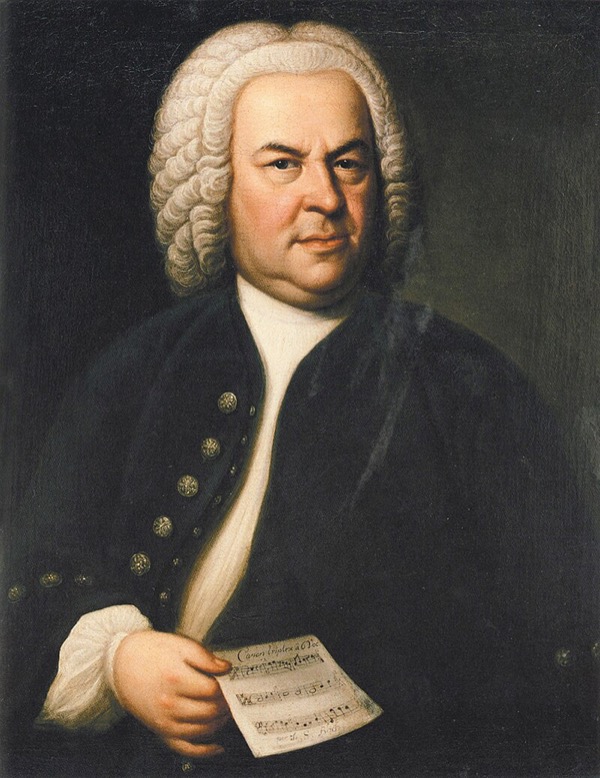
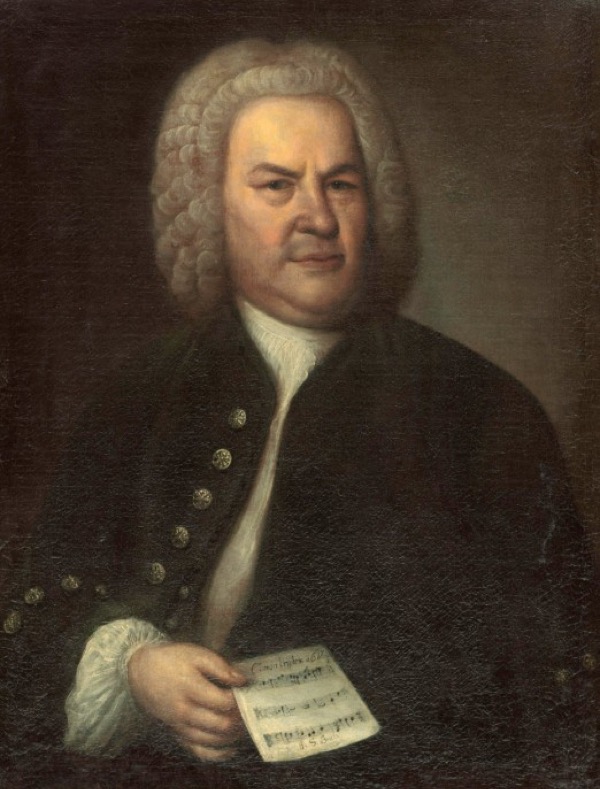
Johann Sebastian Bach

Johann Sebastian Bach

These lost works span categories including sacred and secular cantatas, Passion settings, and instrumental compositions.

Their disappearance can be attributed to various historical factors, including neglect after Bach’s death, the scattering of manuscripts among heirs, wartime losses, and more.

Today, we’re looking at the stories behind these lost Bach masterpieces – and how they might have been lost to time.

What Happened to Bach’s Manuscripts After He Died?

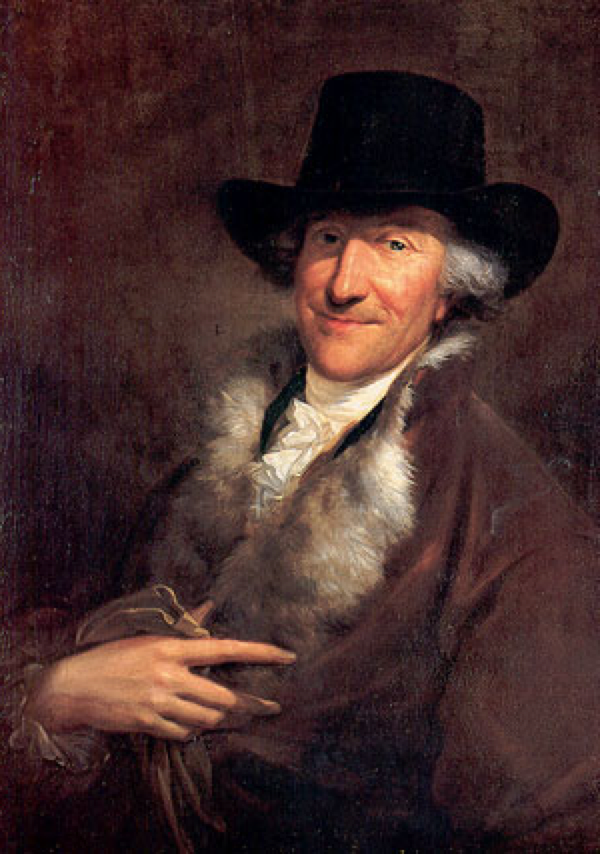
Wilhelm Friedemann Bach

Wilhelm Friedemann Bach

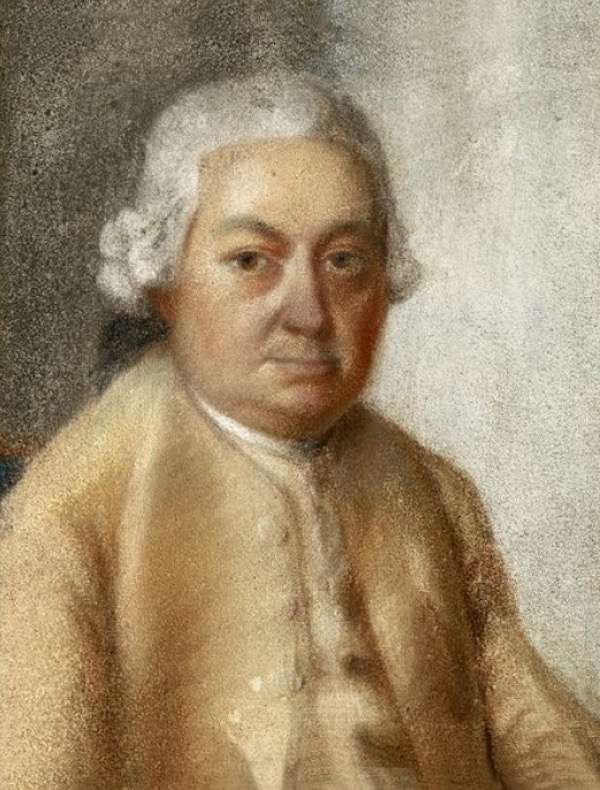
After Bach’s death in 1750, his manuscripts were divided among his family members, especially his widow Anna Magdalena and his sons Wilhelm Friedemann and Carl Philipp Emanuel Bach.

Wilhelm Friedemann sold his father’s scores piecemeal during various periods of financial struggle.

After his death in 1784, the remaining manuscripts were auctioned off to various collectors – including one of his students, Sara Itzig Levy, best-known today for being Felix Mendelssohn‘s great-aunt.

Carl Philipp Emanuel inherited another chunk of his father’s estate: the manuscripts of Bach’s Passions and other major works. He died in 1788, and his collection was passed to his granddaughter.

After she died in 1805, many of the manuscripts were sold off. A large portion was eventually purchased by a musical society and archive founded in Berlin known as the Sing-Akademie.

The Sing-Akademie’s Role In Preserving Bach Manuscripts

Carl Philipp Emanuel Bach

Carl Philipp Emanuel Bach

In 1800, German composer and conductor Carl Friedrich Zelter became the leader of the Sing-Akademie. His star student, Felix Mendelssohn, became fascinated with the Bach works that were in the musical society collection, as well as the ones that his great-aunt had saved for her own private collection.

Over the generations, wartime upheavals took a toll on Bach’s works.

During World War II, the Berlin Sing-Akademie archives were moved for safekeeping and then seized by the Soviet army.

For decades, it was believed the archives had been lost, but in 1999, they were found in Ukraine intact. The rediscovery of the old Sing-Akademie archives yielded some previously lost Bach works and documents.

Other Bach Rediscoveries

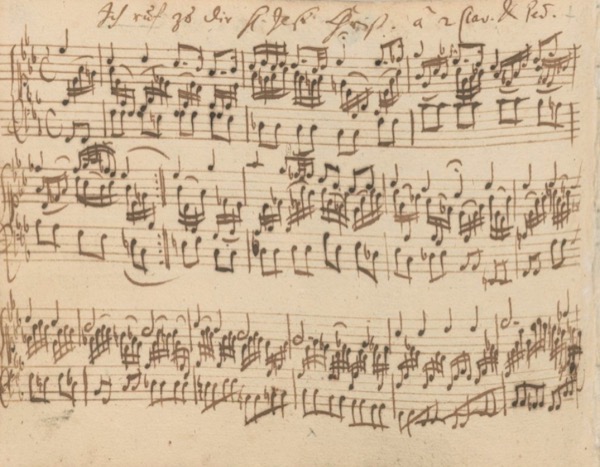
Bach manuscript

Bach manuscript

This isn’t the only place where undiscovered Bach manuscripts have been found, either.

In 1992, Peter Wollny, the present-day director of the Bach Archive in Leipzig, came across two unsigned and undated music manuscripts at the Royal Library of Belgium.

Years later, Wollny discovered that the handwriting in the manuscripts belonged to a student of Bach’s named Salomon Günther John, and that John may have copied them out.

The works – two Ciaconas for organ, likely dating from Bach’s teenage years – were authenticated and were performed for the first time in centuries in November 2025.

The discovery suggests that more lost Bach works might be uncovered someday.   

What Were the Lost Works?

The lost Bach works fall into a few baskets:

  • Sacred cantatas
  • Secular cantatas
  • Passions
  • Instrumental works

Why Are So Many of Bach’s Sacred Cantatas Lost?

Throughout his career, Bach’s job description often included writing sacred cantatas for performance on Sunday services and feast days.

While Bach worked in Leipzig between 1723 and 1750, his responsibilities included composing cantatas.

Carl Philipp Emanuel Bach claimed that he composed five full annual cycles of church cantatas.

Each annual cycle would consist of around 60 cantatas. Five full cycles’ worth would suggest the existence of 300. However, we only know of around 200, meaning around a hundred are presumably missing.

Another contributing factor to the confusion was the fact that Bach frequently (and understandably) reused or adapted parts of older cantatas as part of his newer versions.

After Bach’s death, there were simply too many pieces – and too many heirs – for the cantatas to remain a unified collection, so they were ultimately split up.  

What Happened to Bach’s Secular Cantatas?

Bach also composed numerous secular cantatas, i.e., celebratory works for royal birthdays, weddings, city officials, and the like.

Because they were often written for a single specific occasion, their scores were less likely to be preserved. Sometimes those scores might have been gifted to dedicatees or patrons as gifts.

One example is Bach’s Birthday Cantata for Augustus II (BWV 1156) from 1727. The libretto survives today because it was presented in print to Augustus, but Bach’s music hasn’t survived.

It has been theorised that portions of Bach’s Mass in B minor, dating from 1749, were adapted from this cantata, as pieces of the Mass appear to fit Haupt’s text.

If that theory is true, it means that Bach may have reused secular music in his later sacred music, or vice versa, even decades after the fact.  

Why Are So Many of Bach’s Passions Lost?   

Only two authentic Bach Passions have survived in their entirety: the St. John Passion from 1724 and the St. Matthew Passion from 1727.

We also have the libretto of a third: the St. Mark Passion.

However, Bach’s obituary lists five Passions, suggesting there might be two we don’t know about.

A payment record exists from 1717, paying Bach (referred to as “Concert Meister Bachen” in the paperwork) for a Passion music performance. However, we don’t have any trace of this hypothetical work at all.

As for the fifth, if it ever existed, we have no concrete evidence about it.

There’s an outside possibility that while writing his obituary, Bach’s family incorrectly ascribed a Passion to him. A surviving manuscript of a St. Luke’s Passion copied by Bach and his son Carl Philipp Emanuel exists, and for a while, historians believed that Bach had written it. However, it has since been attributed to another unknown composer.

If the obituary was correct, and there were indeed three other complete passions by Bach that we know nothing about, as gutting as the loss would be, it would also make a certain amount of sense. The Passions were massive works meant for performance during Holy Week, which only happened once a year, so these weren’t works that were intended to be preserved and performed long-term.

What Happened to Bach’s Lost Instrumental Works?

Scholars believe that we have far fewer instrumental works by Bach than we should, given that he had two appointments – one in Weimar from 1708 to 1717, and one in Köthen from 1717 to 1723 – where his primary responsibilities would have included writing instrumental music.

It is believed that his Harpsichord Concerto in D-minor (BWV 1052) was adapted from a lost violin concerto; transposing the keyboard part to violin suggests an original string version.   

In fact, reconstructions have been made for about ten instrumental concertos that Bach likely wrote but are now lost.

Bach’s obituary also mentions that he composed “many trios”, but not many survive.

There’s also an excerpt from a Sinfonia in D-major that ends abruptly and has no known accompanying sections; we simply don’t know where the rest went.  

Conclusion

Johann Sebastian Bach’s surviving output is vast, but, unbelievably, it represents only a fraction of what he actually composed during his lifetime.

The story of those lost pieces reminds us that there is much we still don’t know about Bach’s work – even though he is arguably the single most important figure in the history of classical music.

But there are still plenty of archives to comb through. So who knows? In the years to come, we may yet discover more of Johann Sebastian Bach’s lost works.

Friday, March 13, 2026

Johann Sebastian Bach

 Am 21. Mai ist das Kammerensemble der J. S. Bach-Stiftung zusammen mit der Sopranistin Julia Doyle und dem Bariton Matthias Helm zu Gast im Berliner Dom.

📅 21. Mai 2026 um 20:00
📍 Berliner Dom
🎟️ Tickets über den Berliner Dom
0:23 / 0:35

Friday, August 16, 2024

Air - Johann Sebastian Bach


Das "Air" von Johann Sebastian Bach aus der 3. Suite für Orchester (D-Dur; BWV 1068), 2. Satz. Einfach zurücklehnen, ins Grüne schauen und genießen. The "Air" by Johann Sebastian Bach from the 3rd orchestral suite (D minor; BWV 1068), 2nd movement. Just lean back, look into the green and enjoy. Photo 2005 by Nebelwarner: Forest at the "Venner Moor" near the city of Senden (German state North Rhine-Westphalia).

Featured Post

Debunking the Top 5 Myths About Chopin

  Over time, selective anecdotes, early biographies, and nineteenth-century ideals of the “suffering artist” have hardened into familiar cli...