Total Pageviews

Showing posts with label Händel. Show all posts

Friday, March 20, 2026

Why Can’t Classical Music Look Ahead


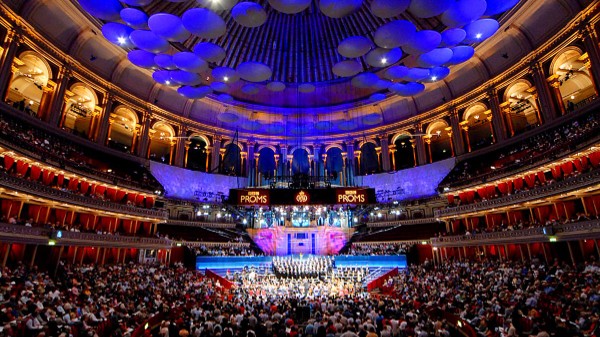
In the United Kingdom only, a quick skim through current musical programmes allows one to assess that most of the music performed in concert halls focuses on past composers. Surely, the amount of living composers has never been greater. Especially in the United Kingdom. Yet, all major events, such as the BBC Proms, focus on the past. The old sells. The last night of the Proms in 2025 will see Mussorgsky, Hummel, Gounod, Dukas and of course Britten and Elgar, and many others.

But it is not just in the United Kingdom, opera houses around the world often focus their seasons on a composer of choice, focusing on the catalogue and looking at less famous works. These are still the works of past composers. In 2025, it is Puccini and Handel who will take the frontline at the Paris Opéra.
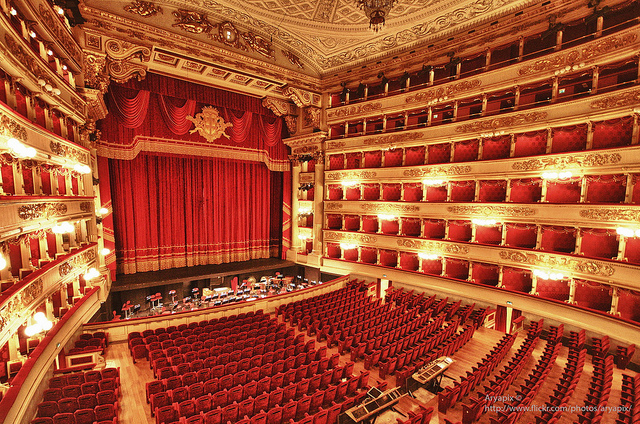
Opera house

© opera-diary.com

Out of all the currently living composers, very few are allowed the entrance to concert halls pre-mortem, it seems. They are, for most of them, only allowed in the smaller venues. And when they get the keys to the major houses, it is only after years of battling for a place with their ancestors.

However, this has not always been the case historically. Just like popular music today, classical music used to be focused on the new, on composers working towards getting commissions and progressing, on music that was being created in the moment.

Composers were not expected to live off the same material forever, but rather to come up with new and exciting music. The competition was tough too — each composer wanted to work for the finest patron, crown or church. The most important names, BachHandelMozartHaydnBeethoven, and so on, all performed like that.

As Western classical music grew out of Christianity, it was intended to accompany religious services, and coming up with new dedicated material was the daily expectation of the appointed composers. The repetition of the old was not advised either. Music was dedicated to God and a testament of dedication and discipline.
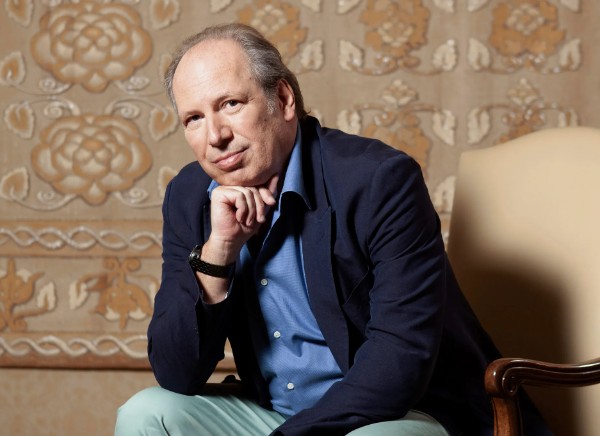
Hans Zimmer

Hans Zimmer

But then music, over the centuries and just like many things, became an industry… and entered the world of Hollywood. So much so that today some of the most successful composers are in fact film composers, such as Zimmer. The irony of it all is that now film music has entered the concert hall, and rather than taking up space in cinemas, it takes life in music venues. It is quite common to see listings of soundtracks being performed in their entirety, to the projected film, or not. What a three-hundred and sixty surprising twist; music for images, without the images.

Bach was not brought to the forefront before Mendelssohn exposed him again to the world, and most composers after their death would fall into oblivion. It was all about the new, until somehow, it shifted towards the old. Somehow, a fascination for the past, rather than the present, developed. But the promotion of old music in disfavour of new music is not a consequence of a lack of quality from existing composers. In fact, there are a plethora of immensely talented composers all over the world. Inventive, creative and curious musicians who perhaps deserve a better place in concert halls…

Friday, December 22, 2023

Transcending Tunes of Light and Shade Handel: Messiah

by 

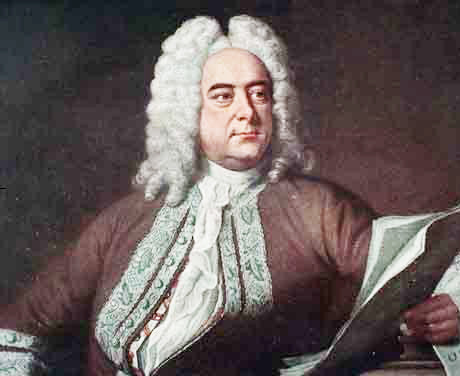
Credit: http://www.portlandhandelsociety.org/

George Frideric Handel © portlandhandelsociety.org

The reasons for this tradition are somewhat apocryphal: one version is that at the first London performance in 1743, the audience “together with the King”, were so moved by the ‘Hallelujah’ Chorus that they spontaneously rose to their feet. An alternative explanation is that King George II was so tone-deaf that he thought the performance had finished, and the orchestra was playing the National Anthem: once the King stood, everyone present was obliged to stand too. Whatever the reason, there is something really special about standing for such an uplifting and triumphant piece of music.

For me ‘Messiah’ will forever be associated with the beginning of the Christmas season. When I was at school, it formed an integral part of the concert which ended the Autumn term, along with the service of nine lessons and carols at the church next door to my school. I must have sung Handel’s ‘Messiah’ at least 10 times, for the tradition of performing it at Christmas continued when I joined my university choir.

Background

‘Messiah’ was composed in 1741, with a text compiled by Charles Jennens from the King James Bible and the version of the Psalms included with the Book of Common Prayer. It was first performed in Dublin on 13 April 1742 and received its London premiere nearly a year later. Initially it received a modest public reception, despite Handel’s established reputation in England, where he had lived since 1712, but gradually the oratorio gained in popularity and it is now one of the best-known, much-loved and most frequently performed choral works in Western music.  

The Story

The work is organised in three sections: Part 1 tells the story of the birth of Christ and includes all the familiar elements of the Christmas story. Part 2 is concerned with Christ’s passion and death, his resurrection and ascension, and ends with the joyous ‘Hallelujah’ chorus. It is this aspect of the work which makes it just as applicable for performance at Easter as well as at Christmas (in fact, its premiere in Dublin took place 19 days after Easter 1742). Part 3 returns to the theme of resurrection and represents the real core of the work as Christ’s resurrection is connected to our own redemption and sense of hope, beautifully affirmed in one of the work’s most famous arias, ‘I Know that My Redeemer Liveth’. And I suppose the best thing about ‘Messiah’ really is all the memorable ‘tunes’ – from ‘Ev’ry Valley Shall be Exalted’ to ‘The Trumpet Shall Sound’, ‘I Know My Redeemer Liveth’ to the charming duet between tenor and alto ‘O Death Where is Thy Sting’. Then there are the choruses: ‘And the Glory of the Lord’, ‘All We Like Sheep’, ‘For Unto Us a Child is Born, ‘Hallelujah’, and the wonderful fugue of the final chorus. In between all this are some beautiful solos, recitatives, which serve to move the narrative forward, and delightful orchestral interludes.

Handel brings the text to life with light and shade, storms and sunshine, fugue and counterpoint, and a huge variety of textures and “word painting”, the technique of having the melody mimic the literal meaning of the libretto. Because of the skilful way in which Handel organises the material, and the universal, redemptive message of the text, Messiah remains a work which is uplifting and life-affirming, regardless of how it is performed.

Monday, December 19, 2022

Handel: For Unto Us A Child Is Born from Messiah - Megaron Chamber Choir


Messiah (HWV 56) is an English-language oratorio composed in 1741 by George Frideric Handel. The text was compiled from the King James Bible and the Coverdale Psalter by Charles Jennens. It was first performed in Dublin on 13 April 1742 and received its London premiere nearly a year later. After an initially modest public reception, the oratorio gained in popularity, eventually becoming one of the best-known and most frequently performed choral works in Western music. Megaron Choir is in my humble opinion one of the best European youth choirs. Their energy, virtuosity, and competence are beyond rational understanding. Megaron Chamber Choir was founded in October 2003 on the initiative of Damijan Močnik, composer and conductor, and united former students of the Diocesan Classical Gymnasium at St. Stanislav’s Institution in Ljubljana, who had before been active in various choral ensembles and received music education in one or more of the five choirs at the Diocesan Classical Gymnasium. As such, Megaron Chamber Choir represents the peak of the choir pyramid of St. Stanislav’s Institution. In the sixteen years since its founding, Megaron Chamber Choir has evolved into a high-quality choir performing regularly in Slovenia as well as in Austria, Italy, Germany, Belgium, the Netherlands, Slovakia, Poland, USA, and Canada, and thus earning a reputation at home as well as abroad. More: https://kzmegaron.com/about/