by
On Fridays, the publisher Mitrofan Petrovich Belaieff had his musical gatherings, bringing together the cream of the St Petersburg composers. The earlier group, who came together around Mily Balakirev, known as the Mighty Handful, or just The Five (Balakirev, Alexander Borodin, César Cui, Modest Mussorgsky, and Nikolai Rimsky-Korsakov), had done their best to embody Russian national music, but fell apart after the early death of Mussorgsky. The timber merchant Belaieff stepped forward next.
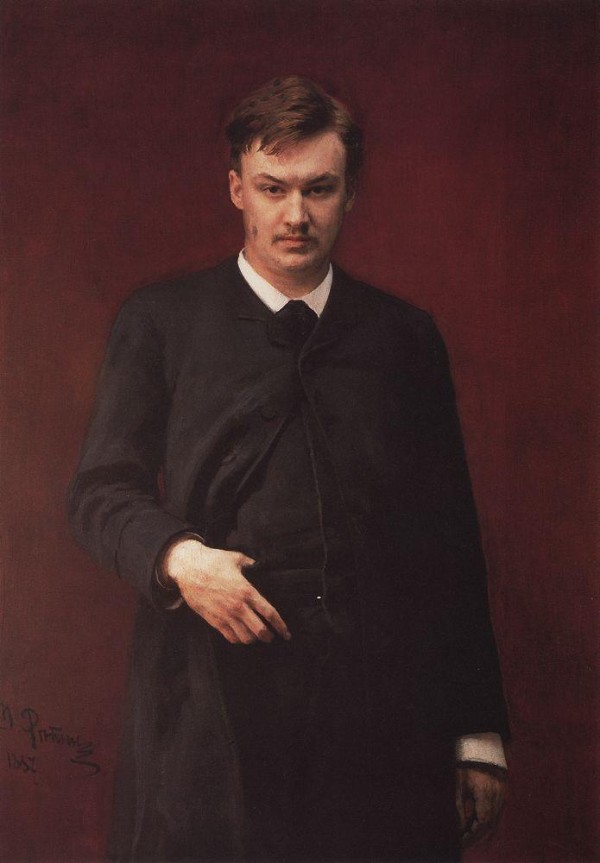
Portrait of Alexander Glazunov
Belaieff, with the family fortune in the timber industry behind him, was also a musician. He played the viola and, through Anatoly Lyadov, was introduced to Alexander Glazunov. In the early 1880s, Belaieff held Friday musical meetings for string quartet concerts at his house. Initially, they were playing through the quartets of Haydn, Mozart, and Beethoven in chronological order, but soon Russian music was making its appearance.
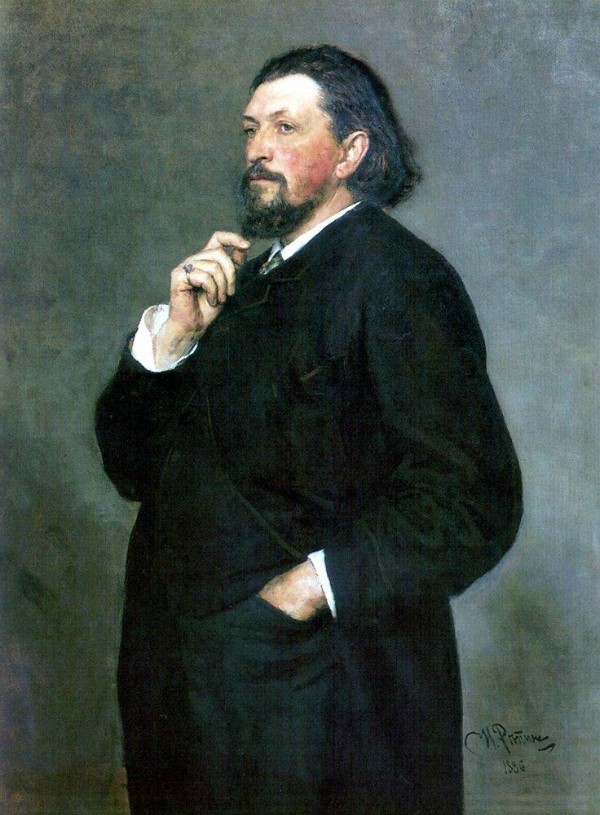
Portrait of Mitrofan Belaieff by Ilya Repin
Musically, Glazunov was the new driving force behind what became known as the Second Petersburg School. Rimsky-Korsakov, Lyadov, Glazunov, the critic Vladimir Stassov, and many others flocked to Belaieff’s soirees. Rimsky-Korsakov, Lyadov, and Stassov had been important members or adjuncts to The Five. The Belaieff meetings were never cancelled. Rimsky-Korsakov recalled that if a member of the original quartet fell ill, Belaieff quickly found a stand-in. Belaieff always played the viola in the quartet.
A normal evening would include a concert at around 1 am, after which food and wine flowed. After the meal, Glazunov or someone else might play the piano, either trying out a new composition or reducing a symphonic work to a 4-hand version.
The composers would all contribute to a group project, such as the string quartet for Belaieff’s 50th birthday in 1886, composed by Rimsky-Korsakov, Borodin, Lyadov, and Glazunov. Called the String Quartet on the Theme ‘B-la-F’, using the principal syllables of Belaieff’s last name. A year earlier, Glazunov, Lyadov, and Rimsky-Korsakov composed the three-movement ‘Jour de fête’ or ‘Name-Day Quartet’ for their patron.
For the Jour de Fête quartet, Glazunov contributed an opening movement called Les chanteurs de Noël. The Jour de Fête celebrates Christ’s birth, celebrated on January 6-7 on the Orthodox calendar. The Christmas singers bring joy to the festivities.
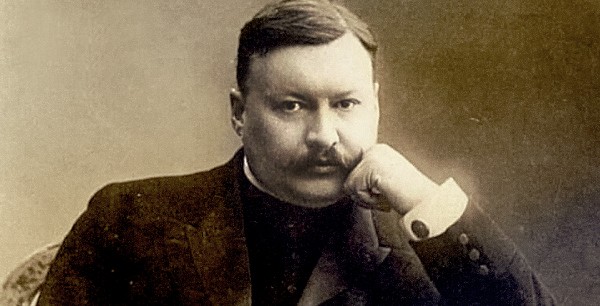
Felix Galimir at Marlboro
This recording was made in 1950 by the Galimir Quartet. Founded by violinist Felix Galimir (1910–1999) in 1927, the quartet was made up of him and his three sisters (Adrienne on violin, Renée on viola, and Marguerite on cello). They were the right quartet at the right time, recording Alban Berg’s Lyric Suite and the String Quartet of Maurice Ravel under the supervision of the composers, who were present during the rehearsals and recording sessions in 1936. These recordings were awarded two Grand Prix de Disques awards. After fleeing Germany because of his Jewish background, he ended up in Palestine and, together with his sister Renée, was a founding member of what would become the Israel Philharmonic Orchestra. In 1938, he moved to New York, where he re-founded the Galimir Quartet, this time with members Henry Seigl on violin, Karen Tuttle on viola and Seymour Barab on cello. In New York, he was a member of the NBC Symphony orchestra, concertmaster of the Symphony of the Air, and taught at The Juilliard School, the Curtis Institute of Music in Philadelphia, and Mannes College of Music in New York. In the summers, from 1954 to 1999, he was on the faculty of the Marlboro Music Festival.
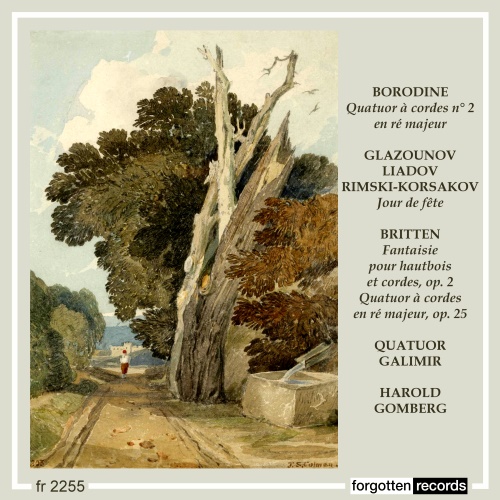
Performed by
Galimir Quartet
Recorded in 1950
Official Website
For more of the best in classical music, sign up for o


