Showing posts with label Friedrich Gulda. Show all posts

Friday, May 15, 2026

The Sorcerer’s Apprentice Friedrich Gulda and Martha Argerich


a6c1fcdad71990aabdfd835c73be09caAround Martha Argerich’s 5th birthday, her mother placed her under the pianistic tutelage of Vicente Scaramuzza. Even though Mr. Scaramuzza was considered a sadistic fanatic, he gave her a superb technical grounding and laid the foundations for her unique cantabile style.

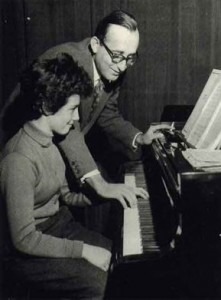
When Martha was asked at age 12 about her biggest dream, she unabashedly told President Peron that she wanted to study with Friedrich Gulda in Vienna. And Peron made it happen! Gulda had won the International Geneva Competition at age 16, and his lifelong passion would be to break down the barriers between the classical music and jazz idioms and successfully combine the two genres.

Gulda, like Martha, was a free and eccentric spirit! Both were fiercely independent, allergic to the rules imposed by career, fame, agents and concert halls. Martha admired Gulda for “his spontaneity, curiosity, and a love for music—for all music, not only for classical. He was such an open-minded person, so vital in this sense. He told me once ‘you have to learn everything before turning sixteen because later on gets a little stupid!’

She was fascinated by his sound and by the paradox of his controlled expressiveness. Argerich acknowledges Gulda as her biggest pianist influence. He recorded their lessons, and made her critique her own performances. He also told her to learn Ravel’s Gaspard and Schumann’s Abegg Variations in five days. “I did not find it difficult at all,” she said, “because I did not know it was supposed to be.” Argerich was Gulda’s only student, and she studied with him for only 18 months. Unimpressed by her subsequent fame and the personal chaos that surrounded her, he cried upon meeting her later, “What have you done with your life?” Essentially, we are talking about 2 extroverted recluses producing chaotic brilliance at the piano! A great number of pianists play difficult pieces and many photograph well. However, it is “her naturalness of phrasing that allows her to embody the music rather than interpret it.” Her native language is music, and she warmly credits Gulda with “having taught me how to listen.”

Friday, January 28, 2022

The Terrorist Pianist Friedrich Gulda

Credit: www.weinberger.co.at

© weinberger.co.at

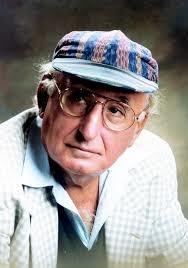
The genius pianist Friedrich Gulda (1930-2000) was lauded for his extraordinary interpretations of the music of BachMozartSchubert, and Beethoven. Highly sought after as a piano teacher, his students included Martha Argerich and Claudio Abbado. However, Gulda openly flaunted classical music etiquettes and conventions, playing some recitals in the nude. And in what some people have described as a tasteless publicity stunt, he even faked his own death in 1999. The entire classical music world lined up to pay tribute to Gulda, when a Geneva concert agent contacted the news media and reported seeing the pianist “remarkably alive.” Seemingly, Gulda sent a fax from Zurich airport announcing his own death in order to see what kind of obituaries would be written about him. “People have thrown so much muck at me while I am alive, I do not want them to chuck it into my grave as well.” All protestations aside, it might be telling that Gulda’s very next concert titled “Resurrection Party,” was fully booked.

Friedrich Gulda: Cello Concerto (Ernst Simon Glaser, cello; Royal Norwegian Navy Band; Peter Szilvay, cond.)

Gulda had a strong dislike for authority, and he refused to accept the “Beethoven Ring” offered by the Vienna Academy in recognition of his performances and recordings. He often made last-minute program changes onstage, and freely cultivated an interest in jazz. For Gulda, pianists who didn’t also compose were not to be considered real musicians. In his compositions, stylistic references to jazz gave way to improvisations and arrangements of the popular-music repertory. Teaming up with the likes of jazz great Chick Corea, Gulda uncompromisingly expressed his anti-bourgeois artistic convictions by jarringly juxtaposing elements and styles borrowed from jazz, folksong, electronic music and the classical music repertoire. It is hardly surprising that in classical circles he earned the nickname “terrorist pianist,” a moniker Gulda was predictably rather proud of.

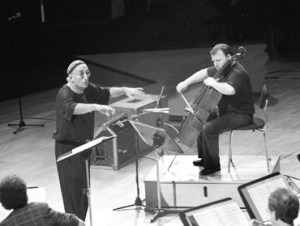
Gulda is commonly regarded as the “cross-over” pioneer of his time, and his most frequently performed work is the Concerto for Cello and Wind ensemble.

101675-guldagulda-u--schiff-2-f-inlayComposed for the cellist Heinrich Schiff in 1980, the work premiered at the Vienna Konzerthaus on 9 October 1981 with Schiff as the soloist and Gulda conducting. According to Gulda, Schiff only commissioned and performed this work because he wanted to make a recording of the Beethoven cello sonatas with Gulda. However, the cello concerto became such a rousing success that Schiff eventually forgot about Beethoven. The work bears a surprising double dedication—to Schiff and to the controversial socialist chancellor Bruno Kreisky, who held office at that time.

A conventional and classically inspired cello gesture immediately leads into a swinging Big Band riff, including percussive back beats and improvisatory cello passages. The contrasting theme in this “Overture,” on the other hand, comes straight from the Austrian mountainside. This “Ländler” features lilting dance rhythms in the woodwinds with obligatory Alpine horn calls, and eventually both sections are repeated. The “Idyll” returns us to the Austrian Alps. Indigenous and melodious folk tunes are first sounded in the brass chorus and subsequently taken by the soloist. The “Cadenza” skillfully embeds a variety of musical styles within a virtuoso character, while the “Menuett” opens with a cello cantilena accompanied by the guitar. Subsequently, the flute in conversation with the cello gracefully presents the musical contrast. Critics have spitefully suggested that Gulda’s music conveys an ironic distance to his native folk music. These sentiments, however, are not confirmed in the “Finale,” as a stylized marching band splendidly communicates with a classically inspired soloist.

Featured Post

Yuja Wang wore a heart rate monitor in Rachmaninov marathon, with astonishing results

4 April 2024, 17:03 | Updated: 5 April 2024, 15:58 Yuja Wang’s heart rate results revealed, after marathon Rachmaninov performance.  Picture...