by Georg Predota March 23rd, 2026
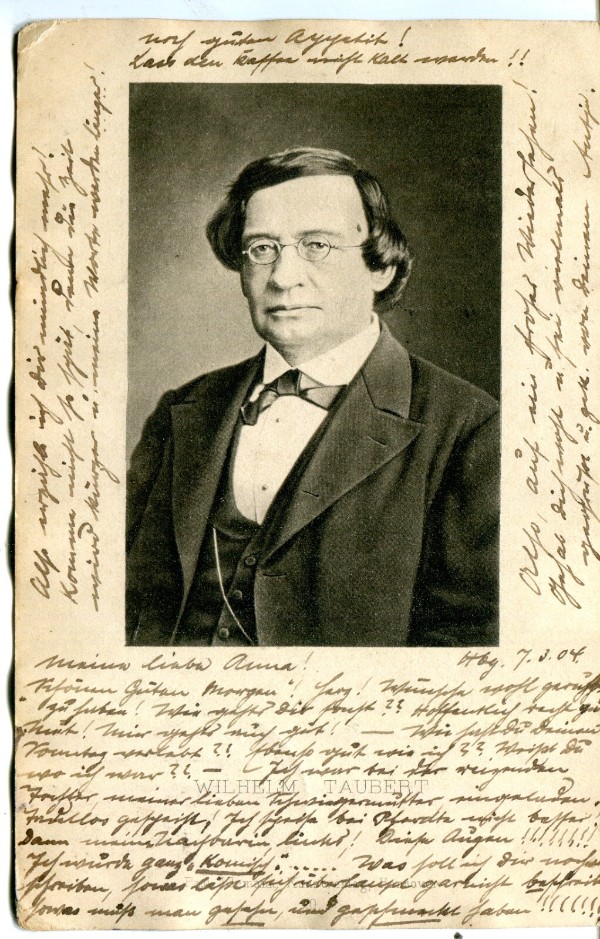
Wilhelm Taubert
Mendelssohn and Taubert studied piano with Ludwig Berger, and they exchanged a number of letters. In one of these letters, Mendelssohn identifies “the lack and impetus of spirit which, for all of Taubert’s musicianship, refined taste and great industry, nevertheless hindered him from achieving complete success as a composer.” (Lindeman, Grove Music Online, 2001)
On the occasion of Taubert’s birthday on 23 March, let’s explore the life and works of a capable yet eclipsed composer whose prolific output was ultimately overshadowed by his more illustrious contemporaries.
Childhood Promise
Carl Gottfried Wilhelm Taubert was born into a middle-class family. His father may have held an administrative or civil service position, and he was exposed to Berlin’s vibrant musical and theatrical scene at an early age.
Taubert showed great early promise on the piano, and his first structured lessons came from August Neithardt and, most significantly, Ludwig Berger. Berger was a student of Muzio Clementi and even went with him to Russia.
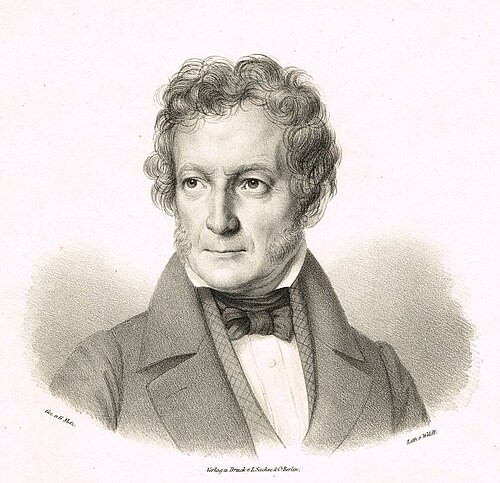
Ludwig Berger
A capable composer and piano virtuoso, Berger built his reputation as a teacher, counting Felix and Fanny Mendelssohn, Dorn, August Wilhelm Bach, and Wilhelm Taubert among his most distinguished students.
Dual Path in Berlin
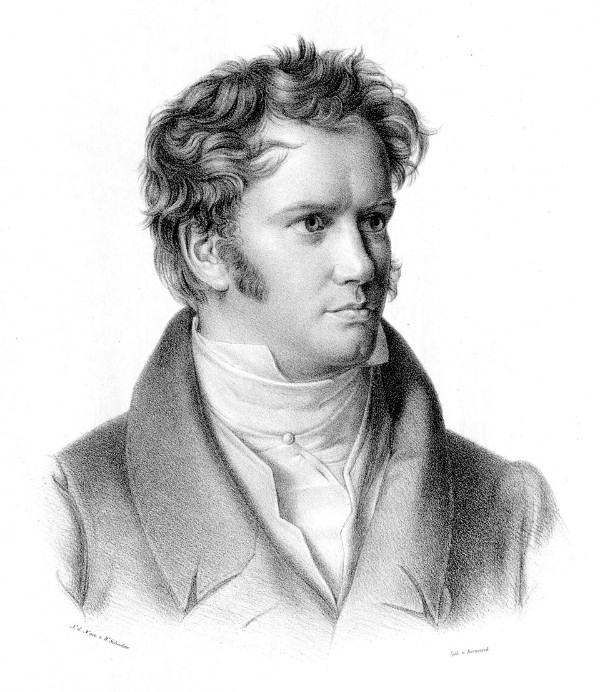
Bernhard Klein
Under Berger’s guidance, Taubert progressed rapidly, and he was allowed to perform publicly as early as age 13. Taubert also studied composition with Bernhard Klein, himself a student of Luigi Cherubini, who held the professorship of composition at the Royal Institute for Church Music and served as music director at the University of Berlin.
Alongside music, Taubert also pursued philosophy studies at the University of Berlin, preparing for a dual path that shaped his refined taste and intellectual approach to music. Among his first compositions were small instrumental pieces and sets of songs which attracted favourable comments from Mendelssohn.
Mendelssohn and Taubert engaged in a busy exchange of letters that discussed various aspects of musicianship and artistry. When a critic highly praised the uniqueness of the overture to A Midsummer Night’s Dream, Mendelssohn wrote to Taubert, “…the first obligation of any artist should be to have respect for the great men and to bow down before them…and not try to extinguish the great flames in order that his own small candle can seem a little brighter.” (Green, Biography as Ethics, 2006).
The Working Musician
Wilhelm Taubert
At the age of 20, Taubert was appointed assistant conductor and accompanist for the Berlin court concerts. He would subsequently become associated with the Berlin Königliche Schauspiele under Mendelssohn and Meyerbeer, and served as Generalmusikdirektor there from 1845 until 1848.
Taubert also held the appointment of court Kapellmeister until 1869, and in this position, he would conduct the royal orchestra until 1883. As far as we can tell, Taubert was highly regarded as a teacher, instructing Theodor Kullak, among others, at the Royal Academy of Arts.
Taubert composed in a graceful and popular style, and he soon attracted the attention of Robert Schumann. As the editor of the Neue Zeitschrift für Musik, Schumann reviewed a great many of Taubert’s compositions, indicating his high regard. He even asked Taubert to contribute to the journal.
Encounter with Schumann
In his early twenties, Taubert composed his Piano Concerto No. 1, dedicated to his piano teacher Ludwig Berger. Schumann heard the concerto performed by the composer in 1833, and three years later, after the score was published, he remembered many of the positive aspects of his first impression.
As Schumann writes in his 1836 review, “Without waxing lyrical, I could call this Concerto one of the most excellent.” (Lindemann, Hyperion, 2010) However, Schumann also found too many similarities to Mendelssohn’s Piano Concerto No. 1 in G minor, Op. 25. In the end, Schumann credits Mendelssohn as the original.
Challenges in Complexity
Wilhelm Taubert composed five symphonies that reveal the challenges of writing longer, more complex music. He also composed six operas that were all staged at the Königliches Theater in Berlin. “Although these works seem not to have stood the test of time, they were well received and often highly admired when written.” (Smith, Naxos, 2024)
In his compositional style, Taubert stayed close to the traditional models offered by Mendelssohn and Carl Maria von Weber. His music is highly diatonic and cadential, with chromaticism primarily reserved for modulatory passages.
As has been noted, Taubert’s music is full of graceful and gentle melodies of light lyrical charm, and therefore well adapted to smaller and more intimate musical forms. As such, it is hardly surprising that Lieder form an important part of his output.
A Forgotten Footnote
For much of the 20th century, Wilhelm Taubert was little more than a forgotten footnote in music history. Overshadowed by Mendelssohn and Schumann, his extensive oeuvre was quickly forgotten after his death.
Mendelssohn’s assessment, quoted at the beginning, might well have played its part. While he praises Taubert’s technical skill and competence, and acknowledges his diligence and productivity, he pinpoints a core deficiency.
What Mendelssohn misses in Taubert’s music is the inner fire and passion, or, in other words, originality and creative energy. This isn’t just a mild criticism but a clear statement that Taubert might well have been a capable composer, albeit one without genius.
21st-Century Revival
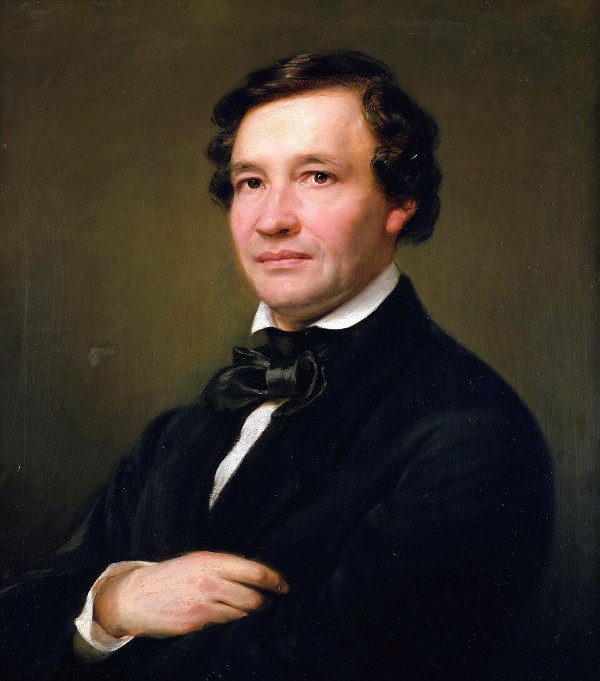
Wilhelm Taubert
Fortunately, the 21st century has engaged in a quiet rediscovery that finally gives listeners a chance to hear this forgotten voice. Initially, Hyperion Records released Taubert’s two piano concertos as Volume 51 of its acclaimed “Romantic Piano Concerto” series.
However, the real breakthrough arrived in September 2025 when pianist Lucas Wong released the world-premiere recording of Taubert’s Piano Sonatas. Praising its pastoral charm, light virtuosity and intimate storytelling, critics have found great delight in the discovery of a once-neglected composer.
In an age hungry for fresh repertoire, the works of Wilhelm Taubert remind us of the vast untapped 19th-century music. While his symphonies and operas still await full revival, Taubert is finally restored to the broader narrative of 19th-century Romanticism.


