by
However, such finales are not, strictly speaking, necessary. Sometimes composers subvert expectations in favour of quieter, more introspective endings.
Such endings are always striking. Today, we’re looking at seven symphonies with quiet finales and the contexts in which they all happen.
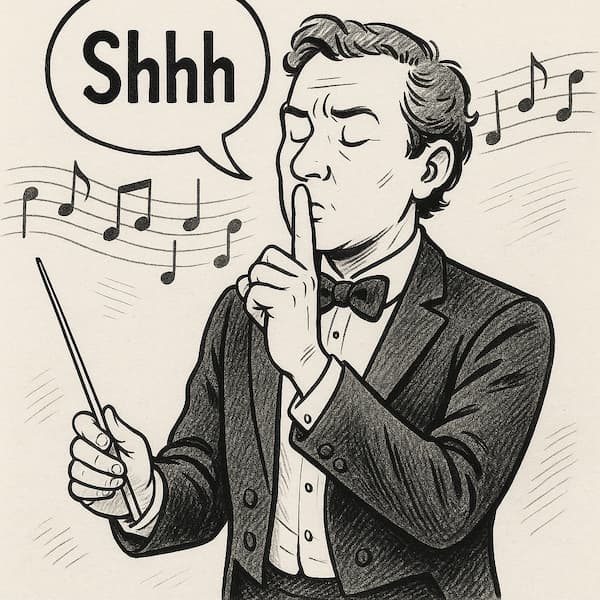
(Image created by Chatgpt)
Beethoven: Symphony No. 6 (1802-1808)
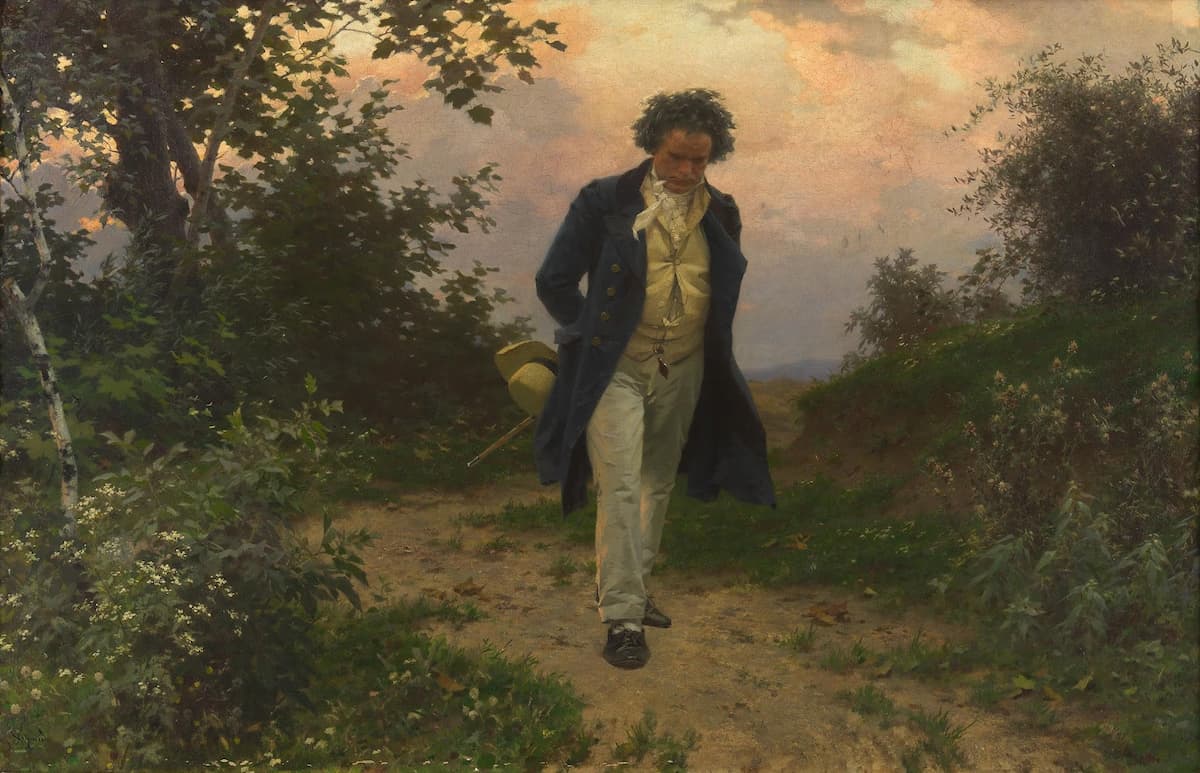
Julius Schmid: Beethoven’s Walk in Nature
Like many writers and composers of his time, Beethoven was deeply inspired by the natural world.
In fact, he was so inspired that in 1802, he decided to write a programmatic symphony containing musical portrayals of natural phenomena like a babbling brook and a rumbling thunderstorm.
To portray his vision, instead of the traditional four movements, this symphony has five.
According to the composer, the first movement portrays a visitor’s joy at arriving in the countryside, the second a bubbling creek, the third a rural dance, the fourth a thunderstorm, and the fifth the song of a shepherd.
At the end of the final movement, the lilting shepherd’s song reappears pianissimo, with elegant filigree adorning it in the strings.
The ending begins around 41:00.
Haydn: Symphony No. 45, “Farewell” (1772)
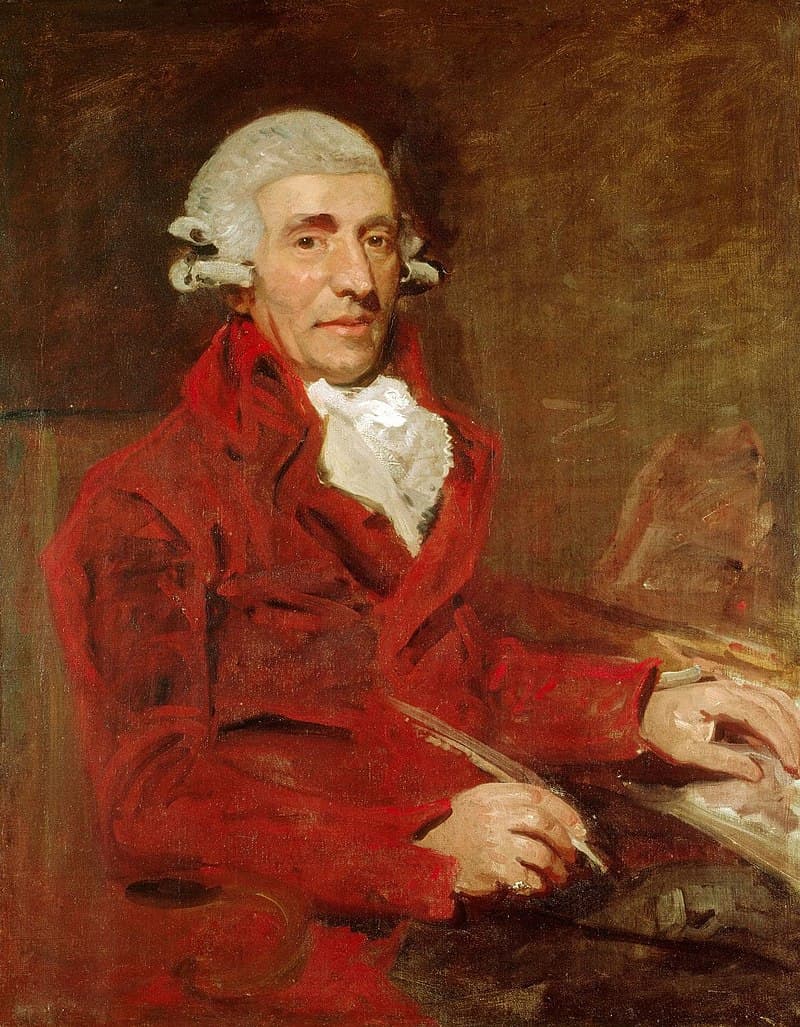
Haydn in London
In 1761, Joseph Haydn began working for the wealthy Esterházy family.
In the summer of 1772, he and his musicians were living and working at the Esterházy palace in rural Hungary.
The musicians were getting restless for summer vacation and desperately wanted to return to their families. So they asked Haydn to use his influence with Prince Esterházy to release them.
Instead of going to the prince directly, Haydn wrote an unusual symphony. This symphony became known as the “Farewell.”
The nickname came about because the score of the final movement instructs the performers to leave the stage one by one until only two violinists are left playing. (One of them would have been Haydn himself.)
Prince Esterházy got the message. The court returned to the city of Eisenstadt the next day.
The ending begins around 23:30.
Sibelius: Symphony No. 4 (1909-11)
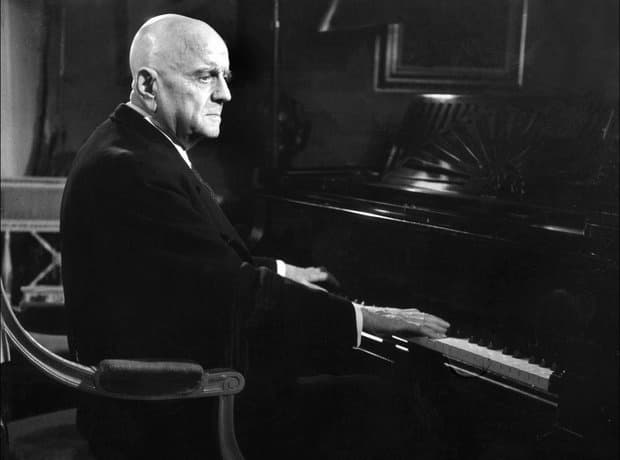
Jean Sibelius
In 1909, Jean Sibelius was struggling with a variety of mental and emotional challenges.
First, he was coming to terms with his alcohol addiction. In 1907, the stress caused by his excessive drinking and partying had landed his beloved wife Aino in a sanatorium.
Around the same time, he had to undergo surgery for throat cancer. He would be terrified for decades to come that the cancer would reappear and kill him.
In addition to dealing with challenges in his personal life, he was metabolising bleak ideas from the broader zeitgeist. His brother was a psychiatrist, and all Europe was talking about Freudian ideas like psychoanalysis (in fact, Sibelius labelled the fourth his “psychoanalytic symphony”). He did not find these ideas particularly comforting.
He also was in contact with colleagues making their careers in cities like Vienna and Paris, and found that he had trouble relating to the avant-garde creative paths they were taking. (Stravinsky, for instance, began working on his cutting-edge Rite of Spring in 1910.)
All of these influences combined heightened Sibelius’s feelings of isolation and triggered an artistic identity crisis. When he finally finished the Fourth, Sibelius wrote to a friend, “It stands as a protest against present-day music.”
It makes perfect sense that during this time, which was difficult personally and professionally, Sibelius looked inward and turned convention on its head.
By the end, absolutely nothing in this work feels resolved. Even the key of the final movement is ambiguous. It is a masterpiece of melancholy understatement.
The ending begins around 32:30.
Brahms: Symphony No. 3 (1883)
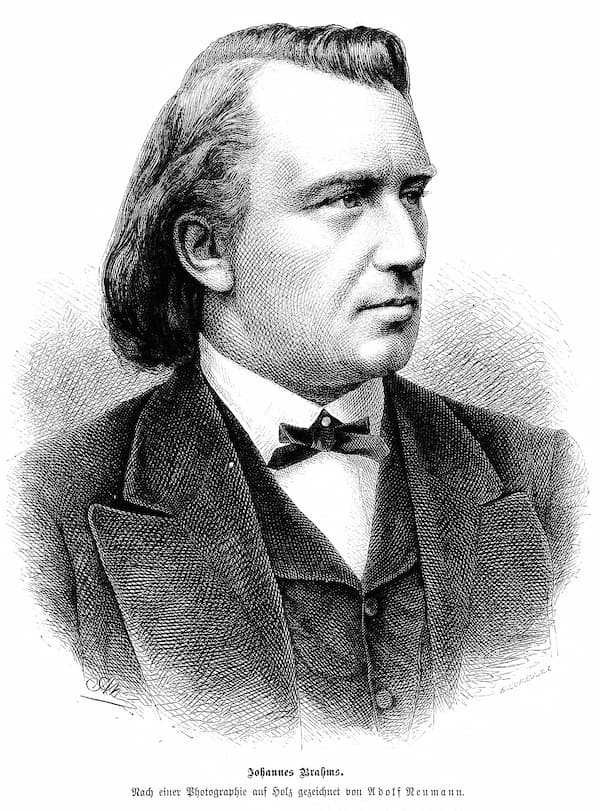
Johannes Brahms, 1880
As a very young man barely out of his teens, Brahms chose as a personal motto the phrase “frei aber froh” (free but happy), which, of course, is abbreviated F.A.F.
Thirty years later, Brahms returned to his motto as inspiration for the theme of his third symphony: the descending main theme of the first movement prominently features the notes F-Ab-F.
From this simple idea, Brahms creates a larger structure that sees the notes repeated in a variety of guises across multiple movements.
Brahms was in love with pianist Clara Schumann for decades. In the end, he decided not to marry her – or anyone else – in order to focus on his work. Perhaps this symphony was partly his coming to terms with the fact that he would never have a partner or children, making the old “free but happy” musical motif a bittersweet one.
Given this background, it’s understandable why Brahms didn’t think a bombastic finale would be appropriate.
Instead, he chose a gentle, bittersweet send-off, repeating the opening motif, but in a dreamy fashion. It sounds like a man finally coming to terms with his life path.
The ending is around 35:00.
Tchaikovsky: Symphony No. 6 (1893)
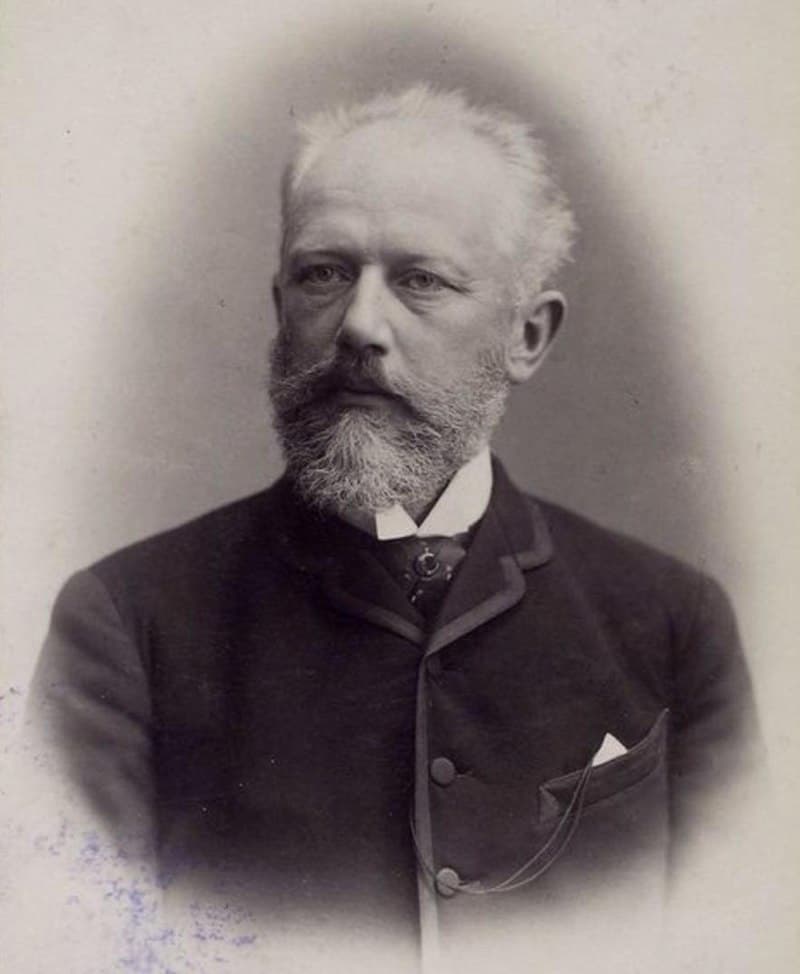
Émile Reutlinger: Pyotr Il’yich Tchaikovsky, 1888
In February 1893, Tchaikovsky wrote to his nephew:
Now, on my journey, the idea of a new symphony came to me, this time one with a programme, but a programme that will be a riddle to everyone. Let them try and solve it … The programme of this symphony is completely saturated with myself and quite often during my journey I cried profusely.
The symphony – his sixth – became known as “The Passionate Symphony” or “Pathetique.”
The symphony seems to come to a close at the end of the third movement. It’s so bombastic that even today, it’s common for audience members to break out in applause after it finishes.
However, there’s still one more movement left to go. It’s marked “Adagio lamentoso”, meaning “lamenting adagio.”
By the end of the movement, the orchestra’s desperate fury is replaced by tragedy. The situation is hopeless. The basses play low pizzicato notes that sound like a slowing heartbeat. The last few measures are marked “ppppp” and the music dies away into silence.
This ending is so unusual that future generations wondered if this was some kind of suicide note…especially since Tchaikovsky died of cholera nine days after he conducted the symphony’s premiere.
The ending is around 48:00.
Brian: Symphony No.1, ”Gothic” (1919-1927)
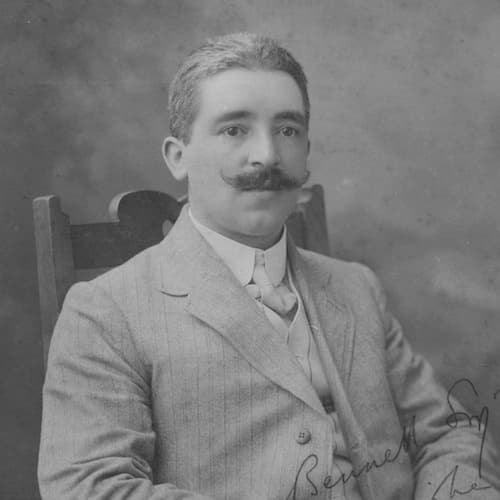
Havergal Brian © Wikipedia
In 1919, British composer Havergal Brian embarked on a massive project: a symphony that would take nearly two hours to perform.
The forces required for a performance of the piece are mind-boggling. Presenters need to hire rarely used instruments, such as the basset horn, thunder machines, chains, rattles, organ, a massive offstage brass section, six sets of timpani, two harps, forty violins, and more.
That’s not even counting the four adult choirs, children’s choir, and four vocal soloists!
All in all, the work has six movements. It attempts to portray the grandeur of the Gothic period, and all of the history made in Europe during that time.
The finale ends with a hushed choral statement consisting of the words “non confundar in aeternum.” This is the ending to the Te Deum: “May I not remain confounded forever.”
The ending is around 1:44:00.
Vaughan Williams: Symphony No. 3, “Pastoral” (1922)
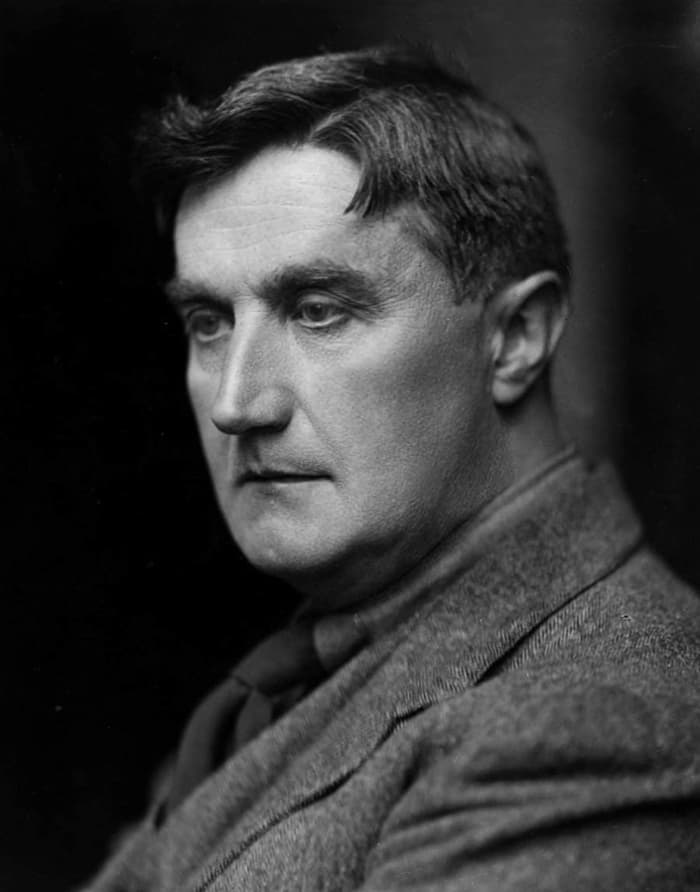
E.O. Hoppé: Vaughan Williams, 1920
In 1922, English composer Ralph Vaughan Williams and his fellow citizens were still coming to terms with the bloodbath of World War I.
Vaughan Williams wrote many works influenced by his experiences as a medical orderly and lieutenant on the front lines. He took inspiration from the pastoral fields he’d seen in France and England, and his longing to imagine them in a time of peace.
In the fourth movement finale, Vaughan Williams introduces a soprano voice to the score. She enters an ethereal way over a quiet timpani roll, singing a wordless song. The lack of words means that listeners can ignore language and focus on the sheer humanity of her voice instead.
She appears again in the work’s final moments, creating one of the most goosebump-inducing quiet endings in the repertoire. She is otherworldly.
The ending is around 26:30.


