Showing posts with label Engelbert Humperdinck. Show all posts

Tuesday, July 14, 2026

The Strangest Deaths of Famous Composers: Part 2

 by Emily E. Hogstad  July 15th, 2026


In Part 2 of our series on strange composer deaths, we move into the twentieth century – an era shaped by modern medicine, world wars, and rapidly changing artistic worlds.
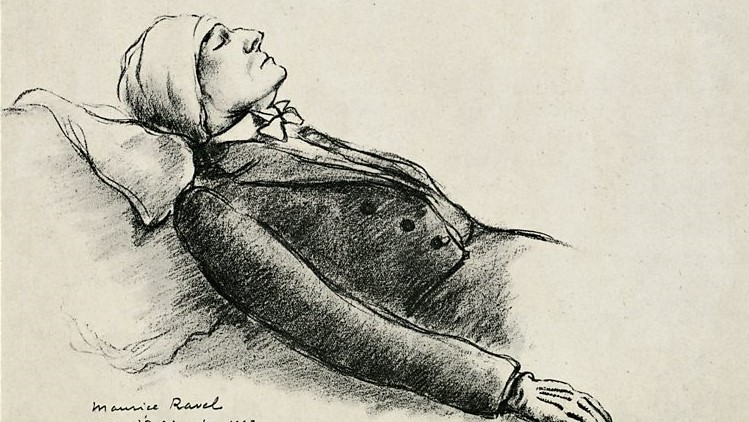
Ravel on his deathbed © Lebrecht Music & Arts

Ravel on his deathbed © Lebrecht Music & Arts

These composers did not die quietly or predictably. Instead, their final days were marked by misdiagnosed illnesses, institutionalisation, sudden accidents, wartime chaos, or shocking medical failures.

Today, we’re looking at some of the strangest deaths of famous composers.

Hugo Wolf (1903)  

In 1897, composer Hugo Wolf was entering the final stages of a syphilis infection.

At the time, he was suffering from delusions that he was the intendant of the Vienna Opera. His friends only succeeded in sending him to an asylum by telling him it was the Emperor’s home, where he would sign the paperwork to finalise his new position.

He was in and out of institutions over the following years. At one point, he attempted suicide by jumping into a lake, but he survived – and then was committed for the rest of his life.

In early 1902, doctors determined he’d have just a few days of suffering left. But he survived for a full year more, only dying of a pulmonary infection in February 1903.

Enrique Granados (1916) 

Spanish composer Enrique Granados died a tragic hero’s death.

In 1916, in the middle of World War I, he was touring America. Toward the end of that tour, he accepted one last recital invitation and postponed his passage.

It was a fateful decision. Crossing the English Channel, his British vessel was torpedoed by a German U-boat.

In the chaos, Granados found a spot on a lifeboat…but then he saw his wife in the water and jumped into the ocean to save her. (Women of the 1910s, who usually dressed in heavy and restrictive clothing, were especially prone to drowning.)

Both died.

Alexander Scriabin (1915)  

Russian composer Alexander Scriabin had an active creative imagination.

In the 1910s, he conceived a multimedia extravaganza called Mysterium, to last seven days and be performed in the Himalayas.

While he was working on this project, a boil on his lip – possibly originating from shaving – became infected.

He began running a high fever and developed septicemia. Nine days later, he was dead, along with his dreams for Mysterium.


Engelbert Humperdinck (1921)  

In September 1921, composer Engelbert Humperdinck attended a performance of the opera Der Freischütz. His son was serving as the stage director of the production.

During the performance, Engelbert suffered a heart attack. He died the following day from a second heart attack.

Wolfram would go on to make a career in opera and write a biography of his father.

Alban Berg (1935)  

In 1935, composer Alban Berg set aside his demanding opera Lulu to work on a violin concerto, which he wrote quickly over the summer.

The death of Alma Mahler‘s daughter Manon at the age of 18 inspired him to subtitle the magical, melancholy work “To the memory of an angel”: a subtitle that would prove to be prophetic.

Berg returned to Lulu, hoping to finish it, but in November 1935, he was bitten by an insect. A boil developed on his back and became infected. He ended up developing sepsis and dying on Christmas Eve.

Lulu remained unfinished, although portions would be presented in the years to come.

After the death of Alban’s widow, Lulu was finished in the 1970s by composer and conductor Friedrich Cerha.

Louis Vierne (1937)  

On 2 June 1937, blind composer and organist Louis Vierne played a fateful organ recital at Notre-Dame Cathedral. It would be his 1,750th – and final – one.

He had finished the main body of his program and was just about to begin improvising from themes submitted to him in Braille.
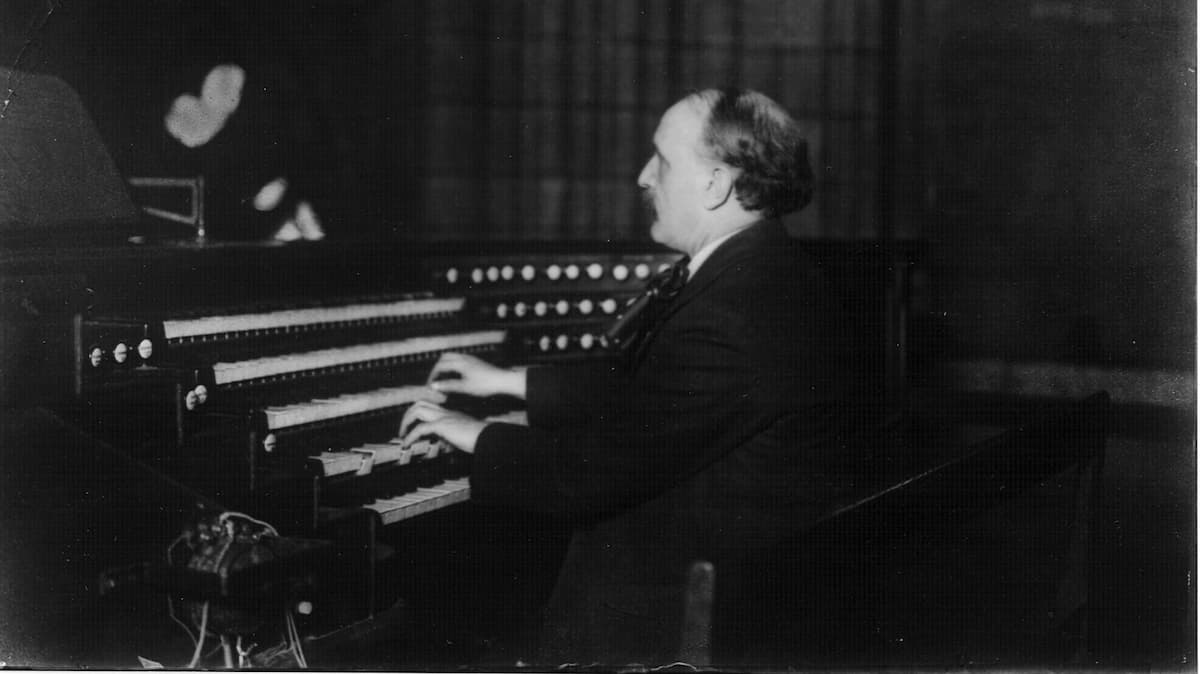
Louis Vierne at Notre Dame

Louis Vierne at Notre Dame © Rollin Smith

He pulled out a stop, had some kind of cardiac event, and then fell off the bench. His foot was stuck on the low E-pedal note. The note resonated through the cathedral.

Amazingly, he had always expressed a wish to die while playing at the organ.


George Gershwin (1937)  

In 1937, composer George Gershwin began experiencing an array of concerning symptoms: headaches, coordination issues, and mood swings. He even started smelling burning rubber.

However, doctors chalked it up to stress and his workaholic tendencies.

But on 9 July 1937, he collapsed, and doctors realised he might have a brain tumour.

He had emergency surgery, and a large tumour (now believed to be a glioblastoma) was removed from his skull.

Tragically, he did not survive. He was just 38 years old.


Maurice Ravel (1937)  

Composer Maurice Ravel suffered a similar fate to Gershwin the same year.

In October 1932, he was in a taxi accident. It was originally thought that Ravel’s injuries were minor, but in retrospect, it seems like he never quite recovered. He began forgetting things like his address and even his music.

He began suffering from head pain in 1937. That December, he underwent experimental brain surgery in the hope of diagnosing his condition. No solid diagnosis was made, but no tumour was found.

Ravel never really gained lucidity and became unable to swallow. He died on 28 December 1937.


Anton Webern (1945)   

Composer Anton Webern died in a tragic accident in the chaos of post-WWII Mittersill, Austria.

One night after dinner, he stepped outside his house to smoke a cigar: a much-appreciated gift from his son-in-law, who was active in the wartime black market.

At the same time, that same son-in-law welcomed two Americans…who, it turns out, were actually soldiers visiting to question him. Webern’s son-in-law was arrested.

In the hubbub, one of the soldiers rushed outdoors and – inexplicably and indefensibly – shot Webern three times.

His family moved the composer to a bed and called the doctor, but his injuries were too grave to survive.

Conclusion

Every death is a tragedy, but when a composer’s life ends suddenly, violently, or under deeply unsettling circumstances, the loss can feel especially acute.

Many of these composers died in the midst of active careers, leaving behind unfinished works and unanswered artistic questions. It’s impossible not to wonder what music was lost along with them.

At the same time, they remind us that behind even the most sophisticated music were fragile human lives, shaped by historical forces beyond their control.

Knowing their stories deepens our understanding of their music and sharpens the sense of urgency, vulnerability, and humanity that still resonates in their works today.

Friday, August 25, 2023

THRILLMAKER: The Humperdinck is back!

BY JOEE GUILAS


AT A GLANCE

  • This September, thelegendary British crooner returnsto the country as part of hisongoing world tour, “The Legend Continues.” Fans will be serenaded by his passionate performances in a two-night concert at the Newport Performing Arts Theater, Newport World Resorts, Pasay City, on Sept. 9 and 10, 7:30 PM.


hump1.jpeg
Engelbert Humperdinck

Ironic as it may sound, the singer who immortalized the song “Release Me” is not considering releasing his tight hold on fame anytime soon.  Legendary balladeer and frequent Manila visitor Engelbert Humperdinck will soon be en route to another world tour, including a stop in the Philippines this September.

“It’s been four years since my last visit, and I’m looking forward to coming over.  I’m excited about coming over there.  I know that Filipinos love my music.  I’ve been spending a lot of time online, and I see them singing my songs on karaoke,” shared Humperdinck. He said this also prompts him to always have something special for his Filipino fans whenever he is afforded the chance to visit the country.  This next visit is undoubtedly not going to be an exception.

“I have a surprise for the Filipino people when I get there,” he teased. 

The promised surprise is on top of the 87-year-old singer’s new album, "All About Love.”  He hopes that some cuts in this new project will be hits just like his classic “Release Me,” which stayed on top of the charts for 56 consecutive weeks in multiple countries.

“The music that I record seems timeless when I recorded them in the past, and I never get tired singing them, especially Release Me,” Humperdinck acknowledged. 

Asked whether or not he is getting tired of singing at his ripe age, Humperdinck stressed that slowing down anytime soon is far-fetched, at least at this point: “Retiring is not a word that I use.  I have such a great following that I don’t want to disappoint them.  Wherever I go, I get such a great reception.”  More than this, however, the debt of gratitude to his craft makes him stick to the life of being a musician.

“Music has been my passport to the world.  It’s made me see countries I’ve never seen before. It’s a wonderful way to make a living.” 

This September, the legendary British crooner returns to the country as part of his ongoing world tour, “The Legend Continues.” Fans will be serenaded by his passionate performances in a two-night concert at the Newport Performing Arts Theater, Newport World Resorts, Pasay City, on Sept. 9 and 10, 7:30 PM.

For over 50 years, Humperdinck mastered wooing audiences worldwide, earning him the title “King of Romance.” Among his commercially successful singles are “Release Me,” “Quando Quando Quando,” “Spanish Eyes,” and many more.

While his captivating vocals have charmed millions of fans, the man earned his icon status in the music industry with massive achievements through the decades. Humperdinck rose in the music scene in the 1960s alongside iconic bands The Beatles and The Rolling Stones. Throughout his long career, he became a four-time Grammy nominee and released dozens of studio albums, selling over 150 million records. To this day, he consistently showcases his legacy and wins the hearts of listeners across the globe.

Now, given all these tucked into his belt, it should be no wonder why fans are finding it difficult to release his music from their playlists. 

hump1.jpeg
Engelbert Humperdinck

Ironic as it may sound, the singer who immortalized the song “Release Me” is not considering releasing his tight hold on fame anytime soon.  Legendary balladeer and frequent Manila visitor Engelbert Humperdinck will soon be en route to another world tour, including a stop in the Philippines this September.

“It’s been four years since my last visit, and I’m looking forward to coming over.  I’m excited about coming over there.  I know that Filipinos love my music.  I’ve been spending a lot of time online, and I see them singing my songs on karaoke,” shared Humperdinck. He said this also prompts him to always have something special for his Filipino fans whenever he is afforded the chance to visit the country.  This next visit is undoubtedly not going to be an exception. 

“I have a surprise for the Filipino people when I get there,” he teased.

The promised surprise is on top of the 87-year-old singer’s new album, "All About Love.”  He hopes that some cuts in this new project will be hits just like his classic “Release Me,” which stayed on top of the charts for 56 consecutive weeks in multiple countries.

“The music that I record seems timeless when I recorded them in the past, and I never get tired singing them, especially Release Me,” Humperdinck acknowledged. 

Asked whether or not he is getting tired of singing at his ripe age, Humperdinck stressed that slowing down anytime soon is far-fetched, at least at this point: “Retiring is not a word that I use.  I have such a great following that I don’t want to disappoint them.  Wherever I go, I get such a great reception.”  More than this, however, the debt of gratitude to his craft makes him stick to the life of being a musician.

“Music has been my passport to the world.  It’s made me see countries I’ve never seen before. It’s a wonderful way to make a living.”

This September, the legendary British crooner returns to the country as part of his ongoing world tour, “The Legend Continues.” Fans will be serenaded by his passionate performances in a two-night concert at the Newport Performing Arts Theater, Newport World Resorts, Pasay City, on Sept. 9 and 10, 7:30 PM.

For over 50 years, Humperdinck mastered wooing audiences worldwide, earning him the title “King of Romance.” Among his commercially successful singles are “Release Me,” “Quando Quando Quando,” “Spanish Eyes,” and many more.

While his captivating vocals have charmed millions of fans, the man earned his icon status in the music industry with massive achievements through the decades. Humperdinck rose in the music scene in the 1960s alongside iconic bands The Beatles and The Rolling Stones. Throughout his long career, he became a four-time Grammy nominee and released dozens of studio albums, selling over 150 million records. To this day, he consistently showcases his legacy and wins the hearts of listeners across the globe.

Now, given all these tucked into his belt, it should be no wonder why fans are finding it difficult to release his music from their playlists.

Friday, February 14, 2014

Engelbert Humperdinck - His Music and His Life

German composer Engelbert Humperdinck was born on September 1, 1854 bin Siegburg/Rheinland. He has - of course! - nothing to do with the identical pop singer. Humperdinck received innumerable awards from the Collee of Music Cologne and the Mozart Award from the Munich Academy of Tone Arts.

During the Bayreuth Festival in 1882, Humperdinck became the assistant of Richard Wagner. Humperdinck's career went on as Professor of Composition in Barcelona (1885-1887) and 1890 in Frankfurt/Germany. In 1900, Humperdinck took over the master director form of the Berlin Academy of Arts.

Humperdinck's compositions started with chorus ballads, simple songs, a humorous orchestral work and a tonal, fine sounding string quartet.

His first opera "Hansel and Gretel" (1893) showed very well that the new generation lacks very much Richard Wagner's pathos. "Hansel and Gretel" became an utterly impossible folksong melodic "Christmas"-opera with the lyrics of Humperdinck's sister Adelheid Wette.

The melodramatic opera "The King's Children" (1897) premiered 1910 in New York, but -admittedly - became never home and familiar. "The Marriage with Reluctance" (1905) flopped because of naive awkwardness and ornate orchestral composition.

The keenness Engelbert Humperdinck passed away in Neustrelitz on September 27, 1921.

"Hansel und Gretel" - "The Overture" by Engelbert Humperdinck