Total Pageviews

Showing posts with label Part 1. Show all posts

Friday, February 6, 2026

The Most Passionate Composer Love Letters of All Time, Part 1


Today, we’re looking at love letters from ten composers, including Mozart being very saucy on a business trip, Brahms pining over Clara Schumann, and Haydn making a shocking confession to his mistress.

Joseph Haydn, 1791
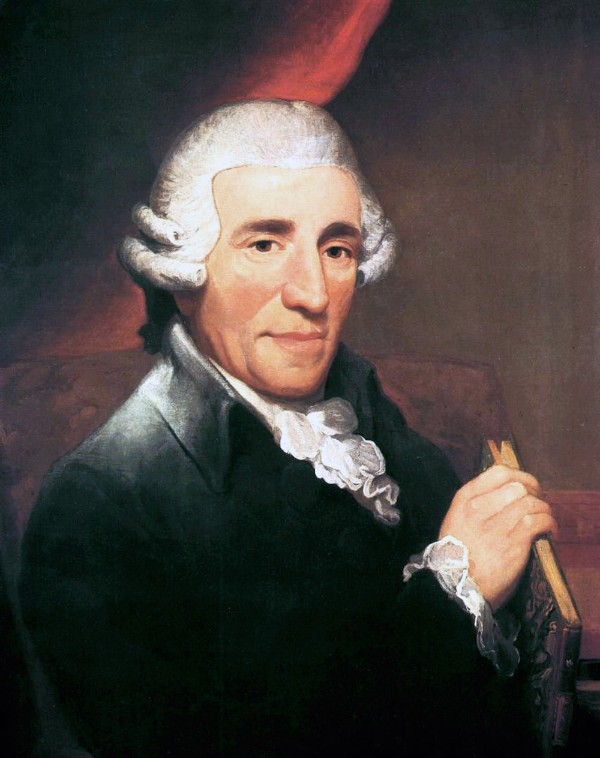
Joseph Haydn

Joseph Haydn

In these two love letters to his mistress, singer Luigia Polzelli, Haydn writes about her husband’s fatal illness…and longs for “four eyes [to] be closed”, a reference to his hope that his own wife will die, too!

London, 14th March 1791

Most esteemed Polzelli,

I am very sorry for you in your present circumstances, and I hope that your poor husband will die at any moment; you did well to put him in the hospital, to keep him alive…

London, 4th August 1791

Dear Polzelli!

…As far as your husband is concerned, I tell you that Providence has done well to liberate you from this heavy yoke, and for him, too, it is better to be in another world than to remain useless in this one. The poor man has suffered enough. Dear Polzelli, perhaps, perhaps the time will come, when we both so often dreamt of, when four eyes shall be closed. Two are closed, but the other two – enough of all this, it shall be as God wills.

Learn more about why Haydn hated his wife so much.

Ludwig van Beethoven, 1812

Beethoven’s Seventh Symphony, finished in 1812   

In 1812, Beethoven wrote an impassioned love letter to an unknown woman. This letter has come to be known as the letter to the Immortal Beloved.
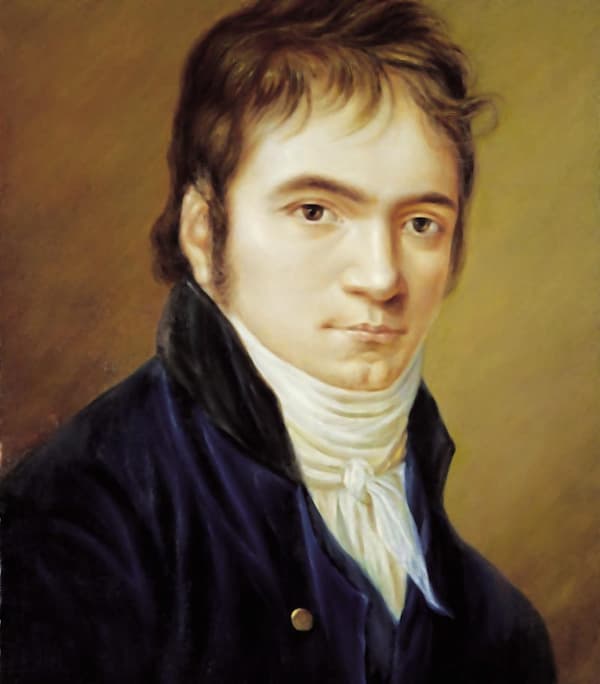
Beethoven in 1803

Beethoven in 1803

Though still in bed, my thoughts go out to you, my Immortal Beloved, now and then joyfully, then sadly, waiting to learn whether or not fate will hear us – I can live only wholly with you or not at all – Yes, I am resolved to wander so long away from you until I can fly to your arms and say that I am really at home with you, and can send my soul enwrapped in you into the land of spirits – Yes, unhappily it must be so – You will be the more contained since you know my fidelity to you. No one else can ever possess my heart – never – never – Oh God, why must one be parted from one whom one so loves. And yet my life in V is now a wretched life – Your love makes me at once the happiest and the unhappiest of men – At my age I need a steady, quiet life – can that be so in our connection? My angel, I have just been told that the mail coach goes every day – therefore I must close at once so that you may receive the letter at once – Be calm, only by a calm consideration of our existence can we achieve our purpose to live together – Be calm – love me – today – yesterday – what tearful longings for you – you – you – my life – my all – farewell. Oh continue to love me – never misjudge the most faithful heart of your beloved. ever thine, ever mine, ever ours…

Read more about Who was the Immortal Beloved?

Wolfgang Amadeus Mozart, 1783

Mozart’s Die Entführung aus dem Serail overture   

Here’s a suggestive love letter from Wolfgang Amadeus Mozart to his wife Constanze, written in 1783 when he was about to return home to Vienna after overseeing a production of his opera Die Entführung aus dem Serail in Prague.

On June 1st I’ll sleep in Prague, and on the 4th – the 4th? – I’ll be sleeping with my dear little wife; – Spruce up your sweet little nest because my little rascal here really deserves it, he has been very well behaved, but now he’s itching to possess your sweet [word erased by some unknown hand]. Just imagine that little sneak, while I am writing, he has secretly crept up on the table and now looks at me questioningly; but I, without much ado, give him a little slap – but now he is even more [word erased by some unknown hand]; well, he is almost out of control, the scoundrel.

Find out what life was like with the Mozarts in the 1780s.

Hector Berlioz, 1832

Berlioz’s Symphonie Fantastique   

Berlioz wrote this letter to actress Harriet Smithson, a woman whom he had been obsessed over and stalking for years, for whom he had composed the Symphonie fantastique and Lélio. He was begging her to return his letter:
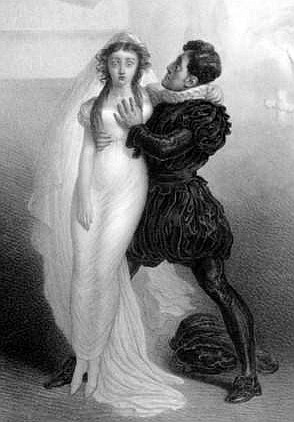
Harriet Smithson in Romeo and Juliet

Harriet Smithson in Romeo and Juliet

If you do not desire my death, in the name of pity (I dare not say of love) let me know when I can see you. I cry mercy, pardon on my knees, between my sobs!!! Oh, wretch that I am, I did not think I deserved all that I suffer, but I bless the blows that come from your hand, await your reply like the sentence of my judge.

Learn more about the insane love story between Hector and Harriet.

Franz Liszt, 1834

Liszt’s Liebestraum No. 3  

In 1834, Franz Liszt wrote this to his new mistress, Countess Marie d’Agoult:
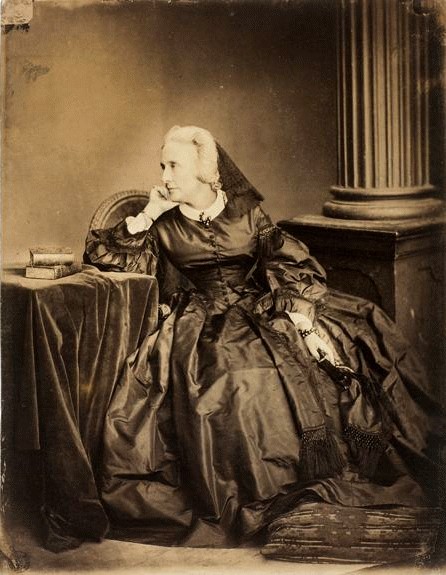
Marie d'Agoult in 1861

Marie d’Agoult in 1861

My heart overflows with emotion and joy! I do not know what heavenly languor, what infinite pleasure, permeates it and burns me up. It is as if I had never loved!!! Tell me whence these uncanny disturbances spring, these inexpressible foretastes of delight, these divine tremors of love. Oh! All this can only spring from you, sister, angel, woman, Marie! All this can only be, is surely nothing less than a gentle ray streaming from your fiery soul, or else some secret poignant teardrop which you have long since left in my breast.

Learn more about the passionate nature of Liszt and Marie d’Agoult’s early relationship.

Robert Schumann, 1837
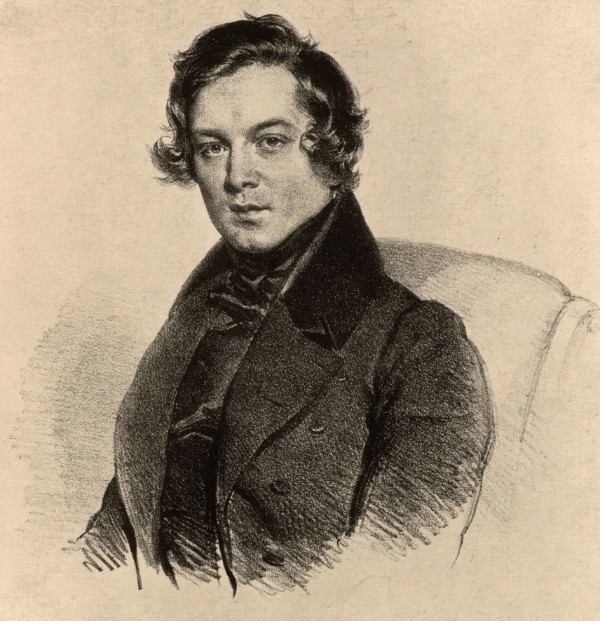
Robert Schumann

Robert Schumann

In December 1837, composer Robert Schumann was in love with virtuoso pianist Clara Wieck. They’d gotten engaged a few months earlier and were doing their best to navigate their relationship, given that Clara’s father didn’t approve of their romance.

New Year’s Eve, 1837, after 11 p.m.

I have been sitting here for a whole hour. Indeed, I meant to spend the whole evening writing to you, but no words would come. Sit down beside me now, slip your arm round me, and let us gaze peacefully, blissfully, into each other’s eyes…

How happy we are, Clara! Let us kneel together, Clara, my Clara, so close that I can touch you, in this solemn hour.

On the morning of the 1st, 1838.

What a heavenly morning! All the bells are ringing; the sky is so golden and blue and clear – and before me lies your letter. I send you my first kiss, beloved.

Learn more about the brutal court case between Robert, Clara, and her father.

Johannes Brahms, 1858

Brahms’s Piano Concerto No. 1, Movement 2 (he once told Clara this was a portrait of her)    

Brahms had complicated feelings for his mentor and dear friend Clara Wieck Schumann.

In 1858, her husband Robert had died two years earlier, and Clara was on tour in the Netherlands to make money to support her family. Brahms came to her home in Düsseldorf, in part to help watch her children. He wrote to her during her tour:

My beloved friend,

Night has come on again, and it is already late, but I can do nothing but think of you and am constantly looking at your dear letter and portrait. What have you done to me? Can’t you remove the spell you have cast over me? …

How are you? I did not want to ask you to write, but do so long for letters from you. Besides, I know only too well how you are – you are holding your head up. So just write me a word or two occasionally, and I shall be happy – just a friendly greeting to say that you are keeping well and that you will be back in 14, 13, 12, 11, 10, 9, 8, 7, 6, 5, 4, 3, 2 days!…

Do cheer me with writing me a few lines. I want them so badly, but above all, I want you.
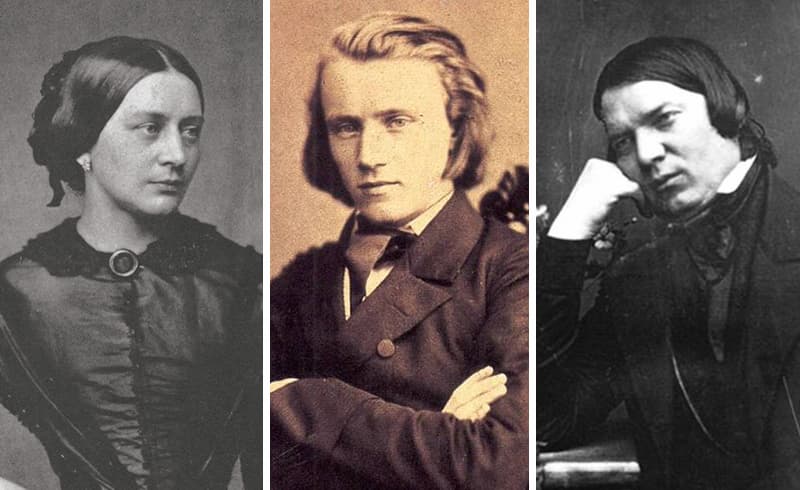
Brahms and the Schumanns

Brahms and the Schumanns

Learn more about the friendship and love triangle between Robert, Clara, and Johannes.

Richard Wagner, 1863
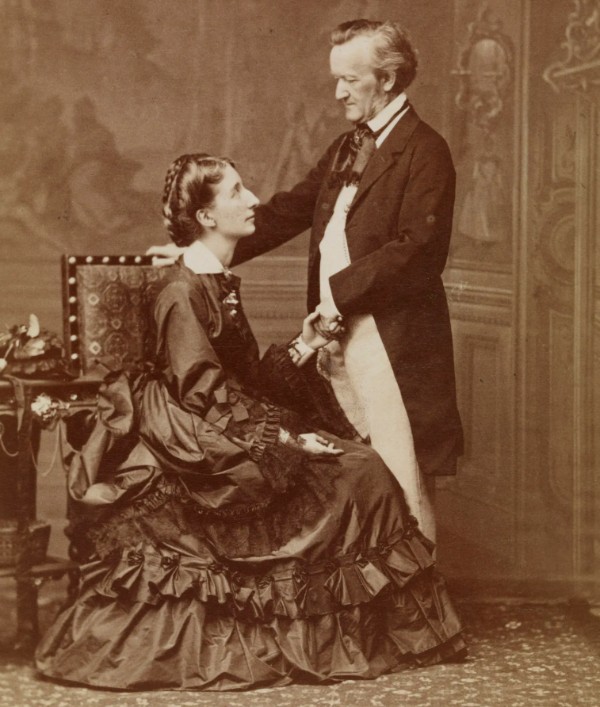
Richard Wagner and Cosima Liszt von Bülow

Richard Wagner and Cosima Wagner

Richard Wagner and Cosima Wagner’s marriage became one of the most influential in music history. However, the relationship had an inauspicious start. Richard wrote this letter to his mistress Maria Volkl shortly after first declaring his love to Cosima (!):

Now, my darling, prepare the house for my return, so that I can relax there in comfort, as I very much long to do… And plenty of perfume: buy the best bottles, so that it smells really sweet. Heavens! How I’m looking forward to relaxing with you again at last. (I hope the pink drawers are ready, too???) – Yes, indeed! Just be nice and gentle, I deserve to be well looked after for a change.

Gustav Mahler

During their engagement, Gustav Mahler wrote this letter to his fiancée Alma, to let her know she must decide between becoming his wife or pursuing her passion for composing music.

Almschi, I beg you, read this letter carefully. Our relationship must not degenerate into a mere flirt. Before we speak again, we must have clarified everything, you must know what I demand and expect of you, and what I can give in return – what you must be for me. You must “renounce” (your word) everything superficial and conventional, all vanity and outward show (concerning your individuality and your work) – you must surrender yourself to me unconditionally… in return you must wish for nothing except my love! And what that is, Alma, I cannot tell you – I have already spoken too much about it. But let me tell you just this: for someone I love the way I would love you if you were to become my wife, I can forfeit all my life and all my happiness.

Learn more about the beautiful Alma Schindler’s background, her marriage to Gustav, and why he wrote this letter.

Jean Sibelius, 1891   

Sibelius wrote this letter to his fiancée Aino in early January 1891:

My own Aino darling,

Thank you for your letter and your Christmas cards. Your relatives have all been very kind to me. Please give them my respects and thank them most warmly, won’t you. But it is you who loves me more than anyone else has done, and I want you to be sure that I love you and belong to you with all my heart. Every time you write to me, I discover some new aspect of your personality. It makes me feel as if you are a store of treasures to which only I have the key, and you can imagine how proud I am to own it. You are so natural and sincere, which I like. When in the future we have a home of our own and are together alone, we must never be anything other than wholly ourselves, natural, tender towards each other, and devoted. I think and hope that you will be content with me in this respect. It is perhaps unmanly to say so, but you know, Aino, that I have always wanted to be caressed and have always missed its absence. At home, I was the only one who was demonstrative, and this in spite of the fact that I was basically very shy. But up to now, only you have caressed me, and perhaps you have thought it tiresome of me to ask you often to do this, my darling. This could well have remained unwritten, but as I am writing as quickly as I am thinking (hence my superb handwriting!), and this came into my head, it can just as well go into the letter. I sometimes cannot believe that a person like you loves me, for you are a wonderful woman.
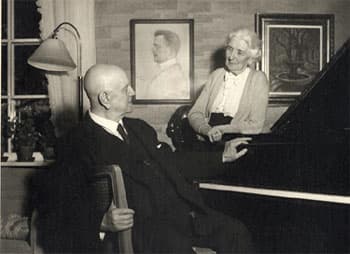
Aino and Jean Sibelius

Aino and Jean Sibelius


Friday, September 5, 2025

The Greatest Child Prodigies of All Time, Part 1

by 

Throughout music history, there have been many incredible children who have demonstrated an astonishing, unnervingly early mastery of their art.

Some went on to become the greatest musicians of their age. Others have vanished from our collective memories.

One thing they all have in common is that the stories of their childhoods are all fascinating.

Today, we’re looking at the backgrounds, education, and jaw-dropping accomplishments of some of the greatest child prodigies of all time.

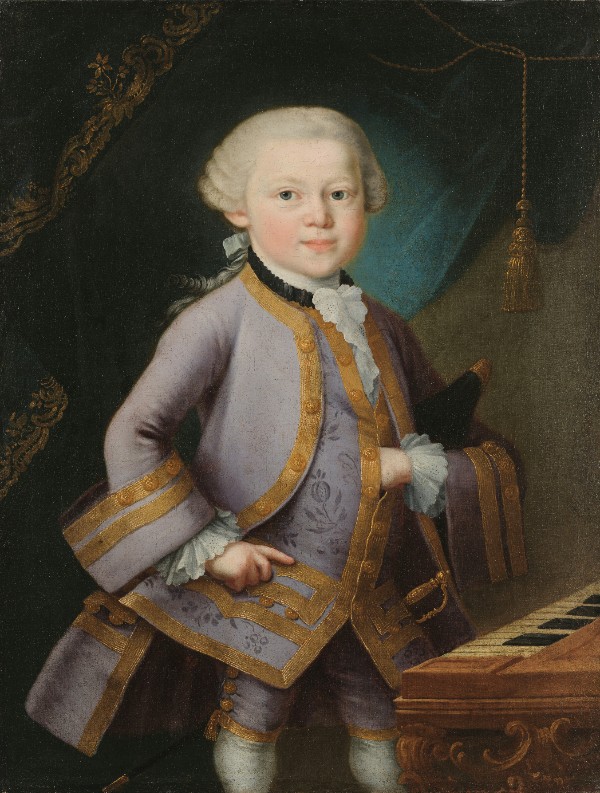
Wolfgang Amadeus Mozart

Wolfgang Amadeus Mozart

Wolfgang Amadeus Mozart

Wolfgang Amadeus Mozart is likely the most famous musical prodigy of all time. He was born in 1756, the second surviving child of court musician Leopold Mozart and his wife.

His older sister Maria Anna, nicknamed Nannerl, began taking keyboard lessons when she was seven and Wolfgang was three.

Nannerl later wrote:

He often spent much time at the clavier, picking out thirds, which he was ever striking, and his pleasure showed that it sounded good…

In the fourth year of his age, his father, for a game as it were, began to teach him a few minuets and pieces at the clavier… He could play it faultlessly and with the greatest delicacy, and keeping exactly in time…

At the age of five, he was already composing little pieces, which he played to his father, who wrote them down.

Despite Leopold’s reputation as a pushy stage father, when it came to his early attempts at composition, Wolfgang was clearly the instigator. His early manuscripts are stained with ink and bear evidence of his enthusiasm for composing.

After both Nannerl and Wolfgang became prodigies, Leopold decided to take leave from his job and accompany them on a tour of Europe. Over a period of years, the Mozart family traveled across Austria, Germany, France, and Britain, showcasing the talents of both children.

Wolfgang composed on the road and wrote his first symphony when he was eight (possibly with the assistance of Nannerl).  

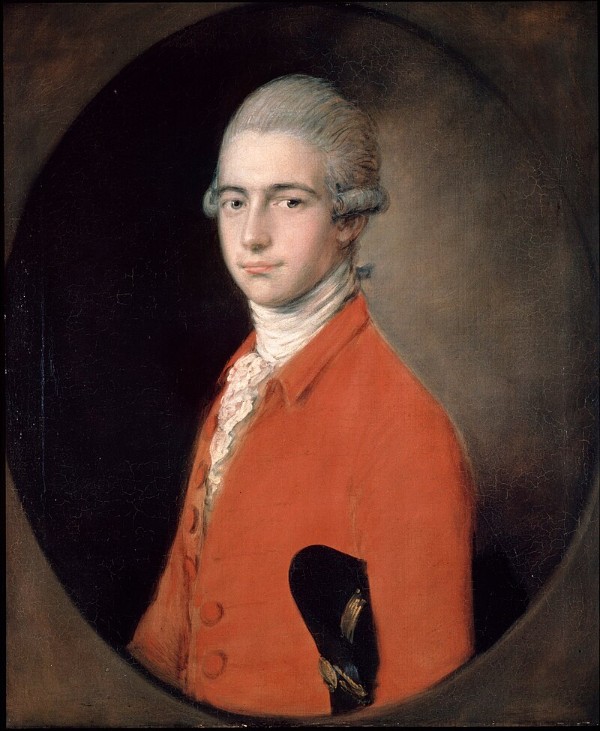
Thomas Linley the Younger

Thomas Linley the Younger

Thomas Linley the Younger

Thomas Linley the younger was born the same year as Mozart, in 1756, in Bath, England. His father shared his name, so the son often went by the nickname Tom.

Thomas Linley the Elder made his living as a music teacher and local impresario, and eventually became the most famous musical patriarch in Bath.

Presenting concerts became a family affair. His children, including Tom, started out by collecting tickets, but once they began showing musical talent, Thomas the Elder had them appear onstage. The musical performances of the Linley children helped secure the family’s social and economic fortunes.

Tom gave his concerto debut on violin in the summer of 1763, just after his seventh birthday. That year, he began studying composition with William Boyce, Master of the King’s Musick.

In between lessons, the Linleys began touring Britain. In 1767, two of the Linley siblings performed at a Covent Garden performance of The Fairy Favour by Thomas Hull. Tom played the violin, sang, and danced, receiving rapturous reviews.

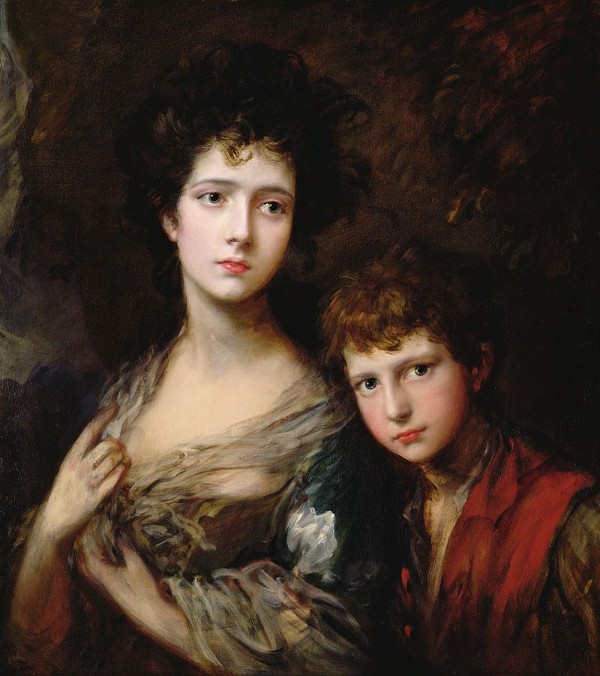
Elizabeth and Thomas Linley

In 1768, the year he turned twelve, Tom went to Italy to study violin playing and composition with Florentine master Pietro Nardini. Tom became Nardini’s favourite pupil.

In April 1770, the month he turned fourteen, he met Wolfgang Amadeus Mozart, who was traveling through Italy with his father to concertize and study. The two boys became fast friends. English writer Charles Burney wrote of their meeting:

The Tommasino, as he is called, and the little Mozart, are talked of all over Italy as the most promising geniuses of this age.

When Wolfgang had to leave for the next stop on his tour, both boys were upset at having to separate. Leopold Mozart wrote to his wife, who remained in Salzburg during the Italian tour:

These two boys performed in alternation during the whole evening, constantly embracing each other.

The next day, the little Englishman, a very dear boy, had his violin brought to us and played the whole afternoon; Wolfgang accompanied him on the violin.

The day after, we dined with Msr. Gavard, the Grand Duke’s financial administrator, and these two boys played in alternation the whole afternoon, not as boys, but as men!

Little Thomas accompanied us home and cried the most bitter tears because we were leaving the next day.

Tragically, Tom would never get to develop into a fully fledged performing artist or composer. He died in August 1778 at the age of twenty-two in a boating accident.

Mozart would never forget his friend, telling tenor Michael Kelly years later that Tom was “a true genius” and, had he lived, would have become one of the great musicians of the age.   

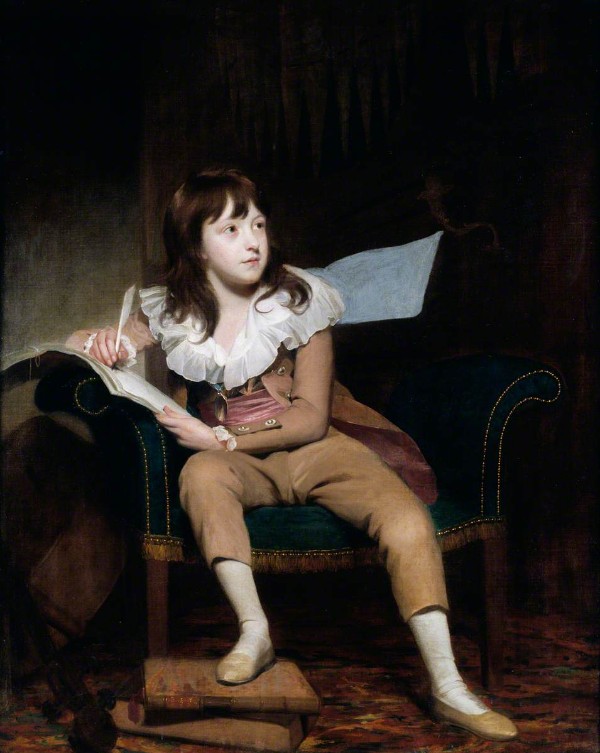
William Crotch

William Crotch

William Crotch

William Crotch was born in Norfolk, Britain, in the summer of 1775. His father was a carpenter and instrument builder.

When William was two years old, he began performing on an organ that his father had built. He made fast progress. The following year, his mother brought him to London, where he performed for King George III, playing on an organ at St. James’s Palace.

One magazine reported:

As soon as he has finished a regular tune, or part of a tune, or played some little fancy notes of his own, he stops, and has some of the pranks of a wanton boy; some of the company then generally give him a cake, an apple, or an orange, to induce him to play again…

Later in life, Crotch admitted that this strategy to get him to play had spoiled him.

His first oratorio was performed when he was just fourteen.

He attended Oxford University and became a professor there in 1797, when he was twenty-two. Over the course of his career, he taught a number of important British musicians.  

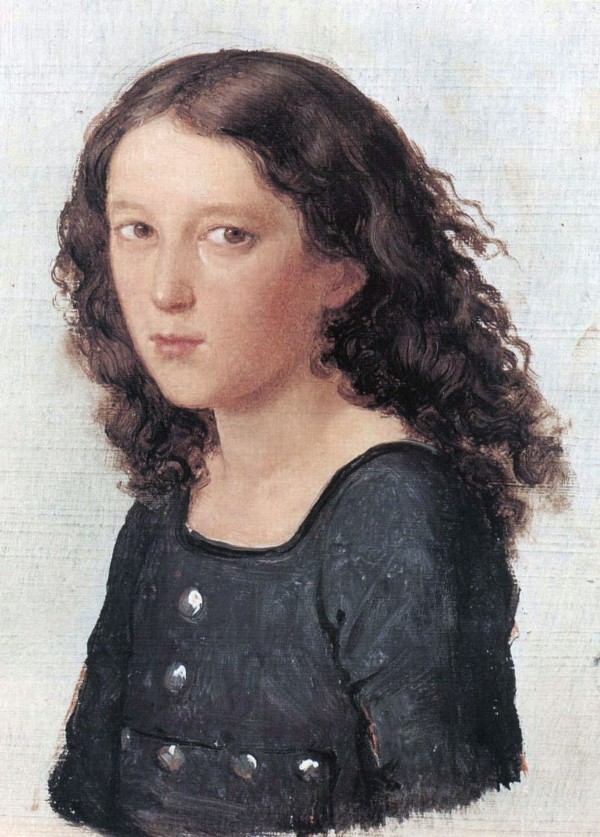
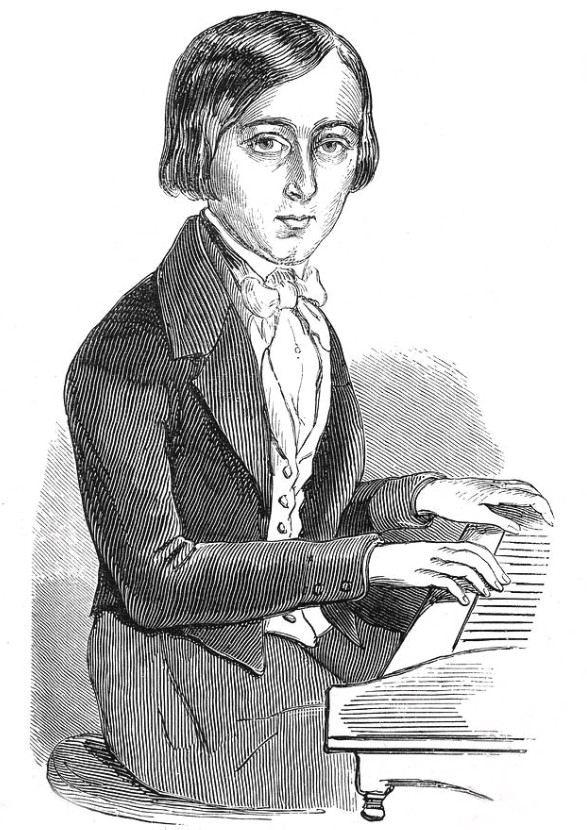
Felix Mendelssohn

Felix Mendelssohn

Felix Mendelssohn

Felix Mendelssohn was born in early 1809 to a wealthy and musical banking family. He grew up to become one of the most impressive musical prodigies in classical music history.

A variety of influences played into Felix’s early development.

His older sister Fanny Mendelssohn was a child prodigy herself, and the two siblings bonded over their musical studies.

The wider family also valued the arts and education, and their wealth enabled both Fanny and Felix to explore their musical interests in a supportive environment.

In addition, the Mendelssohns’ social cachet meant that all manner of artistic and intellectual leaders of the nineteenth century flocked to the family home.

In short, it was the perfect environment for a prodigy to develop.

Felix began studying the piano with his mother when he was six. Throughout his childhood, he had a number of first-rate teachers, including Marie Bigot (who had worked with Beethoven) and Ludwig Berger (who had studied with Clementi). He also began studying composition.

His parents paid for a private orchestra to perform at house concerts, and Felix began writing music for the ensemble. As a child, he wrote thirteen string symphonies for them.

His first published work, a piano quartet, appeared when he was just thirteen. (It is believed that his father helped to ensure the publication of the work.)  

But Felix’s father wasn’t encouraging his son out of pity: the works were of genuine, astonishing quality. In fact, Mendelssohn’s string octet, written for four violins, two violas, and two cellos, is widely considered to be one of the finest works of chamber music ever written…and he was only sixteen when he composed it!  

The following year, he followed the Octet up with his Overture to a Midsummer Night’s Dream, which still appears on concert programs today.

In 1821, when Felix was twelve, Johann Wolfgang von Goethe compared Felix to Mozart, suggesting that between the two, Felix might be even more talented. It was a shocking comparison, especially because Goethe had met Mozart when he was a touring seven-year-old prodigy.

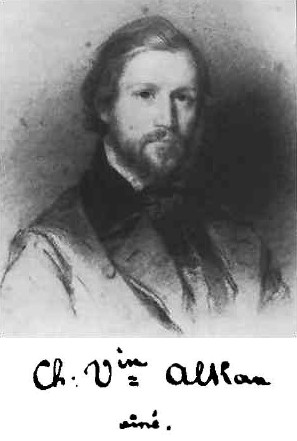
Charles-Valentin Alkan

Charles-Valentin Alkan

Charles-Valentin Alkan

Charles-Valentin Alkan was born in Paris in 1813 to a musical family. His father was a musician and head of a private music school, and all five of his siblings went into music professionally in some capacity.

His musical talent was obvious from an early age. Astonishingly, he took his first audition for the Paris Conservatoire solfège class when he was just five years old. One of his examiners wrote that he had “a pretty little voice.”

A year later, he auditioned for the piano class, too. That time the examiners wrote, “This child has amazing abilities.”

In 1821, when he was seven, he won a first prize in solfège. That same year, he gave his first public performance on violin.

He also began studying piano, and at the age of ten, he won a piano prize to add to his collection.

His opus 1 for solo piano was written in 1828, when he was just fourteen. As the work makes clear, he was already a master musician.  

Camille Saint-Saëns

Camille Saint-Saëns

Camille Saint-Saëns

Camille Saint-Saëns was born to a Parisian family in 1835. Tragically, just a few months after Camille’s birth, his father died of tuberculosis.

He spent the first two years of his life in the countryside with a nurse, and was only reunited with his widowed mother in Paris in 1837.

Before his third birthday, he began picking out melodies on the family piano. His great-aunt was his first piano teacher, but he quickly learned all that she had to teach. When he was seven, he began studying with Camille-Marie Stamaty.

He began playing for small groups when he was five years old, but his mother made sure that he didn’t concertize too widely as a very young boy.

He gave his public debut when he was ten in a remarkable double-header, playing Mozart’s fifteenth piano concerto and Beethoven’s third concerto.

In 1848, when he was thirteen, he enrolled at the Paris Conservatoire. Over the course of his studies there, he became an organ virtuoso as well as a piano virtuoso.

He began his formal composition studies when he was fifteen. That same year, he wrote a symphony in A-major, although he never published it.

He capped off his student career by writing his Op. 1 for harmonium in 1852, the year he turned seventeen.  

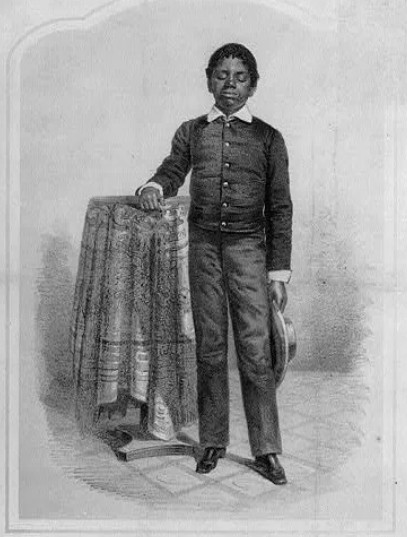
Blind Tom Wiggins

Blind Tom Wiggins

Blind Tom Wiggins

Thomas Wiggins was born on a Georgia plantation in the spring of 1849. His lot was unimaginably difficult: both of his parents were enslaved, and he was born blind.

Because his blindness kept him from doing work that an enslaved person would generally do, he was permitted to wander the grounds as a child.

One day, he heard one of the plantation owner’s daughters play piano, and he was immediately intrigued. He was allowed access to the piano and was composing by the time he was five.

The master of the plantation, a man named General Bethune, saw a money-making opportunity. He moved Tom into his own room and made a piano available to him. He began playing twelve hours a day.

Because of his lack of traditional formal training, he focused on reproducing the sounds he heard around him, like rainstorms and birdsong.

When he was eight years old, General Bethune hired a promoter to oversee Tom’s career. Tom began a grueling touring schedule, being marketed as a freak of nature and compared to an animal. He began earning the family the modern equivalent of millions of dollars a year. Of course, Tom and his family saw none of that money.

To publicise Tom, Bethune would hire musicians to play for Tom, then challenge him to reproduce what he’d just heard, which he could always do. That extraordinary memory resulted in his learning thousands of pieces of music by ear.

In 1860, when he was eleven, he appeared at the White House for James Buchanan, becoming the first Black artist to give a command performance there.

After the Confederacy lost the American Civil War, Bethune sent a teenage Tom to Europe. While there, he received testimonials from pianist Ignaz Moscheles and conductor Charles Hallé, attesting to his genius.