Friday, October 9, 2026

Why We Don’t Hear Them: Tim van Beveren on Women Composers and DORA


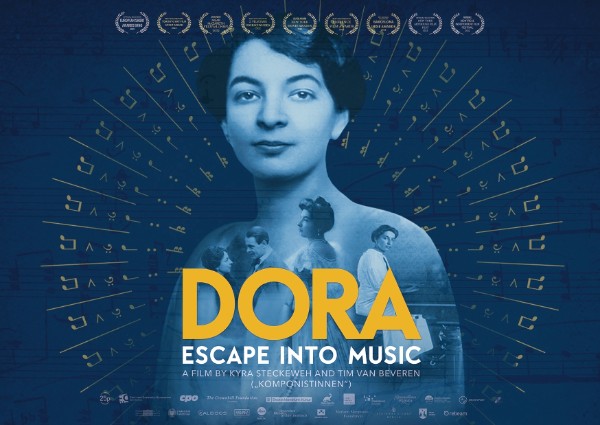
DORA – Escape into Music

DORA – Escape into Music

Around 2016, Steckeweh asked van Beveren to make a few short films to accompany her concert program of music by women composers. She had already been researching their lives and works and bringing their music back to the concert stage. Van Beveren, by contrast, knew next to nothing about the subject then. “I had never heard of female composers before,” he recalls. He knew Clara Schumann and Fanny Hensel by name but had never given serious thought to the wider history of women who composed, “because they were simply not performed in concert halls.”

Steckeweh opened that largely unknown world to him. During a drive from Berlin to Paris, she began telling him about the composers she had encountered through her research and performances: about their music, their lives, and the obstacles they had faced in their struggle to be taken seriously as professional composers. What had begun as a conversation about a few short concert films was turning into something far larger. As Steckeweh told their stories, van Beveren realised that the real subject lay less in a list of forgotten names than in the circumstances that had allowed so much of their music to vanish from public memory. For women composers of earlier generations, recognition had been hard to come by. They lived in societies that did not regard women as equal to men and denied them the same legal and social standing; only a few held the public’s attention for long.
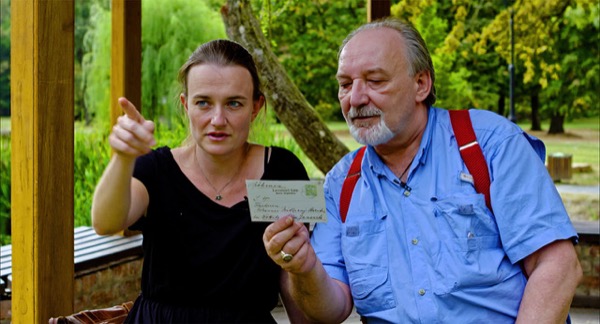
Kyra Steckeweh and Tim van Beveren

Kyra Steckeweh and Tim van Beveren

“I said, well, stop right here,” he recalls. “This is stuff which is much more interesting for a full-blown documentary than just a two- or three-minute clip.”

That conversation became the starting point for Women Composers, a documentary by van Beveren and Steckeweh that traces the lives and music of Mel Bonis, Lili Boulanger, Fanny Hensel, and Emilie Mayer. The film travels across Europe to the places where these women lived and worked, weaving historical research and interviews together with performances of their music.
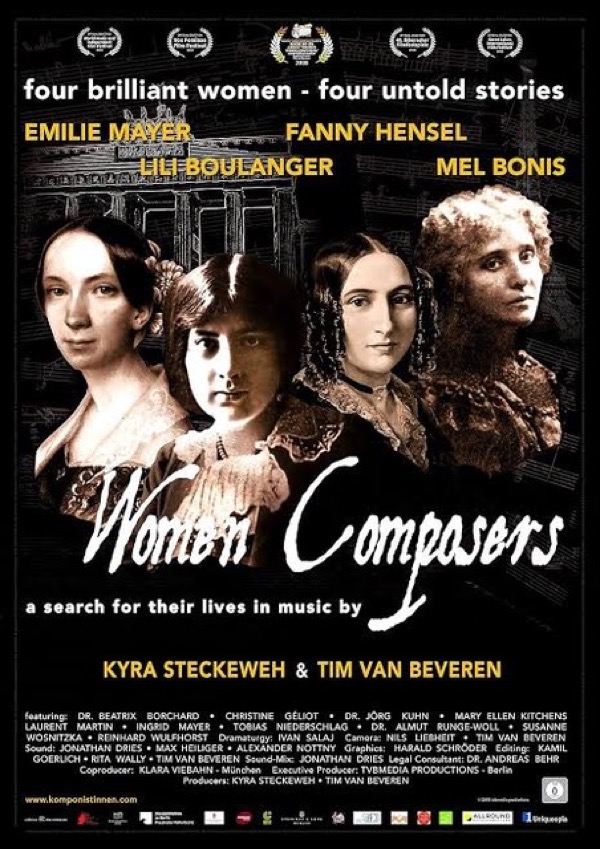
Women Composers documentary poster

Women Composers

WOMEN COMPOSERS – Theatrical Trailer   

One composer who particularly affected van Beveren was Emilie Mayer. She had written eight symphonies, yet her name was largely unfamiliar to the public. Van Beveren was struck that, as early as 1850, Mayer had managed to present a concert devoted entirely to her own compositions at Berlin’s Royal Theatre with royal approval. Even the location of her grave had become difficult to identify, and her music had faded from public awareness.

The experience made van Beveren question how musical history is preserved and, perhaps more importantly, how it is heard. For him, recordings and performances are essential because audiences cannot form an opinion about music they never have the opportunity to hear.

“Only a very small percentage of the population can read music – provided the scores have even been published. So how can people decide what they like if they can’t hear it?” he asks.

While filming Women Composers, van Beveren and Steckeweh also gathered reactions from audiences in Berlin. They asked concertgoers to name composers and sing or whistle a melody by them. Mozart was easy. Beethoven was easy. But when they asked about women composers, the responses were very different.

“For female composers? None,” van Beveren recalls.

The experiment demonstrated something that had already become apparent during their research: the problem was not simply that audiences had forgotten these composers. Many had never been introduced to them in the first place.

After Women Composers, van Beveren and Steckeweh began considering another film. Their next subject became Dora Pejačević, the Croatian composer whose music had once been performed in major European cities but disappeared from the repertoire after her death in 1923. Pejačević’s privileged background gave her opportunities that many women composers of her time did not have. She grew up in a noble family; her household supported music, and the family held concerts at the castle. Yet these advantages did not prevent her music from being forgotten.
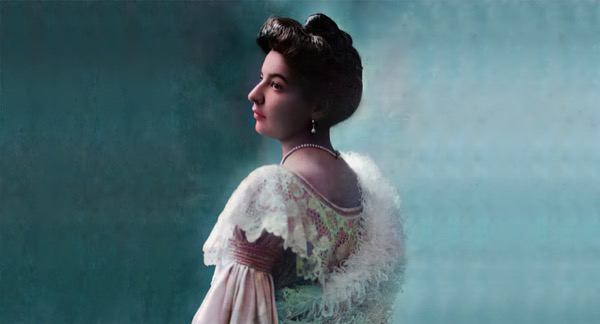
Dora Pejačević

Dora Pejačević

While reading about Pejačević, van Beveren again recognised the potential for a much larger story.

“I said this again,” he remembers. “She is a fascinating subject for a full-blown documentary.”

His interest deepened when he began hearing Pejačević’s music. After learning about her from a friend in Zagreb, he searched for her scores and sent them to Steckeweh. She began studying the piano works, among them the Sonata in D minor, and recorded them for Deutschlandfunk.

“The first time Kyra played it,” van Beveren says, “I was shivering.”
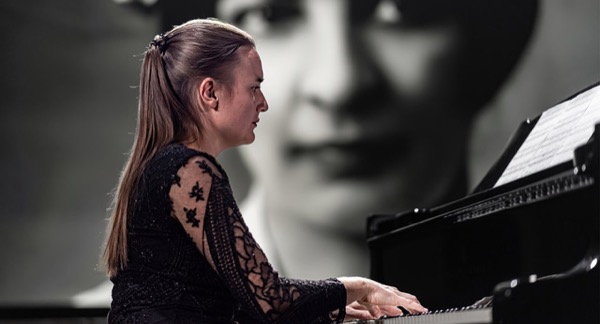
Kyra Steckeweh

Kyra Steckeweh

DORA – Escape into Music   

The resulting film, DORA – Escape into Music, follows Pejačević’s life, her music, and the European world she lived in. It also documents an extraordinary attempt to bring one of her major orchestral works back into the concert hall. During their research, van Beveren and Steckeweh discovered a 1921 newspaper article indicating that Pejačević’s Symphony was scheduled to be performed by conductor Arthur Nikisch in 1922. Their research eventually led to the Symphony’s first performance by the Gewandhausorchester, conducted by Andris Nelsons in 2022. The COVID-19 pandemic complicated the production, and the planned concert nearly fell through. The film nevertheless incorporated the performance story into its larger exploration of Pejačević’s life and musical legacy.

Before making the films, van Beveren says he was “totally unaware” of the vast body of music written by women. Now he describes it as an “enormous treasury” of compositions that are still rarely performed in a concert repertoire dominated by familiar male names. But he is careful not to suggest that every forgotten work deserves attention simply because its composer was a woman. The important thing, he believes, is to give the music a genuine opportunity to be heard and judged.

Some pieces, he says, are extraordinary. Others may not be. But without professional performances, audiences cannot make that distinction for themselves. For van Beveren, that responsibility extends beyond individual performers. Programmers, conductors, record companies, and major concert institutions all influence which works enter the musical landscape. “You need professional performers,” he says, emphasising that forgotten works need the same level of attention, quality, and commitment as established repertoire.

He also sees a generational shift. Younger musicians, he believes, are less and less concerned with whether a man or a woman wrote a piece. What matters to them is whether the music speaks to them and deserves to be played.

That change can begin with relatively simple choices. After screenings of their films throughout Europe, Steckeweh and van Beveren encouraged audiences to ask their local radio stations to play music by women composers. For them, rediscovery need not remain an academic project or a documentary subject. It can happen through the ordinary ways people encounter music: a concert, a recording, a radio broadcast, or a performer’s recommendation.

A vast amount of music still awaits discovery. Van Beveren points to the Archiv Frau und Musik in Frankfurt, a library that holds works by thousands of women composers, as an indication of how much remains to be explored. When women’s music is left out of the repertoire, he says, “you’re missing half of the cultural heritage of mankind.”

Both films make that absence visible. More importantly, they invite us to consider what might happen when we finally hear this missing music.

The films are available to stream on demand or to buy at:

DORA – Escape into Music (original title: “DORA – Flucht in die Musik”)

English-language version

Spanish-language version

German-language version

WOMEN COMPOSERS – full-length director’s cut (original title: “KOMPONISTINNEN”)

English-language version

German-language version

30 Pieces of Classical Music About Autumn

 by Emily E. Hogstad  September 2nd, 2024


Maple leaves

© Davidgn/Dreamstime.com

Today, we’re looking at almost four centuries of music. So grab a pumpkin spice latte, settle in, and enjoy these thirty pieces of classical music about autumn.

The 4 Seasons by Christopher Simpson (ca 1640s)   Christopher Simpson was an English composer and virtuoso viol player. (Viol instruments were predecessors to modern string instruments.)

Simpson wrote his Four Seasons for a treble instrument, two bass viols, and continuo. In each one, he included a fantasy, an air, and a galliard (a type of energetic dance).

Players also added their own ornamentation to the work to customize their interpretations.

Autumn from the Four Seasons by Antonio Vivaldi (1724)  

Let’s be honest…you knew this work would be on the list!

In 1724, composer and violinist Antonio Vivaldi wrote a set of violin concertos inspired by each of the four seasons.

He also included poetry in the score to describe in words what he was describing in music.

His autumn concerto portrays harvest celebrations and hunting parties.

Autumn from The Seasons by Joseph Haydn (1801)    ut in modern movie terms, The Seasons was a bit of a cash-grab sequel to Haydn’s wildly popular oratorio The Creation.

Unfortunately, like many sequels, it wasn’t as successful as the work that inspired it, but it’s still worth enjoying today.

The forces required to mount The Seasons include a large orchestra, a chorus, and three vocal soloists.

Like Vivaldi, Haydn chose to highlight harvest celebrations and hunting parties. The hunting chorus is one of the best of its era.

October from Das Jahr (The Year) by Fanny Mendelssohn Hensel (1841)   

Fanny Mendelssohn Hensel was composer Felix Mendessohn’s older sister, as well as a brilliant pianist and astonishingly productive composer.

Because she was a woman, many of her works never entered the standard repertoire in the way that her brothers did. Luckily for listeners, that’s beginning to change.

Das Jahr (The Year) is a set of piano pieces that trace the year month-by-month.

In a clever twist on the autumnal hunting motif, Hensel’s October’s piece features horn calls that turn out to be traveling minstrels. The deer in the forest may be startled, but the work ends with a happy flourish.

In Autumn by Edvard Grieg (1865)   

Norwegian composer Edvard Grieg was 22 when he wrote this overture. A fellow composer friend told him, “This is trash, Grieg; go home and write something better.”

So Grieg transcribed it for two pianos and submitted it to a composing competition…and that critical composer friend just happened to be on the jury! Amusingly, In Autumn ended up winning first prize.

E.Grieg Concert Overture “In Autumn” op.11 for piano 4 hands  

Autumn Song by Pyotr Ilyich Tchaikovsky (1876)   

In the 1870s, Tchaikovsky had the same idea as Fanny Mendelssohn Hensel: writing a series of piano works, one inspired by each month.

His October song begins with a snippet of poetry:

Autumn, our poor garden is all falling down,
the yellowed leaves are flying in the wind.

The music itself is a wistful, lovely sigh for solo piano, with the melancholy that is brought on by the season in full display. Anyone who has lived in a northern climate can relate!

Symphony No. 10: “To Autumntime” by Joseph Joachim Raff (1879)  

Joachim Raff was born in 1822 in Switzerland.

He worked with many of the big names of Romantic music (including Mendelssohn, Liszt, and Clara Schumann) and was widely acclaimed in his own time, but is rarely heard today.

This symphony has four movements, and each was published with subtitles:

I. Impressions & Feelings
II. Ghostly Round-Dance
III. Elegie
IV. Men Hunting

“Pensée d’automne” by Jules Massenet (1887)  

In the song Pensée d’automne, or Thoughts in Autumn, composer Jules Massenet set a poem by French poet Armand Silvestre to music.

The poem speaks of “grieving birds” and “withered flower cups.” The narrator wistfully invites a lover to return to the place where they courted in the springtime.

He then points out that his love for her has made the season irrelevant:

Let the beautiful days die! Let the harsh winter be born again!
Like a joyful hymn in the moaning wind,
A song of love emerges from my devoted heart!

Autumn: Etude de Concert No. 2, Op. 35 by Cécile Chaminade (1886)   

French composer Cécile Chaminade was one of the most popular composers of her era. She focused primarily on writing piano music and miniatures. They proved to be especially popular in the domestic sheet music market.

That popularity, combined with her sentimental romantic style as well as her gender, led her to be dismissed as an unserious artist.

This autumn-inspired etude challenges that assumption. It’s both achingly tender and technically challenging.

8 Characteristic Pieces, En Automne, by Moritz Moszkowski (1886)   Play

Moritz Moszkowski was a German pianist and composer of Polish origin. Although his work is rarely seen on programs today, he was very popular during his lifetime.

This work, from his set of eight Characteristic Pieces, seems to portray a chilly wind blowing leaves off the trees in colored swirls.

Four Sketches, op. 15: In Autumn by Amy Beach (1892)   

Amy Beach was a profoundly talented American composer and pianist. She began writing little waltzes for piano when she was only four years old.

After she got married at the age of eighteen, she focused on composition because it wasn’t seemly for a respectable wife of a doctor to tour as a piano soloist.

In 1892’s Four Sketches, written when she was twenty-five, a snippet of poetry appears at the “In Autumn” movement: “yellowing foliage on scattered lawns.” This is a quote from French poet and statesman Alphonse de Lamartine.    moods of autumn.

From Vivaldi’s lilting Four Seasons to Tchaikovsky’s melancholy “Autumn Song” to Musgrave’s grim fall hunt, classical music evokes the complex emotions brought about by the season in a way that no other art form can.

The History of the Symphony: From Opera Overture to Postmodern Portrait

The symphony began as a kind of warm-up act – a short instrumental piece played before a larger work, meant to settle a restless audience.

Over the next two centuries, composers turned that warm-up act into one of classical music’s most ambitious forms.

Today we’re tracing that transformation by looking at specific symphonies – and how each of the major composers inherited their predecessors’ rules, then threw them out.

Sammartini – Sinfonia No. 6 in F major (c. 1744)  The symphony originated in the sinfonia, a genre traditionally used as an orchestral introduction to a larger work, like an opera.

Italian composer Giovanni Battista Sammartini (c. 1700–1775) was one of the first composers to detach the sinfonia from the opera and perform it independently. This change laid the groundwork for the modern symphony.

Sinfonias were often in three parts: a bright, rhythmic fast section, followed by a lyrical, slower section, followed by a dance-like conclusion.

Haydn, Symphony No. 104, “London” (1795)   

Austrian composer Joseph Haydn (1732–1809) inherited the form that Sammartini had pioneered.

Haydn’s first symphony dates from 1759. Its structure closely follows Sammartini’s, with three movements: a fast presto, a slower andante, and another presto.

In the 1760s, he began adding a third movement, a minuet. By the 1770s, the four-movement structure became standardised.

Another vital development that Haydn helped pioneer was writing first movements in sonata form: i.e., a form in which two themes are played, contrasted, and developed.

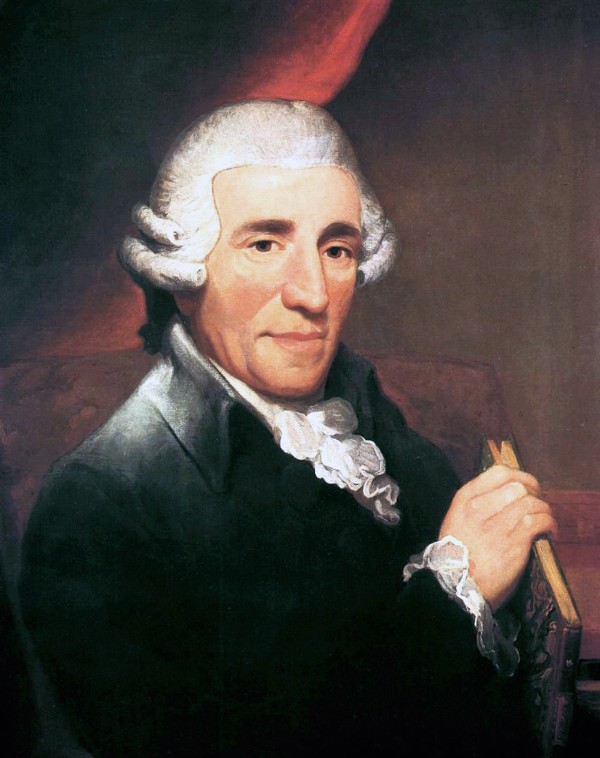
Joseph Haydn

Joseph Haydn

By the time he completed his 104th symphony in 1795, Haydn had spent nearly forty years codifying the modest sinfonia into a genre that would dominate orchestral writing for over a century.  

Beethoven – Symphony No. 9 (1822–1824)  

German composer Ludwig van Beethoven (1770–1827) inherited Haydn’s four-movement structure and broke it – twice.

His third symphony, nicknamed the Eroica, runs nearly twice as long as a typical Haydn symphony. The second movement is not just the customary slow movement; it is a theatrical funeral march, fit for a tragically fallen hero.

Beethoven originally dedicated it to Napoleon Bonaparte, seeing him as a champion of more egalitarian Enlightenment ideals – but when Napoleon crowned himself emperor in 1804, Beethoven reportedly scratched out the dedication in fury, tearing the title page.

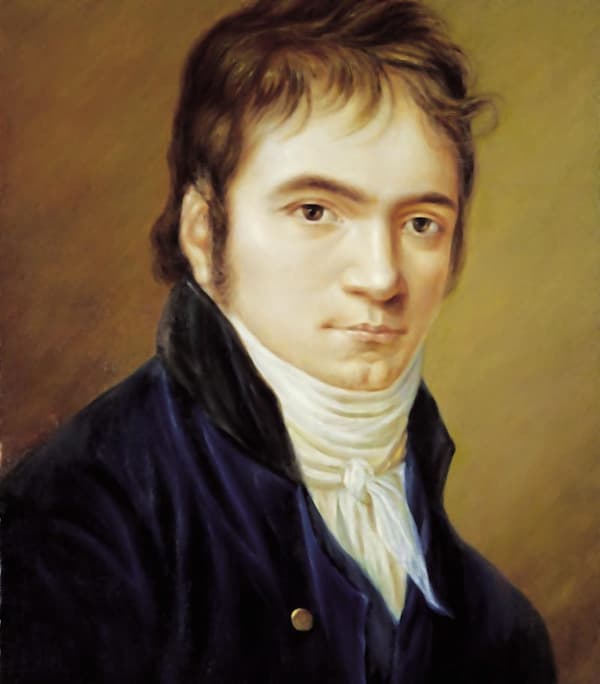
Christian Horneman: Beethoven, 1803 (Beethovenhaus Bonn)

Christian Horneman: Beethoven, 1803 (Beethovenhaus Bonn)

Two decades later, Beethoven shattered the conventions again. His ninth symphony is scored for a full orchestra, four vocal soloists, and a chorus – the first time vocal soloists and a chorus had ever been used in a symphony.

He also pushed forward the idea that extramusical ideas can be expressed in the symphony; the text he set was Schiller’s “Ode to Joy,” an explicit call for universal brotherhood.

Between them, these two symphonies wrestle with the question: how far can the boundaries of a symphony be pushed before it stops being a symphony at all?

With these two works, Beethoven made that question the genre’s central preoccupation for the next century.

Berlioz – Symphonie fantastique (1830)  

French composer Hector Berlioz (1803–1869) answered Beethoven’s innovations by going somewhere Beethoven never had: autobiography.

His Symphonie fantastique – subtitled “Episode in the Life of an Artist…in Five Sections” – consists of five movements tracing an artist’s opium-induced descent through obsession, heartbreak, and, finally, hallucinations of his own execution.

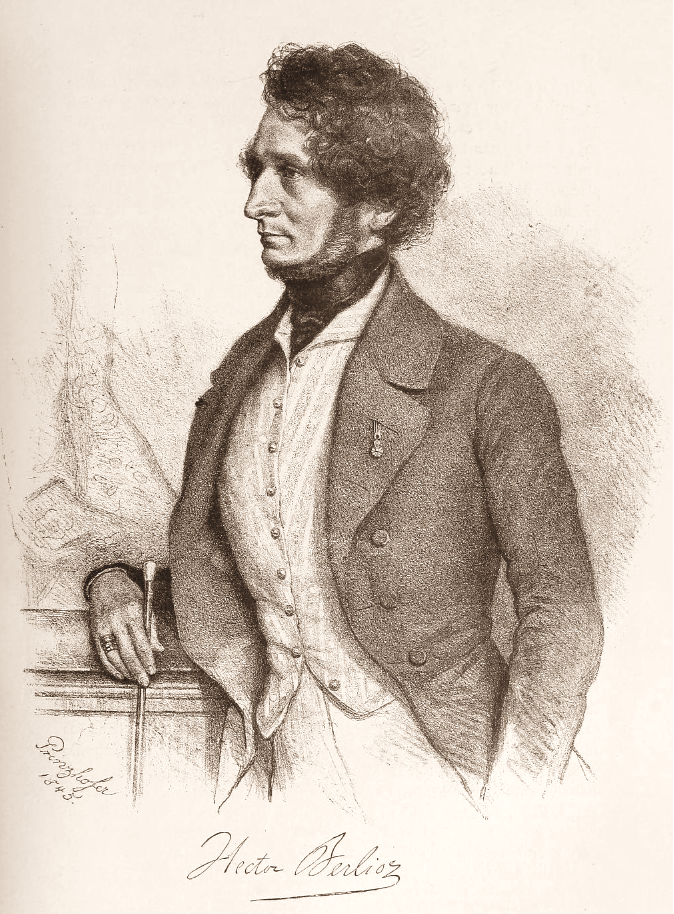
August Prinzhofer: Hector Berlioz, 1845

August Prinzhofer: Hector Berlioz, 1845

The unhealthy obsession Berlioz drew on here was very real. In 1827, he became infatuated with Irish actress Harriet Smithson after seeing her perform Shakespeare in Paris.

The symphony’s recurring melody, dubbed the idée fixe, represents her idolised image, returning in various guises across all five movements to show the artist’s fixation on her everywhere.

The idée fixe was a striking new way to create cohesion across a large orchestral work, and it became a tempting tool for composers who wanted to inject narrative into their symphonies.

Brahms – Symphony No. 1 (1855–1876)   

Beethoven pushed the symphony into new territory of expression, and Berlioz followed him. By the mid-1800s, Berlioz, Liszt, and Wagner were going even further, pushing extramusical narratives and program music, the so-called “music of the future.”

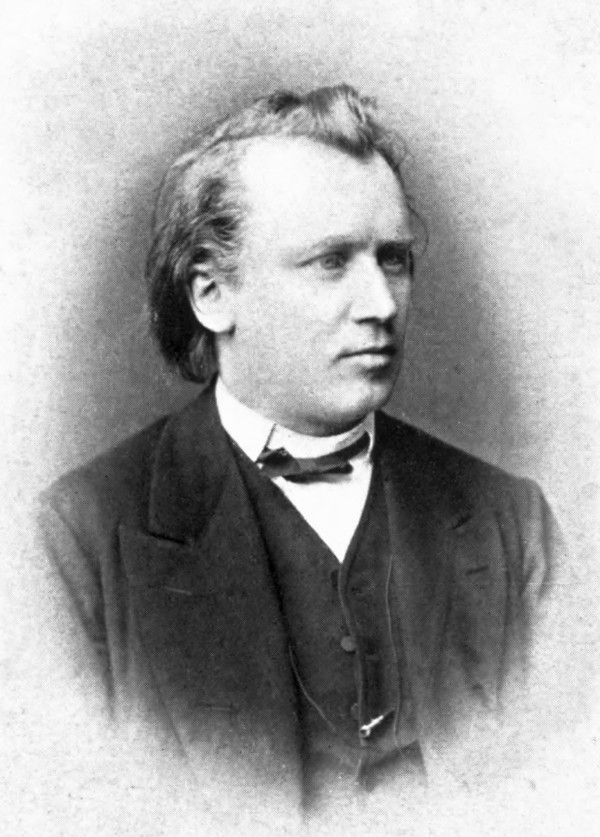
Johannes Brahms, c. 1872

Johannes Brahms, c. 1872

Johannes Brahms (1833–1897), however, wanted to rewind the clock. He believed the symphony could still work in its older, “absolute” form, with no story attached.

Intimidated by Beethoven’s example (he compared his legacy to “the tramp of a giant”), he took his time making his case. He began composing his first symphony in the mid-1850s but didn’t finish it for two decades.

The result was worth the wait. Brahms’s majestic first symphony proved that absolute music could still make an emotional and intellectual impact, even with a traditional structure and without an extramusical narrative.

It also argued that composers don’t necessarily have to “break” what came before or forget it. Sometimes the music of the future could look back to the past.

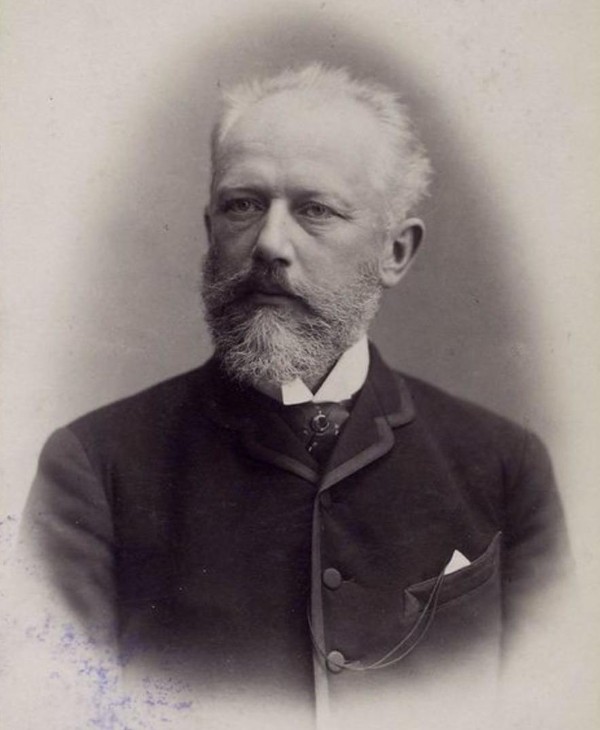
Tchaikovsky – Symphony No. 6, “Pathétique” (1893)   

In 1893, two of the most popular symphonies of all time premiered. Each one offered a potential path for future composers to pursue.

Symphonies almost always close with a fast, affirmative finale. But Tchaikovsky’s Pathétique breaks that unwritten rule: its final movement is slow and mournful, fading into silence.

Pyotr Ilyich Tchaikovsky

Pyotr Ilyich Tchaikovsky

In this symphony, Tchaikovsky split the difference in the ongoing 19th-century battle between program music and absolute music. He created a program, but kept it secret, and wanted audiences to come up with a story on their own.

(Intrigue about that program grew after Tchaikovsky died just nine days after conducting the symphony’s premiere, reportedly of cholera – a death that’s remained the subject of speculation and debate ever since.)

Whatever the symphony’s private meaning, its structural statement is clear: honest, emotional expression can dictate a symphony’s structure.

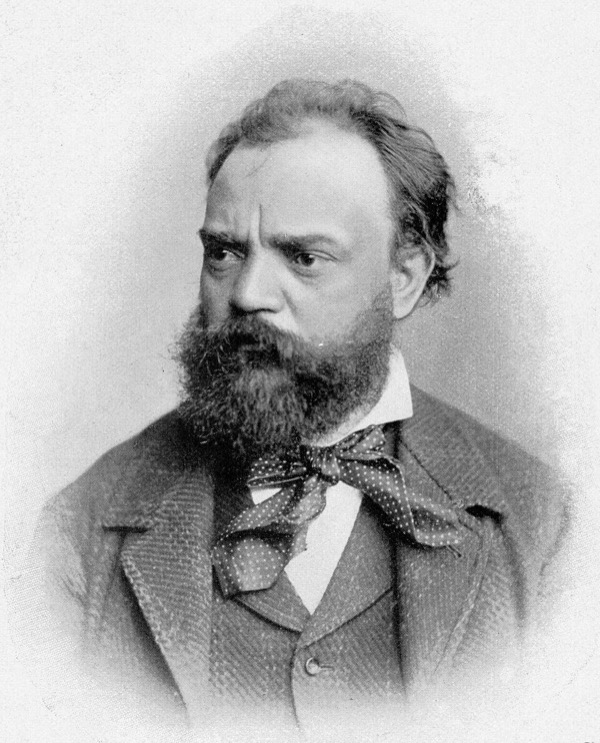
Dvořák – Symphony No. 9, “From the New World” (1893)  

The Pathetique pointed one way a symphony could go: toward personal expression of private emotional extremes.

Another 1893 symphony that offered a path forward was Dvořák’s ninth: the communal experience of folk music.

Dvořák had spent his career inspired by the folk songs, dances, and rhythms of his native Bohemia. The Slavonic Dances and his Eighth Symphony both draw on melodic shapes and rhythmic patterns inspired by Czech folk music.

Antonín Dvořák, 1882

Antonín Dvořák, 1882

Between 1892 and 1895, Dvořák took a job teaching in America, and his influences expanded accordingly. The melodies of his ninth symphony evoke the pentatonic scales and rhythmic character of American spirituals and folk songs.

Tchaikovsky’s sixth looked inward for inspiration, while Dvořák’s ninth looked outward.

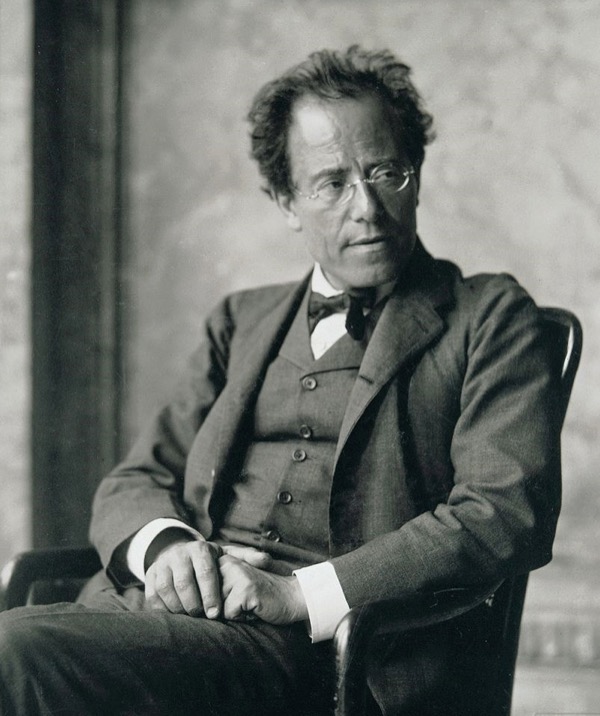
Mahler – Symphony No. 9 (1908–1909)   

German-Austrian composer Gustav Mahler (1860–1911) stretched symphonic conventions to their breaking point.

Mahler’s ninth throws out multiple conventions. It runs roughly ninety minutes, longer than any other symphony on this list. It also opens with what would traditionally be a slow movement instead of a fast one, and its massive final movement is a slow adagio rather than a triumphant allegro.

Mahler was acutely aware of his own mortality while writing it. He’d recently been diagnosed with a fatal heart condition and had lost his young daughter the year before.

Moritz Nähr: Gustav Mahler, 1907

Moritz Nähr: Gustav Mahler, 1907

That biographical weight seems to show up in the music itself – quotes or gestures that mimic the beating of a heart; long passages that seem to dissolve rather than resolve; and a final page that fades to near-silence, marked in the score with an instruction usually translated as “dying away.”

Here, Mahler borrowed all kinds of innovations – including Beethoven’s scale, Berlioz’s embrace of autobiography, and Tchaikovsky’s emotional intensity – and blended them. The work would be his final completed symphony.

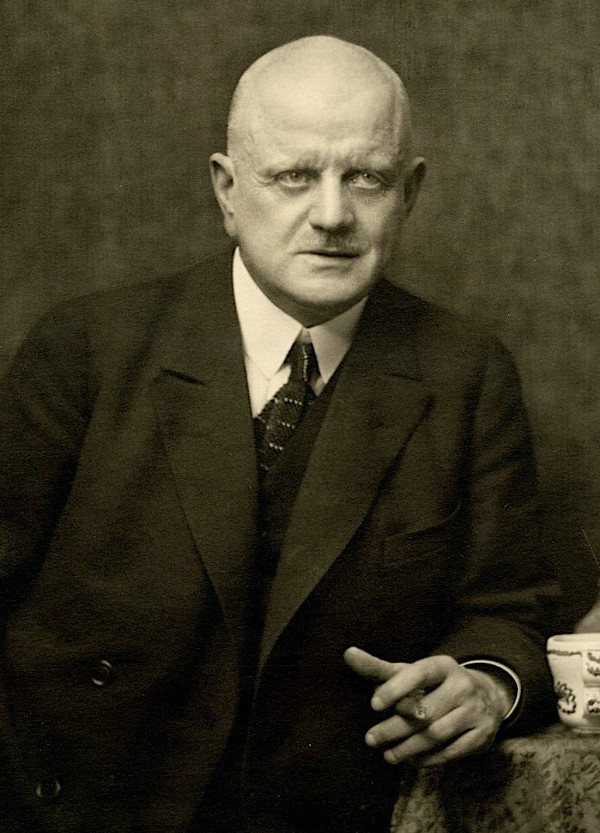
Sibelius – Symphony No. 7 (1914–1924)   

In his seventh symphony, Jean Sibelius (1865–1957) condensed his ideas into one twenty-minute movement, dictating with precision how tempo and character should evolve gradually over time.

He originally envisioned a more conventional multi-movement work, but as he worked with his material, he came to believe it would be most effective in its ultimate condensed form.

Because of this, he even hesitated to call it a symphony, toying with the idea of designating it a “fantasia sinfonica” before giving in.

Jean Sibelius, 1923

Jean Sibelius, 1923

Nearly every composer before him had contributed to the genre by adding something: length in Haydn and Beethoven’s cases, an extramusical story in Berlioz’s, intense and effusive emotional expression in Tchaikovsky’s. Sibelius did something radical by removing what made it a symphony in the first place: clearly delineated movements.

Schnittke – Symphony No. 1 (1969–1974)

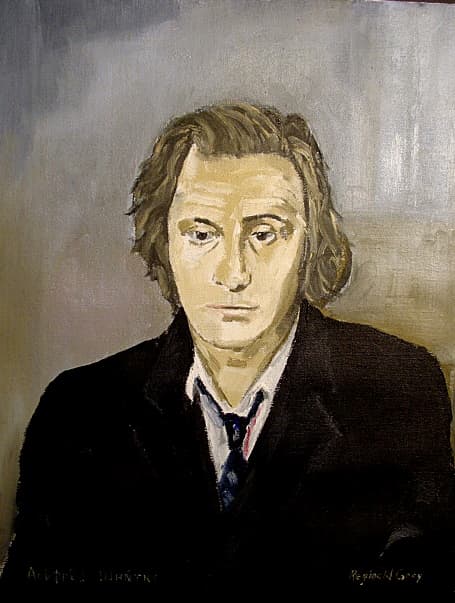
Portrait of Alfred Schnittke by Reginald Gray

Portrait of Alfred Schnittke by Reginald Gray

By the mid-1900s, so many symphonic innovations had already taken place, changing, stretching, and challenging the genre in multiple ways, that it was becoming increasingly difficult for composers to think of new ones while remaining faithful to the genre’s conventions.

But Soviet composer Alfred Schnittke (1934–1998) had one innovation up his sleeve. He developed a style he’d dubbed polystylism – the deliberate blending of different, dissimilar styles – and then wrote his first symphony employing it.

In this symphony, he quotes Haydn, Beethoven, and Strauss waltzes. Jazz improvisation occurs. At certain points in the score, musicians are instructed to walk on and offstage.

Any listener would be forgiven for wondering if this is still actually a symphony – if, perhaps, sometime between Haydn and Sibelius, the word had lost its meaning…or perhaps gained a new one.

Every symphony on this list up to this point defined itself by responding to what came before. Schnittke’s contribution was to enshrine that history rather than build on it.

Conclusion

By the time Schnittke walked musicians on and off the stage mid-performance, quoting Haydn and Strauss in the same breath, the question Beethoven had first posed with the Eroica – how far can a symphony be pushed before it stops being a symphony at all? – had effectively been answered. That answer was: as far as a composer’s willingness to break rules would take them.

Composers still write symphonies today. But whether the word still means what it meant to Haydn in 1795 is another debate entirely.

Saturday, October 3, 2026

YUJA WANG, ALWAYS


YUJA WANG, ALWAYS...🎹🌹
Shared post from Philippe Toudic
May be an image of text. May be an image of text. May be an image of violin, clarinet, oboe and text. May be an image of one or more people and text. May be an image of text
Yuja at the Celebration of MTT in San Francisco! She played the 2d movement from the Barber Concerto and a Poulenc four hands piece with Teddy Abrams. I saw Yuja play that piece with MTT years ago.