Friday, October 5, 2012

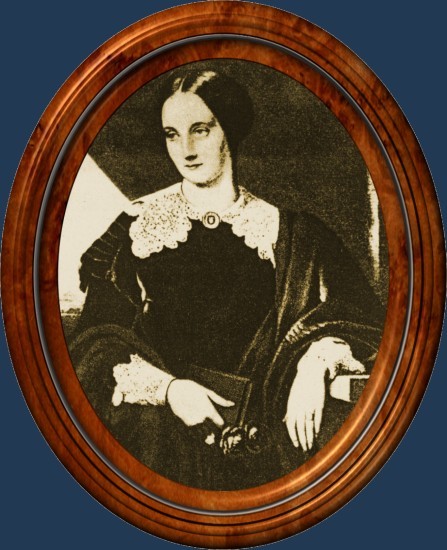
Johannes Brahms - His Music and Life


Johannes Brahms was born on May 7, 1833 in Hamburg/Germany and passed away on April 3, 1897 in Vienna/Austria.

Brahms became a contra-bass-player and respected horn player. As a young boy Brahms earned his livings by performing in different sailor saloons and dives.

After wretched and puny school years he did try to build up a higher education through self-confidence and self-study. Brahms surprisingly drew people's attention to his impressing piano playing, especially when he accompanied the Hungarian violinist Eduard Remeny on virtuoso touring.

In 1858, Brahms became Musical Director in Detmold/Germany. In 1863, Brahms has been in charge of the Vienna Academy of Music. As freelance artist Brahms lived a carefree life. Schubert had been forced to it, Beethoven succeeded in doing at the beginning.

The Piano was Brahms' source of composing work. He could fulfill a sonata's gigantic measurements and extents. Richard Wagner and Johannes Brahms have been the "Children of Romanticism", but only Brahms has lacked the pathos of theatrical language and expressionism. But, Brahms' compositions have become a world power - equal to Beethoven and Wagner.

This space doesn't allow mentioning the whole life's work of an incredible German classical composer named Johannes Brahms.

More in my next post about him.

(To be continued!)


Tuesday, October 2, 2012

Johannes Brahms - Symphony No.3 - Poco Allegretto

Maurice Ravel - His Music and Life

Maurice Ravel was born on March 7, 1875 in Ciboure-Biarritz/France and passed away on December 28, 1937 in Paris. His father was a Swiss engineer automotive pioneer while his mother had been a Basque housewife.

Ravel joined the Conservatoire de Paris for an unbelievable period of 16 years. His professors were the well-known Andre Gedalge (1856-1926) and Gabriel Faure (1845-1924).

Nothing fascinated Maurice Ravel more than translating piano music into the language of the virtuoso orchestra. The time was ripe, for by 1900, Rimsky-Korsakov and Richard Strauss had brought a new opulence to symphonic scoring. Ravel was a born transcriber who prided himself on the precision of his orchestral craft as he stretched the instruments to the limits what they could do.

Like Claude Debussy ("Claire de Lune"), Ravel was trained primarily as a pianist, and most of what he wrote originated at the keyboard. But everything was fair game for his brilliant metarphormoses, not only his own piano works which were given dual lives.

Paradoxically, though he was a master of the orchestra, only three of Ravel's own symphonic works were originally scored for orchestra, beginning with the wonderful Rapsodie Espagnol from 1907, when he was akready 32 and quite famous in Europe.

Once you have heard the pizzicato strings in the role of guitars and a colorfully large orchestra glinting with percussion from Alborada del gracioso, is it hard to believe that this wonderful show piece was initially conceived to the keyboard.

Ravel's "Bolero" from 1928 is also an outstanding representative of Spanish sensuality in the form of classical music.

Ravel remained unmarried. He loved exotic cats and Japanese ornamental plants. Even experiencing a luxury life the agonizing feelings of loneliness let become Ravel mentally deranged.


“The only love affair I have ever had was with music.”

Maurice Ravel

The history of classical music, however, is full of fabulously gifted individuals with slightly more earthy ambitions. Love stories of classical composers are frequently retold within a romanticized narrative of sugarcoated fairy tales. To be sure, happily-ever-after stories do on rare occasions take place, but it is much more likely that classical romances lead to some rather unhappy endings. Johannes Brahms had an overriding fear of commitment, Claude Debussy drove his wife into an attempt at suicide, Francis Poulenc severely struggled with his sexual identity, and Percy Grainger was heavily into whips and bondage. And that’s only the beginning! The love life of classical composers will sometimes make you weep, or alternately shout out with joy or anguish. You might even cringe with embarrassment as we try to go beyond the usual headlines and niceties to discover the psychological makeup and the societal and cultural pressures driving these relationships. Classical composer’s love stories are not for the faint hearted; they are heightened reflections of humanity at its best and worst. Accompanying these stories of love and lust with the compositions they inspired, we are able to see composers and their relationships in a completely new light.


Tuesday, September 25, 2012

Jean Sibelius - His Music and Life

Jean Sibelius was born on December 8, 1865 in Tawastehus/Finland and passed away September 9, 1957 in Helsinki.

Many of his in-laws and forefathers were well-known doctors, artists and clergy members. Sibelius began to study law at first. But unsatisfied, he changed his mind soon and shifted courses to music.

In 1890, his real composition works started. The first decade had been the most fruitful and successful period of Sibelius' whole career and life.

Finland's history and its wonderful ferry tales and legends had been inexhaustible source for symphonies and incredible orchestral suites such as "En Saga" (1892, revised in 1901), "Karelia" (1893), "Four Legends for Orchestra" (1895) and "Finlandia" (1900). Sibelius took most of his musical ideas from his native land Finland with Finnish longing and melancholy.

One might ask, whether Sibelius' "Violin Concert" was the composer's carefully planed revenge on the deities of this instrument.

In his childhood, Sibelius had first played the piano, but after a few years he switched to the violin. He later confessed: "The violin took me over completely. From then on for the next ten years or so my profoundest wish, the loftiest aspiration of my ambitions, was to become a great violin virtuoso." But Sibelius never quit managed to reach these goals. 

As I mentioned earlier: Sibelius took most of his musical ideas from his native land Finland. In this respect, the music that he wrote in 1906 for Hjalmar Procope's play "Belshazar's Feast" represents a rare excursion for the composer into the exotic and the oriental.

Featured Post

The Most Overtly Erotic Works in Classical Music

  by  Emily E. Hogstad    May 28th, 2026 Western classical music is often thought of as cerebral or abstract, but throughout its history, co...