Total Pageviews

Friday, February 7, 2025

The Genius of Felix Mendelssohn 10 Most Popular Works

by Hermione Lai, Interlude
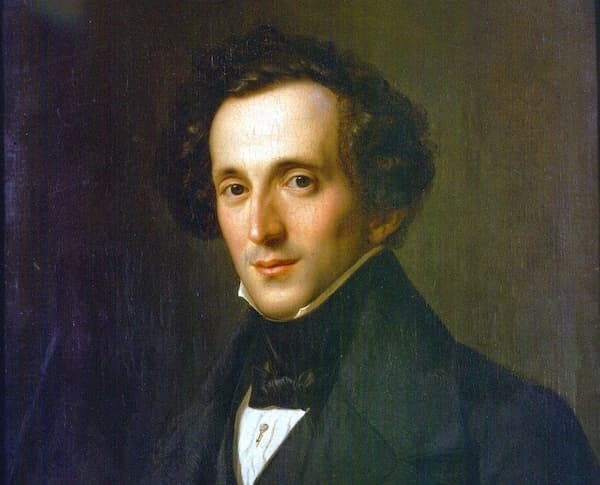
Felix Mendelssohn

Felix Mendelssohn

From the sweeping grandeur of his symphonies to the ethereal charm of his concertos, or the atmospheric depths of his incidental music, Mendelssohn’s compositions continue to captivate audiences worldwide.

To celebrate his birthday on 3 February, here are 10 of Mendelssohn’s most iconic pieces that will showcase his genius. Whether you’re a die-hard fan or a newcomer to his work, this blog brings you the essence of his musical magic.

Midsummer Night’s Dream “Overture”

Felix Mendelssohn: “Overture” to Midsummer Night’s Dream, Op. 21 

Felix Mendelssohn twice composed music for William Shakespeare’s play A Midsummer Night’s Dream. And would you believe that he composed the immensely popular and famous concert “Overture” at the age of 17!

Edwin Landseer: Scene from A Midsummer Night's Dream

Edwin Landseer: Scene from A Midsummer Night’s Dream

The “Overture” is a vibrant and whimsical piece that captures the magic and mischief of Shakespeare’s play. Just listen to the magical opening that evokes the image of fairies flitting through a moonlit forest. There is also a noble fanfare and some truly playful chaos, representing the confusion and comedy of lovers and the mischievous antics of Puck.

Mendelssohn provides a dreamlike conclusion, with the music returning to the ethereal and enchanting melody from the beginning. The “Overture” is a musical journey through the forest of enchantment, sparkling with clarity, lightness, and pure joy.

Violin Concerto

Felix Mendelssohn: Violin Concerto in E minor, Op. 64

Are you ready for the ultimate Instagrammable musical joyride? If so, the Violin Concerto by Felix Mendelssohn is your ticket to one of the most famous musical joyrides in classical music.

What a wonderful musical gem that sparkles with youthful energy. It all starts with a thrilling burst of notes, like fireworks lighting up the sky. The orchestra and violinist seem to be playing a delightful game of cat and mouse. The music then softens into a serene and dreamy interlude, with the violin singing an intimate melody that paints images of calmness.

The final movement is like the best party you’ve ever been to. It’s all about joy, with the violin leading a vibrant dance. It is full of life and laughter and lets you forget your worries for a little while.

Piano Trio No. 1

Felix Mendelssohn: Piano Trio in D minor No.1, Op. 49 

The Mendelssohn Piano Trio No. 1 is one of the most popular chamber compositions. When Robert Schumann first heard the piece, he wrote, “Mendelssohn is the Mozart of the 19th century.”

The piano immediately sets the stage for a sweeping melody in the cello, quickly joined by the violin. That opening movement switches back and forth between vibrant energy and quiet longing, a continuous emotional flow.

A “Song without Words” is followed by a “Scherzo” that reminds us of the airy passages in the Midsummer Night’s Overture. The initial piano theme of the finale keeps returning, and two expressive cantabile sections add a touch of introspection.

Songs Without Words

Felix Mendelssohn: Songs Without Words, Op. 19, No. 1 

Mendelssohn’s Lieder ohne Worte (Songs Without Words) are like bubbles of musical joy, floating through time with an effervescent charm. And did you know that Mendelssohn actually invented this genre of “wordless songs.”

These pieces are incredibly popular as they delicately balance simplicity and sophistication. Although there are no lyrics, each piece tells a story or invites the listeners to create their own narrative.

Just listen to the beautiful flowing melodic lines with a hint of virtuosity. These pieces speak directly to the heart, conveying universal human experiences and emotions. And they are accessible even to amateur pianists.

Elijah

Felix Mendelssohn: Elijah, “He, Watching over Israel” 

The oratorio Elijah is not simply a musical experience, it is also a spiritual one. Incredibly popular with singers and audiences, it offers beauty, drama, and devotion.
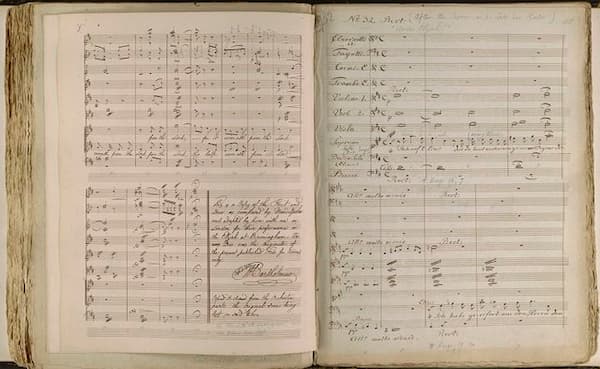
Manuscript of Mendelssohn's Elijah

Manuscript of Mendelssohn’s Elijah

Elijah is based on the biblical story from the Books of Kings concerning the prophet Elijah. It is a dramatic portrayal of his life, focusing on his miracles, his challenge to the priests of Baal, his confrontation with Queen Jezebel, and his ascension to heaven.

“He, Watching over Israel” is one of the most beloved choruses, as it is inherently calming and serene. Intended to provide solace, the music gently rises and falls to invoke the idea of an ever-watchful and loving guardian.

Italian Symphony

Felix Mendelssohn: Symphony No. 4 in A Major, Op. 90 “Italian” 

Felix Mendelssohn’s “Italian” Symphony is a wonderful auditory postcard from Italy. This incredibly popular work captures the vibrant spirit and scenic beauty Mendelssohn experienced during his trip to the land of music.
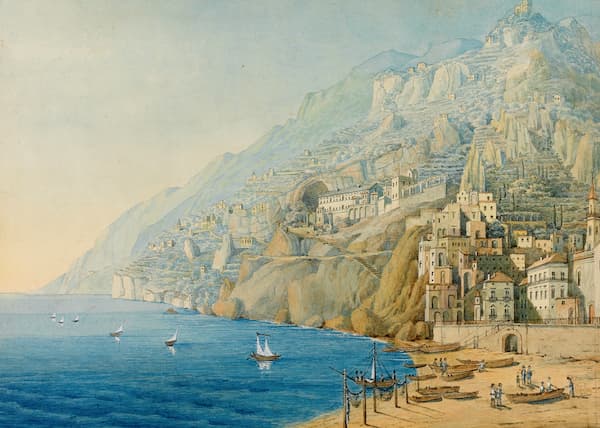
Mendelssohn's painting of the Amalfi Coast

Mendelssohn’s painting of the Amalfi Coast

Blending dance-like rhythms with soaring melodies, the first movement bursts with excitement. It is like strolling through a lively Italian town. The lyrical and serene second movement evokes the calm of the countryside, and the third sounds a serenade in the moonlight.

The Final Celebration unleashes a whirlwind of notes that imitates the joyous dances in the streets of Rome or Naples. This symphony has it all: the warmth of the Italian sun, gorgeous melodies, and plenty of dance rhythms.

Octet

Felix Mendelssohn: Octet in E-flat Major, Op. 20 

It’s almost unbelievable, but Mendelssohn wrote his first chamber masterpiece at the age of 16! The Octet channels all the exuberance, creativity, and passion of youth into an incredible piece of music.

Mendelssohn weaves together eight instruments in a display of youthful energy and brilliance. It’s like a roller coaster of emotions and sounds that feel modern and timeless all at once.

The Octet is pure sparkling creativity! And while we are captivated by the energetic outer movements, it also contains moments of profound beauty in the slow movement. It’s an unbelievable range of emotions from a composer that young.

Piano Concerto No. 1

Felix Mendelssohn: Piano Concerto No. 1 in G minor, Op. 25 

At the age of 22, Mendelssohn fell in love with Delphine von Schauroth. They played lots of piano duets together, and his first Piano Concerto was the result of his infatuation.

It seems that Delphine composed an important passage for this work, but we really don’t know which one. Could it be the melancholy theme from the opening movement that returns in the final movement and provides the musical and emotional bond for the work?

We may never know for sure, but the relationship did not last. Mendelssohn eventually married Cécile Jeanrenaud, and Delphine wedded in succession the English clergyman Edwin Hill-Handley, Stephan Freiherr Henning von Eberg and Edward Knight.

Hebrides Overture

Felix Mendelssohn: The Hebrides, Op. 26 “Fingal’s Cave” 

The Hebrides Overture, also known as “Fingal’s Cave”, is a musical postcard from one of nature’s most dramatic spectacles. Mendelssohn visited Scotland and the Cave in 1829, and it inspired one of his most popular works.

This musical painting is less about melody and more about evoking the rugged atmosphere of the Hebrides. Just listen as the cellos and basses mimic the deep swells of the ocean, setting a majestic and mysterious scene.

It’s actually a story without words, where the music itself is the narrative, depicting the cave, the sea, and the rugged Scottish coastline. In the woodwinds you can actually hear the almost supernatural echo from inside the cave.

Wedding March

I’ve left the most popular selection for last. Mendelssohn’s “Wedding March” is one of the most famous pieces of classical music. It originates in the play “A Midsummer Night’s Dream” and accompanies the wedding scene of Theseus and Hippolyta.

The reason it’s become one of the most popular pieces by Mendelssohn actually has to do with a specific wedding. In 1858, Princess Victoria, Queen Victoria’s daughter, used it for her wedding recessional, and it has since become a staple in wedding traditions around the world.
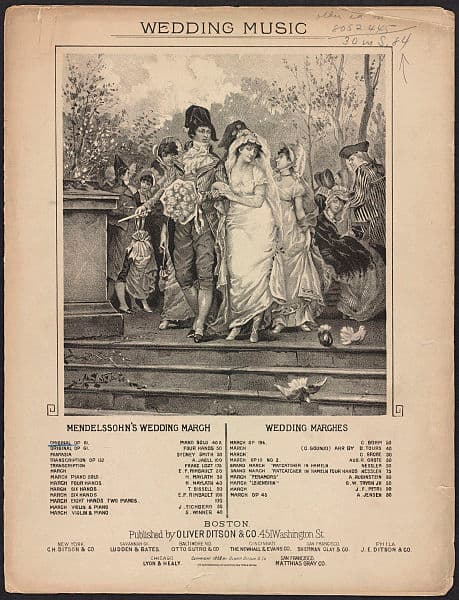
Sheet music for Mendelssohn's wedding march

Sheet music for Mendelssohn’s wedding march

It really encapsulates the very essence of romance and joy. The melody is pure and uplifting, and it seems to carry the weight of happiness and the promise of a blissful future. Mendelssohn wrote the music for a specific scene, but it transcended its original context to become a symbol of matrimonial joy and celebration.

Mendelssohn’s music, featuring classical elegance and romantic passion, continues to captivate audiences worldwide. With plenty of melodic richness and profound emotional depth, his music maintains enduring popularity for its ability to convey joy, beauty, and a timeless sense of celebration.

Thursday, February 6, 2025

Philippines National Artist for Music (1973) Antonio Molina

Antonio Jesus Naguiat Molina - his music and his life


Antonio Jesus Naguiat Molina was born on the 26th of December, 1894, in Quiapo, Manila. He is the son of Juan Molina, a customs inspector during the final years of the Spanish regime, and Simeona Naguiat. Antonio Molina was married to Pilar Siauingco with whom he had six children - among them are: Rostia, a pianist; Exequiel (Lito), a jazz artist and journalist; and, Antonio Maria, Jr., a US-based conductor and composer.

His most important orchestral works are Misa Antoniana Grand Festival Mass (1964) and Ang Batingaw (1972). Among his chamber music compositions are Prelude and Romanz for cello and piano (1928) and Bontok Rhapsody. Some of his piano works are Malikmata (1939) and We Were Moonlight (1941).

Antonio Sr.'s father founded the 22-piece Orquestra Molina, whose members lived and rehearsed in the family residence. At 12, Antonio Sr. could play the violin. The bandurria, mandolin, guitar, laud, bajo de unas and octavina, and the cello all followed later. 

He received his Bachelor's degree in 1909 at the Colegio de San Juan de Letran. Prior to that, he also went to the Escuela de Catolica de Quiapo, where he began his first formal schooling. In 1919, he enrolled at the University of the Philippines (UP) Conservatory of Music. His teachers included Nicanor Abelardo and the Conservatory Director, Robert Schofield. He obtained his teacher's diploma in 1923. From 1922 to 1924, he concertised extensively in Hanoi and other parts of Indo-China. He also taught at the UP Conservatory of Music and then at the Centro Escolar University. He functioned both as organizer and conductor of Philippine choral and rondalla music groups wherein he was also actively involved. He conducted the premiere of the Bach's Christmas Oratorio on the 14th of December, 1947, the first performance of Mozart's opera, Don Giovanni, and the first television choral concert to be presented in the Philippines. 

Molina's first composition, "Matinal" (1912), is preserved in an unpublished volume called Miniaturas, Vol. I. According to the composer, they are called Miniaturas because they do not seem to have arrived at a category of serious musical works. They are merely combinations of melody and harmony conceived during a moment of enthusiasm, passion, or humour, and later written down. They are products of inspiration and instinct, and not of technical studies in music. He then wrote a set of waltzes, Lamentos de mi Patria (Laments of my Fatherland) in 1913, and "Hatinggabi", his most famous violin piece (1915).

His hundreds of compositions include a sarswela entitled "Ana Maria", done while he was still in school. His most important orchestral works are Misa Antoniana Grand Festival Mass (1964) and Ang Batingaw (1972). Among his chamber music compositions are Prelude and Romanz for cello and piano (1928) and Bontok Rhapsody. Some of his piano works are Malikmata (1939) and We Were Moonlight (1941). His major works are composed of chamber music, choral, piano, violin, theatre, voice and violoncello music. Many of his works still have not been published.

Antonio Molina received numerous awards such as the Conductor of the Year Award (1953) from the Music Lovers' Society, the UP Conservatory Alumni Award and the Phi Kappa Beta Award (1972), among others. He was the first musician to be conferred the National Artist Award (12th June, 1972).

Antonio Molina, Sr. died on the 29th of January, 1980.

Why does classical music make us cry?


Why does classical music make us cry? Pictured: Yukiko Ogura (Philharmonia Principal Viola)
Why does classical music make us cry? Pictured: Yukiko Ogura (Philharmonia Principal Viola). Picture: Getty / Camilla Greenwell

By Maddy Shaw Roberts

Catchy music makes you tap your foot. Emotive music catches you off guard and without warning, has your eyes pricking and nose running. So why do we have this physiological response to music? 

Think about your favourite piece of music… and then imagine hearing it live for the first time. If you’re having a trouble, have a listen to this beautiful piece of Bach for solo piano:

Blind pianist Lucy plays enchanting Bach 'Prelude in C' in Royal Albert Hall debut | Classic FM Live

Or if that didn’t conjure up much, try this – the stirring second movement of Rachmaninov’s Second Piano Concerto:

Rachmaninov's Piano Concerto No.2 (I) - Jeneba Kanneh-Mason | Classic FM

If you felt a lump in your throat or a stinging sensation in your eyes, you wouldn’t be alone. Music can elicit highly emotional responses – a 2017 survey of 892 adults found that nearly 90% had experienced feeling like crying when listening to music.

Outside of musical enjoyment, crying can be a great cathartic release, helping to relieve stress when we’re feeling sad or anxious. Tears contain stress hormones, which are released from our bodies when we cry. But why do we cry to music?


IT can feel like music speaks directly to our hearts. Think of the other emotional contexts music is used in, from rousing hymns at weddings, to poignant elegies at funerals, and rousing marches at graduations as we begin our adult lives.

Shedding a few tears to music is considered a healthy response. It can help us process our deepest emotions in a safe setting – in a concert hall, surrounded by fellow music lovers, at a ceremony, or perhaps at home, listening to a recording.

One of the main purposes of music is to communicate something beautiful for our collective appreciation. So if the music makes you cry, it’s probably doing its job right.

When we feel an emotional response to the music, it can be down to familiarity. Music conjures of memories of the past – of a loved one, a dream or a family member – and hearing great classical music can help connect us to times gone by, creating create a sense of poignancy that this music was also enjoyed by audiences over 200 years ago.

Tears are often invoked when the musical choices feel familiar. In the build-up to the great pianistic climax in Rachmaninov’s concerto, anticipation builds and the reward circuit in our brain is triggered, as the ‘expected’ moment in the music finally arrives and the feeling of tension and anticipation is released.


Crying to music can help us process our deepest emotions in a safe setting
Crying to music can help us process our deepest emotions in a safe setting. Picture: Alamy

Our physiological reactions can be down to pure musical appreciation – the feeling of awe we experience at experiencing art performed at a high level.

We might feel awestruck at the virtuosity of the performers, or the intricacy of the musical writing. Techniques like long melodic phrases, harmonic tension and resolve, and changes in intensity can elicit feelings of satisfaction, hope and even hopelessness.

Studies show that dramatic changes in dynamics, rhythm and texture can light up the brain, and that satisfying harmonic journeys can trigger the reward-related regions of our brains.

When words are difficult, music can communicate the unsayable – that’s a paraphrase of a quote by Hans Christian Andersen, who once said, “Where words fail, music speaks”.

The point is, there’s also something to be said for the wordlessness of orchestral music. Much like a ballet, the narrative created with music and no words can make us feel on a deeper level that speaks to everyone universally.

Whether you cry or get goosebumps while listening to music can also depend on your personality type. Read more about that in this study.

Wednesday, February 5, 2025

Lucrecia Kasilag Divertissement for piano and Orchestra (Allegro Moderato}


Short Biography of Filipina composer Lucrecia Roces Kasilag

Lucrecia R. Kasilag was born on the 31st of August, 1918 in San Fernando, La Union. She is the third of six children of Marcial Kasilag Sr., a government engineer, and Asuncion Roces, a music teacher, Lucrecia's first musical influence. A little after Kasilag's birth, the family moved to Albay and then to Manila. 

At an early age, Lucrecia learnt to play the guitar. She graduated valedictorian from the Paco Elementary School and from the Philippine Women's University High School. She finished her Bachelor of Arts degree in English at the Philippine Women's University (PWU), after which she took piano lessons from Concha Cuervo, and later, Pura Lacson Villanueva. She obtained her Music Teacher's degree from St. Scholastica's College of Music in 1939. And she was sent on an Asian tour by impresario Alfredo Lozano. She finished her Bachelor of Music degree at the PWU. She obtained her Master of Music degree, major in theory and minor in composition at the Eastman School of Music, University of Rochester in New York. She was conferred honorary doctorate degrees by the Centro Escolar University, the Philippine Women's University and the St. John University, New York in 1981. 

Lucrecia Kasilag taught at various colleges such as the St. Scholastica's College, Assumption College and the University of the Philippines Conservatory of Music. She also did pioneering research in ethnic culture and gained world-wide recognition as the Director of the Bayanihan Philippines Dance Company. She was Dean of the PWU College of Music and Fine Arts. She served as Artistic Director and as president of the Cultural Centre of the Philippines from 1969 until her retirement in 1986. She held so many other posts in many different organizations. She held key positions in national and international music organizations and has been recipient of different grants. In 1971, Lucrecia Kasilag was designated as a Colombo music expert to advise the University of Singapore on the setting up of its music department. She has written several articles and essays on various aspects of humanities and research in Asian music. 

Lucrecia Kasilag began composing during World War II. Her over two hundred and fifty compositions range from folk song arrangements, art songs, solo instruments pieces, chamber and orchestral works. She has done significant pioneering work in combining the resources of occidental and oriental instruments in East and West compositions.

In 1979, Kubing Records recorded some of her works such as "Toccata for Percussion and Winds" (1958), "Divertissement for Piano and Orchestra" (1960), "Legend of Sarimanok" (1963), "Filiasiana", a choral dance kaleidoscope (1964), "Dularawan" (Drama-Tableau) for indigenous instruments and mixed chorus (1969), "Her Son, Jose", an operator (1976) and "Sisa", ballet music (1976).

Lucrecia Kasilag passed away on 16th August, 2008 at the age of 90. 

Always keep singing your own song


What do composers Ryan Cayabyab, Louie Ocampo, and Ogie Alcasid think about the current state of Filipino music?

BY ROBERT REQUINTINA


AT A GLANCE

  • During a press conference for the upcoming show "OAC: Original and Absolute Classics" which will be held at the North Solaire Ballroom in Quezon City on Feb. 13, the trio discussed the growing variety of musical styles and the rising recognition of Filipino artists locally and internationally.


ogs.jpg
From left: OPM composers Louie Ocampo, Ogie Alcasid, and Ryan Cayabyab (Facebook)

Renowned composers Ryan Cayabyab and Louie Ocampo have offered high commendations for the Original Pilipino Music (OPM) scene, celebrating its remarkable evolution and heightened success in recent years. 

During a press conference for the upcoming show "OAC: Original and Absolute Classics" which will be held at the North Solaire Ballroom in Quezon City on Feb. 13, the trio discussed the growing variety of musical styles and the rising recognition of Filipino artists locally and internationally.

Their optimistic view of the current direction of OPM shows a lively artistic community. This community keeps creating new works while honoring the rich cultural heritage of the country. 

"Yung dating pinapanaginip ko dati, nangyayari na ngayon. I hope you understand noon pa man 1960s and 1970s nag-uusap na kami ng mga fellow composers. Iisa lang ang dream namin: makapasok kami sa international (scene). At mailagay ang Filipino performers sa international stage. 

"Ngayon naging hit na ang BINI at SB19 at marami na ang sumusunod. Ano ang ibig sabihin noon? Actually tuwang-tuwa kami na andyan na. Ang kailangan na lang ay ang walang humpay na suporta," said Ryan, the National Artist for Music, on this thoughts about the current state of the local music industry.

Ryan feels impressed and moved by how consumers are embracing Filipino music. It’s great to see this positive change in taste that celebrates cultural connection.

Screenshot 2025-02-06 at 8.37.28 AM.png
Ryan Cayabyab

"Parang nagpapalit na ang taste ng Filipino music consumers. Dati ang playlist nila ay punong-puno ng foreign music. Pero ang balita ko ay mas marami na ang nakikinig sa OPM music. I'm not talking about Filipino music na gawa namin (Louie, Ogie, and Ryan). (It seems like the taste of Filipino music consumers is changing. Before, their playlist was full of foreign music. But my news is that more people are listening to OPM music. I'm not talking about Filipino music that we (Louie, Ogie and Ryan) made.)" 

"Tandaan ninyo sa music ang consumer ay mga bata. So yung mga batang consumer ng pop music, ang pinapakinggan nila ay yung mga gawa ng batang songwriters. Siyempre naman nagkakaintindihan sila dahil pareho ang kanilang mga language. Naiintindihan naman yun. (Remember that in music, the consumers are children. So the young consumers of pop music, what they listen to are the works of young songwriters. Of course, they understand each other because they speak the same language. That's understandable)," Ryan also said.

Ryan stated that comparing old and new music is pointless because they exist on different levels.

"Yung mga matatanda na lumalapit sa akin sinasabi nila mas maganda raw ang mga awit noong era nila. Bakit ngayon ang papangit ng kanta hindi namin maintindihan? Isa lang sagot ko palagi. Hindi kayo ang market niyan. Matanda na kayo. Hindi para sa inyo 'yang music na yan kaya hindi ninyo gusto. (The older people who come to me say that the songs of their era were better. Why are songs so bad now, we don't understand? I always have one answer. It's not your market. You're old. That music isn't for you, that's why you don't like it).

Ryan urged fellow music lovers to explore new possibilities within the realm of music.

"Matanda na kayo. Hindi para sa inyo yang music na yan kaya hindi ninyo gusto. But once you open your mind to the possibilities, that's how it is. Ang audience talaga ng popular music ay sa mga bata. (You're old. That music isn't for you, so you don't like it. But once you open your mind to the possibilities, that's how it is. The audience for popular music is children)," the musician and conductor added.

Screenshot 2025-02-06 at 8.38.46 AM.png
Louie Ocampo

Ryan, 70, is the composer behind the OPM classics "Kay Ganda ng Ating Musika," "Tuwing Umuulan at Kapiling Ka," "Kahit Ika'y Panaginip Lang," "Kailan," "Can This Be Love?", Kumukutikutitap," and more. He mentioned writing a song entitled "Di Ko Masabi" for Stell, a member of SB19. 

"So basically ang music ko ngayon ay ginagawa ko na rin para sa mga kasama ko or baka yung mga makalusot din na bago. May nakalusot naman ngayon na kinanta ni Stell. So ganun yun eh. (So basically, I'm making my music now for my friends or maybe for those who have already made it through. Something that Stell sang has made it through now. So that's it).

"Kung gusto mo ng swimming sa malaking ocean, kailangan makisanib ka rin sa mga sikat. So now the state of Filipino music is enviable. At ang dami nila hindi lang SB19 at Ben&Ben. Papasok silang lahat dyan na mga bago. Ang galing!" (I believe you need to collaborate with the well-known artists. The current state of Filipino music is admirable, and there are many artists, not just SB19 and Ben&Ben. It's wonderful!)," said Ryan.

Louie, 64, mentioned that the OPM scene is moving quickly and is proud of it.

"I feel I'm slowing down kasi ang bibilis nila. The current state of OPM is moving fast, and I'm happy for everyone. Hindi ko na mahabol kasi ang bilis. This makes us want to work harder and keep up with the young ones. Several sounds are coming out, but to me, it's still OPM. (I feel like I'm slowing down because they're speeding up. The current state of OPM is moving fast, and I'm happy for everyone. I can't catch up because of the speed).

"I may not be comfortable with it. But I must learn to grasp it because these are the youth na gumagawa ng mga kanta. So, I must open my mind and see where it is headed. (I may not be comfortable with it. But I must learn to grasp it because these youth make songs. So, I must open my mind and see where it is headed).

og.jpg
Ogie Alcasid

"I remember when I was growing up, my dad would tell me ano ba yang mga kanta mo, hindi maganda. Tapos hindi katulad ng mga kanta namin dati. With what I hear today, I need to embrace it because it is the soundtrack of the youth. You cannot take it away from them because it's their experience. We have to ride with it. (I remember that growing up, my dad would tell me, 'What are your songs? They're not good. They're not like our songs before.' With what I hear today, I need to embrace it because it is the soundtrack of the youth. You cannot take it away from them. We have to ride with it).

"So, I'm happy with OPM because it is so aggressive and alive. I hope it stays that way for the decades to come. I'm proud of OPM," Louie said.

Louie composed the unforgettable songs "Ewan," "Kahit Isang Saglit," "Tell Me," "Be My Lady," "Closer You and I," and more.

Ogie Alcasid

In the enchanting pre-Valentine’s showcase, the talented trio of Ogie, Ryan, and Louie will mesmerize the audience as they perform a selection of beloved Original Pilipino Music (OPM) classics. 

They will entertain the audience with their engaging presence and romantic songs. Guests can expect a memorable evening that celebrates love and rich musical traditions.

"Sa dami ng kanta namin, mahirap isiksik sa isang concert. Pero pasensya na po sa ibang kanta na hindi naisali. Sa ibang concert na lang. (With so many songs, it's hard to fit them into one concert. But I'm sorry for the other songs that weren't included. They'll be included in another concert).

"Our musical director, Paolo Bustamante, has given us the blueprint of what will happen. I grew up with Paolo, although I did not grow up. It wasn't hard to prepare for this show. (Our musical director, Paolo Bustamante, has given us the blueprint of what will happen. I grew up with Paolo, although I did not grow up. It wasn't hard to prepare).

oac.jpg

Ogie, 57, hopes to take the "OAC" show to various parts of the country and abroad.

"I'm praying that it doesn't end there. We can tour together and do many things together. I want to do campus shows and introduce our music to the younger people," he said.

Ogie composed the memorable hits "Bakit Ngayon Ka Lang," "Kung Mawawala Ka," "Kailangan Kita," "Sa Kanya," "Nandito Ako," "Huwag Ka Lang Mawawala," etc.

Dream projects

Ryan, Ogie, and Louie excitedly shared their dream projects. Each offered a unique vision that reflected their passion and commitment to positive change.

"Ang dami ko pang gustong gawin. Hindi ko pa nagagawa yung piano concerto ko, although last year, nakagawa na ako ng full symphonic work. I'm doing things now na palagay ko meron akong oras para sa sarili ko. I finally found time to do things na para sa nararamdaman ko ngayon. (I still have so much I want to accomplish. I haven't finished my piano concerto yet, although last year I completed a full symphonic work. I'm currently focusing on activities that allow me to express how I feel at this moment. Finally, I've found the time to pursue things that are important to me)," said Ryan.

Louie answered: "I always wanted to develop something with a song, orchestral, or simple piano piece. Pero ang dream ko medyo weird eh. Gusto kong gumawa ng something na hindi acceptable na magiging uso. Something weird tapos magiging pop. Something different. I don't know what it is, but maybe the universe will hit me, and I will do something different. 

"Maybe people will not like it initially, but uso na pala yun later. I want to do a musical and develop a new catalog of songs. I've written hundreds of songs, so I could write another hundred songs I can share with everyone before I go. Yun ang dream ko na hindi ko pa nauumpisahan," he said.

Ogie said he wrote a musical which is expected to be staged in 2026.

"I'm working on it already. It's about yung musical na sinulat namin. Itatanghal na namin in 2026. By the end of the year, siguro, we will have auditions. I will likely play a role. 

"I am hoping my wife will also say yes. Sinulat namin ito medyo matagal na pero sa kaka-polish, we really want to come up with something appealing kasi it's a really good story and makes use of songs na hindi pilit. (I am hoping my wife will also say yes. We wrote this for a while, but in the final polish, we really wanted to come up with something appealing because it's a really good story and makes use of a song that isn't forced).

"Nakakatakot din na project because gagastusan din namin at sa dami ng musical, ayaw naman namin sabihin bakit ganun lang ang ginawa namin. Gusto naming kagiliwan ito ng mga manonood. (It's also a scary project because we'll have to spend a lot of money and with so many musicals, we don't want to say why we did it that way. We want the audience to enjoy it)," Ogie said.

Monday, February 3, 2025

Music is an important part of our life (I)


Music is an important part of our life as it is a way of expressing our feelings as well as emotions. No matter where you are living on this globe.  Some people consider music as a way to escape from the pain of life. It gives you relief and allows you to reduce stress. ... Music plays a more important role in our life than just being a source of entertainment.


Music affects our emotions. When we listen to sad songs, we tend to feel a decline in mood. When we listen to happy songs, we feel happier. Upbeat songs with energetic riffs and fast-paced rhythms (such as those we hear at sporting events) tend to make us excited and pumped up. 

Music means the world to me. It makes me think about how it relates to life and I love the beats. Music is a way to express yourself, keep you company while you're alone, and always give you something to do. Music is a way of expressing me and being able to relate to other people.

It won't be a surprise to most that music can affect the human brain emotionally. ... Happy, upbeat music causes our brains to produce chemicals like dopamine and serotonin, which evokes feelings of joy, whereas calming music relaxes the mind and the body.

Music is a form of art; an expression of emotions through harmonic frequencies. ... Most music includes people singing with their voices or playing musical instruments, such as the piano, guitar, drums or violin. The word music comes from the Greek word (mousike), which means "(art) of the Muses.

Music is love. David Crosby sang this wonderful song already in 1971. "Everybody's sayin' music is love
Everybody'sayin' it's, you know it is..."

Music tells stories. Well, composers and musicians use music to tell stories. From all over the world.  Music can be used to depict characters, places, actions and even emotions. Music is often used to heighten a mood, or to express a thought or feeling when mere words are not enough.

“[Music] can propel narrative swiftly forward, or slow it down. It often lifts mere dialogue into the realm of poetry. It is the communicating link between the screen and the audience, reaching out and enveloping all into one single experience.” The best stories engage all of the senses.

One of the great things about music in general, and in particular concert music, is that playing it opens up a whole new world of experience that further enhances the mind, physical coordination, and expression. Music lovers, who are also amateur performers, may choose to play in community ensembles (orchestra, band, choir), take lessons, perform with others, compose, and nearly anything else a professional musician may do, while maintaining their regular lives. All of this involves intense physical coordination in performing an instrument alone or with others, while reading musical notation, and adding delicate or strong nuanced changes to the music that only a performer can bring. In general, to an amateur musician, music can provide an escape from everyday life or an alternative means of expressing one's own capabilities. It is an important part of their lives and fills a need or an urge to create music.

I have been a music lover since my 4th birthday. Meanwhile, living as a German expat in the Philippines, I found out that Filipinos and Germans are music lovers. Among indigenous Filipinos, one important function of music is to celebrate or commemorate important events in the human life cycle. Fortunately, until today, these rich indigenous musical traditions live on. They serve as a reminder of the Filipinos' long history of musical talent and ingenuity.

Such is the case of Philippine music which today is regarded as a unique blending of two great musical traditions – the East and the West. ... The majority of Philippine Music revolves around cultural influences from the West, due primarily to the Spanish and American rule for over three centuries.

Becoming a German expatriate in the Philippines already 1999, I have attended many music events. I fell in love with Filipino classical music. So what does music really mean to Filipinos? It simply tells them where they've been and where they could go. It tells a story that everyone can appreciate and relate to, which is why it's a big part of every Filipino culture. 

Music of the Philippines (Filipino: Himig ng Pilipinas) include musical performance arts in the Philippines or by Filipinos composed in various genres and styles. The compositions are often a mixture of different Asian, Spanish, Latin American, American, and indigenous influences.

Notable folk song composers include the National Artist for Music Lucio San Pedro, who composed the famous "Sa Ugoy ng Duyan" that recalls the loving touch of a mother to her child. Another composer, the National Artist for Music Antonino Buenaventura, is notable for notating folk songs and dances. Buenaventura composed the music for "Pandanggo sa Ilaw".

(To be continued!)

Musik ist ein wichtiger Teil unseres Lebens, da sie eine Möglichkeit ist, unsere Gefühle und Emotionen auszudrücken. Ganz gleich, wo Sie auf der Welt leben. Manche Menschen betrachten Musik als eine Möglichkeit, dem Schmerz des Lebens zu entfliehen. Sie verschafft Ihnen Erleichterung und hilft Ihnen, Stress abzubauen. ... Musik spielt in unserem Leben eine wichtigere Rolle als nur eine Quelle der Unterhaltung zu sein.

Musik beeinflusst unsere Emotionen. Wenn wir traurige Lieder hören, verschlechtern sich unsere Stimmung. Wenn wir fröhliche Lieder hören, fühlen wir uns glücklicher. Fröhliche Lieder mit energischen Riffs und schnellen Rhythmen (wie sie wir bei Sportveranstaltungen hören) machen uns aufgeregt und munter.

Musik bedeutet mir die Welt. Sie bringt mich zum Nachdenken darüber, wie sie sich auf das Leben bezieht, und ich liebe die Beats. Musik ist eine Möglichkeit, sich auszudrücken, Gesellschaft zu leisten, wenn man allein ist, und immer etwas zu tun zu haben. Musik ist eine Möglichkeit, mich auszudrücken und mit anderen Menschen in Kontakt zu treten.

Die meisten werden nicht überrascht sein, dass Musik das menschliche Gehirn emotional beeinflussen kann. ... Fröhliche, schwungvolle Musik veranlasst unser Gehirn, Chemikalien wie Dopamin und Serotonin zu produzieren, die Glücksgefühle hervorrufen, während beruhigende Musik Geist und Körper entspannt.

Musik ist eine Kunstform; ein Ausdruck von Emotionen durch harmonische Frequenzen. ... Bei den meisten Musikstücken singen Menschen mit ihrer Stimme oder spielen Musikinstrumente wie Klavier, Gitarre, Schlagzeug oder Geige. Das Wort Musik kommt vom griechischen Wort (mousike), das „(Kunst) der Musen“ bedeutet.

Musik ist Liebe. David Crosby sang dieses wunderbare Lied bereits 1971. „Alle sagen, Musik ist Liebe.
Alle sagen, es ist Liebe, du weißt, es ist …“

Musik erzählt Geschichten. Nun, Komponisten und Musiker verwenden Musik, um Geschichten zu erzählen. Aus aller Welt. Musik kann verwendet werden, um Charaktere, Orte, Handlungen und sogar Emotionen darzustellen. Musik wird oft verwendet, um eine Stimmung zu heben oder einen Gedanken oder ein Gefühl auszudrücken, wenn bloße Worte nicht ausreichen.

„[Musik] kann eine Erzählung schnell vorantreiben oder verlangsamen. Sie erhebt bloße Dialoge oft in den Bereich der Poesie. Sie ist die Kommunikationsverbindung zwischen der Leinwand und dem Publikum, die alles erreicht und in ein einziges Erlebnis einhüllt.“ Die besten Geschichten sprechen alle Sinne an.

Eines der großartigen Dinge an Musik im Allgemeinen und Konzertmusik im Besonderen ist, dass das Spielen eine ganz neue Erfahrungswelt eröffnet, die den Geist, die körperliche Koordination und den Ausdruck weiter verbessert. Musikliebhaber, die auch Amateurmusiker sind, können sich dafür entscheiden, in Gemeinschaftsensembles (Orchester, Band, Chor) zu spielen, Unterricht zu nehmen, mit anderen aufzutreten, zu komponieren und fast alles andere zu tun, was ein professioneller Musiker tun kann, während sie ihrem normalen Leben nachgehen. All dies erfordert eine intensive körperliche Koordination beim Spielen eines Instruments allein oder mit anderen, beim Lesen von Noten und beim Hinzufügen feiner oder starker nuancierter Änderungen zur Musik, die nur ein Musiker vornehmen kann. Im Allgemeinen kann Musik für einen Amateurmusiker eine Flucht aus dem Alltag oder eine alternative Möglichkeit zum Ausdruck der eigenen Fähigkeiten sein. Sie ist ein wichtiger Teil ihres Lebens und befriedigt ein Bedürfnis oder einen Drang, Musik zu machen.

Ich bin seit meinem 4. Geburtstag ein Musikliebhaber. Währenddessen habe ich als deutscher Expat auf den Philippinen herausgefunden, dass Filipinos und Deutsche Musikliebhaber sind. Eine wichtige Funktion der Musik für die einheimischen Filipinos besteht darin, wichtige Ereignisse im menschlichen Lebenszyklus zu feiern oder zu gedenken. Glücklicherweise leben diese reichen einheimischen Musiktraditionen bis heute weiter. Sie erinnern an die lange Geschichte des musikalischen Talents und Einfallsreichtums der Filipinos.

Dies ist der Fall bei der philippinischen Musik, die heute als einzigartige Mischung zweier großer Musiktraditionen gilt – des Ostens und des Westens. ... Der Großteil der philippinischen Musik dreht sich um kulturelle Einflüsse aus dem Westen, die hauptsächlich auf die über drei Jahrhunderte andauernde spanische und amerikanische Herrschaft zurückzuführen sind.

Als ich 1999 als deutscher Auswanderer auf die Philippinen kam, besuchte ich viele Musikveranstaltungen. Ich verliebte mich in die klassische philippinische Musik. Was bedeutet Musik also den Filipinos wirklich? Sie erzählt ihnen einfach, wo sie waren und wohin sie gehen könnten. Sie erzählt eine Geschichte, die jeder schätzen und mit der sich jeder identifizieren kann, weshalb sie ein großer Teil jeder philippinischen Kultur ist.

Musik der Philippinen (Philippinisch: Himig ng Pilipinas) umfasst musikalische Darbietungskünste auf den Philippinen oder von Filipinos, die in verschiedenen Genres und Stilen komponiert wurden. Die Kompositionen sind oft eine Mischung verschiedener asiatischer, spanischer, lateinamerikanischer, amerikanischer und indigener Einflüsse.

Zu den bemerkenswerten Komponisten von Volksliedern gehört der National Artist for Music Lucio San Pedro, der das berühmte „Sa Ugoy ng Duyan“ komponierte, das an die liebevolle Berührung einer Mutter für ihr Kind erinnert. Ein anderer Komponist, der National Artist for Music Antonino Buenaventura, ist bekannt für die Notation von Volksliedern und Tänzen. Buenaventura komponierte die Musik für „Pandanggo sa Ilaw“.

Southeast Asia on the Piano by Charisse Baldoria


May I invite you all to support a project by a good pianist friend of mine who is launching her 2nd CD which features Southeast Asian music.

For the first time, a CD album will gather together piano pieces inspired by gong-chime ensembles (gamelan) from Bali, Java and the Philippines, including a world premiere recording of Philippine National Artist Ramon P. Santos' Gong-An suite for piano.

Performed by Charisse Baldoria, the album was created to develop appreciation for the beauty and richness of Southeast Asian music and culture.

The music was written by composers from the Philippines, Europe, the United States, Canada, and New Zealand, for solo piano, two pianos, and a trio with violin and percussion.

Find out more about this project here.