Arthur Nikisch: Liszt - Hungarian Rhapsody No.1, 1920 Berlin Philharmonic Orchestra
STARTING TIMES: Silent Film 1913: 0:00 VERSION 1: Side 1 0:55 , Side 2 5:13 Side 3 9:10 Side 4 12:29 VERSION 2: Side 1 15:08 Side 2 19:27 Side 3 23:24 Side 4 26:42 INTRODUCTION to Nikisch's recordings and his art of conducting see below!
Arthur Nikisch was the most famous conductor of his times. Unfortunately there exist only few recordings with him and all are from the acoustic era. Hence, for us Nikisch stands in the shadow of his great successor Wilhelm Furtwängler. But Nikisch was the only conductor Furtwängler really admired. He wrote: "Nikisch vermochte es eben, ein Orchester singen zu machen. Dies... ist etwas höchst Seltenes." ("Nikisch was able to let an orchestra sing. This... is something very rare.")
Nikisch himself admired Richard Wagner, not only as composer, but also as conductor. He played at least two times as violinist under his baton. From Wagner he got the idea of modulation of tempo as a condition for real melos and expression. But the ability to realise this idea in a perfect way came out of Nikisch himself.
Many contemporaries described Nikisch as a magician. So the question for us is: Can we experience these wonderful qualities from the few recordings that were made under primitive conditions about hundred years ago? My answer is: yes, to a large degree. Of course there are final losses, but there is enough left for us to experience the essence of his art.
I made every effort to transfer the two shellacs (Grammophon 65906 and 69567) into the digital world. There is no manipulation of sound (equalisation: flat). Hence, the surface noises of the shellacs might be louder than you are used to. But this is the price we have to pay for getting the full sound of the records.(You should not use headphones for this transfer.)
I let the record breaks untouched because they belong to the recording sessions of that time .If you don't like listen with gaps you may click on the indicated starting time of the next side (below the video) when the current side ends.
The two short silent films at the beginning are rare (not on Youtube as far as I know) and illustrate very clearly Nikisch's way of conducting. He moves his arms and hands precisely but at the same time you might feel his magic influence upon the orchestra.
A good transfer should be in accordance with these visual impressions and with the statements of the contemporaries about Nikisch. I hope I have settled this task. How difficult it is you can recognize by the fact that I had to offer two versions.
As indicated in the video the first version is best for listening with only a computer. The loudness is still not very high but should be enough in most cases. If necessary put the volume at 100 percent. For this version I had to double the maximum loudness in the film program. This means one more step of computing with the result of less musicality. I did it because many people listen just this way. But if you are seriously interested in Nikisch's art you should connect your computer with a good HiFi system and listen to the second version. Then you will marvel and understand why Arthur Nikisch was so famous.
Thursday, May 2, 2024

FIRST CLASSICAL CONCERT of 15-year-old Karolina Protsenko | Mendelssohn ...
15 year old Karolina Protsenko is playing Mendelssohn Violin Concerto In E Minor as soloist with Orchestra Nova LA for the first time. Karolina is playing on a Carl Becker violin Chicago 1937.
Big thanks to Karolina's violin teacher Sam Fischer for nourishing her musical talent and being a great classical violin mentor for her.
Condactor: Ivan Shulman
Videographer: Sam Liu
Soundman: Jeff Dollente
Wednesday, May 1, 2024
Rickmansworth Young Musician of the Year 2024 - Elizabeth Pinyan Guo -
Rickmansworth Young Musician of the Year 2024 - 2nd Prize Winner - Elizabeth Pinyan Guo - Piano
Clair de Lune - Debussy
Prokofiev - Dance of the Knights
Prokofiev: Romeo and Juliet, No 13 Dance of the Knights
Sergei Sergeyevich Prokofiev (Russian: Серге́й Серге́евич Проко́фьев, tr. Sergej Sergeevič Prokof'ev)[1][2] (27 April [O.S. 15 April] 1891 -- 5 March 1953)[3] was a Russian composer, pianist[4][5] and conductor who mastered numerous musical genres and is generally regarded as one of the major composers of the 20th century.
Nine-year-old Wilson Liu Performs Prokofiev's Prelude Op. 12, No. 7
Nine-year-old pianist Wilson Liu, a student at the Juilliard Pre-College program, performs Prokofiev Prelude.
Tuesday, April 30, 2024
Felicità - Karolina Protsenko & Daniele Vitale Sax | Behind The Scenes
15-Year-Old Karolina Protsenko plays "Love Theme" by Ennio Morricone
Rhythm of the rain
1,200,275 views • Aug 17, 2021
Friday, April 26, 2024
14 Beautiful Female Classical Pianists
14. Lola Astanova:  • Lola Astanova plays Rachmaninoff Mome...
13. Khatia Buniatishvili: • F. Liszt - "Ständchen" Piano Transcri...
12. Dora Deliyska: • Dora Deliyska plays Beethoven, "The r...
11. Hélène Grimaud: • Helene Grimaud (Ravel Piano Concerto ...
10. Anastasia Huppmann: • Chopin Etude Black Keys Op 10 No 5
9. Olga Jegunova: • Olga Jegunova - W.A. Mozart: Piano So...
8. Eloïse Bella Kohn: • Debussy - Ce qu'a vu le vent d'ouest ...
7. Irina Lankova: • Irina Lankova plays Schubert Imprompt...
6. Valentina Lisitsa: • Tchaikovsky "June" Barcarolle Чайковс...
5. Olga Scheps: • Alexander Skrjabin Waltz A flat major...
4. Primavera Shima: • Schumann Arabasque Op. 18 - Primavera...
3. Belle Suwanpotipra: • Debussy: L'Isle joyeuse
2. Katharina Treutler: • Debussy: La fille aux cheveux de lin,...
1. Yuja Wang: • Video
*No copyright infringement intended*
• Lola Astanova plays Rachmaninoff Mome...
13. Khatia Buniatishvili: • F. Liszt - "Ständchen" Piano Transcri...
12. Dora Deliyska: • Dora Deliyska plays Beethoven, "The r...
11. Hélène Grimaud: • Helene Grimaud (Ravel Piano Concerto ...
10. Anastasia Huppmann: • Chopin Etude Black Keys Op 10 No 5
9. Olga Jegunova: • Olga Jegunova - W.A. Mozart: Piano So...
8. Eloïse Bella Kohn: • Debussy - Ce qu'a vu le vent d'ouest ...
7. Irina Lankova: • Irina Lankova plays Schubert Imprompt...
6. Valentina Lisitsa: • Tchaikovsky "June" Barcarolle Чайковс...
5. Olga Scheps: • Alexander Skrjabin Waltz A flat major...
4. Primavera Shima: • Schumann Arabasque Op. 18 - Primavera...
3. Belle Suwanpotipra: • Debussy: L'Isle joyeuse
2. Katharina Treutler: • Debussy: La fille aux cheveux de lin,...
1. Yuja Wang: • Video
*No copyright infringement intended*
• Lola Astanova plays Rachmaninoff Mome...
13. Khatia Buniatishvili: • F. Liszt - "Ständchen" Piano Transcri...
12. Dora Deliyska: • Dora Deliyska plays Beethoven, "The r...
11. Hélène Grimaud: • Helene Grimaud (Ravel Piano Concerto ...
10. Anastasia Huppmann: • Chopin Etude Black Keys Op 10 No 5
9. Olga Jegunova: • Olga Jegunova - W.A. Mozart: Piano So...
8. Eloïse Bella Kohn: • Debussy - Ce qu'a vu le vent d'ouest ...
7. Irina Lankova: • Irina Lankova plays Schubert Imprompt...
6. Valentina Lisitsa: • Tchaikovsky "June" Barcarolle Чайковс...
5. Olga Scheps: • Alexander Skrjabin Waltz A flat major...
4. Primavera Shima: • Schumann Arabasque Op. 18 - Primavera...
3. Belle Suwanpotipra: • Debussy: L'Isle joyeuse
2. Katharina Treutler: • Debussy: La fille aux cheveux de lin,...
1. Yuja Wang: • Video
*No copyright infringement intended*Discover Margaret Bonds
By Fanny Po Sim Head, Interlude
Because my mouth
Is wide with laughter
And my throat
It is deep with song
You do not think
I suffer after
I have held my pain
So long?
Because my mouth
Is wide with laughter
You do not hear
My inner cry?
Because my feet
Are gay with dancing
You do not know
I die?
These are Minstrel Man’s lyrics, the first piece of Three Dream Portraits composed by Margaret Bonds. I discovered Bonds through playing this piece for a singer. The emotional text accompanied by a relatively straightforward piano part creates a powerful effect and led me to want to know more about her and her music.
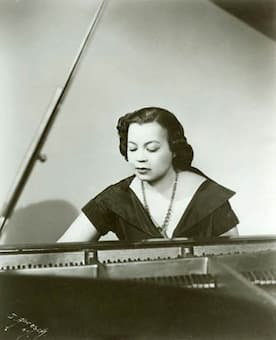
Margaret Allison Bonds
Margaret Allison Bonds (1913-1972) was born in Chicago, the United States. Her parents, Estrella Bonds and Dr. Monroe Majors were divorced when Margaret was very young. While her mother and her grandmother raised Margaret, she remained close with her father. Dr. Monroe Majors (1864-1960) was a physician, a writer, and a civil rights activist. He opened one of the first black hospitals in Texas. One of his popular publications, Noted Negro Women: Their Triumphs and Activities, acknowledges the accomplishments of black women since the end of slavery in the 1860s. Margaret had once collaborated with her father for his campaign song We’re All for Hoover Today.
Margaret Bonds took piano lessons from her mother when she was little. Estrella Bonds was a renowned piano teacher. She was also a charter member of the National Association of Negro Musicians (NANM). Margaret Bonds grew up meeting many African American artists and literary figures, including Abbie Mitchell, Will Marion Cook, and prominent female composer Florence Price (1887-1953). Bonds composed her first work, Marquette Street Blues, at the age of five. In addition to taking piano lessons, she took composition lessons from Florence Price and William Dawson (1899-1990) before going to Northwestern University, a traditionally “white” college.
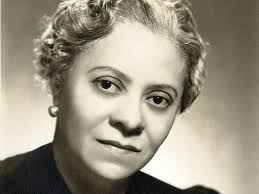
Florence Price (1887-1953)
Bonds completed both bachelor’s and master’s degrees in music at Northwestern University. During her studies, her song Sea Ghost won the Wanamaker Prize’s vocal category (1932). Also skilled as a professional pianist, she was the first African American woman to perform as a soloist with a major American orchestra. In 1933, she served as a solo pianist with the Chicago Symphony orchestra, playing John Alden Carpenter’s Concertino for piano and orchestra. In 1934, she performed Price’s Piano Concerto in D minor with the Women’s Symphony Orchestra. The same year, she finished her master’s degree at Northwestern University.
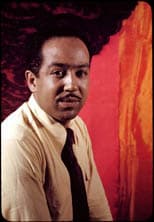
Langston Hughes © Carl Van Vechten / Carl Van Vechten Trust / Beinecke Library, Yale
In 1939, Bonds received a scholarship studying composition with Roy Harris (1898-1979) at the Julliard School of Music. She moved to New York, living in the historically black neighborhood of Harlem. She met her husband, Lawrence Richardson, through Langston Hughes. Langston Hughes (1902-1967), a prominent poet and a leading figure of the Harlem Renaissance, inspired Margaret Bonds in many ways. During her years studying at Northwestern University, Margaret Bonds experienced her first prolonged racism. She found great comfort in Langston Hughes’ signature poem, The Negro Speaks of Rivers. Margaret Bonds discovered more of his works and became more aware of her black heritage. They finally met in person in 1936, and they became lifelong friends and collaborators. According to Bonds’ daughter, Hughes was such a part of the family that he usually stayed at their house during Thanksgiving and Christmas. Soon after their first meeting in 1936, Margaret Bonds began to set his poems into music, including The Negro Speaks of Rivers.
Margaret Bonds devoted herself to elevating African American music and art. By blending the idiomatic musical language of spirituals and work songs, and the increasingly sophisticated vocabulary of jazz with the conventions of the western classical traditions, Bonds sought to re-establish African American culture and art as something complex, beautiful, something essential to the American identity. The collaborations between Langston Hughes and Margaret Bonds include numbers of vocal and choral works and plays.
Ballad of the Brown King
During the Civil Rights Movement, Margaret Bonds and Langston Hughes continued to collaborate and emphasize African American culture and values. She composed two significant works dedicated to Martin Luther King Jr., and one of them is the Ballad of the Brown King, which remained one of the most popular and frequently performed pieces of their collaboration. Inspired by the Civil Rights movement, this work was a Christmas cantata in honor of the African king, Balthazar. Premiered in New York in 1954, Bonds extended this short version to an orchestral version with nine movements, and it was performed in 1960 by Westminster Choir. The movements are all related in terms of keys and theme. Their musical styles continue to display Bonds’ trademark of utilizing European compositional technique with African American vernacular music. The 9-movements exhibit a variety of African American musical styles. It ranges from the traditional four-part hymn gospel, spirituals to calypso. Mary had a Little Baby, the fourth movement of the work, became one of the most famous pieces of the Ballad.
Troubled Water
For instrumental works, the majority of them are arrangements of spirituals. Bonds arranged over 50 spirituals into her compositions, and they often feature active and independent lines with expanded and rich harmonies. Troubled Water is perhaps the only published work for solo piano. The last movement of a three-movement Spiritual Suite, Troubled Water, is based on the spiritual Wade in the Water, and the title is probably inspired by its lyrics, “God’s gonna trouble the water.” Essentially a theme and variation, the contrapuntal technique and the overlapping “call and response” pattern once again represent Bonds’ blending of the classical western tradition and African American musical idioms, respectively. Idioms such as syncopation and jazz harmonies are found throughout the entire piece. This piece is full of excitement and drama with a triumphant ending that gets a strong audience response.
Margaret Bonds: Troubled Water
Due to its popularity, Bonds also rearranged Troubled Water for cello and piano, and symphony orchestra.
After Langston Hughes died in 1967, Margaret Bonds left New York and moved alone to Los Angeles. Although she continued to work diligently and kept bringing Langston Hughes’ works to the public, depression and alcoholism continued to affect her life. Sadly, when she passed away, many of her letters, music, and manuscripts were discovered in the dumpster by her house. While some of them are collected and stored in libraries’ archives, most of her work remains unpublished and unheard. The scope of her work and influence is yet to be fully known.
Subscribe to:
Posts (Atom)
-
The BoholTimes MUSIC can raise someone’s mood, get them excited, or make them calm and relaxed. Music also – and this is important – allow...
-
2,261,443 views May 15, 2019 SUNTORY HALL Munich Philharmonic conducted by Valery Gergiev, Tokyo Suntory Hall Dec 1, 2018 00:05 - 15:5...
-
Yes, this first piano concerto by Tschaikowsky still brings tears into my eyes. Tchaikovsky (or Tschaikowsky) was the second of six survi...


