Friday, September 25, 2026

7 Best Performances of Clair de Lune, According to YouTube

 by Emily E. Hogstad  September 19th, 2026


But which ones have actually captured the most listeners there? And which one is the most watched of all?

We ranked the seven most-viewed “Clair de Lune” performances on YouTube (as of 2026) and listed them in reverse order, saving the most popular for last.

The results may surprise you. The list includes a violin, a theremin, a classical guitar, and an audience of elephants.
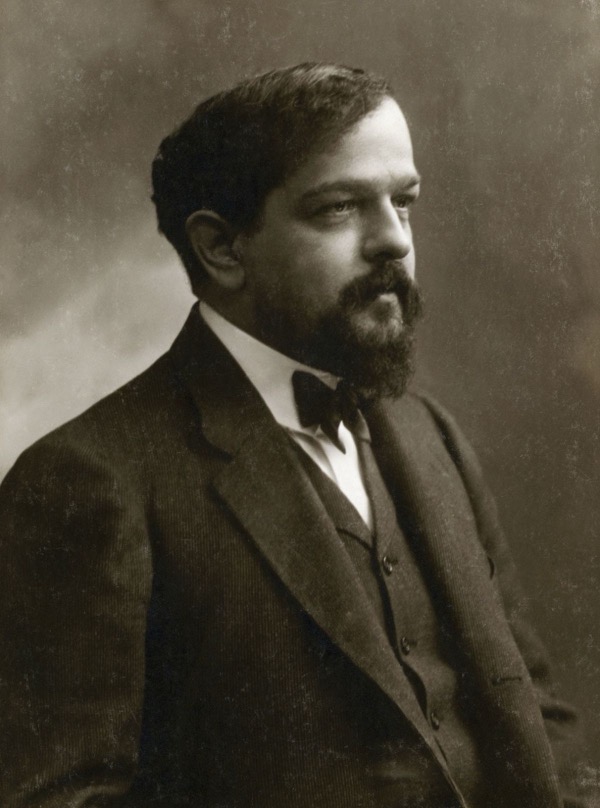
Claude Debussy, ca. 1908, photo by Félix Nadar

Claude Debussy, ca. 1908, photo by Félix Nadar

Only three of the seven performances are for solo piano. What they all share is the breathless beauty that makes “Clair de Lune” one of the most beloved – and ubiquitous – pieces of classical music ever written.

7. David Oistrakh

4.5 million views  

As we mentioned, not all of the performances on this list are for solo piano. One breathtaking example: this violin-and-piano performance by David Oistrakh, recorded in Paris in 1962 with Frida Bauer at the piano.

Oistrakh was one of the great Soviet Russian violinists of the 20th century, and everything that made him legendary is present here: the tonal warmth, the complete absence of ego, the sense that the music is simply passing through him rather than being performed.
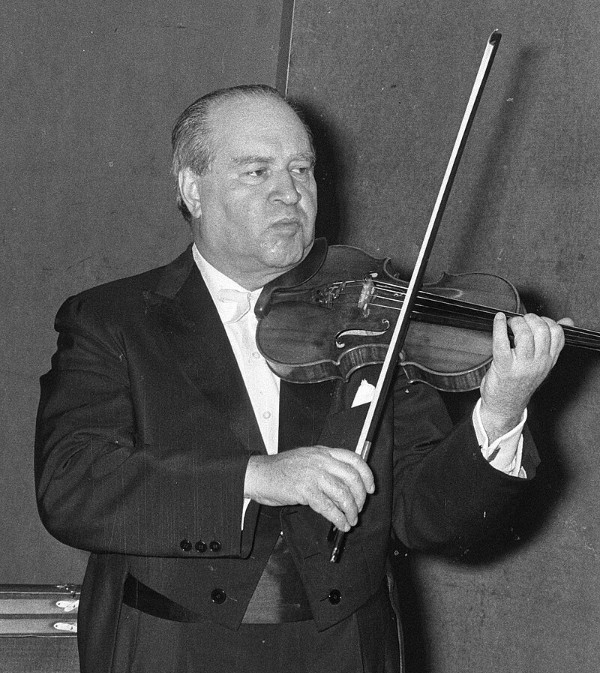
David Oistrakh, 1972

David Oistrakh, 1972

The violin carries the melody with a breathy vocal quality that a solo piano can’t replicate.

This was one of the first great violin performances ever uploaded to YouTube (all the way back in September 2006), and it inspired and influenced an entire generation of violin lovers. It is a fitting performance to kick off this list.

6. Gregoire Blanc

5.9 million views  

The second performance on the list isn’t for the piano; it’s for the theremin. The theremin is a deeply odd instrument. Invented in 1920, it is played entirely without touch. Instead, the performer’s hands move through open air to shape pitch and volume.

Leon Theremin playing a theremin

Leon Theremin playing a theremin

The theremin’s tone meshes intriguingly with Debussy‘s liquid melody; both exist somewhere between the corporeal and ethereal.

Blanc plays with complete emotional commitment, never letting the instrument’s inherent strangeness become the point.

It’s also worth noting that in 2020, he pinned a frustrated comment:

Claravox Centennial | “Clair de Lune” Performed by Grégoire Blanc & Orane Donnadieu  

Whether you check out the original viral video or his updated version, take a listen. It’s spooky, a little comical, and deeply moving all at once – and proves that Debussy’s music can survive all kinds of adaptations and reinventions.

5. Roxane Elfasci

11 million views  

Roxane Elfasci studied business at the prestigious HEC Paris before switching careers and devoting herself to the guitar. Judging by this recording, it was a solid choice.

“Clair de Lune” is a difficult lift for guitarists. The original piano writing can be dense, and the voicing is spread across a wide range that the guitar was never designed to handle.
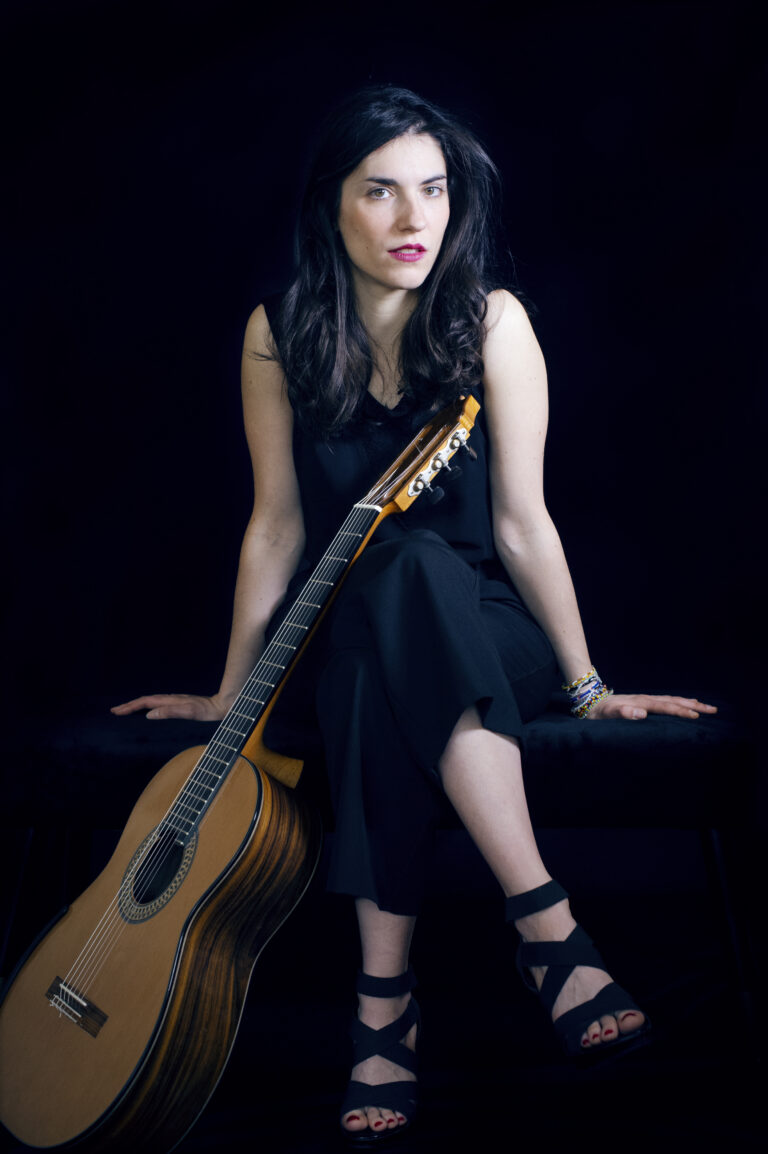
Roxane Elfasci

Roxane Elfasci

However, Elfasci makes the challenges sound easy. Her virtuosic approach to the arrangement creates an almost spectral shimmer.

Eleven million views later, this performance demonstrates decisively that a talented guitarist’s interpretation can rightfully earn its place beside pianists’.

4. Seong-Jin Cho

11 million views  

Seong-Jin Cho is the first pianist on this list.

In 2015, he won the International Chopin Competition – arguably the most prestigious piano competition in classical music – and was signed by Deutsche Grammophon, home to many of history’s great pianists.
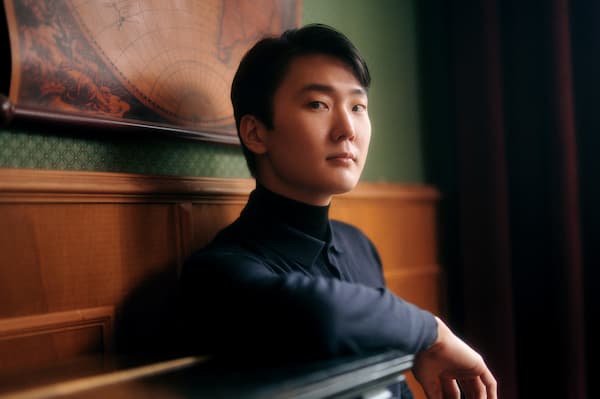
Seong-jin Cho (photo by Christoph Köstlin)

Seong-jin Cho (photo by Christoph Köstlin)

This recording comes from his 2017 Debussy album on DG, released on the eve of the composer’s death centenary.

It is an immediate argument for why a Chopin specialist makes an ideal Debussy interpreter: the touch is exquisite, the voicing luminous, the control of colour absolute.

The tempo is more relaxed than many interpretations. In 2018, he told YourClassical, “I listened again after I played it and my producer said, ‘Oh, you play a little bit slower than the others,’ and then I still felt this is the right tempo for me. Perhaps I will play differently in ten years, but for now I think this is the right tempo.”

This extra space allows every harmonic shift to breathe and settle. The result is a “Clair de Lune” that possesses an almost spiritual gravity.

3. Menahem Pressler

12 million views  

Few pianists have lived as cinematic a life as Menahem Pressler.

He was born in Magdeburg, Germany, in 1923, fled the Nazis in 1939, and in 1946 won the Debussy International Piano Competition – a competition named after the same composer whose music he would return to again and again for the rest of his life.

This particular performance, made when Pressler was nearly 90, was filmed in Paris in 2012.
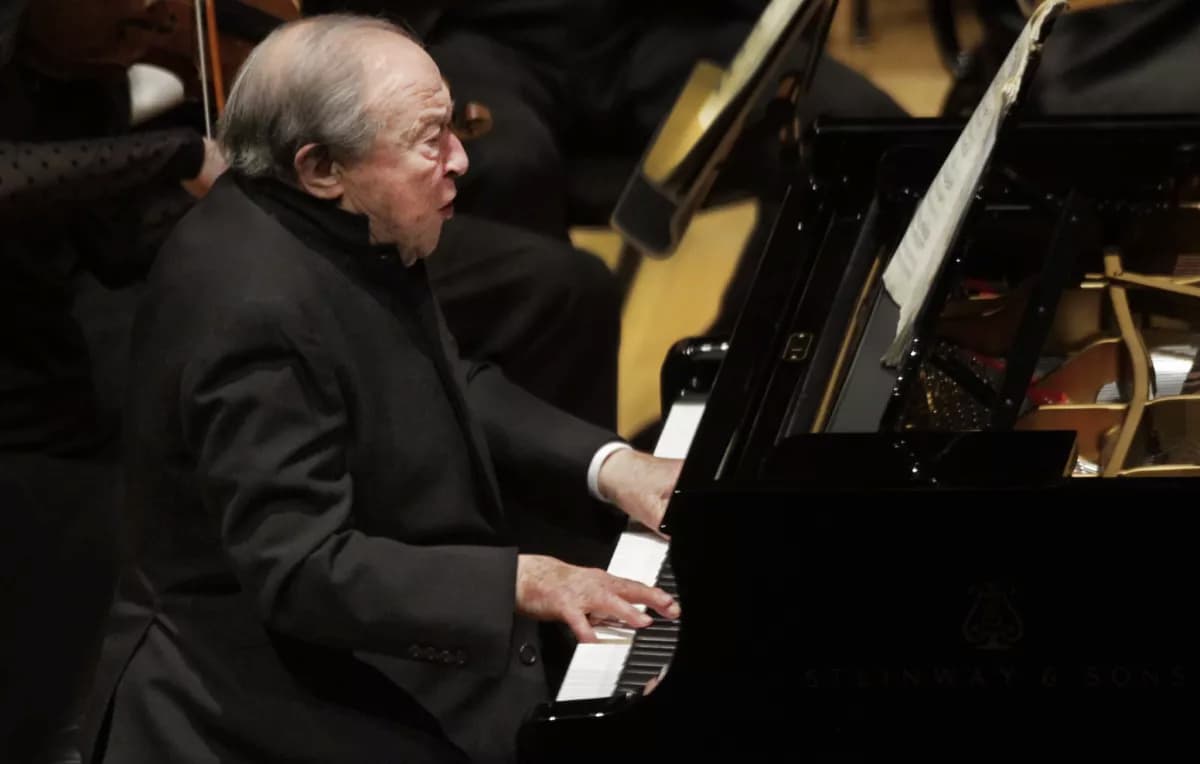
Legendary pianist Menahem Pressler

Menahem Pressler

His playing here conveys an overwhelming sense of love, generosity, profound empathy, and wisdom. This is someone who has lived with this music for decades; it has clearly become a kind of second skin for him.

After a long and celebrated career, Pressler died in 2023 at the age of 99.

2. Paul Barton

15 million views   

This is the only entry on this list where the audience matters as much as the performer.

Paul Barton studied art at the Royal Academy of Arts in London before pursuing a career as a concert pianist – a career he eventually set aside when he travelled to Thailand in the 1990s to teach piano.

While there, he became involved with Elephants World, a sanctuary for rescued logging and trekking elephants, and began bringing his piano to play for them.
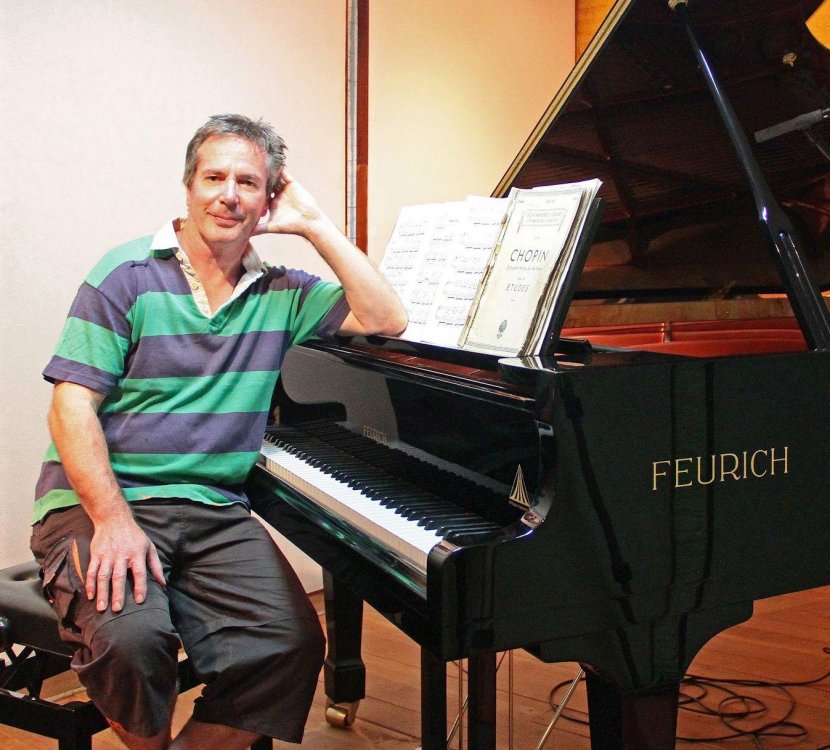
Paul Barton

Paul Barton © bach-cantatas.com

In this video, his audience is Ampan, a gentle 80-year-old elephant with impaired sight. As soon as Barton begins playing, Ampan starts wagging her ears – an elephant’s way of saying, “I am intrigued by this.”

“Their breathing actually slows down when you play, which tells me they are relaxed and happy,” Barton has said.

“Clair de Lune” has moved many millions of humans over the past century-plus. It’s heartwarming to realise it has also delighted other animals, too.

1. Rousseau

69 million views  

At 69 million views, this is the most-watched performance on this list by a significant margin – and it belongs to someone who has never shown their face.

Rousseau is an anonymous American pianist who launched their YouTube channel in March 2018 and built one of the largest classical music audiences on the internet almost entirely through a single innovation: a reactive visualizer that accompanies each performance, lighting up keys as notes are struck.

The effect is somewhere between a piano recital and a meditation. The visualizer makes the architecture of the music visible, the voices separating into colour, the harmonies blooming across the keyboard.

Tens of millions have watched this performance of “Clair de Lune,” proving that the music itself and its visible structure are deeply intriguing to viewers.

Conclusion

Together, these seven performances have accumulated well over 128 million views – a number that says something significant about “Clair de Lune” itself. Few pieces are as beloved.

Whether it’s a 1962 violin recording, an anonymous pianist with a light show, or a concert pianist playing for an elderly elephant, the music retains its magic.

If there’s a takeaway from this list, it is that there is no single definitive “Clair de Lune.” Only the versions that find you at the right moment matter. We hope one of them has touched your heart.

Wednesday, September 23, 2026

Ukraine and the Music of Resilience

 by Maureen Buja  September 21st, 2026


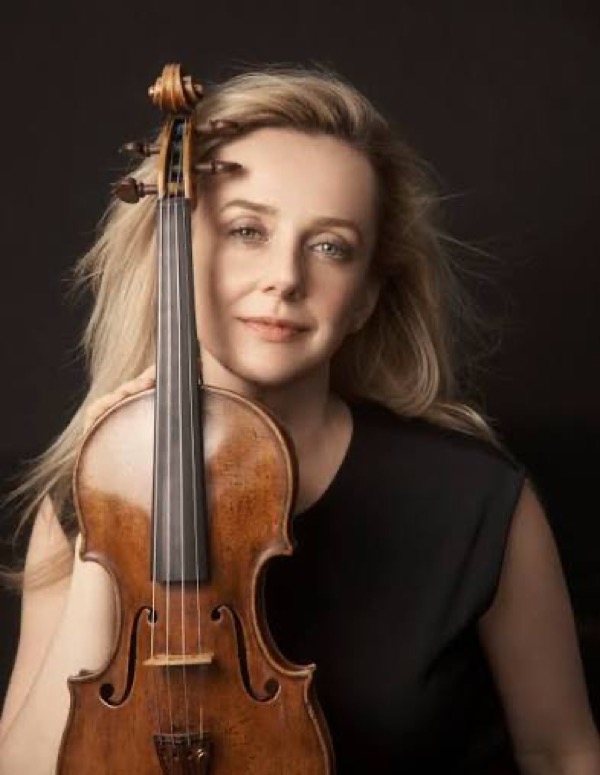
Solomiya Ivakhiv

Solomiya Ivakhiv

In this fashion, violinist Solomiya Ivakhiv brings us a recording of Ukrainian music from living and lesser-known Ukrainian composers. The recording was made in Lviv under the constant threat of Russian missile attacks.

Victoria Vita Polevá

Victoria Vita Polevá

The most striking piece on the recording is the opening, Victoria Vita Polevá’s searing lament, Bucha. Lacrimosa was written in 2022 in direct response to a brutal massacre in the Kyiv suburb of Bucha as Russian troops were withdrawing. The lament is in 3 parts, starting with a solo violin representing the souls rising to their eternal rest. Percussion is omnipresent as a threatening force that culminates in the middle section. In the end, the violin motif returns but without any idea of comfort or resolution. It’s left to the woodblocks for their final dry statement on the future.

Hanna Havrylets, 2019

Hanna Havrylets, 2019

Hanna Havrylets composed Ex Libris in 1993 for poet and violinist Sofia Maidanska to perform on a tour of North America. The suite of four movements ‘responds to Maidanska’s poetry with fantasies on traditional themes marked by their modal harmony, fusing art and folk music techniques of repetition and ornamentation rather than development’.

Bohdan Kryvopust

Bohdan Kryvopust

Bohdan Kryvopust is represented by two pieces composed in 2024. On the River commemorates the protestors killed in Kyiv’s Independence Square (Maidan Nezalezhnosti) during the demonstrations in January and February 2014 when the country’s president, Viktor Yanukovych, rejected the idea of closer ties to the European Union in favour of closer ties with Russia. Much as in Polevá’s lament, the violin is left to pick up the pieces but doesn’t bring the work to a calm resolution.

His Ukrainian Suite was commissioned by the Ukrainian Institute of America and Bohdan Gerulak, in memory of his late wife, the journalist and translator Marta Skorupsky. At its core is the folk song Oh, Wondrous Birth, which tells the origin story of Ukraine and Crimea as the land of ancient Scythia. The second movement recognised the beauty and headstrong temperament of women from the Hutsul region in western Ukraine (and the home region of our violinist). The final movement, When I Got My Draft Notice, takes its title from another song from western Ukraine, but one that feels more relevant now.

Osyp Zalesky

Osyp Zalesky


Bohdana Frolyak, 2017

Bohdana Frolyak, 2017

An older-generation composer, Osyp Zalesky (1892–1984) built his career in the US after training at the conservatoire in Lviv and studying with Guido Adler in Vienna. He worked in Buffalo, New York, and founded its local Ukrainian Music Institute. Bohdana Frolyak arranged his part-song Autumn Song for violin and orchestra.

Ihor Sonevytsky

Ihor Sonevytsky

Bohdana Frolyak’s own Nocturne on the recording comes from a suite for cello and piano she wrote in 2008 in memory of the composer Ihor Sonevytsky, commissioned by his widow Natalia Palidvor. The bittersweet melody and its major/minor-switching harmony have been reworked for violin and orchestra.

Roman Prydatkevych

Roman Prydatkevych

Roman Prydatkevych’s Ukrainian Rhapsody No. 1 is very much in the tradition of late-Romantic violin music; Bohdana Frolyak’s modern arrangement gives it a fresh twist, calling on composers from Korngold to John Williams to create a work with both concert and filmic imagery.

Yuriy Shevchenko

Yuriy Shevchenko

As an encore, Solomiya Ivakhiv plays the arrangement of Ukraine’s national anthem by Yuriy Shevchenko, completed shortly before the composer’s death from COVID in 2022. 

Again and again, the music and composers on this recording reinforce Ukraine’s place in music: connected to the world, yet with its own unique sound and connection to its folk and people. Many of these composers have found their homes in other countries, but still maintain their links to their homeland. This recording showcases not only Solomiya Ivakhiv’s violin playing but also the beautiful music from home and the many composers who have helped define it.

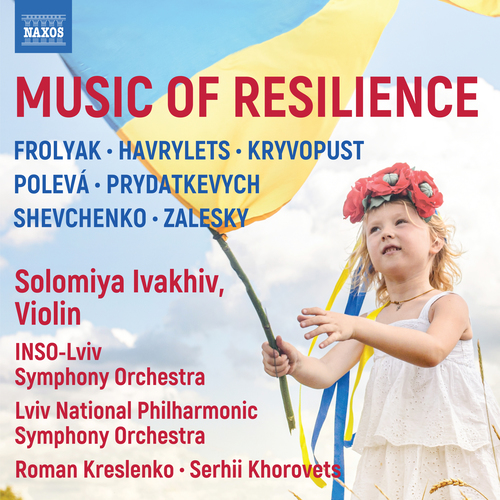
Ukrainian Music for Violin and Orchestra (Music of Resilience) (Ivakhiv, Kreslenko, Khorovets) album cover

Music of Resilience
Solomiya Ivakhiv, violin
With the Academic Symphony Orchestra & INSO-Lviv Symphony Orchestra, conducted by Roman Kreslenko and Serhii Khorovets
Naxos 8.579191

All That Jazz and Chamber Music Too – Chatter Spreads the Word

by Richard Linnett  September 24th, 2026


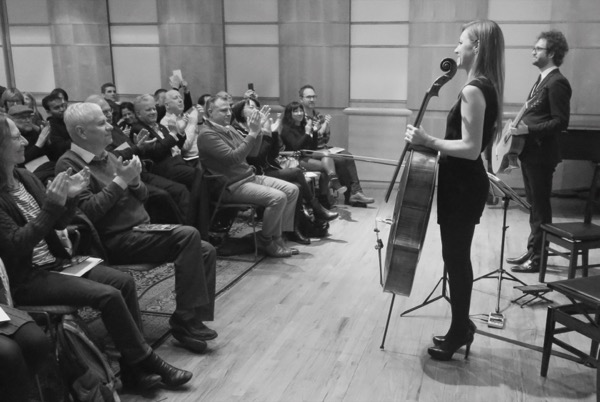
GatherNYC concerts take place every Sunday at 11am and include a spoken word performance plus a two-minute celebration of silence in the middle of the show, a format pioneered by Chatter in Albuquerque. GatherNYC founder and cellist Laura Metcalf has been performing with Chatter for some 16 years, and her co-founder, husband and classical guitarist Rupert Boyd first performed there in 2013, which marked the debut of their cello + guitar duo Boyd Meets Girl. They have since performed as a duo around the world, released two albums and a third to be released in 2027.

Metcalf & Boyd, NYC (Photo by Harold Levine)

Metcalf & Boyd, NYC (Photo by Harold Levine)

“The vibe, acoustics and intimate nature of the club make it the ideal venue for our upcoming season,” said Boyd. “Jazz and classical music are two vital art forms. So different, yet at their core, so similar, and we love the idea of each helping the other to thrive in New York City.”

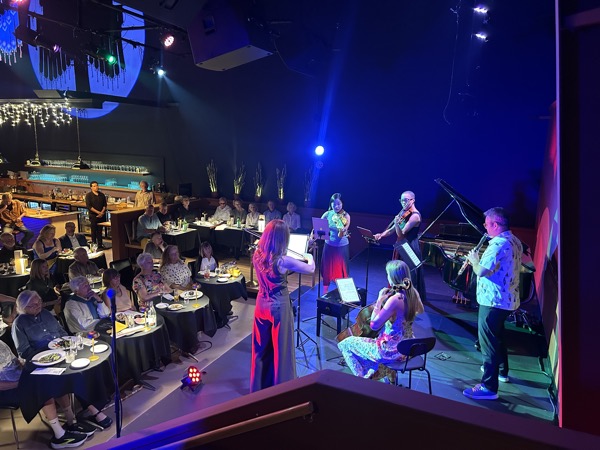
Meanwhile, back at the mothership in New Mexico, Chatter launched a new series of casual evening performances on 6 September at Unit B, a popular jazz, blues and rock dinner club in Santa Fe. Called B-Sides (as in “besides our other shows”), the series is in addition to the group’s weekly morning events every Saturday in Santa Fe and Sunday in Albuquerque, their once a month Late Works performances of experimental, post-classical music on first Fridays every month and their dinner theatre classical Cabaret events on occasional Sundays at the Albuquerque Museum.

B-Sides Chatter at Unit B

B-Sides Chatter at Unit B

David Felberg, violin, and Judith Gordon, piano played Christopher Cerrone’s Violin Sonata  

The sold-out maiden voyage of B-Sides featured Metcalf and her Overlook Quartet performing chamber works by young contemporary composers Gabriella Smith and Kim Osberg. They were joined by ChatterPDX founder James Shields on clarinet for a brilliant Kenji Bunch composition. Shields also played his own solo jazz-infused work Duo No. 7 accompanied by Chatter founder and violinist David Felberg. Pianist extraordinaire Judith Gordon closed out the event with Felberg on works by Thomas Ades and Christopher Cerrone. Flutist Jesse Tatum made a surprising cameo performing a breathless, extraordinary recitation of the first part of Kurt Schwitters’ 1932 Dadaist sound poem Ursonate. The audience and the Unit B staff were spellbound during the entire show.

Overlook Quartet played Gabriella Smith’s “Carrot Revolution”  

“When we heard we were having a classical show tonight, we didn’t expect this at all,” said Eli O’Brien, who was waiting tables and listening intently. “It was so totally different. Amazing.” His reaction was seconded by Unit B owner Dharm Skotting-Segal. “Absolutely brilliant,” he gushed. “An incredible new experience.”

I caught up with Shields on his long road trip back to Portland with his wife, violinist Emily Cole, a frequent cross-country journey for the couple. A former Principal Clarinet with the Oregon Symphony, Shields founded ChatterPDX in 2024 as an offshoot of the New Mexico operation and it is flourishing, attracting overflow audiences. In keeping with Chatter’s underground punk rock-like ethos, performances are held on Sunday mornings in a former men’s clothing warehouse in downtown Portland with occasional evening shows at the Gordon House, a Frank Lloyd Wright designed gem outside of town. ChatterPDX recently unveiled an ambitious composers in residence program in which select artists are commissioned to create new works that are premiered by Chatter in Portland, New Mexico and NYC, and are subsequently recorded, releasing an album every year.

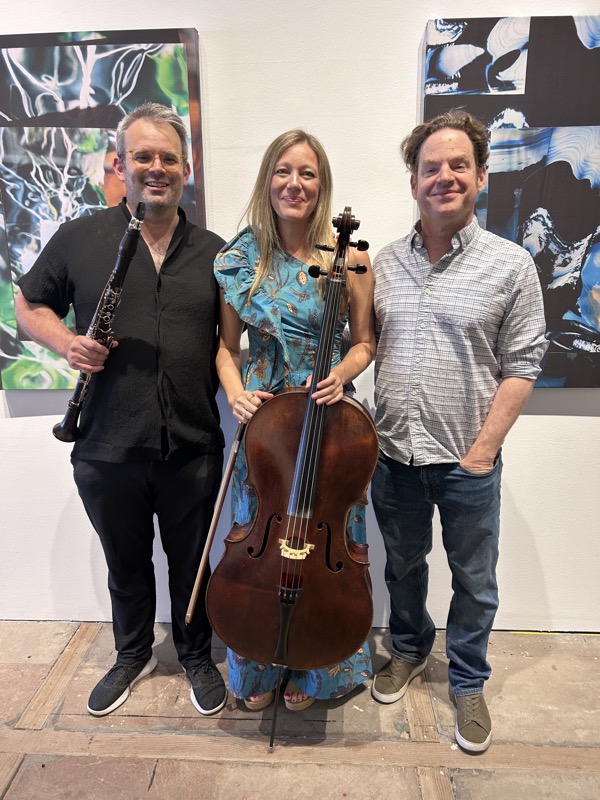
Shields, Metcalf & Felberg

Shields, Metcalf & Felberg

James Shields, clarinet, and David Felberg, violin, performed James Shields’ “Duo no. 7”  

“We have multiple commissions that are three-year fellowships,” said Shields. “We’re giving them a brand new commission each year for three years, and we’re also playing their pre-existing works. We have three fellows at a time and they are on staggered entry, with one following after another.” Two current fellows, both born in the ’90s, are Kim Osberg and Akshaya Tucker, the latter’s cello and wind octet “That Amber Glow” premiered in New Mexico in August. Spoiler alert, pianist and popular young Chatter regular Luke Gullickson will be number three, official announcement forthcoming.

Shields is an exuberant, robust musician with an outgoing personality. He bravely bailed from his cushy symphony orchestra career because as he says, it was a better fit for him to be performing and managing on a more DIY level. “I came out of the pandemic, hit a wall, had performance anxiety and got a wake-up call that I needed to take a chance and see if Chatter would work in Portland. It became established so quickly, it was surprising.” The Portland organization now mounts almost 60 performances a year, often with 150 people or more in attendance.

Shields is an eloquent champion not only of classical music, but also its neo-modern or post classical subsets. Contrary to recent headlines in the popular press that bemoan an aging audience and slumping attendance at major venues like the Hollywood Bowl and the New York Philharmonic, he doesn’t believe classical music is “in crisis.” He’s optimistic that the culture is blossoming at a grassroots regional level as local chamber music outfits attract young musicians, composers and enthusiasts across the country, very much like Chatter.

“We’re now starting to have more impact and are more essential,” he said. “With larger institutions there is such a separation between everything, and specialization, which cuts off the people who are performing the music from the people who are deciding what’s going to be programmed and marketed. Chatter changes the paradigm. Our process is undertaken by a smaller group of people and there’s more overlap between the different roles. Audiences really resonate with that.”

Are there more Chatter chapters on the horizon?

“Occasionally, people will approach us and ask about it. Someone in Seattle was asking and someone in Detroit, but so far we have two offshoots that are working really well.”

Richard Linnett is a journalist, author and amateur horn player. He writes music reviews for The Strad and is the author of the non-fiction books The Eagle Mutiny and In the Godfather Garden: The Long Life and Times of Richie the Boot Boiardo. He lives in New Mexico.

Meet Leopold Mozart the Manager


Leopold Mozart the manager music joke
Credit: NPR Classical on Facebook

Sunday, September 20, 2026

Fluttering Through Music: Classical Pieces Inspired by Butterflies

 by Fanny Po Sim Head  May 3rd, 2025


Alongside these are lesser-known gems by composers from around the world, each capturing the essence of butterflies through shimmering textures, playful motion, and lyrical grace. With spring in full bloom, it is the perfect time to explore how nine other compositions have imitated these enchanting creatures through sound.

Butterfly lands on a sprig of lavender

© Katherine Frey – The Washington Post/Getty Images


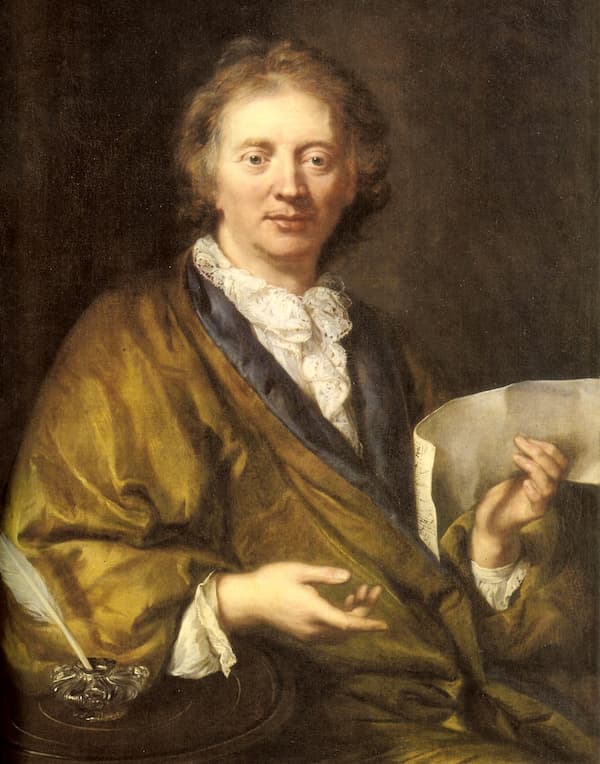
1. François Couperin: Le Papillon (The Butterfly)

Anonymous: François Couperin, first half of 18th century (Chateau de Versailles)

Anonymous: François Couperin, first half of 18th century (Chateau de Versailles)

François Couperin (1668–1733), one of the great French Baroque composers, was known for his highly expressive harpsichord works. Le Papillon is a charming and intricate piece that captures the delicate motion of a butterfly in flight. With its rapid ornaments and light textures, the composition embodies the elegance and unpredictability of a butterfly’s movement. The harpsichord’s crisp articulation enhances the playful and weightless quality of the piece, making it a delightful early representation of butterflies in music.  

2. Edvard Grieg: Butterfly (from Lyric Pieces, Op. 43 No. 1)

Edvard Grieg (1843–1907) was a master of miniature piano works, and Butterfly is a perfect example of his ability to capture natural beauty in music. This piece, from his Lyric Pieces, features rapid, fluttering arpeggios that mimic the delicate and effortless movement of a butterfly. The right-hand patterns create a shimmering effect, evoking an image of a butterfly gliding and flitting through the air. Its short duration and dreamy character make it a favourite among pianists and audiences alike.

3. Gabriel Fauré: Papillon, Op. 77

Fauré’s Papillon, Op. 77, holds a special place in music history, commissioned by his publisher Hamelle after the wonderful success of his Élégie. Though it was likely composed in 1884, it only graced the public with its presence in 1898. Interestingly, Fauré originally considered naming it “Piece for violoncello, ” but his publisher thought a more vibrant title would suit it better. So, it was named Papillon, which charmingly translates to “butterfly. “Fauré, however, had a humorous response, saying, “Butterfly or dung fly – use whichever you prefer. ”  

4. Ernesto Lecuona: La Mariposa (The Butterfly)

Ernesto Lecuona

Ernesto Lecuona

Cuban composer Ernesto Lecuona’s La Mariposa reflects the lush romanticism of Cuban music. With sweeping melodies and vibrant rhythms, Lecuona creates a vivid portrayal of a butterfly in flight, evoking both joy and grace through rich harmonic language.  

5. Heitor Villa-Lobos: A Mariposa na Luz (The Moth in the Light)

Brazilian composer Heitor Villa-Lobos (1887–1959) composed A Mariposa na Luz as a poetic and haunting interpretation of a moth attracted to light. Unlike the more playful depictions of butterflies in other compositions, this piece, written for violin and piano, carries a more melancholic and dramatic tone. The music reflects the moth’s doomed fascination with light, moving between delicate fluttering passages and moments of intensity. Villa-Lobos’ use of impressionistic harmonies and rhythmic ambiguity creates an ethereal atmosphere, highlighting both the beauty and the fragility of the creature.  

6. Dora Pejačević: Papillon, Op. 6

Dora Pejačević

Dora Pejačević

Dora Pejačević (1885–1923), a Croatian composer known for her lyrical and expressive style, wrote Papillon as part of her Eight Little Piano Pieces, Op. 6, when she was just 12 years old. Despite her young age, the piece already shows her sensitivity to character and texture. The music flutters gently, using light figurations and delicate dynamics to suggest the soft, unpredictable flight of a butterfly. Though simple, it’s a poetic early glimpse of a composer who would later become one of Croatia’s most significant musical voices.  

7. Francisco Tárrega: 20 Estudios de guitarra: No. 14 “La Mariposa”

Francisco Tárrega (1852–1909) was a foundational figure in classical guitar history, and his Estudios are staples of the repertoire. No. 14, titled La Mariposa (“The Butterfly”), is a short but captivating piece filled with fluttering arpeggios and ornamental flourishes. Its airy, agile lines mimic the gentle flight of a butterfly, making it both a delightful listening experience and a valuable study in finger control and tone for guitarists. Like many of Tárrega’s miniatures, it evokes nature with elegance and restraint.

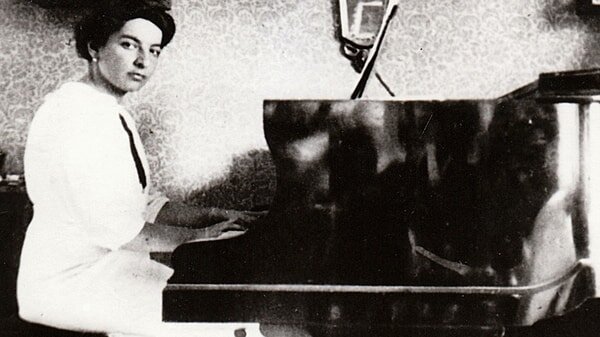
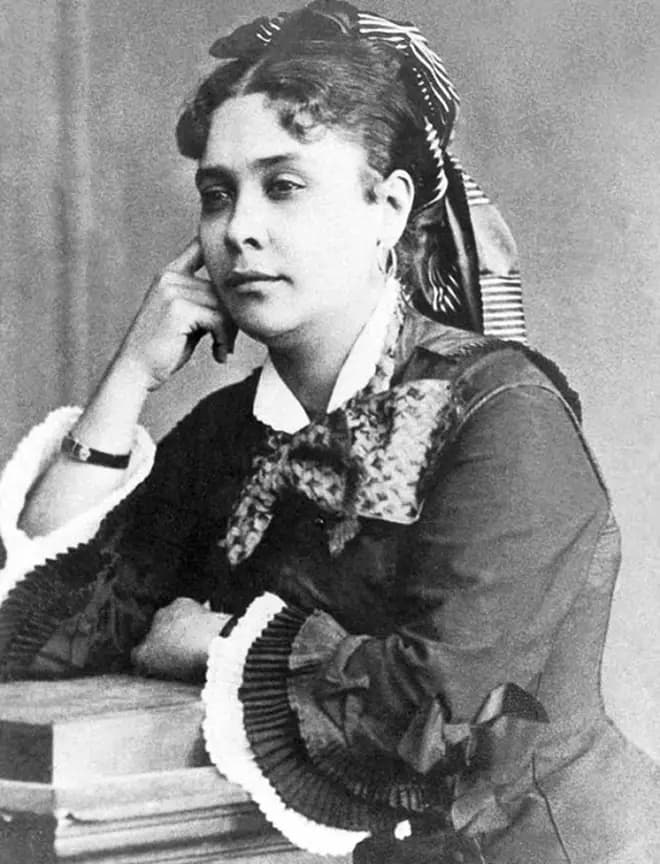
8. Chiquinha Gonzaga: Borboleta

Chiquinha Gonzaga

Chiquinha Gonzaga

A pioneering figure in Brazilian music, Chiquinha Gonzaga (1847–1935) was not only the first female conductor in Brazil but also a prolific composer who blended European salon styles with Afro-Brazilian rhythms. Borboleta (“Butterfly”) is a charming and rhythmically vibrant piano piece that likely draws from the choro or polka traditions. Its playful syncopations and graceful melodic turns suggest a butterfly in motion, full of energy and colour. This work reflects Gonzaga’s unique voice—lighthearted yet firmly rooted in Brazilian musical identity.   

9. Valerie Coleman: Danza de la Mariposa

A GRAMMY®-nominated flautist and composer, American Valerie Coleman’s Danza de la Mariposa is inspired by the various species of butterflies inhabiting South America. This enchanting one-movement tone poem bursts with vibrant colours, depicting butterflies gracefully dancing and weaving through delightful, syncopated rhythms. According to the composer’s note, the slower sections honor the poignant and lovely sounds reminiscent of Peruvian Yaravi (a lament song) and are followed by joyful and spirited Argentinean concert tango before concluding in the essence of Yaravi.  

These nine compositions, spanning from the Baroque to the 20th century and encompassing diverse musical traditions, showcase the many ways in which composers have captured the essence of butterflies in music. Whether through rapid, fluttering passages, playful and whimsical gestures, or deeper, more introspective interpretations, each piece offers a unique perspective on these delicate and fleeting creatures. The butterfly’s natural grace and movement continue to inspire musicians and listeners alike, making these works timeless reflections of nature’s beauty, perfectly suited for the fresh, blossoming energy of spring.

Friday, September 18, 2026

The Dactylion

b 

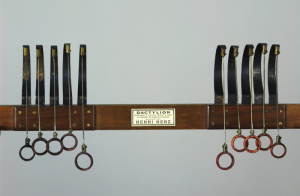
dactylionThe opening decade of the 21st century is once more gripped by a passion for musical virtuosity. Countless young and aspiring musicians—frequently supported and driven by overzealous parents—are vying to study at the most prestigious conservatories and with the most esteemed teachers around the world. To the music historian, this kind of narcissistic frenzy is nothing new, as the rage for keyboard instruments at the beginning of the 19th century reached ever-new levels of insanity. Teacher invented a whole series of mechanical devices—more reasonably called torture devices—that could supposedly help a budding virtuoso achieve even greater finger agility. And Henri Herz patented one such contraption, called the Dactylion in 1836. Mind you, Herz was one of the most famous virtuosos and popular composers in Paris of the 1830s and 40s. He engaged in extended concerts tours to Russia, the United States and South America, and to supplement his income he kept an enormous stable of willing piano students.
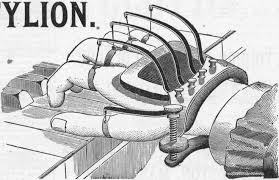
Detail DactylionThe dactylion was specifically designed to loosen and strengthen the fingers of would-be virtuosos. It was made up of two parallel wooden bars. The first was fixed to the front of the keyboard and guided the hands. The second wooden bar, placed parallel to the first, had ten rings. These rings, one for each finger, were attached to springs that could be adjusted to give greater resistance. Apparently, the device just flew of the shelves!

Piano DactylionA good number of musicians, however, were rather skeptical from the beginning. The pianist Friedrich Kalkbrenner introduced François-Joseph Fétis, the first director of the Brussels Royal Music Conservatory, to the Dactylion. “It seems,” Fétis remarked, “that the Dactylion is only good for catching mice.” No, replied Kalkbrenner, “Monsieur Henri Herz made it for catching fools.” Robert Schumann was highly critical of Herz’s compositions, claiming that this music “exemplified the hollow state of the Parisian virtuosos.” But we also know that Schumann developed rather severe hand problems in the mid 1830s. Nobody knows if he actually bought a Dactylion, but he certainly made a contraption, probably based on the Dactylion that isolated one finger at a time. All that venom and spite against the Parisian virtuosos might, after all, have been the result of having been made a fool!
Composers with Disabilities, Part 2 Pettersson, Chopin, Joyce, Beethoven


In Part 1 of this series, we looked at four composers who lived and worked with significant disabilities.

Here are four more – spanning three centuries and five countries, with disabilities ranging from chronic pain to hearing loss to impacts from injuries sustained in childhood.

Allan Pettersson

Rheumatoid arthritis

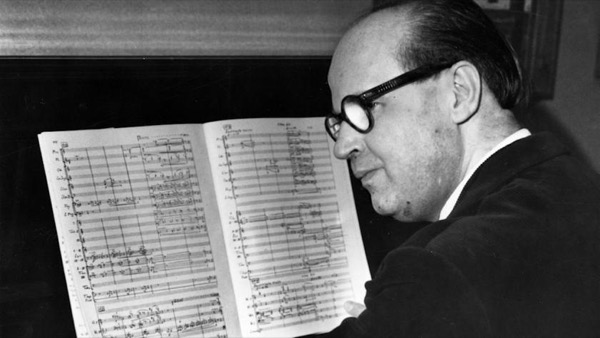
Allan Pettersson

Allan Pettersson

Allan Pettersson was born in 1911 to an alcoholic blacksmith and his dressmaker-and-singer wife.

Against his father’s wishes, he began teaching himself the violin at age 10. In 1930, he enrolled at the Royal Swedish Academy of Music to continue his studies.

The viola would eventually become his favoured instrument, and in the 1940s, he began working as a violist in the Stockholm Concert Society Orchestra, later the Stockholm Philharmonic.

Pettersson has been described as a “combative loner”; he was once scolded by visiting conductor Willem Mengelberg for refusing to blend with his section.

His interest in being an orchestral musician eventually faded, and he began focusing on composition instead, writing multiple symphonies.

His seventh symphony, premiered in 1968, was a breakthrough, becoming a huge success in Sweden.  

In the early 1950s, his chronic pain was diagnosed as rheumatoid arthritis.

At the time, there were limited effective treatments, and his physical condition deteriorated throughout the 1950s.

He kept composing, but by the early 1960s, his mobility was severely curtailed. His apartment was on the fourth floor of a building without an elevator, leaving him essentially homebound for years.

In 1970, he was hospitalised for nine months with kidney issues.

Still, he continued composing as his health deteriorated. When he died of cancer in 1980, he was working on his seventeenth symphony.

Frédéric Chopin

Tuberculosis

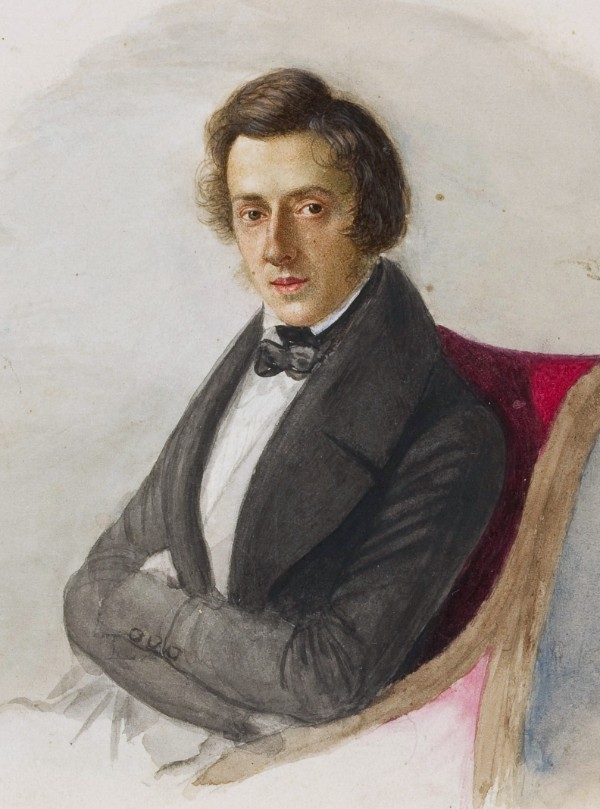
Maria Wodzińska: Frédéric Chopin, 1836 (Wasaw: National Museum)

Maria Wodzińska: Frédéric Chopin, 1836 (Wasaw: National Museum)

After Chopin moved from his native Poland to Paris in 1831, his health deteriorated, and he began coughing up blood: classic symptoms of a dreaded tuberculosis infection.

A few years later, he came down with laryngitis and bronchitis, too. He got so ill that rumours of his death began circulating.

Even after he recovered from the acute infections, he continued to endure intense and exhausting coughing spells.  

In Chopin’s day, tuberculosis was often treated by bloodletting (the process of draining blood from the body) and colon cleansing. These treatments did not provide lasting relief, if any.

With the lack of treatment options available to him, Chopin turned to belladonna and opium for relief. We wrote about his relationship with opium and how it may have affected his music-making here: https://interlude.hk/piano-opium-eater/.

Throughout his thirties, his condition deteriorated steadily. During a tour of Scotland and England in 1848, he made out his will, acutely aware that his days were limited.

He died the following year in Paris.

Molly Joyce

Injuries from a car accident

Molly Joyce

Molly Joyce

American composer Molly Joyce was a seven-year-old violinist when she was in a car accident. Her left hand was almost completely severed from her body.

She would go on to study at the Juilliard School, the Royal Conservatory in The Hague, and the Yale School of Music.  

In a 2022 interview, she told contemporary art music blogger Sandris Murins:

“I identify as disabled because of a car accident that happened a little more than 20 years ago, when my left hand was nearly amputated. Since the accident, I have been on a journey of acceptance… I have had to come a long way, while unfolding my disability, and it has paralleled the progression of my artistic practice.”

Due to her own experiences, Joyce has become increasingly interested in prioritising the experiences of audience members with disabilities. For instance, she provides sign language interpretation and audio descriptions for people who have reduced vision or hearing.

She also works with other artists who have disabilities, such as dancer Jerron Herman, who has cerebral palsy.

According to her official biography, her primary instrument is “her electric vintage toy organ, an instrument she bought on eBay that suits her body and engages her disability on a compositional and performative level.”

Ludwig van Beethoven

Deafness, alcoholism, depression, liver issues, possible lead poisoning

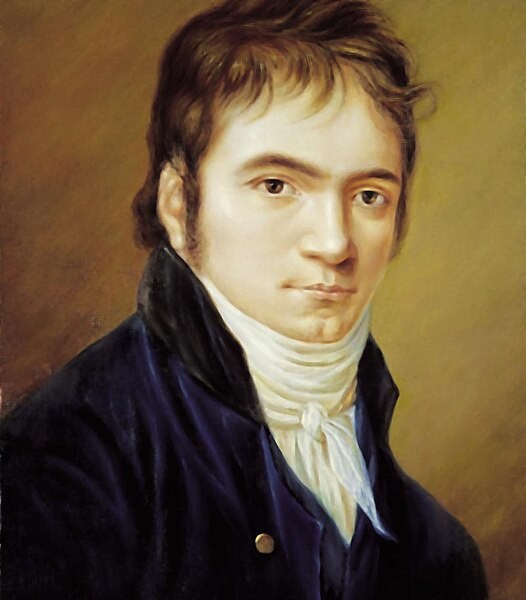
Christian Honeman: Ludwig van Beethoven, 1803 (Beethovenhaus Bonn)

Christian Honeman: Ludwig van Beethoven, 1803 (Beethovenhaus Bonn)

Beethoven dealt with many more health issues than his well-known hearing loss, tinnitus, and depression.

For one, he had severe and lifelong gastrointestinal problems.

These symptoms first began appearing after his beloved mother died when he was just sixteen, leaving his violent and alcoholic father as his only parental figure. During flares of stress or grief, his abdominal pain and digestive problems would often worsen.

In 1821, six years before his death, he also began showing signs of liver disease, including jaundice, vomiting, and more abdominal pain. One contributor was likely his alcohol consumption.

Based on what historians know, it is commonly accepted that his final cause of death was actually liver failure.  

Modern research has unearthed additional information about Beethoven’s health and disabilities.

For instance, a clipping of Beethoven’s hair was recently tested for heavy metals at the Mayo Clinic.

NPR reported in May 2024 that the lead level in the hair was “64 to 95 times higher than the hair of someone today.”

Paul Jannetto, director of the lab, told NPR he believes this was “likely” due to “the goblets and glasses [Beethoven] drank out of.”

Lead poisoning alone likely wouldn’t have killed Beethoven, but it can worsen liver disease, GI issues – and, yes, hearing loss.

We’ll never know exactly what disabilities Beethoven would be diagnosed with had he lived today – but it would certainly be more than deafness and depression.

Conclusion

Pettersson composed from a fourth-floor apartment he could barely leave. Chopin made out his will on tour, knowing he was dying. Joyce’s art expanded once she came to terms with her disability. Beethoven wrote some of the most celebrated music in the Western canon while going deaf, poisoned by his own cups, and battling organ failure.

Disability is woven into the history of classical music – and these four great composers are just a small part of that larger story.