Friday, August 28, 2026

Claude Debussy and the Poetry of Sound Settings by Verlaine, Baudelaire, and Mallarmé

 by Georg Predota  August 22nd, 2026


Always guided by the particular requirements of the French language, Debussy abandoned the expressive conventions of the nineteenth century and attempted to capture ambiguity and fleeting emotional impressions.

As we celebrate Debussy’s birthday on 22 August, let us explore his remarkable mélodies through the poetry of three writers who profoundly shaped his imagination: Paul VerlaineCharles Baudelaire and Stéphane Mallarmé.   

Between Speech and Song

If you are listening to the Debussy melodies for the first time, it’s important to understand that the requirements of the French language always guided Debussy. Stressed syllables are never strongly accentuated, but treated with suitable discretion in order not to betray the spirit of the text.

The vocal lines are full of rhythmical innovations that free them from symmetrical regularity. Essentially, we hear melodic recitatives created in a flexible framework that generally avoids large intervals. This flexibility gives rise to the wonderful nuances so highly valued in French art.

His piano accompaniments, which probably shouldn’t be called accompaniments at all, are basically self-sufficient compositions. Actually, we can follow the harmonic development in Debussy’s musical language all the way to the most daring refinements in his last years.   

Music Melting into Air
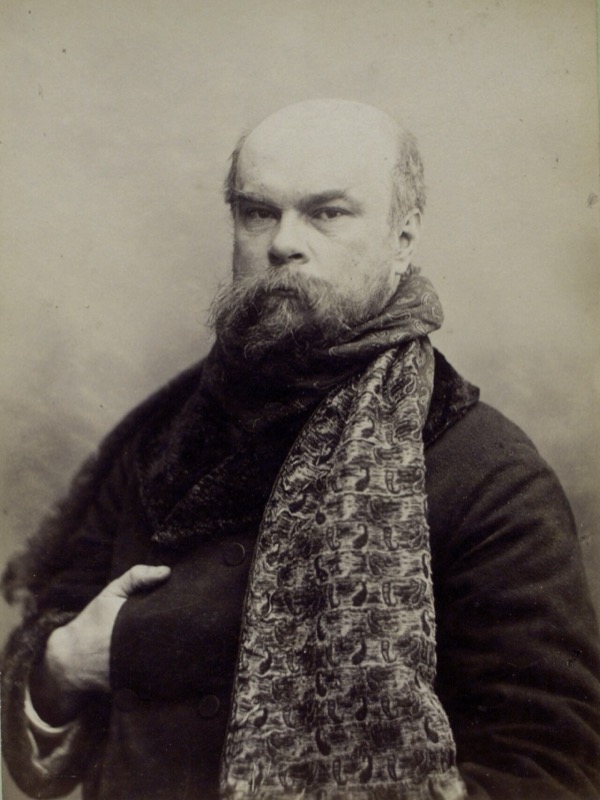
Paul Verlaine

Paul Verlaine

Without doubt, Paul Verlaine was Debussy’s favourite poet. His statement that “music comes before all else, and for that chose the irregular, vague, and melting better into the air,” also became Debussy’s focal point.

Paul Verlaine published his Fêtes galantes in 1869, and it was immediately compared to the enchanted world of the divine master of amorous plays, the great and sublime painter Watteau.

Claude Debussy set “Mandoline” from the Fêtes galantes collection in 1882. It is one of the first Verlaine texts he set to music. It is a work of juvenilia, but Verlaine’s text is precisely what would have appealed to him at this time in his life. Debussy’s amorous ventures were well known, and the light-hearted text pokes fun at wild exchanges of vows and luxuriates in a good lifestyle.

The idea of using the piano as a mandolin substitute is not new, but Debussy introduces a new realism in the opening call to attention. The opening fifths allow for limitless possible continuations, and the initial vocal line sets out wonderfully floating chromatic phrases that won’t be repeated until the final verse. In this early mélodie, we get a sense of what Debussy’s piano part would later become.    

When Love Became Music
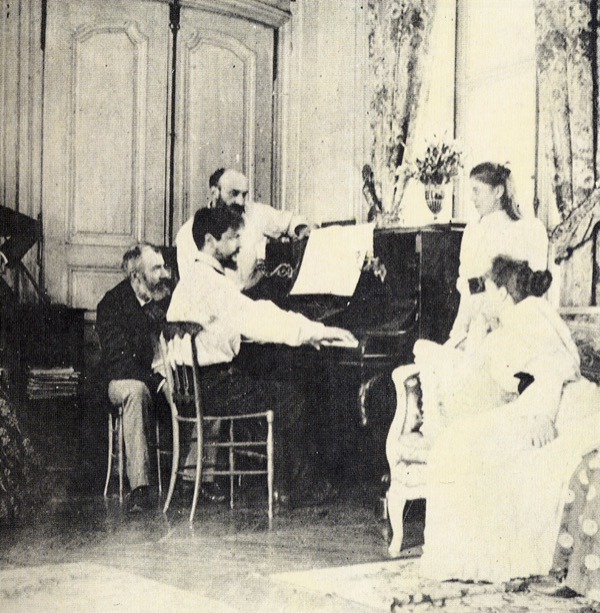
Claude Debussy, 1893

Claude Debussy, 1893

The aesthetic kinship between Verlaine and Debussy has been amply discussed, and Debussy took two stabs at Clair de Lune, with the first setting dating from 1882. It conjures up a magical moonlit world in which commedia dell’arte figures linger without a clear purpose.

It is a dream world in which sense is abandoned before the senses, and no story is told. However, there is a clear subtext to this particular setting. The 18-year-old Debussy was an accompanist for Mme Moreau-Sainti, a professional singer who operated a singing school for the ladies of Parisian high society.

And thus, Debussy’s gaze fell upon a red-haired beauty with green eyes, blessed with a beautiful high soprano voice. As his passion grew, he wrote songs that resembled an amorous diary of dreams and desires of infinite sweetness. In all, Debussy composed around forty songs for Madame Vasnier.

Before he left for Rome, he assembled thirteen in a bound album and added the following dedication. “To Mme Vasnier, these songs which have lived only through her, and whose enchanting grace would be lost if they no longer passed through her fairylike melodious lips.”   

A New Language of Song

Debussy composed his next set of mélodies to Verlaine’s texts in Rome and Paris between 1886 and 1887. These settings were re-published in 1903 under the official title Ariettes oubliées. Inspired by subtlety and nuance, Debussy began to move in a new direction, towards a recitative-like style that would become a trademark of his vocal writing.

His earlier lover and muse, Marie-Blanche Vasnier, was still in his mind, and it is certainly possible to see the entire set as a declaration of love. However, both Verlaine and Debussy sought to innovate song by using rhythm and tone colour as the basis for a new form of art.

For Debussy, this set established the tone for his future vocal compositions in terms of musical and attention to poetic detail. In Ariettes oubliées, he found a new and heightened level of understanding of Verlaine’s poetry. He composed in a highly chromatic, tonally ambiguous language, which he would make his own over the next couple of years.

Both artists essentially freed language and music from conventional restrictions. Verlaine employed uneven rhythm and rhymes, and Debussy was breaking away from traditional tonal concepts. Both were reaching out in new directions by seeking guidance from the other arts.   

The Poetry of Inner Exile
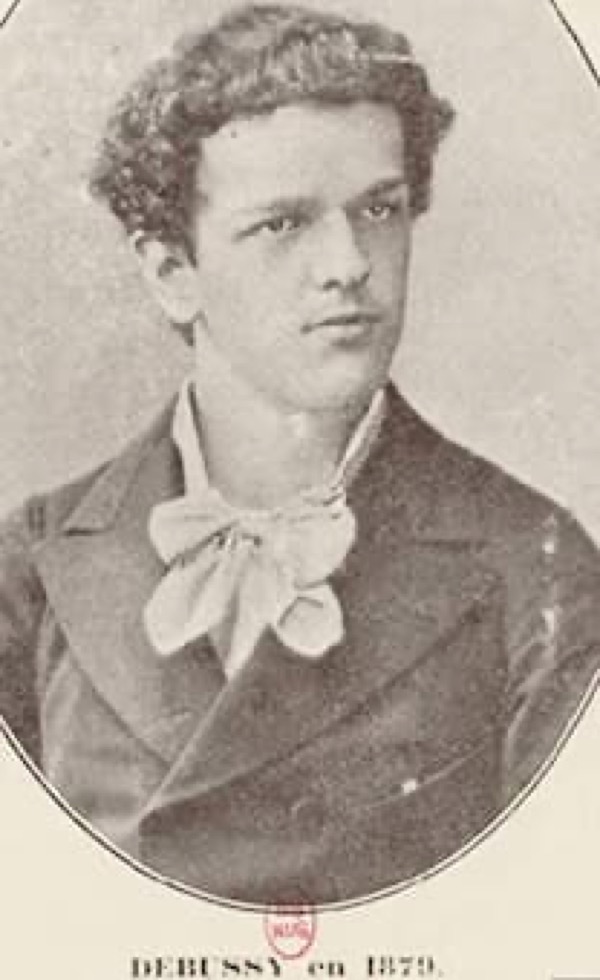
Claude Debussy, 1879

Claude Debussy, 1879

Paul Verlaine certainly lived an extremely troubled life. He lived as a closeted gay man and was suffering from wild swings of emotions and possibly bipolar disorder. Drug dependence and alcoholism took a horrific toll on his life, and he died in Paris at the age of 51.

Incarcerated for shooting his fellow poet and lover Arthur Rimbaud, Verlaine composed what many literary critics consider to be his finest poetry. He was aware that his time away from the Parisian cafes probably saved his life, and he converted to Roman Catholicism in the summer of 1874.

It was during this period in his life that Verlaine penned most of the poems in Sagesse, poetical expressions of simple Catholic Christianity as well as of his emotional odyssey. Debussy’s setting of three poems from this collection dates from 1891, but they were not published together until 1901.

Dedicated to Ernest Chausson, the “Trois mélodies” find Debussy moving away from the intimate and psychologically charged aspects of his earlier Verlaine settings towards something more purely atmospheric. The music dissolves the distinction between foreground and background, with the piano creating the environment in which the voice exists.   

Echoes of Lost Loves

In June 1904, Claude Debussy said goodbye to Verlaine by composing three additional songs from the Fêtes galantes. This set is dedicated to Emma Bardac, his future second wife, and he summons once more the familiar spirits of Verlaine from the commedia dell’arte.

Composed two years after he had completed Pelléas et Mélisande, Debussy reached a new height of daring and innovation in his musical language. “Les ingénus” presents an example of purely French atonality, expressing the poem’s veiled irony.

“Le faune” makes use of courante and saraband rhythms, yet the piano does not provide the customary rich background of colour. Instead, the right hand imitates the arabesques of a flute in free counterpoint with the voice. Meanwhile, the left hand, in the lowest register, beats out the accompaniment like a tambouring.

The cycle reaches its climax with “Colloque sentimental,” a rather nostalgic goodbye to his old loves. A searing sadness fills the conversation as Debussy gives “the poem the dimensions of an inner dialogue, remembrances of the kind one murmurs privately to oneself. It is a supreme example of the perfect freedom of recitative alternation with arioso.” 

Beauty in the Darkness
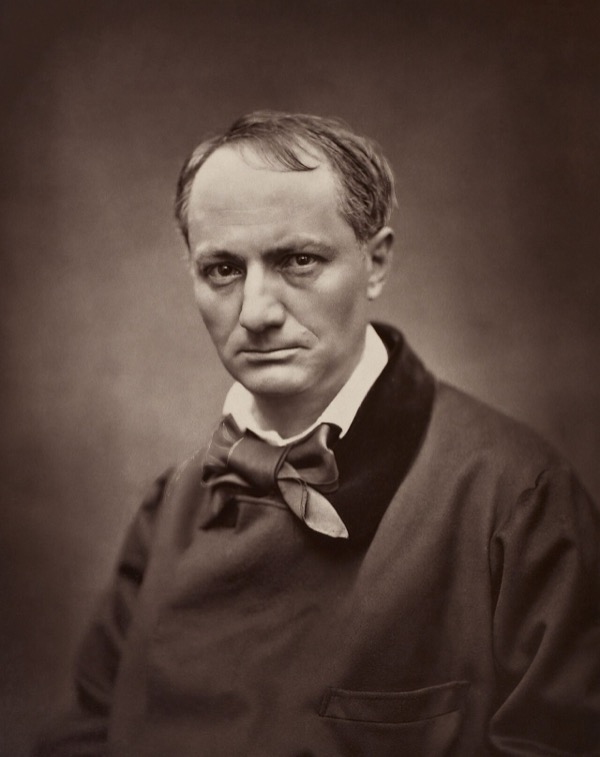
Étienne Carjat, Portrait of Charles Baudelaire, circa 1862

Étienne Carjat, Portrait of Charles Baudelaire, circa 1862

Charles Baudelaire (1821-1867), according to TS Eliot, was the first modern poet, “the greatest exemplar in modern poetry in any language.” He produced unprecedented expressions of a complex sensibility and modern themes within the structures of classical rigour and technical artistry.

He wrote his best poetry against a backdrop of financial constraint, alienation, and legal strife. And let’s not forget exceedingly complicated personal and family relationships. He set himself apart from other writers by cultivating an eccentric image.

He lived an unconventional life by writing poetry in verse that used romantic topoi to upset them, and by launching a new form. While he did seek recognition, “Their distinct individuality defines Baudelaire and his poetry.”

His Les Fleurs du mal (The Flowers of Evil) was considered the most important and influential poetry collection published in all of Europe in the 19th century. As a critic wrote, “Into his poetry he poured all the dark pessimism of his own soul, all the bitterness and agony of his despair.” Composers loved Baudelaire’s poetry, as it so closely resembled music.   

The Shadow of Bayreuth
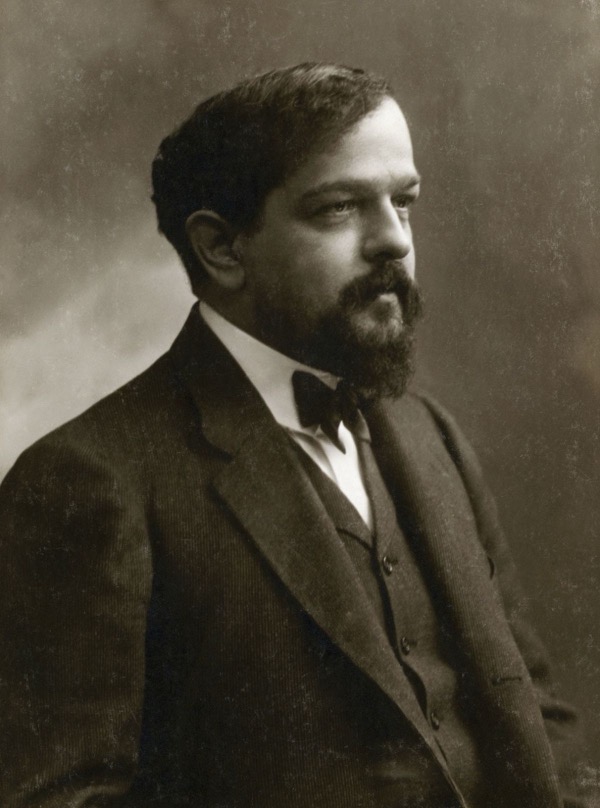
Claude Debussy, ca. 1908, photo by Félix Nadar

Claude Debussy, ca. 1908, photo by Félix Nadar

Composed between 1887 and 1889, Debussy’s Cinq poèmes de Charles Baudelaire hurls us into the sensual worlds of Baudelaire’s words and Richard Wagner’s harmonies. In fact, Debussy made two pilgrimages to Bayreuth, and he responded positively to Wagner’s sensuousness, mastery of form, and striking harmonies.

It has been suggested that while Debussy was no traditional heir to Wagner in Pelleas and Melisande, “his possession and transformation of Wagner give him substantiality, signification, and depth.”

These were Debussy’s only settings of Baudelaire, and despite his ambivalent view of Wagner, the shadow of Bayreuth is not far away. “Le Balcon” is conceived on an unusually large scale, and it is the longest of Debussy’s songs.

As Roger Nichols wrote, it “shows how sensitive Debussy was to the double need of recapitulation, confirmation, and forward movement.” “Harmonie du soir” is probably the most popular song in the set, as Debussy closely mirrors Baudelaire’s poetic structure. It opens with a brief prelude and then develops into an evolving structure. Maybe you also recognise it from his fourth Prélude for piano, which is titled “Les sons et les parfums tournent dans l’air du soir,” after a quote from “Harmonie du soir.”   

Music of the Unspoken
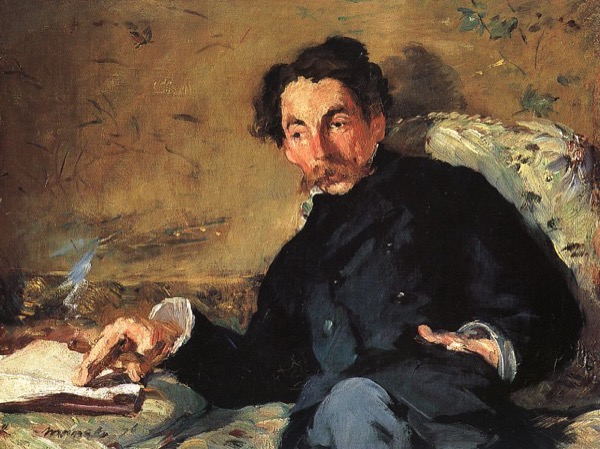
Portrait of Stéphane Mallarmé (Manet)

Portrait of Stéphane Mallarmé (Manet)

Debussy had set verse by the French Symbolist poet Stéphane Mallarmé in 1884. Still, when the first complete volume of his poetry was published in 1913, both Debussy and Ravel quickly began independently setting several verses.

Debussy was annoyed that Ravel had chosen two of the same poems, and Ravel was annoyed that the poet’s heir did not refuse Debussy’s request. In the event, to render the poet’s dense symbolism into a compelling musical language, Debussy created an unprecedented degree of boldness and refinement.

As Roger Nichols writes, “To be sure, the air one breathes here is dangerously rarefied, and, matching the world of the poetry, of all the songs Debussy wrote, these are the most difficult to approach.”

How does one musically convey a desire for longing, which cannot be fulfilled for lack of an object to focus on? Debussy forged an ingenious atonal language with an unreal weightlessness, all remaining suspended in mid-air. These three songs are a great achievement, but an exception among Debussy’s mélodies.

Debussy’s mélodies never attempted to illustrate poetry in music. Verlaine gave him atmosphere and ambiguity; Baudelaire opened the door to a darker, more sensual musical world; and Mallarmé pushed him towards an almost weightless language. Yet, Debussy’s greatest achievement is probably the fact that it hovers between what is said and what is suggested.

Monday, August 24, 2026

Why Did Chopin Only Give Around 30 Public Concerts?


Frédéric Chopin, arguably the most famous pianist in classical music history, suffered from stage fright and performance anxiety.

In March 1830, when he was twenty years old and preparing to leave his beloved hometown to make his name beyond Poland, he appeared in Warsaw, a sight that pleased the audience and organisers. They floated the idea of arranging another performance.

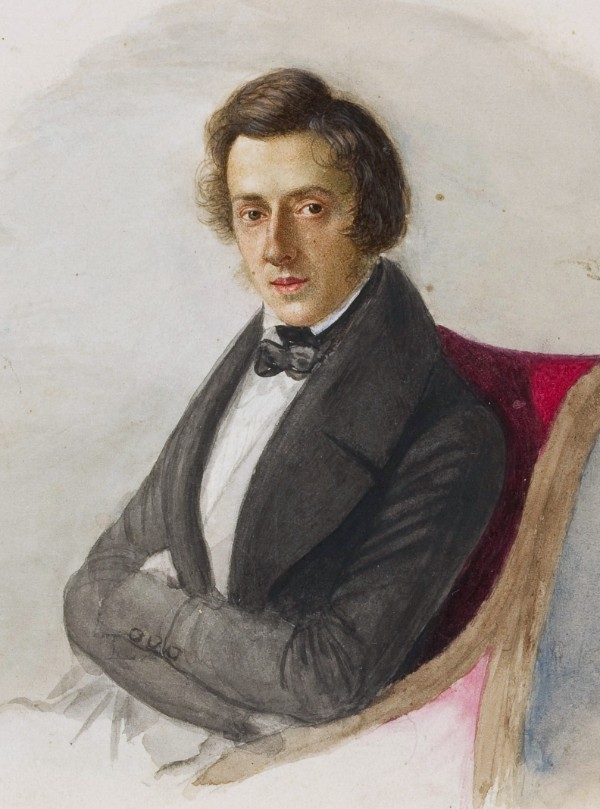
Maria Wodzińska: Frédéric Chopin, 1836 (Wasaw: National Museum)

Maria Wodzińska: Frédéric Chopin, 1836 (Wasaw: National Museum)

But the offer wasn’t so easy for Chopin to accept. He confessed in a letter to his best friend Tytus Woyciechowski on March 27, 1830:

“You cannot imagine what a torture the three days before a public appearance are to me.”

In the end, he did give more concerts, and many were triumphs. But it seems that his performance anxiety never fully went away – and this was one of the reasons why Chopin gave only around thirty public performances over the course of his career.

Today we’re looking at the answer to the question: why did Chopin give so few public concerts – yet still go on to become one of the most important pianists of the nineteenth century?

Was It Stage Fright – Or Something Else?

Chopin may not have given many concerts, but that doesn’t mean he didn’t perform for others.

On the contrary, especially after he moved to Paris in the early 1830s, he gave regular informal salon performances.

At these salons, wealthy aristocrats would mix with writers, painters, and musicians.

So why did Chopin prefer the salon so decisively? There are a few reasons.

Stage Fright and Performance Anxiety

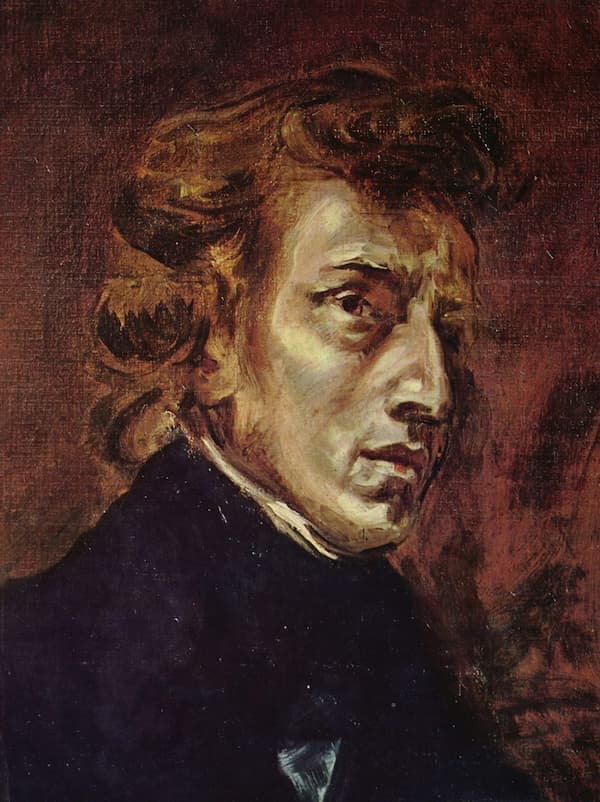
Portrait of Frédéric Chopin by Eugène Delacroix, 1838

Portrait of Frédéric Chopin by Eugène Delacroix, 1838

We’ve already covered the first reason: his stage fright and performance anxiety.

To play in a well-appointed salon in front of friends or acquaintances who you know respect you – no matter how wealthy they are – is a fundamentally different experience from playing in a hall full of strangers.

Aesthetics and His Soft Touch

But there are other reasons, too. For one, Chopin’s touch was famously subtle. He was obsessed with opera and the human voice, preferring to focus on cultivating a singing tone over sheer flash-bang Lisztian virtuosity.

That kind of touch carries much better in a smaller space like a salon than in a full-scale concert hall built for hundreds.

He was very aware that people had this impression of his playing. In 1829, when he was on tour in Vienna, he wrote to his family:

“…It is being said everywhere that I played too softly, or rather, too delicately for people used to the piano-pounding of the artists here. I expect to find this reproach in the paper, especially as the editor’s daughter thumps frightfully. It doesn’t matter, there has always got to be a but somewhere, and I should rather it were that one than have people say I played too loud.”  

His Health

Chopin’s chronic tuberculosis became symptomatic sometime around 1830, when he was in his early twenties.

In addition to racking coughs, patients suffered from persistent low-grade fevers, unbearable chronic fatigue, and susceptibility to other infections.

It was not a disease that was conducive to performing publicly – especially if you already had a touch of nerves to begin with.

His Philosophy

Chopin was deeply sceptical of virtuosity for its own sake. Unlike Liszt, who built his reputation on feats of almost superhuman technical display, Chopin believed that technique should be invisible: a means to an end, not the end itself.

You can hear this philosophy in his nocturnes, mazurkas, and the Ballades, pieces of enormous technical complexity that nonetheless should sound effortless.

Even his Études, ostensibly technical exercises, are among the most emotionally searching pieces in the piano repertoire.

For Chopin, the concert hall – with its pressure to dazzle, to project, to perform – ran counter to his priorities as an artist.   

What Chopin’s Last Tour Suggests About the Road Not Taken

For most of his adult life, Chopin had the luxury of avoiding concert halls. His compositions sold, and his salon appearances had attracted a full roster of wealthy Parisian students willing to pay handsomely for an hour of his time.

Then, in 1847, everything fell apart at once.

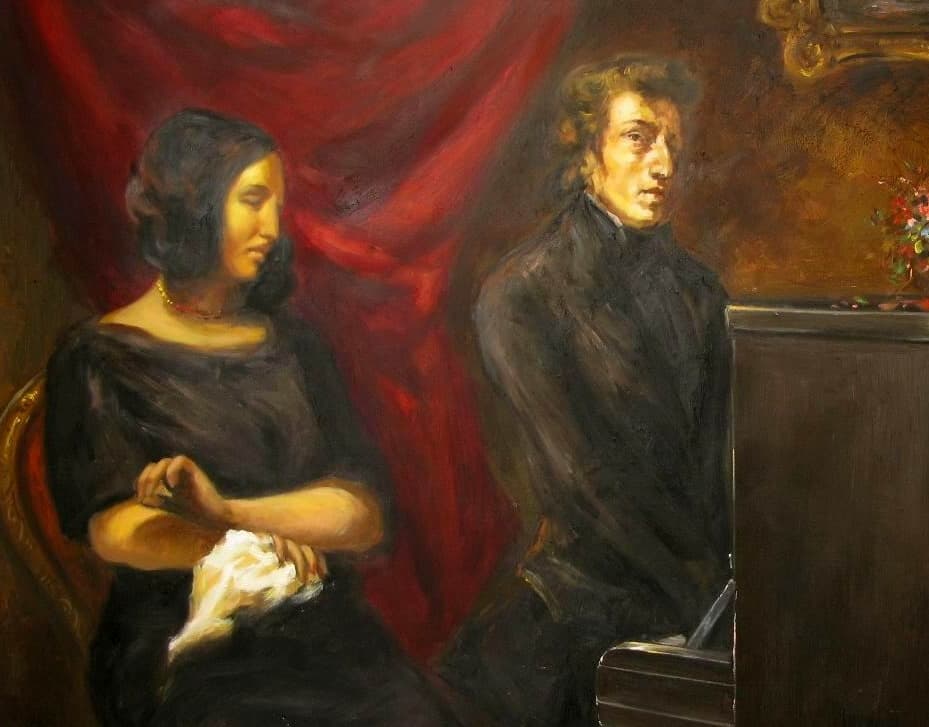
Portrait of Frédéric Chopin and George Sand by Eugène Delacroix

Portrait of Frédéric Chopin and George Sand by Eugène Delacroix

His relationship with George Sand – nine years long, tempestuous, and in many ways the emotional centre of his life – ended bitterly. His health, never good, deteriorated sharply in the aftermath of their breakup. And the following year, revolution swept Paris, drying up his teaching income almost overnight.

He was 38 years old, dying, sad, and suddenly broke. So, out of necessity, he did something he’d always been loath to do: go on tour.

His Scottish pupil and friend Jane Stirling arranged a tour of England and Scotland to shore up his finances, and Chopin – who had spent nearly two decades carefully limiting his public appearances – found himself giving concerts in London, Manchester, Edinburgh, and Glasgow in rapid succession.

Ironically, the greatest honour of the trip came when he played for Queen Victoria and Prince Albert not at a public concert, but at a private party.  

Through it all, he kept playing, even when he had trouble standing or had to cut his programs because his physical stamina was so low. But demand for tickets was inconsistent, and Stirling ended up buying many and giving them out for free.

Chopin’s letters from this period are harrowing. In one, he described stopping while in Edinburgh to write out his will.

He returned to Paris in November 1848, having given his last ever public concert in London, and died in October 1849.

The tour made one thing clear: whatever his exact reasons for staying off the concert platform, Chopin made the right choice.

Conclusion

Chopin’s stage fright was real, but it was only one thread in a larger, more complicated story.

His avoidance of the concert platform was also a matter of aesthetics, of physical necessity, and of genuine artistic conviction. Taken together, these factors make for a more interesting story than a simple case of nerves: they paint a picture of an artistic identity that prioritised intimate music-making over public spectacle.

It’s also worth asking what we would have lost if Chopin had pushed through his anxiety and pursued a conventional performing career. More concerts would almost certainly have meant fewer compositions – and it’s the compositions, not the performances, that made him one of the most important figures in the history of Western music. Every nocturne, every ballade, every étude exists in part because Chopin protected his time and his energy rather than spending it onstage on tour.

Chopin’s music speaks as directly to audiences today as it did in those Parisian salons, even though he never embraced touring or public concerts.

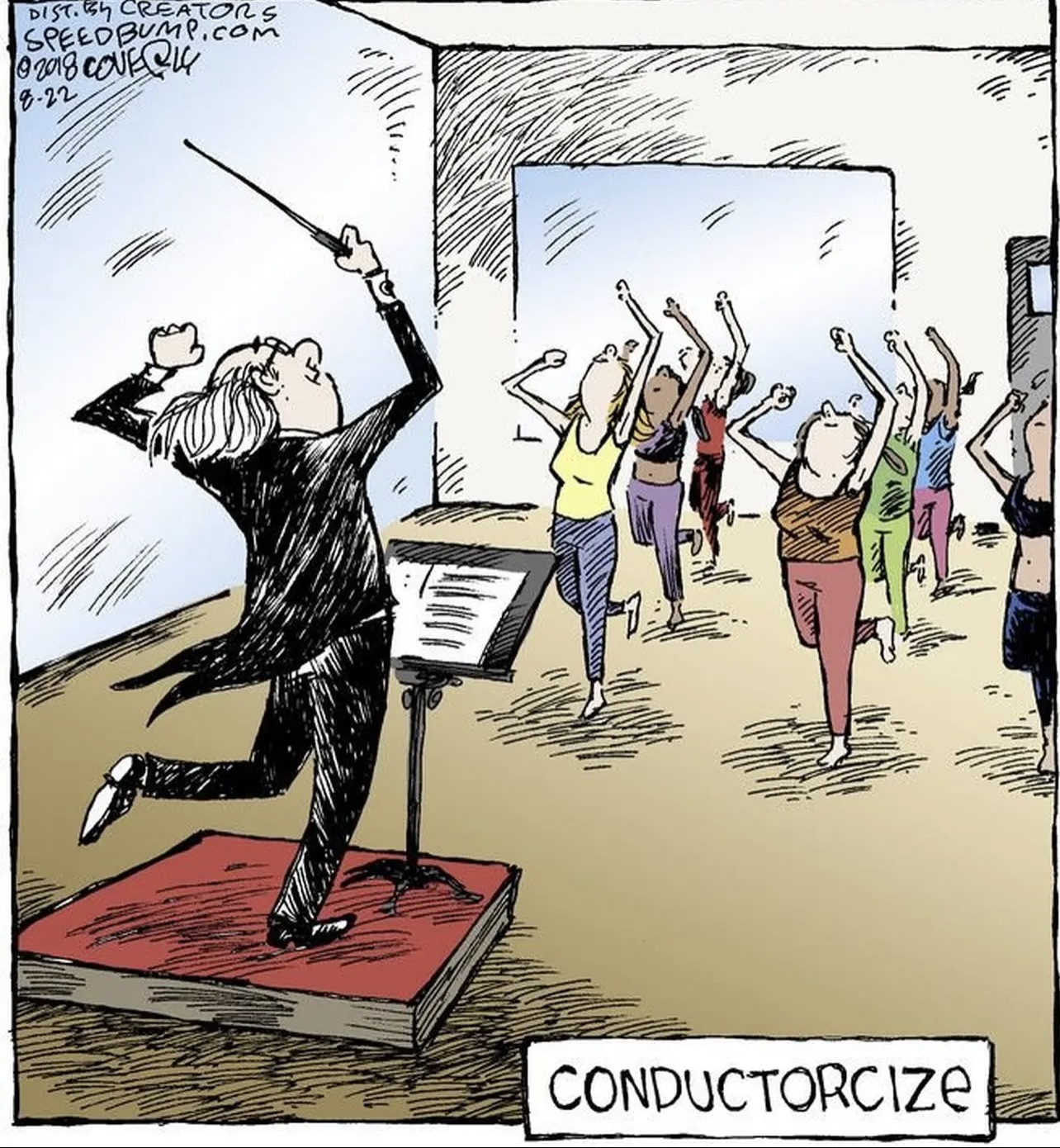
Time for Some Conductorcize!

 August 24th, 2026


Credit: Speedbump.com

Augustin Hadelich: Between Baroque and Blues

 by Xu Han  August 22nd, 2026


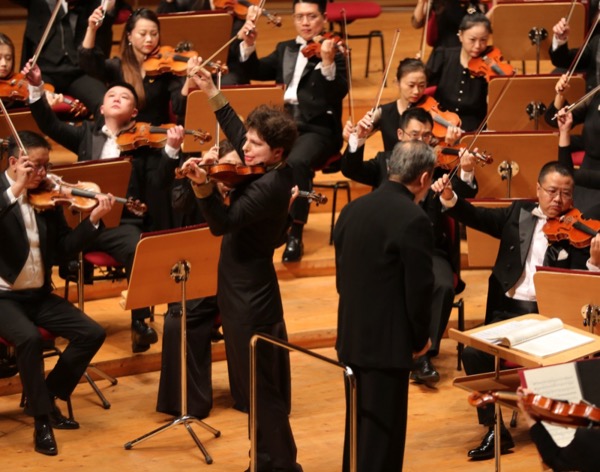
Augustin Hadelich at Shanghai Symphony Orchestra in June 2025

Augustin Hadelich at Shanghai Symphony Orchestra in June 2025

Telemann’s Fantasia with Baroque Bow

Hadelich recorded Georg Philipp Telemann’s Twelve Fantasies for Solo Violin in 2009 and has continued to champion such underrated pieces. “My program’s first half is lighthearted and extroverted,” Hadelich commented, “Telemann’s Fantasie No. 8 provides a fresh, playful beginning.”    

Hadelich described Telemann’s composition as “inventive and surprising, even flamboyant and virtuosic, and full of thorny counterpoint.” During Telemann’s lifetime, he was actually more celebrated than Bach. However, the sheer number of his output, with works of varying quality, greatly affected how later generations viewed him.

As Telemann constantly moved on to the next composition, that improvisatory quality fascinated Hadelich: “he has great ideas, but they are spontaneous and unexpected, and not necessarily part of some ambitious architecture. For this reason, I would only program Telemann before Bach, not after!”

”I use my baroque-style bow for the Telemann and Bach works on the program and play the rest with a modern bow.” Hadelich credited the violinist Julia Fischer for introducing him to baroque bows. Almost immediately, he found the natural, intuitive, and bouncy qualities of the 1730s-style bow perfect for the repertoire.

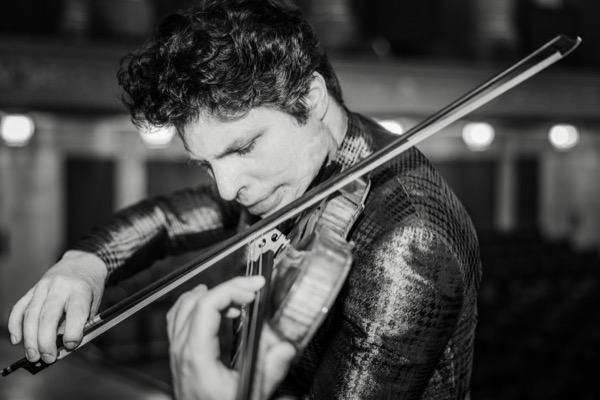
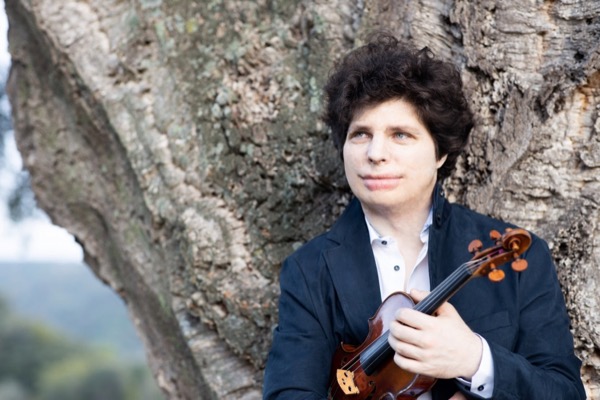
Augustin Hadelich

Augustin Hadelich

Coleridge-Taylor Perkinson’s Blue Note

Hadelich’s latest album, American Road Trip, featured Coleridge-Taylor Perkinson’s Louisiana Blues Strut, and his solo recital also included Perkinson’s Blue/s Forms. 2024 marked 20 years since Hadelich came to America: “so it is the perfect time to release an American album.”

Augustin Hadelich Orion Weiss American Road Trip album cover

Through this collection, Hadelich introduced more listeners to the lesser-known works of African American composers such as Coleridge-Taylor Perkinson. “I find Perkinson’s music very well composed for the violin.” Hadelich reflected, “The Blues references are recognisable, but they are more complex, with harmonically and rhythmically surprising elements around every corner.”

Plus, Perkinson and Bach have both used the dance forms and folk music for inspiration, Hadelich pointed out. But as a classical violinist, he said he had to “switch off certain left-hand habits” to play Perkinson’s blues style. Unlike a clean slide between two notes of perfect pitches, Hadelich embraced the “blue note” that ended up “slightly flat.” The third movement of Blue/s Forms makes extensive use of this technique.  

Capturing Ysaÿe’s Sunrise

Carrying the imaginations of Telemann and Perkinson forward, Hadelich chose Eugène Ysaÿe’s Sonata No. 5 in G major for Solo Violin as the next piece. “The first movement, L’Aurore, depicts a dawn and sunrise—a very ambitious idea for a solo violin piece!” Hadelich said, “The sounds and textures are colourful and powerful, almost orchestral.” As to the second movement, Danse Rustique, “it is a folk dance in quintuple meter, and travels along all kinds of unexpected musical paths, sounding almost like an improvisation, until the dance returns and accelerates towards the end.”

Augustin Hadelich (Photo Credit: Suxiao Yang)

Augustin Hadelich (Photo Credit: Suxiao Yang)

Interestingly, in late 2009, Hadelich filmed a performance video of L’Aurore. His original plan was to begin shooting at 5 a.m.: starting in “the darkness and stillness of the night”, then the music would accompany “the world waking up” and culminate with “a beautiful sunrise”. Hadelich specifically located a venue with east-facing floor-to-ceiling windows, only to discover that snow began falling at 6 a.m.! Yet even as heavy snow obscured the winter sunrise, the radiance of Ysaÿe’s L’Aurore continued to shine through Hadelich’s violin playing.   

Paganini: Capriccio literally means prank!

Why choose Niccolò Paganini to conclude the first half? Hadelich explained: “In a solo violin program, stylistic variety is particularly important. The pieces are so different and contrasting, yet one can find unexpected connections. It was my goal to showcase many approaches to writing for unaccompanied violin.”

Hadelich decided upon two Paganini caprices for this recital, No. 19 and No. 16, “not played all that often but showing his humour and eccentricity as a composer.” According to Hadelich, “No. 19 is downright funny at times, while the off-kilter accents of No. 16 remind me of Perkinson’s Blues ideas.”   

In his live performance videos, Hadelich often walked the listeners through noteworthy details. “No. 19 Caprice opens with majestic octaves…(the main theme) is cheerful and playful, interrupted by strongly barking double-stops…” Hadelich shared that “the funniest moment of the piece (for me at least) is at the very end, when the upper voice goes into the stratosphere (around 2:30 in the video)!”

Hadelich added in his description: “We should never forget how funny some of Paganini’s music is. Capriccio literally means prank, and a caprice like this is intended to surprise, thrill and delight the listener at every turn!”

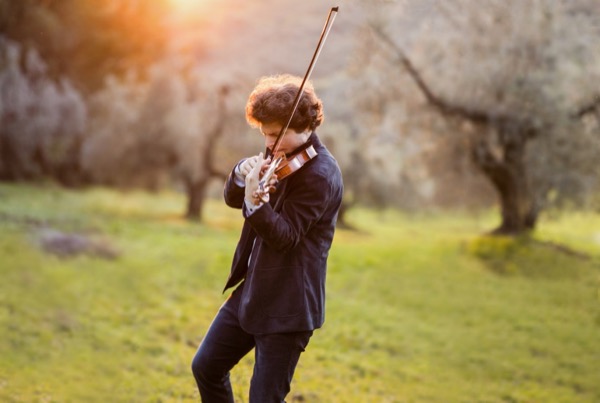
Augustin Hadelich

Augustin Hadelich

Bach: Res severa verum gaudium

“True joy is a serious matter” is the motto of the Gewandhaus Orchestra in Bach’s city, Leipzig. Like many violin players, Hadelich’s first exposure to Bach seemed all too serious, lacking enough joy, until the historically informed approach revolutionised our collective perception.

“I had first encountered Bach when I was 7,” Hadelich recounted in his carefully written CD liner notes. “I remember wondering why he didn’t make all our lives easier by just writing for violin with accompaniment, so violinists wouldn’t have to play all those double-stops!” In fact, many 19th-century violinists performed these works with piano accompaniment.

In the early 20th century, Bach often sounded solemn and slow. Hadelich credited the rise of historically informed interpretations in rediscovering “the playfulness, lightness and eccentricity of baroque music.” He pointed out that the Italian word barocco means “bizarre” or “irregular,” which reflected its adventurous departure from the earlier Renaissance ideals.

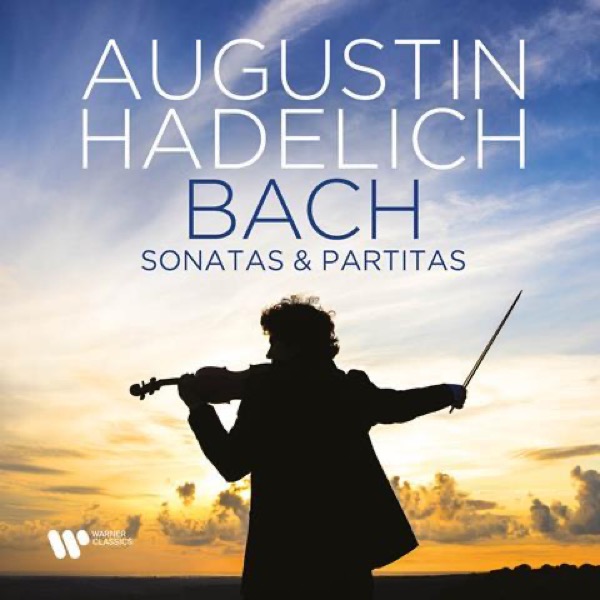
Augustin Hadelich Bach Sonatas & Partitas album cover

In his acclaimed Bach Sonatas & Partitas recording, Hadelich used vibrato discreetly and only added ornaments when necessary. “It felt liberating to play Bach with a baroque bow…passages of three- and four-note chords felt more fluid. The dance movements danced more, and the slow movements sang more,” he wrote.

For the second half of his recital, Hadelich programmed Bach’s Violin Partita No. 2 in D minor ending with the great Ciaccona. “Bach’s voice leading is perfect, and he always thinks polyphonically,” Hadelich told me, “one has to study this a bit, away from the violin, to understand the voices.” For example, he added: “even in movements like the first and third (Allemanda and Sarabanda), which initially sound homophonic, there are in fact always three voices implied, with the violin line tracing all three!”  

As always, Hadelich meticulously revealed hidden details in his words and in his performance. He saw the Allemanda as “a microcosm of all the dramatic, tender, and playful moods of the partita.” For the Courante, he discovered from the printed facsimile of Bach’s manuscript a more natural way of bowing around the dotted rhythms. During the Giga’s main theme, he relished the baroque bow’s lively bounce on the string.  

Finally, Hadelich said: “The pinnacle of Bach’s Partita No. 2 is the Ciaccona (Chaconne): on top of a descending bassline, repeated 64 times, Bach erects towering structures, creates moments of anguish and sorrow, and leads us to moments of introspection and bliss. It feels like a journey through life itself. It is not hyperbolic to say that the Chaconne might be the greatest piece ever written for the violin.” Meditative, focused, and solitary, the solo violinist reached the end: “it feels like the final note could continue forever.”

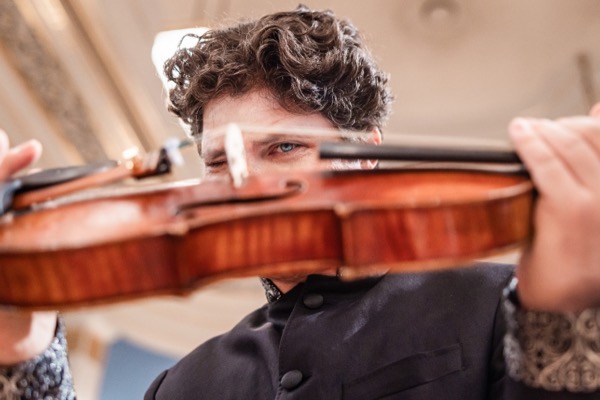
Augustin Hadelich (Photo Credit: Suxiao Yang)

Augustin Hadelich (Photo Credit: Suxiao Yang)

Sunday, August 23, 2026

~ Yuja Wang

 
Our "Featured" posts are Yuja Wang quote memes that I've prepared over the years, posted since 2020, and have included them at the top of our Group's Community Home page as "Featured Posts" beginning in 2021. During this time, Peter Chen II, the administrator of Yuja's Archive website, has modified the web links for nearly all of the videos on file there; consequently, most of my posts featuring those videos are now outdated. In the coming weeks, I will periodically reshare these Quote Memes here and, at the same time, update those video links in our "Featured Posts."
This is Number 129
The pic is from a screenshot from a YouTube video interview with Yuja Wang by Zsolt Bognar, "Living the Classical Life", Episode 14 Yuja Wang
The quote is from an interview with Krista Soriano, for Elle, 20 November 2017.
For translation purposes, here is the text from the quote:
" One publication called me a 28-year-old prodigy, which is an oxymoron. I do think there’s a connection between being a musician and being very childlike. We never really grow up. We just look at everything creatively with a fresh mind." ~ Yuja Wang
Below is a link to the music. If it has expired since it was posted here, look for the latest version at yujawang.nicerweb.com/. Use the indicated date and concert/interview above to search for the current link:
May be an image of piano and text that says '"One publication called me a 28-year-old prodigy, which is an oxoKon. I do think there' connection between being a musician and being very childlike. We never really grow up. We just look everything creatively with a fresh mind." ~Yuja Wang BJB BJB129 B12 129'