Friday, August 14, 2026

Giovanni Legrenzi


Giovanni Legrenzi

Giovanni Legrenzi

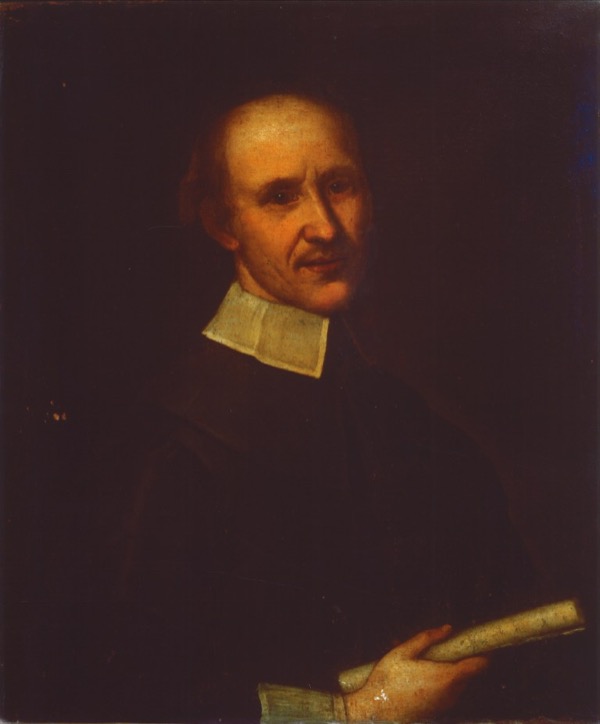
The music of Giovanni Legrenzi (1626-1690), baptised on 12 August 1626, represents the final stage in the formation of the late Baroque style. Legrenzi rose from humble beginnings in the provinces to end his career as maestro di cappella of the ducal Basilica of St Mark’s in Venice.

Extremely influential in the development of the late Baroque idioms across northern Italy, Legrenzi’s music affected not only his documented pupils Antonio Lotti, Antonino Biffi, Giovanni Varischino, and possibly Tomaso Albinoni, but also Arcangelo Corelli and Antonio Vivaldi.

His compositions touch on virtually every genre practised in his time, and, to celebrate the 400th anniversary of his birth in 2026, let us take a closer look at his life and musical achievements.      

From Clusone to Ferrara

Legrenzi was born in Clusone, near Bergamo, then part of the Republic of Venice. His father, Giovanni Maria, was a violinist, and young Giovanni was presumably educated at home. Little is known about his early years, but he is mentioned as organist at S. Maria Maggiore in Bergamo in 1645.

Following his ordination as a priest in 1651, he was appointed resident chaplain. He became first organist in 1653, but his appointment as organist was not reconfirmed in 1654, “owing to his apparent involvement in a minor gambling scandal.” (Wikipedia)

Legrenzi was active in Bergamo in some capacity until April 1656, and the majority of his published output from this period consists of church music, including music for Mass and Vespers. Later in 1656, he became maestro di cappella at the Academy of the Holy Spirit in Ferrara.

The Ferrara Years

This academy of laymen performed sacred music and oratorios, addressing the needs of the aristocratic community of Ferrara. His position left him ample time for other pursuits, and his first opera, Nino il giusto, dates from 1662. Ferrara also provided him with aristocratic connections, which he cultivated assiduously.

Legrenzi’s output during his Ferrara years remained devoted to church music, yet he composed three operas, one oratorio, and several sonate da camera and dances. He left Ferrara in June 1665 after completing his third opera, Zenobia e Radamisto, but he retained strong ties with the city.

We have little information about Legrenzi’s activities for the next five years, except for positions he sought unsuccessfully or refused. He was apparently offered posts in Modena and Bergamo but refused them.  

Ambition and Setback
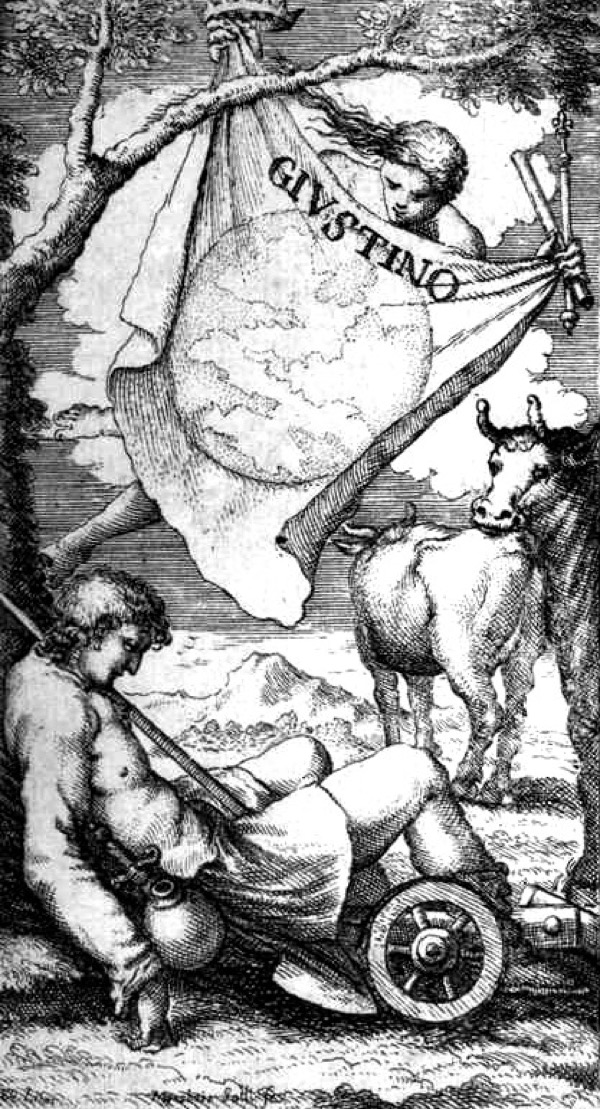
Giovanni Legrenzi: Giustino, image from the libretto, Venice 1683

Giovanni Legrenzi: Giustino, image from the libretto, Venice 1683

Stephen Bonta writes, “A letter of 17 July 1665 shows that Legrenzi had enlisted the help of Carlo II Gonzaga, Duke of Mantua, in a bold scheme to obtain the post of Kapellmeister at the Habsburg court in Vienna. His attempt was unavailing; the post was occupied by Antonio Bertali until 1669.” (Bonta, Grove Music Online, 2001)

Legrenzi himself wrote that he was appointed director of music at the court of Louis XIV but was unable to assume the position due to a grave illness. That appointment probably dates from 1668, and in 1669 he competed for the post of maestro di cappella of Milan Cathedral, but G.A. Grossi was elected.

Additional attempts at gaining employment were unsuccessful, but by 1670, Legrenzi was living in Venice. He held posts at several religious institutions, with an eye toward securing a position in one of the major churches in northern Italy.  

From Contender to Maestro

Legrenzi remained busy with additional compositions and publications, and he reports that he composed four Masses, more than 70 psalms and 80 motets, five Compline services, hymns, string sonatas, and keyboard sonatas. We don’t know whether any of these works survive.

In 1676 he was a finalist for appointment as maestro at San Marco in succession to Francesco Cavalli, losing by a single vote to Natale Monferrato. Legrenzi continued to receive appointments from religious institutions, and, along with Carlo Pallavicino, he was one of the leading opera composers of his day.

Legrenzi finally succeeded Monferrato as maestro di cappella at San Marco in April 1685. He greatly expanded the choir and the number of instrumentalists, but his health was beginning to fail. He once again turned to the composition of sacred music, but none of the music he composed for the S. Marco cappella seems to have survived.  

Legacy and Style

Giovanni Legrenzi died on 27 May 1690 and was buried in S. Maria della Fava. His great-nephew Giovanni Varischino inherited his books and music, and produced four posthumous publications. Legrenzi’s legacy endured for several years.

Stephen Bonta writes, “Legrenzi’s music is characterised by clarity of design achieved through the co-ordination of well-defined tonal drives and incisive themes employed in various repetitive schemes; a contrapuntal style in which line is subordinated to harmony and rhythm is metrically conceived; integration of the bass into the thematic process; and skilful employment of the new violin idiom without its more virtuoso special effects.” (Bonta, Grove Music Online, 2001)

Legrenzi’s style remains virtually the same regardless of genre, and there is little development or change throughout his career, only refinement. Although he is best known as a composer of instrumental sonatas, Legrenzi was predominantly a composer of liturgical music.  

Legacy and Rediscovery
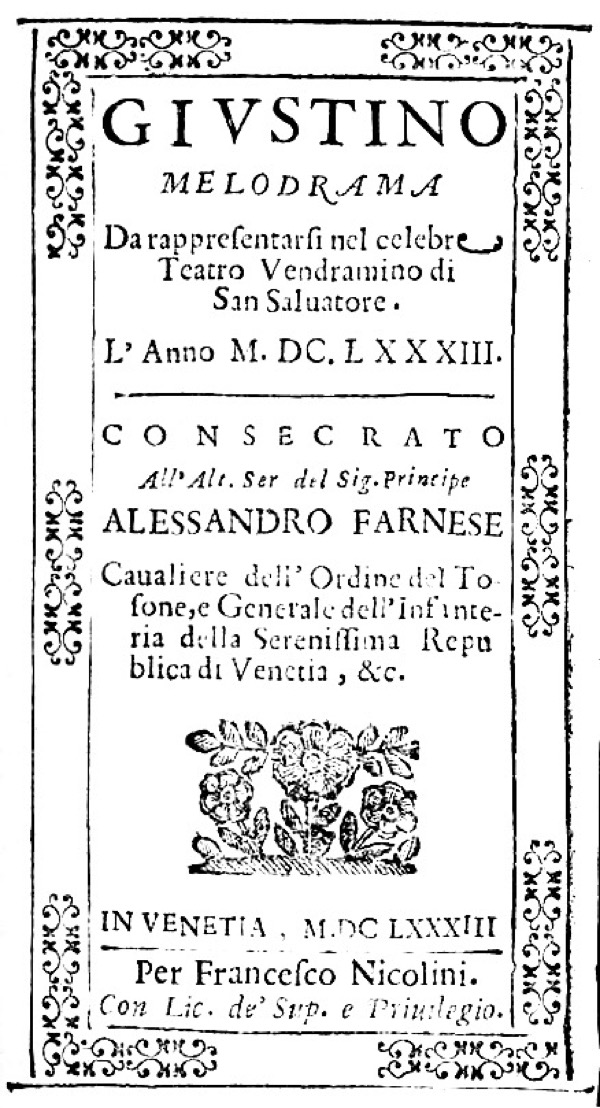
Giovanni Legrenzi: Giustino, title page of the libretto, Venice 1683

Giovanni Legrenzi: Giustino, title page of the libretto, Venice 1683

He also composed nineteen operas, which were extravagantly presented and immensely popular, yet few have survived. His operatic style featured many short arias, and it is found in his operas, oratorios, cantatas, and motets.

Giovanni Legrenzi was one of the most gifted and important composers of his time. In his hands, traditional counterpoint loses all connotation of an academic exercise and becomes a texture rich in meaning and content.

He bridged the expressive vocal traditions of Monteverdi with the structural foundations later perfected by Vivaldi and Bach. He helped to establish Venice as a dominant musical centre, and shaped the trajectory of Italian instrumental and liturgical music.

As scores and new editions have become available over the last few decades, Legrenzi’s music has gradually gained traction. In addition, some of his surviving operas have seen significant revivals, expanding appreciation of his music beyond specialist circles.

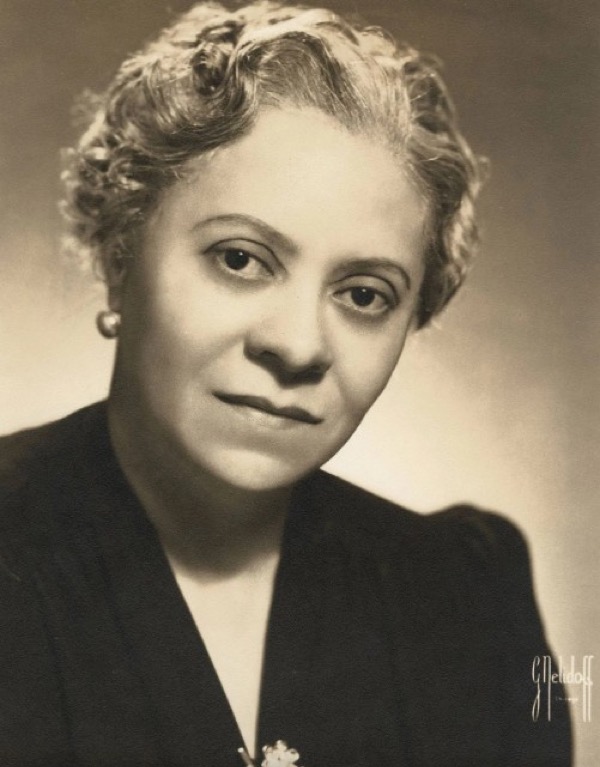
Florence Price: The Composer Who Fought to Be Heard


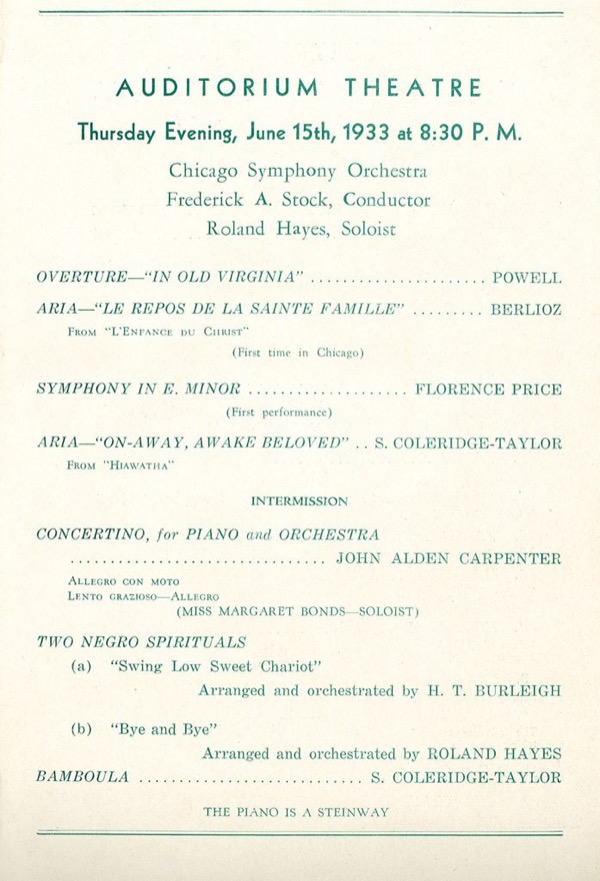
In June 1933, the Chicago Symphony Orchestra performed a symphony by an American woman for the first time in its history.

The composer was Florence Price – a Black woman from Little Rock, Arkansas, who had spent years navigating an art world resisting her participation at every turn.

Her Symphony No. 1 in E minor brought the audience to its feet. Critics praised it, too. One from the Chicago Daily News wrote:

“It is a faultless work, a work that speaks its own message with restraint and yet with passion…worthy of a place in the regular symphonic repertory.”

This performance should have launched a celebrated career. Instead, Price spent the next two decades writing letters that went unanswered, submitting scores to publishers who weren’t interested, and composing prolifically in the hours left over after teaching piano to support her children.

Today, thanks to the work of scholars and musicians, Price’s music is performed by orchestras around the world.

But to understand why it matters, and why her story resonates so profoundly, you first have to understand what she pushed through to create it.

How Florence Price Began Her Unlikely Life as a Composer

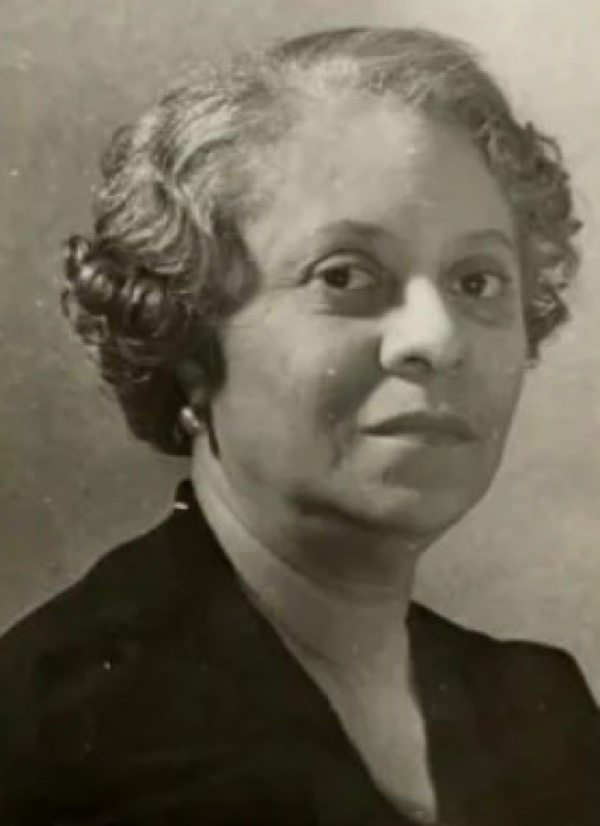
Florence Price

Florence Price

Florence Beatrice Smith was born in Little Rock, Arkansas, in 1887, into a middle-class Black family that took both her education and her musical gifts seriously from the start.

Her mother, a music teacher herself, began giving Florence piano lessons when Florence was a young child. By the age of four, she had begun composing. By fourteen, she published her first piece.

She enrolled at the New England Conservatory of Music in Boston – one of the most prestigious schools in the country – and graduated in 1906 with honours in organ and piano performance.   

Before her adult career had officially begun, she was forced to navigate the choppy waters of race and classical music. To gain admittance to the Conservatory, she listed her home state as “Pueblo, Mexico.”

It’s worth pausing to consider what that decision meant: that being perceived as a Mexican composer would be easier than being perceived as a Black composer. Even as a young woman just starting out, she understood how difficult her identity would make her career – and it raised the lifelong question of whether she should embrace it.

Escape from Terror and the Struggle for Recognition  

After her graduation, she returned to the South to teach, eventually becoming head of the music department at Clark Atlanta University, a well-known HBCU (historically black college or university).

She married Thomas Price in 1912 and built a busy life as a teacher, performer, and increasingly prolific composer.

Florence Price, downtown Little Rock

Downtown Little Rock

Unfortunately, Little Rock was becoming unbearable. The racial violence of the Jim Crow South – with its riots, lynchings, and constant terror – convinced the Prices to leave.

In 1927, the Prices participated in the Great Migration, heading north to Chicago in search of a safer community.

She became involved with the legendary Chicago Black Renaissance arts movement, which included musical giants like Louis Armstrong, Earl Hines, and Mahalia Jackson.

Inspired by the creative atmosphere, she threw herself into additional composition studies and also began submitting work to competitions.

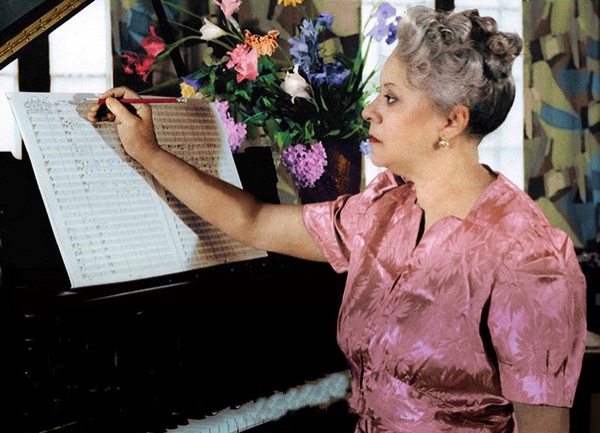
Florence Price

Florence Price

Winning the Wanamaker Contest: Did It Help?  

In 1932, she entered the Rodman Wanamaker Contest in Musical Composition for Composers of the Negro Race. She won first prize in two categories.

The victory caught the attention of Chicago Symphony conductor Frederick Stock and led directly to the historic 1933 performance of her first symphony.

It was a breakthrough. Price became the first Black woman to have a symphony performed by a major American orchestra.

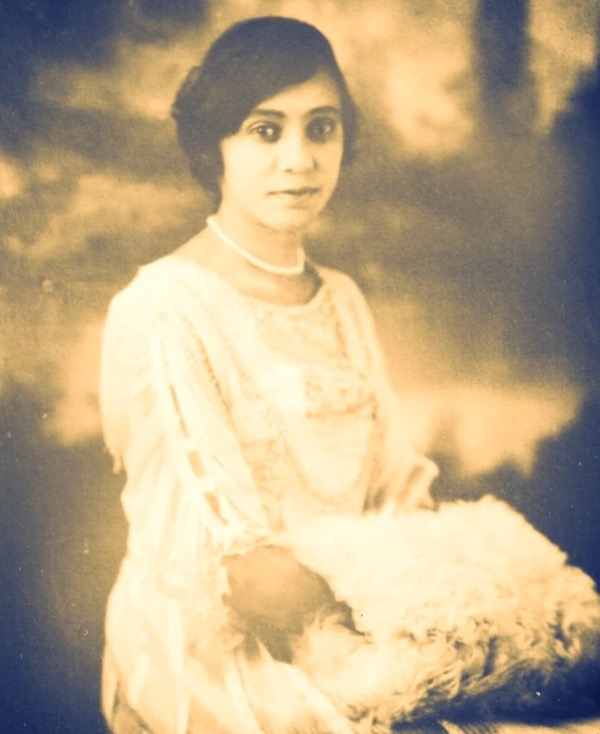
Florence Price

The concert programme in 1933

A listener might assume that such a triumph would open doors for a composer, but they stayed largely shut. The world of American classical music in the 1930s and 1940s was guarded by gatekeepers: concert programmers, music publishers, critics, etc. – most of whom were white and male, and many of whom demonstrated limited interest in championing a Black woman composer.

Despite the obstacles, over the following years, Price persisted. She wrote to major conductors, including seven times to Serge Koussevitzky of the Boston Symphony Orchestra, asking them to consider programming her work.

To Koussevitzky, she addressed the difficulties she faced head-on:

“Unfortunately, the work of a woman composer is preconceived by many to be light, froth, lacking in depth, logic, and virility. Add to that the incident of race – I have Colored blood in my veins – and you will understand some of the difficulties that confront one in such a position.”

In the end, nearly every promising lead she tried to grasp fizzled out. Koussevitzky never programmed her work.

The Silence After the Standing Ovation

Price’s Three Spirituals  

Despite her success at the Chicago Symphony premiere, Price struggled to gain a foothold during the Depression and World War II eras.

Music publishers of the era had little commercial interest in concert works by Black composers, let alone female Black composers. The recording industry was similarly indifferent, as was radio broadcasting.

These routes to fame and career growth were often gatekept and therefore segregated in practice, if not law. The boys’ club that had uplifted hundreds of white male composers – grants, commissions, performances, and more – were exponentially more difficult for her to secure.

On top of that, her personal life unravelled around the same time. Thomas Price lost his job in the Depression and developed anger issues. He got the family into financial difficulty and became abusive. Her marriage to him ended in a difficult divorce in 1931.

She was left a single mother with two daughters to support, largely on the income she earned teaching piano or playing live music in movie theatres.

Still, she kept composing, and as she did, her artistic identity came clearly into focus.

She was a prolific and technically accomplished composer who worked across a wide range of forms: symphony, piano concerto, chamber music, organ works, art songs, and more. Her output numbered in the hundreds of works.

Her compositional voice was uniquely her own. She understood the European classical tradition intimately (she had, after all, been trained well at the New England Conservatory).

But she also employed meaningful hints of her Black identity, such as the melodic shape of the spiritual, the rhythms of the juba dance, or the emotional directness of the blues.

Florence Price

Florence Price

What Florence Price Left Behind – and Who Kept It Alive  

One breakthrough came – not surprisingly – through the advocacy of another great Black woman musician: contralto Marian Anderson.

She performed Price’s songs regularly, bringing them before the public in cities across the country. It was a meaningful gesture, but it also could not make up for the broader institutional recognition that Price’s works – judging by the reviews of the first symphony in 1933 – deserved.

Thanks to the advocacy of Anderson and others, when Florence Price died in 1953 at the age of 66, she wasn’t the total unknown that some commentators have suggested. Colleagues, former students, and performers all valued her work.

In certain circles – especially among Black musicians and music educators – her contributions were known and loved. Her legacy was kept alive, in part, because those communities refused to let it disappear over the following decades.

In 1979, Professor Rae Linda Brown – herself a Black woman – was pursuing a graduate degree in African American Studies at Yale University when she came across the manuscript of Price’s third symphony. She was hooked, and one of the specialities of her career was born.

Tragically, Brown died in 2018 before releasing her biography of Price (which appeared only in an edited version in 2020). Her work laid the groundwork for ongoing present-day scholarship.

Florence Price

Florence Price

How a Discovery in an Abandoned House Changed Price’s Legacy  

A particularly significant moment in the modern reception of Price came in 2009, half a century after her death, when a large cache of Price’s scores and papers was discovered in an abandoned house in St. Anne, Illinois – a house that she’d once used as a summer retreat.

The manuscripts were in varying condition, but many were intact. Researchers and musicians who examined them found works that had never been performed, or had not been heard in decades.

By that time, others were starting to take up the baton, including Alex Ross at The New Yorker. He wrote a piece in January 2018 called “The Rediscovery of Florence Price.” It wasn’t long before Price began appearing on more orchestral programs.

The pattern was telling: it took a white critic at a prestigious mainstream outlet to move the needle with many institutional programmers. To be clear, Price was not unknown; her music continued to be performed and taught in Black musical communities for decades after her death. What changed in the 2010s wasn’t necessarily her visibility within those communities, but rather the willingness of mainstream institutions to start programming her work.

In recent years, performances of her music have increased dramatically, a trend accelerated by broader social and cultural developments since 2020.

Price’s “Bewilderment”, performed by Karen Slack and Michelle Cann   

Her symphonies have now been recorded by leading orchestras. At the 2022 Grammys, the Philadelphia Orchestra’s album of the first and third symphonies won for best orchestral performance. The Chicago Symphony brought her third symphony on tour to Europe in 2022. More recently, in 2025, Karen Slack and pianist Michelle Cann won the Best Classical Solo Vocal Album Grammy for their performances of Price’s art songs.

Why Florence Price Still Matters – and the Prophecy She Fulfilled

Price’s Song of Hope   

Florence Price’s music and her uniquely American story continue to intrigue audiences today.

Interestingly, Antonín Dvořák prophesied in an editorial in 1893, the year he wrote his New World Symphony and Price turned six:

“I am convinced that the future music of this country must be founded on what are called black melodies. These can be the foundation of a serious and original school of composition, to be developed in the United States. These beautiful and varied themes are the product of the soil. They are the folk songs of America and your composers must turn to them.”

Of course, the great irony is that nobody saw Price as the fulfilment of that famous prophecy – a prophecy from one of the canonised white male composers, no less. The great gift was that she kept writing – and fighting – anyway.

Florence Price never needed rescue or rediscovery. She needed – and continues to need – the acknowledgement that the barriers placed in front of her were real, that she cleared them with exceptional artistry, and that the serious, original, and American music she left behind deserves to be heard.

The same symphony that earned a Chicago audience a standing ovation in the summer of 1933 has the power to inspire the same excitement today.

Friday, August 7, 2026

National Pride: Dvořák’s Slavonic Dances

by Maureen Buja  August 3rd, 2026


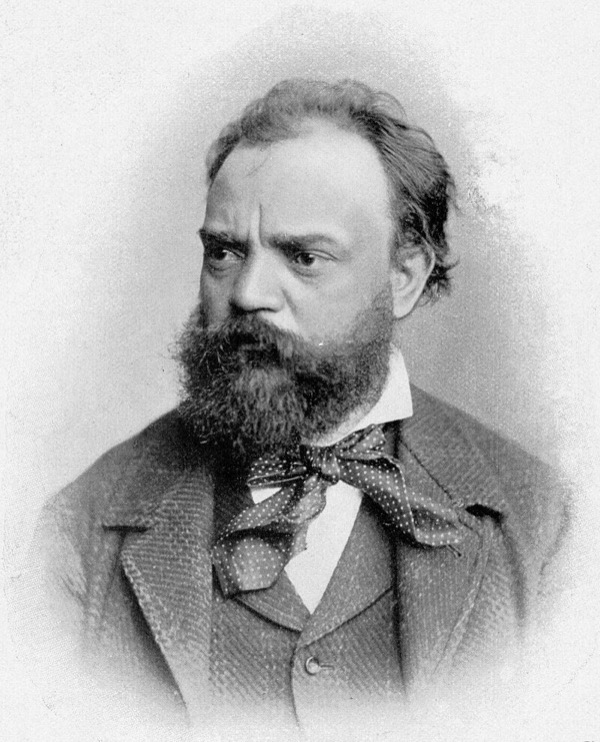
Antonín Dvořák, 1892 (Gallica: btv1b8417521d)

Antonín Dvořák, 1892 (Gallica: btv1b8417521d)

Despite the ‘Slavonic’ title, which would imply dances from anywhere in central, southeastern, or eastern Europe (covering Poland, Croatia, Ukraine, Russia, among many other countries), the style of these dances is solidly Czech. In point of fact, Dvořák was really writing using styles and forms from his native Bohemia. As with so much of his work, he’s not quoting real folk music as much as writing in the style of, capturing Bohemian rhythms and folk-dance structures.

The release of the Slavonic Dances was Dvořák’s introduction to the musical world outside his native land. Dvořák had applied for the Austrian State Prize to support his composing work and won it three times: 1874, 1876, and 1877. Brahms, as one of the award committee members, stepped in and was enormously helpful in bringing Dvořák to the attention of his own publisher, Simrock.

Simrock was impressed with Dvořák’s four-hand Slavonic Dances and requested the orchestral version; both sets were successful and became the start of Dvořák’s international reputation. In the end, it led him to the United States and the founding of the short-lived National Conservatory of Music of America in 1892.

The seventh number of the Op. 72 Slavonic Dances was based on the Bohemian dance called the kolo. This is a chain dance for anywhere from 3 to 15 people, with all dance movements happening with the feet while the body moves little. People may hold hands or hold each other around the waist to form the chain. Dancers move to the left and right with side steps and little hops, gradually moving the line to the left. Each of the South Slavic regions will have its own variation on the kolo dance, and experienced dancers can dress up the steps with syncopation or higher hops. It’s a fast dance!

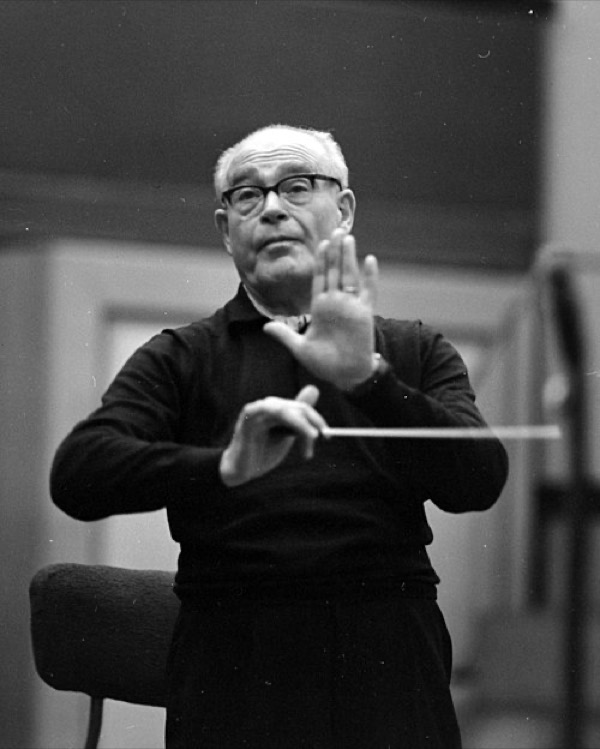
Paul Kletzki, 1965

Paul Kletzki, 1965

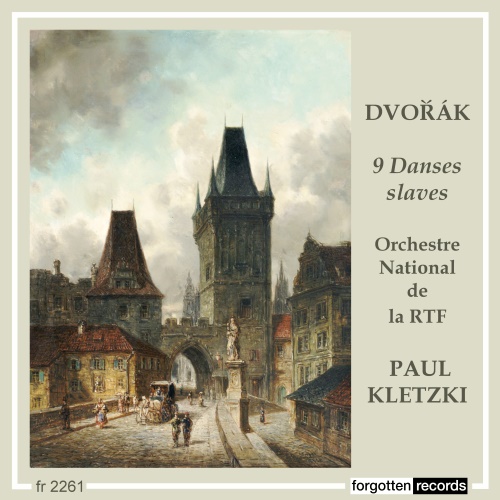
This was recorded in 1961 by the National Orchestra of the RTF under the direction of Paul Kletzki. Polish conductor Paul Kletzki (1900–1973) spent WWII avoiding the Nazis, leaving Berlin, where he had conducted the Berlin Philharmonic under the guidance of Wilhelm Furtwängler, for Milan, Italy. Eventually, he fled to Russia to escape Italian antisemitism. In 1946, he returned to Milan for La Scala’s reopening and eventually settled in Switzerland, becoming a Swiss citizen in 1949. He was known for his championing of the works of Gustav Mahler after the war. In 1954, he was appointed chief conductor of the Liverpool Philharmonic Orchestra, and in 1955, he led the first recordings of the Israel Philharmonic Orchestra. From 1958 to 1961, he was principal conductor of the Dallas Symphony Orchestra and from 1967 to 1970, was the General Music Director of the Orchestre de la Suisse Romande. His death in 1973 came while he was conducting a rehearsal of the Liverpool Philharmonic.

Dvorak-9 Danses slaves-Orchestre National de la RTF-Paul Kletzki


Cats and Composers: Meet the Feline Muses of 15 Musical Geniuses

For centuries, people have loved living with cats. The great composers have been no exception.

Today, to celebrate International Cat Day (August 8th), we’re looking at fifteen great composers who lived and worked with cats…and how those cats may have inspired their music!

Domenico Scarlatti (1685-1757)

Pulcinella

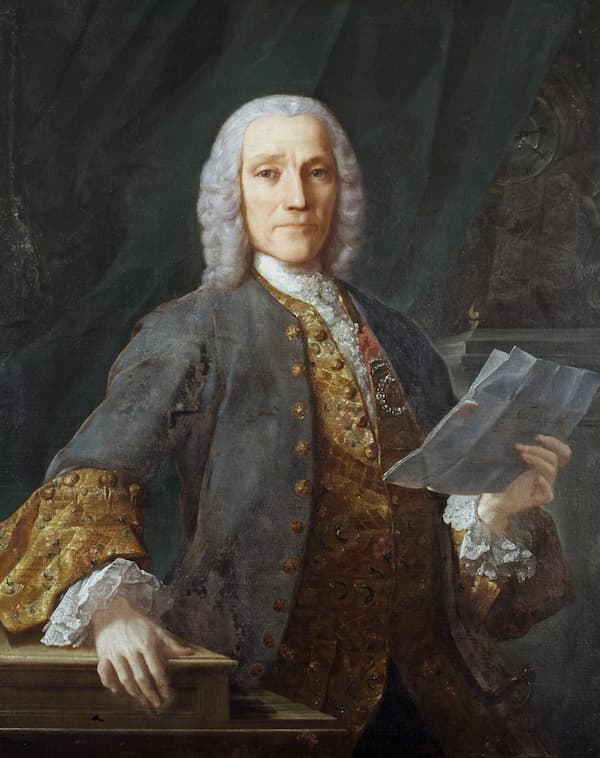
Portrait of Scarlatti wearing the Order of Santiago (1738)

Portrait of Scarlatti wearing the Order of Santiago (1738)

We’ll begin with Domenico Scarlatti’s cat Pulcinella.

According to legend, Pulcinella had a habit of walking up and down Scarlatti’s keyboard.

One day, Scarlatti heard the cat pick out a striking theme during her walk. That theme provided the material for this one-movement harpsichord sonata.     

As charming as this story is, it only started appearing in the early nineteenth century, so the story may be embellished or even false.

But it’s a great story, and very well-known, so for the purposes (purr-poses?) of this article, we’re going to choose to believe that Pulcinella really existed!

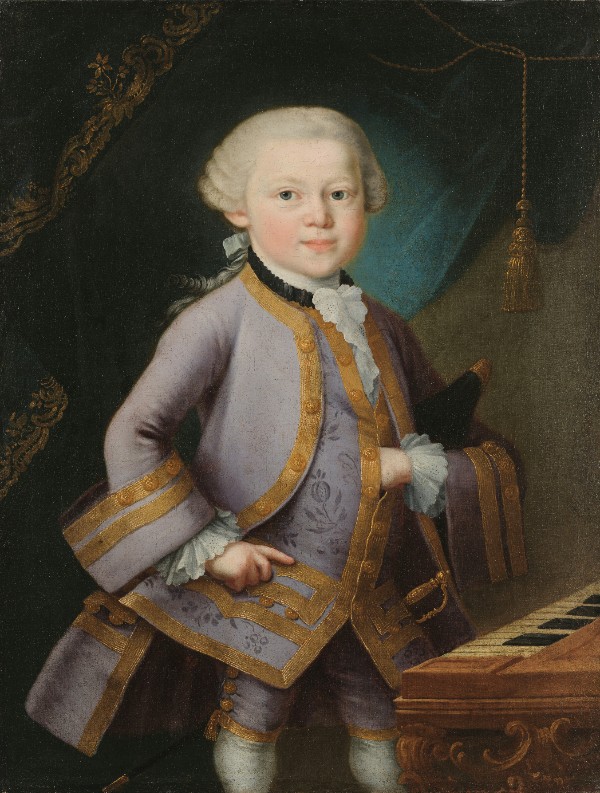
Wolfgang Amadeus Mozart (1756-1791)

Wolfgang Amadeus Mozart

Wolfgang Amadeus Mozart

Daines Barrington was an English lawyer and naturalist who was fascinated by child prodigies.

In the spring of 1764, an eight-year-old Mozart arrived in London with his family. Mozart was so talented that some people – including Barrington – wondered if his father was lying about his age.

However, Barrington was ultimately convinced of Mozart’s age because of a cat.

He wrote:

“I must own that I could not help suspecting his father imposed with regard to the age of the boy, though he had not only a most childish appearance, but likewise had all the actions of that stage of life. For example, whilst he was playing to me, a favourite cat came in, upon which he immediately left his harpsichord, nor could we bring him back for a considerable time.”

Mozart’s desire to play with this “favourite cat” proved to Barrington’s satisfaction that he really was a child prodigy.

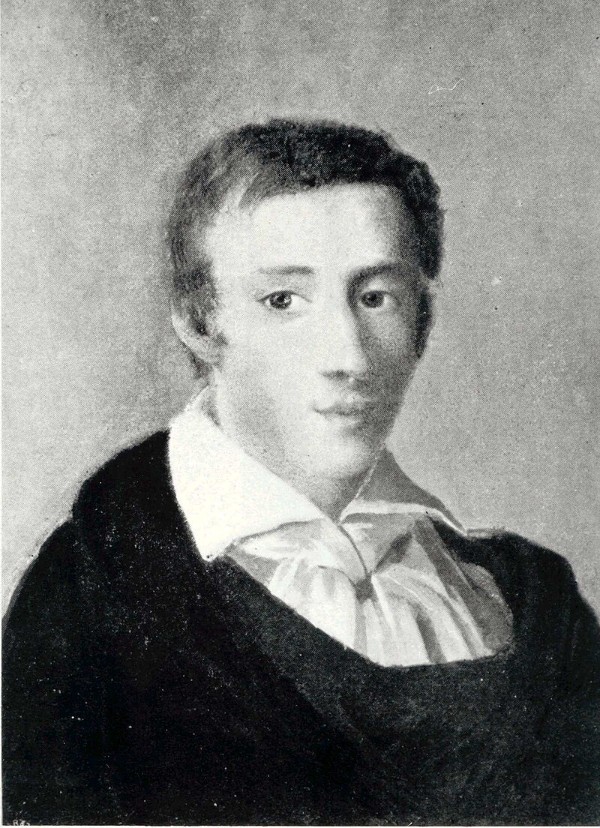
Frédéric Chopin (1810-1849)

Valdeck

Frédéric Chopin

Frédéric Chopin

Between the mid-1830s and mid-1840s, composer and pianist Frédéric Chopin and author George Sand were in a romantic relationship.

They both valued having their own space and didn’t always live together, but Chopin did spend a lot of time at Sand’s apartment, and Chopin would compose there.

Apparently Sand’s cat Valdeck sometimes walked or ran across the piano keyboard, much like Pulcinella Scarlatti once had.

According to legend, the scurrying figures halfway through Chopin’s Waltz in F Major, Op. 34, no. 3 were inspired by Valdeck’s paws getting in the way of Chopin’s hands as he played.  

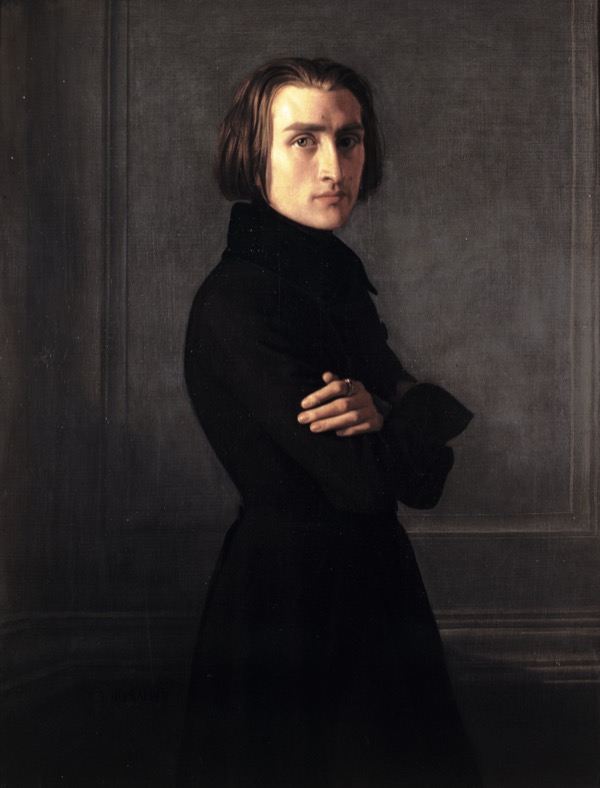
Franz Liszt (1811-1886)

Madame Esmeralda

Franz Liszt

Franz Liszt

According to Liszt biographer Alan Walker in his book Franz Liszt: The Weimar Years:

“No account of daily life [in the Liszt household] would be complete without mention of Madame Esmeralda, the family cat, and a guard dog called Rappo, who romped all over the house without restraint and used to bark beneath Liszt’s window while he composed.”    

Madame Esmeralda lived in the period between 1848 and 1861, when Liszt was working as Weimar’s Hofkapellmeister and living with his mistress Princess Carolyne zu Sayn-Wittgenstein.

Apparently the cat was named after Esmeralda from Victor Hugo’s novel The Hunchback of Notre Dame.

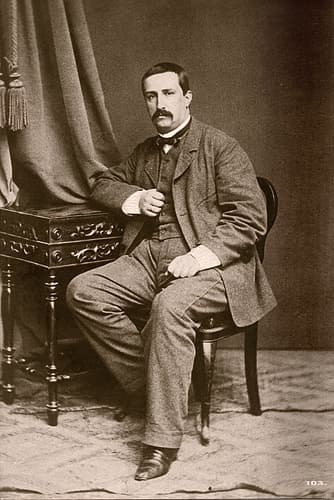
Alexander Borodin (1833-1887)

Fisher, Lelong, and others

Alexander Borodin

Alexander Borodin

Alexander Borodin and his wife never had children, but they did have multiple cats.

Composer Nikolai Rimsky-Korsakov wrote in his memoirs about visiting the Borodins. He reported that they would curl up on Borodin’s neck (despite Borodin’s halfhearted protests of “now, this is too much!”) and stroll across the dining room table during mealtime, eating off guests’ plates.

Rimsky-Korsakov wrote:

One was called Fisher because he was successful in catching fish through the holes in the frozen river. Another, known as Lelong, had the habit of bringing home kittens in his teeth, which were added to the household.

The Borodins would regale their visitors with stories of their cats’ biographies.

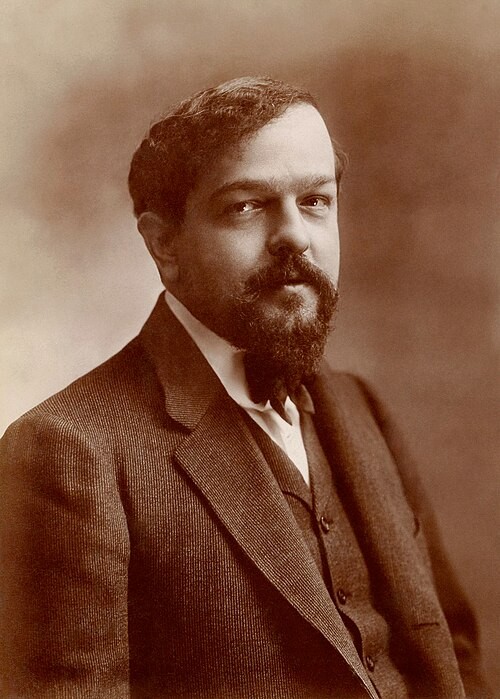
Claude Debussy (1862-1918)

Line (multiples)

Claude Debussy

Claude Debussy

Claude Debussy kept a series of grey Angora cats who all inherited the same name from one another. According to Time Magazine, that name was Line.

Biographer Victor Seroff wrote:

“[Debussy’s cats] tiptoed, as usual, through a mass of papers on Debussy’s desk, while he was working.”

Another biographer named Eric Jensen wrote:

“[The cats were] permitted to lounge solemnly on the desk and if they so wished, to sow disorder among the pencils.”

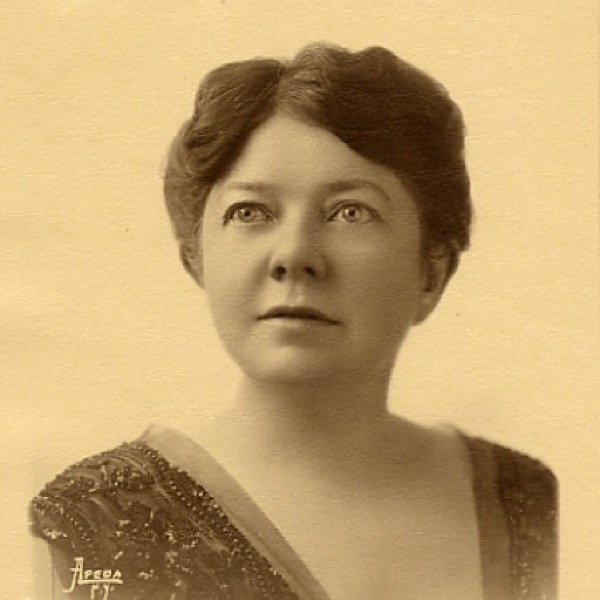
Amy Beach (1867-1944)

Hamlet

Amy Beach

Amy Beach

American composer Amy Beach was inspired by Scarlatti’s Cat Fugue when she published her own Fantasia Fugata in 1923.

She left a tongue-in-cheek asterisk on the front page of the published score:

“For [the subject] the composer is indebted to ‘Hamlet’, a large black Angora who had been placed on the keyboard with the hope that he might emulate Scarlatti’s cat and improvise a fugue theme.”  

Ralph Vaughan Williams (1872-1958)

Zebedee, Foxy, and others

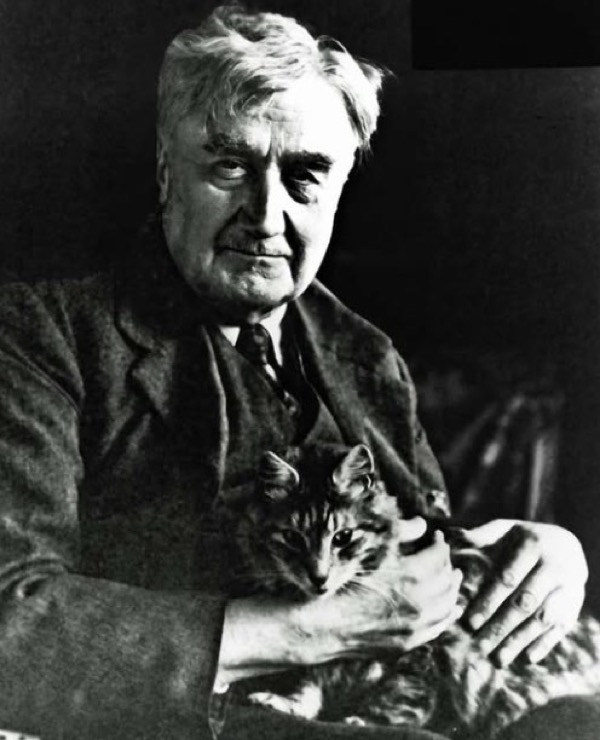
Ralph Vaughan Williams and his cat Foxy

Ralph Vaughan Williams and his cat Foxy

Composer Ralph Vaughan Williams was so obsessed with his cats that he wrote letters from their point of view.

One 1953 letter to the family veterinarian contains a boarding request from the perspective of their cat Zebedee, who “very much dislike[s] noise, and vans, and removal men” and wants Mr. and Mrs. Vaughan Williams to “[fix] me up with a fish shop and so on” after the move is over.

Another contains deliberate misspellings, much like a modern-day meme:

“We are very pleased with your prezent, itt made us both purrrrrr…”

Maurice Ravel (1875-1937)

Siamese cats

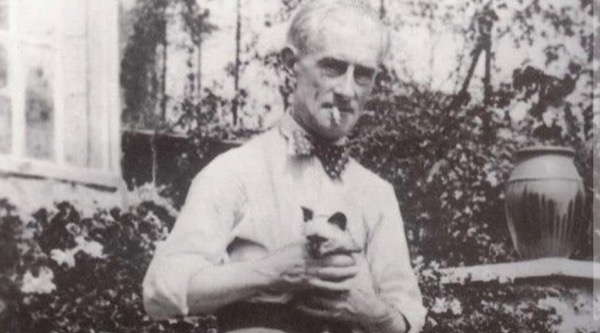
Maurice Ravel and his cat

Maurice Ravel and his cat

Maurice Ravel never married (in fact, there are questions whether he enjoyed a romantic life at all), but he was never lonely in his home, because he always kept several beloved Siamese cats.

It was a great event in the Ravel household when kittens were born. Ravel even declared that his friend violinist Hélène Jourdan-Morhange (and dedicatee of his famous violin sonata) was their godmother.

In one letter to Jourdan-Morhange, he wrote:

“Your godson is in good shape, but his brother has so gorged himself that he is suffering from gastritis. This doesn’t prevent them from playing jungle on the lawn.”

He signed off with a joke:

“I lick the end of your nose.”  

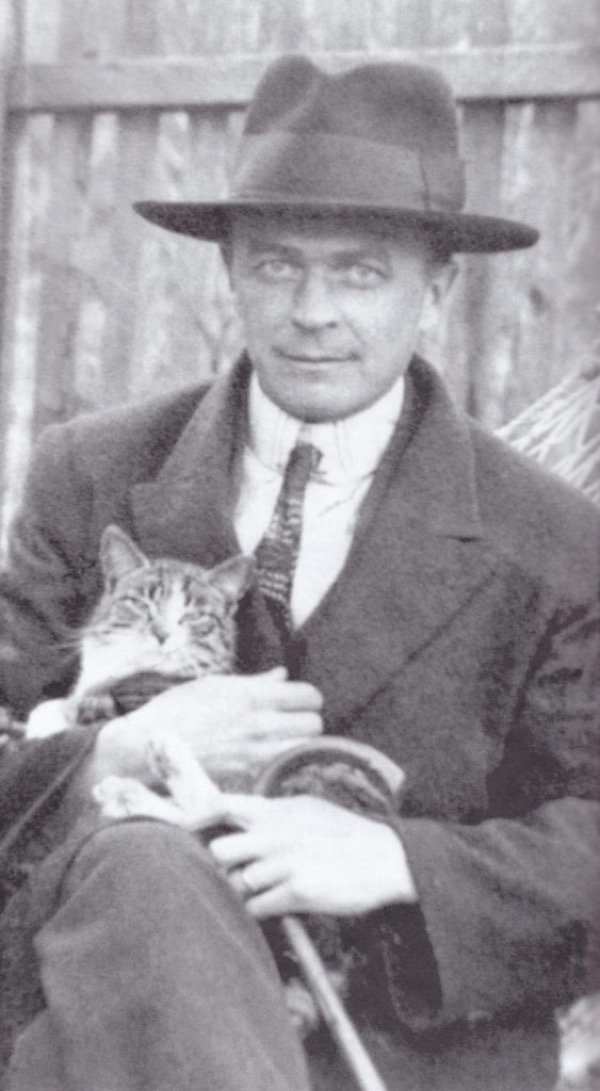
Väinö Raitio (1891-1945)

Väinö Raitio and his cat

Väinö Raitio and his cat

Väinö Raitio brought twentieth-century modernism to Finland…a style that wasn’t particularly appreciated there during his lifetime.

His tone poem “Kuutamo Jupiterissa” (“Moonlight on Jupiter”) dates from 1922-23, and is one of his finest works. He wrote it after having a vivid dream of visiting Jupiter and its moons.    

His dedication to the work was unusual: “I dedicate this tone poem to my cat, who came from Korso. I sent him to Jupiter in October 1922.”

Some people viewed this as a snub of the human beings surrounding him, or as performative eccentricity. But Raitio insisted that the dedication came out of genuine love for his cat. Who are we to second-guess?

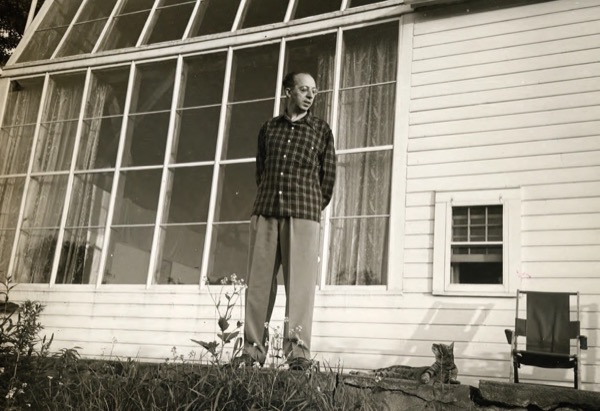
Aaron Copland (1900-1990)

Aaron Copland and his cat

Aaron Copland and his cat

According to BBC Music MagazineAaron Copland had several cats throughout his lifetime, but we weren’t able to find any information about their names. And there’s an adorable picture of Copland looking at a cat outside of his home.

He wrote a couple of cat-themed works during his life, including “The Cat and the Mouse” and the song “I Bought Me a Cat.”    

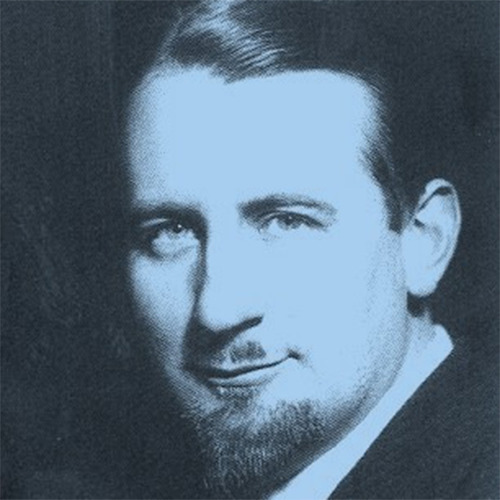
Peter Warlock (1894-1930)

Peter Warlock

Peter Warlock

British composer Peter Warlock led a troubled and scandalous life. (He once shocked neighbours by riding a motorcycle through town naked.)

In December 1930, he died from coal gas poisoning. There was some question about whether it was murder or suicide. But one fact led people to believe it was the latter: he’d put his cat outside the room, thereby saving its life…something a murderer, perhaps, would be less likely to do.

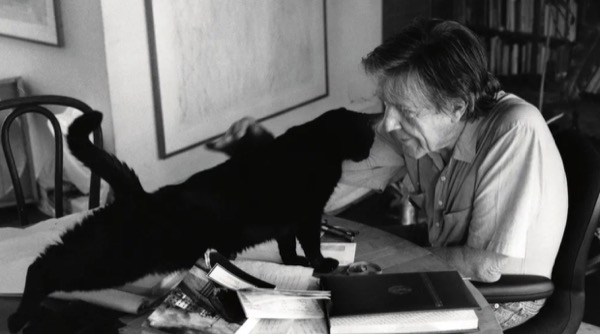
John Cage (1912-1992)

Skookum and Losa

John Cage

John Cage

Laura Kuhn, the former executive director of the John Cage Trust, wrote this entry in the trust’s blog on 6 September 2013: https://johncagetrust.blogspot.com/2013/09/a-memory-on-cages-101st.html

John Cage had a very close relationship with his second black cat, Losa. (His first black cat, Skookum, was tragically set loose on the streets of New York by a well-meaning worker on the roof. John was so bereft, Andy Culver told him we were going to have to send him back to Zen School.) One of their favourite games together was for John to put Losa under a cardboard box. Losa would then move around the loft, the box on his back, weirdly animated. I was horrified the first time I saw him do this. “He must be scared!” I cried. John just laughed. He said Losa liked it, and, furthermore, his new name was now Losa Rinpoche Taxi Cab. Of course, Losa would, after a time, simply shrug the box off, look disdainfully at us both, and calmly walk away.

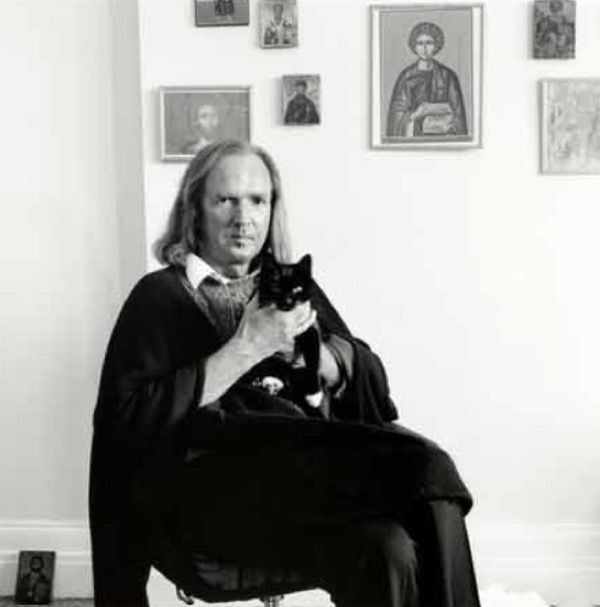
John Tavener (1944-2013)

Mandu, Daisy, Nimrod

John Tavener

John Tavener

John Tavener wrote two cat-related works.

The first was Mandoodles, which depicts various scenes from his cat Mandu’s life: Mandu is born, Mandu plays, Mandu catches a bird, Mandu sleeps, Mandu goes out at night, and Mandu dies.    

His piano work “In Memory of Two Cats” is dedicated to two more of his cats: Daisy and Nimrod.

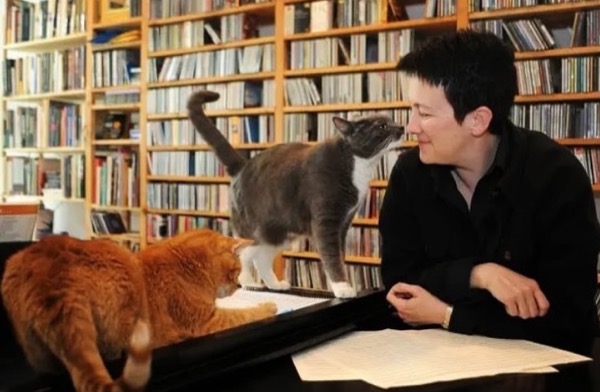
Jennifer Higdon (1962-)

Beau and Squeak

Jennifer Higdon

Jennifer Higdon

Jennifer Higdon is a popular Pulitzer Prize-winning American composer.

In a 2010 interview with the New York Times, she spoke of her composing anxiety: https://www.nytimes.com/2010/04/22/arts/music/22higdon.html

“Starting a piece is the worst, and that can stretch from one day to three weeks of agony. The cats run and hide.”

Final Thoughts

Musicians, tell us about your cats in the comments! And let us know which composer cat name you like best, and which cat-inspired work here is your favourite.

For more of the best in classical music, sign up for our E-Newsletter