Saturday, April 15, 2023

W. A. Mozart - KV 45 - Symphony No. 7 in D major
The symphony is set in 4 movements:
1. Allegro (0:00)
2. Andante (2:43)
3. Menuetto (5:09)
4. Finale (9:18)
Composed in Vienna and dated January 16, 1768. Later reworked into the overture to La finta simplice.
http://en.wikipedia.org/wiki/Symphony...
Performers: The academy of ancient music, conducted by Christopher Hogwood.
How to Listen to Classical Music: Tonality
Explains Tonality, Keys, Key Relations, Modes, Characters, Modulations, Relative Major/Minor, Dominant Preparations, and how composers use all this.
Where to Start with Classical Music? - https://www.insidethescore.com/14-pieces
Master Your Ear, Writing, and Musicianship - https://www.insidethescore.com/musica...
11 Rules for Composing Success - https://www.insidethescore.com/11-rules
This video covers much of the crucial ground needed to understand tonality, tonal systems, tonal and modal music, major and minor keys, key relations, what it means to modulate or key change, what is the tonic, dominant, subdominant, relative major and minor chords, and more. This information is crucial to absorb if you want to understand classical music at a higher level, because it permeates so much music, from J.S. Bach through Mozart and Beethoven, all the way to 20th Century composers such as Shostakovich and others.
While many people use classical music for studying, relaxing and relaxation, or sleeping, far fewer people actually enjoy listening actively. Due to the difficult state of music education, most people don't know how to follow a symphony, or how the best composers wrote and structured their works. While it has been proven that classical music can be beneficial to the mental development of babies and kids, I believe it has life enhancing qualities for all ages, and as an art form deserves to be shared, whether through outreach, or tutorials and lessons like these.
Classical music, at its best, can be richly emotional, and I believe that its emotion can be unlocked by anyone willing to follow these guides through. The principles that I will go through apply to all music, whether live in concert or on CD or Spotify, and whether you're listening to Mozart, Bach, Beethoven, Handel, Brahms, Chopin, Wagner, Verdi, or Puccini, and whether listening to Renaissance, Baroque, Classical, Romantic, Orchestral, Choral, or Chamber music.
Many programs suggest that learning an instrument such as the piano, violin, guitar, cello, oboe, clarinet, or singing in a choir, is crucial for music appreciation. Well I think these skills, as well as learning to read sheet music and training your ear, can be extremely useful, I believe that almost anyone can learn to enjoy classical music with minimal training and music theory. Therefore, this short series will be very light on music theory, and will only use it when necessary to highlight certain forms such as sonata, rondo, and other typical forms.
While I originally got into classical music via movie scores and film composers such as Howard Shore, John Williams, and Hans Zimmer, I discovered this way of listening which has completely changed the way I approach and enjoy classical music. I hope through these videos I can share that with you.
Sources:
Essays by Donald Francis Tovey
Please Subscribe if you want to see more like this, as well as video essays and analysis on movie music and classical music!
Friday, April 14, 2023
Theme to Exodus / London Pops Orchestra
A stirring rendition to the soundtrack of the film Exodus, directed by Otto Preminger, originally composed by Ernest Gold.
月亮代表我的心 - The Moon, My Heart - Carl Doy
Carl Doy is a New Zealand pianist, composer and arranger and one of New Zealand’s most successful musicians having sold over 2 million albums.
Here he performs The Moon, My Heart with members of the New Zealand Symphony Orchestra.
Italian Dishes or Classical Composers?
By Georg Predota, Interlude

© tastingtable.com
Cambini
Although we might easily imagine Cambini to be a lightly sautéed seafood dish from the Tuscany region, it actually identifies the Italian composer and violinist Giuseppe Maria Cambini (1746-1810). Born in Livorno, Cambini made his way to Paris and appeared as a celebrated soloist at the Concert Spirituel. He also was an extremely prolific composer, writing 82 Sinfonia concertantes, 9 symphonies, 17 concertos and over 100 string quintets! Yet, in the chronicles of music history we primarily know Cambini for his supposed hostilities towards Wolfgang Amadeus Mozart. Mozart had his Sinfonia concertante (K. 297B) scheduled for performance at a concert Spirituel. However, Cambini reacted jealously, and in fear of his own reputation in Paris sabotaged the performance.
Falvetti
Would you believe that Falvetti designates an ancient pasta dish originating in the Kingdom of Naples? You have good reason to be suspicious, because I was referencing the Italian Baroque composer Michelangelo Falvetti (1642–1692). One of the most original musical personalities in the second half of the seventeenth century, Falvetti was born in Calabria but spend the majority of his career in various musical institutions in Sicily. He composed polyphonic masses, concertato psalms and motets for various voices and continuo, but only two complete works have survived. Among them is the Oratorio Il diluvio universal (The Flood), first performed in Messina in 1682. A typical work of the Counter Reformation, it musically combines theater and Catholic propaganda. Nevertheless, the score discloses penetrating knowledge of the Baroque musical traditions of Rome and Venice.
Mannelli
Not to be confused with a fictitious dessert from Liguria, Carlo Mannelli (1640-1697) was an Italian violinist, castrato and composer. A celebrated violinist who taught Arcangelo Corelli, Mannelli composed roughly 300 works including 86 violin sonatas, 24 trio sonatas, 58 sinfonias and some vocal works. However, only a handful of works have actually come down to us in manuscript form. The same is true for a violin treatise entitled Studio del Violino, which has also been lost. Earning the nickname “Carlo del Violino,” the composer skillfully combined the virtuoso and lyrical potential of the violin. His sonata da chiesa “La Foggia,” contains a part for obbligato lute and is dedicated to the composer Francesco Foggia.
Sgambati
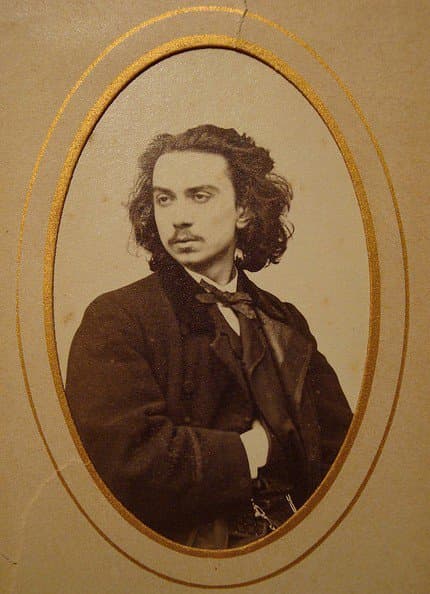
Giovanni Sgambati
The deliciously sweet concoction “Sgambati,” a fried sweet dough ball with coconut cream filling, is primarily served around Christmas time in the province of Alto Adige in northern Italy. Although it all sounds rather delicious, a dish by that name simply does not exist! Rather, the name Sgambati identifies an Italian pianist and composer who was responsible for the rebirth of Italian instrumental music at the end of the 19th century. Born in Rome, Sgambati studied with Franz Liszt and systematically explored the world of instrumental music. Richard Wagner called him “a true, great and original talent,” and his First Symphony blends Italian melodic style and the German orchestral tradition. The work was immediately successful and became part of the standard repertoire of the conductors Martucci and Toscanini.
Subscribe to:
Posts (Atom)
-
The BoholTimes MUSIC can raise someone’s mood, get them excited, or make them calm and relaxed. Music also – and this is important – allow...
-
2,261,443 views May 15, 2019 SUNTORY HALL Munich Philharmonic conducted by Valery Gergiev, Tokyo Suntory Hall Dec 1, 2018 00:05 - 15:5...
-
Yes, this first piano concerto by Tschaikowsky still brings tears into my eyes. Tchaikovsky (or Tschaikowsky) was the second of six survi...


