

SOUNDS FAMILIAR - Baby A. Gil - The Philippine Star
May 14, 2025 | 12:00am
The MSO is one of the oldest orchestras in Asia and the longest surviving artistic institution in the Philippines. Founded in 1926, it has survived wars, endured hardships and emerged as a pillar of artistic achievement. The ‘In Pursuit of Excellence Season’ will reflect this legacy while looking toward the future with exciting collaborations, world premieres and performances that bring together the best of local and international talent.
Music lovers are in for a wonderful treat as the Manila Symphony Orchestra (MSO) gears up for its hundred years celebration with one concert event after another. The MSO together with Standard Insurance presents the aptly titled “In Pursuit of Excellence.” This is the “MSO 99 Concert Series.”
There is one event scheduled for almost every month starting this May, with the grandest of titles and featuring some of today’s best soloists.
First off, here is “Music for Peace,” the first concert of the season on May 24 at the Aliw Theater on the CCP Grounds in Pasay City. Featured are Dvorak’s Symphony No. 9 From the New World and Beethoven’s Violin Concerto in D, Op. 61, which will be performed with Berlin-based violin soloist Emanuel John Villarin and conductor Marlon Chen.
This opener is one that the MSO is very sentimental about. This commemorates the 80th anniversary of the series of over 150 post-liberation concerts that the MSO organized between 1945 and 1946. It was probably the MSO’s way of helping the battered city of Manila and its people find solace and hope through music. The Dvorak and the Beethoven were among those performed by the MSO during this period.
In fact, the entire Dvorak symphony was one of those featured in the MSO’s very first postwar concert held under the sky at the roofless Sta. Cruz Church in Binondo on May 9 to 11, 1945. The piece was selected by then music director Herbert Zipper because Dvorak derived inspiration from American music for his composition and the show was a tribute to the American forces who helped liberate the Philippines from the Japanese occupation.
As such, the Symphony No. 9 from the New World has come to symbolize peace, unity and healing. It was last performed by the MSO at the Meralco Auditorium in a concert commemorating the 70th anniversary of the end of World War II last March 2015. Here now is the chance to listen to it performed live and to give thanks for the peaceful past 80 years.
To continue the schedule: June 28, also at the Aliw Theater, has “A Night in Hollywood” with the Los Angeles Film Composers Intensive (LAFCI) Conducting Fellows featuring American guest conductor Angel Velez and cellist Zoltan Onczay.
Aug. 9 presents “Brazilian Guitar and Cello” with music by Villalobos and Jeffrey Ching plus Fabio Presgrave on cello; Fabio Zanon on guitar, Stefanie Quintin-Avila, soprano and Chen again as conductor.
Sept. 7 is the night of the “Butterfly Lovers Violin Concerto” also at the Aliw Theater. This is a Filipino work for Children’s Choir and Orchestra probably inspired by the famous composition of the same title by He Zhanhao with violinist Monica Bacus and the Children’s Choir.
Sept. 27 is titled “Dancing with Tchaikovsky” also at the Aliw. As the title says, the evening features Rococo Variations for Cello and Orchestra and the Suite from the “Ballet Sleeping Beauty” by Tchaikovsky with cellist Damodar Das Castillo and guest conductor Alexander Vikulov.
And then to launch the “Road to 100” countdown to the celebration of a century of performances next year, there will be “The MSO 100th Anniversary Concert,” which will be held at the Samsung Performing Arts Theater at Circuit Makati with pianist Muyu Liu and guest conductor Darrell Ang. No repertoire has been announced but I am sure it will be something memorable.
Jeffrey Solares, MSO artistic director says: “This landmark season will celebrate the MSO’s links with music and artists from various countries and celebrate the richness that has contributed to the current artistic palette of the orchestra. It will also feature the young artists it has nurtured through its scholarship and training programs as soloists.”
The MSO is one of the oldest orchestras in Asia and the longest surviving artistic institution in the Philippines. Founded in 1926, it has survived wars, endured hardships and emerged as a pillar of artistic achievement.
The “In Pursuit of Excellence Season” will reflect this legacy while looking toward the future with exciting collaborations, world premieres and performances that bring together the best of local and international talent.
When he finally arrived in Vienna as a permanent resident in 1795, Beethoven fit into an interesting hiatus in the city’s music life. Mozart‘s recent death left a place open for a daring piano virtuoso and composer. In his first 10 years in the city, Beethoven wrote 20 of his 32 piano sonatas and 3 of his piano concertos—who better to show off his skills than himself?
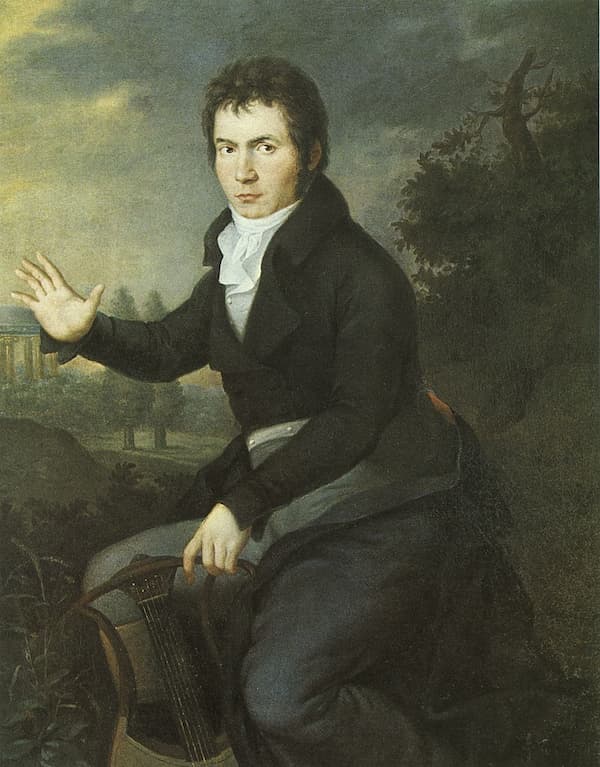
Joseph Willibrord Mähler: Ludwig van Beethoven, ca 1804–1805 (Vienna Museum)
Completed in 1803 and revised in 1804, Beethoven’s Third Piano Concerto started with sketches as far back as 1796, and the first and second movements were completed around 1800. It was given its premiere with the composer at the keyboard on 5 April 1803 in a concert that included the Second Symphony and Christ on the Mount of Olives, his oratorio.
Beethoven was starting to have problems with his hearing as he approached this concerto, and this set him on his new creative path. Music, for him, became a dynamic process, rather than the filling in of architectural forms. One example of this can be seen in his 3rd Symphony, the Eroica, where the first theme isn’t as it is first stated but comes to define its form through the progress of the first movement.
The 3rd Piano Concerto falls between this new compositional method of the Eroica and his earlier Viennese style, when he was more concerned with establishing his name and credentials as a composer and performer.
If we look at just the first movement, we seem to be starting with a theme more intended for a symphonic movement, rather than a concerto movement. The orchestra gives the first statement of the theme, and Beethoven uses the orchestra to create motivic blocks that can be moved around as necessary. He plays with the different registers of the orchestra and inserts his ‘heavy beats on light places’ to play with the rhythms. His focus, however, is the soloist, and the piano is given a brilliant placement that foreshadows much of his later piano writing.
The repeat of the opening gives him the opportunity to play with the opening theme, but the following development is kept short. It’s the final section, with the Coda where the theme seems to really blossom and show its potential.
There’s so much in this work that gives us an indication of the unique way that Beethoven will progress – always challenging the norm, pressing forward with new ideas, and rethinking the usual to create the unusual.
This recording was made in 1958, with Alexander Jenner as soloist under Kurt Richter leading the Symphony Orchestra of the Volksoper Vienna.
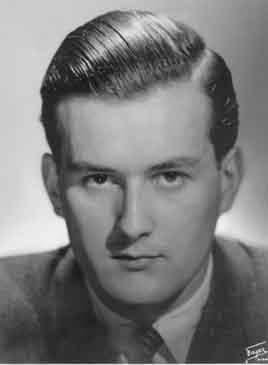
Alexander Jenner
Alexander Jenner (b. 1929) studied in Vienna and, upon graduation in 1949, was awarded the ‘Bösendorfer-Preisflügel’, a grand piano given to the best student of that year graduating from the Vienna State Academy of Music. In 1957, by unanimous jury vote, he was awarded first prize in the Rio de Janeiro Contest for Pianists. As a performer, in addition to the classics, he was active in the promotion of modern music, becoming the first Austrian pianist to perform George Gershwin’s two great piano works, the Rhapsody in Blue and the Concerto in F in 1951; he also gave the premiere of Stravinsky’s Petrouchka for solo piano.
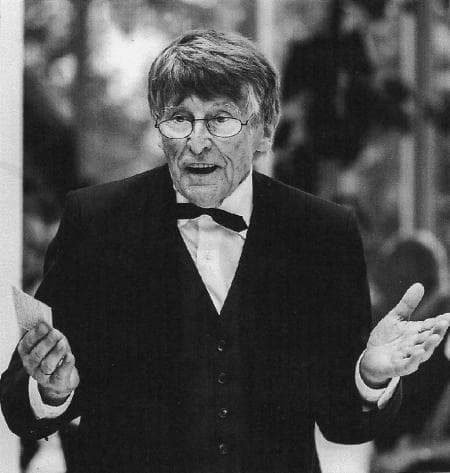
Kurt Dietmar Richter
Kurt Dietmar Richter was a German composer and conductor (1931–2019) who lived in Pilzen, Bohemia, now part of the Czech Republic. He received his musical training in Erfurt, where he fell under the influence of Paul Hindemith and, throughout his life, continued to promote modern music. In 1990, he founded the Berlin artist initiative die neue brücke.
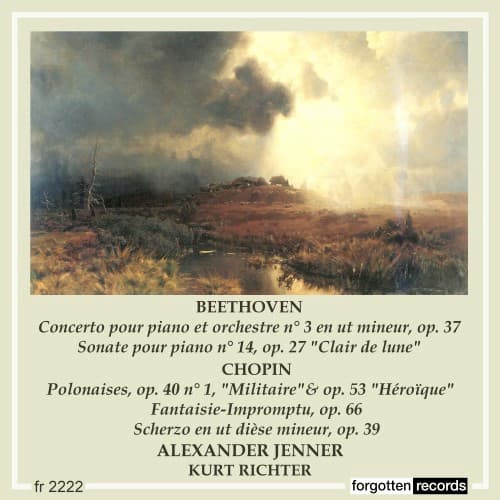
Performed by
Alexander Jenner
Kurt Richter
Symphony Orchestra of the Volksoper Vienna
Recorded in 1958
Official Website
Born in Stockholm, Sweden, on 9 May 1955, Anne Sofie von Otter is one of the finest singers of her generation. Internationally recognised as a concert and recital singer of exceptional gifts, von Otter has built an incomparable catalogue of recordings. Her ever-evolving repertoire and versatility have seen her branch out into the world of opera, jazz, rock, and pop songs.
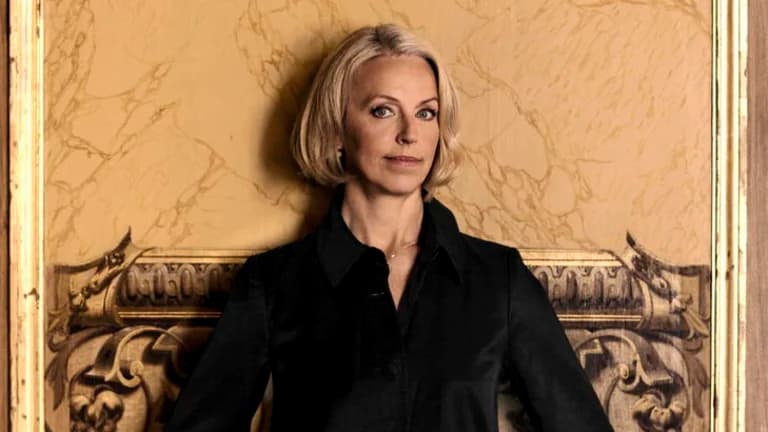
Anne Sofie von Otter
Her father Göran von Otter was a Swedish diplomat in Berlin during World War II, and Anne Sofie grew up in Bonn, London, and Stockholm. She knew absolutely nothing about classical music and cared even less. “I couldn’t tell the difference between a tenor or a bass, or between Bach and Mahler,” she explained in an interview. Growing up in comfortable surroundings, von Otter took obligatory piano lessons, but she was really into pop and rock music.
She loved the Beatles above all, but also Cat Stevens, Judy Collins and Crosby, Stills and Nash. “It was the nice tidy pop,” she greatly enjoyed. “The Rolling Stones were not for me.” Later, a friend introduced her to fusion jazz, which she thought was very daring at the time. However, she really loved the ballet, especially the Tchaikovsky ballets she attended in Stockholm and later in London, where her father was the Swedish Consul General for five years.
Dashing Music Teacher
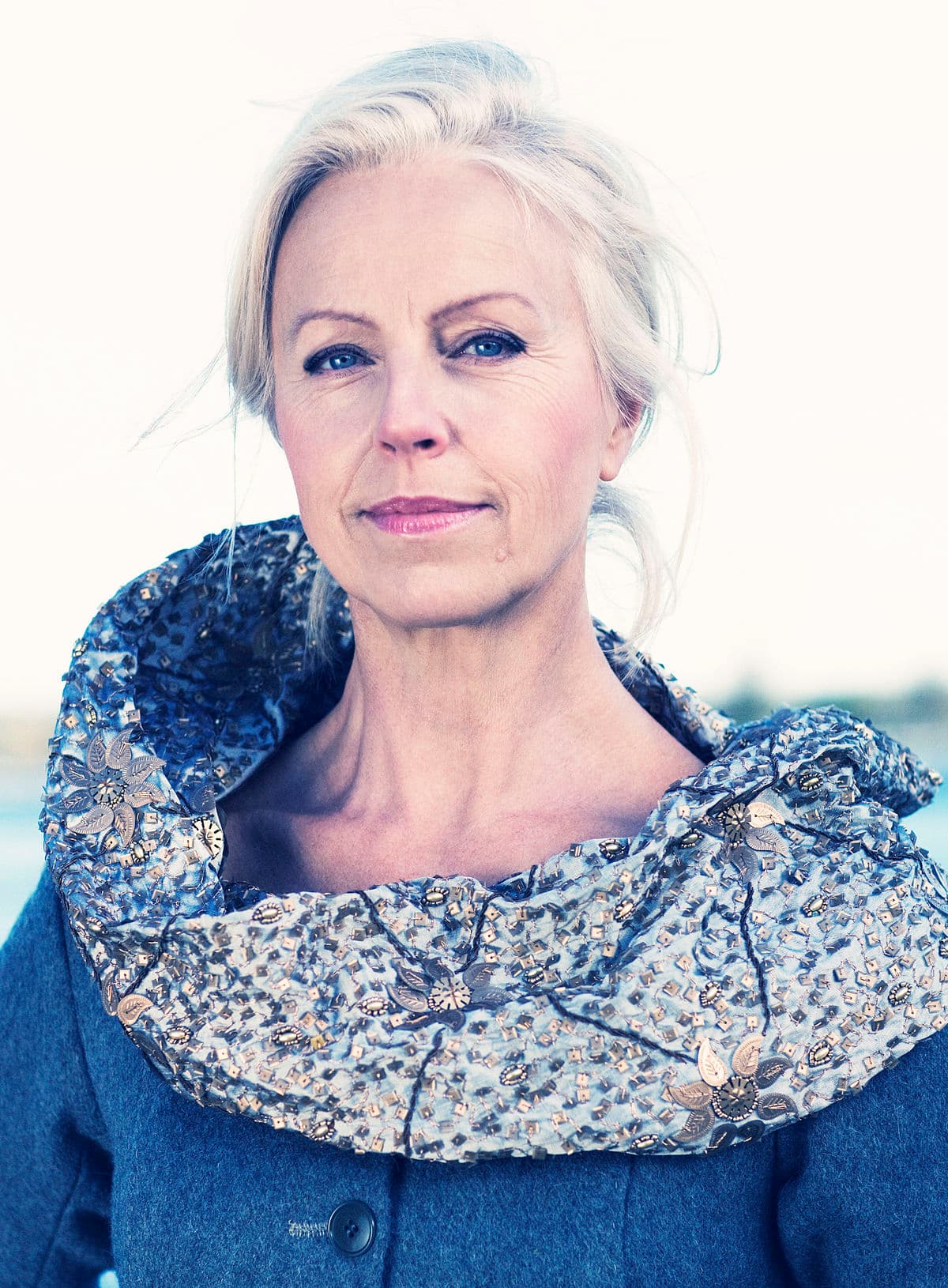
Von Otter’s biggest dream as a child was to become a ballerina, and she did take dance classes.
As she once disclosed, “I was terribly disappointed when I realized that I could not do it.” Singing wasn’t even on the radar until her last two years of high school in Sweden when a dashing young music teacher took over the chorus, “and I just had to sign up.” She didn’t know anything about singing and had no experience of going to the opera. “It took me a while to understand,” she remembers, “that I had a gift for singing.”
However, as von Otter explained in an interview, “I always wanted to use the voice in a natural way, so classical singing, with all that it implies, for me was very strange. I didn’t like vibrato. It was horrifying. Whenever I sang in my teens it was with my natural voice.” Von Otter became a dedicated choir singer, learning to read music and different styles, from Baroque to Contemporary. She certainly never had any fantasies about becoming an opera singer at all, as she was “very self-conscious, nervous, and very shy.”
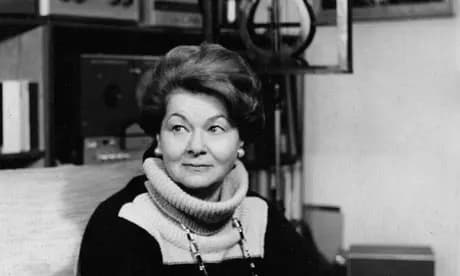
Vera Rózsa
Von Otter sang in a number of choruses, always in the soprano section. “But it was killing my voice,” she said. “I wanted to be a soprano, and it was hurting, so what could I do?” She started taking singing lessons and her singing teacher told her, “You are not a soprano, you are a mezzo.” She won a place at the Guildhall School of Music and Drama in London and studied with the legendary Hungarian teacher, Vera Rózsa. Her insight into a singer’s voice and technique was famous, and after listening for just a couple of bars, she immediately knew what exercise was needed.
For von Otter, the contrast between Rózsa’s high-energy and the more laid-back approach of her Swedish singing teachers was striking. Rózsa quickly undid some of the damage to von Otter’s voice, and she instilled in her the mantra that a good singer needs, “artistic temperament, concentration, dramatic ability, personality, good taste, and total devotion to the profession. An artist needs a heart on fire and a brain on ice.”
Shift to Opera

Rózsa organised a repertoire of operatic roles for von Otter and suggested that she audition for a position in an opera house. Von Otter was not enthusiastic, as “I didn’t want to be a soloist. I wanted to sing and I didn’t mind people hearing my voice individually but I would rather be up the back of a choir than have them look at me because that was embarrassing.” She certainly did not want to be in the spotlight, and the transformation to the stage did not come naturally.
At that time, von Otter still made a living from singing in a number of choirs in Stockholm, including the cathedral choir, the radio choir, and the Bach choir, and she made enough money to survive. She never dreamt of standing on the operatic stage, but her manager and agent, a little against her will, urged her to audition, and she was quickly snapped up by Basel Opera, making her debut in 1983. “I got my first job,” she recalled, “and indeed it was good for me. It developed me as a performer and my understanding of what I was singing about.”


