Friday, January 31, 2025

Decoding My Playlist: What Does My Music Player Think I Like?

With technological advancements, our music players can now generate a list of music tailored to our preferences, matching our usual choices at different times of the day. It is both bizarre and fascinating to discover what our music player thinks we like. Sometimes, these suggestions reveal patterns we didn’t consciously notice, offering a fresh perspective on our musical inclinations.

listening to headphones with music

© az616578.vo.msecnd.net/

When I decided to write an article about my favorite composers and their piano compositions, I scrolled through the selections my music player suggested. To my surprise—or perhaps not—I genuinely enjoyed many of them. The curated playlists seemed to echo my preferences, yet they also introduced me to pieces I hadn’t considered in a long time, sparking new reflections on familiar music.

My favorite composer is J.S. Bach, and my music player often includes a piece or two of his. At the top of my list is one of his 1741 compositions, the Goldberg Variations. I am captivated by its simple, delicate, and somewhat moody opening. Named after one of Bach’s pupils, who is said to have played the variations to help his noble employer sleep, the work never fails to draw me in. Its seamless blend of technical brilliance and emotional depth make it an enduring masterpiece. Each time it appears on my playlist, it feels like a trusted companion, affirming my deep connection to Bach’s artistry.

Bach’s Goldberg Variations [Glenn Gould, 1981 record] (BWV 988) 

Recently, I have been revisiting another Bach masterpiece: English Suite No. 2 in A Minor, BWV 807: I. Prélude. This piece took on a new context for me when I learned it was featured in a chilling film scene where a Nazi officer played the Prelude while the SS officers massacred Jewish residents who refused to relocate to concentration camps. The juxtaposition of this serene, intricate music with such horrific imagery is deeply unsettling. The music player’s suggestion of this piece prompted me to reflect on the complex history of classical music and its associations.

English Suite No. 2 in A Minor, BWV 807: I. Prélude 

Watch the scene (content warning):

While this association is haunting, it does not diminish the intrinsic beauty of the piece for me. Bach’s music often transcends time and context, resonating with listeners across centuries. My music player’s inclusion of this work made me appreciate anew its timeless appeal.

Moving on to Beethoven, the last movement of his Op. 109 is one of my favorite piano works. It has a unique quality—simultaneously static and profoundly moving. The intertwining themes and variations create a meditative yet dynamic experience, showcasing Beethoven’s unparalleled genius in blending structure with emotion. Its frequent appearance on my playlist often feels like an invitation to pause and immerse myself in its profound serenity.

Beethoven: Piano Sonata Op. 109 

Lately, I have also been exploring Beethoven’s piano concertos. My music player initially suggested his 3rd Concerto, but my recent favorite is the 4th. Its hopeful yet understated tone, combined with the delicate orchestral entrance after the piano’s brief opening, has captivated me. This concerto strikes a balance between intimacy and grandeur, making it a perfect companion for reflective moments, which aligns seamlessly with my playlist’s mood-based suggestions.

Beethoven: Piano Concerto No. 4 

Another composer who frequently appears on my playlist is Scriabin. One of the daily playlists suggested his Prelude Op. 16, No. 4, but I’ve found No. 1 from the same opus equally charming, soothing, and warm. Scriabin’s music, often described as mystical and otherworldly, offers a fascinating contrast to the structured works of Bach and Beethoven. Discovering these pieces through the music player has deepened my appreciation for Scriabin’s unique voice.

Scriabin : Prélude Op. 16 No. 1 

Exploring different styles of music, particularly from South American composers, is another joy. My music player recently introduced me to Alberto Nepomuceno’s Prece. Nepomuceno, often regarded as the “Father of Brazilian music,” blended popular and folk elements into his compositions, leaving a lasting influence on Brazilian concert music. His legacy continued through his students, including Heitor Villa-LobosPrece is a poignant piece that captures the essence of Brazilian musical identity while remaining universally appealing. Its appearance on my playlist felt like a gentle nudge to explore more from this fascinating repertoire.

Alberto Nepomuceno: Prece 

Another South American composer whose works I’ve been exploring is Carlos Guastavino. Often called the “Schubert of the Pampas,” Guastavino is celebrated for his romantic and deeply lyrical compositions. Although not featured in my music player’s current playlist, his piano works often embody a lyrical and nostalgic quality that resonates deeply with listeners. His music reflects the landscapes and folk traditions of Argentina, blending classical techniques with the emotional warmth of his homeland. Reflecting on Nepomuceno’s influence naturally led me to revisit Guastavino’s compositions, showcasing how playlists can act as a springboard for broader musical exploration.

Carlos Guastavino: Cantilena n. 5 “Abelarda Olmos” 

Lastly, one piece that always seems to find its way into my playlist is Franck’s Prélude, Fugue et Variations. It’s not only a joy to listen to but also a piece I love to play. Franck’s ability to weave intricate counterpoint with expressive melodies is truly remarkable. This work, with its blend of technical challenge and emotional depth, remains a staple in my musical journey. My music player’s recurring suggestion of this piece feels like a constant reminder of its enduring significance.

César Franck: Prélude, Fugue, et Variation 

These discoveries have made me reflect on how well my music player knows my tastes. It’s a delightful and sometimes eerie experience to see my preferences mirrored back to me through algorithms and data. At the same time, the suggestions serve as a springboard for exploration, introducing me to new works and composers I might not have otherwise encountered. This interplay between familiarity and discovery keeps my musical journey dynamic and enriching.

What about you? What does your playlist suggest you listen to? What does your music player think you like? Perhaps it’s time to dive into your playlists and uncover some surprises.

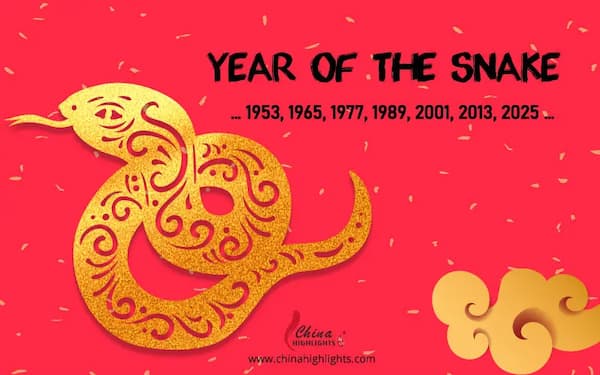
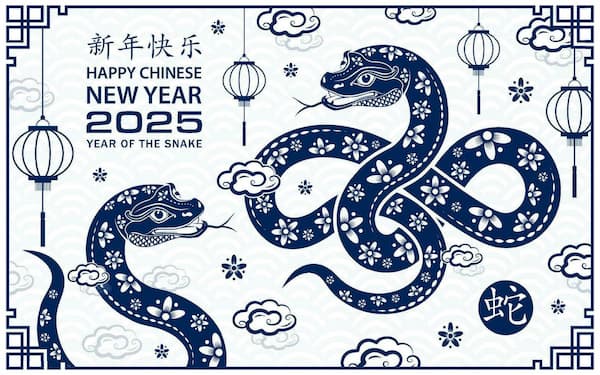
Slithering into Fortune: Happy Chinese Year of the Snake

by Hermione LAI 

This year promises to be filled with transformation and growth, and whether you are looking for big changes or small wins, there is a magical energy in the air. The snake may be mysterious, but it is also very powerful, resourceful and ready to lead us towards a new beginning. 

The Wood Snake

Year of the Snake

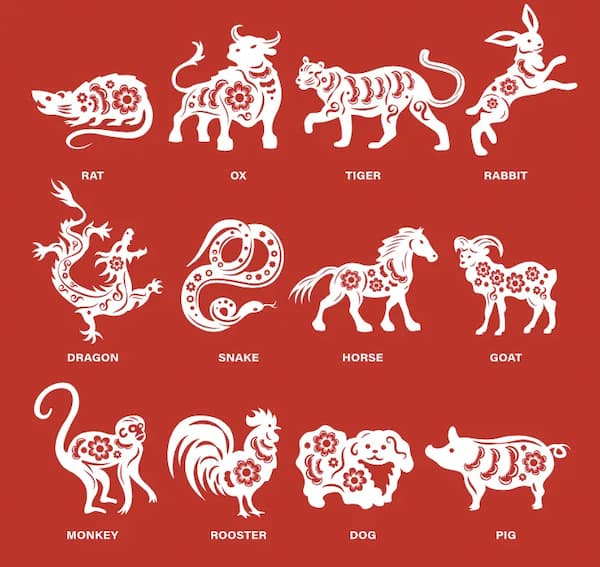
In the Chinese zodiac, the snake occupies the sixth position, and it is associated with wisdom, charm, elegance, and transformation. People born in the Year of the Snake are supposed to be intuitive, strategic, and intelligent. In 2025, the Year of the Snake starts on 29 January and ends on 16 February. 2025 is the year of the Wood Snake, associated with growth, creativity, and expansion.

People born under the influence of the Wood snake tend to be highly creative. Highly innovative and artistic, they have a natural ability to create new ideas and come up with solutions. Individuals also exhibit a strong sense of nurturing and caring, making them more emphatic and concerned about others. And since wood can bend without breaking, Wood Snakes are uniquely capable of adapting and can go with the flow when necessary. 

Love Life

Happy Chinese New Year 2025 zodiac sign year of the snake

It has been predicted that individuals born under the zodiac of the snake will experience a particularly vibrant and fulfilling love life. Their natural charm and allure will make it easy for them to attract members of the opposite sex, leading to a year filled with romantic opportunities and excitement. Wood Snakes tend to be more reserved in the beginning stages of a relationship, so it may take time for attraction to turn into something more lasting.

However, it is advisable to exercise caution and avoid indulging in their romantic pursuits. Excessive behaviour can complicate relationships and lead to unintended consequences, such as unwanted pregnancies. By setting boundaries and using their intelligence and judgment, Snakes can enjoy romance without facing complications. Your best matches are the Rooster, Ox, and Dragon, but you should absolutely stay away from Monkey and Tiger. 

Money

Chinese zodiac

2025 looks quite promising for Wood Snakes in terms of wealth, income, and family growth. There might be opportunities for financial growth through strategic investments, planning, or business ventures. If you’ve been waiting for the right moment to take a financial leap, such as investing in stocks, real estate, or starting a business, this may well be a good year to move forward, but only after careful consideration and planning.

It has been predicted that 2025 will be particularly beneficial for individuals in the communication sector and that collaborations with foreign companies may lead to additional income. However, Wood Snakes can be drawn to indulgent spending, especially on luxury items. Be mindful of your financial habits in 2025, especially when it comes to unnecessary purchases. Set a clear budget and stick to it, ensuring that you prioritise your financial goals over momentary desires. 

Health

Chinese zodiac snake

Even though the physical energy might be high, the Wood Snake might be vulnerable to stress and mental fatigue in 2025. Sometimes, individuals born under that sign tend to overthink and strategise, leading to excessive worrying. Please be careful, as emotional health might be impacted.

It’s always a good idea to incorporate relaxation techniques like meditation, yoga, or deep-breathing exercises into your daily routine. Allow yourself moments of downtime to decompress from the mental and emotional pressures you face. And if you are prone to anxiety, you might find that stress manifests physically, such as tension headaches, digestive issues, or muscle strains.

Snake Chinese zodiac sign

2025 will likely be a wonderful year if you are born under the sign of the Snake, as you will experience significant growth and transformation driven by a balance of strategic planning, emotional awareness, and a deepening of both personal and professional connections. You will navigate all challenges with patience and resilience.

Happy Chinese New Year! May the Year of the Snake bring you wisdom, prosperity, and endless joy!

Wednesday, January 29, 2025

Nicanor Abelardo - his music and his life


NASAAN KA IROG (Nicanor Abelardo) | Kung Hindi Man


Nicanor Santa Ana Abelardo was born on the 7th of February, 1893 in San Miguel de Mayumo, Bulacan. He was a composer, pianist and teacher. He was the eldest of eight children born to Valentin Abelardo, a photographer, and Placida Santa Ana, a church singer. His father taught him solfeggio and bandurria when he was five. At six, he could already play the William Tell Overture on the guitar. He composed and dedicated a waltz, "Ang Unang Buko" (First Bud) to his grandmother, at age eight. In 1902, his uncle, Juan Abelardo, a painter, brought him to Manila where he studied in several primary schools. While working for his uncle, he learned to play the piano, and later studied voice under the Italian maestro Enrico Capozzi who refused to be paid for teaching such a talented boy.1 Upon the recommendation of composer, Francisco Buencamino, he was hired to play at saloons and cabarets at age 13. At barely 15, Abelardo took on a teaching job in barrio schools in San Ildefonso and San Miguel, Bulacan. 


In 1916, he studied at the University of the Philippines Conservatory of Music. While there, he composed the "U.P. Beloved", a school hymn which won first prize in an open musical contest in 1917. In 1918, he was appointed as an assistant instructor in solfeggio and harmony. He became a full-pledged instructor in 1919. He received his teacher's certificate in science and composition in 1923. He then became the head of the composition department the following year. 

MUSICAL STYLE Abelardo's musical style is a hybrid of Western classical music and indigenous Filipino music. He was noted for his ability to express the essence of Filipino culture and passion in his songs through the use of melody.

Abelardo was a prolific composer of kundiman (art song). He redefined this genre and elevated it to artistic heights through his compositions like "Nasaan Ka Irog?" (1923); "Kundiman ng Luha" (1924), and "Paghanga" (1939). Abelardo also composed music for the sarswela - such as "Kawanggawa" (1918); "Dakilang Punglo" (1926); "Tayo'y Pakasal Na" (1930); "Kapabayaan o Bunga ng Masamang Hilig" (1918); "Sumilang", "Ang Tala ng Unibersidad", "Lucila" (1911); the operetta "Akibat" (1913); "Ang Likha ni Pierrot o Batik ng Kabihasnan" (1931); "Ang Mestiza" (1922); "Makabagong Dalaga" and "Batang Tulisan" (1934).  He also wrote in different musical forms such as the "Kung Hindi Man" (transcribed from a love song originally for voice, violin, cello and piano), "Ang Aking Bayan" (patriotic song), "Bonifacio Song", and "Naku...Kenkoy!" He also has works in the classical genre which include "Sonata for violin and piano", "Salve Regina Mater" (1932), and many others. 

After more than 140 works, Abelardo began to ail. He died in 1934 leaving behind several unfinished works.

NASAAN KA IROG (Nicanor Abelardo) | Kung Hindi Man

JAMES LAST Notturno di Chopin ( Lecce)


Per rendere ancora più bella una città basterebbe liberare i monumenti dalle auto, dai cassonetti dei rifiuti e dalla segnaletica... e soprattutto evitare di buttare a terra quello che ci pare.

Pinoys listen to music 126 minutes a day, longest globally


Paul Icamina - The Philippine Star


The time spent by Filipinos listening to music, at an average of 126 minutes or a little over two hours a day, is the longest in the world. Iqbal Nuwir Anwar via Canva

Paul Icamina - The Philippine Star 

January 30, 2025 | 12:02am


MANILA, Philippines — Filipinos not only spend the most time on the internet and on social media, they listen to music the longest anywhere on the planet.

The time spent by Filipinos listening to music, at an average of 126 minutes or a little over two hours a day, is the longest in the world, according to a study conducted by the National Research Council of the Philippines (NRCP).

“Music is more than a means of entertainment – it is the people’s way to communicate feelings, resonate their stories and build on their emotions,” says Dr. Maria Alexandra Chua, a professor at the University of Sto. Tomas Conservatory of Music who leads NRCP’s Musika Pilipinas project.

And yet, as important as music is in these islands, more than half of Filipinos in the industry earn less than P20,000 a month, the NRCP study found.

The meager earnings are a little over the minimum wage in Metro Manila, says Chua, who is also with the UST Research Center for Culture, Arts and the Humanities.

This is reflected in the small share of music in creative revenues.

The gross value added of the country’s creative industry expanded from P1.61 trillion in 2022 to P1.72 trillion in 2023, according to the Philippine Statistics Authority. Music’s contribution is only P18.1 billion or 8.8 percent of the creative total.

The NRCP Musika Pilipinas project is designed to remedy this, defining the scope of the music ecosystem from publishing, recording and live music to the industry value chain. It will identify and assess market capital of music goods, particularly in the pivotal transformation to digital platforms, and determine growth prospects.

The NRCP study covered 700 industry players, and data was gathered from focus group discussions with artists, music company executives and organizations.

The study found that 61.1 percent of Filipinos involved in music creation, production, distribution and consumption were college degree holders; majority of them were freelance artists.

Most of the respondents said that to support their living expenses, they earned income not related to the music industry.

“Local artists would always have to go through what we normally identify as sariling sikap, that is, without any government intervention and support in music training, marketing and promotion,” says Chua.

Despite having the Philippine Creative Industries Development Act which promotes the development of Philippine creative industries, music is not a stand-alone sector in the creative industries council.

The music industry is subsumed under performing arts and audiovisuals, says Chua, who graduated at UST, magna cum laude, with a major in Piano.

There are problems of representation for music industry members in policy discussions, as well as in identifying music’s economic contribution as an important part of the Philippine creative economy, she points out.

A music coordinating council responsible for handling the dynamics, concerns, development and challenges faced by the industry is about time, recommends the NRCP study.

A centralized music coordinating council will handle the dynamics, concerns, strategic development plan and challenges faced by the industry, Chua says.

“The lack of effective protection of intellectual property rights of local artists is another crucial issue that needs to be addressed,” she says.

“The Philippine music industry should be understood as individuals, groups, institutions, companies and stakeholders who engage in the entire process of the creation, production, distribution and consumption of music within the Philippines,” Chua explains.

“To put it simply, they are creating, producing, reproducing, distributing or consuming music within the Philippines or producing music while representing the Philippines and from whose activities the Philippine economy benefits, including overseas Filipino musicians who send remittances,” Chua says.

Monday, January 27, 2025

Joseph Joachim Romanze in C

Joseph Joachim (June 28, 1831 -- August 15, 1907) (pronounced YO-a-chim) was a violinist, conductor, composer and teacher. He is regarded as one of the most influential violinists of all time. Joseph Joachim was born to Julius and Fanny Joachim, who were Hungarian Jews, as the seventh of eight children. Joachim was born in Kittsee (KopÄ any / Köpcsény), near Bratislava and Eisenstadt, in today's Burgenland area of Austria. At the time, Kittsee was part of the Esterhazy holdings in Hungary, and for this reason Joachim is often considered to be Hungarian. Joseph Joachim's birth house in Kittsee. In 1833 his family moved to Pest, where he studied violin with Stanislaus Serwaczynski, the concertmaster of the opera in Pest. (Serwaczynski later moved to Lublin, Poland, where he taught Wieniawski). In 1839, Joachim continued his studies in Vienna (briefly with Miska Hauser and Georg Hellmesberger, Sr.; finally â€" and most significantly â€" with Joseph Böhm). He was taken by his cousin, Fanny Wittgenstein (grandmother of the philosopher Ludwig Wittgenstein) to live and study in Leipzig, where he became a protégé of Felix Mendelssohn. In his first public performance with the Leipzig Gewandhaus Orchestra he played a violin concerto by Heinrich Wilhelm Ernst. The twelve-year-old Joachim's 1844 performance of the Beethoven violin concerto in London (under Mendelssohn's baton) was a triumph, and helped to establish that work in the repertory. Although his second concert tour there was less successful, Joachim was to remain a favorite in England.