Tracklist:
0:00 Viderunt Omnes
0:54 King Henry VIII: Pastime With Good Company
2:02 Jean-Baptiste Lully: Armide Overture
3:36 Ludwig van Beethoven: Symphony No. 9, I. Allegro ma non troppo, un poco maestoso
Disclaimer: This list may not contain all of the composers. The information may also be misleading or not recorded at all, therefore with some of the causes of death being regarded as "unknown".
Wednesday, October 9, 2024

Tuesday, October 8, 2024
A letter from Prague: the city in timeless harmony
Hattie Butterworth
Tuesday, October 8, 2024
Exploring the city’s cultural identity through architecture, history, and the legacy of Czech music
Prague is a city that architecturally is vaguely reminiscent of many places. I visited Prague for the first time earlier this summer, and found myself with memories of Italy, Germany and Scandinavia in my mind as I walked the cobbled streets. Then it has its political markers – the Lennon Wall with its ever-changing graffiti, marking global causes and the Memorial to the Victims of Communism active in Czechoslovakia between 1948 and 1989.
Its music – the distinctive Bohemian legacy of Dvořák, Suk, Smetana and others – perhaps gives the city an extra dimension to its colour. ‘My music is rhythmic because I am Czech,’ Bohuslav Martinů once said. ‘The national music of the Czechs is rhythm – strong and agile rhythm.’
But it was Bedřich Smetana (1824-1884), who was perhaps the first composer to revive the Czech musical language. A pioneer in his own right, he is now known in the country as the ‘father of Czech music’. This shift to writing in Czech came as later in life, he further embedded himself in Czech culture by learning to speak the language and the Czech nationalist movement caught wind. His own first language, as was usual among the middle classes in the Habsburg empire, was German.
Strong and lyrical, the Czech language has West-Slavic origins and is distinctly different to the German language of Smetana’s upbringing. Listening to the discussions of Czech audiences felt like a further journey into the music of the country. As I settled down in the National Theater for a production of Smetana’s late opera The Secret, the pastel and gold colours of the building glimmered and the strong, lyrical language reduced to whispers.
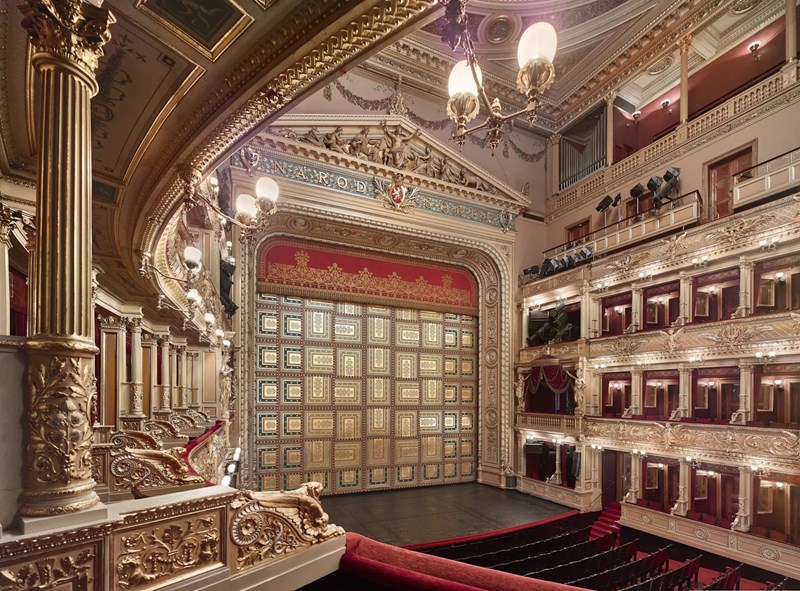 The interior of the National Theatre, Prague | Photo: National Theatre Prague
The Czech National Opera has commitment to celebrating its composer, Smetana, in his 200th anniversary year as part of the ‘Year of Czech Music’. The Secret lives alongside eight other Czech operas that Smetana wrote whilst principal conductor of Prague’s Provisional Theatre, the temporary home for Czech drama and opera before the National Theatre was built. Libuše (The Kiss) has also seen a new production this year, as well as revivals of The Bartered Bride and Dalibor.
Smetana’s operas blend the folk songs of his homeland with his personal style and have a poetic musical language. So too does his orchestral music, the most famous of which, his Má vlast was composed towards the end of his life and in the symphonic poem style pioneered by his friend Franz Liszt. Just as he began writing the work in 1874, Liszt lost the hearing in his left ear and a month later had also lost hearing in his right. He completed the work profoundly deaf.
By the end of 1874, Smetana resigned from his position as a conductor of the Provisional Theatre, because he couldn't hear well enough to keep doing his job. He wrote in his diary at the time: ‘If my disease is incurable, then I should prefer to be liberated from this life.’ He also suffered severely from tinnitus and wrote the ‘high E’ pitch he was hearing in the last movement of Bedřich Smetana's String Quartet No. 1, ‘From My Own Life’. In the middle of the finale, the quartet breaks off, followed by this mysterious high note. I wonder if this was a form of healing for Smetana, as embedding a tinnitus pitch into music has been known to significantly reduce the volume of the pitch. Was Smetana writing to sooth, rather than protest?
Many have argued about what caused the composer’s deafness and later his mental illness, leading for his body to be exhumed twice. In 1987 antibodies were found that pointed to syphilis, though the diagnosis still isn’t conclusive.
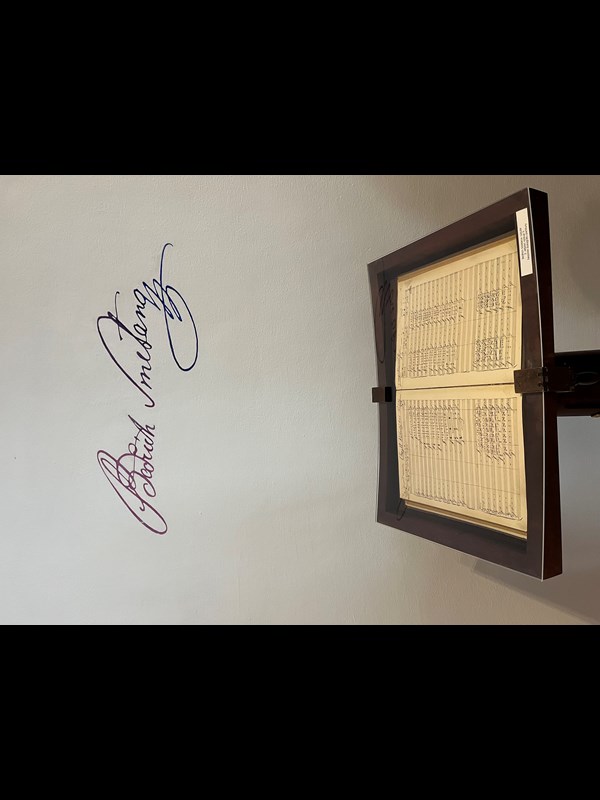 The Smetana Museum original manuscript of Smetana's opera The Kiss | Photo: Hattie Butterworth
Learning of Smetana’s connections and tragedies came from the beautifully-curated Smetana museum, right on the Vltava river in a neo-renaissance building. It’s an intimate and moving experience, holding original letters and memorabilia from Smetana’s life. So too does the museum at Jabkenice, where a deaf Smetana composed many of his later works.
I often wonder about composers: does knowing about their lives matter or impact the way we hear the music? Perhaps the ins and outs of Smetana’s private life aren’t as important to the music as the knowledge is of his cultural journey throughout his life. When we listen to Smetana we are hearing a shift into a cultural identity and a start to the legacy we now know of the country’s music. It’s history through staves, scores and melodies.
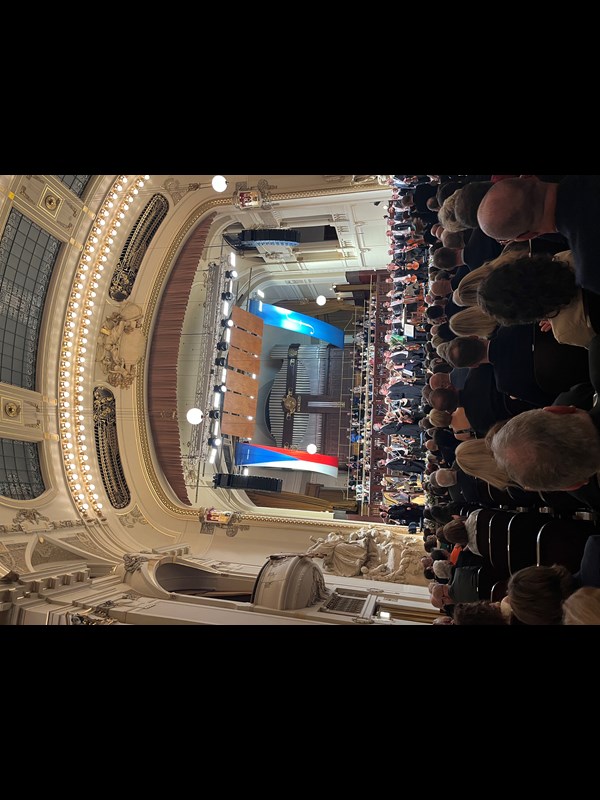 The Czech Philharmonic closing the Prague Spring Festival 2024 | Photo: Hattie Butterworth
Gramophone’s Orchestra of the Year 2024 was voted as being the Czech Philharmonic Orchestra. On my trip in June I saw the orchestra at the Rudolfinum concert hall in an all-Czech programme of music to close the annual Prague Spring Festival. From Smetana and Dvořák to the European premiere of Miroslav Srnka's Superorganisms, it was a unique opportunity to understand a full spectrum of Czech music and witness its effect on me. Perhaps the constant thread is the folk music of the country – still influencing Czech composers to this day and giving an intergenerational connection and community to the audiences.
In a recorded speech to receive the award, the orchestra’s chief conductor Semyon Bychkov said: ‘this orchestra lived by navigating through the highs and the lows, always attached to the national musical tradition, keen to preserve its unique sound and expression.’ Prague is engulfed with music. Walk around with your headphones in – Dvorak’s symphonies hold new resonance, bringing this iconic river and architecture to life through sound and history.
2024 is the Year of Czech Music. Find out more at visitczechia.com

Sunday, October 6, 2024
Evolution of Classical Music (1400 BC-1900 AD)
Classical music through the eras from the ancient world to the turn of the century.
Enjoy!
Disclaimer: I do not own the music or photos used in this video. It is for entertainment purposes only.
Olivia Rodrigo donates all Manila concert proceeds to Jhpiego Philippines

Jan Milo Severo - Philstar.com
October 7, 2024 | 9:18am
In a photo posted on Oct. 6, 2024, Olivia Rodrigo is seen visiting Jhpiego Philippines, a local nonprofit organization, which she donated proceeds of her concert to.
MANILA, Philippines — Filipino-American pop star Olivia Rodrigo donated all the proceeds of the Manila leg of her "Guts" World Tour to Jhpiego Philippines.
According to Olivia's Instagram story on Sunday, Jhpiego Philippines is "dedicated to improving the health and lives of women and girls in the Philippines, especially in underserved and conflict-affected areas."
Olivia posted her visit to the non-governmental organization's headquarters after her concert on her Instagram account.

"I’m so stoked that all the net ticket sales from last night could be donated to @jhpiego through my fund 4 good," Olivia wrote.
"I got to visit the organization while I was in Manila and was so impressed by the work they are doing providing healthcare to women and girls in the Philippines."
"It was the most special show and the most meaningful trip. To say I’m grateful doesn’t even cut it! Mahal kita," she added.
Olivia said that performing in the country was a dream come true for her.
"Been dreaming of this show for a whileeeee. My first time in the Philippines and also my biggest venue ever!!!!!" she said.
"Thank you to everyone Manila for welcoming me so generously and making me feel so loved and thank you to @americanexpress for making this show happen," she added.
Feast for the ears: PPO kicks off concert season


PPO performs with violinist Shlomo Mintz under the baton of Maestro Grzegorz Nowak --ORLY DAQUIPIL/CONTRIBUTOR
Subscribe to:
Posts (Atom)
-
The BoholTimes MUSIC can raise someone’s mood, get them excited, or make them calm and relaxed. Music also – and this is important – allow...
-
2,261,443 views May 15, 2019 SUNTORY HALL Munich Philharmonic conducted by Valery Gergiev, Tokyo Suntory Hall Dec 1, 2018 00:05 - 15:5...


