Friday, January 6, 2023

Daniel Barenboim tritt als Generalmusikdirektor der Staatsoper zurück


Nach langer Krankheit dirigiert Daniel Barenboim zwar wieder. Doch seinen Posten als Generalmusikdirektor der Staatsoper Unter den Linden gibt es nun auf. „Leider hat sich mein Gesundheitszustand im letzten Jahr deutlich verschlechtert“, sagt er.


Der seit langem erkrankte Daniel Barenboim tritt als Generalmusikdirektor der Staatsoper Unter den Linden zurück. Das gab der 80-Jährige am Freitag in Berlin bekannt.


„Leider hat sich mein Gesundheitszustand im letzten Jahr deutlich verschlechtert. Ich kann die Leistung nicht mehr erbringen, die zu Recht von einem Generalmusikdirektor verlangt wird“, hieß es in einer Erklärung Barenboims. „Deshalb bitte ich um Verständnis, dass ich zum 31. Januar 2023 diese Tätigkeit aufgebe.“ Er bitte Kultursenator Klaus Lederer um Auflösung des Vertrages zum genannten Zeitpunkt.


Barenboim erklimmt mühsam das Podium

Lederer zeigte sich in einer Mitteilung „überzeugt, dass Daniel Barenboim die richtige Entscheidung getroffen hat“. Die Entscheidung stelle das Wohl der Staatsoper und der Staatskapelle in den Vordergrund. „Dies alles verdient größten Respekt.“


Zum Jahreswechsel zurück ans Dirigentenpult

Barenboim war erst zum Jahreswechsel ans Dirigentenpult zurückgekehrt. Er dirigierte am vergangenen Samstag in Berlin die neunte Sinfonie von Ludwig van Beethoven.


Barenboim hatte Anfang Oktober angekündigt, er müsse sich jetzt so weit wie möglich auf sein körperliches Wohlbefinden konzentrieren. „Mein Gesundheitszustand hat sich in den letzten Monaten verschlechtert und es wurde eine schwere neurologische Erkrankung bei mir diagnostiziert“, schrieb er dazu.


Die Staatsoper musste ein zum Geburtstag geplantes Konzert in der Berliner Philharmonie absagen, bei dem Barenboim Klavier spielen sollte. Zuvor musste Barenboim bereits das Dirigat für die zu seinem Geburtstag realisierte Neuinszenierung von Richard Wagners „Der Ring des Nibelungen“ an der Staatsoper abgeben. Für ihn sprangen Christian Thielemann und Thomas Guggeis am Pult ein. Thielemann vertrat Barenboim auch während der Asientour mit der Staatskapelle.


In jüngster Zeit war Barenboim mehrmals ausgefallen. Im Februar musste er sich einem chirurgischen Eingriff an der Wirbelsäule unterziehen.


dpa/tba

Dancing the Classics: Bach, Schubert, Debussy and Mozart

by 

Interpretive dance to classical music

Some classical music has been specifically written to accompany dance, such as the Baroque dance suite, but I am more interested in dance interpretations of classical music that originally had little or no connection to bodily movement. 

The story goes that Johann Sebastian Bach composed his Goldberg Variations for the Russian ambassador to Saxony. Count Kyerslingk suffered from extended bouts of insomnia, and to ease his torment, he instructed his private harpsichordist Johann Gottlieb Goldberg to play for him. Goldberg was a former student of J.S. Bach, and he approached him to compose a piece “which should be of such smooth and somewhat lively character that he might be a little cheered up by them in his sleepless nights.” Bach went to work and composed a variations set that has been called “one of the most sophisticated works ever written for the keyboard.”

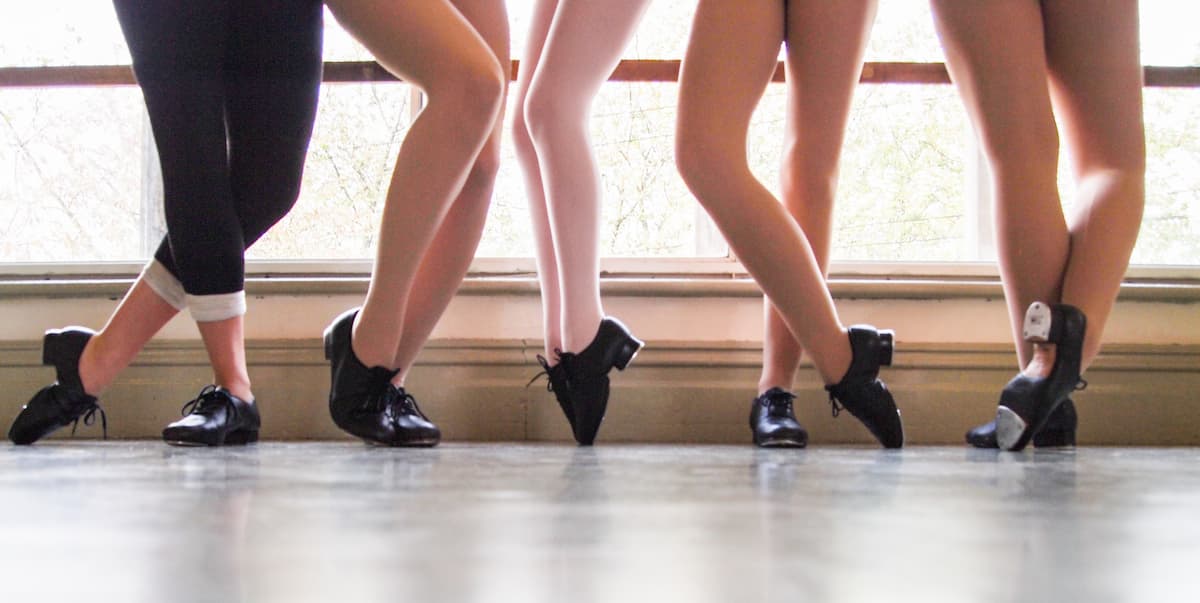
Tap dancing

Tap dancing

The Goldberg Variations have been called “sublime and compassionate, graceful, warm and relentlessly intricate.” There is nothing sleepy whatsoever in the Goldberg Variations when the hands of composer Conrad Tao and the feet of tap dance Caleb Teicher get involved. The supposedly calming music becomes a celebration of being awake. There is nothing but pure happiness in the aria followed by an explosion of rhythmic vitality in the variations. There is no doubt in my mind that this particular version would have greatly cheered up Count Kyerslinn.

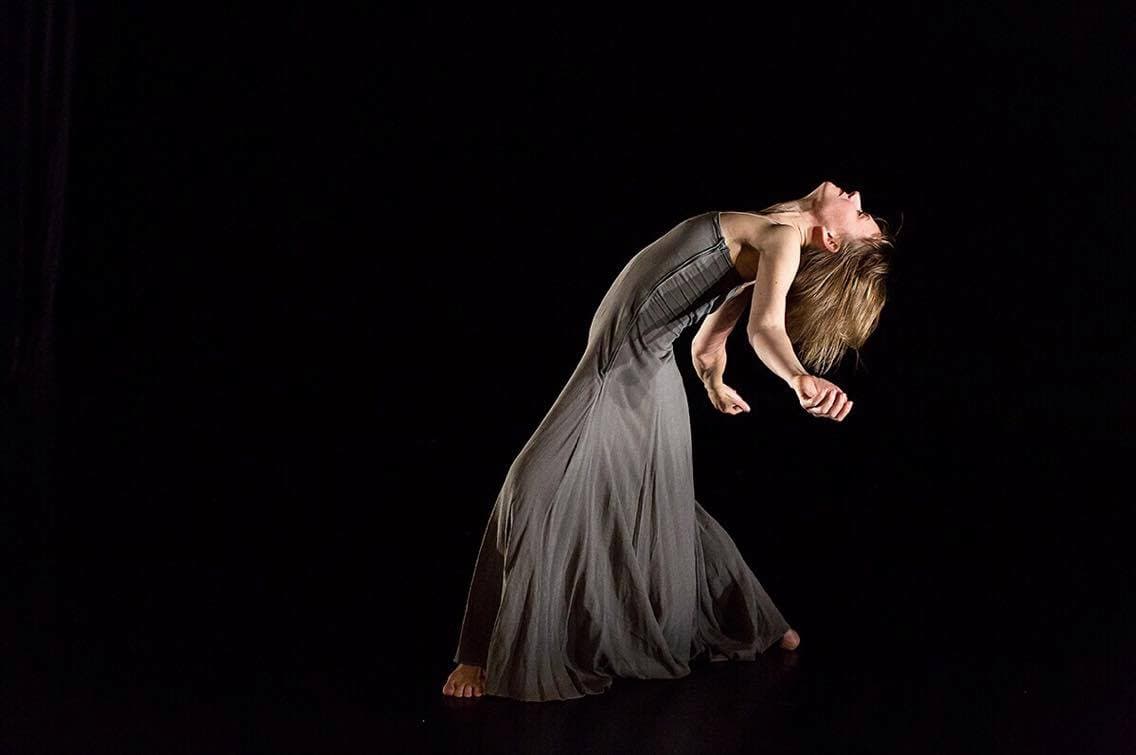
Franz Schubert based the concluding song of Winterreise on one of the most powerful poems by Wilhelm Müller. The “Hurdy-Gurdy player” presents a very disturbing picture of the alienation of humanity. As a barefoot man is standing on the ice, even music, “often considered a link with the divine, has become monotonous, automated and indifferent.” A contemporary critic wrote, “Schubert’s music is as naive as the poet’s expressions; the emotions contained in the poems are as deeply reflected in his own feelings, and these are so brought out in sound that no one can sing or hear them without being touched to the heart.”

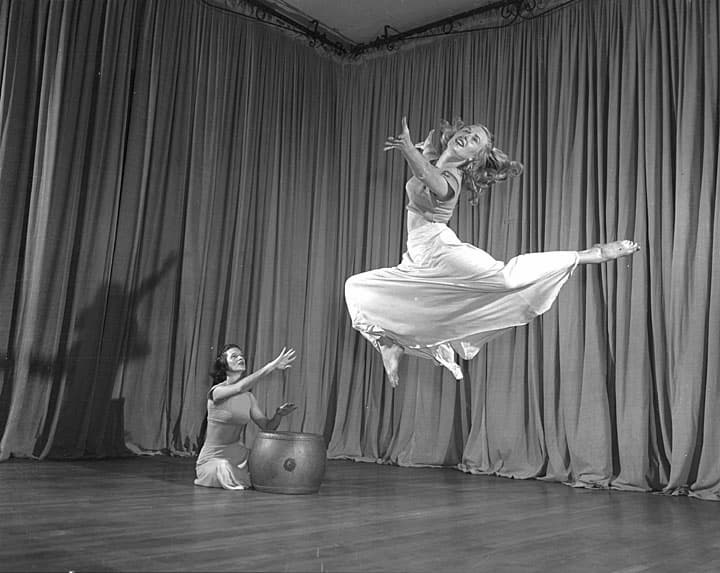
black and white photo of women's interpretive dance with instrumental accompaniment

To me, Schubert’s music presents a melancholic aura that creates a sense of ultimate desolation. This overbearing sense of anguish and despair becomes visible in the movements created by the featured Saarländisches Staatstheater Ballet production. There is a lot of focus on bare feet, and what a powerful and highly emotional way of expressing that the plate of the hurdy-gurdy player will remain empty forever. 

The French poet Paul Verlaine wrote his poem “Clair de lune” (Moonlight) in 1869. It is an ambiguous description of a moonlit masquerade ball, alternating moments of joy and sadness. The poet takes us on a journey of self-discovery as he gets in touch with his soul in hopes of finding himself. He is looking for all kinds of distractions to feed to his soul in the form of masks, singing, and dancing. The second stanza is devoted to ease his soul with the sound of melody, and in the concluding stanza the poet acknowledges the picturesque beauty of the moonlight. Claude Debussy composed two settings of “Clair de lune,” plus an instrumental version for his Suite bergamasque. Without doubt, it is the composer’s most famous piece for piano, and it further inspired the French dancer, choreographer, and artist Yoann Bourgeois. He has been called a “dramatist of physics,” and his gravity-defying performance transports us to a place and time “where time has no meaning.” Will he find what he is looking for? 

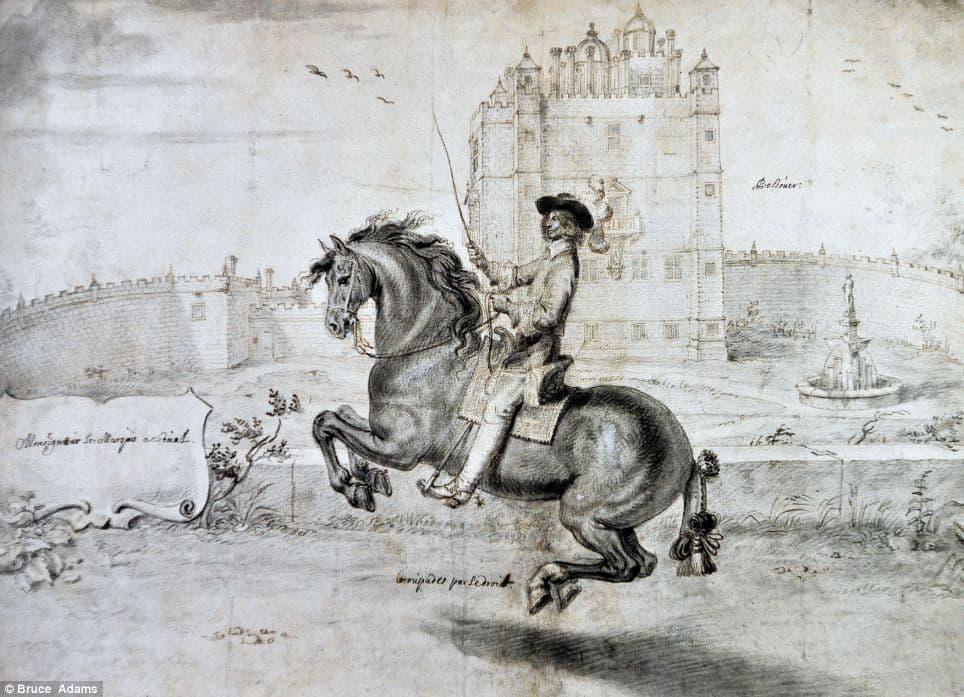
Wolfgang Amadeus Mozart composed his cantata Davide penitente on commission from the benevolent society for musicians. The text expresses repentance during Lenten season, and it supposedly helps to recognize our sinfulness, express our sorrow and ask for God’s forgiveness. In the mind of the French horse trainer and film producer Bartabas, born Clément Marty, Mozart’s cantata was the perfect match for an equine ballet; that’s right, a ballet performed by the horses and riders of the National Equestrian Academy of Versailles.

Drawing of Equestrian Ballet

Equestrian Ballet © Bruce Adams

He placed the performance into the “Felsenreitschule,” a 300- year old Salzburg venue that was originally built for equestrian performances. Once you place a period instrument ensemble and vocalists in the former audience arcade, you experience a “performance submerged in an atmospheric darkness, lending it something of the sacred.” It certainly is a fascinating interplay between horse and human, music and movement, and light and costumes. Personally, I love it!

Thursday, January 5, 2023

Just For You (Concerto) - Ernesto Cortazar - his music and his life


Ernesto Cortázar (May 2, 1940 – August 2, 2004) was a Mexican composer, arranger, and pianist, born in Mexico City and who died in Tampico, Tamaulipas. He was the son of composer, Ernesto Cortázar, founder and president of the Society of Authors and Composers of Mexico.

At the age of 13, Ernesto Cortázar lost his parents in a car accident. He finished his musical studies, and at age 17, began his work as a film musician. In 1958, he won the Best Background Music Award for a Latin American film at the International Festival of Cartagena (Colombia), with the melody Rio de Sueños.

He scored more than 500 films and managed to become the #1 artist of mp3.com during the years 1999 and 2001, achieving more than 14 million downloads at that time.

After living in Los Angeles, California for most of his adult life, he returned to Mexico, settling in Tampico, where he died, the victim of cancer in 2004.


New Year's Concert 2023 - Wiener Philharmoniker - Welser-Möst PART (1/5)

César Franck - his music and his life


César Franck was a composer, pianist, organist, and music teacher who worked in Paris during his adult life. In 1858 he became organist at Sainte-Clotilde, a position he retained for the rest of his life. He became professor at the Paris Conservatoire in 1872; he took French nationality, a requirement of the appointment. His pupils included Vincent d'Indy, Ernest Chausson, Louis Vierne, Charles Tournemire, Guillaume Lekeu and Henri Duparc. After acquiring the professorship Franck wrote several pieces that have entered the standard classical repertoire, including symphonic, chamber, and keyboard works.


Many of Franck's works employ "cyclic form", a method aspiring to achieve unity across multiple movements. This may be achieved by reminiscence, or recall, of an earlier thematic material into a later movement, or as in Franck's output where all of the principal themes of the work are generated from a germinal motif. The main melodic subjects, thus interrelated, are then recapitulated in the final movement. Franck's use of "cyclic form" is best illustrated by his Symphony in D minor (1888).


His music is often contrapuntally complex, using a harmonic language that is prototypically late Romantic, showing a great deal of influence from Franz Liszt and Richard Wagner. In his compositions, Franck showed a talent and a penchant for frequent, graceful modulations of key. Often these modulatory sequences, achieved through a pivot chord or through inflection of a melodic phrase, arrive at harmonically remote keys. Indeed, Franck's students report that his most frequent admonition was to always "modulate, modulate." Franck's modulatory style and his idiomatic method of inflecting melodic phrases are among his most recognizable traits.


Franck had huge hands, capable of spanning twelve white keys on the keyboard.[62] This allowed him unusual flexibility in voice-leading between internal parts in fugal composition, and in the size of the repeated chords which are a feature of much of his keyboard music. Of the Violin Sonata's writing it has been said: "Franck, blissfully apt to forget that not every musician's hands were as enormous as his own, littered the piano part (the last movement in particular) with major-tenth chords... most mere pianistic mortals ever since have been obligated to spread them in order to play them at all."


The key to his music may be found in his personality. His friends record that he was "a man of utmost humility, simplicity, reverence and industry." Louis Vierne, a pupil and later organist titulaire of Notre-Dame, wrote in his memoirs that Franck showed a "constant concern for the dignity of his art, for the nobility of his mission, and for the fervent sincerity of his sermon in sound... Joyous or melancholy, solemn or mystic, powerful or ethereal: Franck was all those at Sainte-Clotilde.

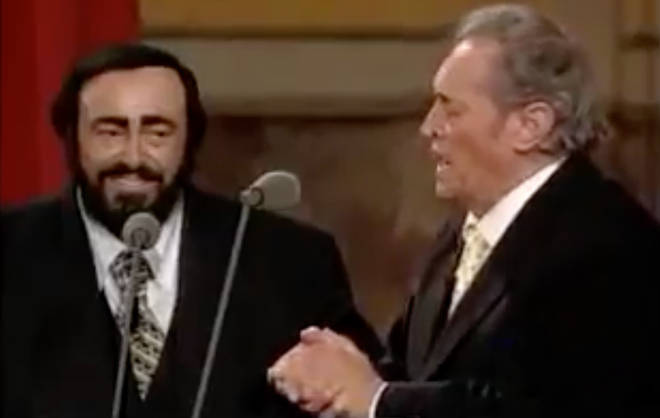
When Luciano Pavarotti sang with his 88-year-old father in an emotional duet

Updated: 3 January 2023, 19:55

Luciano and Fernando Pavarotti
Luciano and Fernando Pavarotti. Picture: Facebook / The Tenor / Rai Uno

By Kyle Macdonald, ClassicFM London

The touching moment when a father joined his son for a very special performance of a beloved sacred song. 

When a former baker took to the stage with opera’s biggest star, it was a story about music spanning the generations.

Legendary tenor Luciano Pavarotti was born in 1935 in Modena, Northern Italy. His father, Fernando Pavarotti, was a baker, and his mother, Adele Venturi, a cigar factory worker.

Fernando Pavarotti was an amateur singer with a fine tenor voice. Years later, his son said Fernando had turned down the possibility of a singing career because of stage fright and nerves.

The family was poor in those early days, but his father’s passion for music opened a new world for his son. Luciano’s first encounters with singing and opera came through both his singing and listening to his father’s collection of albums from the great tenors of the day.

Luciano Pavarotti went on to study singing and began singing opera roles in the 1960s. Legendary breakthroughs at the Royal Opera House in London’s Covent Garden and New York’s Metropolitan Opera made a huge star of the opera world.

A few years later, thanks to the 1990 Football World Cup in Italy, The Three Tenors, and his always-glistening high notes, he became a true household name.

But he never forgot where he came from, or his musical roots.

In 2001, 88-year-old amateur tenor Fernando joined his son for a duet. Together they sang César Franck’s ‘Panis Angelicus’.  

Nearing 90 years of age, Fernando’s best singing voice may well have been behind him. But it’s the looks of love and pride between the two of them that make this a very special moment of music.

They have duetted in previous years. Here’s another performance of the same sacred song, recorded in the cathedral of their home town in 1978 (watch below).

A baker who loved his music, and a tenor who changed the course of classical music. Two Pavarottis, bravo to you both.

Wednesday, January 4, 2023

Filipino American Symphony Orchestra - Star Spangled Banner (US) and Lupang Hinirang (Philippines)


111,531 views  Jul 3, 2020
Star Spangled Banner and Lupang Hinirang (Anthems of the United States and the Republic of the Philippines). FASO concert at the Walt Disney Concert Hall, Los Angeles, CA.