37,332 views Mar 27, 2018 Roger Williams' recording, "Somewhere in Time" is the mesmerizing music score of the 1980 film. This performance, in 2009 was 3 days after his 85th birthday, is Roger Williams' exquisite medley of "The Rose" and "Somewhere In Time," and the epitome of his artistry. Marc Riley conducted the Crystal Cathedral Orchestra. Website: https://rogerwilliamsmusic.com
Friday, August 19, 2022

Mozart Piano Concerto No 9 E flat major K 271 Jeunehomme Maria / his music and his life
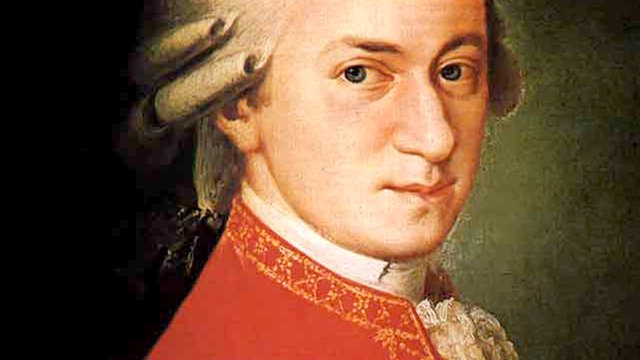
Wolfgang Amadeus Mozart (1756–1791)
Thursday, August 18, 2022
Dmitri Shostakovich - his music and his life
Dmitri Shostakovich (1906–1975) was a Russian composer and pianist and was one of the most celebrated composers of the 20th century.
Life and Music
Despite Shostakovich's exceptional talent, it was not until he was nine that he received his first formal piano lessons from his mother, a professional pianist.
In 1919, composer Alexander Glazunov considered the young Shostakovich ready to begin his studies at the Petrograd Conservatory, where he was director.
The 19-year-old Shostakovich produced a First Symphony that is an astonishing act of creative prodigy.
In 1936, Stalin attended a performance of Shostakovich's operatic grotesquerie, Lady Macbeth of the Mtensk District. Dismayed by its lack of positivist flag-saving, the state newspaper, Pravda, slated this "bedlam of noise".
With the gun of the Soviet regime pointed at his head - and Stalin's finger effectively on the trigger - Shostakovich knew he had to produce a surefire winner.
The Fifth Symphony, with its universal message of triumph achieved out of adversity, was exactly what the State wanted, and it made him a public hero.
In 1948, several composers, including Shostakovich and Prokofiev, were hauled over the coals by Pravda for "decadent formalism".
In 1953 Shostakovich also composed his masterly Tenth Symphony, written - although no one was aware of it at the time - as a reaction against the Stalinist regime, and in the case of the vitriolic Scherzo, a sardonic portrait of Stalin.
The constant psychological torture had taken its toll, and it seems that in 1960, following the completion of his Eighth String Quartet, Shostakovich contemplated suicide. In 1966 he suffered a heart attack from which he never fully recovered, and which hastened a preoccupation with death which is tangibly realised in his angst-ridden Fourteenth Symphony.
Shostakovich died a broken man.
Did you know?
One of Shostakovich's songs was sung by the cosmonaut Yuri Gagarin over the radio from his spacecraft to Mission Control down on earth.
(C) ClassicFM London
Wednesday, August 17, 2022
Davao City composer explains what is popular Kadayawan song ‘Bahaghari Tayo’ all about

LANDERO (Keith Bacongco)
by Keith Bacongco, Manila Bulletin
DAVAO CITY – For almost 20 years, the iconic song “Bahaghari Tayo” composed by local music legend Popong Landero is always associated with the annual Kadayawan Festival every August.
Aside from Davaoeños, this festive song is also familiar among those who are frequent visitors of this city not just during the Kadayawan Festival but also the Araw ng Davao celebration.
The song is usually played in public places during festivities.
But what is really the inspiration behind the making of this festive song?
Unknown to many, Bahaghari Tayo does not simply depict festivity but it is more about the recovery from fear, pain, and suffering from terrorist attacks in this city, Landero admitted to the Manila Bulletin.
“When I heard that a bomb exploded at the airport, I was very worried because my wife was working there. Although she was safe because they were inside,” he recalled, referring to the bomb attack on March 4, 2003 that killed 21 people and injured hundreds here.
The incident, the musician added, reminded him of a grenade blast during college days at the University of Mindanao in the 1980s that injured several people. “The explosion was quite close to the spot where we were playing guitar. We saw some people injured and the debris even hit our heads. We were shocked and a lot of people panicked.”
Based on this experience, Landero added, he tried making a song but it never materialized. “So I just tried to forget that experience.”
And the 2003 twin bombings happened.
Aside from the airport bombing, another bomb went off ear the gate of the Sasa International Seaport on April 2 that killed 16 persons and injured 45 others.
These incidents fueled him once again to write the song, Landero recalled. But he also wanted to the song to be his entry to the Huni sa Dabaw, a songwriting contest, which was a part of the Araw ng Dabaw celebrations in 2004.
Released in 2004, the song is part of a locally-produced album with the same title that contains nine other tracks that talk about love, abundance in harvest, peace, and harmony.
While the song is based on the pain and suffering, Landero further disclosed that he wanted to write the song the opposite way.
“I thought of writing the song that would not touch on fear and loneliness. So that explains the lyrics that talks about recovery from sufferings, sustained development amid the adversities, as well as to urge the Davaoeños tounite for peace,” the seasoned musician explained.
In 2008, Landero added, the city council adopted the song as the official theme song of the Araw ng Dabaw celebrations.
The song’s festive melody has inspired various local artists and school-based drum and bugle corps to play it with their own renditions during their performances in different events.
The entire album is now available on Spotify.
Subscribe to:
Posts (Atom)
-
The BoholTimes MUSIC can raise someone’s mood, get them excited, or make them calm and relaxed. Music also – and this is important – allow...
-
2,261,443 views May 15, 2019 SUNTORY HALL Munich Philharmonic conducted by Valery Gergiev, Tokyo Suntory Hall Dec 1, 2018 00:05 - 15:5...
-
Yes, this first piano concerto by Tschaikowsky still brings tears into my eyes. Tchaikovsky (or Tschaikowsky) was the second of six survi...


