Thursday, September 30, 2021

Beethoven’s unfinished Tenth Symphony completed by artificial intelligence


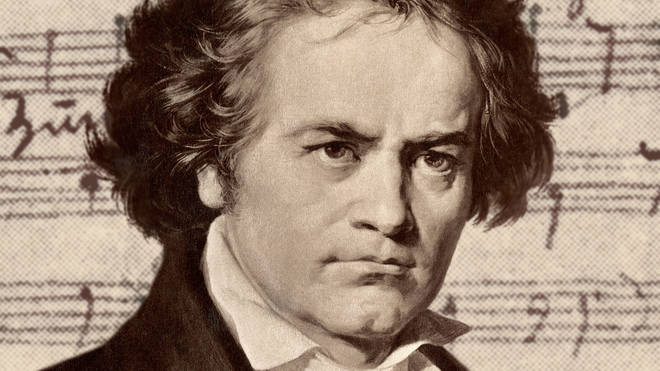
Beethoven’s Tenth Symphony completed by AI
Beethoven’s Tenth Symphony completed by AI. Picture: Alamy

By Sophia Alexandra Hall, ClassicFM London

Beethoven’s previously unfinished Tenth Symphony has been completed by artificial intelligence technology. The work will have its world premiere in Germany next month, 194 years after the composer’s death.

In 1824 Beethoven premiered his final orchestral work, Symphony No. 9 in D minor.

However, before his death three years later in 1827, he had begun work on a tenth symphony.

All that remains of Beethoven’s Tenth Symphony is fragmentary sketches of the first movement which he started before his death in 1827 (read more about the curse of the ninth symphony here). However, these fragments have now been turned into a complete piece of music using artificial intelligence technology.

The project was started in 2019 by a group made up of music historians, musicologists, composers and computer scientists. Using artificial intelligence meant they were faced with the challenge of ensuring the work remained faithful to Beethoven’s process and vision.

Previous uses of AI in compositional processes include Schubert’s final symphony being completed by the AI from the Huawei Mate 20 Pro smartphone, and an artificial intelligence harmoniser which harmonises any melody of your choice in the style of Bach.

There have also been previous attempts to complete Beethoven's unfinished symphony. In 1988 Barry Cooper pieced together Beethoven’s fragmentary sketches into a first movement, but was unable to go further than this section due to the limited material available.

Dr Ahmed Elgammal is a professor at the Department of Computer Science, Rutgers University, and lead computer scientist on the artificial intelligence project. He explained in The Conversation that in order for their project to go further, the team “had to use notes and completed compositions from Beethoven’s entire body of work – along with the available sketches from the Tenth Symphony – to create something that Beethoven himself might have written”.

He explained: “This was a tremendous challenge. We had to teach the machine how to take a short phrase, or even just a motif, and use it to develop a longer, more complicated musical structure, just as Beethoven would have done.”The first test was to see if an audience of experts could determine where Beethoven’s phrases ended and where the AI extrapolation began. When they couldn’t, the team knew they were on the right track.

Over the next 18 months the artificial intelligence constructed and orchestrated two entire movements, each over 20 minutes.

The entire piece will premiere on 9 October 2021 at the Telekom Forum in Beethoven's birthplace of Bonn, Germany, with a recording being released on the same day.

While the highly anticipated event is sold out, Dr Elgammal says he does expect some pushback.

“There are those who will say that the arts should be off-limits from AI, and that AI has no business trying to replicate the human creative process,” he says in The Conversation, “yet when it comes to the arts, I see AI not as a replacement, but as a tool – one that opens doors for artists to express themselves in new ways.”

Tuesday, September 28, 2021

Bringing out the National Song: Liszt’s Hungarian Rhapsodies

by Maureen Buja , Interlude

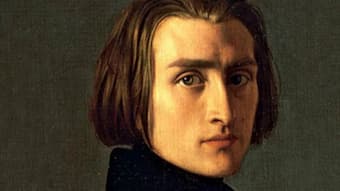
Franz Liszt

Franz Liszt

In 1839, Franz Liszt (1811-1886) returned to Hungary, which he had left in 1822 at age 11. In the new nationalism that was sweeping Europe, he was hailed as a true Hungarian champion. As part of his musical explorations of his home country, he was fascinated by gypsy music and started to transcribe it for inspiration. Later researchers, such as Bartók and Kodály, found that Liszt’s gypsy music was regular art music played in a gypsy style, rather than their original music, but no matter, it served as an inspiration for Liszt.

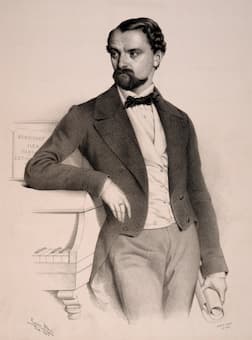
Auguste Alexis Canzi: Franz Doppler (1853)

Auguste Alexis Canzi: Franz Doppler (1853)

Liszt wrote a series of piano works between 1839 and 1847 and published them under the title Magyar dallok / Ungarische National-melodien (Hungarian Songs / Hungarian National Melodies). These included 15 Hungarian Rhapsodies; 4 more were written later. Six of the Hungarian Rhapsodies were orchestrated by Franz Doppler. Flautist, conductor and composer Doppler had met Liszt in Weimar in 1854 where Doppler and his brother had been performing. Later, Doppler was in Pest, Hungary, as principal flautist at the German Theatre and then, from 1841-58, as flautist and ballet conductor at the Hungarian National Theatre. Doppler’s role as orchestrator is unknown, but in Liszt’s will of 1860, he insisted that the orchestration for the Hungarian Rhapsodies had to be credited as ‘orchestrated by F. Doppler and revised by F. Liszt.’

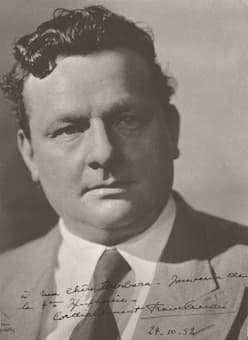
Franz André

Franz André

The Hungarian Rhapsody No. 3 in D major is an orchestration of the piano Hungarian Rhapsody No. 6 in D flat major. It was dedicated to Count Antal Apponyi. It is made up of 4 popular Hungarian songs, It opens with a march-like theme before moving to a quicker Presto. Next follows a Lassu, which originally had a text of surprising sadness: My father is dead, my mother is dead, and I have no brothers and sisters, and all the money that I have left will just buy a rope to hang myself with.’ This traditional text of despair is followed by a lively Friss to change the mood.

Saturday, September 25, 2021

The Piano: "A History in 100 Pieces" by Susan Tomes

By: Frances Wilson, Interlude

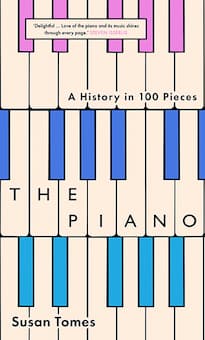
The Piano: A History in 100 Pieces by Susan Tomes

The Piano: A History in 100 Pieces by Susan Tomes

It was perhaps inevitable that pianist and writer Susan Tomes would turn her attention eventually to the extraordinarily broad repertoire of the piano – her instrument, and mine, and that of countless others, both professional and amateur players. While her previous books have been concerned with the myriad aspects of being a pianist – from performing, recording and teaching, concert preparation, etiquette and attire, and audiences to the daily exigencies of practising and rehearsing – her latest volume, The Piano: A History in 100 Pieces is concerned with repertoire and how the piano’s development and capabilities have influenced how composers write for it.

This comprehensive book uses specific pieces from the repertoire – some very well known, others less so – to illustrate the piano’s history and illuminate its development, from the moment in the early 18th century when it began to supplant the harpsichord as the keyboard instrument du jour to the modern piano as we know it today.

From the outset, the piano offered composers a greater varieties of colours, effects and timbres, and so their music reflected the piano’s capabilities and range, its potential for songful lyricism or an orchestral richness of sound, amply demonstrated in the piano sonatas of Haydn, Mozart and Beethoven, for example, the song accompaniments of Schubert, or Chopin‘s Nocturnes with their bel canto melodies.

The book begins in “pre-history”, with music written for the harpsichord, the most famous of which is Bach’s Goldberg Variations, a pinnacle of the repertoire and a work which continues to fascinate performers, audiences and commentators alike. Bach’s Italian Concerto also features in this section, together with works by Domenico Scarlatti and C.P.E. Bach – all works which can be played and enjoyed equally on harpsichord or piano.

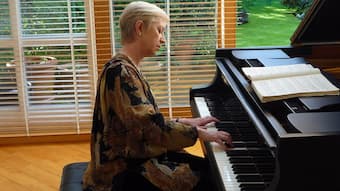
Susan Tomes

Susan Tomes

We then move from the harpsichord to the fortepiano and thence to the piano itself, in its earliest iteration, a much smaller instrument physically, but already one with far greater range and tonal projection than the harpsichord or fortepiano, as is clear from the music of Haydn and Mozart. One of the pieces explored in this chapter is Haydn’s Variations in f minor, Un piccolo divertimento, Hob. XVII: 6, a work of profound expression, which foreshadows Schubert, and pianistic breadth. Unsurprisingly, Haydn’s great E-flat major Sonata, Hob. XVI:52 is also covered in detail in this chapter, a work which utilises the capabilities of the piano to their fullest extent in a work of great character, texture and variety.

But as these early chapters reveal, this book is not simply a chronology of the piano, not by any means; but rather a detailed exploration of some of the greatest music composed for the instrument as well as lesser-known gems, written from the authoritative standpoint of someone who knows both instrument and repertoire intimately. And it comes right up to date with a chapter focusing on music by living composer Arvo Pärt, Philip Glass, Judith Weir and Thomas Adès.

Susan Tomes writes with a lucid eloquence founded on knowledge, experience and, above all, affection for the piano, which shines through every paragraph. She not only offers the reader important analysis, contextual details and performance notes for each work, but also demonstrates a deep understanding of what it feels like to actually play this music, the sensation of the notes “under the hands”, how it sparks the imagination and provokes emotions, and the experience of learning and shaping it to bring it to life in concert – fascinating insights which take the reader “beyond the notes”, as it were. Thus, the book acts as both a historical survey and a primer for those seeking more detailed information about specific works, with guidance on performance practice and interpretation, drawn from Tomes’ own experience as a soloist, chamber musician and teacher.

The range of pieces explored in the book reflects the vast breadth of the piano’s repertoire, and Tomes is the perfect guide through this almost overwhelming embarrassment of musical riches.

Nor does she confine herself only to the solo repertoire. Concerti and chamber music also feature heavily, from, for example, Schubert’s much-loved ‘Trout’ Quintet to Rachmaninoff‘s Piano Concerto No. 3, to demonstrate the piano’s importance in these genres and how it interacts with and complements other instruments. Jazz is also covered, while the final chapter explores where the piano and its repertoire might be heading, and how we as listeners, and players, might open our ears and minds to a different range of music, presented in less traditional performance settings.

Robert Schumann: Piano Concerto in A Minor, Op. 54 – I. Allegro affettuoso (Florian Uhlig, piano; German Radio Saarbrücken-Kaiserslautern Philharmonic Orchestra; Christoph Poppen, cond.)

This comprehensive, informative and highly readable celebration of the piano and its literature is a must-read for pianophiles and music lovers. With its wealth of analysis and contextual information it is also a significant resource for those who teach and play the piano, a book to keep close by the instrument to refer to, dip into, and cherish.

The Piano: A History in 100 Pieces is published by Yale University Press

Friday, September 24, 2021

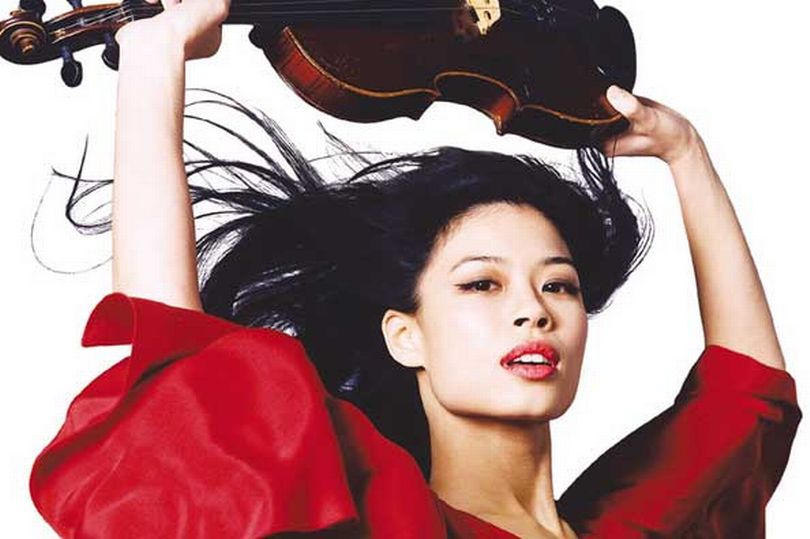
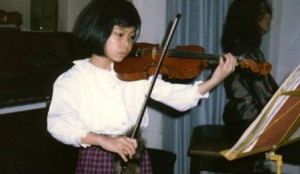
The Dangers of being a Musical Prodigy Vanessa Mae: Slapped around by Tiger Mum

by: Georg Predota, Interlude

Vanessa Mae

Vanessa Mae

The “Tiger mom phenomenon,” a term coined by Yale law professor Amy Chua in 2011, describes an age-old system of strict authoritarian motherly control that is supposed to propel children towards excellence. Advocates suggest that it produces an exceptionally high proportion of top performers in a variety of academic and musical areas. Skeptics blame the system for inflicting a host of chronic mental health and psychiatric problems, including a high suicide rate amongst Asian children aged 5 to 12! As you might well imagine, the musical universe is full of ambitious parents who will do whatever it takes to see their sons or daughters succeed. But you don’t have to take my word, just ask Singaporean-born British violinist and alpine skier Vanessa-Mae, who openly confessed that her mother Pamela Tan-Nicholson frequently used serious physical violence and humiliation to improve her violin playing. “She regularly hits me violently across the face and body for less than perfect performances. Everything was geared towards focusing me on my violin career,” Mae has said. “If I didn’t play a piece perfectly, my mother–and often my music teacher also—would resort to slapping me.

Vanessa-Mae-Cover-1

Vanessa also revealed that she was tightly controlled, and not permitted to leave her house unchaperoned until the age of 20. “I had faced thousands of people on stage and millions on TV, but I didn’t know how to cross the road,” said Vanessa. Physical force was looked upon as a reflection of parental devotion, and little Vanessa spent a good amount of time kneeling on the floor and asking for forgiveness, while her mom kept pulling her ears. Unashamedly, one could say almost proudly, Pamela Tan-Nicholson told a newspaper reporter, “I hit her often to instill discipline and restricted her life outside of music. Maybe some would say she would have done better with an even stricter mum who didn’t give her so much freedom. Perhaps others would consider Mae lucky she had a Tiger Mum, everything is relative.” Vanessa does credit her strict upbringing with her ability to freely speak her mind. However, mother and daughter have not spoken in person since Vanessa sacked her as her manager, a day before her 21st birthday, in 1999!

Moved to Tears


by Frances Wilson , Interlude

Music has the power to tug at the heartstrings, and evoking emotion is the main purpose of music – whether it’s joy or sadness, excitement or meditation. A certain melody or line of a song, a falling phrase, the delayed gratification of a resolved harmony – all these factors make music interesting, exciting, calming, pleasurable and moving.

Tears and chills – or “tingles” – on hearing music are a physiological response which activates the parasympathetic nervous system, as well as the reward-related brain regions of the brain. Studies have shown that around 25% of the population experience this reaction to music. But it’s much more than a pure physiological response. Classical music in particular steers a mysterious path through our senses, triggering unexpected and powerful emotional responses, which sometimes result in tears – and not just tears of sadness.

Tears flow spontaneously in response to a release of tension, perhaps at the end of a particularly engrossing performance. Certain pieces of music can remind us of past events, experiences and people, triggering memories and associated emotions. At other times, we may feel tearfully awestruck in the face of the greatness or sheer beauty of the music.

This last response has a name – Stendhal Syndrome – and while the syndrome is more commonly associated with art, it can be applied equally to the powerful emotional reaction which music provokes.

A psychosomatic disorder, Stendhal Syndrome, or hyperkulturemia, causes rapid heartbeat, dizziness, sweating, disorientation, fainting, tears and confusion when someone is looking at artwork (or hearing a piece of music) with which he or she connects emotionally on a profound level. The phenomenon, also called ‘Florence Syndrome’, is named after the French author Marie-Henri Beyle , who wrote under the pen-name of ‘Stendhal’. While visiting the Basilica of Santa Croce in Florence, he became overcome with emotion and noted his reactions:

“I was in a sort of ecstasy, from the idea of being in Florence, close to the great men whose tombs I had seen. Absorbed in the contemplation of sublime beauty … I reached the point where one encounters celestial sensations … Everything spoke so vividly to my soul.”

While there is some debate as to whether the syndrome actually exists, there is no doubt that music (and art and literature) can have a very profound effect on our emotional responses.

Thursday, September 23, 2021

Rossini and His Overtures

 by Georg Predota, Interlude


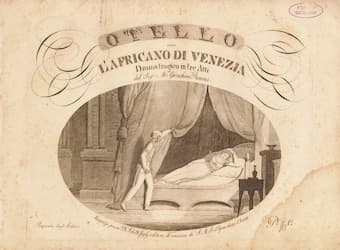
Rossini's Otello

Rossini’s Otello

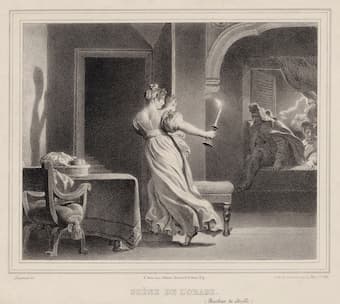
We celebrate Gioachino Rossini (1792-1868) as one of the most successful and popular operatic composers of his time. And although you might never have actually seen or heard a complete Rossini opera, I am sure you know a good many of his overtures. In fact, the overtures have long been staples of the orchestral repertory and much more frequently performed than the operas to which they belong. It is a curious situation in that the reputation of his dramas has never equaled the sweetness “of their melodies, the richness of their harmonies, the brilliance of their orchestration, and the power of their rhythms.” We do know that almost all of his overtures make use of musical elements and melodies that appear somewhere in the opera, which begs the question if Rossini composed the overture before or after he had completed the opera? According to legend, that’s exactly the question a young composer asked Rossini, who described six different ways of composing overtures. Rossini apparently said, “I composed the overture to Otello in a little room in which that most ferocious of all managers, Barbaja, shut me up with a dish of macaroni and told me that he would let me out only after the last note of the overture had been written.” As a point of reference, Otello was first performed in Naples at the Teatro del Fondo in 1816, and the notorious Barbaja was indeed involved. As far as the overture goes, this one was clearly written after the opera had been completed.


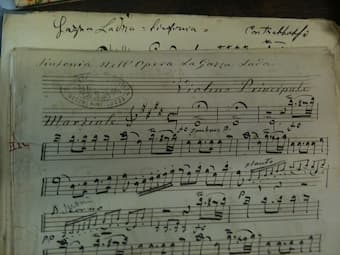
Rossini's La Gazza Ladra

Rossini’s La Gazza Ladra

The same process was apparently at work with the overture to La Gazza Ladra (The Thieving Magpie). Rossini reports that he “wrote the overture to Gazza Ladra, on the very day of the first performance of the opera in the wings of the Scala Theatre in Milan. The manager had put me under the guard of four stagehands who were ordered to throw down the music pages, sheet by sheet, to copyist seated below. As the manuscript was copied, it was sent page by page to the conductor who then rehearsed the music. If I had failed to keep the production going fast, my guards were instructed to throw me in person down to the copyists.” Fortunately, Rossini was able to keep up, and therefore managed to witness the huge success of the opera. Rossini himself was thrilled by his opera and a few days after the première wrote in an excited letter to his mother “that it was so full of music that one could make three or four operas from it,” and that it was “the most beautiful music I have written so far.”


Rossini's The Barber of Seville

Rossini’s The Barber of Seville

Rossini’s opera buffa The Barber of Seville is primarily known today for its rousing overture. However, the premiere on 20 February 1816 at the Teatro Argentina in Rome was a disaster! The next day Rossini wrote to his mother, “Last night my opera was staged and it was solemnly booed, what mad, what extraordinary things are to be seen in this country. I will tell you that in the midst of it all the music is very fine and already people are talking about its second evening when the music will be heard, something that did not happen last night, from the beginning to the end without the constant noise accompanying the whole performance.” Rossini was entirely correct about the second performance, as it was an unqualified triumph. But how did Rossini compose the famous overture? He writes, “I made my task easier in the case of the overture to the Barber of Seville, which I left unwritten; instead I made use of the overture to my opera Elisabetta, which is a very serious opera, whereas the Barber of Seville is a comic opera.” In fact, the overture is actually twice re-cycled as he had originally written it for the opera Aureliano in Palmira of 1813.


Rossini's Le Comte Ory

Rossini’s Le Comte Ory

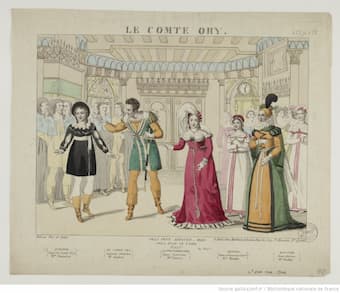
Rossini’s fourth opera for Paris, Le Comte Ory, was first staged at the Paris Opéra in August 1828. Set in thirteenth-century France, the opera deals with the attempts of Count Ory to woo the Countess Adèle, whose husband is away on a crusade. There is much disguising—including hermits and nuns—and everybody manages to run away just before the husband of the Countess returns. The “Introduction” is well matched to the plot, its outer sections suggesting the Count’s cunning exploits, with a martial passage at its heart, the returning opening section ending in the plucked notes of the strings.” How did Rossini go about composing the “Introduction?” According to the composer, “I composed the overture to the Comte Orly while fishing in the company of a Spanish musician who the whole time talked incessantly about the Spanish political situation.” Really doesn’t tell us much about the creative process, but it’s a nice anecdote nevertheless.


Rossini's William Tell

Rossini’s William Tell

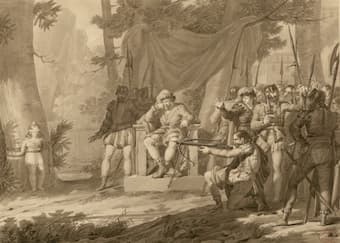
When we talk about instrumental favorites in contemporary concert halls, we invariably stumble across the overture to William Tell. While the opera itself has been largely forgotten, the overture owns much of its popularity to varied incorporations within expressions of popular culture. Let’s not be deceived, however, because the popular appeal of Rossini’s William Tell Overture was instantaneous. It was immediately published independently from the opera, and Franz Liszt promptly fashioned his famous piano transcription. Rossini tells us that he “composed the overture to William Tell in the lodgings on the Boulevard Montmartre filled night and day with a crowd of people smoking, drinking, talking, singing, and bellowing in my ears while I was laboring on the music.”

Rossini's Mosè in Egitto

Rossini’s Mosè in Egitto

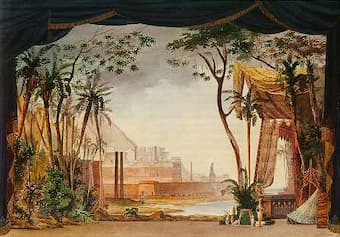
If that little anecdote is true, Rossini must not have been easily distracted, except possibly by food. But his answer also indicates that composing was not always easy. Rossini confirms that notion by stating, “I never composed any overture to my opera Moses, which is the easiest way of all.”

101-year-old man with Alzheimer’s shows us all the eternal power of music


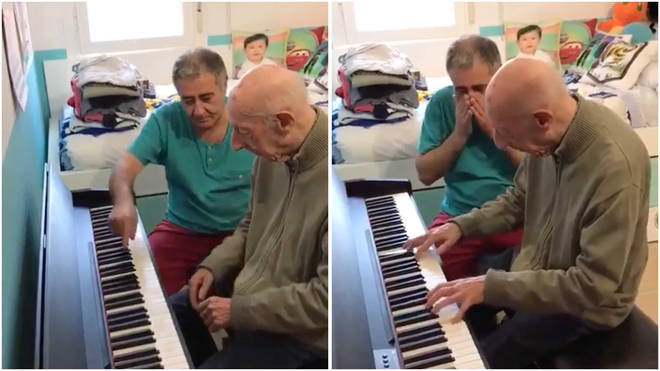
Antonio Cadenas plays piano
Antonio Cadenas plays piano. Picture: Facebook / Antonio Cadenas

By Kyle Macdonald, ClassicFM London

Today, on World Alzheimer’s Day, here’s a beautiful moment to remind us how deeply music runs – in our mind, body and spirit.

Spanish musician Antonio Cadenas celebrated his 101st birthday in May. He’s a man with a remarkable story and talent, which speaks to the profound power of music-making.

Cadenas has Alzheimer’s Disease, a syndrome that results in a decline of brain functioning and impacts on thinking skills and other mental abilities. Today, 21 September, is World Alzheimer’s Day, an international campaign to raise awareness surrounding the issues faced by people with dementia.

Remarkably, it is possible for musical memories to be stored in different areas of the brain that have been unaffected by the decline.

And incredibly, Antonio can still remember the music and his piano technique. He plays Lagrimas y sonrisas, by Juan D’Arienzo. You can see the music flow through the fingers of the centenarian. It’s powerful and inspiring.

Read more: How playing an instrument benefits your brain

Antonio Cadenas was born in Terque, Spain on May 10, 1919. As a child, his first music lessons came from his mother and priests at a local cathedral.

He served in the military from 1942 to 1946, before continuing music and working as a teacher up until his retirement in the 1980s. He now lives with his son and his family.

Thank you for sharing your music and talent, Antonio.

Featured Post

Yuja Wang wore a heart rate monitor in Rachmaninov marathon, with astonishing results

4 April 2024, 17:03 | Updated: 5 April 2024, 15:58 Yuja Wang’s heart rate results revealed, after marathon Rachmaninov performance.  Picture...