Sunday, September 12, 2021

Khatia Buniatishvili: “Beyond the Eccentricity of Planet Pogorelich”

 By: Georg Predota

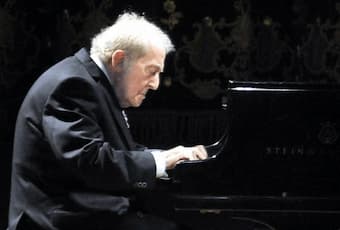
Khatia Buniatishvili

Khatia Buniatishvili

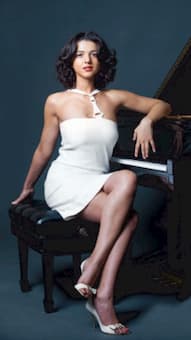
One of the most visually glittering pianists today, Khatia Buniatishvili steadily appears on television sets, front covers of glossy magazines and every imaginable social media outlet. She certainly attracts attention; on the cover of a recent Schubert release, Khatia takes on the physical persona of the famous corpse Ophelia, prompting a critic to sheepishly ask, “artistic or airheaded?” Unquestionably, she is one of the most highly sought after pianists, and readily appears in the world’s most prestigious concert halls. And it is her appearance in outfits with often plunging necklines that have earned her various nicknames, including the “Betty Boop” of the piano, and “the pop star of the classical music world.” For some, Khatia is a phenomenon “titillating the classical public… shaking and disrupting this fragile world.” To others, she is a “Lady Gaga or Beyoncé craving attention, with fashion as the best kind of projection.” To me, this simply begs the question of what makes Khatia Buniatishvili tickhatia Buniatishvili was born in the town of Batoumi near the Black Sea on 21 June 1987. At that time, Georgia was still under Soviet authority, and life was anything but placid. When Georgia declared independence in 1991, every day became a struggle for survival and for keeping poverty at bay. “Early on, I got a taste of what real discipline is,” she explains, “and of how a human being can develop their imaginary world amidst a schedule that’s busy and difficult both mentally and physically.” Khatia was introduced to music by her mother, who apparently also instilled her with a sense of fashion by “sewing together magnificent dresses for her two daughters from bits of cloth she had managed to scavenge.” Khatia had discovered the piano at the age of three, and her mother would leave a new musical score on the piano each day. By age 6, Khatia first appeared publically with the Tbilisi Chamber Orchestra in the Concerto Op. 44 by Isaac Berkovich, a composer closely associated with the Soviet regime. That highly successful debut resulted in the invitation to tour internationally with the orchestra.
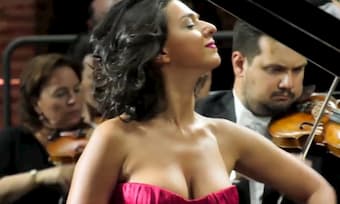
Khatia Buniatishvili in BerlinIn Tbilisi, Khatia took lessons with the renowned Georgian Chopin interpreter Tengiz Amirejibi, and it was during a local piano competition that she met Oleg Maisenberg. He convinced her to come to Vienna and study with him. She arrived in Vienna full of enthusiasm, and became an eager student. “I wanted to absorb everything I could, and the University had virtually unlimited knowledge on offer.” She still has only praise for Oleg Maisenberg, whom she describes as a magnificent musician of unlimited imagination and depth. “Every lesson was a work of art and remains deeply engraved in my memory.” Khatia’s rise to fame began in earnest in 2008, when she was awarded the 3rd prize and the Public prize by the prestigious Arthur Rubinstein International Piano Master competition in Tel-Aviv. In the same year she was invited to perform at Carnegie Hall, and she issued her first album in 2011 with works by Franz Liszt. Concurrently with her rapid rise to fame, Khatia is determined to follow her own path. And once she sits down at the piano, everything goes, including attitude, emotion, and outfit.
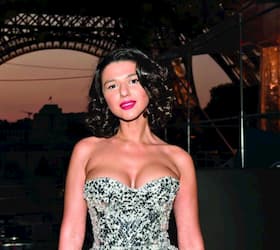
Khatia BuniatishviliKhatia Buniatishvili is adamant about the freedom of her performances, and she defends her right to “re-appropriate each work and to perform them without necessarily respecting the tradition or model imposed by her predecessors.” The human being stands squarely in the center of her art, as “we can subtly reveal our emotions all the while staying perfectly intimate with our instrument.” Emotion is her guiding and motivating force, and she is in love with complexity and paradoxes, not complications and oppositions. Her music is fundamentally bound to political activism, as she is involved in numerous social rights project, including among others the DLDwomen13 Conference in Munich, or the United Nation’s 70th Anniversary Humanitarian Concert benefiting Syrian refuges. Khatia Buniatishvili refuses all invitations to perform in Russia as long as president Putin is in power. As to Khatia’s musical performances, they have either been called “hauntingly original” or “beyond the eccentricity of Planet Pogorelich.” This fundamental disagreement depends on how commentators interpret the communicative aspects of music, and that surely includes attire and all other performative aspects. 


Friday, September 10, 2021

Forgotten Pianists: Aldo Ciccolini

By: Anson Yeung 

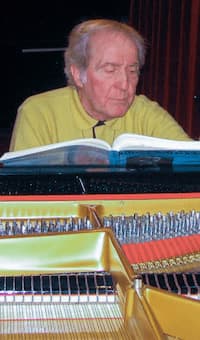
Aldo Ciccolini

Aldo Ciccolini © WRTI

A celebrated interpreter of Erik Satie’s music, Aldo Ciccolini (1925 – 2015) was born and raised in Naples, Italy. Enrolled at the Naples Conservatory at the age of 9 as an exceptional case, he studied with Paolo Denza, a pupil of Ferruccio Busoni, and became the youngest professor at the Conservatory at 22. Despite his aristocratic roots, he had to support his family by performing in bars after World War II.

His victory in Marguerite Long-Jacques Thibaud Competition in 1949 (first prize shared with the Bulgarian pianist Ventsislav Yankov) opened the international performing stage to him. Subsequently settled in Paris, Ciccolini studied with masters of the French school (if such generalisation is allowed), including Marguerite Long, Alfred Cortot and Yves Nat. He also proved himself to be an outstanding pedagogue, having taught students like Jean-Yves Thibaudet, Antonio Pompa-Baldi, Akiko Ebi and Fabio Luisi at the Conservatoire de Paris.

Aldo Ciccolini

© Wikipedia

Although he spent the earlier part of his life in Italy, he considered himself to possess a “French soul”. This could also be seen through his fondness for French music amongst his vast repertoire, including Satie, Debussy, Saint-Saëns and the lesser-known composers Déodat de Séverac and Alexis de Castillon.

His choice of repertoire, together with his understated style (a combination of non-flashy demeanour and emotional restraint), probably explained why he didn’t receive the acclaim of some of his peers. That said, he was of course capable of handling the “warhorse” repertoire, including piano concerti by Tchaikovsky, Prokofiev and Rachmaninoff and complete Beethoven piano sonatas. Always noble and lyrical, his playing possessed a rare quality that countless pianists aspire to achieve – that is, to deceive listeners into perceiving piano not as a percussive instrument but instead a human voice with nuances and intonations.

He continued to actively concertise until the very end of his life, with no discernible decline in technical command and perhaps even greater authority. In this extravagant Tarantella, he revealed his virtuosic temperament with his electrifying reading. It’s hard to imagine how an 85-year-old could pull off such an unfailingly impressive performance. It had everything – exuberance, brilliance and elegance. The underlying pulse was steady with spontaneous rubato, while passagework was tackled with clarity and filigree.

Erik Satie: 3 Gnossiennes (Aldo Ciccolini, piano)

Abstract music like this requires a kind of musical instinct to make sense of it. Ciccolini, having championed Satie’s works like no other pianist, certainly had that. It can easily sound bland and uninspired in the wrong hands, but he brought out the nonchalance characteristic of Satie’s music so finely without over-interpretation.

This article wouldn’t be complete without visiting this timeless rendition of Elgar’s Salut d’Amour.

This is not youthful love, but an aged man reminiscing about the bittersweet memories – full of affectation, remembrance and yearning. The first few seconds could give goosebumps and reduce one to tears with its purity and serenity. It’s unbelievable how Ciccolini gently stroke the keys and conjured up not only a plethora of colours but also memories and emotions from the bottom of our hearts. It’s so simple yet at the same time so sophisticated – in its richness of tonal colours, suppleness of phrasing and wealth of emotions – distilling the complex facets of love into this ethereal performance, from which his artistry truly emanated.

Aldo Ciccolini, what a legendary pianist!

Privacy Policy

Thursday, September 2, 2021

Best pieces of minimalist classical music for ultimate relaxation


10 best pieces of minimalist classical music for ultimate relaxation
10 best pieces of minimalist classical music for ultimate relaxation. Picture: Getty

By Rosie Pentreath, ClassicFM London

From Michael Nyman to Meredith Monk, we bliss out in some of the most mesmerising, hypnotic and calming minimalist music ever written.

The guiding principle of minimalist music, said founding father of the genre Terry Riley, is producing simple, repeated patterns of notes.

“Essentially,” he said, “my contribution was to introduce repetition into Western music as the main ingredient without any melody over it, without anything... just repeated patterns, musical patterns.”

Repetitive patterns can make for a mesmerising and ultimately hypnotising listening experience, perfect for unwinding and taking some time to reflect.

We’ve dug through the minimalist music canon to find some of the very best and most relaxing pieces written in the genre.

  1. Terry Riley: In C (1964)

    Want the most simple, happy and hypnotic minimalist music there is? Head to American composer Terry Riley and try his repetitive and relentless minimalist work, In C.

    Composed in 1964, it’s scored for an undefined number of performers – although Riley suggests a group of 35 is about right – and consists of 53 short, numbered musical phrases that may be repeated by each musician in the ensemble as many times as they like, at their discretion. It sounds like it shouldn’t work but somehow does.

  2. Julius Eastman: Femenine No. 1, Prime (1974)

    Eastman was an American composer, pianist, vocalist, and dancer, and his music is characterised by repeating that slowly evolve and eventually dissolve. ‘Prime’ from Femenine is poised and unhurried, a beautiful example of what he called his “organic music” style.

  3. Arvo Pärt: Für Alina (1976)

    Arvo Pärt is an Estonian minimalist composer who invented the ‘tintinnabulum’ style of music – ‘tintinnabuli’ meaning ‘bell-like’.

    Für Alina makes minimal use of the notes of the piano to portray an evocative and sublime moment of calm.

    “Tintinnabulation is an area I sometimes wander into when I am searching for answers, in my life, my music, my work,” the composer says. “In my dark hours, I have the certain feeling that everything outside this one thing has no meaning. The complex and many-faceted only confuses me, and I must search for unity.”

  4. Meredith Monk: Ellis Island (1981)

    Meredith Monk is an American composer, singer and multimedia creator. She composed Ellis Island, a work for two pianists, for her own film of the same name, in 1981. The film is a series of meditative, thought-provoking scenes that explore the experience of immigrants entering America at the turn of the century.

  5. Philip Glass: Glassworks No. 1, Opening (1982)

    One of the fathers of modern minimalism, Glass has composed numerous works for piano, orchestra and film in the genre. His 1982 collection for piano and chamber group, Glassworks, includes textbook examples of the Glass minimalist style, and ‘Opening’ is beautifully graceful and contemplative.

  6. Steve Reich, Different Trains (1988)

    American composer Steve Reich composed Different Trains for string quartet and recorded tape – notably tape featuring human voices, produced to form melodies. The three-movement experimental work traces contrasting train journeys in America and Europe around the time of the Second World War – Reich confronting poignantly that, as a Jewish man, his own train journeys during the war would have been very different had he been in Europe at the time.

  7. Michael Nyman: The Heart Asks Pleasure First (1993)

  8. Michael Nyman wrote a melody-led minimalist soundtrack for the 1993 film, The Piano. The melody of the theme music, ‘The Heart Asks Pleasure First’, is simple, ravishing and reflective, and the repetitive music underneath swirls and churns underneath to create a profound sense of wonderment and hope.

    Ludovico Einaudi: I Giorni (2006) 

  9. Italian composer and pianist Ludovico Einaudi studied in the European modernist tradition with the likes of Luciano Berio and Karlheinz Stockhausen, but when he discovered the work of American minimalists, he brought a simplicity and clarity into his composing style. His piano works like ‘I Giorni’ are understated, but powerfully reflective in their simplicity.


  10. John Luther Adams: Become Ocean (2014)

    American composer John Luther Adams’ 2014 work, Become Ocean, was awarded that year’s music Pulitzer Prize. The composer, who regularly writes music inspired by nature, was commissioned by the Seattle Symphony to compose a work that reflected the stunning waters of the Pacific Northwest.

    The work unfurls and expands with a sensation evocative of a solo swim through vast, open water. “My hope,” the composer said, “is that the music creates a strange, beautiful, overwhelming – sometimes even frightening – landscape, and invites you to get lost in it.” Listening, it’s almost as we if we ourselves do become ocean.

  11. Max Richter: Sleep (2015)

    German-British composer Richter’s Sleep is an eight-and-a-half-hour-long piece inspired by the very essence of slumber. His beautiful minimalist music aims to push back against our increasingly mechanised, fast-paced and ‘switched-on’ modern society, and he gave the beautiful music glacially-paced melodies that slide in and out of focus – just like sleep. Sublime.


Thursday, August 26, 2021

Andrea Bocelli’s ‘Ich Liebe Dich’ father-daughter duet is too much for our hearts

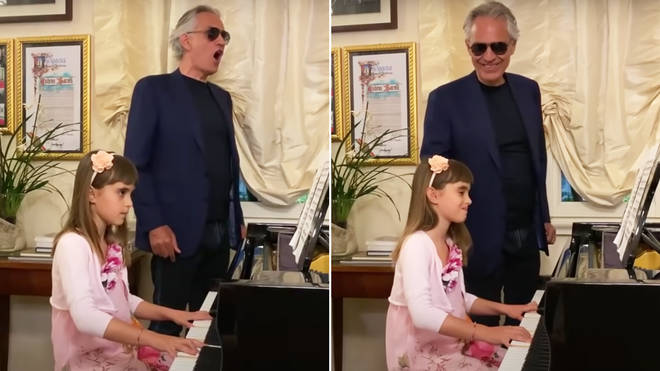
Andrea Bocelli’s ‘Ich Liebe Dich’ father-daughter duet is too much for our hearts

Andrea Bocelli’s ‘Ich Liebe Dich’ father-daughter duet is too much for our hearts. Picture: Instagram / @andreabocelliofficial

By Sian Moore, ClassicFM London

Andrea Bocelli sang beside daughter Virginia as she played the Beethoven love song on the piano, for their first ever duet.

It was a special moment for Andrea Bocelli when he joined his youngest child for a heartwarming father-daughter duet.

After spending many days together in their home last year, Bocelli and then eight-year-old Virginia had been practizing Beethoven’s ‘Ich liebe dich’ (‘Tender Love’), and the young pianist was ready to play it in its entirety.

As Bocelli sang the opening line to Karl Friedrich Wilhelm Herrosee’s poem, his daughter seamlessly began to play Beethoven’s love song on the piano beside him.

The result is a tender, heartwarming collaboration between a world-famous tenor and his child...


The clip was first shared by the Italian singer on 3 May, 2020.

“Little Virginia has been working hard over the past few weeks to honor her obligations,” he captioned the video.

“We now present our first duet, a jewel created long ago but which remains wonderfully current, a lied which speaks of love with an infinite tenderness.”

Bocelli goes on to reveal that, after hours of practice together at the piano, the piece had become the pair’s song.

He added: “Thanks to the great Beethoven who, with his setting of an amateur’s poem (Karl Friedrich Herrosee), built a mountain out two blades of grass.”

The tenor is no stranger to performing alongside his children.

21 of the greatest women composers in classical music

 By ClassicFM London

Explore the world’s forgotten women composers in this incredible interactive map


Forgotten female composers feature in interactive map. Picture: svmusicology.com/mapa

By Rosie Pentreath, ClassicFM London

@rosiepentreath

Discover and celebrate over 500 great figures from classical music, thanks to this ingenious interactive tool that honors women past and present.

A new interactive tool has been created to shine a light on brilliant female composers around the world who, throughout the ages, have been neglected to a large extent by classical music.

Pushing back on the prejudice, societal norms and troubling taboos that have cast women under an almost impenetrable shadow for centuries, music teacher Sakira Ventura has created an online map that plots hundreds of women composers living today, and from history, in their respective countries.

The effect is an instant visual of just how many women and their music are ripe for discovery.

The 28-year-old music teacher was inspired by the fact that she doesn’t remember learning about many, if any, female composers during her own music education. Something she wanted to rectify in her own student’s journey.

“They don’t appear in musical history books, their works aren’t played at concerts and their music isn’t recorded,” Ventura says of the majority of the women on the map.

Speaking to The Guardian, she continues: “I’m 28 years old and nobody ever spoke to me about female composers. I want to do what hasn’t been done for me.

“I want my students to know that Mozart and Beethoven existed but also that there were also all these female composers.”

Ventura’s fascinating map features living British composers such as Rachel Portman and Alma Deutscher, but also less well known historical and living figures – such as the Ethiopian nun Emahoy Tsegué-Maryam Guèbrou, who is known for her piano playing and compositions, and the song composer, Queen Liliʻuokalani, who was Haiwaii’s last monarch and the composer of over 160 songs.

Every woman’s plot is accompanied by a short bio and links to discover more. It’s a rich, fascinating and inspiring tool, which Ventura has told The Guardian she’s continuing to build, with a list of another 500 women being collated as we speak.

“I had always talked about putting these composers on the map,” she says. “So it occurred to me to do it literally.”

Visit svmusicology.com/mapa to explore now.

Sunday, August 22, 2021

2021's Top 5 Music Films to See this Summer


String students, you've worked hard this academic year as you continued to balance distance learning with academic responsibilities and keeping up with your music instruction. While we do hope you'll make an effort to keep up with your music practice over the summer break, we also encourage you to take plenty of time off to relax and unwind.

To that end, we've put together a list of recent top five music films. We chose some of them because of their music scores, which should inspire those seeking to become music composers as you learn more about the careers and avenues available to you as an adult. We chose others because the music or musicians were central to the movie's theme.

1. The United States vs. Billie Holiday

Billie Holiday is undeniably a jazz legend, a female phenom, and an icon of her time. She was also a Black woman who led a complex life that included battling an addiction to alcohol and drugs and a string of abusive relationships. One of the latter was with black Federal Agent Jimmy Fletcher. As a result of the tumultuous angst of that affair, Holiday became the subject of a targeted undercover sting operation by the Federal Department of Narcotics.

Andra Day plays the lead in The United States vs. Billie Holiday, and, as you can imagine, the soundtrack is as extraordinary as both Ms. Holiday and Ms. Day are themselves. This movie is currently streaming on Hulu. Are you a string musician who loves jazz? Read our post, Jazz: It's Not Just for Upright Bass Musicians. 


2. Soul

The Pixar movie, Soul won the 2021 Academy Awards for both Best Animated Feature, Best Original Score, and Best Sound, making it a trifecta for those who love spectacular animation and music. This family-friendly movie has a resonance similar to that of Coco, as it follows a jazz pianist's journey between the gig of a lifetime in NYC to the afterlife.

Joe (Jamie Foxx) is a middle-school band teacher whose life hasn't entirely gone the way he expected. His true passion is jazz, and he's good. However, when he travels to another realm to help someone find their passion, he soon discovers what it means to have soul.


3. Raya and the Last Dragon

Another animated film from Disney Studios, Raya and the Last Dragon takes place in a realm known as Kumandra. It's a re-imagined Earth inhabited by an ancient civilization, where a warrior named Raya (Kellie Marie Tran) is determined to find the last dragon. 

Five long centuries after the selfless sacrifice of the magical dragons, the once-peaceful land of Kumandra, where humans lived harmoniously alongside the mystical creatures, is in disarray, divided into five nations. Our heroine, Raya, is determined to find the last dragon and heal the land.

Besides its notable 94% approval rating from the Rotten Tomatoes crowd, Raya and the Last Dragon also has a highly acclaimed score (James Newton Howard) that blends contemporary pop with traditional Southeast Asian music and instruments.


4. Clouds

We're particularly fond of the movie Clouds (also from Disney), which follows the life of teen musician Zach Sobiech, based on a true story. After learning that his cancer is spreading and he only has six months left to live, Senior Zach (Fin Argus) and his best friend decide to pursue their dream of collaborating on an album and recording it.

Once they post the album on YouTube, it goes viral. As with anyone who experiences true fame, "...Zach is confronted with the reality that no matter how he spends his time, he is going to hurt the people he loves the most...and he is left to make difficult decisions about how to spend his time and more importantly with whom." Even musicians who aren't facing life-ending diagnoses struggle with their rise to fame, making the messages in this movie doubly poignant.


5. A Biography/Documentary Free-for-All

We mentioned the Billie Holiday film above, but these past few years have been a bit of a documentary- and biography-style movie free-for-all. It feels like just about anyone famous in the contemporary music world is filming themselves — or having films made about them — these days. 

All of the films listed below offer interesting, compelling, and educational insights into the music industry and what it takes to rise to the top, and the struggles that arise when you want to stay there. Examples include:


Linda Ronstadt: The Sound of My Voice

Tina (Turner)

Billie Eilish: The World's a Little Blurry

Beastie Boys Story

Song Exploder (contemporary composers)

No Direction Home (Bob Dylan)

Miss Americana (Taylor Swift)

Hip-Hop Evolution (contemporary MCs, DJs, and moguls)


Published by StringOvation Team on June 24, 2021