Friday, January 13, 2023

Classical to Broadway: The Art of Robert Wright and George Forrest

by 

Wright (front) and Forrest in their early days

Robert Wright (1914-2005) worked with George Forrest (1915-1999) to bring classical music to the musical stage. Both men were credited as composer-lyricist, but George Forrest worked primarily on the musical side of things. Wright was born in Daytona Beach, Florida, and studied piano. He was active while in high school, working in vaudeville, played piano at a silent movie theater, and led his own orchestra. Together with George Forrest, they wrote the school song ‘Hail to Miami High’. This first collaboration would eventually lead to 16 produced stage musicals, 18 revues, music for dozens of films, and many club acts. After leaving high school the pair did a cross-country cabaret tour and eventually ended up in Hollywood, where they worked for MGM as songwriters for seven years.
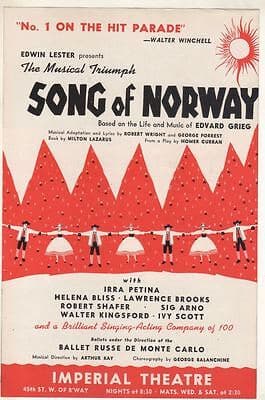
Song of Norway Poster

Song of Norway Poster

Their first Broadway production was Song of Norway in 1944, which took music from his piano concertos, from his violin sonatas, and many other sources. 

Other music in the production can be traced to the source: ‘Prelude & Legend’ (based on Grieg’s Piano Concerto in A minor), ‘Now’ (based on Violin Sonata No. 2, and Waltz from Lyric Pieces, Book 2), ‘Strange Music’ (based on ‘Wedding Day at Troldhaugen’ from Lyric Pieces, Book 8), ‘Midsummer’s Eve’ (based on ‘I Walked One Balmy Summer Eve’ from Five Poems, Op. 26, No. 3 and Scherzo in E from Lyric Pieces, Book 5), and ‘I Love You’ (‘Ich Liebe Dich’, from Melodies of the Heart, Op. 5, No. 3).
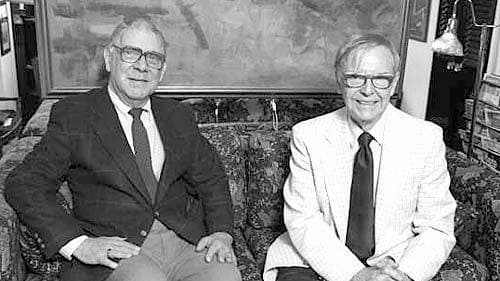
Wright and Forrest later in life

Wright and Forrest later in life

This 1944 operetta was a successful Broadway hit and was the first Broadway show to cross to London after the end of WWII, opening in 1945.

Next came Gypsy Lady in 1947, adapting music from two operettas by Victor Herbert, The Fortune Teller (1898) and The Serenade (1897).

‘Romany Life’ from The Fortune Teller, with lyrics by Harry B. Smith, was one of the songs that was used in the Wright-Forrest work. 
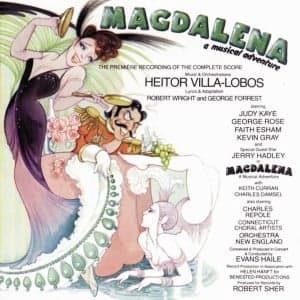

Magdalena Studio Recording 1990

Magdalena Studio Recording 1990

In a shift from their usual method, the duo worked with a living composer, Heitor Villa-Lobos, on Magdalena: A Musical Adventure. The original book was by Frederick Hazlitt Brennan and Homer Curran, and then was given new lyrics and musical adaptations by Wright and Forrest. The New York Times gave it a scathing review, praising only Villa-Lobos’ music. It lasted for 88 performances.

In 1949 came The Great Waltz, which adapted the music of both Johann Strauss Sr and Jr. The original production opened on Broadway in 1934, to a book by Moss Hart and lyrics by Desmond Carter. That, in turn, was based on a pasticcio (an unauthorized adaptation of the music of one or more composers) by Erich Wolfgang Korngold and Julius Bittner called Walzer aus Wien, first performed in Vienna in 1930. In 1949, Wright and Forrest were asked to make their own adaptation for the Los Angeles Civic Light Opera. This never opened on Broadway but went to London in 1970.

Finally, in 1953 came Wright and Forrest’s great hit: Kismet. This used the music of Alexander Borodin to create songs that entered the pop music world, including ‘Stranger in Paradise’, ‘Baubles, Bangles and Beads’, and ‘This is my Beloved’.
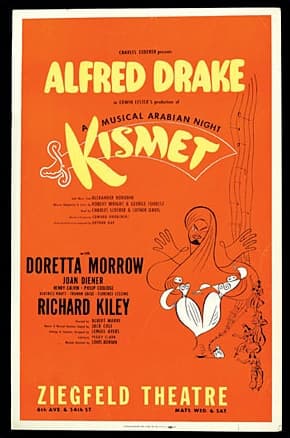
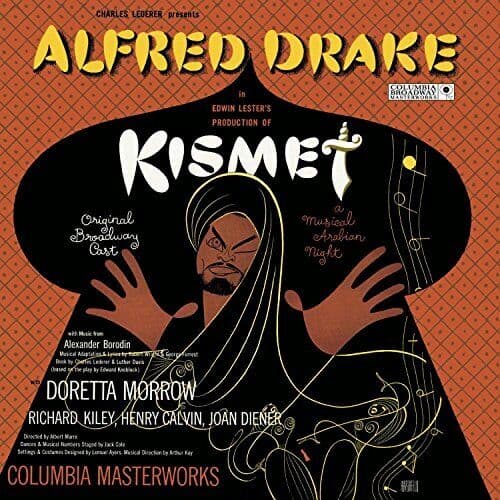
Kismet Poster 1953

Kismet Poster 1953

Kismet Poster 1953

Borodin’s String Quartet No. 2 was used for two different songs. 

The women’s dance scene from Act II of Prince Igor, the Polovtsian Dances, was the basis for no fewer than 5 different pieces, the most famous of which was Stranger in Paradise, based on the ‘Gliding dance of the Maidens’ from the dance sequence. 

As testament to the popularity of Stranger in Paradise was that in 1955, no fewer than 5 versions made it to the UK pop charts, including versions by Tony Bennett (No. 1), The Four Aces (No. 6), Tony Martin (No. 6), Bing Crosby (No. 17), Don Cornell (No. 19), and an instrumental version by Eddie Calvert (No. 14). It also charted in France as Étranger au paradis that same year. Since then, versions have been recorded by everyone from Engelbert Humperdinck to Sun Ra. Neil Young has performed it live but has never recorded it.

Kismet won 3 Tony Awards in 1954: Best Musical, Best Actor in a Musical (Alfred Drake as Hajj) and Musical Conductor (Louis Adrian). In 1995, Wright and Forrest were awarded the ASCAP Foundation Richard Rodgers Award.

Wright and Forrest’s last adaptation-musical was the music for Anya in 1965, adapting the music of Sergei Rachmaninoff. It closed while in previews when the critics denounced it as being too old-fashioned. It was a musical adaptation of the story of Anastasia, said to be the only surviving daughter of Emperor Nicholas II of Russia. The show was reworked many times, A Song for Anastasia (1967), The Anastasia Game (1989 and 1990), The Anastasia Affaire (1992), and Anastasia, the Musical (1998), but was never the international success that Kismet had been.
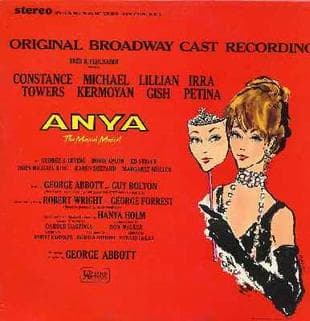
Anya Original Broadway Cast Recording

Anya Original Broadway Cast Recording

These shows are a testament to how differently classical music was heard in the early 20th century. We can see from various Warner Brother cartoons that classical music by Beethoven, Brahms, Chopin, Liszt, Rossini, Schumann, Smetana, Strauss II, and Wagner were all thought to be appropriate for cartoon usage as being known to the public. Wright and Forrest took their own knowledge of the by-ways of classical music and re-presented them with words and situations that perfectly caught the public’s taste in the case of Kismet.

Thursday, January 12, 2023

Joseph Rheinberger - his music and his life


Born: March 17, 1839 Vaduz Liechtenstein

Died: November 25, 1901 (aged 62) Munich Germany

Joseph Rheinberger, in full Joseph Gabriel Rheinberger, (born March 17, 1839, Vaduz, Liechtenstein—died Nov. 25, 1901, Munich, Ger.), German composer and teacher whose organ sonatas are among the finest 19th-century works for that instrument.


Rheinberger studied organ at Vaduz and became organist at the parish church when he was only seven years old. He later studied at Feldkirch and Munich and in 1867 became professor of organ and composition at the Munich Conservatory. Among his pupils were Engelbert Humperdinck, Ermanno Wolf-Ferrari, Wilhelm Furtwängler, and the American composers George W. Chadwick and Horatio Parker. Besides 20 organ sonatas, he wrote four operas and much church and chamber music. He received a title of nobility in 1894.

Josef Gabriel Rheinberger - Piano Concerto Op. 94 (audio + sheet music)


Being Rheinberger’s only valid essay in the genre, the Piano Concerto in A-flat major op. 94 of 1876, merits special attention. It was splendidly received by contemporary musicians and critics and granted the shy and introverted Rheinberger a successful and amazingly smooth entrée into the world of the concert hall. Shortly after its creation the work was performed and wildly acclaimed in Munich, Leipzig), Cologne, and many other musical centers of Germany. (carus-verlag.com)

Is this music or can it be deleted?

The relationship between music and memory is powerful. Music evokes powerful emotions that then bring back memories. When we listen to a piece of music from years ago, we seem to travel back to that moment. We can feel everything as if we were there.


Our long-term memory can be divided into two distinct types, namely implicit memory and explicit memory. Explicit memory is a deliberate, conscious remembering of the past. Explicit memory involves things like textbook learning or experiential memories, things that must be consciously brought into awareness.


Implicit memories are our unconscious and automatic memories. For example, playing a musical instrument, or recalling the words to a song when someone sings the first few words. A large part of memory takes place in the unconscious mind.


Explicit memory fades in the absence of recall, while implicit memory is more enduring and may last a lifetime even in the absence of further practice. The explicit memory systems become damaged by conditions such as Alzheimer’s disease.


I remember my parent's irritation in their faces, such as a broken mirror! Once upon a time, we have been getting crazy while listening to our idols' sounds. In my case, sometime during the 1960s and 1970s.


I felt "satisfaction" while listening to the Rolling Stones or dancing to the Beatles. I had hectic dreams together with Pink Floyd or couldn't hold myself with "Da-da-da_ and its then "German New Wave which swapped to the world later on - yes, even up to the Philippines.


Today, we are the parents of the younger generation again. Is there diplomatic space for any discussions? What's the music up nowadays?


Rap or house? Or something like this? Noise, din, row, racket, fuss, or damage to my (?) musical paintwork?


I remember harmonic accords with flutes and my accordion. Later myself at the piano ... . 


Two generations, even three meanwhile. Let's strike the right one - no matter which generation we belong to.


Shahram Heshmat, Ph.D., an associate professor emeritus at the University of Illinois at Springfield with a Ph.D. in Managerial Economics from Rensselaer Polytechnic Institute, describes it as follows: " In sum, music can help to unlock non-musical memories and promote communication in older adults with Alzheimer's disease. Recalling a memory is not always easy. It doesn’t simply come when you want to retrieve it. However, music helps to recall all the memories that you’ve connected with a song. Listening to a piece of music that was played a lot during a significant life event, such as a wedding or funeral, can trigger a deeply nostalgic emotional experience".


Lisa Marie Presley, daughter of Elvis and Priscilla, dead at 54 – reports

Published January 13, 2023, 10:02 AM

by Robert Requintina

Priscilla Presley (left) and daughter Lisa Marie (Instagram)

Rest in peace.

Singer Lisa Marie Presley, daughter of music icon Elvis Presley and Priscilla Presley, died following a cardiac arrest on Jan. 12. She was 54.

Hours before her demise, Priscilla took to Instagram to ask for prayers for her daughter after she eas rushed to the hospital on Thursday. Her post read: 

“My beloved daughter Lisa Marie was rushed to the hospital. She is now receiving the best care. Please keep her and our family in your prayers. We feel the prayers from around the world, and ask for privacy during this time. – Priscilla Presley”

Lisa Marie Presley (Facebook)

Fans prayed for Lisa Marie, the only child and daughter of Elvis and Priscilla.

Lisa Marie had four children. She was married and divorced four times, including pop star Michael Jackson and Nicholas Cage.

Elvis Presley and daughter Lisa Marie in her younger years (Facebook)

It was TMZ, a popular entertainment website in the US, which initially reported about the death of the musician.

ADVERTISEMENT

“TMZ broke the story … Lisa was rushed to the hospital after her housekeeper found her unresponsive at her Calabasas home. Her ex-husband, Danny Keough, was there and performed CPR on her until paramedics arrived and took over — they administered at least one dose of epinephrine during resuscitation efforts,” TMZ reported.

Elvis and Priscilla with baby Lisa Marie (Facebook)

Lisa Marie debuted in the music scene with her album “To Whom It May Concern” in 2003. It reached No. 5 in the Billboard Hot 100 album chart.

Nine of the world’s top 20 most performed living composers are women, new report finds

(L to R) Errollyn Wallen, Unsuk Chin, Kaija Saariaho

(L to R) Errollyn Wallen, Unsuk Chin, Kaija Saariaho. Picture: Wikimedia Commons / Getty / Alamy

By Sophia Alexandra Hall

New research finds that almost half of the world’s top 20 contemporary composers in 2022 were women. 

An annual classical music statistics report has found that in 2022, nine of the top 20 most performed living composers were women.

Some of the women composers named in the top 20 include Anna Clyne, Kaija Saariaho, Olga Neuwirth, Unsuk Chin, Anna Thorvaldsdottir, Missy Mazzoli and Errollyn Wallen.

The report, carried out by online classical music magazine Bachtrack, is based on 27,124 listings for performances which took place in 2022.

On the report’s full list of 106 most performed living composers, of 24 the British composers featured on the list, 12 were women, and of the 27 Americans named, 10 were women.

Bachtrack’s 2022 statistics are starkly different from previous figures. In 2014, just one composer in the top 20 most performed living composers was a woman (Sofia Gubaidulina), while three John’s made the cut (John Williams, John Adams, John Rutter).

Just one year earlier in 2013, there wasn’t a single woman in the top 200 list.


Russian composer Sofia Gubaidulina in a rare US appearance
Russian composer Sofia Gubaidulina in a rare US appearance. Picture: Getty

Gubaidulina, now age 91, also appears in the top 20 list for 2022 (the highest woman listed, at number seven) a feat particularly impressive due to her struggle to have her music widely performed during the 20th century. 

Living in Soviet Russia, Gubaidulina fell out of favour with the authorities as part of the group, the Khrennikov Seven. These seven composers were condemned by the Soviet Composers Union for writing scores that were in their words, “pointlessness… noisy mud instead of real musical innovation”.

In a 2013 interview with The Guardian however, Gubaidulina explained that being blacklisted and “so unperformed” gave her a sense of “artistic freedom, even if I couldn’t earn much money.

“I could write what I wanted without compromise.”


There’s good news for women in the field of conducting, too. Out of the world’s 100 busiest conductors, Bachtrack names 12 women; another stark difference to previous reports, as in 2013, just one conductor on the same list was a woman (Marin Alsop at No.70).

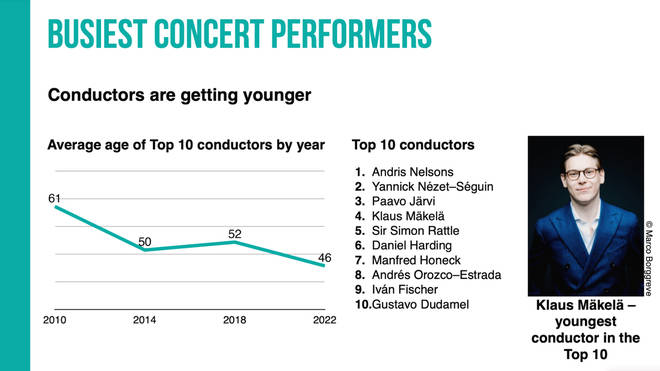
36-year-old Elim Chan is the highest ranking woman at no.29, and she is joined by Karina Canellakis, Nathalie Stutzmann, Mirga Gražinytė–Tyla, Marin Alsop, Dalia Stasevska, Xian Zhang, Gemma New, Simone Young, Joana Mallwitz, Kristiina Poska and Barbara Hannigan. Conductors are also getting younger. 26-year-old Klaus Mäkelä, chief conductor of the Oslo Philharmonic Orchestra, is one of the world’s top ten busiest maestros according to Bachtrack.

The Finnish musician comes in at number four on the list, and is the youngest of the conductors named.

Despite Mäkelä being the youngest, the average age of this list – which features names such as Sir Simon Rattle, Gustavo Dudamel, and Andris Nelsons – is still a pretty spry 46 years old.

In 2010, Bachtrack’s list of the world’s top ten busiest conductors was 61 years old.


The average age of the top ten busiest conductors is now 46 – it had been 61 in 2010.
The average age of the top ten busiest conductors is now 46 – it had been 61 in 2010. Picture: Bachtrack

Over the last decade, a host of talented young conductors have experienced meteoric rises to fame.

In 2022, one of the pinnacle moments in classical music was the announced appointment of 29-year-old Jonathon Heyward as the new Music Director of the Baltimore Symphony Orchestra – a position previously held by trailblazing conductor, Marin Alsop. Taking over for the 2023/24 season, Heyward makes history as both the youngest, and as the first African-American music director for the orchestra.

“I think as a young conductor at the moment, everything that I’ve been doing is actually pretty much for the first time and it’s often with seasoned players and seasoned orchestras who have probably played the pieces hundreds of times,” Heyward told the Southbank Sinfonia in 2021.

“To work for ensembles also doing it for the first time, it’s nice because it feels like we’re exploring it together on a blank canvas, which is thrilling.”

Sunday, January 8, 2023

Carl Czerny - Piano Concerto in a minor, Op. 214 (1829)


Dedicated to Méreaux, Czerny's Piano Concerto in a minor is perhaps one of the most virtuosic piano concerti composed in the classical style, Czerny's piano concerto in a minor features a compendium of pianistic techniques developed during the early Romantic era.

David Boldrini - piano
Rami Musicali Orchestra, conducted by Maestro Massimo Belli
(from the album "Czerny & Viotti: Piano Concertos" released under Brilliant Classics).

"The Piano Concerto in A minor, Op 214, was composed in Vienna in 1829 and published the following year. It is dedicated to the French musicologist and composer Amédée Méreaux (1802–1874) who—like Czerny, and his present obscurity notwithstanding—is best known for his piano studies. (His time will come; many of his 60 Études, Op 63, are of great interest and even more difficult to play than those of Alkan.)

Some see the A minor concerto as one of the earliest Romantic concertos penned. To others it is a transitional work with elements of the many brilliant piano and orchestra works already celebrated in this Hyperion series but with many backward glances to the concertos of Hummel, Weber and Field. The first movement’s opening material is used in various guises throughout the work, its solo part described by one writer, Lorenzo Ancillotti, as ‘a true compendium of the technical difficulties that pianists of the time were likely to address’. The initial ideas, incorporating some surprising modulations, eventually subside into a second section (8'43") in A major and D minor. 

After a return to the original theme and key, Czerny introduces another subject (12'00"), presented at first in F major. Much of the delicate filigree writing is set an octave above the stave—and brilliant it is, too, as the soloist storms home after what must be one of the longest suspensions in any concerto before the inevitable release back into the tonic.

The adagio second movement is in the dominant key of E major and forms no more than a contrasting link to the finale, a 2/4 rondo marked allegro con anima—‘in a spirited manner’. ‘Spirited’ might be construed as an understatement given the demanding solo part, a relentless succession of semiquaver triplets, dancing arpeggios and scales in thirds designed to astonish and entertain in equal measure. A short chorale episode at 6'30" is the only let up for the pianist as the work bowls towards its conclusion leaving the listener in no doubt as to the key of the concerto."

Featured Post

The Most Overtly Erotic Works in Classical Music

  by  Emily E. Hogstad    May 28th, 2026 Western classical music is often thought of as cerebral or abstract, but throughout its history, co...