Friday, May 3, 2024

200th Anniversary of Beethoven’s Ninth Symphony

by 

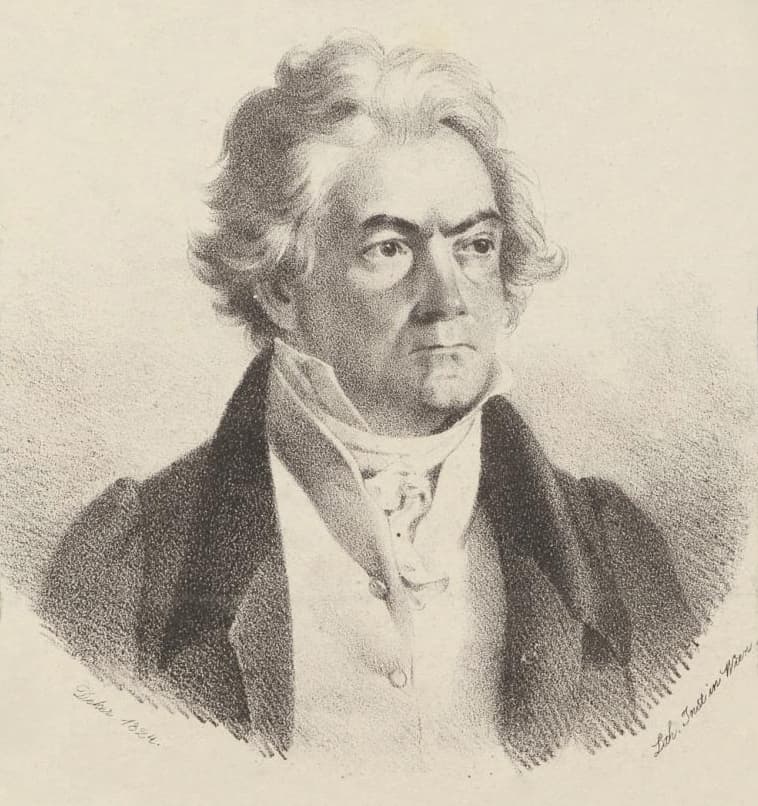
Ludwig van Beethoven in 1824

Ludwig van Beethoven in 1824

To commemorate the 200th anniversary of this memorable event, the Beethoven-Haus Bonn has organised an extensive and multi-faceted 10-day anniversary programme. Visitors and enthusiasts, onsite and online, are treated to exhibitions, a book presentation and signing, a conference, various exhibitions, concerts, and livestreams. At the heart of the celebration is the re-creation of the 7 May 1824 concert at the Stadthalle Wuppertal. 

7 May 1824
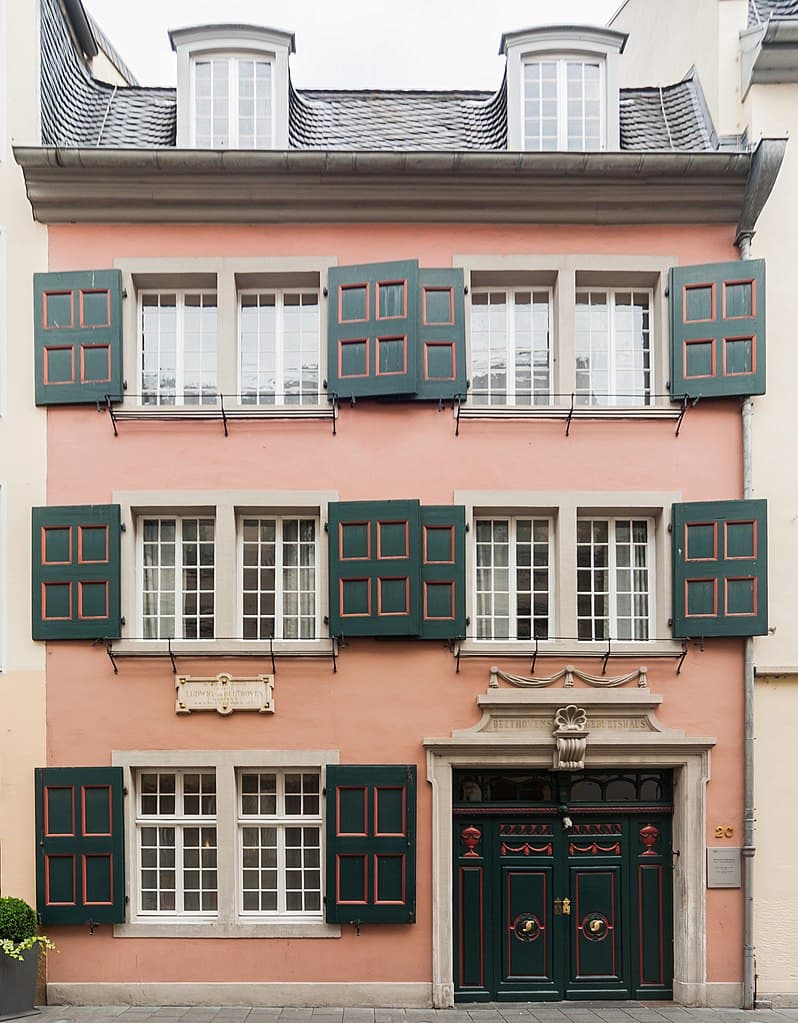
Beethoven-Haus Bonn

Beethoven-Haus Bonn

In 1824, Beethoven assembled a large orchestra and recruited Henriette Sontag and Caroline Unger to sing the soprano and the contralto parts, respectively. According to participating musicians, the 9th Symphony had only two full rehearsals, and was prefaced by the Overture Op. 124 and the Kyrie, Credo and Agnus Dei from the Missa Solemnis. Unsurprisingly, various stories and anecdotes surrounded this momentous occasion. Beethoven, stone deaf at this time, actually took part in the performance by giving the tempos for each part and turning the pages of his score “as though he wanted to play all the instruments and sing all the chorus parts.”

However, the official conductor Michael Umlauf, had instructed the singers and musicians to ignore all of Beethoven’s instructions. When the concert had ended, Beethoven was still conducting and Caroline Unger is credited with turning Beethoven to face the applauding audience. Beethoven’s underlying conception of music as a mode of self-expression still resonates strongly today, and whether one agrees with, or rejects his compositional approach, after him, nothing in music could ever be the same. 

7 May 2024
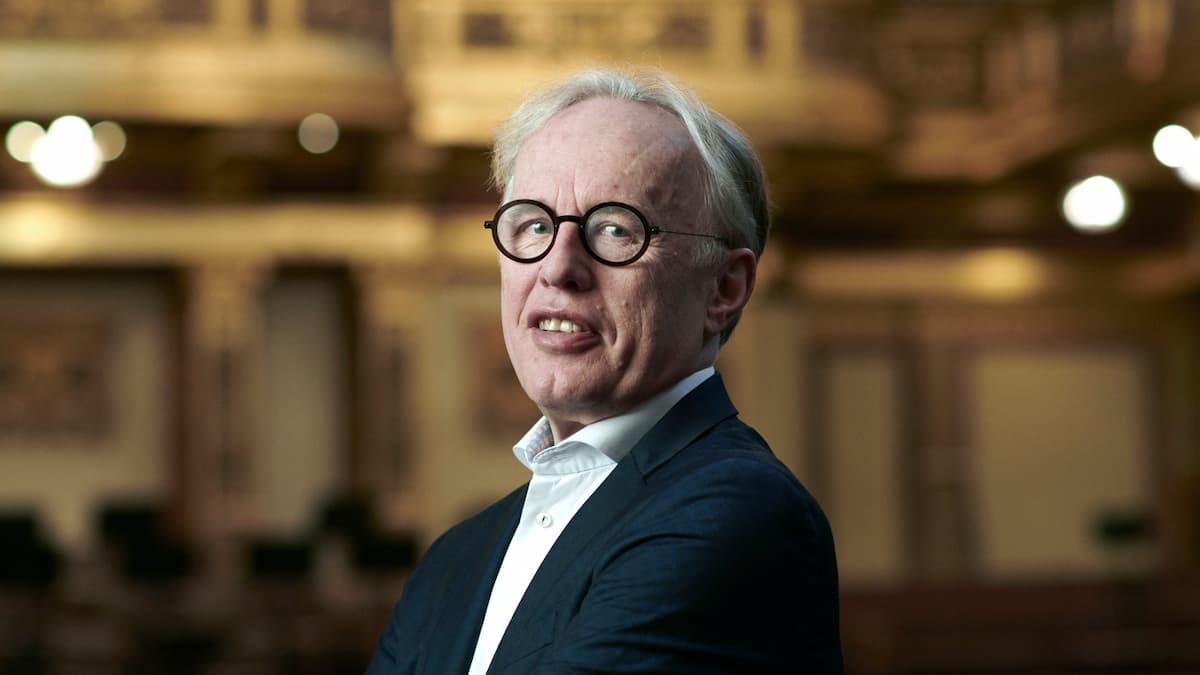
Martin Haselböck

Martin Haselböck

200 years later, the complete premiere performance will be reconstructed by the Orchester Wiener Adademie, considered one of the leading period-instrument orchestras. Soloist and the WDR Rundfunkchor under the musical direction of Martin Haselböck invite audiences to the 19th-century historical City Hall in Wuppertal to experience the original programme in its original order and its entirety. This promises a unique and rather lengthy listening experience, and one that will undoubtedly provide a new and unique perspective.

As the Director of the Beethoven-Haus Bonn, Malte Boecker explains, “to mark its 200th anniversary, we are presenting the Ninth for the first time in the sound of 1824 again as well as in the probable instrumentation, the line-up and the programmatic arrangement that Beethoven himself had planned.” Researchers and scholars have been able to reconstruct a number of facts regarding the original performance. Apparently, the choir had been positioned in front of the orchestra and not as we have come to expect, behind the instrumental forces. Additional research has suggested a possible instrumentation described by Beethoven, and important new details regarding the musical text. 

Romantic Historiography and Meaning
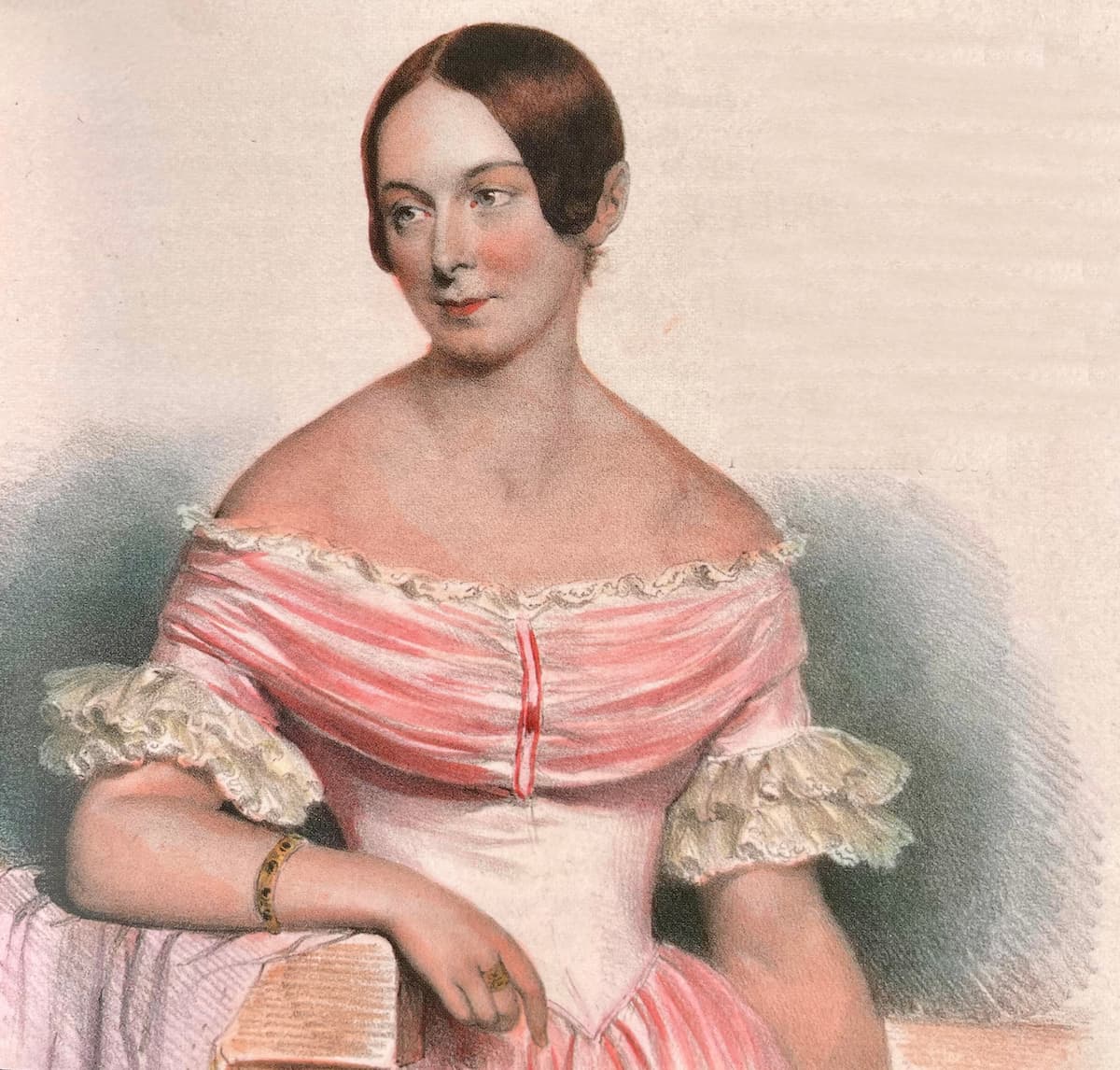
Caroline Unger

Caroline Unger

According to the organisers of the anniversary concert, “in terms of content and aesthetics, the reconstructed programme shows a variety of relationships and suggests that Beethoven wanted to appeal to the idea of Eternal Peace with the Academies.” By definition, ascribing meaning to a programme and/or a particular work is a slippery subject, as we can interpret Beethoven’s meaning in endless ways. It all depends on our interests as modern reconstructions, while historically informed, are essentially restorations according to contemporary attitudes and tastes.

The recasting of this event in the tradition of terms and meanings is not really a historical project, since the concept of historiography was invented long after Beethoven’s death. It is simply impossible to ascribe a definite meaning to Beethoven’s programme or symphony, nor is it possible to deny the symbolic dimensions of the evening and the work. That is probably why a critic once wrote, “Beethoven’s 9th Symphony is a piece one loves to hate: It’s incomprehensible and irresistible, it’s awesome and naïve.”  

Berlin Premiere
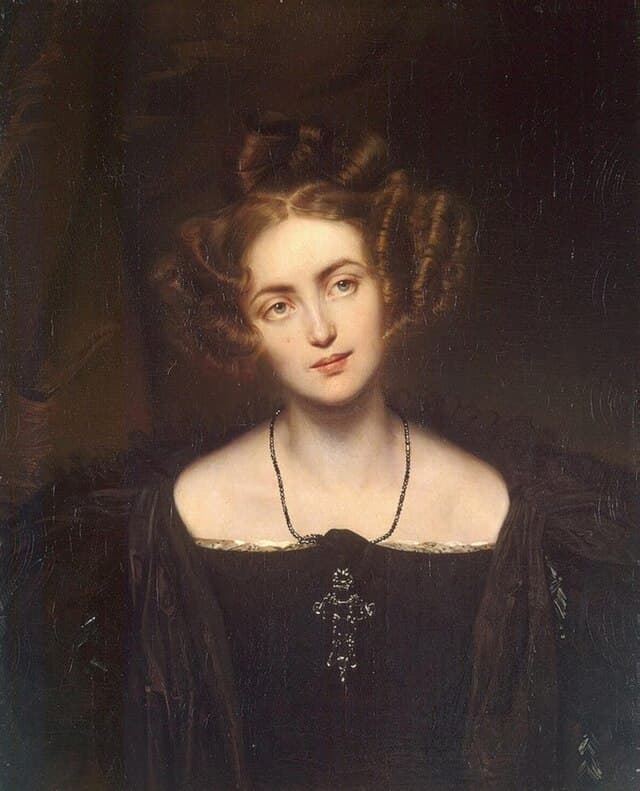
Henriette Sontag

Henriette Sontag

It might be worth remembering that Beethoven was adamant that his 9th Symphony should be premiered in Berlin and not in Vienna. His threat to take his symphony to Berlin was real enough as it took a petition signed by many prominent Viennese patrons, friends, financiers and performers for the composer to change his mind.

Why then was Beethoven so unhappy with Vienna? For some years the composer had lamented the changing musical taste of Viennese audiences, who numerously flocked to see the operatic entertainments offered by Rossini and other Italian composers. Beethoven and Rossini probably met once in Vienna in 1822, and supposedly Beethoven counselled his young colleague with the words, “Above all, make a lot of Barbers!” 

Ode to Joy

For Beethoven, Rossini was a composer of light comedies, who embraced the “rankest lap of luxury” by pandering to populist demands. Supposedly, Beethoven quipped “Rossini would have been a great composer if his teacher had spanked him enough on the backside.” Whether this meeting and conversation actually took place or not is clearly beside the point, as it quickly became, and still is, part of a much larger narrative.
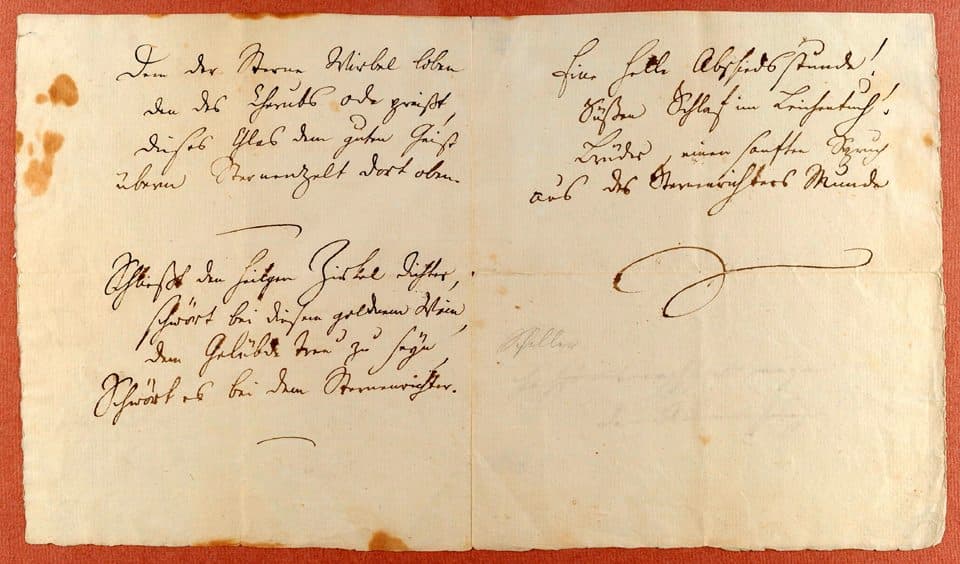
Schiller’s Ode to Joy

Schiller’s Ode to Joy

By presenting his Ops. 123, 124, and 125 in a single academy, Beethoven was clearly not trying to appeal to popular demands. Rather the opposite, it seems, as a programme of such seriousness, duration and ticket expense, was hardly going to attract the bohemian party crowd. By appealing to the spirit of Romanticism and the shared ideals of humanity as expressed in Schiller’s Ode to Joy, the composer appeared to have made not only a musical point but also issued a decisive cultural statement.

200 years later, the Ode to Joy is the anthem of both the European Union and the Council of Europe. Its described purpose is to “honour shared European values, expressing the ideals of freedom, peace, and unity.” The 2024 re-creation of the 1824 academy still won’t be a crowd magnet, nor will it be an attractive event for most Europeans. However, the statement of intent seems very clear. The utopian ideals expressed in the 9th Symphony, although no longer believable in 2024, still need to provide the fundamental bases of interaction in a world intent on proving the opposite on a daily basis.

Thursday, May 2, 2024

Nikisch conducts: FILM 1913 + Liszt: Hungarian Rhapsody No.1


Arthur Nikisch: Liszt - Hungarian Rhapsody No.1, 1920 Berlin Philharmonic Orchestra STARTING TIMES: Silent Film 1913: 0:00 VERSION 1: Side 1 0:55 , Side 2 5:13 Side 3 9:10 Side 4 12:29 VERSION 2: Side 1 15:08 Side 2 19:27 Side 3 23:24 Side 4 26:42 INTRODUCTION to Nikisch's recordings and his art of conducting see below! Arthur Nikisch was the most famous conductor of his times. Unfortunately there exist only few recordings with him and all are from the acoustic era. Hence, for us Nikisch stands in the shadow of his great successor Wilhelm Furtwängler. But Nikisch was the only conductor Furtwängler really admired. He wrote: "Nikisch vermochte es eben, ein Orchester singen zu machen. Dies... ist etwas höchst Seltenes." ("Nikisch was able to let an orchestra sing. This... is something very rare.") Nikisch himself admired Richard Wagner, not only as composer, but also as conductor. He played at least two times as violinist under his baton. From Wagner he got the idea of modulation of tempo as a condition for real melos and expression. But the ability to realise this idea in a perfect way came out of Nikisch himself. Many contemporaries described Nikisch as a magician. So the question for us is: Can we experience these wonderful qualities from the few recordings that were made under primitive conditions about hundred years ago? My answer is: yes, to a large degree. Of course there are final losses, but there is enough left for us to experience the essence of his art. I made every effort to transfer the two shellacs (Grammophon 65906 and 69567) into the digital world. There is no manipulation of sound (equalisation: flat). Hence, the surface noises of the shellacs might be louder than you are used to. But this is the price we have to pay for getting the full sound of the records.(You should not use headphones for this transfer.) I let the record breaks untouched because they belong to the recording sessions of that time .If you don't like listen with gaps you may click on the indicated starting time of the next side (below the video) when the current side ends. The two short silent films at the beginning are rare (not on Youtube as far as I know) and illustrate very clearly Nikisch's way of conducting. He moves his arms and hands precisely but at the same time you might feel his magic influence upon the orchestra. A good transfer should be in accordance with these visual impressions and with the statements of the contemporaries about Nikisch. I hope I have settled this task. How difficult it is you can recognize by the fact that I had to offer two versions. As indicated in the video the first version is best for listening with only a computer. The loudness is still not very high but should be enough in most cases. If necessary put the volume at 100 percent. For this version I had to double the maximum loudness in the film program. This means one more step of computing with the result of less musicality. I did it because many people listen just this way. But if you are seriously interested in Nikisch's art you should connect your computer with a good HiFi system and listen to the second version. Then you will marvel and understand why Arthur Nikisch was so famous.

FIRST CLASSICAL CONCERT of 15-year-old Karolina Protsenko | Mendelssohn ...


15 year old Karolina Protsenko is playing Mendelssohn Violin Concerto In E Minor as soloist with Orchestra Nova LA for the first time. Karolina is playing on a Carl Becker violin Chicago 1937. Big thanks to Karolina's violin teacher Sam Fischer for nourishing her musical talent and being a great classical violin mentor for her. Condactor: Ivan Shulman Videographer: Sam Liu Soundman: Jeff Dollente

Wednesday, May 1, 2024

Barry White - Cant Get Enough Of You Love Babe (Remix)


42,923,607 views Jan 22, 2015

Rickmansworth Young Musician of the Year 2024 - Elizabeth Pinyan Guo -


Rickmansworth Young Musician of the Year 2024 - 2nd Prize Winner - Elizabeth Pinyan Guo - Piano Clair de Lune - Debussy

Prokofiev - Dance of the Knights


Prokofiev: Romeo and Juliet, No 13 Dance of the Knights Sergei Sergeyevich Prokofiev (Russian: Серге́й Серге́евич Проко́фьев, tr. Sergej Sergeevič Prokof'ev)[1][2] (27 April [O.S. 15 April] 1891 -- 5 March 1953)[3] was a Russian composer, pianist[4][5] and conductor who mastered numerous musical genres and is generally regarded as one of the major composers of the 20th century.

Nine-year-old Wilson Liu Performs Prokofiev's Prelude Op. 12, No. 7


Nine-year-old pianist Wilson Liu, a student at the Juilliard Pre-College program, performs Prokofiev Prelude.

Tuesday, April 30, 2024

LOVE'S THEME - HOLLAND SYMPHONY ORCHESTRA


Paolo Conte - Via Con Me


Felicità - Karolina Protsenko & Daniele Vitale Sax | Behind The Scenes


15-Year-Old Karolina Protsenko plays "Love Theme" by Ennio Morricone


Rhythm of the rain


Friday, April 26, 2024

14 Beautiful Female Classical Pianists


14. Lola Astanova:    • Lola Astanova plays Rachmaninoff Mome...   13. Khatia Buniatishvili:    • F. Liszt - "Ständchen" Piano Transcri...   12. Dora Deliyska:    • Dora Deliyska plays Beethoven, "The r...   11. Hélène Grimaud:    • Helene Grimaud (Ravel Piano Concerto ...   10. Anastasia Huppmann:    • Chopin Etude Black Keys Op 10 No 5   9. Olga Jegunova:    • Olga Jegunova - W.A. Mozart: Piano So...   8. Eloïse Bella Kohn:    • Debussy - Ce qu'a vu le vent d'ouest ...   7. Irina Lankova:    • Irina Lankova plays Schubert Imprompt...   6. Valentina Lisitsa:    • Tchaikovsky "June" Barcarolle Чайковс...   5. Olga Scheps:    • Alexander Skrjabin Waltz A flat major...   4. Primavera Shima:    • Schumann Arabasque Op. 18 - Primavera...   3. Belle Suwanpotipra:    • Debussy: L'Isle joyeuse   2. Katharina Treutler:    • Debussy: La fille aux cheveux de lin,...   1. Yuja Wang:    • Video   *No copyright infringement intended*

Celine Dion opens up about battle against Stiff-Person Syndrome

Werner Egk: Kleine Symphonie (1926)


Werner Egk (1901-1983): Kleine Symphonie (1926) --- Staatsorchester Frankfurt (Oder) diretta da Nikos Athinäos -- I. Moderato tempo giusto II. Andante molto tranquillo [9:21] III. Allegro molto [13:44] IV. Andante [16:30]

Featured Post

The Most Overtly Erotic Works in Classical Music

  by  Emily E. Hogstad    May 28th, 2026 Western classical music is often thought of as cerebral or abstract, but throughout its history, co...