Monday, July 6, 2026

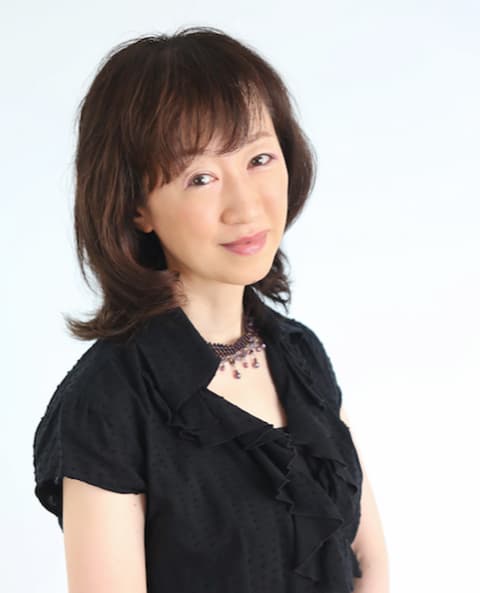
Interview With Japanese Composer Naoko Ikeda


Japanese composer Naoko Ikeda

Naoko Ikeda

Can you introduce yourself and tell us your musical background?

I was born in Sapporo city in the north of Japan and still live here. I am a piano teacher and have been publishing original piano works from Willis Music for about 20 years. I started taking singing lessons at the age of 4 and piano lessons at the age of 6 under the supervision of my music-loving parents. I became interested in composing when I encountered William Gillock’s Lyric Preludes in Romantic Style when I was in junior high school. His works are simple and have a beautiful sound, and various scenes come to mind. I thought it would be wonderful if I could make such a rich piece one day.

In addition to Gillock’s work, what other sources of inspiration do you utilize when composing?

Melody is the most important thing for me. For example, if a melody comes to mind and you can feel the colors and scenery, you can use that as a trigger to continue writing the song. The music I’ve listened to so far (classical, jazz, popular songs, etc.), the books I’ve read, the movies, the paintings, the poems, the starry skies, and the landscapes of nature have made me do this. It inspires me and expands my imagination.  

Naoko Ikeda: Miyabi: Early Intermediate Level

Naoko Ikeda: Miyabi: Early Intermediate Level

Now that my work will be published in the United States, I would like to introduce to you a piece that has a Japanese sound and a feeling of culture in me. I would be very happy if you could feel the beauty. In Miyabi, which has a Japanese theme, I have devised Japanese koto scales in my way and mixed them with Western scales and chords to create a collection that is easy to get along with. In addition, I hope that it will be an opportunity to introduce Japan by incorporating the sounds of Gagaku and the rhythms of Japanese festivals.

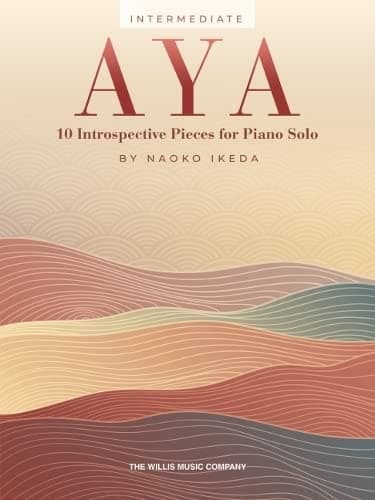
Naoko Ikeda: Aya: 10 Introspective Pieces for Intermediate Piano Solo

Naoko Ikeda: Aya: 10 Introspective Pieces for Intermediate Piano Solo

“Aya” is a solo collection that was published last year. It contains 10 pieces written in a variety of styles, including Japanese works, that can be enjoyed by intermediate-level students.

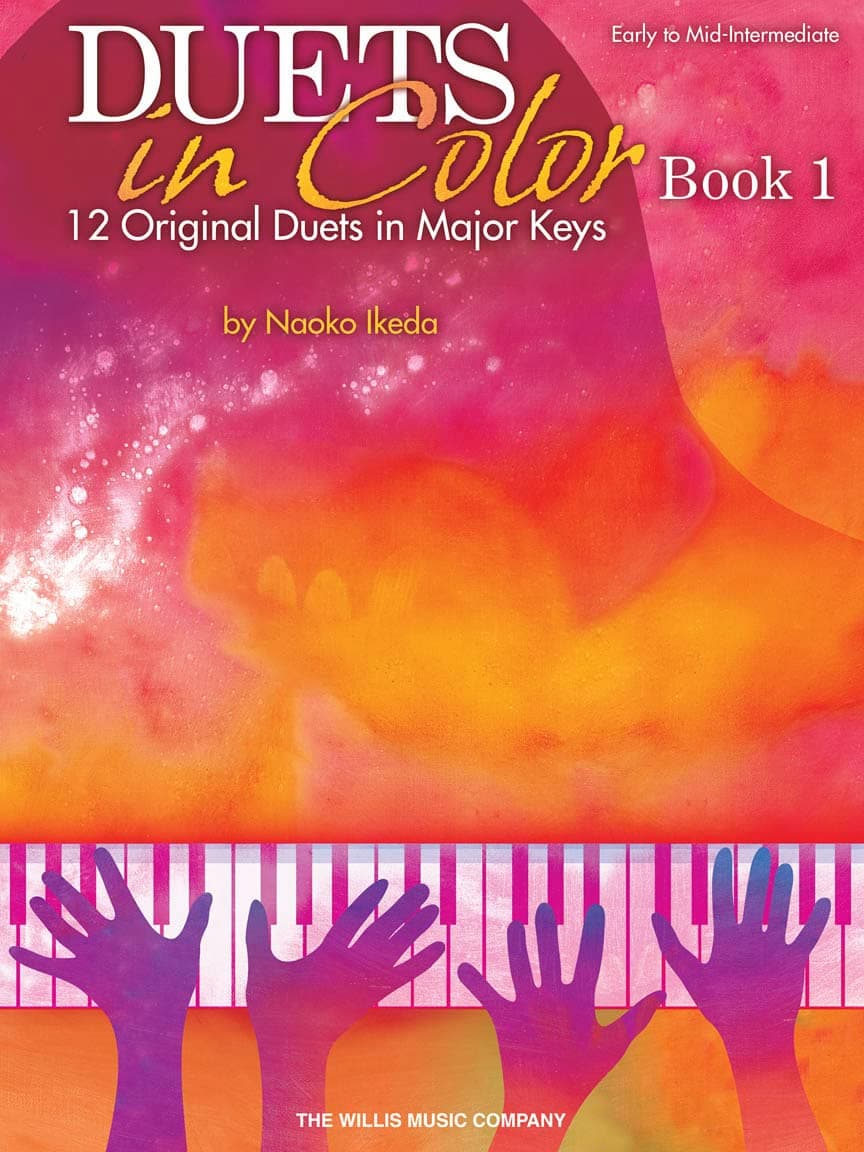
Naoko Ikeda: Duets in Color - Book 1: Early to Mid-Intermediate Level

Naoko Ikeda: Duets in Color – Book 1: Early to Mid-Intermediate Level


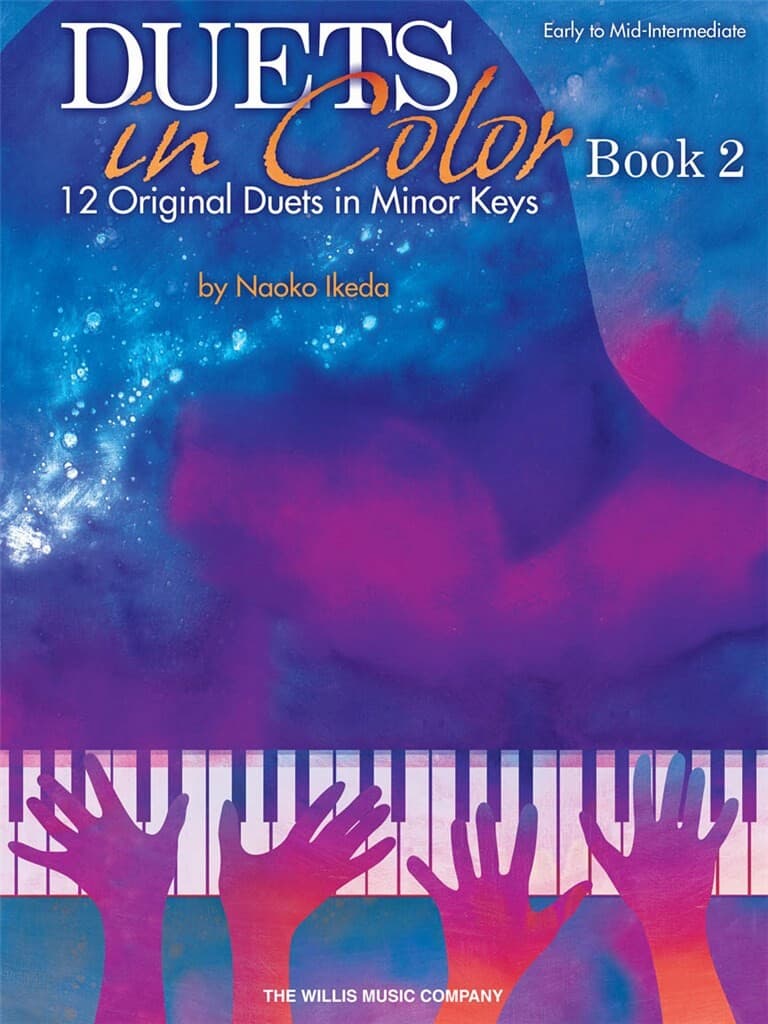
Naoko Ikeda: Duets in Color - Book 2: 12 Original Duets in Minor Keys

Naoko Ikeda: Duets in Color – Book 2: 12 Original Duets in Minor Keys

These are the duets’ collections that I wrote in 24 keys. The book is divided into two volumes, a major key, and a minor key, but C major and C minor, G major and G minor are composed as a set and have some common points such as the same melody and rhythm etc. I think it’s my masterpiece!

Many of your compositions are written for students. They are all beautifully written. Do you mean to write for students? What draws you to write music for students?   

Of course, in order to benefit the students, I try to incorporate technical elements into the works for the elementary level so that they can be enjoyed. This is a very rewarding job! As for the intermediate-level works, I compose them not only for the sake of my students but also for my friends and piano teachers to take a break and enjoy playing them. I would be happy if the students who played it could try out what kind of sound they wanted to play with what they envisioned from the piece, just like I did with Gillock’s work. As a composer, I’m looking forward to letting everyone hear a new side of the piece!

As a composer in Japan, what does your daily life look like? Do you have hobbies besides music?

Cool Chartreuse, a piano duet by Naoko Ikeda  

Like most of you, I am a piano teacher. Currently, I have lessons three days a week, and I also do workshops and lessons on my own work from time to time. Willis let me go at my own pace, so I started composing little by little, writing a few songs, putting together an idea for the collection, and starting discussions with the editor. My hobbies are listening to music, reading books, and looking at artworks…all of these things inspire me to compose music. I want to go on a trip soon, so I’m checking travel TV programs.

Sunday, July 5, 2026

Did These Seven Great Composers Really Die of Syphilis?

 by Emily E. Hogstad  March 26th, 2026


During the nineteenth century, syphilis was rampant in Europe, and quite a few composers are believed to have had it.

The 2024 article “The Syphilis Pandemic Prior to Penicillin: Origin, Health Issues, Cultural Representation and Ethical Challenges” estimates that during the 1800s, approximately fifteen per cent of European men were infected. Plus, infections were more common in urban areas, where composers tended to live and work.

In a time before antibiotics, syphilis was more than a medical condition: it was often a death sentence. On top of that, the mercury and arsenic “cures” on offer were often just as toxic as the disease itself.

You can imagine how the mental and physical effects of infection and treatment impacted these artists’ lives and work.

Of course, diagnosing composers from centuries away with absolute certainty can be a fool’s errand. But today we’re using historians’ best judgment and looking at seven composers who either are confirmed to have had syphilis, or are widely believed to have had it…as well as how those infections shaped (and in some cases, ended) their careers.

Niccolò Paganini (1782-1840)  

A native of Genoa, Italy, Niccolò Paganini was the greatest violinist of his generation…and maybe of all time.

He became famous for his demonic appearance and seemingly supernatural abilities.

However, although some people felt he was an otherworldly being, he was actually very human, and he struggled with bad health throughout his life.

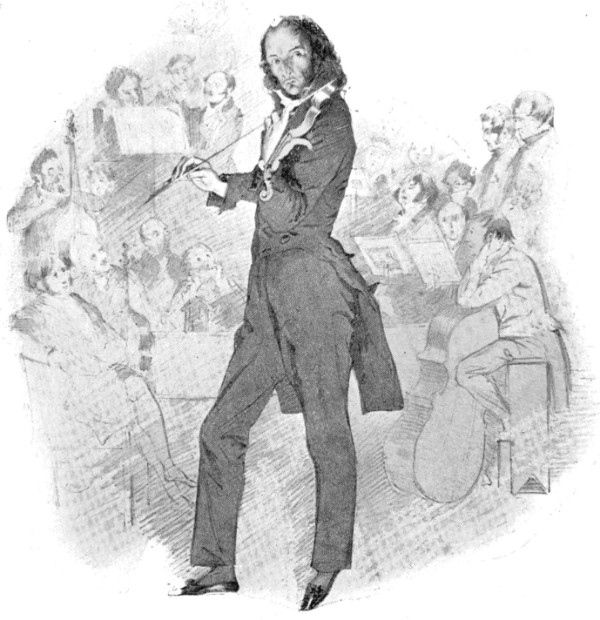
Niccolò Paganini

Niccolò Paganini

Modern historians believe that he had Ehlers-Danlos Syndrome or Marfan Syndrome. Either would help explain his double-jointedness, which he put to good use while reinventing violin technique.

He was diagnosed with syphilis around 1822, when he was forty. His treatment included mercury therapy and opium. That in turn led to mercury poisoning and opiate addiction.

In 1828, when he was 46, he developed necrotising osteitis of the jaw that had to be operated on.

He also developed tuberculosis, which may have contributed to his dysphonia (loss of voice).

When Paganini met with composer Hector Berlioz in 1838, his voice was so inaudible that his young son had to put his ear next to Paganini’s mouth to hear his words, then translate for Berlioz.

He died in Nice in 1840.

We wrote about the turbulent final years of Paganini, including why he was denied a Catholic burial.

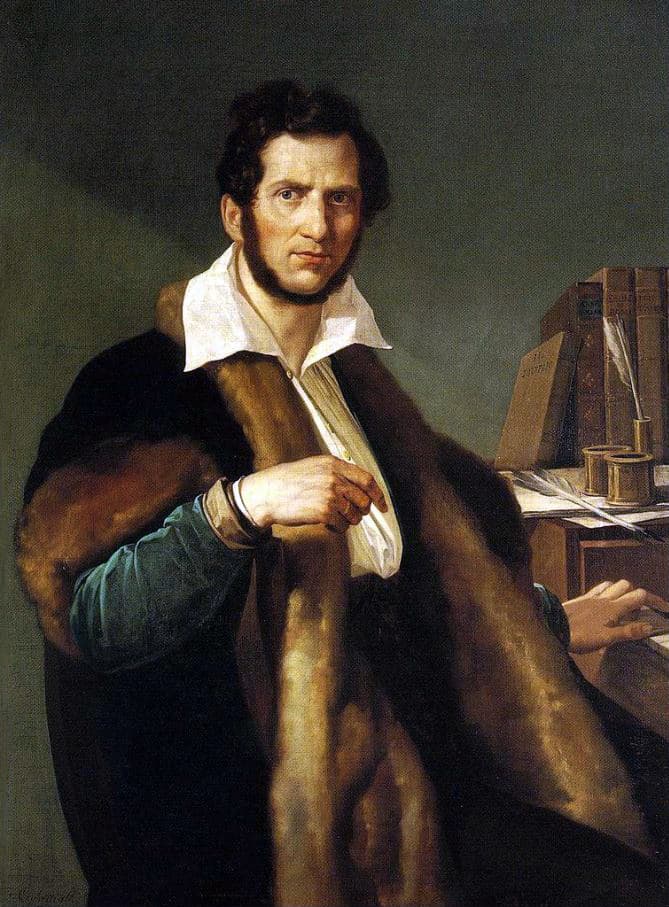
Gaetano Donizetti (1797-1848)  

Donizetti was born in Bergamo, Italy, in 1797. He became one of the most popular opera composers of his generation.

Sometime in his teens or twenties, he came down with syphilis.

In 1828, at the age of thirty-one, he married his eighteen-year-old wife Virginia. She gave birth to three babies, but all died as infants, and the first one was deformed, suggesting he’d passed the disease on.

Portrait of Gaetano Donizetti by Francesco Coghetti

Portrait of Gaetano Donizetti by Francesco Coghetti

Virginia’s own health deteriorated, as well, and she died young in the summer of 1837. It may have been cholera, but it might also have been a syphilitic infection.

Donizetti eventually began exhibiting a host of alarming symptoms: fevers, headaches, paralysis, speechlessness, incontinence, and more.

He was only formally diagnosed in August 1845. His doctor believed he was no longer able to make sane decisions for himself, and so he was tricked and involuntarily confined in 1846.

It was a darkly ironic fate for someone who had written the most famous “mad scene” in operatic history.

He never lived on his own again and died in 1848.

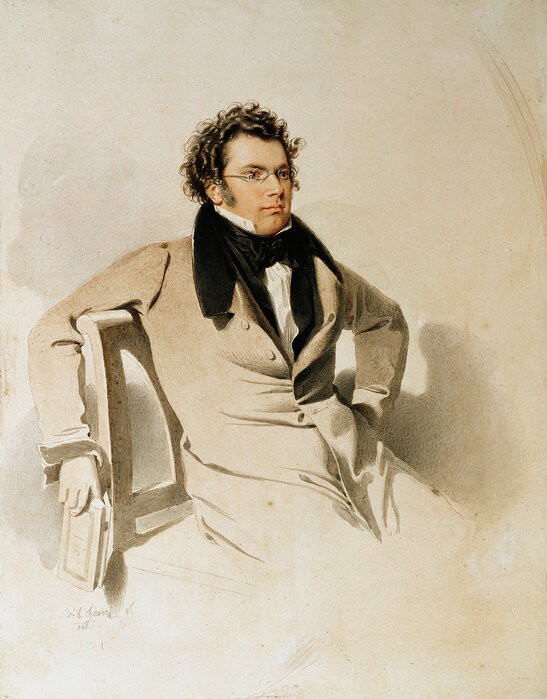
Franz Schubert (1797-1828)  

Franz Schubert was born in Vienna in 1797. He became infected with syphilis in late 1822, when he was in his mid-twenties.

He first noticed symptoms in early 1823, when he began suffering from particularly acute feelings of depression, as well as a red rash and hair loss.

As time passed, and as he got sicker and sicker, he began feeling increasingly doomed, and his compositions started turning darker.

Franz Schubert

Franz Schubert

His fourteenth string quartet from 1824, nicknamed Death and the Maiden, dates from this time.

In 1828, he saw a physician who told him that the end was near. He began suffering from headaches, joint pain, and fever, and became unable to keep down food.

During the final weeks of his life, he moved in with his brother, who took care of him until he died in November 1828 at the age of thirty-one.

Historians today are split about whether he died from typhoid fever, mercury poisoning, syphilis, or some combination of all three.

Read more about how his illness impacted the composition of the “Death and the Maiden” quartet.

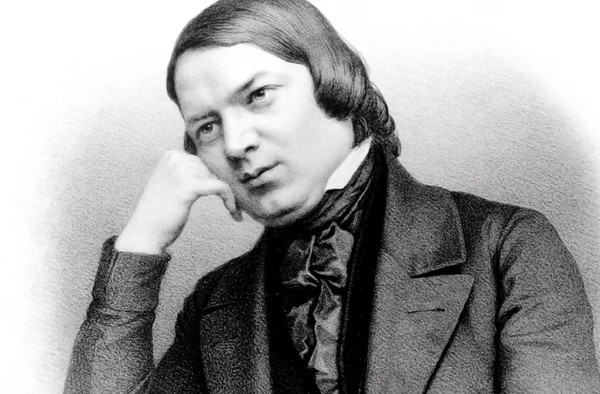
Robert Schumann (1810-1856)  

Robert Schumann was born in Zwickau, Germany, in 1810, and suffered from health issues throughout his life.

By his early twenties, he was wrestling with depressive episodes interspersed with manic ones. A later note he wrote about this time of his life reads, “In 1832, I contracted syphilis and was cured with arsenic.”

If the problem was syphilis, it had actually not been cured; it had only become latent. (This might explain why he apparently never passed it on to his wife, Clara.)

Robert Schumann

Robert Schumann

By his thirties, his symptoms were turning more physical, with his doctor in Dresden noting he was complaining of “insomnia, general weakness, auditory disturbances, tremors, and chills in the feet, to a whole range of phobias.”

In February 1854, he jumped off a bridge into the Rhine River. He was rescued and agreed to be sent away to a sanitarium. Unfortunately, his health continued to deteriorate there.

In the summer of 1856, he came down with pneumonia. His overtaxed immune system couldn’t fight the infection off, and he died that July.

During his illness and after his death, his wife, Clara, and his friends sorted through his music. One of the works they felt revealed his sickness was his violin concerto. It was suppressed until its rediscovery in the 1930s.  

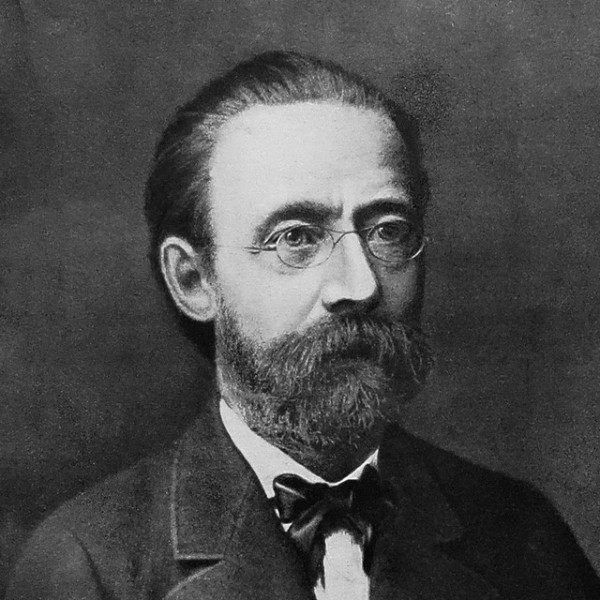
Bedřich Smetana (1824-1884)  

Composer Bedřich Smetana married his wife, pianist Kateřina Kolářová, in August 1849.

They had four daughters between 1851 and 1855, but by 1856, three of them had died of either tuberculosis or scarlet fever, and Kateřina had been diagnosed with tuberculosis, too. She died in April 1859. He remarried the following year.

Unfortunately, his story wasn’t going to have a happy ending. A couple of years later, he began developing hearing issues, chief among them incapacitating tinnitus.

Although he went to see countless doctors and specialists, he grew more and more deaf over the following years.

Bedřich Smetana

Bedřich Smetana

Day-to-day life became excruciating. In January 1875, he wrote, “If my disease is incurable, then I should prefer to be liberated from this life.”

In his first string quartet, dating from 1876, he portrayed the experience of tinnitus by using long high notes in the violin.

A few years after he wrote the quartet, he began expressing fears that he was going mad.

In the early 1880s, his symptoms grew debilitating and included hallucinations and intermittent loss of speech.

By early 1884, he began acting out violently toward his family. In late April, he was committed to an asylum. He died there a few weeks later.

The official death certificate claimed that he’d died of dementia, but his family believed it had been syphilis.

Some twentieth-century doctors took issue with this diagnosis, or whether his hearing loss was due to a syphilitic infection, but it remains a leading theory.

An autopsy was done that revealed high amounts of mercury in his remains.

Read more about how Smetana incorporated autobiography into his first string quartet, including the simulation of tinnitus.

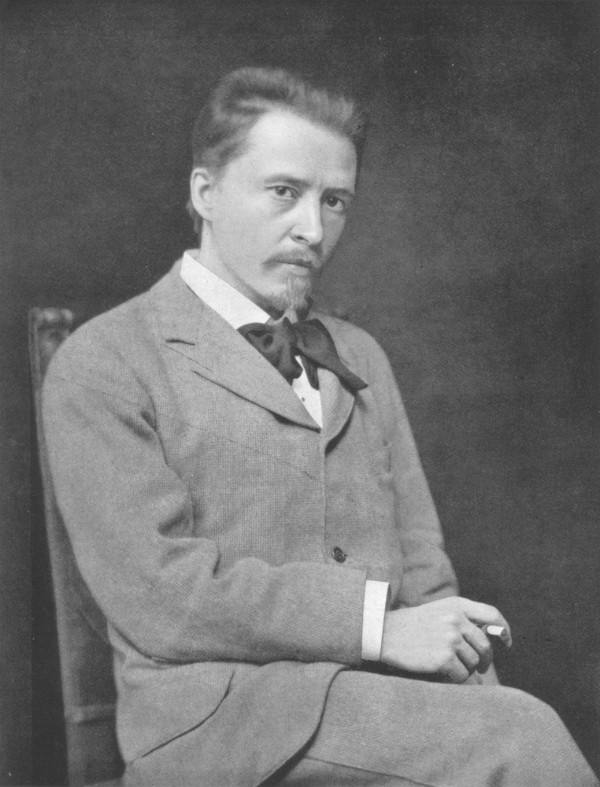
Hugo Wolf (1860-1903)  

Composer Hugo Wolf was born in present-day Slovenia in 1860.

From the beginning, two things were clear: Wolf was incredibly musically talented, and he lacked discipline, at least in part due to his depressive mood swings.

He came down with syphilis young, in his late teens, and became preoccupied with writing lied on themes of sin and suffering.

He had a few ups and downs physically and mentally, but he hit a low point in late 1891, when a combination of his depression symptoms and syphilis symptoms kept him from composing.

Hugo Wolf in 1902

Hugo Wolf in 1902

A few years later, in 1897, he began feeling his mind deteriorating. He tried to write an opera, but only managed sixty pages before he became too ill to write.

He attempted to drown himself in 1899 but survived, and he spent the last few years of his life in an asylum before dying in 1903.

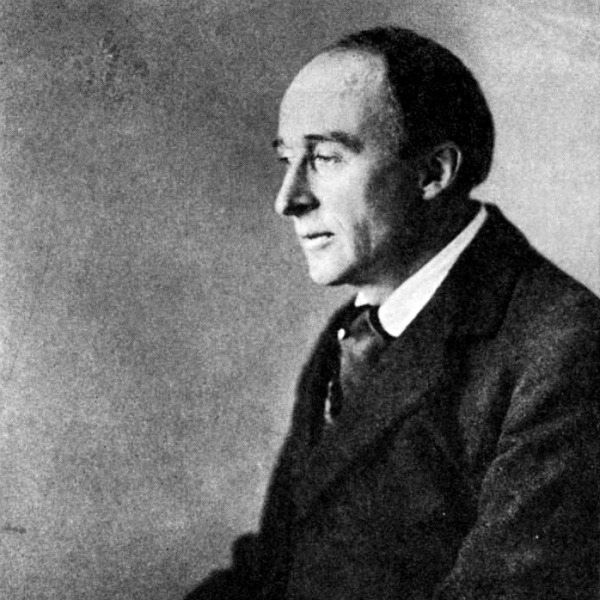
Frederick Delius (1862-1934)

Frederick Delius

Frederick Delius

Frederick Delius was born to a British family in 1862.

As a young man, he traveled to Paris to befriend artists and soak in the bohemian lifestyle there. It is believed that his syphilitic infection originated during these years.

In 1903, at the age of 41, he married a wealthy painter named Jelka Rosen. He had a number of affairs during their marriage, but she never left him.

In 1910, syphilis symptoms began to manifest, chief among them headaches, back aches, and blurred vision.

Within a decade, he could no longer move except with a wheelchair; he was completely blind; and he was on morphine for pain.

Jelka tried her best to take care of him, but she needed help. The couple hired a composer, conductor, and pianist named Eric Fenby, who would serve as Delius’s helper as he navigated the end of his life, dealing with syphilis-related health issues.


Delius’s farewell to music and to life was his setting of some poetry from Walt Whitman’s Leaves of Grass in his Songs of Farewell.  

Conclusion

Syphilis diagnoses – and the stigma and shame surrounding them – profoundly impacted the work of many major composers…and therefore, obviously, left a mark on the history of music.

For many composers, the diagnosis impacted not only their health but also the tone, intensity, and subject matter of their work, from Schubert’s haunting reflections on mortality to Smetana’s anguished depiction of his resulting deafness.

While this music offers us a glimpse into the despair and struggle of a pre-antibiotics syphilis diagnosis, what can’t be seen as clearly is, of course, all of the additional music that the disease deprived us of.

It’s a sad truth that without the scourge of syphilis and its deadly treatments, classical music history would look very different today.

Superstar Pedagogy The Lang Lang Piano Method

Sports fans wear the shirts of their idols, and classical music has never entirely escaped the cult of personality either. Few classical musicians in modern times, with the possible exception of Liberace, have embraced celebrity quite as enthusiastically as Lang Lang.

There is branded merchandise, the carefully scripted aura of fashion and luxury, and, of course, the flamboyant stage persona. Combined with an unhappy and traumatic childhood, and you’ve got a classical rags to riches story.

I have personally seen Lang Lang grinning from t-shirts, but many youngsters can now encounter his animated cartoon personality in the Lang Lang Piano Method.

To commemorate his birthday on 14 June, it is worth asking what this piano primer does for the piano community: does it give back, or does it simply borrow yet another page from the superstar playbook?  

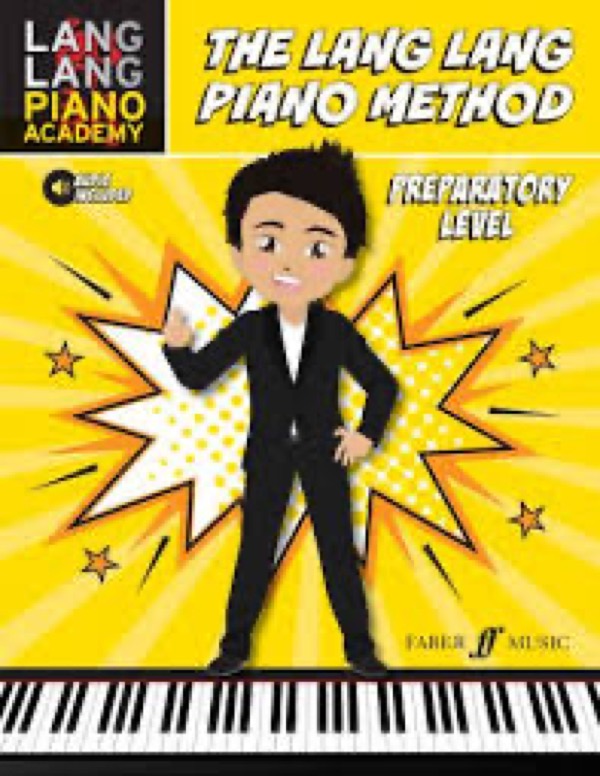
Join the Superhero

The Lang Lang Piano Method, Preparatory Level (Faber Music)

The Lang Lang Piano Method, Preparatory Level (Faber Music)

First things first: I am not a piano teacher, and my personal instruction relied on established methods. I have also lived long enough to understand that things have changed, and that entire generations have never known a time without the internet or digital technology.

Lang Lang introduced his Piano Method as part of the “Lang Lang Piano Academy” with Faber Music in 2016. According to the pianist, it is designed to inspire the next generation of pianists by making the piano feel accessible rather than intimidating.

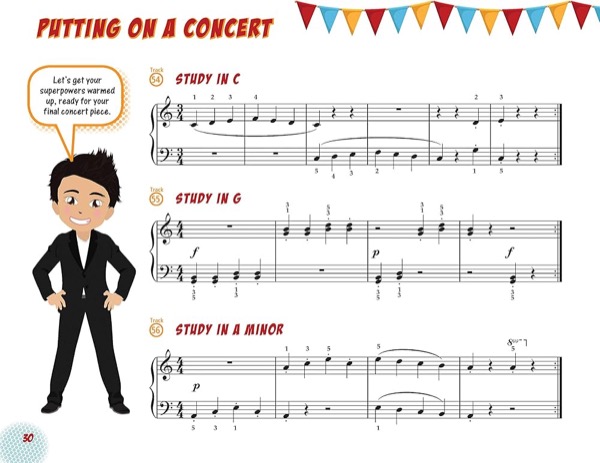
Lang Lang Piano Method excerpt

There are five levels, each with a printed or downloadable book, downloadable audio files, material for teachers, answer sheets, QR codes for quick access, and certificates of completion so you can join the “superhero world of Lang Lang.”

He believes that children should not be faced with nothing but scales and arpeggios, and that joy should always come before discipline. In this case, joy takes the form of a cartoon Lang Lang, whose own voice takes young pianists through each section.  

Education Vision

Lang Lang

Lang Lang

There seems to be a cultural element behind it, as Lang Lang sees his method not as a tool to produce concert pianists, but as a way of exposing millions of children to music-making. “Learning an instrument can be a really important part of a child’s development and a great way to improve many things like concentration and focus.” (Faber Music, 2016)

This piano primer is one aspect of the “Lang Lang International Music Foundation,” founded in 2008. In the prospectus, we read: “We believe that all children should have access to music and music education, regardless of their background or circumstances.”

“At the Lang Lang International Music Foundation®, we strive to educate, inspire, and motivate the next generation of music lovers and performers. By igniting a child’s passion for music, we are helping children worldwide aim for a better future.”   

A Teacher’s Legacy

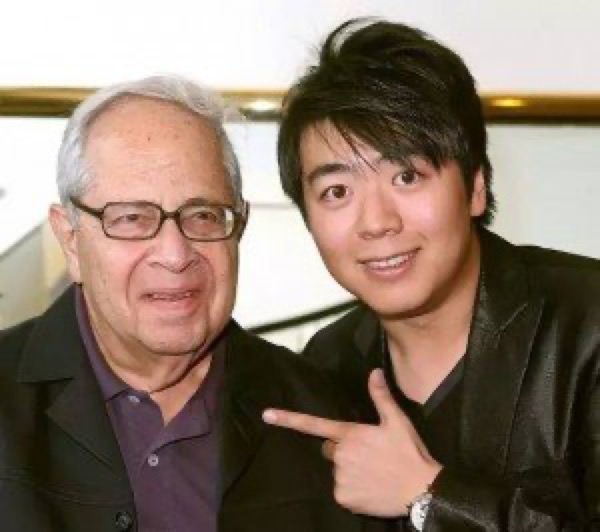
Gary Graffman and Lang Lang

Gary Graffman and Lang Lang

If we’re talking about superstar branding versus artistic philanthropy, we should also remember that Lang Lang received much of his musical training from his much-revered teacher, Gary Graffman, who recently passed away. Teaching Lang Lang, Yuja Wang, and other highly talented Asian youngsters, Graffman didn’t simply teach them to play the piano. Rather, he also instilled in them a sense of giving back to the community.

Graffman was a strong advocate of the arts and arts education, and a few years ago, he wrote something that now feels almost prophetic. “I’d like to add that this diminishment of ALL education in the USA over two generations might help to explain, and perhaps even partially excuse, the uninformed utterances emanating from the mouths of too many of our elected representatives, as well as their complete lack of knowledge or interest in anything to do with the arts.”

“In fact, it would not be at all surprising if many of those representatives who received our typical public education during the last four or five decades have hardly ever, if at all, chosen to visit an art museum or to attend an opera, the ballet or a symphony concert.” (Graffman, Slipped Disc, 2015)  

Inspiration Versus Instruction

Lang Lang with young piano students

Lang Lang with young piano students

I believe that the “Lang Lang Piano Academy” and the “Lang Lang International Music Foundation” are some of the clearest legacies of Gary Graffman’s teaching influence. The Lang Lang Piano Method is probably not the pedagogical blueprint to build Lang Lang clones, but if it inspires more young people to develop a lasting curiosity about music and the arts, we should probably welcome the contribution.

In the reviews by users, the series is called accessible, with specific praise for the Time for a Break audio sections, where Lang Lang plays music purely for its enjoyment value. Some teachers use the books to supplement their usual books, while some teachers are highly resistant to the online/downloadable nature of the project.

And if I personally never have to see Lang Lang perform again, it’s wonderful to see him engaging with young players. We can’t continue to let our classical audiences grey out the attendance; we need to get young students to feel the excitement of music.

As for its pedagogical effectiveness, I will leave that to professional piano teachers to decide.

Saturday, July 4, 2026

Formalwear for Concerts and Operas?


classical concert dress up

A few years ago, a teacher of mine confided to me how much she disliked seeing audience members turn up in hoodies and sneakers. To her, it felt—at least outwardly—like a lack of respect for the formally dressed musicians on stage. But when I saw Sheku Kanneh-Mason perform a concerto at the Royal Festival Hall in a floral shirt, coloured socks, and trainers—and still bring the house down—I found myself reconsidering the question: do we really need to dress formally for concerts anymore?   

What counts as “formal” has always been a moving target, shifting across time, place, and culture. As our lives change, so do our ideas about what different clothes are for—and how we wear them. The shirt, now a staple of formal dress, was once little more than an undergarment; aristocratic men, before the 19th century, thought nothing of wearing stockings and high heels. Today, turning up to a standard concert in full white tie might feel as oddly theatrical as wearing a powdered wig and breeches would have in the 20th century. And in European halls, I’ve often seen audiences in eye-catching traditional dress—surely just as dignified, and just as “formal,” in their own context.

For many people, dressing up—however impractical—is still a way of showing respect: for the performers, and for the art itself. In a sense, audience members and musicians alike accept the small discomforts of formalwear in order to present their best selves to one another, and to the music. Footage from the mid-20th century often shows audiences in uniform evening dress, especially at major festivals such as Bayreuth or Salzburg. Maybe it is this visual memory that has shaped a lasting idea, if not a stereotype, of what concert-going and opera-going are supposed to look like.

That idea still lingers, but its hold is loosening. Older audiences tend to feel more at ease in suits, dresses, and leather shoes—attire that, for many of them, once formed part of everyday life. For younger generations, however, the picture is quite different: while some arrive in business-like or designer outfits, most dress casually—especially at concerts by the crossover stars and other “big names.”

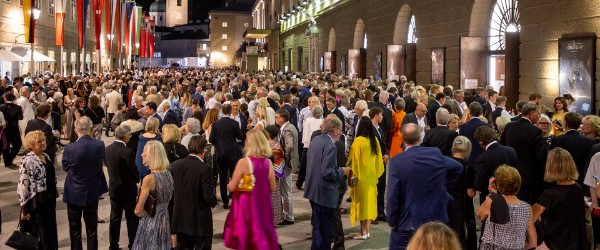
Salzburger Festspiele audience

© Salzburger Festspiele, festival street Hofstallgasse / Andreas Kolarik

Practicality, of course, matters regardless of age. In the damp chill of autumn and winter, fleece jackets and padded vests are everywhere, and soft-soled shoes are often the most comfortable choice. I have, on many occasions, spotted the late Alfred Brendel in the audience—well into his nineties, always with his walking stick—wearing comfortable black leather sneakers beneath a loosely cut suit.

Do audiences today really need to dress formally? Is it still a necessary way of showing respect? Perhaps not—especially as “formalwear” drifts further from everyday life. The pianist Nicolai Lugansky, for example, always appears on stage in impeccable white tie; yet when I happened to see him in the same hall the following evening, he was an entirely unassuming figure in a jumper, casual trousers, black trainers, and a canvas bag slung over his shoulder. I have also seen people attend Bayreuth Festival and Salzburg Festival in T-shirts and slippers without being denied entry—perhaps even a more sensible choice than sitting through the stifling heat of the Festspielhaus, perspiring throughout.   

And yet, speaking for myself, I still like to dress up for concerts—especially when hearing artists I deeply admire. Every concert is an occasion: dressing differently from daily life makes it easier to enter a different state of mind. That, I believe, is true for performers and audiences alike. One need not dress up for the sake of glamour alone, but dress appropriately: bright colours may feel out of place in a Requiem, while lighter music need not be confined to black and white. Rather, one should dress in a way that truly suits the occasion—and even the repertoire.

But if there is one rule for concert dress code, I would say this: nothing that rustles. In moments of stillness, when musical tension hangs by a thread, the slightest crinkle of a down jacket can undo everything.

Twenty Trivia Questions About Classical Music


Today we’re looking at the history of classical music for trivia inspiration. Learn about everything from a composer who murdered his wife, to a Venetian orchestra of talented orphans, to forbidden love affairs, a deaf composer at the premiere of his groundbreaking symphony, and hypnotherapy that inspired a piano concerto.
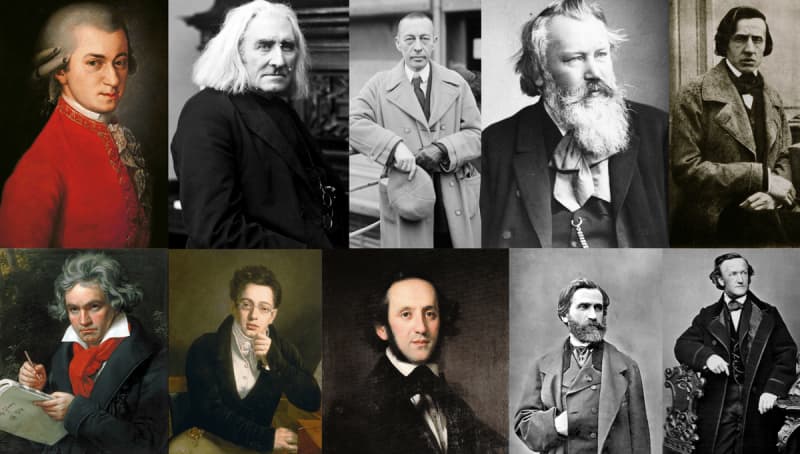
50 Times Great Composers Insulted Other Great Composers

© classicalregister.com

Without further ado, here are our twenty trivia questions from classical music history:

Which composer from Bingen is also known as a saint?

Hildegard of Bingen!

Hildegard of Bingen was born around 1098 in present-day Germany. She started having visions at an early age and joined a Benedictine monastery as a child.

Around 1150 she composed a famous sacred music drama called Ordo Virtutum, or Order of the Virtues.

Hildegard of Bingen wasn’t just a composer. She also wrote theological works based on her visions, as well as scientific and medical texts.

Some modern popes have referred to her as a saint.   

Which composer murdered his first wife and was never punished for it?

Carlo Gesualdo!

In 1586, when he was twenty, Gesualdo married his first cousin, Donna Maria d’Avalos. They had one son.

Four years later, Gesualdo came home and discovered his wife in bed with another man. Gesualdo killed both his wife and her lover with a gun and sword.

The authorities decided he had not committed a crime.   

Which composer died after striking his foot with a staff he used while conducting?

Jean-Baptiste Lully!

Italian composer Jean-Baptiste Lully was both a dancer and musician.

He got a job in the court of Louis XIV. In 1687, to celebrate Louis’s recovery from surgery, he conducted a performance of his Te Deum.

He conducted by pounding a staff on the floor. In the process, he accidentally hit his foot. Gangrene developed and he refused to amputate because he still wanted to be able to dance.

Lully died on 22 March 1687 of his injuries.   

Which composer had seven kids with his second cousin, and thirteen kids with his second wife?

Johann Sebastian Bach!

In 1707, Johann Sebastian Bach married his second cousin, Maria Barbara Bach.

She died tragically and unexpectedly in July 1720.

The following year, Bach married an accomplished young singer named Anna Magdalena. She was twenty and he was thirty-six.

They had thirteen children together. Their youngest child, a daughter named Regina Susanna, was only eight years old when he died.   

Which composer wrote music for a virtuoso orchestra of women who had been abandoned as babies?

Antonio Vivaldi!

He was a teacher at a facility known as the Ospedale della Pietà, which took care of orphaned or abandoned children.

As children, the most musically talented girls were chosen to perform in the figlie di coro, or daughters of the choir. They would both sing and play instruments.

Vivaldi wrote many of his works for them.   

Which composer had a dream that the devil played violin for him – and then woke up and wrote it down?

Giuseppe Tartini!

Giuseppe Tartini wrote in Jérôme Lalande’s Voyage d’un François en Italie:

One night, in the year 1713 I dreamed I had made a pact with the devil for my soul. Everything went as I wished: my new servant anticipated my every desire. Among other things, I gave him my violin to see if he could play. How great was my astonishment on hearing a sonata so wonderful and so beautiful, played with such great art and intelligence, as I had never even conceived in my boldest flights of fantasy. I felt enraptured, transported, enchanted: my breath failed me, and I awoke. I immediately grasped my violin in order to retain, in part at least, the impression of my dream.

Even so, Tartini insisted that the work was not nearly as impressive as the one he’d dreamed.  

Wolfgang Amadeus Mozart!

In 1781, Mozart was aiming to ingratiate himself with Emperor Joseph II, while still remaining employed with Prince-Archbishop Hieronymus Colloredo in his hometown of Salzburg.

Unfortunately, Colloredo kept Mozart from making lucrative appearances, and acrimony grew between them.

Mozart tried to resign, but Colloredo refused to accept the resignation.

Meanwhile, Mozart’s father was horrified at his son’s behavior and was encouraging him to make nice with the archbishop.

The following month, Colloredo finally accepted the resignation…but not before having his steward kick Mozart on the behind.

Mozart decided to make a go at freelancing in Vienna. The decision would change his life and career and music forever.   

Which composer was also one of the best swordsmen in Europe?

Joseph Bologne, Chevalier de Saint-Georges!

Bologne was the illegitimate son of a white planter named Georges and an enslaved Black woman named Nanon.

When he was seven, he was brought to France to be educated. At thirteen, he enrolled in a fencing academy. He soon proved to be a talented student.

A fencing master derided him by labeling him an “upstart mulatto.” Bologne beat that fencing master in a match, to the intense pride of his father.

Bologne also studied music as a teenager and became a great violinist and composer as an adult.  

Which composer had his skull stolen out of his coffin?

Joseph Haydn!

Haydn died in 1809 in Vienna and was buried. Soon after, the gravedigger was bribed by two men named Joseph Carl Rosenbaum and Johann Nepomuk Peter.

They wanted to examine Haydn’s skull because they were interested in phrenology, the pseudo-science then in vogue of associating character traits or talents with physical features.

Haydn’s skull ended up in Rosenbaum’s possession, and a series of darkly zany misadventures occurred.

Haydn’s skull and body were only reunited in the twentieth century, when a descendent of Haydn’s employer built a tomb for him.  

Which composer went deaf and had to be turned around to see the audience at the premiere of his ninth symphony?

Ludwig van Beethoven!

Beethoven was only in his mid-twenties in the 1790s when he first started noticing that his hearing was deteriorating.

By the time of the premiere of his ninth symphony in 1824, he had been completely deaf for a decade.

After the work’s first performance was over, he didn’t realize how the audience was applauding, and so singer Caroline Unger turned him around so he could see.   

Which composer and pianist were kept from marrying by the pianist’s father?

Robert Schumann and Clara Wieck!

Clara Wieck was born in 1819 and her music teacher father was insistent on molding her into a great musician.

Between his strict teaching regimen, his daughter’s astonishing inborn talent, and a little luck, Clara became one of the greatest pianists in Europe.

Another older piano student named Robert Schumann was rooming with the Wiecks. To Wieck’s horror, Robert and Clara fell in love. Robert proposed when she was eighteen, and she accepted.

Robert and Clara actually went to court to bypass Wieck. The court battle was bruising, but they were married in September 1840, the day before Clara’s 21st birthday.

Their love affair has since become one of the best-known love stories in the history of classical music.  

Which composer and violinist did people think had made a deal with the devil?

Niccolò Paganini!

The violin has always had a bit of a demonic connotation (see the Devil’s Trill sonata!). This may have started because portable violin-like instruments were popular in dances during the Renaissance and had connections with physical love.

Violinist Niccolò Paganini was born in Italy in 1782, and he was so good at playing the instrument that audiences struggled to believe his talent had a natural explanation.

His appearance contributed to the myth. He was pale and vampiric, and looked like a cadaver.

He was also said to be a dangerous womanizer, which didn’t help his reputation!  

Which composer almost carried out a mass shooting – but didn’t because he was a composer?

Hector Berlioz!

Berlioz was a promising young composer when he became involved with pianist Marie Moke, sometimes known as Camille Moke. They became engaged when she was nineteen.

Berlioz traveled to Italy to compose. While there, he got news that she’d broken off the engagement and married an heir to a major piano making business by the name Camille Pleyel. (Yep: two Camilles in one marriage!)

Berlioz was so infuriated that he got on a carriage to go to Paris, carrying two pistols. He intended to shoot Moke, her mother, and then himself.

However, his rage eventually abated, and he decided not to go through with his violent plan, in part due to the music that the world would lose out on if he’d kill himself at the start of his career.

Beyond a doubt, it’s one of the most disturbing stories in classical music history.   

Which composer fell in love with Clara Schumann…but never married her?

Johannes Brahms!

Brahms was only twenty years old when he came to visit Robert and Clara Schumann in the autumn of 1853.

Both Robert and Clara were hugely impressed by the young man and took him under their wings. Robert even wrote a famous article in which he hailed Brahms as the savior of music.

In February 1854, Robert’s mental health issues came to a head, and he went to an asylum for treatment, leaving behind a distraught pregnant Clara and seven other young children.

Brahms tried to help Clara how he could, and, awkwardly, fell in love with her.

For a variety of reasons, even after Robert’s death, they never married. But they continued to love each other deeply and inspire one another creatively until Clara died in 1896.   

Which composer died after getting cholera from drinking unboiled water?

Pyotr Ilyich Tchaikovsky!

Tchaikovsky was feeling uncharacteristically optimistic after writing and premiering his famous sixth symphony – also known as the Pathetique – in October 1893.

However, his life was cut short just a few days later, when he went to a restaurant and drank a glass of unboiled water. There was a cholera outbreak in St. Petersburg at the time. Tchaikovsky came down with cholera and after an illness of just a few days’ duration, died.

Rumors have circulated that Tchaikovsky’s death was suicide or forced suicide. The New Grove Dictionary of Music reports, “We do not know how Tchaikovsky died. We may never find out.”  

Which composer and pianist had to get hypnotherapy to cure his writer’s block?

Sergei Rachmaninoff!

In 1897 composer Sergei Rachmaninoff suffered a humiliating premiere of his first symphony. The conductor may have been drunk, and the critics panned the work.

For three years, he couldn’t compose a thing, and he sank into a deep depression. After months of this, his aunt suggested that he seek help from a mental health professional, which he did.

He began working with a doctor named Nikolai Dahl, seeing him daily for four months in early 1900. He was composing again by the summer.

His next big work is perhaps his most famous – his second piano concerto. He dedicated the work to Dahl in appreciation.  

Which composer once claimed he only ate white food?

Erik Satie!

Satie wrote in his book, the amusingly titled Memoirs of an Amnesiac:

My only nourishment consists of food that is white: eggs, sugar, grated bones, the fat of dead animals, veal, salt, coconuts, chicken cooked in white water, fruit-mould, rice, turnips, camphorated sausages, pastry, cheese (white varieties), cotton salad, and certain kinds of fish (without their skin). I boil my wine and drink it cold mixed with the juice of the Fuchsia. I am a hearty eater, but never speak while eating, for fear of strangling.

This portion of the memoir is somewhat satirical, but it’s unclear exactly how much he was exaggerating.   

Which composer left his first wife, who later shot herself?

Claude Debussy!

Debussy met and married his first wife, Lilly Texier, in 1899.

Within four years, Debussy had grown bored of her. She wasn’t a sparkling intellect, and he felt she was too dull. She also never gave birth to a child, which disappointed Debussy.

Debussy’s solution to his marital troubles was to have an affair with a glamorous married singer named Emma Bardac.

The day before their fifth wedding anniversary, Lilly shot herself at the Place de la Concorde. She didn’t die, but the dramatic gesture didn’t save their marriage.

Debussy would eventually divorce Lilly and marry Bardac.  

Which composer never married and had a houseful of Siamese cats?

Maurice Ravel!

The perpetually single composer lived in a magical house called Belvedere outside Paris. Instead of a wife or lover or children, he filled Belvedere with various mechanical trinkets, Siamese cats, and music.

In his opera L’enfant et les sortilèges Ravel we an aria called Duo miaulé, or Meowed Duet. This work was clearly inspired by his cats.   

Which American composer died of a brain tumor in his late thirties?

George Gershwin!

In the mid-1930s, at the height of his creative powers, Gershwin began complaining about headaches, stomach aches, and other symptoms.

In 1937, while soloing with the Los Angeles Philharmonic, he had a brief seizure, followed by an olfactory hallucination of burning rubber.

He began deteriorating mentally, rubbing chocolate on his body and trying to shove a man out of a car. Doctors labeled him a hysteric.

However, when he went to the hospital for the last time, it was clear to doctors something was physically wrong. Gershwin was diagnosed with a brain tumor and died on the operating table.  

Conclusion

Classical music trivia is full of facts about generations of musicians and performers. We hope you enjoyed these twenty, and that they’re a good jumping off point to learn more!

Featured Post

Debunking the Top 5 Myths About Chopin

  Over time, selective anecdotes, early biographies, and nineteenth-century ideals of the “suffering artist” have hardened into familiar cli...