Saturday, July 4, 2026

Twenty Trivia Questions About Classical Music


Today we’re looking at the history of classical music for trivia inspiration. Learn about everything from a composer who murdered his wife, to a Venetian orchestra of talented orphans, to forbidden love affairs, a deaf composer at the premiere of his groundbreaking symphony, and hypnotherapy that inspired a piano concerto.
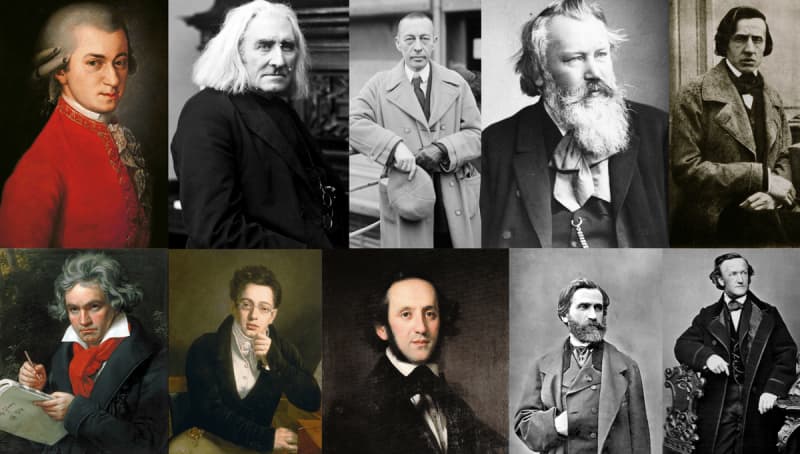
50 Times Great Composers Insulted Other Great Composers

© classicalregister.com

Without further ado, here are our twenty trivia questions from classical music history:

Which composer from Bingen is also known as a saint?

Hildegard of Bingen!

Hildegard of Bingen was born around 1098 in present-day Germany. She started having visions at an early age and joined a Benedictine monastery as a child.

Around 1150 she composed a famous sacred music drama called Ordo Virtutum, or Order of the Virtues.

Hildegard of Bingen wasn’t just a composer. She also wrote theological works based on her visions, as well as scientific and medical texts.

Some modern popes have referred to her as a saint.   

Which composer murdered his first wife and was never punished for it?

Carlo Gesualdo!

In 1586, when he was twenty, Gesualdo married his first cousin, Donna Maria d’Avalos. They had one son.

Four years later, Gesualdo came home and discovered his wife in bed with another man. Gesualdo killed both his wife and her lover with a gun and sword.

The authorities decided he had not committed a crime.   

Which composer died after striking his foot with a staff he used while conducting?

Jean-Baptiste Lully!

Italian composer Jean-Baptiste Lully was both a dancer and musician.

He got a job in the court of Louis XIV. In 1687, to celebrate Louis’s recovery from surgery, he conducted a performance of his Te Deum.

He conducted by pounding a staff on the floor. In the process, he accidentally hit his foot. Gangrene developed and he refused to amputate because he still wanted to be able to dance.

Lully died on 22 March 1687 of his injuries.   

Which composer had seven kids with his second cousin, and thirteen kids with his second wife?

Johann Sebastian Bach!

In 1707, Johann Sebastian Bach married his second cousin, Maria Barbara Bach.

She died tragically and unexpectedly in July 1720.

The following year, Bach married an accomplished young singer named Anna Magdalena. She was twenty and he was thirty-six.

They had thirteen children together. Their youngest child, a daughter named Regina Susanna, was only eight years old when he died.   

Which composer wrote music for a virtuoso orchestra of women who had been abandoned as babies?

Antonio Vivaldi!

He was a teacher at a facility known as the Ospedale della Pietà, which took care of orphaned or abandoned children.

As children, the most musically talented girls were chosen to perform in the figlie di coro, or daughters of the choir. They would both sing and play instruments.

Vivaldi wrote many of his works for them.   

Which composer had a dream that the devil played violin for him – and then woke up and wrote it down?

Giuseppe Tartini!

Giuseppe Tartini wrote in Jérôme Lalande’s Voyage d’un François en Italie:

One night, in the year 1713 I dreamed I had made a pact with the devil for my soul. Everything went as I wished: my new servant anticipated my every desire. Among other things, I gave him my violin to see if he could play. How great was my astonishment on hearing a sonata so wonderful and so beautiful, played with such great art and intelligence, as I had never even conceived in my boldest flights of fantasy. I felt enraptured, transported, enchanted: my breath failed me, and I awoke. I immediately grasped my violin in order to retain, in part at least, the impression of my dream.

Even so, Tartini insisted that the work was not nearly as impressive as the one he’d dreamed.  

Wolfgang Amadeus Mozart!

In 1781, Mozart was aiming to ingratiate himself with Emperor Joseph II, while still remaining employed with Prince-Archbishop Hieronymus Colloredo in his hometown of Salzburg.

Unfortunately, Colloredo kept Mozart from making lucrative appearances, and acrimony grew between them.

Mozart tried to resign, but Colloredo refused to accept the resignation.

Meanwhile, Mozart’s father was horrified at his son’s behavior and was encouraging him to make nice with the archbishop.

The following month, Colloredo finally accepted the resignation…but not before having his steward kick Mozart on the behind.

Mozart decided to make a go at freelancing in Vienna. The decision would change his life and career and music forever.   

Which composer was also one of the best swordsmen in Europe?

Joseph Bologne, Chevalier de Saint-Georges!

Bologne was the illegitimate son of a white planter named Georges and an enslaved Black woman named Nanon.

When he was seven, he was brought to France to be educated. At thirteen, he enrolled in a fencing academy. He soon proved to be a talented student.

A fencing master derided him by labeling him an “upstart mulatto.” Bologne beat that fencing master in a match, to the intense pride of his father.

Bologne also studied music as a teenager and became a great violinist and composer as an adult.  

Which composer had his skull stolen out of his coffin?

Joseph Haydn!

Haydn died in 1809 in Vienna and was buried. Soon after, the gravedigger was bribed by two men named Joseph Carl Rosenbaum and Johann Nepomuk Peter.

They wanted to examine Haydn’s skull because they were interested in phrenology, the pseudo-science then in vogue of associating character traits or talents with physical features.

Haydn’s skull ended up in Rosenbaum’s possession, and a series of darkly zany misadventures occurred.

Haydn’s skull and body were only reunited in the twentieth century, when a descendent of Haydn’s employer built a tomb for him.  

Which composer went deaf and had to be turned around to see the audience at the premiere of his ninth symphony?

Ludwig van Beethoven!

Beethoven was only in his mid-twenties in the 1790s when he first started noticing that his hearing was deteriorating.

By the time of the premiere of his ninth symphony in 1824, he had been completely deaf for a decade.

After the work’s first performance was over, he didn’t realize how the audience was applauding, and so singer Caroline Unger turned him around so he could see.   

Which composer and pianist were kept from marrying by the pianist’s father?

Robert Schumann and Clara Wieck!

Clara Wieck was born in 1819 and her music teacher father was insistent on molding her into a great musician.

Between his strict teaching regimen, his daughter’s astonishing inborn talent, and a little luck, Clara became one of the greatest pianists in Europe.

Another older piano student named Robert Schumann was rooming with the Wiecks. To Wieck’s horror, Robert and Clara fell in love. Robert proposed when she was eighteen, and she accepted.

Robert and Clara actually went to court to bypass Wieck. The court battle was bruising, but they were married in September 1840, the day before Clara’s 21st birthday.

Their love affair has since become one of the best-known love stories in the history of classical music.  

Which composer and violinist did people think had made a deal with the devil?

Niccolò Paganini!

The violin has always had a bit of a demonic connotation (see the Devil’s Trill sonata!). This may have started because portable violin-like instruments were popular in dances during the Renaissance and had connections with physical love.

Violinist Niccolò Paganini was born in Italy in 1782, and he was so good at playing the instrument that audiences struggled to believe his talent had a natural explanation.

His appearance contributed to the myth. He was pale and vampiric, and looked like a cadaver.

He was also said to be a dangerous womanizer, which didn’t help his reputation!  

Which composer almost carried out a mass shooting – but didn’t because he was a composer?

Hector Berlioz!

Berlioz was a promising young composer when he became involved with pianist Marie Moke, sometimes known as Camille Moke. They became engaged when she was nineteen.

Berlioz traveled to Italy to compose. While there, he got news that she’d broken off the engagement and married an heir to a major piano making business by the name Camille Pleyel. (Yep: two Camilles in one marriage!)

Berlioz was so infuriated that he got on a carriage to go to Paris, carrying two pistols. He intended to shoot Moke, her mother, and then himself.

However, his rage eventually abated, and he decided not to go through with his violent plan, in part due to the music that the world would lose out on if he’d kill himself at the start of his career.

Beyond a doubt, it’s one of the most disturbing stories in classical music history.   

Which composer fell in love with Clara Schumann…but never married her?

Johannes Brahms!

Brahms was only twenty years old when he came to visit Robert and Clara Schumann in the autumn of 1853.

Both Robert and Clara were hugely impressed by the young man and took him under their wings. Robert even wrote a famous article in which he hailed Brahms as the savior of music.

In February 1854, Robert’s mental health issues came to a head, and he went to an asylum for treatment, leaving behind a distraught pregnant Clara and seven other young children.

Brahms tried to help Clara how he could, and, awkwardly, fell in love with her.

For a variety of reasons, even after Robert’s death, they never married. But they continued to love each other deeply and inspire one another creatively until Clara died in 1896.   

Which composer died after getting cholera from drinking unboiled water?

Pyotr Ilyich Tchaikovsky!

Tchaikovsky was feeling uncharacteristically optimistic after writing and premiering his famous sixth symphony – also known as the Pathetique – in October 1893.

However, his life was cut short just a few days later, when he went to a restaurant and drank a glass of unboiled water. There was a cholera outbreak in St. Petersburg at the time. Tchaikovsky came down with cholera and after an illness of just a few days’ duration, died.

Rumors have circulated that Tchaikovsky’s death was suicide or forced suicide. The New Grove Dictionary of Music reports, “We do not know how Tchaikovsky died. We may never find out.”  

Which composer and pianist had to get hypnotherapy to cure his writer’s block?

Sergei Rachmaninoff!

In 1897 composer Sergei Rachmaninoff suffered a humiliating premiere of his first symphony. The conductor may have been drunk, and the critics panned the work.

For three years, he couldn’t compose a thing, and he sank into a deep depression. After months of this, his aunt suggested that he seek help from a mental health professional, which he did.

He began working with a doctor named Nikolai Dahl, seeing him daily for four months in early 1900. He was composing again by the summer.

His next big work is perhaps his most famous – his second piano concerto. He dedicated the work to Dahl in appreciation.  

Which composer once claimed he only ate white food?

Erik Satie!

Satie wrote in his book, the amusingly titled Memoirs of an Amnesiac:

My only nourishment consists of food that is white: eggs, sugar, grated bones, the fat of dead animals, veal, salt, coconuts, chicken cooked in white water, fruit-mould, rice, turnips, camphorated sausages, pastry, cheese (white varieties), cotton salad, and certain kinds of fish (without their skin). I boil my wine and drink it cold mixed with the juice of the Fuchsia. I am a hearty eater, but never speak while eating, for fear of strangling.

This portion of the memoir is somewhat satirical, but it’s unclear exactly how much he was exaggerating.   

Which composer left his first wife, who later shot herself?

Claude Debussy!

Debussy met and married his first wife, Lilly Texier, in 1899.

Within four years, Debussy had grown bored of her. She wasn’t a sparkling intellect, and he felt she was too dull. She also never gave birth to a child, which disappointed Debussy.

Debussy’s solution to his marital troubles was to have an affair with a glamorous married singer named Emma Bardac.

The day before their fifth wedding anniversary, Lilly shot herself at the Place de la Concorde. She didn’t die, but the dramatic gesture didn’t save their marriage.

Debussy would eventually divorce Lilly and marry Bardac.  

Which composer never married and had a houseful of Siamese cats?

Maurice Ravel!

The perpetually single composer lived in a magical house called Belvedere outside Paris. Instead of a wife or lover or children, he filled Belvedere with various mechanical trinkets, Siamese cats, and music.

In his opera L’enfant et les sortilèges Ravel we an aria called Duo miaulé, or Meowed Duet. This work was clearly inspired by his cats.   

Which American composer died of a brain tumor in his late thirties?

George Gershwin!

In the mid-1930s, at the height of his creative powers, Gershwin began complaining about headaches, stomach aches, and other symptoms.

In 1937, while soloing with the Los Angeles Philharmonic, he had a brief seizure, followed by an olfactory hallucination of burning rubber.

He began deteriorating mentally, rubbing chocolate on his body and trying to shove a man out of a car. Doctors labeled him a hysteric.

However, when he went to the hospital for the last time, it was clear to doctors something was physically wrong. Gershwin was diagnosed with a brain tumor and died on the operating table.  

Conclusion

Classical music trivia is full of facts about generations of musicians and performers. We hope you enjoyed these twenty, and that they’re a good jumping off point to learn more!

Friday, July 3, 2026

A Trip to the Underworld for a Party: Offenbach’s Orphée aux enfers


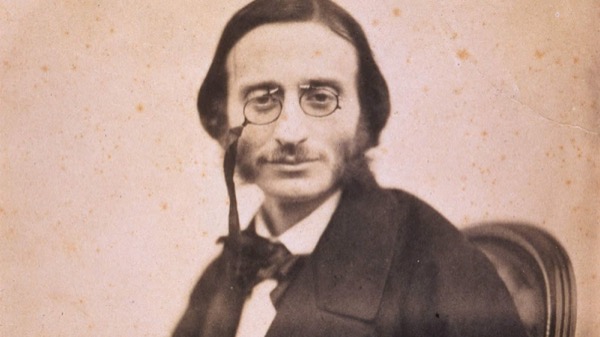
Jacques Offenbach

Jacques Offenbach

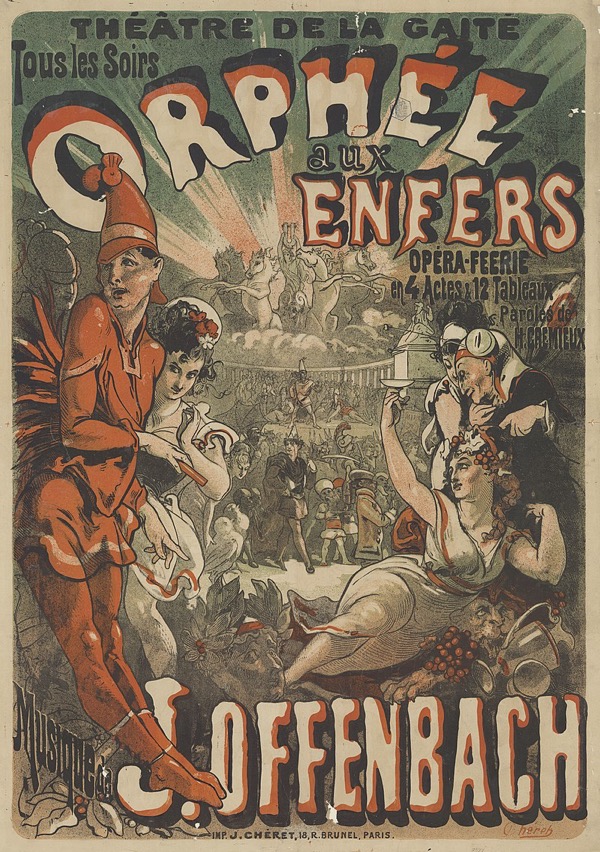
Jump to 1858. Jacques Offenbach set the story, written by Hector Crémieux and Ludovic Halévy, first as a two-act opéra bouffon at the Théâtre des Bouffes-Parisiens, Paris, on 21 October 1858. Over the next 12 years, Offenbach revised and expanded it to become a four-act “opéra féerie”, given at the Théâtre de la Gaîté, Paris, on 7 February 1874. In this later, very successful version, Offenbach made his name around the world.

Poster for the Paris Revival of 1878

Poster for the Paris Revival of 1878

Offenbach has taken the story of Orpheus and Eurydice and set it on its head. Orpheus isn’t the son of Apollo but just a countryside violin teacher; he and his wife Eurydice mutually detest each other. When Eurydice is abducted by Pluto, Orpheus is glad she’s gone. It takes Public Opinion (who says she’s the guardian of morality). Eurydice is happy to have the God of Death as her lover. Orpheus wants to pursue the shepherdess Chloë, but is harried by Public Opinion, who will ruin his violin teaching career unless he goes to rescue his wife.

Meanwhile, up in Olympus, reports of Pluto’s beautiful new woman are getting around. Diane is lamenting the loss of Actaeon, who Jupiter has turned into a stag to protect her reputation. Cupid and Venus have returned from their own amatory adventures, and everyone’s in revolt about the tedium of Olympus and their boring diet of ambrosia and nectar. They’re not fond of Jupiter’s reign, either. When Orpheus arrives with Public Opinion, Jupiter decides to go to the Underworld to sort things out, and all the gods decide to go with him as a holiday.

Eurydice is bored in the Underworld. She’s been locked up by Pluto and only has a country bumpkin for a jailer. Jupiter finds Eurydice and, in the guise of a golden fly, sings a love duet with her (he can only buzz in his fly guise). He’s able to free her, and they go to find the other gods in the Underworld.

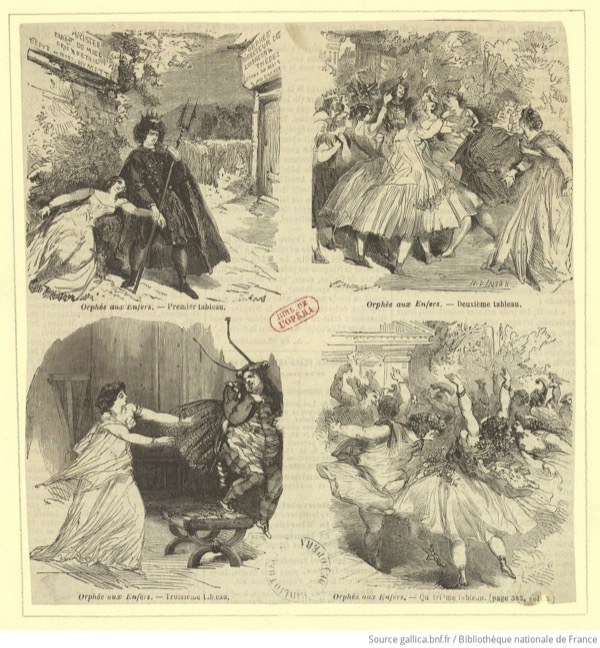
Edmond Morin: Scenes from Orphée aux enfers, ca 1850 (Gallica, btv1b53117028m)

Edmond Morin: Scenes from Orphée aux enfers, ca 1850 (Gallica, btv1b53117028m)

They join the other gods who are having an enormous party, or, from the description, perhaps an orgy, where, as one writer puts it, ‘ambrosia, nectar, and propriety are nowhere to be seen’. Eurydice is in disguise as a Bacchante (a wild woman who follows Bacchus). A dance is called for, and Jupiter leads everyone in a minuet, which is boring. The gods then come up with a fast dance in honour of the Underworld, the Galop infernal.

Orpheus arrives with Public Opinion. He’s permitted to walk out with Eurydice but is forced to look back when Jupiter throws an unexpected lightning bolt, so he jumps and looks back. Eurydice vanishes. Jupiter then proclaims that she will belong to the god Bacchus and become one of his priestesses. Orpheus is free of his hated wife, Pluto doesn’t want her back, and all ends resolved, except, perhaps, for Eurydice, who is not consulted on her wishes.

This opera was a box office success but, critically, was received with mixed opinion: some hated the change to a beloved story and librettists’ disrespect for classical mythology, while others found it ‘unprecedented, splendid, outrageous, gracious, delightful, witty, amusing, successful, perfect, tuneful’. The scene in Olympus ‘was widely seen as a veiled satire of the court and government of Napoleon III, Emperor of the French’. The opera made Offenbach’s name, rescued his opera company from financial problems, and broke all box office records. It was staged widely through France and then internationally, and continues to hit the stage in the 21st century.

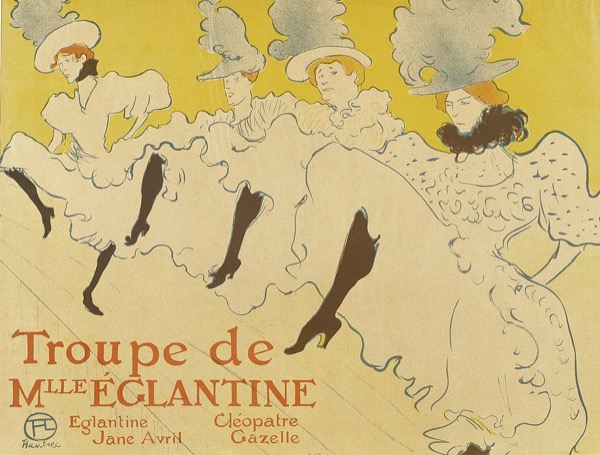
The Galop Infernal in the final act is, of course, what is now known more familiarly as the Can-Can. The can-can was a dance in the musical halls of Paris starting in the 1840s, developing from the quadrille, a dance for 4 or more couples. It gradually evolved into a dance that featured high kicks, splits (or jump splits) and cartwheels, all the while the dancer’s long skirts and petticoats were being vigorously shaken. Eventually, the couple-pairing of the original can-can gave way to the chorus line so familiar today.

Henri de Toulouse-Lautrec: <em>Troupe de Mlle Églantine</em>, 1895, showing the Can-Can.

Henri de Toulouse-Lautrec: Troupe de Mlle Églantine, 1895, showing the Can-Can

By the end of the 19th century, the French cabarets such as the Moulin Rouge and Folies Bergère used the Galop infernal to accompany the dance, and the association continues today. In actuality, many different composers have written music for the dance, including Franz Lehár and Cole Porter.


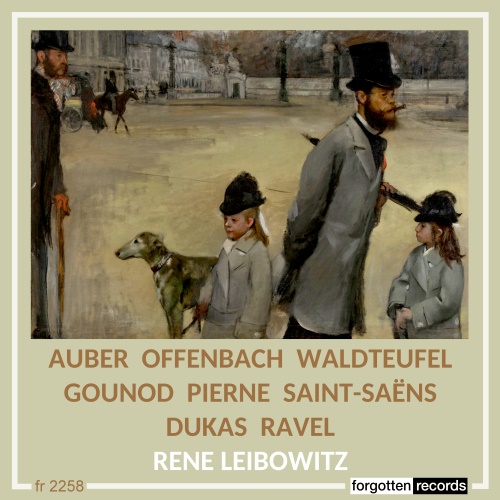
This recording was made in June 1960 by René Leibowitz, leading the Orchestre de la Société des Concerts de Paris.

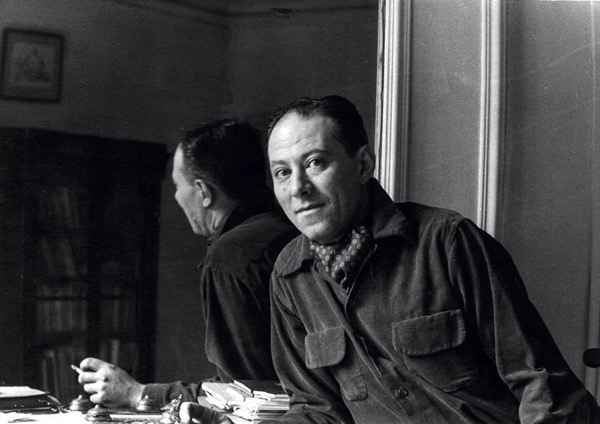
René Leibowitz

René Leibowitz

René Leibowitz (1913–1972) was a composer in the Second Viennese style and devoted follower of Arnold Schoenberg, and a conductor of a wide range of music, from Beethoven to Gershwin. Starting in the 1950s, Leibowitz conducted recordings of seven complete operas, including Orphée aux enfers, which were well received. In his later years, he recorded a set of Beethoven symphonies and was among the first to follow Beethoven’s metronome markings. Although he wasn’t the first to record this, his version was praised for its ensemble playing. As a teacher, his most important pupils were Pierre Boulez and Jacques-Louis Monod, each of whom followed a different path in 20th-century music. At his death, Leibowitz left a compositional estate of nearly 100 pieces.

The Orchestre de la Société des Concerts de Paris (or, more accurately, the Orchestre de la Société des Concerts du Conservatoire) was established in 1828 and comprised the professors of the Paris Conservatoire and their pupils. It closed in 1967 and became the basis for the Orchestre de Paris, which still plays today.

Auber-Offenbach-Waldteufel-Gounod-Pierné-Saint-Saëns-René Leibowitz

Performed by
René Leibowitz
Orchestre de la Société des Concerts de Paris

Recorded in 1960

Official Website

When Sokolov Listens The Rise of Alexandra Dovgan (Born on July 1, 2007)


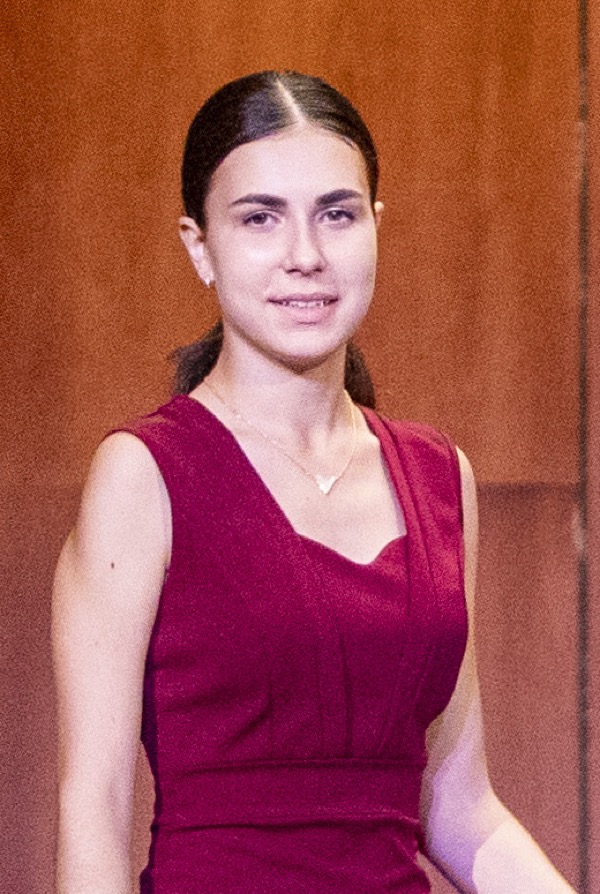
The Russian pianist Alexandra Dovgan had already collected five competition victories by the age of thirteen, receiving her technical and musical training under Mira Marchenko at Moscow’s Central Music School.

Beyond prizes and accolades, Dovgan has also attracted the attention of Grigory Sokolov, who became an important artistic mentor and advocate. To celebrate Dovgan’s birthday on 1 July, let’s explore the artistic connection between the famously private Sokolov and one of the most compelling young pianists of her generation.

Alexandra Dovgan

Alexandra Dovgan   

El País Semanal features on Sokolov and Dovgan

Alexandra Dovgan

Alexandra Dovgan

The most comprehensive and well-researched account of the connection between Grigory Sokolov and Alexandra Dovgan comes from the Spanish author and journalist Jesús Ruiz Mantilla. He regularly publishes interviews, reports, profiles, and music criticism.

Ruiz also has a literary career, having published eight novels, essays, plays, and poems. In a weekend feature for El País, a major Spanish newspaper, Ruiz traces the artistic transmission between generations of Russian pianism by focusing on the almost mythical Sokolov and the exceptionally mature young pianist Alexandra Dovgan. (Mantilla, “Grigori Sokolov y Alexandra Dovgan,” El Pais Semanal 2021)  

First Encounter

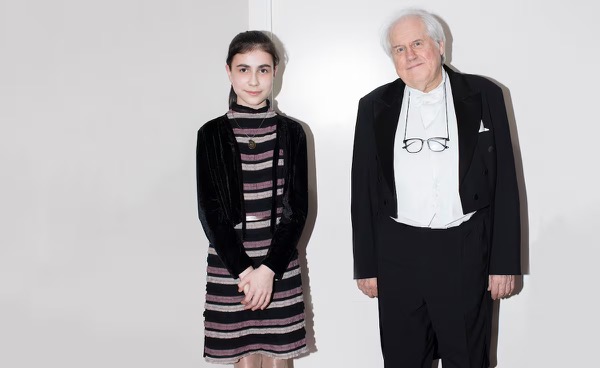
Alexandra Dovgan and Grigory Sokolov

Alexandra Dovgan and Grigory Sokolov

Apparently, Sokolov became aware of Dovgan when he was invited to look at a number of videos featuring new talents. While he typically listens to only a piece or two, in Dovgan’s case, he continued for nearly two hours.

Sokolov explained, “It’s not that I think the others were worse, but in her case, I discovered a link that connects her musical world with mine.” Sokolov wanted to meet her, and since then, they have exchanged ideas.

These meetings aren’t lessons, as Dovgan has her own teachers who train her exceptionally well, but according to Sokolov, it’s an “exchange between two colleagues.” Sokolov is a famously solitary man, devoted like a monk to his own constant refinement, so it is highly unusual for him to dedicate time to engage with other pianists.  

In Dialogue

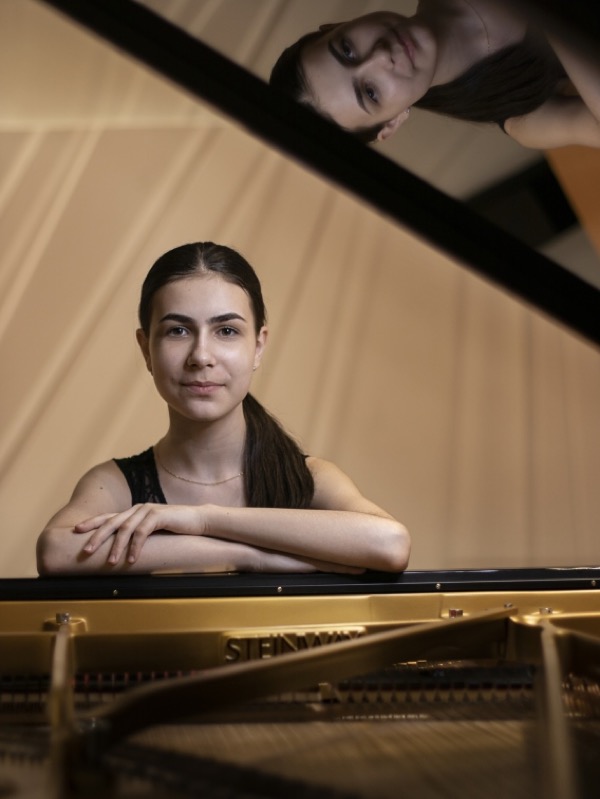
Alexandra Dovgan at the piano

Alexandra Dovgan at the piano

They first met in Amsterdam and barely exchanged a few words, but during their second meeting, they focused on understanding the instrument they would be playing. They discussed the age, the makers, and the materials of the piano, connecting the body and soul of the instrument to the expression of music.

They also considered the concept of tempo in compositions, and Dovgan recalled that “the maestro told her that she must be honest in every circumstance. Not only as a person and as a performer, but also that she must be very careful and faithful to the scores, and must thoroughly study the tempos.”

This, according to Sokolov, is where the magic of music lies and how he manages to hold the audience’s attention. “It’s about bringing music created in another time into this era and making it seem as if it’s being conceived in that very moment.”  

Sokolov’s endorsement of Dovgan

Alexandra Dovgan

Alexandra Dovgan

Sokolov also introduced Dovgan to his longtime manager and producer, Franco Panozzo. He played him a sound recording of Dovgan’s performance of the Mendelssohn Piano Concerto No. 1, and Panozzo reportedly concluded that it was performed by a great artist.

He then showed him the video of the 12-year-old Dovgan, and Panozzo was speechless and immediately signed her. Sokolov still refuses to grant interviews about himself, but he has nothing but praise for Dovgan.

“At 13, she can hardly be called a child prodigy, because while she is a prodigy, it’s not child’s play. What one hears when watching her is the performance of an adult. It is a special pleasure for me to commend the artistry of her remarkable music teacher, Mira Marchenko. However, there are some things that cannot be taught or learned. Alexandra Dovgan’s talent is exceptionally harmonious. Her playing is honest and focused. I predict a great future for her.”

On This Day 3 July: Carlos Kleiber Was Born


For a good number of commentators and experts, Carlos Kleiber, born on 3 July 1930 in Berlin, is regarded as among the greatest conductors of all time. “His gifts are musical and dramatic insight, analytical abilities, technique, and his methods of explaining himself make him the greatest conductor of our day.” Plácido Domingo relates, “When I work with him, I feel that he knows why the composer wrote every note, treated every phrase, conceived of every bit of orchestral color in a particular way.”

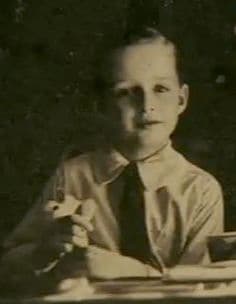
Carlos Kleiber as a boy

Carlos Kleiber as a boy

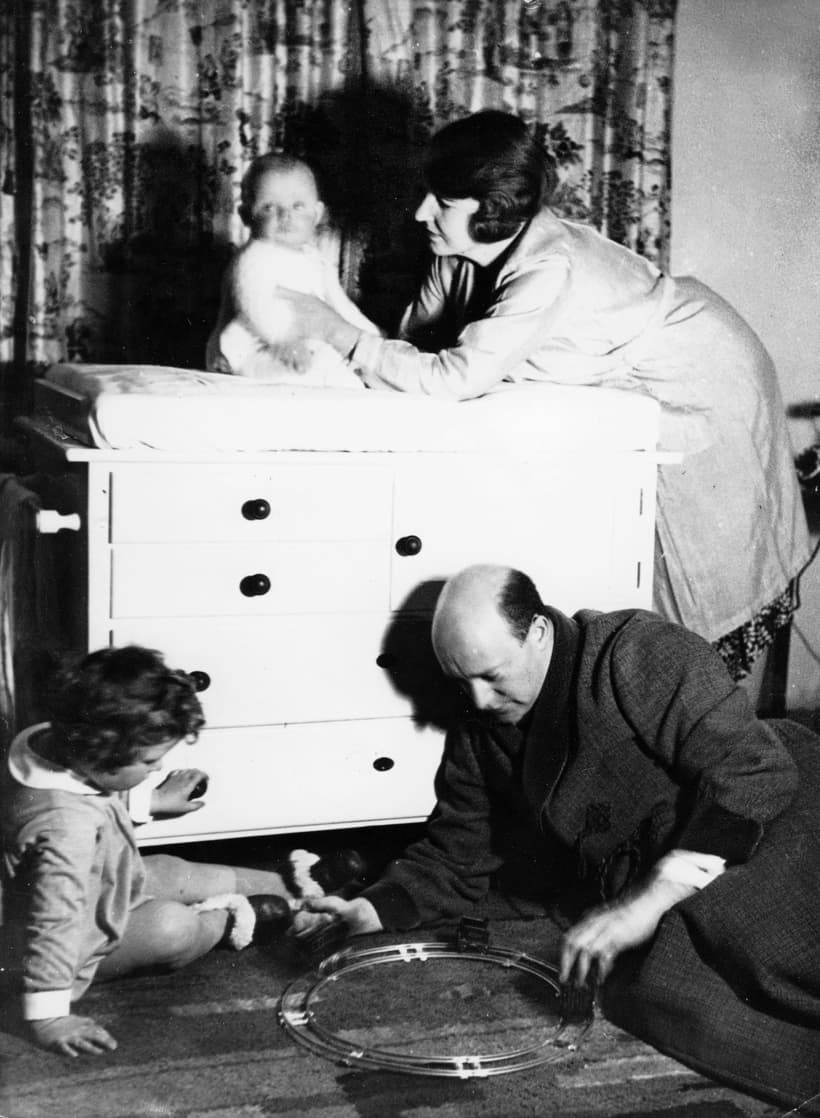
Carlos was the son of the eminent Austrian conductor Erich Kleiber and his American wife Ruth Goodrich. The family emigrated to Buenos Aires in 1935, and it was soon becoming obvious that young Carlos had exceptional musical talents. A biographer writes, “Carlos had an extremely brilliant mentality, that freedom, spontaneity. He was an ideal youth, who was enormously gifted. Something extraordinary.” His father, however, actively discouraged his son from pursuing a musical career. As he once wrote to a friend, “I am longing to see one of my son’s compositions, what a pity the boy is musically talented.”   

By all accounts, Erich Kleiber was “gigantically vain, who felt that he never had the worldwide esteem he deserved, and he was extremely sensitive about comparisons with other conductors, including his son.” Carlos described his mother as “a very strong woman, and very protective of her husband. Nothing could come between them, even the children.”

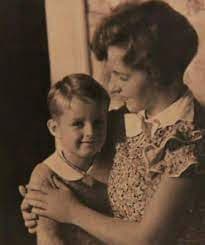
Carlos Kleiber and his mother

Carlos Kleiber and his mother

His sister Veronica remembered, “our mother confessed to me later that when Carlos was born, he was small and she thought that he wouldn’t survive because he was so weak and skinny. However, as a little person, he was very strong-willed, and he liked to give orders.” A colleague remembered that “Carlos had a Lady Macbeth of a mother,” which greatly contributed to his insecurity. After giving a masterful performance of the Rosenkavalier in Munich, everybody went backstage to congratulate him. That evening Kleiber was conducting with the score, and to everybody’s embarrassment, his mother commented, “I thought you knew this score!”  

At a very young age, Carlos declared that he wanted to compose something. “He was wonderful at learning, both languages and anything else, and he learned musical notation from his mother.” Proudly he announced, “Now I am going to try and see what I can compose.” After spending years of Nazi terror in Argentina, the Kleiber family was free to return to Europe after WWII. However, Carlos was only fifteen and the family wanted him to finish high school. In addition, Carlos traveled widely with his father, “serving as amanuensis and valet.”

The Kleiber family

The Kleiber family

It was in late 1948 that Carlos made his professional debut in the orchestra pit, but not as a conductor. Apparently, he was playing second timpani in a performance of Götterdämmerung conducted by his father. At the age of 19, Carlos, with the permission of his father, moved to Zurich. In fact, Erich Kleiber “forced his son to Zurich and into chemistry,” and Carlos studied for a semester and a half at the Technische Hochschule. A family friend writes, “It was an uneasy fit. Carlos had a brilliant mind for learning, but little interest in chemistry.”   

Erich Kleiber was not pleased and asserted “that Carlos was wasting time, and he brought him home to Buenos Aires.” Sensing that music was becoming increasingly important for his son, Erich decreed, “that Carlos would study theory and harmony.” Yet, Carlos was not really interested in piano and harmony, and he probably didn’t study analysis or counterpoint either. Carlos did not have absolute pitch, “but his relative pitch was speedy and reliable.” He started to learn how to read scores, and quickly taught himself to read scores at an unusually speedy and high level.

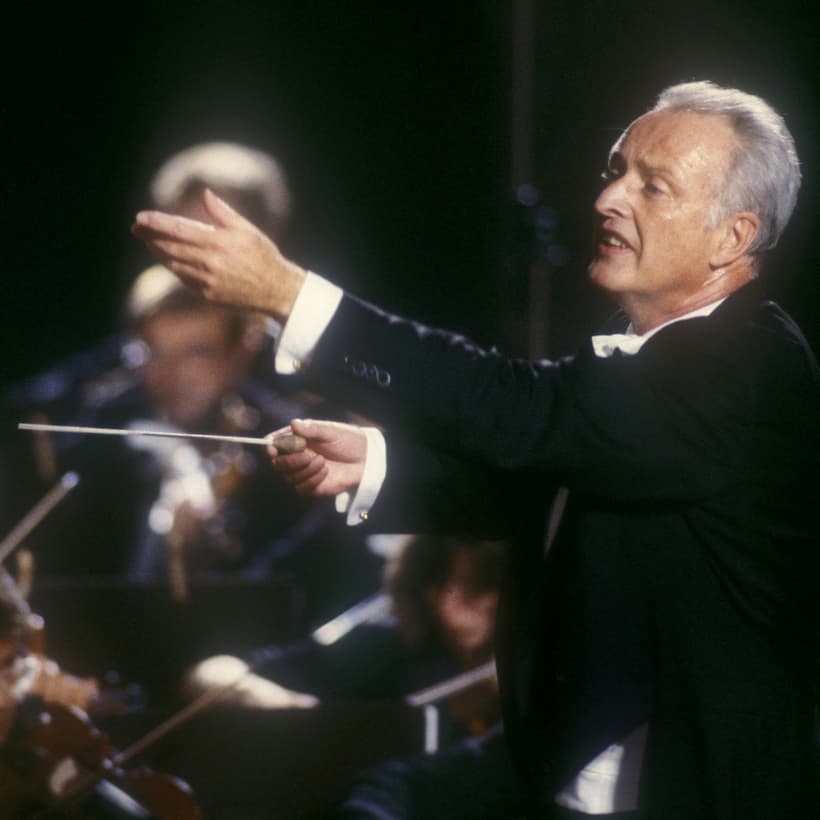
Carlos Kleiber conducting in 1987

Carlos Kleiber in 1987

A biographer writes, “the standard lore is that he made some sort of debut as a conductor around 1952 in South America.” There is no corroborating evidence for that particular claim, and Carlos was deliberately vague about his early conducting experiences. It might well be that he wanted to suggest a level of prior experience before he started his career in Europe. However, Charles Barber has proposed a very sensible alternative explanation. “As with his multiple languages and his vast command of literature and poetry, Carlos was an autodidact, who was almost wholly self-taught. As a conductor, he was his own creation.”

Shostakovich and Britten: Kindred Spirits Across the Iron Curtain

The year 2026 marks both the 120th anniversary of Dmitri Shostakovich‘s birth and the fiftieth anniversary of the death of the British composer Benjamin Britten. Today, the two composers, who lived on opposite sides of the Iron Curtain, are not so often associated together. Yet they were not only friends bound by profound mutual admiration; they also had a remarkable amount in common.

Born only seven years apart, they died within little more than a year of one another, in 1975 and 1976 respectively, both from possibly heart-related conditions. Both achieved fame while still young, and both possessed considerable talents beyond composition: Shostakovich was once an accomplished pianist, while Britten distinguished himself as both a pianist and a conductor. Both were celebrated as cultural treasures in their respective countries and showered with public honours, yet both remained, in different ways, alienated outsiders – Shostakovich repeatedly suffered political persecution and was later afflicted by serious illness; Britten was homosexual at a time when sexual relations between men remained illegal in Britain. Their musical styles may have differed greatly, but both were driven by an intense sense of conviction. Using economical and somewhat conservative musical languages, they transformed wit, bite, natural poetry, profound catharsis, and a wide range of expressions into music.

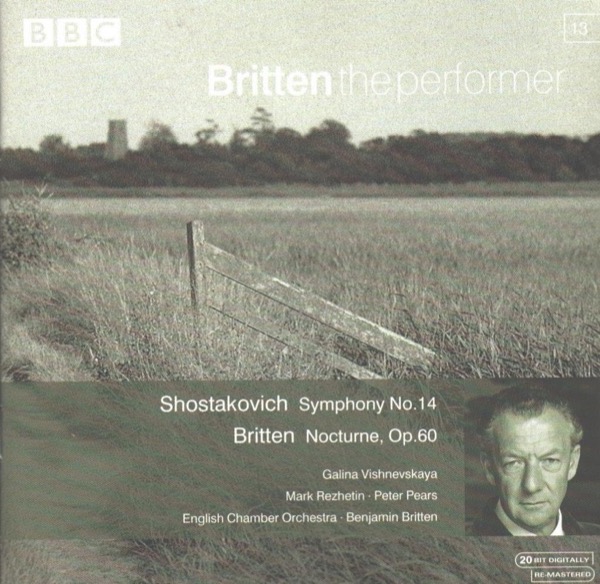
BBC "Britten the Performer": Shostakovich Symphony No. 14 and Britten Nocturne, Op. 60 (English Chamber Orchestra, Benjamin Britten)

BBC “Britten the Performer”: Shostakovich Symphony No. 14 and Britten Nocturne, Op. 60 (English Chamber Orchestra, Benjamin Britten)

Britten probably became aware of Shostakovich before Shostakovich encountered his music. In a 1935 letter to a friend, Britten wrote:

“The real musicians are so few & far between, aren’t they? Apart from the Bergs, Stravinskys, Schönbergs & Bridges, one is a bit stumped for names, isn’t one? … Shostakovitch—perhaps—possibly.”

A few months later, he attended a concert performance in London of Shostakovich’s opera Lady Macbeth of Mtsensk. He recorded his reaction in his diary:

“There is a consistency of style & method throughout. The satire is biting & brilliant. It is never boring for a second—even in this form.”

Britten also added, with characteristic sharpness:

“The ’eminent English Renaissance’ composers sniggering in the stalls was typical. There is more music in a page of Macbeth than in the whole of their ‘elegant’ output!”

Living in a comparatively closed cultural environment, Shostakovich may not have properly encountered Britten’s music until the 1950s, and the first Britten work he heard may have been one of the English composer’s most accessible pieces, The Young Person’s Guide to the Orchestra. After admiring one another from afar for many years, the two composers finally met in London in 1960. The Leningrad Philharmonic, conducted by Yevgeny Mravinsky, was touring Britain and presented the British première of Shostakovich’s First Cello Concerto with Mstislav Rostropovich as soloist. On that occasion, Shostakovich invited Britten to sit beside him during the concert.

Few written details survive about that first encounter, but subsequent events make it clear that they immediately took to one another and that their respect deepened as they became better acquainted. In a 1963 interview, Britten named Shostakovich as one of the living composers he most admired, alongside StravinskyCopland and Tippett. From the 1960s until their deaths, they maintained a regular correspondence across the European continent. Britten travelled to the Soviet Union on six occasions, while Shostakovich made several visits to Britain. Their friendship penetrated the Iron Curtain, bringing a note of sincere human warmth to an otherwise cold political era.

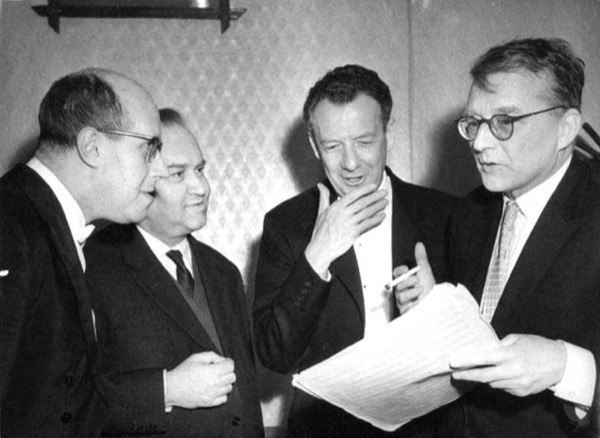
Dmitri Shostakovich (right) and Benjamin Britten examining a score, 1963

Dmitri Shostakovich (right) and Benjamin Britten examining a score, 1963

In 1966, to mark Shostakovich’s sixtieth birthday, Britten wrote a special essay entitled “Tribute to Dmitri Shostakovich”, expressing the “deep attachment” he felt for Shostakovich’s music. Comparing his own works with those of Shostakovich, Britten described them as:

“so very different from his own, but conceived, many of them, in the same period, children of similar fathers, and with many of the same aims.”

Britten acknowledged that their music sounded very different, yet perceptively identified a deeper affinity between them: directness of expression, moral seriousness, sympathy for outsiders and victims, and resistance to fashionable aesthetic orthodoxies. That same year, Britten travelled to Moscow for Shostakovich’s sixtieth-birthday celebrations, where the two composers attended the première of Shostakovich’s Second Cello Concerto.

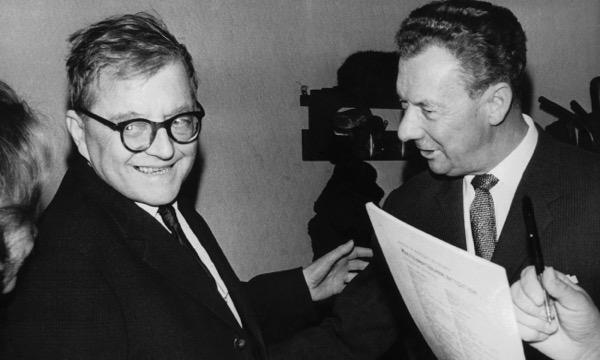
Dmitri Shostakovich and Benjamin Britten, 1966

Dmitri Shostakovich and Benjamin Britten, 1966

Britten reciprocated the friendship by dedicating his church parable The Prodigal Son of 1968 to Shostakovich. Shostakovich, in turn, dedicated his Fourteenth Symphony of 1969 to Britten. In their correspondence, the two men referred to it as “our symphony”.  

A precious recording preserves a unique document of their friendship. On 14 June 1970, at the Aldeburgh Festival founded by Britten, he conducted the English Chamber Orchestra in the first British performance of Shostakovich’s Fourteenth Symphony. To my mind, it remains one of the most authoritative and affecting recordings of the work. It is music-making in the fullest sense, transcending the limitations of the recording and questions of technical execution. Britten perfectly grasps the caustic irony of Shostakovich’s language and balances it against the music’s piercing bitterness and sorrow. The two soloists associated with the work’s earliest performances, Mark Reshetin and Galina Vishnevskaya, are also close to ideal. Had Shostakovich heard the recording, might even his habitually impassive face have broken into a knowing smile?   

The legendary cellist Mstislav Rostropovich entered Britten’s world alongside Shostakovich. It was Rostropovich who performed the First Cello Concerto at the concert where the two composers first met. He subsequently became both a witness to and a participant in their friendship – he appears frequently in photographs of Britten and Shostakovich together.

Shostakovich later joked that he had suffered because Rostropovich played the First Cello Concerto so well: whenever Britten was particularly moved by the performance, he prodded Shostakovich in the ribs. After the concert, however, it was Rostropovich who made the first approach to Britten, asking him to compose something new for the cello. The result was a succession of works written specifically for Rostropovich: the Cello Sonata, the Cello Symphony and the three Suites for Solo Cello.

This almost became a form of artistic exchange between the two great composers. Shostakovich subsequently wrote his Second Cello Concerto for Rostropovich, while in the final movement of Britten’s Cello Sonata the composer directly invoked Shostakovich’s celebrated musical monogram, D–E-flat–C–B: DSCH in German notation. It is an affectionate tribute that also carries a faint suggestion of friendly artistic rivalry.  

The two composers also seemed to possess an unspoken understanding. It may not have been coincidental that in 1962, both completed works that rank among the crowning achievements of their careers, each centred on war and humanitarian concern. Shostakovich composed his Thirteenth Symphony Babi Yar, using poems by Yevgeny Yevtushenko. Scored for bass soloist, male chorus and large orchestra, it creates an atmosphere of immense, oppressive drama. Its opening movement confronts ethnic hatred through the memory of the 1941 massacre at Babi Yar, from which the symphony takes its title.

Britten, meanwhile, composed the large-scale choral work War Requiem. It interweaves the monumental sonorities of the Latin Requiem with the intimate song-writing in which Britten excelled. While mourning human suffering on a universal scale, the work also focuses on individual tragedy through poems written during the First World War by Wilfred Owen.

Britten: War Requiem   

By the end of the 1960s, the composers’ deteriorating health, particularly Shostakovich’s, and occasional political difficulties made meetings increasingly hard to arrange. In 1971, after an interval of several years, Britten returned to Moscow for what would be his final Soviet visit. Perhaps moved by Britten’s persistence, Shostakovich, after cancelling several proposed journeys due to illness, finally travelled to Britten’s home in Aldeburgh during the summer of 1972 despite his frail health.

There, Shostakovich was shown sketches for Britten’s final opera, Death in Venice, then still in progress. For the intensely private and sensitive Britten, allowing a friend to see an unfinished composition represented an extraordinary mark of trust. It was perhaps the most intimate encounter of their friendship. Shostakovich would return to Britain later that year, when the two men met for the final time.

In August 1975, news arrived of Shostakovich’s death. Archival records show that Britten and Peter Pears wrote a letter of condolence to his widow, Irina, and later invited her to the 1976 Aldeburgh Festival. That year, the festival presented the British première of Shostakovich’s final completed work, the Viola Sonata. Irina attended the performance.

Less than eighteen months after Shostakovich’s death, Britten also died, on 4 December 1976.

Featured Post

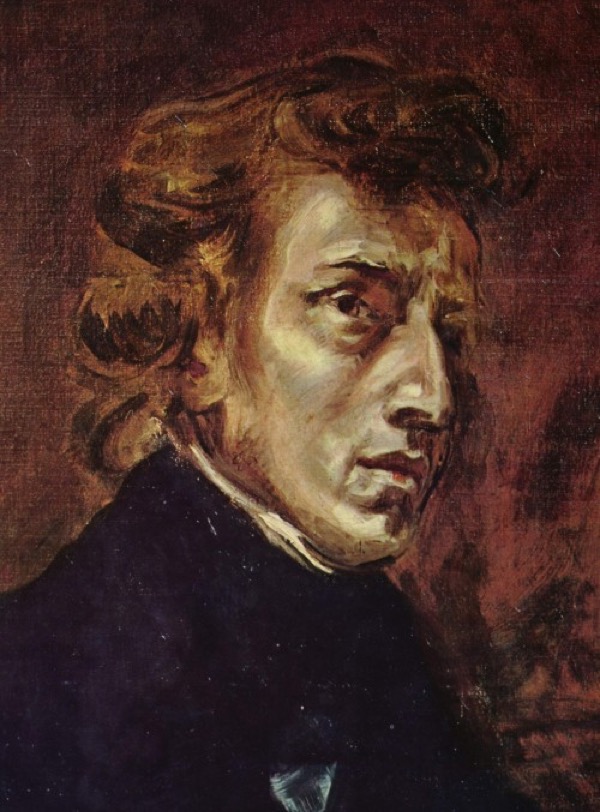
Debunking the Top 5 Myths About Chopin

  Over time, selective anecdotes, early biographies, and nineteenth-century ideals of the “suffering artist” have hardened into familiar cli...