Friday, July 3, 2026

When Sokolov Listens The Rise of Alexandra Dovgan (Born on July 1, 2007)


The Russian pianist Alexandra Dovgan had already collected five competition victories by the age of thirteen, receiving her technical and musical training under Mira Marchenko at Moscow’s Central Music School.

Beyond prizes and accolades, Dovgan has also attracted the attention of Grigory Sokolov, who became an important artistic mentor and advocate. To celebrate Dovgan’s birthday on 1 July, let’s explore the artistic connection between the famously private Sokolov and one of the most compelling young pianists of her generation.

Alexandra Dovgan

Alexandra Dovgan   

El País Semanal features on Sokolov and Dovgan

Alexandra Dovgan

Alexandra Dovgan

The most comprehensive and well-researched account of the connection between Grigory Sokolov and Alexandra Dovgan comes from the Spanish author and journalist Jesús Ruiz Mantilla. He regularly publishes interviews, reports, profiles, and music criticism.

Ruiz also has a literary career, having published eight novels, essays, plays, and poems. In a weekend feature for El País, a major Spanish newspaper, Ruiz traces the artistic transmission between generations of Russian pianism by focusing on the almost mythical Sokolov and the exceptionally mature young pianist Alexandra Dovgan. (Mantilla, “Grigori Sokolov y Alexandra Dovgan,” El Pais Semanal 2021)  

First Encounter

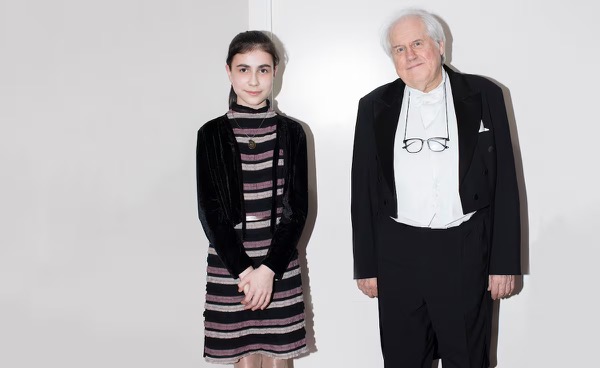
Alexandra Dovgan and Grigory Sokolov

Alexandra Dovgan and Grigory Sokolov

Apparently, Sokolov became aware of Dovgan when he was invited to look at a number of videos featuring new talents. While he typically listens to only a piece or two, in Dovgan’s case, he continued for nearly two hours.

Sokolov explained, “It’s not that I think the others were worse, but in her case, I discovered a link that connects her musical world with mine.” Sokolov wanted to meet her, and since then, they have exchanged ideas.

These meetings aren’t lessons, as Dovgan has her own teachers who train her exceptionally well, but according to Sokolov, it’s an “exchange between two colleagues.” Sokolov is a famously solitary man, devoted like a monk to his own constant refinement, so it is highly unusual for him to dedicate time to engage with other pianists.  

In Dialogue

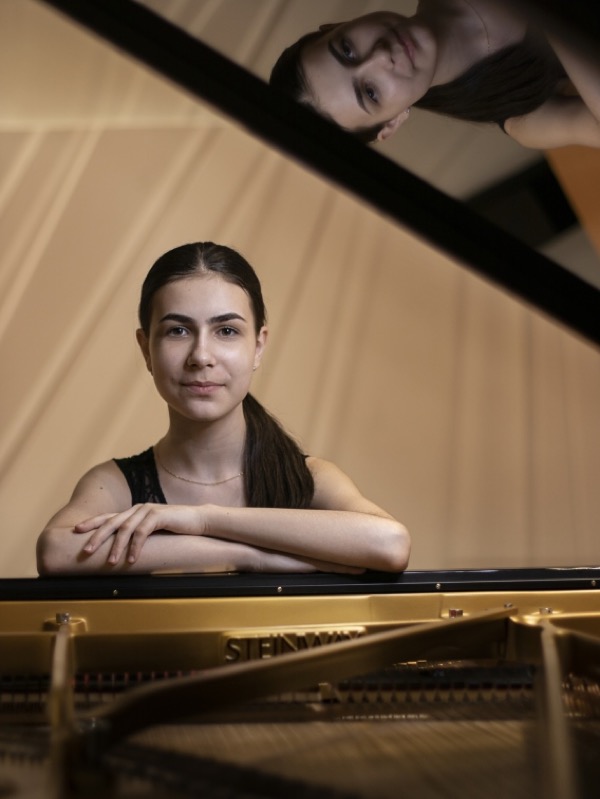
Alexandra Dovgan at the piano

Alexandra Dovgan at the piano

They first met in Amsterdam and barely exchanged a few words, but during their second meeting, they focused on understanding the instrument they would be playing. They discussed the age, the makers, and the materials of the piano, connecting the body and soul of the instrument to the expression of music.

They also considered the concept of tempo in compositions, and Dovgan recalled that “the maestro told her that she must be honest in every circumstance. Not only as a person and as a performer, but also that she must be very careful and faithful to the scores, and must thoroughly study the tempos.”

This, according to Sokolov, is where the magic of music lies and how he manages to hold the audience’s attention. “It’s about bringing music created in another time into this era and making it seem as if it’s being conceived in that very moment.”  

Sokolov’s endorsement of Dovgan

Alexandra Dovgan

Alexandra Dovgan

Sokolov also introduced Dovgan to his longtime manager and producer, Franco Panozzo. He played him a sound recording of Dovgan’s performance of the Mendelssohn Piano Concerto No. 1, and Panozzo reportedly concluded that it was performed by a great artist.

He then showed him the video of the 12-year-old Dovgan, and Panozzo was speechless and immediately signed her. Sokolov still refuses to grant interviews about himself, but he has nothing but praise for Dovgan.

“At 13, she can hardly be called a child prodigy, because while she is a prodigy, it’s not child’s play. What one hears when watching her is the performance of an adult. It is a special pleasure for me to commend the artistry of her remarkable music teacher, Mira Marchenko. However, there are some things that cannot be taught or learned. Alexandra Dovgan’s talent is exceptionally harmonious. Her playing is honest and focused. I predict a great future for her.”

On This Day 3 July: Carlos Kleiber Was Born


For a good number of commentators and experts, Carlos Kleiber, born on 3 July 1930 in Berlin, is regarded as among the greatest conductors of all time. “His gifts are musical and dramatic insight, analytical abilities, technique, and his methods of explaining himself make him the greatest conductor of our day.” Plácido Domingo relates, “When I work with him, I feel that he knows why the composer wrote every note, treated every phrase, conceived of every bit of orchestral color in a particular way.”

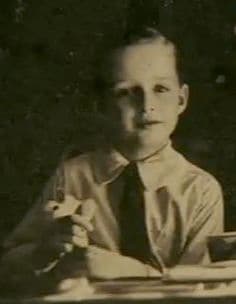
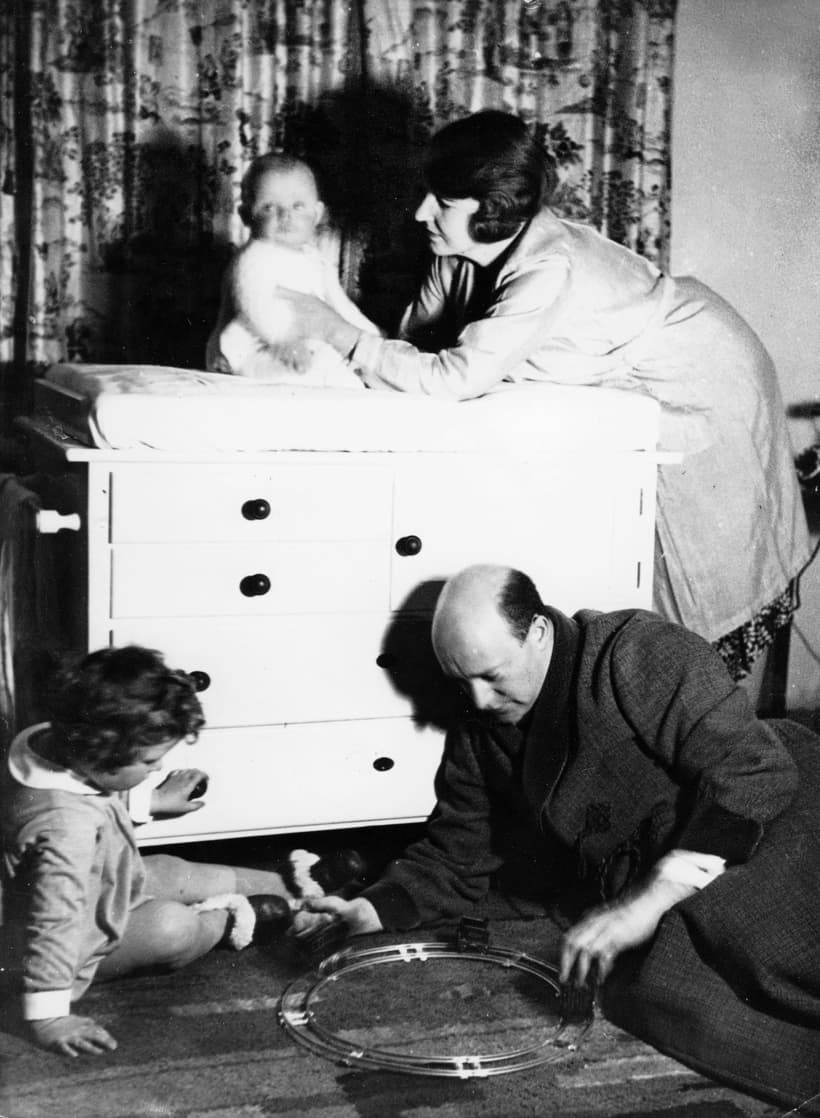
Carlos Kleiber as a boy

Carlos Kleiber as a boy

Carlos was the son of the eminent Austrian conductor Erich Kleiber and his American wife Ruth Goodrich. The family emigrated to Buenos Aires in 1935, and it was soon becoming obvious that young Carlos had exceptional musical talents. A biographer writes, “Carlos had an extremely brilliant mentality, that freedom, spontaneity. He was an ideal youth, who was enormously gifted. Something extraordinary.” His father, however, actively discouraged his son from pursuing a musical career. As he once wrote to a friend, “I am longing to see one of my son’s compositions, what a pity the boy is musically talented.”   

By all accounts, Erich Kleiber was “gigantically vain, who felt that he never had the worldwide esteem he deserved, and he was extremely sensitive about comparisons with other conductors, including his son.” Carlos described his mother as “a very strong woman, and very protective of her husband. Nothing could come between them, even the children.”

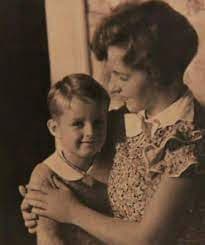
Carlos Kleiber and his mother

Carlos Kleiber and his mother

His sister Veronica remembered, “our mother confessed to me later that when Carlos was born, he was small and she thought that he wouldn’t survive because he was so weak and skinny. However, as a little person, he was very strong-willed, and he liked to give orders.” A colleague remembered that “Carlos had a Lady Macbeth of a mother,” which greatly contributed to his insecurity. After giving a masterful performance of the Rosenkavalier in Munich, everybody went backstage to congratulate him. That evening Kleiber was conducting with the score, and to everybody’s embarrassment, his mother commented, “I thought you knew this score!”  

At a very young age, Carlos declared that he wanted to compose something. “He was wonderful at learning, both languages and anything else, and he learned musical notation from his mother.” Proudly he announced, “Now I am going to try and see what I can compose.” After spending years of Nazi terror in Argentina, the Kleiber family was free to return to Europe after WWII. However, Carlos was only fifteen and the family wanted him to finish high school. In addition, Carlos traveled widely with his father, “serving as amanuensis and valet.”

The Kleiber family

The Kleiber family

It was in late 1948 that Carlos made his professional debut in the orchestra pit, but not as a conductor. Apparently, he was playing second timpani in a performance of Götterdämmerung conducted by his father. At the age of 19, Carlos, with the permission of his father, moved to Zurich. In fact, Erich Kleiber “forced his son to Zurich and into chemistry,” and Carlos studied for a semester and a half at the Technische Hochschule. A family friend writes, “It was an uneasy fit. Carlos had a brilliant mind for learning, but little interest in chemistry.”   

Erich Kleiber was not pleased and asserted “that Carlos was wasting time, and he brought him home to Buenos Aires.” Sensing that music was becoming increasingly important for his son, Erich decreed, “that Carlos would study theory and harmony.” Yet, Carlos was not really interested in piano and harmony, and he probably didn’t study analysis or counterpoint either. Carlos did not have absolute pitch, “but his relative pitch was speedy and reliable.” He started to learn how to read scores, and quickly taught himself to read scores at an unusually speedy and high level.

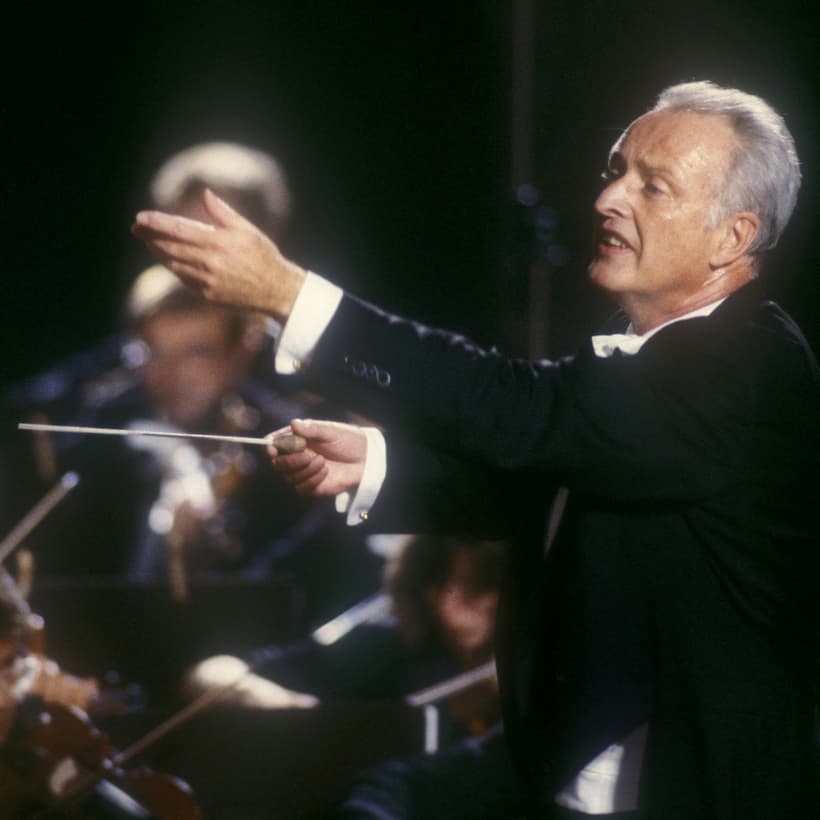
Carlos Kleiber conducting in 1987

Carlos Kleiber in 1987

A biographer writes, “the standard lore is that he made some sort of debut as a conductor around 1952 in South America.” There is no corroborating evidence for that particular claim, and Carlos was deliberately vague about his early conducting experiences. It might well be that he wanted to suggest a level of prior experience before he started his career in Europe. However, Charles Barber has proposed a very sensible alternative explanation. “As with his multiple languages and his vast command of literature and poetry, Carlos was an autodidact, who was almost wholly self-taught. As a conductor, he was his own creation.”

Shostakovich and Britten: Kindred Spirits Across the Iron Curtain

The year 2026 marks both the 120th anniversary of Dmitri Shostakovich‘s birth and the fiftieth anniversary of the death of the British composer Benjamin Britten. Today, the two composers, who lived on opposite sides of the Iron Curtain, are not so often associated together. Yet they were not only friends bound by profound mutual admiration; they also had a remarkable amount in common.

Born only seven years apart, they died within little more than a year of one another, in 1975 and 1976 respectively, both from possibly heart-related conditions. Both achieved fame while still young, and both possessed considerable talents beyond composition: Shostakovich was once an accomplished pianist, while Britten distinguished himself as both a pianist and a conductor. Both were celebrated as cultural treasures in their respective countries and showered with public honours, yet both remained, in different ways, alienated outsiders – Shostakovich repeatedly suffered political persecution and was later afflicted by serious illness; Britten was homosexual at a time when sexual relations between men remained illegal in Britain. Their musical styles may have differed greatly, but both were driven by an intense sense of conviction. Using economical and somewhat conservative musical languages, they transformed wit, bite, natural poetry, profound catharsis, and a wide range of expressions into music.

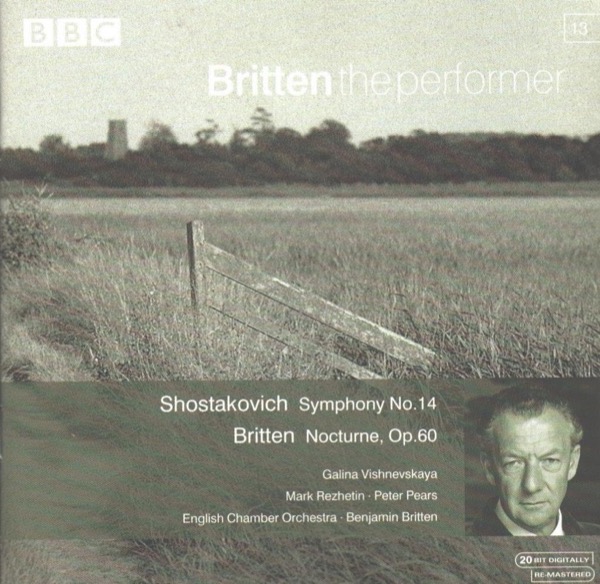
BBC "Britten the Performer": Shostakovich Symphony No. 14 and Britten Nocturne, Op. 60 (English Chamber Orchestra, Benjamin Britten)

BBC “Britten the Performer”: Shostakovich Symphony No. 14 and Britten Nocturne, Op. 60 (English Chamber Orchestra, Benjamin Britten)

Britten probably became aware of Shostakovich before Shostakovich encountered his music. In a 1935 letter to a friend, Britten wrote:

“The real musicians are so few & far between, aren’t they? Apart from the Bergs, Stravinskys, Schönbergs & Bridges, one is a bit stumped for names, isn’t one? … Shostakovitch—perhaps—possibly.”

A few months later, he attended a concert performance in London of Shostakovich’s opera Lady Macbeth of Mtsensk. He recorded his reaction in his diary:

“There is a consistency of style & method throughout. The satire is biting & brilliant. It is never boring for a second—even in this form.”

Britten also added, with characteristic sharpness:

“The ’eminent English Renaissance’ composers sniggering in the stalls was typical. There is more music in a page of Macbeth than in the whole of their ‘elegant’ output!”

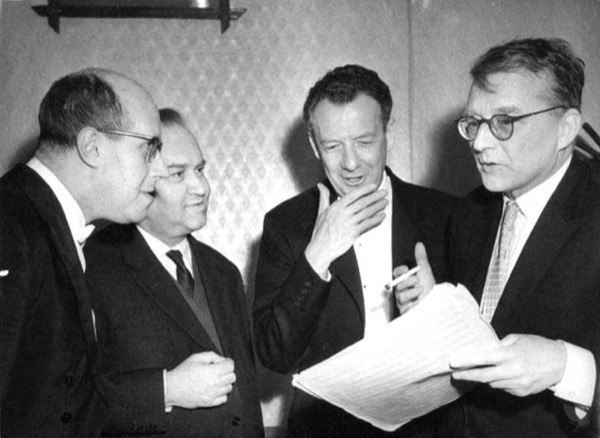
Living in a comparatively closed cultural environment, Shostakovich may not have properly encountered Britten’s music until the 1950s, and the first Britten work he heard may have been one of the English composer’s most accessible pieces, The Young Person’s Guide to the Orchestra. After admiring one another from afar for many years, the two composers finally met in London in 1960. The Leningrad Philharmonic, conducted by Yevgeny Mravinsky, was touring Britain and presented the British première of Shostakovich’s First Cello Concerto with Mstislav Rostropovich as soloist. On that occasion, Shostakovich invited Britten to sit beside him during the concert.

Few written details survive about that first encounter, but subsequent events make it clear that they immediately took to one another and that their respect deepened as they became better acquainted. In a 1963 interview, Britten named Shostakovich as one of the living composers he most admired, alongside StravinskyCopland and Tippett. From the 1960s until their deaths, they maintained a regular correspondence across the European continent. Britten travelled to the Soviet Union on six occasions, while Shostakovich made several visits to Britain. Their friendship penetrated the Iron Curtain, bringing a note of sincere human warmth to an otherwise cold political era.

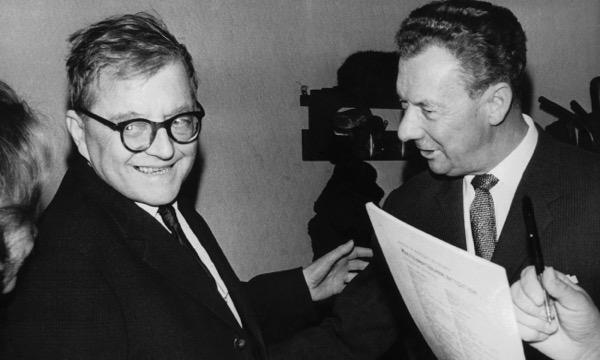
Dmitri Shostakovich (right) and Benjamin Britten examining a score, 1963

Dmitri Shostakovich (right) and Benjamin Britten examining a score, 1963

In 1966, to mark Shostakovich’s sixtieth birthday, Britten wrote a special essay entitled “Tribute to Dmitri Shostakovich”, expressing the “deep attachment” he felt for Shostakovich’s music. Comparing his own works with those of Shostakovich, Britten described them as:

“so very different from his own, but conceived, many of them, in the same period, children of similar fathers, and with many of the same aims.”

Britten acknowledged that their music sounded very different, yet perceptively identified a deeper affinity between them: directness of expression, moral seriousness, sympathy for outsiders and victims, and resistance to fashionable aesthetic orthodoxies. That same year, Britten travelled to Moscow for Shostakovich’s sixtieth-birthday celebrations, where the two composers attended the première of Shostakovich’s Second Cello Concerto.

Dmitri Shostakovich and Benjamin Britten, 1966

Dmitri Shostakovich and Benjamin Britten, 1966

Britten reciprocated the friendship by dedicating his church parable The Prodigal Son of 1968 to Shostakovich. Shostakovich, in turn, dedicated his Fourteenth Symphony of 1969 to Britten. In their correspondence, the two men referred to it as “our symphony”.  

A precious recording preserves a unique document of their friendship. On 14 June 1970, at the Aldeburgh Festival founded by Britten, he conducted the English Chamber Orchestra in the first British performance of Shostakovich’s Fourteenth Symphony. To my mind, it remains one of the most authoritative and affecting recordings of the work. It is music-making in the fullest sense, transcending the limitations of the recording and questions of technical execution. Britten perfectly grasps the caustic irony of Shostakovich’s language and balances it against the music’s piercing bitterness and sorrow. The two soloists associated with the work’s earliest performances, Mark Reshetin and Galina Vishnevskaya, are also close to ideal. Had Shostakovich heard the recording, might even his habitually impassive face have broken into a knowing smile?   

The legendary cellist Mstislav Rostropovich entered Britten’s world alongside Shostakovich. It was Rostropovich who performed the First Cello Concerto at the concert where the two composers first met. He subsequently became both a witness to and a participant in their friendship – he appears frequently in photographs of Britten and Shostakovich together.

Shostakovich later joked that he had suffered because Rostropovich played the First Cello Concerto so well: whenever Britten was particularly moved by the performance, he prodded Shostakovich in the ribs. After the concert, however, it was Rostropovich who made the first approach to Britten, asking him to compose something new for the cello. The result was a succession of works written specifically for Rostropovich: the Cello Sonata, the Cello Symphony and the three Suites for Solo Cello.

This almost became a form of artistic exchange between the two great composers. Shostakovich subsequently wrote his Second Cello Concerto for Rostropovich, while in the final movement of Britten’s Cello Sonata the composer directly invoked Shostakovich’s celebrated musical monogram, D–E-flat–C–B: DSCH in German notation. It is an affectionate tribute that also carries a faint suggestion of friendly artistic rivalry.  

The two composers also seemed to possess an unspoken understanding. It may not have been coincidental that in 1962, both completed works that rank among the crowning achievements of their careers, each centred on war and humanitarian concern. Shostakovich composed his Thirteenth Symphony Babi Yar, using poems by Yevgeny Yevtushenko. Scored for bass soloist, male chorus and large orchestra, it creates an atmosphere of immense, oppressive drama. Its opening movement confronts ethnic hatred through the memory of the 1941 massacre at Babi Yar, from which the symphony takes its title.

Britten, meanwhile, composed the large-scale choral work War Requiem. It interweaves the monumental sonorities of the Latin Requiem with the intimate song-writing in which Britten excelled. While mourning human suffering on a universal scale, the work also focuses on individual tragedy through poems written during the First World War by Wilfred Owen.

Britten: War Requiem   

By the end of the 1960s, the composers’ deteriorating health, particularly Shostakovich’s, and occasional political difficulties made meetings increasingly hard to arrange. In 1971, after an interval of several years, Britten returned to Moscow for what would be his final Soviet visit. Perhaps moved by Britten’s persistence, Shostakovich, after cancelling several proposed journeys due to illness, finally travelled to Britten’s home in Aldeburgh during the summer of 1972 despite his frail health.

There, Shostakovich was shown sketches for Britten’s final opera, Death in Venice, then still in progress. For the intensely private and sensitive Britten, allowing a friend to see an unfinished composition represented an extraordinary mark of trust. It was perhaps the most intimate encounter of their friendship. Shostakovich would return to Britain later that year, when the two men met for the final time.

In August 1975, news arrived of Shostakovich’s death. Archival records show that Britten and Peter Pears wrote a letter of condolence to his widow, Irina, and later invited her to the 1976 Aldeburgh Festival. That year, the festival presented the British première of Shostakovich’s final completed work, the Viola Sonata. Irina attended the performance.

Less than eighteen months after Shostakovich’s death, Britten also died, on 4 December 1976.

An Americana Review


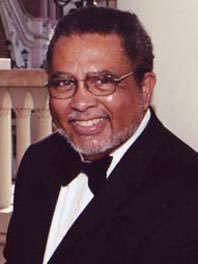
We’ll open with American composer Adolphus Hailstork (b. 1941) and his wonderfully titled American Port of Call. Written in 1985 for the Virginia Symphony Orchestra, this concert overture draws its inspiration from the port of Norfolk, Virginia. Port cities in any country are centres of intense activity, followed by long fallow periods. Hailstork catches that ebb and flow of activity in his work.

Adolphus Hailstork(photo by Samuel CFTP)

Adolphus Hailstork(photo by Samuel CFTP)

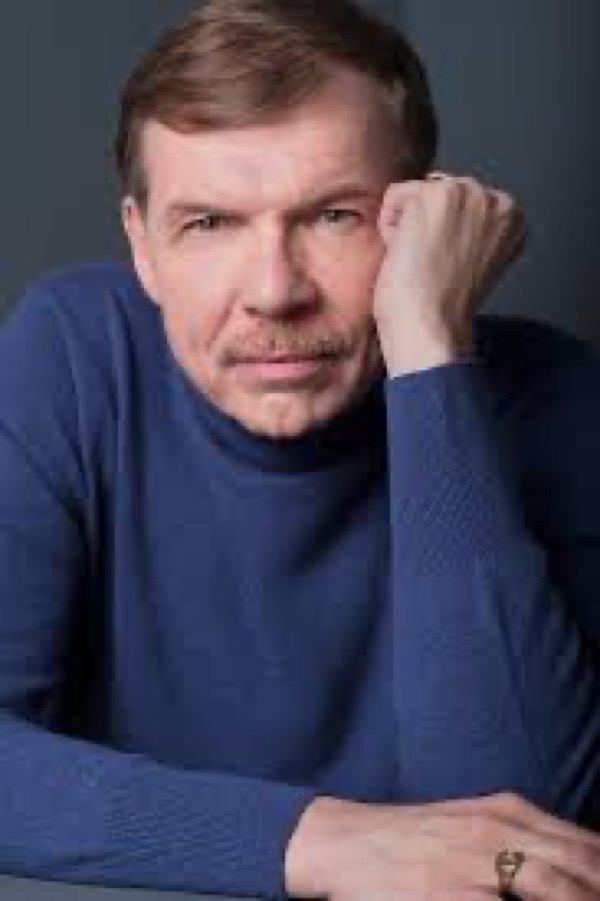
Kenneth Fuchs (b. 1956) started with a theme from his String Quartet No. 1, Where Have You Been?, in creating his romance for violin and orchestra, the American Rhapsody. An arpeggiated minor eleventh chord becomes the opening line in the violin, and it is this expansive line that, combined with the work’s ‘pan-diatonic harmonies’, gives the work its American feel.

Kenneth Fuchs

Kenneth Fuchs

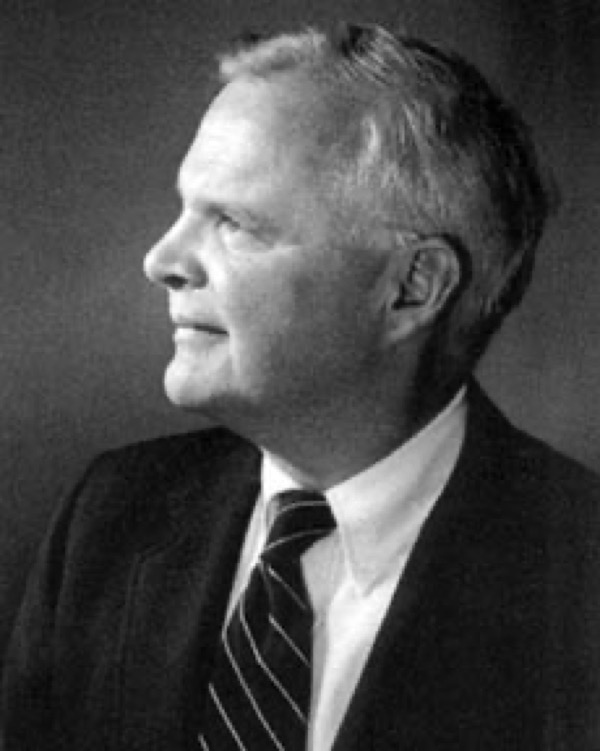
Joseph Willcox Jenkins (1928–2014) wrote his American Overture in 1955 when he was on the arranging staff of the United States Army Field Band. In this, his first work for the band, Jenkins placed the emphasis on the Band’s horn section. As a horn player, he was, as he said, ‘tired of…having to play off-beats’, a common role of the horn section. Although the use of Lydian and Mixolydian modes rather than just major/minor gives the feel of folk music, no actual folk music was used in the creation of this piece.

Joseph Willcox Jenkins

Joseph Willcox Jenkins

Robert Russell Bennett (1894-1981) made his name on Broadway, but not only as a composer. Between 1920 and 1976, he scored all or part of more than three hundred shows, and in his peak season, he had 22 shows running concurrently in New York. He took the music written by composers including George Gershwin, Cole Porter, Irving Berlin, Richard Rodgers, Jerome Kern, and Frederick Loewe, and made the arrangement played by the theatre orchestra. In his youth, he was a director of the United States Army Bands in 1918 and 1919 before resuming his music studies. He studied in France with Nadia Boulanger and met her students Aaron Copland and Roger Sessions. He wrote film scores for Hollywood before returning to New York.

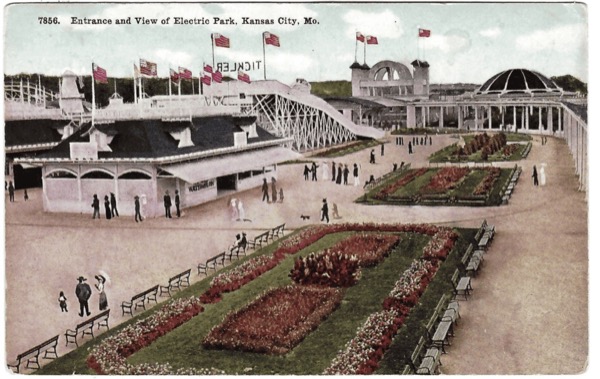
In 1948, Bennett went to hear the Goldman Band in a concert honouring the 70th birthday of the band’s founder, Edwin Franko Goldman. In its five movements, Bennett captures the breadth of musical styles in the dance music of the late 19th century. Bennett originally called the work Electric Park after a park in Kansas City that Bennett had gone to as a child, wondering at the sounds that came out of its brightly illuminated dance hall.

Electric Park, ca. 1900

Electric Park, ca. 1900

Named for its 100,000 electric light bulbs and very much fashioned after New York’s Coney Island amusement park. From 1900 until its fiery destruction in 1925 and eventual closing in 1930, the Park was a place for Kansas City residents to play, day and night.

Bennett’s music shows the variety of music that was on the stage: a Cake Walk, A Schottische, a Western One-Step, a melancholy Wallflower Waltz, and finally, a Rag. It’s all music for showing off your finery, your fine steps, a waltz from Europe, and then the rag, a pure American product.

Robert Russell Bennett

Robert Russell Bennett


Returning to Kenneth Fuchs, his An American Place is his reflection on the ‘palette of musical sounds that have developed in the United States during the last hundred years, including popular and classical elements, and is intended to suggest the rich body of music created by the American symphonists who have come before me and from whom I continue to take inspiration’. It’s not about any particular place in America, but about Fuchs’ place in American music.

Michael Torke (B. 1961) wrote An American Abroad, which gives us, as the composer says, ‘We hear the natural naïvety an American might feel travelling abroad, full of wonderment and curiosity. We might expect to hear about a transformative path from point A to point B, maybe even progressing to point C. Yet the end result for listeners is more of a composite of impressions, a travel log, a slide-show of images, the lingering delight and melancholy of the romance of travel we might wish to savour in our memories’.

An American abroad (the person, not the piece) is often full of melancholy of ‘this isn’t like home’ and, at the same time, the delight and discovery of ‘this isn’t like home’. Fixed ideas of cereal for breakfast are changed to the Parisian delight of the joys of a croissant and a baguette.

Michael Torke

Michael Torke

Morton Gould (1913–1996) is one of America’s underappreciated composers. In his American Ballads, written in 1976 for the American Bicentennial, commissioned by the Queens Symphony Orchestra. Gould wrote about the work that he took the familiar ‘chestnuts’ of American music, America the Beautiful and The Star-Spangled Banner, combined with Revolutionary War and Civil War–era songs, and closing with ‘the national hymn of hope and inspiration, We Shall Overcome to create the sound world of his youth.

Morton Gould

Morton Gould

Gould’s other great American work is American Salute, which casts the Civil War–era marching song When Johnny Comes Marching Home, written by Patrick Gilmore, to create a work for WWII. Originally broadcast on the radio in 1942, the work has become one of Gould’s most performed works. Gould’s work combines classical style with jazz and popular elements to create a synthesis of serious and popular that remains unique.

Preston Ware Orem (1865–1938) wrote his American Indian Rhapsody very much in the style of Liszt‘s Hungarian Rhapsodies, but in this case, he makes musical allusions to the chants of the Cheyenne, Kiowa, Sioux, Chippewa, Pueblo, and Cree tribes. We might find it a bit trite now, but it was an important link in getting native American music into the white American ear.

Preston Ware Orem, ca 1923

Preston Ware Orem, ca 1923

Lukas Foss (1922–2009) created his Three American Pieces first as a work for violin and piano in 1945, and then, in 1989, orchestrated it. Foss cited Aaron Copland’s influence in the work’s ‘open-air quality’. It opens with Early Song, which, after its slow start, carries the listener to a rustic dance. The middle slow movement, Dedication, uses mixed meter (duple versus triple) to give us an ‘eerie, unsettled feeling’. The work closes with Composer’s Holiday, which has more than a little in common with Stephen Foster’s Camptown Races in its inspiration. Blue’s infection, harmonic colour, rhythmic variety, and speed the movement to its close in what the composer calls ‘an exhilarating “All-American” C major cadence’.

Lukas Foss

Lukas Foss

English composer Frederick Delius (1882–1934) owes his time in the United States to both the syphilis that killed him and the inspiration for music that appreciated the American landscape. His 1896 work Appalachia: An American Rhapsody, which takes the Indian name for America, Appalachia, as its title, Delius uses a negro slave song (Nelly Grey) for a set of variations. In the 1903 version (Appalachia: Variations on a Slave Song) for baritone and orchestra, there was a final sung chorus of the original song.

Portrait of Frederick Delius

Portrait of Frederick Delius

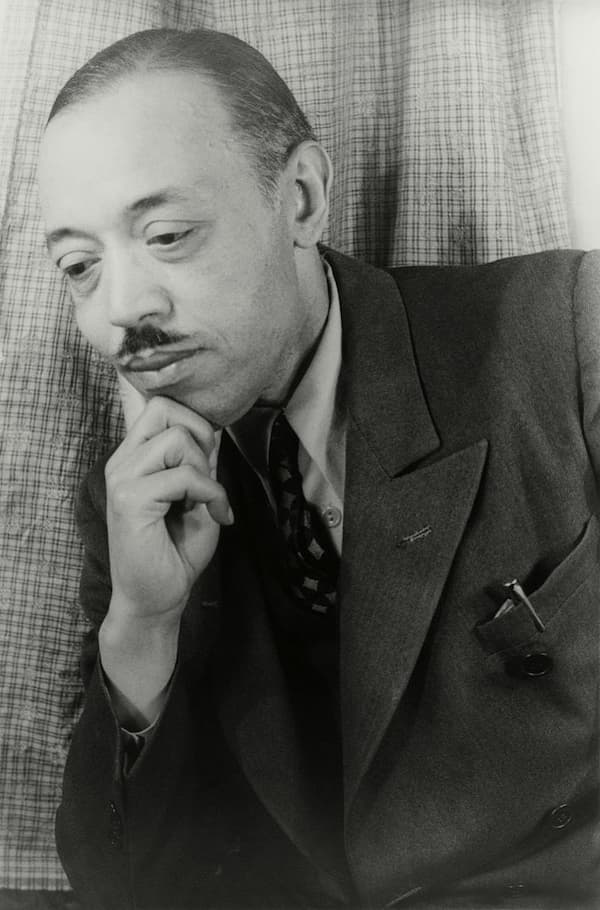
William Grant Still (1895–1978) wrote his first symphonic suite while he was still at university. His American Suite, in a fit of bravado, was sent to Frederick Stock, conductor of the Chicago Symphony Orchestra, but it wasn’t performed. It finally saw the light of day in 1998, when Still’s daughter, Judith Anne Still, gave the parts to Dana Paul Perna, who created the score.

William Grant Still

William Grant Still

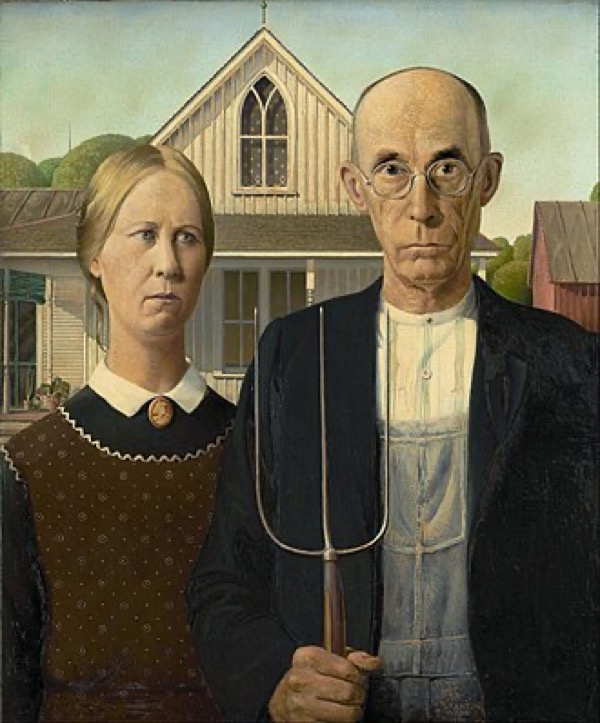
Michael Daugherty (b. 1954) wrote his American Gothic inspired by the artwork of the same title by Grant Wood.

Grant Wood: American Gothic, 1930 (Art Institute of Chicago)

Grant Wood: American Gothic, 1930 (Art Institute of Chicago)

Wood’s 1930 painting depicts a farmer and his daughter standing in front of the Carpenter Gothic–style house. In reality, the woman was Wood’s sister Nan Wood Graham, and the farmer was Byron McKeeby, the family’s dentist. Wood first found the house (The Dibble House in Eldon, Iowa) and then imagined the people who would live there. The image has become an icon for midwestern farmers, for Americans, for conservative values, and for many other ideas. Iowans, on the other hand, were furious at being depicted as ‘pinched, grim-faced, puritanical Bible-thumpers’. None of this is in the picture, but, as Wood noted in a letter in 1941, ‘the people who resent the painting are those who feel that they themselves resemble the portrayal’.

In the final movement, Daugherty focuses on the farmer’s pitchfork and uses Wood’s reputation as a practical joker to create a very American-sounding fiddle tune.

Michael Daugherty

Michael Daugherty

This is just a toe-in-the-water survey of the wealth of music written around the idea(s) of America. Composer after composer has sought to bring out the variety of music in America: not just the classical materials taken from Europe, but folk, popular, and dance music from many different eras. What music would you use to define your own private America? Military marches in the style of Sousa? Wide open spaces in the style of Aaron Copland. The ethnic American sounds of Bernstein? We haven’t looked at the ‘American’ music by those composers, but they certainly have an effect on this music and how we hear it.

The Greatest Violinist of Each Decade of the 20th Century

by Emily E. Hogstad  June 29th, 2026


The process is less about choosing stars and more about understanding what greatness meant in different decades, and how each violinist – and each decade – pushed the art of violin-playing forward.

At the start of the century, the greats were famous for their tone and personal expressiveness. Mid-century, thanks to the diamond-hard virtuosity of Jascha Heifetz, priorities shifted toward technical greatness. Later, the pendulum swung back again: the greats began embodying warmth, humanity, and stylistic chameleonism alongside bulletproof technique.

The following list identifies one violinist per decade who best embodied the dominant values of their time.

1900–1909: Eugène Ysaÿe
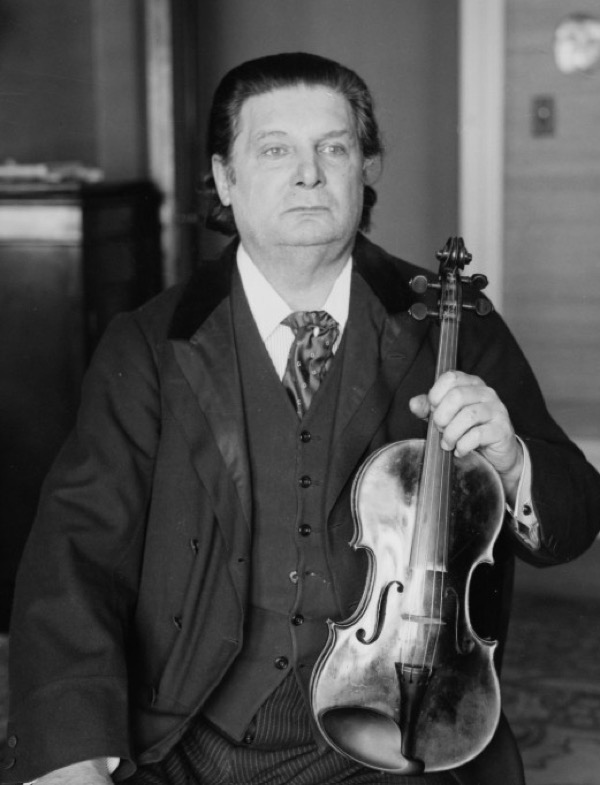
Eugène Ysaÿe

Eugène Ysaÿe   At the turn of the century, Eugène Ysaÿe stood at the centre of European musical life.

His playing fused technical command with unprecedented expressive freedom, laying the foundations of modern violinism and earning him the nickname the King of the Violin.

His approach to phrasing and tone permanently altered expectations of what the violin could express.

During his career, composers such as Franck, Chausson, and Debussy wrote with his sound in mind, resulting in a number of vital contributions to the violin repertoire.

He also wrote an important set of six solo sonatas, works that remain both technically and philosophically demanding for violinists today.

1910–1919: Fritz Kreisler
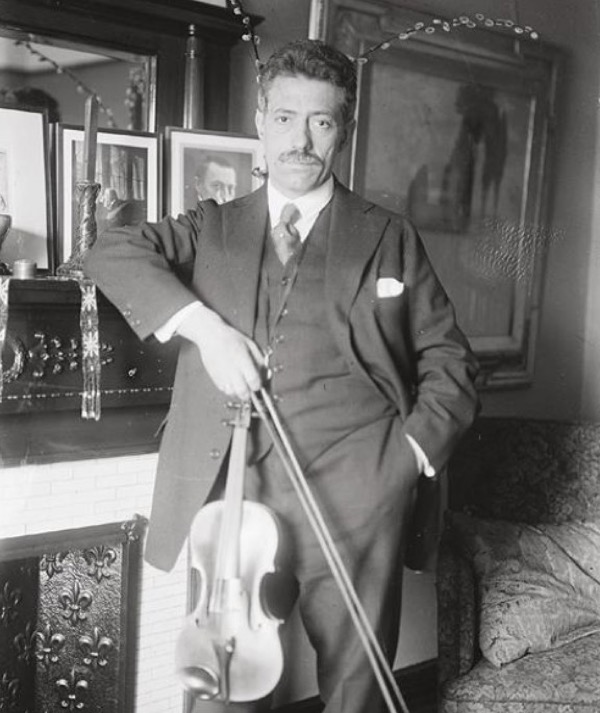
Fritz Kreisler

Fritz Kreisler   Kreisler‘s supremacy in the 1910s was cultural as well as musical.

Many music lovers had their first introduction to violin music through his early recordings – especially the ones of his own beautiful and brief recital pieces like Liebesleid, Liebesfreud, and Caprice Viennois.

He was also famous for his Baroque-style miniatures like his Praeludium and Allegro, which he told audiences were rediscovered scores by obscure composers, but had actually been composed by Kreisler himself.

His famously golden tone, impeccable sense of rubato, and unapologetic Viennese charm shaped early twentieth-century musical taste.

1920–1929: Jascha Heifetz
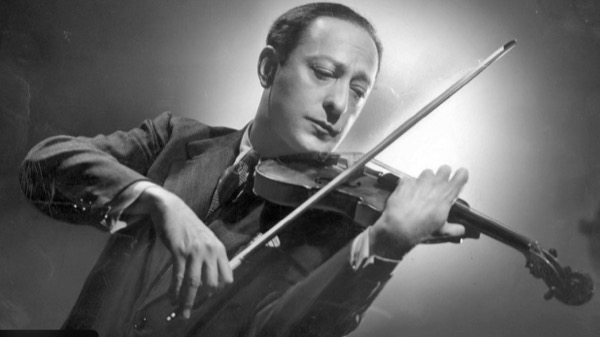
Jascha Heifetz

Jascha Heifetz   No arrival in violin history was more disruptive than Jascha Heifetz. When he first heard a young Heifetz play, Kreisler reportedly quipped that all other violinists might as well break their instruments across their knees.

In the 1920s, Heifetz redefined technical perfection, achieving clarity, speed, control, and precision previously thought unattainable.

From this decade onward, violinists were judged against a new and unforgiving technical standard: Jascha Heifetz’s.

1930–1939: Yehudi Menuhin
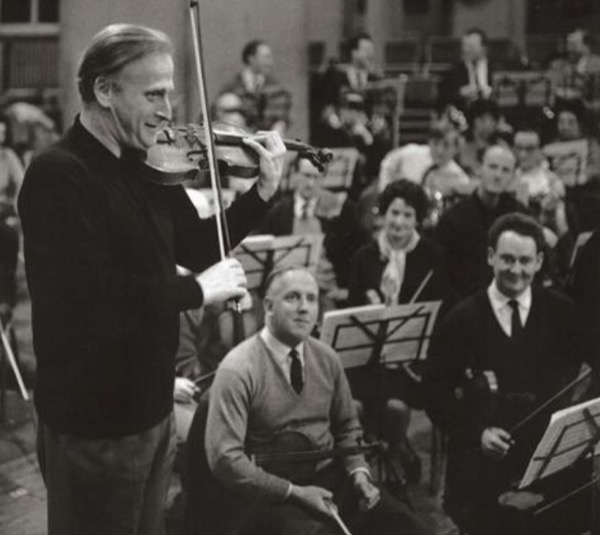
Yehudi Menuhin

Yehudi Menuhin   

While Heifetz remained dominant through the 1930s (and there’s a good case to be made that he was also the most influential violinist for a couple more decades to come), Menuhin came to symbolise something different.

A prodigy of dizzying ability whose seriousness and introspection resonated during the Depression years, Menuhin demonstrated how a solo violinist could become known for his spiritual and even moral depth.

His seriousness and moral authority that emerged in the 1930s would later define his wartime performances, when he performed for Allied troops and concentration camp survivors.

Later in his career, he also became known for his cross-cultural exchanges (he was especially well known for his collaborations with Indian sitarist Ravi Shankar and French jazz violinist Stéphane Grappelli) and supporting young musicians’ careers.

1940–1949: David Oistrakh
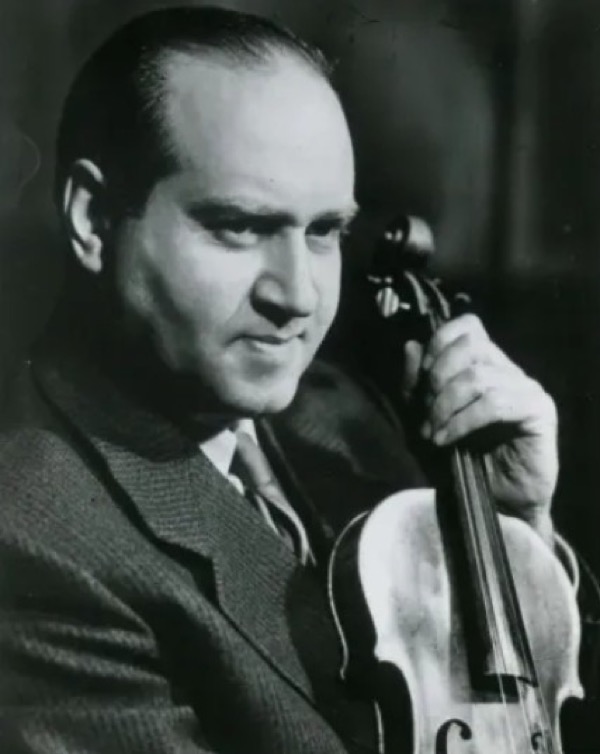
David Oistrakh

David Oistrakh   

The wartime and postwar years demanded a kind of moral and musical gravity from its greatest classical musicians, and the playing of Oistrakh – with his deeply human tone and earnestness – fit the bill.

Oistrakh’s broad tone, architectural phrasing, and moral authority were hugely influential to both Soviet and Western violinists in a musical world fractured by war and politics at the dawn of the Cold War.

His collaborations with Shostakovich (the composer’s shattering first violin concerto, written between 1947-48, was dedicated to him), and his interpretations of Beethoven and Brahms established a model of postwar musical nobility that remains influential to this day.

1950–1959: Nathan Milstein
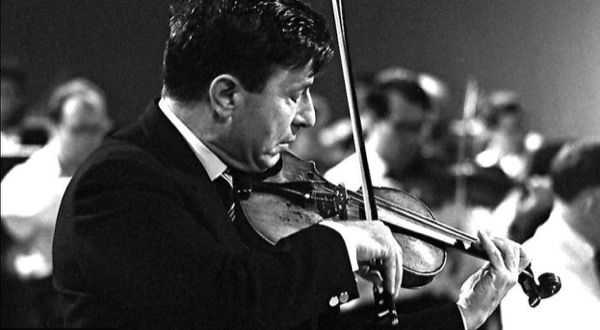
Nathan Milstein

Nathan Milstein   

The 1950s marked a turn toward refinement and stylishness.

Nathan Milstein’s elegance, restraint, and stylistic clarity made him a favourite of the era’s connoisseurs.

His Bach playing, in particular, exerted a particularly long-lasting influence. In those Bach performances and recordings, he favoured structure and line over Romantic excess, helping to usher in a stylish but unsentimental approach to the composer, which hinted at the upcoming historically informed performance practice movement.

1960–1969: Isaac Stern
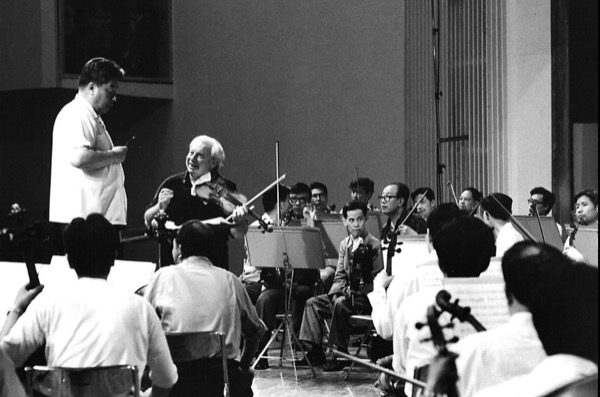
Isaac Stern

Isaac Stern   

By the 1960s, a violinist’s greatness was expected to extend beyond the concert platform. American violinist Isaac Stern followed in Menuhin’s footsteps, emerging not just as a concert violinist but as a cultural statesman.

He championed young artists, made benchmark recordings, and spearheaded the ultimately successful effort to save Carnegie Hall from demolition.

Later, in the 1970s, he even performed international diplomacy, touring China and giving concerts seven years after President Richard Nixon’s first official visit to the country. That tour underlined the country’s growing passion for Western classical music and served as the material for an Oscar-winning documentary, From Mao to Mozart: Isaac Stern in China.

1970–1979: Itzhak Perlman
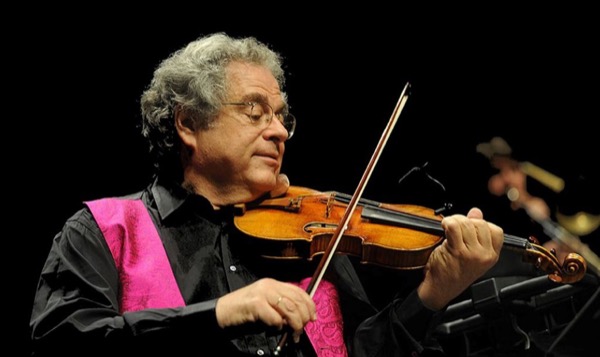
Itzhak Perlman

Itzhak Perlman   

In the 1970s, Itzhak Perlman became one of the most recognisable violinists in the world.

From an early age, he made important appearances on mass media, showing up everywhere from television shows like The Ed Sullivan Show and Mr. Roger’s Neighborhood to soundtracks of major films like Schindler’s List.

His playing combined technical ease with warmth and generosity, contributing his unique charisma and emotional immediacy to concert platforms the world over.

At a time when virtuosity risked emotional coolness after the rise of Heifetz, Perlman helped to popularise a warmth of style and easy accessibility.

1980–1989: Anne-Sophie Mutter
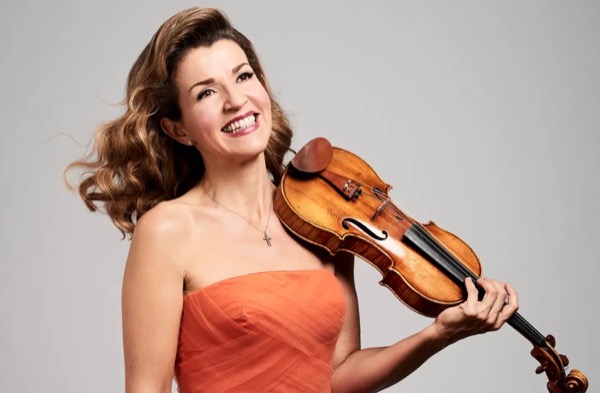
Anne-Sophie Mutter

Anne-Sophie Mutter   

Anne-Sophie Mutter‘s frequent collaborations with Berlin Philharmonic conductor Herbert von Karajan (a major star in classical music in his own right), her technical authority, and her commitment to contemporary composers positioned her at the centre of late twentieth-century violin culture.

She also became famous for performing in shoulderless gowns, creating a modern idea of what a glamorous woman soloist could look like.

At a time when nearly all of the most famous violinists were men, Mutter demonstrated that virtuosity, authority, and visible femininity were not mutually exclusive.

She bridged virtuosity and modernism with rare confidence and individuality.

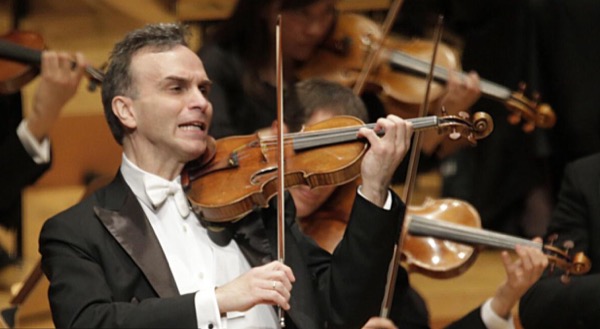
1990–1999: Gil Shaham

Gil Shaham


By the 1990s, no single ideal of violin-playing dominated in the popular consciousness. Recordings, television channels, and the number of influences on young violin soloists had multiplied.

In this pluralistic landscape, Shaham’s joyful, accomplished, communicative artistry stood out.

His playing built on Stern and Perlman’s approach, rejecting the more austere, aristocratic approach of a Heifetz or Milstein in favour of warmth and accessibility, redefining excellence as something that was technically jaw-dropping but also breathtakingly generous and human.

In a decade whose media was becoming increasingly fragmented, that ethos proved quietly influential. You can see traces of it in the generous and golden-toned violin playing of 21st-century violin stars like James Ehnes, Julia Fischer, and Augustin Hadelich.

Conclusion

Taken together, these violinists trace the evolution of what listeners prioritised from decade to decade: from individual expressivity to technical achievement to cultural authority to emotional connection.

By the end of the century, the art had embraced a number of styles, with no single figure dominating a decade like had happened in past decades.

Still, all of today’s great players – whether consciously or not – stand on the shoulders of the violinists who shaped each decade before them.

Featured Post

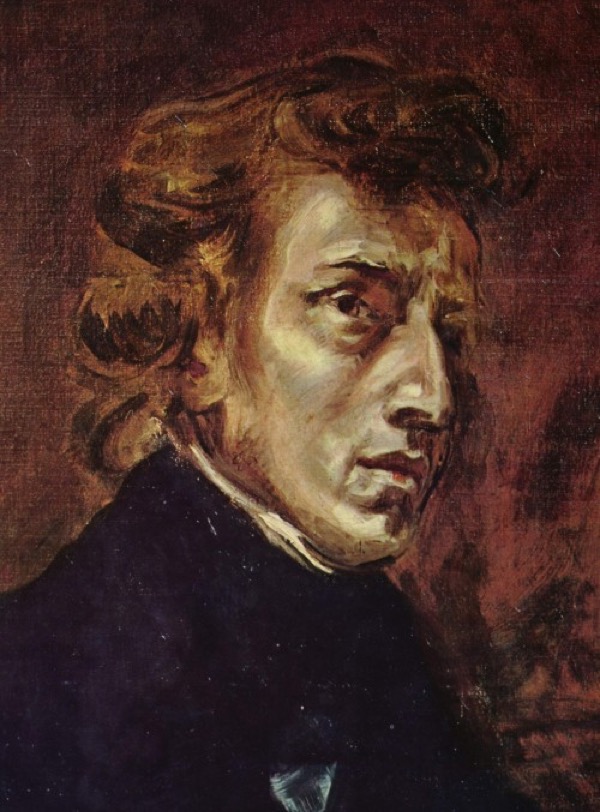
Debunking the Top 5 Myths About Chopin

  Over time, selective anecdotes, early biographies, and nineteenth-century ideals of the “suffering artist” have hardened into familiar cli...