Friday, June 19, 2026

10 Classical Music Facts That Sound Fake But Are True


But scratch the surface, and the past turns out to be far stranger.

Behind some of the most revered composers in Western music are stories that sound like modern internet myths: fan hysteria bordering on mass delusion, obscene jokes set to immaculate counterpoint, creative breakdowns cured by hypnosis, murder plots abandoned at the last minute, and lifelong obsessions with things like trains and numerology.

Remarkably, these stories aren’t apocryphal. In many cases, they’re documented in letters, memoirs, contemporary reports, and firsthand accounts.

Here are ten classical composer facts that sound fake – but are completely true.

1. Franz Liszt caused celebrity hysteria.   

During the 1840s, Franz Liszt inspired a phenomenon that writer Heinrich Heine famously dubbed Lisztomania, which can be compared to the Beatlemania of the twentieth century.

Audiences screamed, fainted, and picked up his cigar stumps in the street.
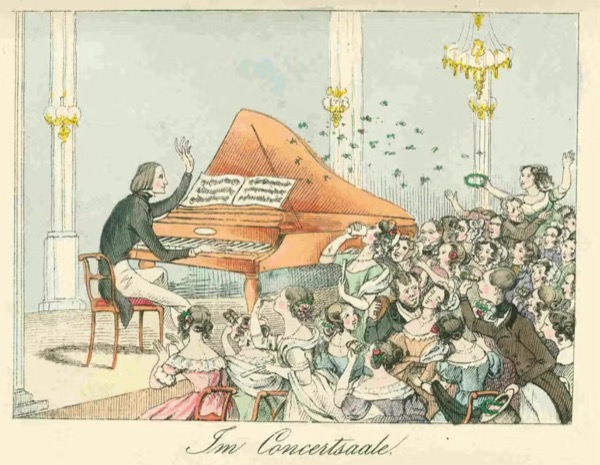
Liszt concert cartoon

Liszt concert cartoon

Lisztomania even had an impact on fashion: women wore cameos with his portrait, made his piano strings into bracelets, and collected his discarded gloves and handkerchiefs.

Thanks to his virtuosity, Liszt became an international celebrity decades before visual mass media, creating a template for the fame of musical superstars of the future.

2. Wolfgang Amadeus Mozart wrote a canon whose text is literally “lick me in the arse.”   

Mozart‘s scatological humour is well documented, and one of his canons bears the unforgettable title Leck mich im Arsch (K. 231) (“Lick me in the Arse”).
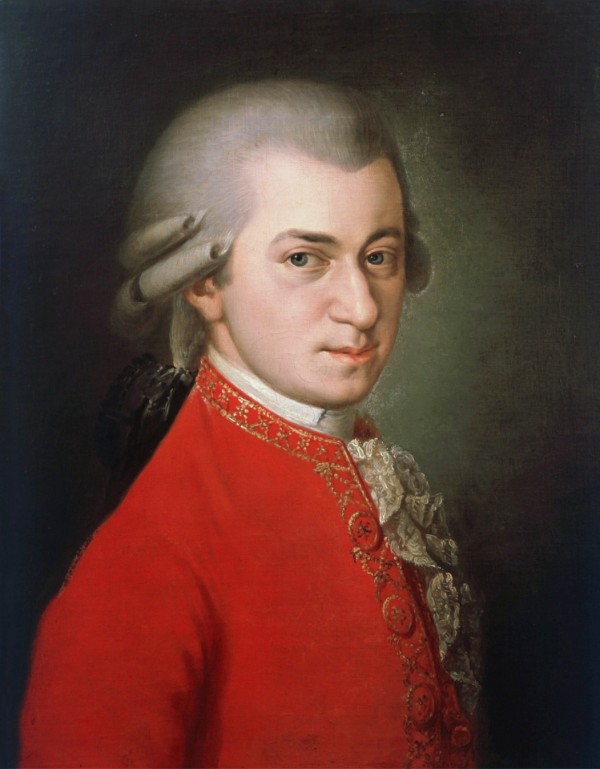
Barbara Krafft: W. A. Mozart, 1819 (Gesellschaft der Musikfreunde)

Barbara Krafft: W. A. Mozart, 1819 (Gesellschaft der Musikfreunde)

Historians have surmised that it was a party piece for a group of friends to sing together.

The canon is harmonically correct, neatly constructed – and unapologetically vulgar.

After Mozart’s death, when his remaining work was being catalogued and published, the publisher changed the lyrics to “Let Us Be Glad!” The original text was rediscovered in 1991.

3. A full performance of Erik Satie’s Vexations can last 18 to 24 hours.  

Satie‘s Vexations consists of a short, eerie piano phrase with the instruction that it be repeated 840 times.

When taken at a slow, meditative tempo – as Satie may have intended – a complete performance can last nearly an entire day.
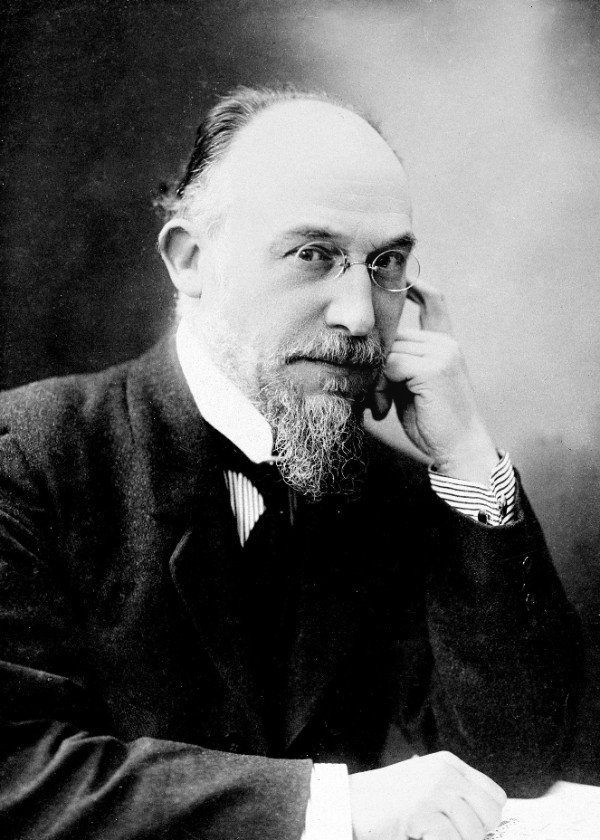
Erik Satie

Erik Satie

The first full performance took place in 1963 and was organised by composer John Cage. It involved multiple pianists rotating in shifts, with audience members coming and going throughout the night.

That performance lasted for eighteen hours. One audience member heard the entire thing.

4. Johann Sebastian Bach once walked 250 miles just to hear an organist.

Bach – Passacaglia in C minor BWV 582 – Smits | Netherlands Bach Society   

In 1705, the 20-year-old Johann Sebastian Bach walked roughly 250 miles from the town of Arnstadt to the town of Lübeck to hear the legendary organist Dieterich Buxtehude.
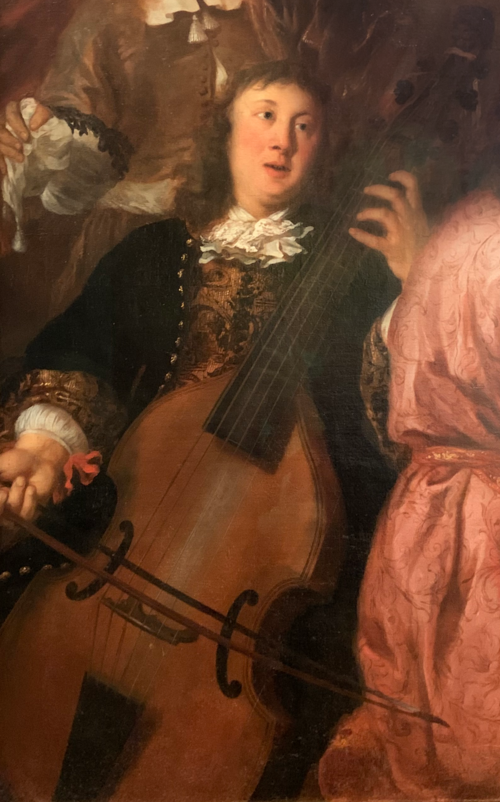
Depiction of the Danish baroque composer Dieterich Buxtehude in the painting "The Musical Party" 1674 by Johannes Voorhout

Depiction of Dieterich Buxtehude in the painting “The Musical Party” 1674 by Johannes Voorhout

That year, Buxtehude was scheduled to lead weekly performances of his music during the Advent season. At least one performance included a 25-member violin section, a brass section, and multiple choirs, so it’s easy to see why Bach would be so interested in hearing it.

Bach was granted a short leave from his job to experience this event, but he overstayed it by several months, studying Buxtehude’s playing and compositional style.

The journey would have permanently shaped Bach’s approach to music, expanding his idea of what was possible.

5. Hector Berlioz, composer of the Symphonie fantastique, once planned a triple murder.   

After composing his famous Symphonie fantastique, based on his fixation with actress Harriet Smithson, Hector Berlioz turned around and fell in love with a virtuoso pianist named Camille Marie Moke, and the two became engaged.
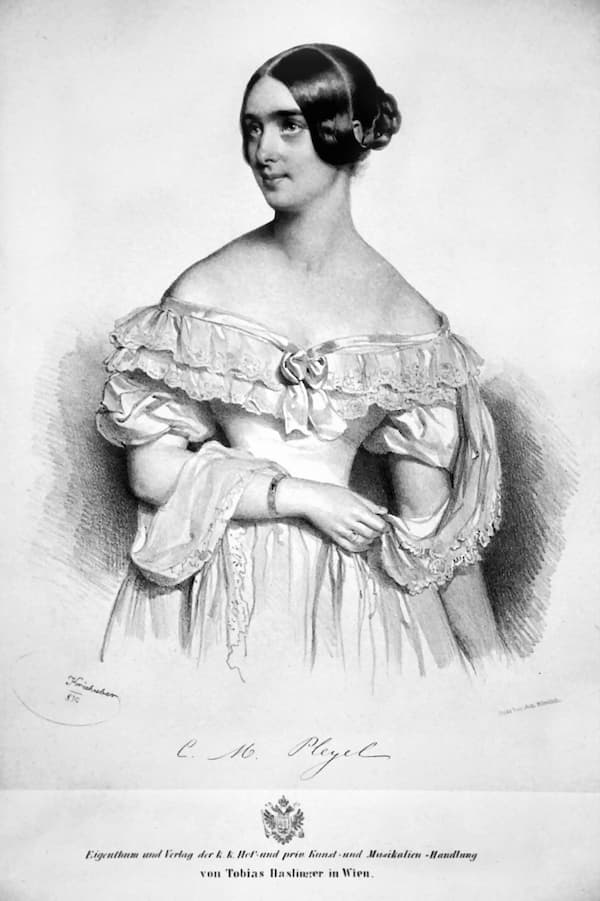
Marie Pleyel

Marie Pleyel

Around the same time, Berlioz won the prestigious Prix de Rome and, as part of his prize, travelled to Rome to live and compose.

One day, he got a letter letting him know that Moke had married a wealthy piano manufacturer instead of him.

Blinded by rage, he devised a detailed plan to murder Moke, her mother, and her husband before killing himself. He even acquired poison and a disguise (a maid’s costume).

Fortunately, the plan collapsed before it could be carried out. He wrote in his memoir that he didn’t follow through because he didn’t want to deprive the world of his music.

It’s one of the more disturbing pieces of trivia in the history of classical music.

6. Sergei Prokofiev died the same day as Stalin.

Prokofiev: Symphony No. 7 / Gergiev · London Symphony Orchestra  

Prokofiev died of a cerebral haemorrhage on March 5, 1953 – the exact same day as Joseph Stalin.
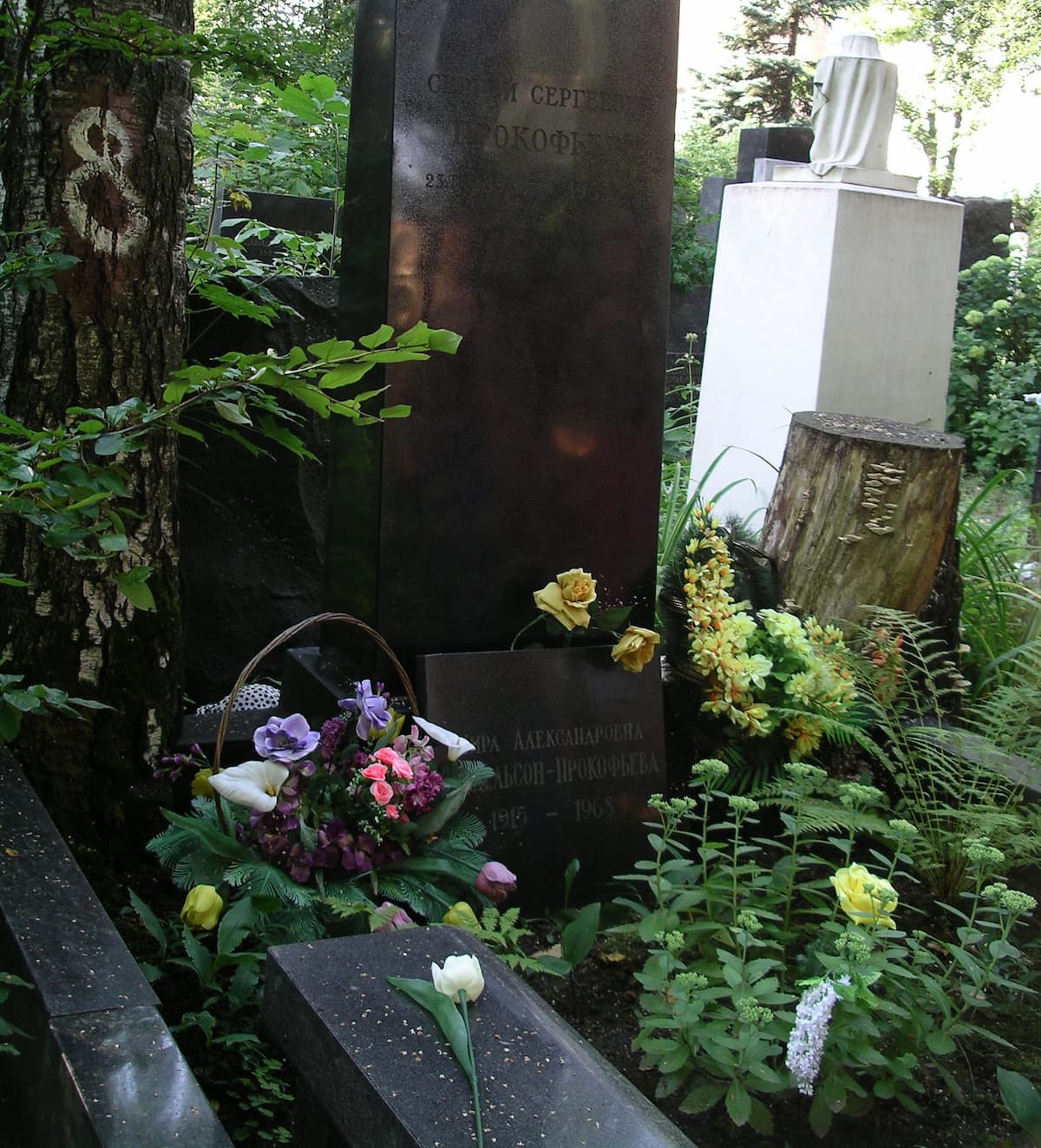
Grave of Sergei Prokofiev

Grave of Sergei Prokofiev

The dictator’s death dominated Soviet media, leaving Prokofiev’s passing largely unnoticed. (In fact, one Soviet music periodical didn’t include a notice of his death until page 116; all preceding pages were devoted to Stalin.)

Prokofiev’s funeral only drew thirty mourners, including his sometimes-rival Dmitri Shostakovich.

Prokofiev’s ex-wife Lina – who was living in a Siberian gulag at the time – only heard about her husband’s death months later, via the radio.

7. Arnold Schoenberg was terrified of the number 13.

Arnold Schoenberg: Verklärte Nacht  

Schoenberg suffered from severe triskaidekaphobia (i.e., a fear of the number thirteen).

Throughout his life, he did things like avoiding hotels with 13 floors and altering the title of his opera from Moses und Aaron to Moses und Aron to avoid writing an opera with 13 letters.

His anxiety became worse as he aged. He was especially despondent when he turned 76, because seven plus six equals thirteen.
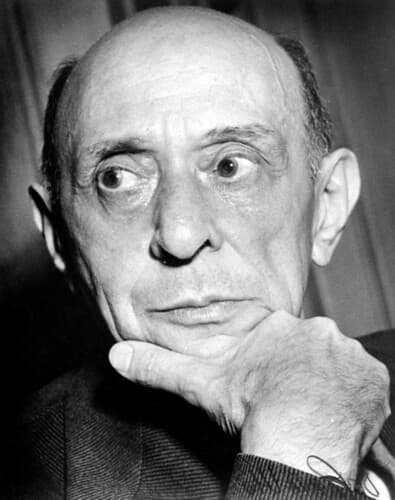
Arnold Schoenberg

Arnold Schoenberg

That said, maybe his fear was justified. He died on 13 July 1951 – just 13 minutes before midnight – having reportedly spent the entire day in terror. He was 76.

8. Wolfgang Amadeus Mozart could memorise and recreate entire works after one hearing.

Miserere mei, Deus – Allegri – Tenebrae conducted by Nigel Short  

At age 14, Mozart attended a performance of priest and composer Gregorio Allegri’s Miserere in the Sistine Chapel: a piece whose score was closely guarded and forbidden to copy.

After hearing it once, Mozart wrote the entire work down from memory. He later returned to correct minor details.

The Vatican ultimately praised the feat rather than punishing him.

9. After the disastrous premiere of his first symphony, Sergei Rachmaninoff needed hypnosis to write again.  

The premiere of Rachmaninoff‘s First Symphony in 1897 was a catastrophe, partly due to a poorly rehearsed and inebriated conductor.
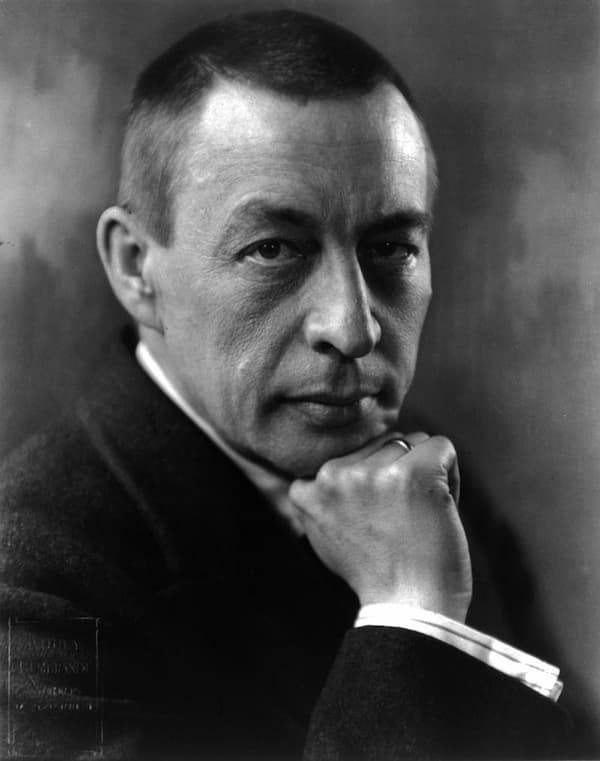
Kubey-Rembrandt Studios: Sergei Rachmaninoff, 1921

Kubey-Rembrandt Studios: Sergei Rachmaninoff, 1921

The failure plunged the composer into a deep depression and creative paralysis that lasted several years.

Rachmaninoff eventually underwent hypnotherapy, which helped restore his confidence, leading directly to the composition of his wildly successful Piano Concerto No. 2. Today, that concerto is one of the most popular ever written.

He even dedicated the score to his therapist in gratitude for the help.

10. Antonín Dvořák had a hyperfixation with trains.  

Antonín Dvořák was intensely fascinated by trains.
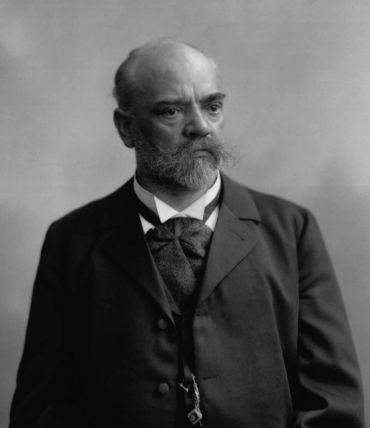
Antonín Dvořák, 1904

Antonín Dvořák, 1904

He memorised timetables, kept a journal of his train travels, spent hours at stations watching engines arrive and depart, and could identify individual trains by sight and sound.

He even once famously remarked that he would have given up all of his symphonies to have invented the locomotive.

Conclusion

Taken together, these stories reveal something essential about classical music history: it is far messier, funnier, darker, and more human than the myths suggest.

The same figures who wrote sacred masses, symphonies, and operatic tragedies were also capable of crude jokes, obsessive fixations, emotional collapses, and spectacular lapses in judgment.

History doesn’t need embellishment to be fascinating. Sometimes, the truth is already stranger than fiction.

Tuesday, June 16, 2026

𝐋𝐢𝐜𝐞𝐨 𝐌𝐮𝐬𝐢𝐜 𝐏𝐫𝐨𝐟𝐞𝐬𝐬𝐨𝐫'𝐬 𝐂𝐨𝐦𝐩𝐨𝐬𝐢𝐭𝐢𝐨𝐧 𝐑𝐞𝐜𝐞𝐢𝐯𝐞𝐬 𝐖𝐨𝐫𝐥𝐝 𝐏𝐫𝐞𝐦𝐢𝐞𝐫𝐞 𝐢𝐧 𝐆𝐞𝐫𝐦𝐚𝐧𝐲

Prof. Niño Cesar B. Tiro of the Liceo de Cagayan University Conservatory of Music achieved another international milestone as his original piano composition, "First Light," received its world premiere in Bonn, Germany on June 14, 2026.
The work was performed by acclaimed German concert pianist Susanne Kessel at the historic Pantheon Theater as part of Freiheit! ("Freedom"), a major international composition project commemorating the upcoming 200th anniversary of Ludwig van Beethoven's death in 2027. The initiative brings together contemporary composers from around the world to explore contemporary concepts of freedom through music.
A composer, arranger, pianist, and educator, Tiro serves as a faculty member of the Liceo Conservatory of Music. He is the sole Filipino invited to participate in the Freiheit! project, a distinction that mirrors his participation in an earlier Beethoven commemorative initiative marking the composer's 250th birth anniversary.
His contribution to that global project earned him the prestigious Ani ng Dangal Award for Music, conferred by the National Commission for Culture and the Arts (NCCA) in recognition of outstanding artistic achievements by Filipinos on the international stage.
Composed in response to the project's theme of freedom, "First Light" reflects hope, renewal, and human possibility through music.
The composition is also slated for publication in a forthcoming international anthology by Editions Musica Ferrum, a contemporary music publishing house based in London, United Kingdom. The publication will allow the work to reach wider audiences, performers, and institutions across the globe.
This achievement highlights the growing international presence of the Liceo Conservatory of Music and underscores Liceo de Cagayan University's commitment to excellence in the arts, creative scholarship, and global engagement.
May be an image of piano and text that says 'LICEODECAGAYAN DE LICEO UNIVERSITY Take a step closer to your DREAMS! LICEONEWS NEWS UCEO Liceo Music Professor's Composition receives World Premiere in Germany www.liceo.edu.ph 0936-270-8196 0955-401-3434 admssions@liceo.edu.ph'


Friday, June 12, 2026

Chamber Music by Women Composers Schumann, Lebrun, Bond, Boulanger, and Carreño

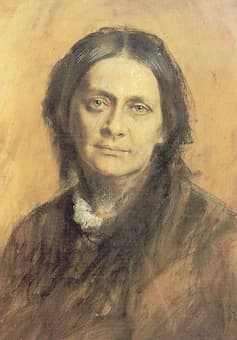
Franz von Lenbach: Clara Schumann

Franz von Lenbach: Clara Schumann

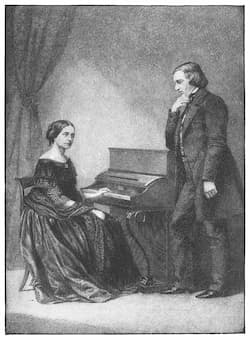
Clara Wieck-Schumann (1819-1896) confided in her diary, “a woman must not wish to compose—there never was one able to do it. Am I intended to be the one? It would be arrogant to believe that.” Her husband Robert was supportive of Clara’s creative efforts, but his opinion on her role was inflexible. “To have children and a husband,” he writes, “who is always living in the realms of imagination do not go together with composing. She cannot work at it regularly and I am often disturbed to think how many profound ideas are lost because she cannot work them out. But Clara herself knows her main occupation is a mother, and I believe she is happy in the circumstance and would not want them changed.”

Clara and Robert Schumann

Clara and Robert Schumann

Such attitudes have actively discouraged or even barred women from pursuing careers as composers for a very long time. It forced Clara Schumann, one of the most talented and distinguished composer-pianist of the 19th century into a “struggle for self-assertion and survival amidst competition, personal disappointments, devastating sorrow, and the challenges of managing both family and career.” Yet despite these obstacles, Clara and other women have persisted in writing music, and their achievements have been hiding in plain sight for centuries. Music by women composers, living or dead, was rarely heard in major concert events. Thankfully this embarrassing situation is gradually changing, and we decided to advance this matter by showcasing some of the most exiting chamber music compositions written by women. Let’s get started with the G-minor Piano Trio, Clara Schumann’s best-known compositions. Composed in 1846, it is her masterpiece and sadly one of the few multi-movement works in her catalogue.  

Franziska Lebrun

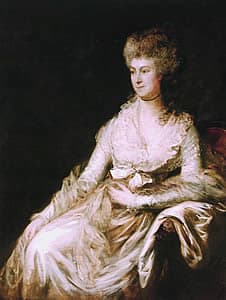
Thomas Gainsborough: Franziska Danzi Lebrun

Franziska Danzi Lebrun (1756-1791) came from a highly talented musical family. Her mother Barbara Sidonia Margaretha Toeschi was a professional dancer and her father Innocenz Danzi a renowned cellist working at the Mannheim court. Her brothers Franz and Johann Baptist, in turn, were professional instrumentalists and successful composers. Franziska was trained as an operatic soprano, and she first publically appeared at the age of 16. Shortly thereafter, she was engaged by the Mannheim opera and highly sought after for her vocal dexterity. Contemporary composers such as Anton Schweitzer, Ignaz Holzbauer, and Antonio Salieri would cast her in leading roles in their most challenging operas. In 1778, Franziska married the composer and oboist of the Mannheim orchestra Ludwig August Lebrun. The couple frequently appeared in concert together, and played in Milan and Paris.

She sang on major operatic and concert stages throughout Europe to great acclaim, and the writer C.F.D. Schubart asserted that she could sing “A, three octaves above middle C with clarity and distinctness.” The family traveled to London in 1779, where Francisca sang at the King’s Theatre in operas by J.C. Bach and Sacchini. Her impact in London was such that the celebrated artist Thomas Gainsborough painted her portrait. However, her talents extended far beyond the stage to keyboard performance and music composition. That includes twelve sonatas for harpsichord with violin accompaniment published as her opus 1 and opus 2. First issued in London between 1779 and 1781, further editions were prepared in Paris and a number of German cities. Although not revolutionary, these charming chamber music compositions provide a delicious taste of mid to late 18th century musical taste. And did you notice that she shares her birth and death year with Wolfgang Amadeus Mozart?  

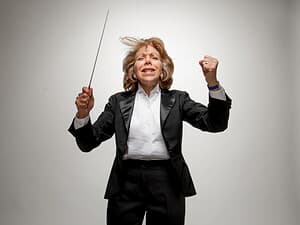
Victoria Bond

Victoria Bond

Victoria Bond (b. 1945) is an acclaimed composer, conductor, lecturer, and the artistic director of “Cutting Edge Concerts.” Major publications call her compositions “powerful, stylistically varied and technically demanding,” and her conducting “impassioned and full of energy and fervor.” In 2019, the Berlin Philharmonic Easter Festival in Baden-Baden, Germany premiered Bond’s opera Clara, based on the life of composer and pianist Clara Schumann. The German press wrote: “Victoria Bond gives each character a three-dimensional role, enriched with original musical colors.” Thus far, Bond has composed eight operas, six ballets, two piano concertos and numerous orchestral, chamber, choral and keyboard compositions. Victoria Bond is the first woman awarded a doctorate in orchestral conducting from the Juilliard School, and she has served with countless national and international symphony and chamber orchestras.

Victoria Bond

Victoria Bond

“Dancing on Glass” is based on the Chinese folksong Liu Yang River. It originates from Hunan Province and was a favorite of street musicians who often sang it accompanied by a drum. It also became the melody of a famous patriotic song celebrating Hunan’s most famous citizen, Mao Zedong. The song makes reference to the nine turns that the Liu Yang River makes before it flows into a lake. As such, the piece “is divided into nine sections, consisting of three solos, three duets and three trios.” According to the composer, “the title derives from the dance of light on the surface of the glass-like river. The sections flow into each other without a break, reflecting the changing character of the river.”  

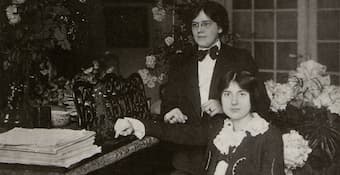
Nadia and Lili Boulanger sisters, 1913

Nadia and Lili Boulanger sisters, 1913

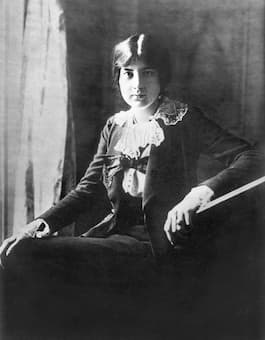
For a very long time, the famous Prix de Rome competition was closed to women. Only in 1903 did the Education Minister Joseph Chaumié make the surprise announcement at a press dinner that the Prix de Rome would be open to women from that year. This unexpected announcement took the “Académie” by complete surprise, and they mercilessly schemed to prevent women from receiving that coveted prize. After her sister Nadia gave up her attempts to win the Prix de Rome, Lili Boulanger (1893-1918) decided to compete for the prize. She studied privately and at the Conservatoire, and after an unsuccessful first attempt in the 1912 competition, she won the Prix de Rome in 1913. She was the first woman to win the prize for music, and her success made international headlines. As the local press wrote, “The suffragettes smash windows and burn houses, but a maiden of France has gained a much better victory.”

Lili Boulanger

Lili Boulanger

Already in early childhood, Lili fell ill with bronchial pneumonia, and she was almost constantly ill for the rest of her life. “Her frail health conditioned her life, through the need of constant care, and her musical career, as she had to rely on private composition and instrumental tuition rather than a full musical education.” But while her dependence on others was often overwhelming, she did enjoy complete intellectual and artistic autonomy. Lily once wrote, “I feel discouraged … not because of the suffering, not because of boredom, but because I understand that I would never be able to have in me the feeling that I have done what I would like to do, but what I have to do, since I cannot follow whatever it is with being interrupted for a long time so that my efforts cannot be sustained!” Lili did compose over 50 works, and her “D’un soir triste” exists in two fabulous versions: one for violin or flute and piano, the other for cello and piano.

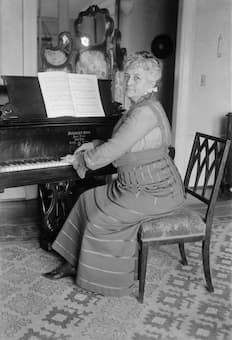
Teresa Carreño

Teresa Carreño

Teresa Carreño (1853-1917) originally hailed from Caracas, Venezuela, but her family moved to New York in 1862. Teresa had a highly ambitious father, and she demonstrated extraordinary talent for piano performance, improvisation, and composition. She became a student of Louis Moreau Gottschalk, and was playing before President Abraham Lincoln at the White House when she was ten years old. The family moved to Paris in 1866, and Carreño played for Franz Liszt. He told the young prodigy, “My dear little Teresita, God has surely given you the greatest gift of all, that of genius. Work, develop your talents, but above all stay true to yourself, and in time you will be one of us.” Carreño performed in concerts throughout the world, and she was “among the first female pianists to tour the United States.”

Carreño served as a role model for new generations of American women who entered musical life as professional performers and composers. In fact, Carreño composed approximately 80 works that mostly date from the early stages of her career. She included them in her concerts, and “they reflect the influence of the style of virtuoso composers, especially Gottschalk, along with an assimilation of Venezuelan rhythmic and formal elements.” Although she mainly composed for the piano, Carreño did approach larger forms in her serenade for string orchestra and her delightful String Quartet in B minor. A scholar writes, “ In 1896, Teresa Carreño, the famous piano virtuosa composed a string quartet which shows a thoroughly sound grasp of quartet technique and style, Particularly praiseworthy is the concise construction of each of the four movements… From the time of its first appearance, this Quartet has received considerable notice.”

Please join us next time for more chamber music composed by women, including works by Fanny Mendelssohn-Hensel, Julia Frances Smith, Germaine Tailleferre, Maddalena Lombardini Sirmen, and Mélanie Bonis.

The Greatest Conductor of Each Decade of the 20th Century


As recordings, radio, and film elevated particular conductors into international symbols, wars, exile, and changing social values reshaped what authority on the podium could look like.

To name a “greatest” conductor for each decade, then, is to identify the figure who most fully embodied the ideals and ambitions of classical music over those specific years.

Today, we’re going decade by decade and looking at the conductors who defined their eras: both in how they conducted and in how they reshaped musical life and the wider culture.

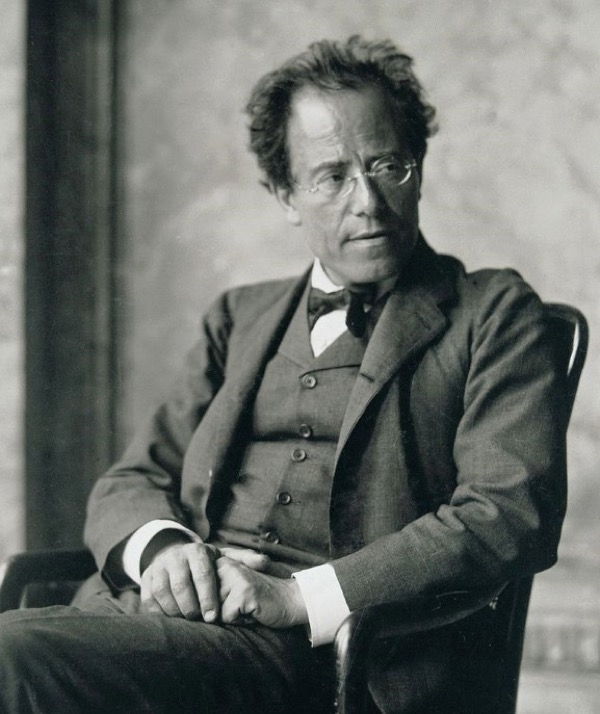
1900–1909: Gustav Mahler

Gustav Mahler

Gustav Mahler

At the dawn of the century, conductors were often composers, and no one embodied that dual expertise more powerfully than Gustav Mahler.

In 1897, Mahler was appointed the director of the Vienna Court Opera, where he imposed unprecedented standards of discipline.

Mahler’s rehearsals were famously exacting. He demanded absolute fidelity to the score while insisting that every detail serve an overarching expressive vision.

His work in Vienna effectively modernised opera production, treating performances as unified artistic statements rather than star-driven events.

Although his fame today rests largely on his symphonies, Mahler’s influence as a conductor was arguably just as important as his influence as a composer.

His belief that conducting and interpreting were also important acts of creation only became more popular with the advent of recordings, when interpretations could finally be permanently memorialised.

1910–1919: Sir Henry Wood

Sir Henry Wood

Sir Henry Wood

A news story on Sir Henry Wood from 1938 

The second decade of the century was defined by upheaval and war, and no conductor did more to sustain and democratise musical life during this period than Sir Henry Wood through his championing of music education, ticket affordability, and the sheer breadth of the repertoire he programmed.

Best known as the founder and guiding force behind the Promenade Concerts in London (which later evolved into the modern-day Proms), Wood believed passionately that great music should be accessible to the widest possible audience.

During World War I, Wood continued programming an ambitious repertoire under extraordinary conditions, introducing audiences to new works while also maintaining high standards at a time when cultural institutions were under severe strain.

His influence was less about personal charisma and more about building long-lasting infrastructure. Although he’s less famous today than most of the names on this list, he built an audience, educated listeners, and permanently altered Britain’s – and arguably, Europe’s – relationship with classical music.

1920–1929: Wilhelm Furtwängler

Wilhelm Furtwängler

Wilhelm Furtwängler

Wilhelm Furtwängler live in Paris (1954@Palais Garnier)   

In the aftermath of World War I, many musicians turned inward, searching for meaning amid the disillusionment it brought.

Wilhelm Furtwängler emerged in the 1920s as the most philosophically serious conductor of his generation.

Appointed to leading posts in Berlin and Leipzig, he quickly became associated with a deeply organic, flexible approach to tempo and structure.

Furtwängler believed music was a living, breathing process. His performances emphasised long lines, structural tension, and an almost metaphysical sense of inevitability.

Unfortunately, after the 1920s, his legacy became somewhat more ambiguous. Despite his opposition to the Nazis, he was pressured to perform at several Nazi-sponsored concerts: appearances that quickly became controversial.

In the years since, it has been revealed that he secretly helped Jewish people flee the Nazi regime, and Joseph Goebbels privately expressed his displeasure with what he viewed as his insubordination…details that have complicated, rather than resolved, debates about Furtwängler’s moral legacy.

1930–1939: Arturo Toscanini

Arturo Toscanini

Arturo Toscanini

Toscanini conducting Verdi’s Overture to La Forza del Destino   

If the 1920s belonged to philosophical depth, the 1930s belonged to artists who demonstrated moral clarity – and Arturo Toscanini stood at the decade’s center.

Having already built a formidable reputation in opera and symphonic repertoire, Toscanini became a global figure through recordings and, most significantly, radio broadcasts with the NBC Symphony Orchestra. (The rising influence of radio in the 1930s was a major phenomenon in classical music.)

Toscanini’s insistence on precision, fidelity to the score, and rhythmic discipline stood in stark contrast to Furtwängler’s freer elasticity.

His public opposition to fascism also turned him into a symbol of artistic integrity and political conscience in the run-up to World War II.

In an era when authoritarianism threatened Europe’s cultural foundations, Toscanini’s exactitude became an ethical stance as well as a musical one.

1940–1949: Leopold Stokowski

Leopold Stokowski

Leopold Stokowski

Stokowski conducting his transcription of Bach’s Toccata & Fugue in D minor  

World War II reshaped the global musical landscape, and few conductors adapted to this new reality as imaginatively as Leopold Stokowski.

Born in Britain but based primarily in the United States, Stokowski embraced new media and audiences with enthusiasm, exemplifying a newly ascendant American musical culture.

His collaboration with Disney on Fantasia introduced orchestral sound to millions who might never have entered a concert hall.

At the same time, he experimented relentlessly with orchestral colour, seating arrangements, and even transcriptions.

In a decade defined by displacement and reinvention, Stokowski exemplified classical music’s ability to expand its reach without abandoning its core artistic priorities.

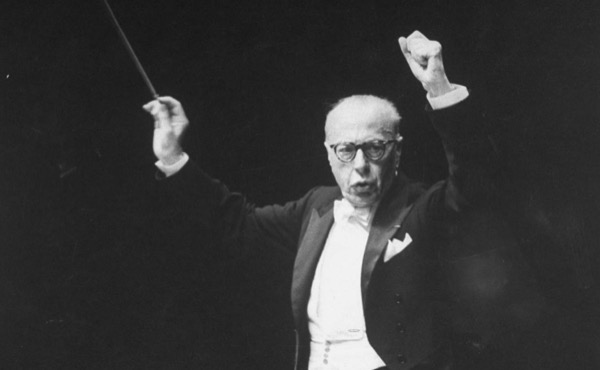
1950–1959: George Szell

George Szell

George Szell

Szell conducts Beethoven’s Symphony No. 5   

The postwar years demanded a sense of order and the skill to rebuild – and George Szell delivered. Although his zeal and its accompanying cruelty could prove hurtful to musicians, it was also deeply influential.

He established a model of orchestral discipline that became the gold standard during the second half of the century. As music director of the Cleveland Orchestra, Szell transformed a capable regional ensemble into one of the world’s most dazzling orchestras through the force of his personality.

Szell’s rehearsal methods in Cleveland and elsewhere were famously (and in some cases, infamously) rigorous. Following in the footsteps of Mahler and Toscanini, he pursued clarity and balance with uncompromising intensity.

During a time when institutions were being built or rebuilt from the ground up, Szell embodied the belief that achieving excellence was a matter of relentless, driving craft.

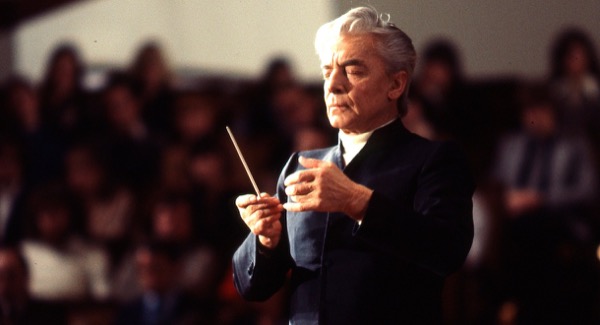
1960–1969: Herbert von Karajan

Herbert von Karajan

Herbert von Karajan    

As music director of the Berlin Philharmonic, Karajan cultivated a polished, homogeneous orchestral sound and a striking visual language that, combined, came to define the era’s – and the Berlin Philharmonic’s – style.

Karajan’s embrace of recording technology and visual media also made him one of the most recognisable figures in classical music around this time. His filmed performances are instantly recognisable due to their camera angles and dramatic lighting.

However, despite his contributions to the art, his reputation has always been complicated. His career got started during the Nazi regime, and in the years following World War II, he was criticised for joining the Nazi Party. That said, a denazification tribunal in 1946 cleared him of illegal conduct.

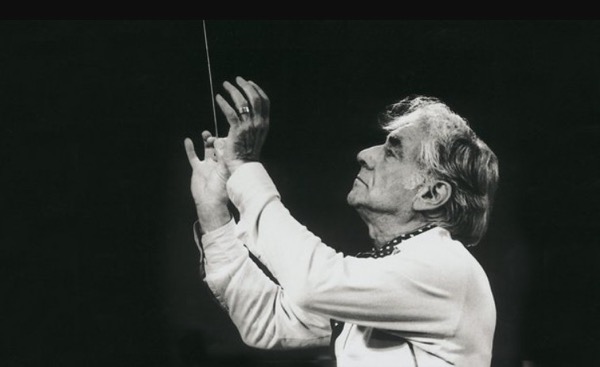
1970–1979: Leonard Bernstein

Leonard BernsteinEspecially with the rise of musicians’ unions and empowerment of orchestral musicians in America, the 1970s saw a shift away from authoritarian maestros toward an embrace of collaborative communication – and Leonard Bernstein was one of this change’s most compelling representatives.

Although Bernstein had long been a prominent figure in the New York music scene, this decade marked the culmination of his influence through his Mahler cycles, televised lectures, and a uniquely expressive conducting style.

Bernstein blurred boundaries between conductor, educator, and advocate. He routinely spoke directly to audiences both in-person and over television broadcasts, insisting that classical music was not a museum artefact but a living language.

In doing so, he helped to define what a charismatic modern conductor might look like.

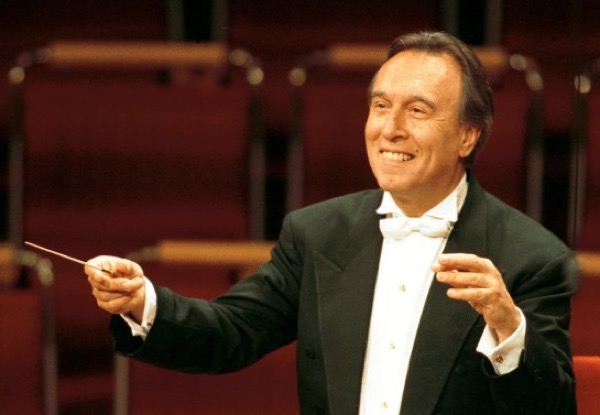
1980–1989: Claudio Abbado

Claudio Abbado

Claudio Abbado

Abbado conducting Mahler’s Symphony No. 5   

By the 1980s, pushback against authoritarian styles of orchestral leadership was continuing, and Claudio Abbado offered an alternative model more rooted in collaboration and transparency.

Known for his work with the Berlin Philharmonic, Vienna State Opera, and later the Lucerne Festival Orchestra, Abbado emphasised careful listening and shared responsibility among musicians. Abbado’s rehearsals were quiet, his authority understated.

He championed modern repertoire alongside the canon and fostered organisational cultures based on trust rather than fear.

In a period increasingly concerned with ethics and institutional reform, Abbado represented a humane and persuasive reimagining of what musical leadership could be.

1990–1999: Simon Rattle

Sir Simon Rattle

Sir Simon Rattle

Rattle conducting Stravinsky’s Rite of Spring   

As the century closed, classical music entered a globalised, post-Cold-War landscape – and Simon Rattle emerged as its genial, emblematic figurehead.

His work with the City of Birmingham Symphony Orchestra demonstrated that ambitious programming, education, and outreach could coexist with artistic excellence.

Rattle embraced the diversity of repertoire and public engagement, pointing toward a future in which, taking cues from Bernstein and Abbado, conductors would act as curators and communicators as much as interpreters.

This approach has resulted in modern-day conductors like Marin AlsopGustavo Dudamel, and Osmo Vänskä, all of whom have emphasised artistic achievement alongside serving the educational and emotional interests of their respective communities.

Conclusion

Taken together, these conductors trace a remarkable hundred-year-long evolution: from Mahler’s authoritarian modernism to Rattle’s collaborative pluralism.

The twentieth century didn’t produce a single representative conductor. But it did create a series of figures who redefined what musical leadership could be in the face of a rapidly changing world. Their contributions remain integral parts of classical music culture even today.

Featured Post

The Most Overtly Erotic Works in Classical Music

  by  Emily E. Hogstad    May 28th, 2026 Western classical music is often thought of as cerebral or abstract, but throughout its history, co...