Friday, April 12, 2024

Playlist: Water Games

by Frances Wilson, Interlude

Shipwreck

Shipwreck

Each is equally apt: in this piece Ravel brilliantly evokes “the splashing of water and by the musical sounds of fountains, cascades and rivulets” (Ravel) through shimmering figurations, cascading arpeggios and other fluid textures. It’s a masterpiece of Impressionism and was the well-spring for other water-inspired piano music by Ravel, namely Une barque sur l’océan from Miroirs and Ondine from Gaspard de la Nuit. 
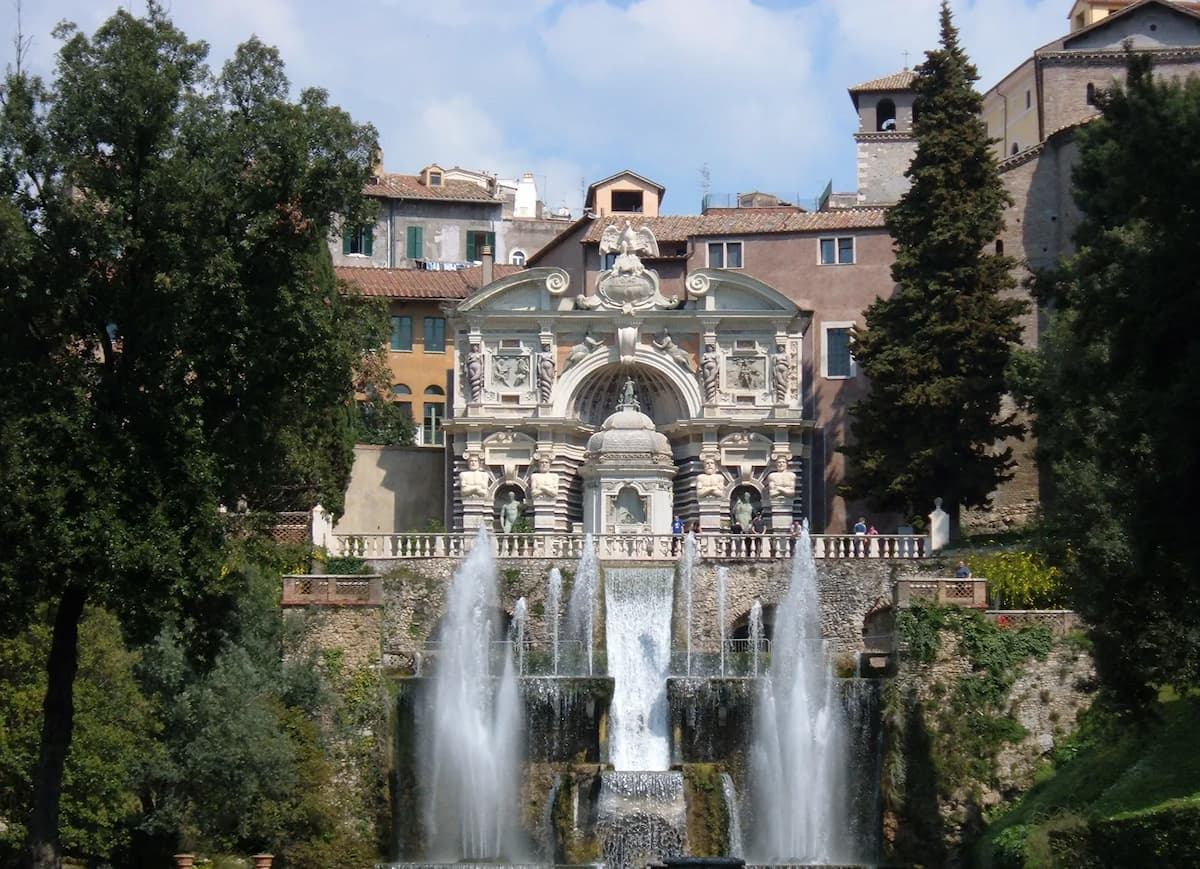
Fountain in Villa d’Este, Tivoli

Fountain in Villa d’Este, Tivoli

But the forerunner of these pieces was undoubtedly Franz Liszt’s Les jeux d’eau à la Villa d’Este, which, like Jeux d’eau, evokes the sparkling play of fountains and the fluidity and brilliance of water. The Villa d’Este boasts an extraordinary system of fountains, with some fifty-one fountains and nymphaeums, 398 spouts, 364 water jets, 64 waterfalls, and 220 basins, fed by 875 metres of canals, channels and cascades, and all working entirely by the force of gravity, without pumps.


Reflections on water

Reflections on water

Debussy was also a master of depicting water in music. Reflets dans l’eau (Reflections in the Water). Here Debussy imitates not just the sounds of water – droplets and burbles, splashes and raindrops – but also reflections, the pictures that float upon the surface.

n. The Lone Wreck, from The Tides by English composer William Baines, is a dramatic tone poem which paints a haunting picture of an abandoned ship deep in the ocean, complete with the calls of sea birds.
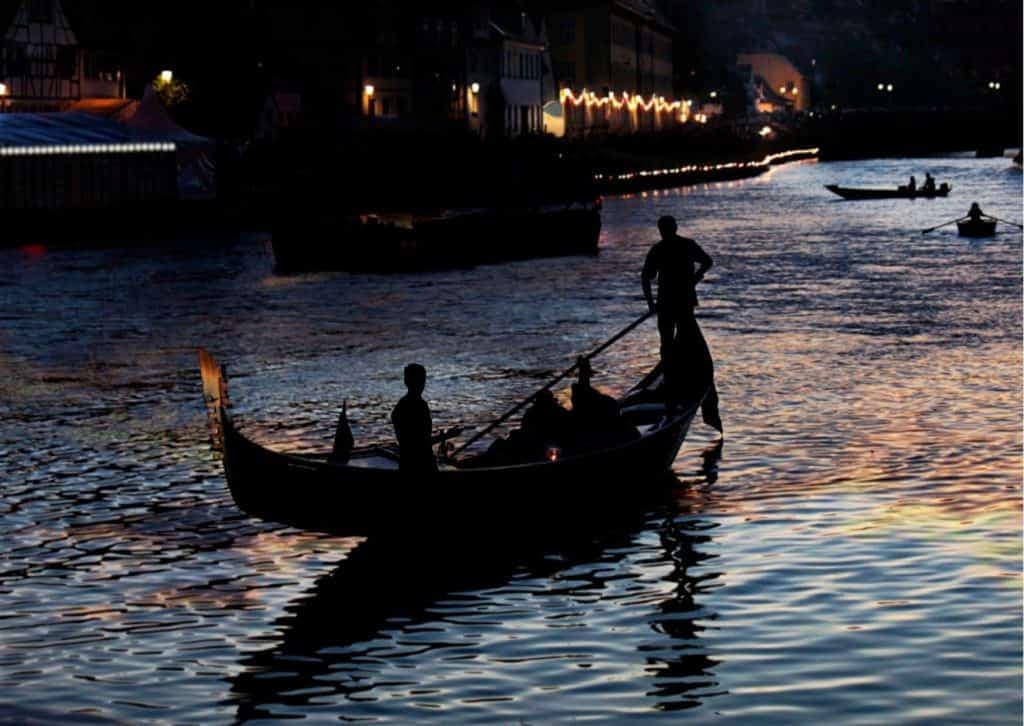
Night gondola in Venice, Italy

Night gondola in Venice, Italy

The Barcarolle, or “boat song”, inspired by the songs of Venetian gondoliers, seeks to portray the rocking motion of the sea and the rise and fall of waves. Chopin’s Barcarolle is perhaps the most famous work in this genre. Mendelssohn’s Venetian Gondolier’s Song in f-sharp minor from his Songs Without Words is dark and atmospheric, suggesting nighttime on the Venetian lagoon.

Liszt was also adept at portraying the motion of the ocean. In his Legende No. 2, St. Francis of Paola walking on the waves, the waters roll and bubble beneath the saint’s feet as he crosses the Straits of Messina.

Meanwhile, Benjamin Britten transports us to more serene waters in Sailing from his Holiday Diary suite. The wind gets up in the middle section, tossing the boat about, before calm is restored.

Transcending Tunes of Light and Shade Handel: Messiah

by Frances Wilson, Interlude

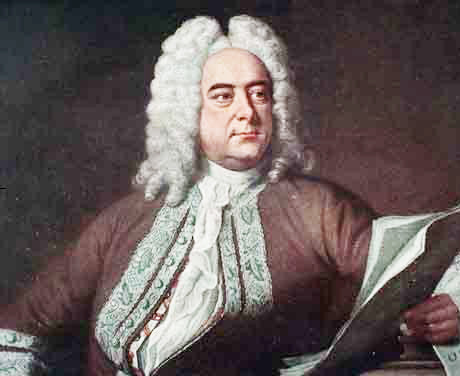
Credit: http://www.portlandhandelsociety.org/

George Frideric Handel © portlandhandelsociety.org

The reasons for this tradition are somewhat apocryphal: one version is that at the first London performance in 1743, the audience “together with the King”, were so moved by the ‘Hallelujah’ Chorus that they spontaneously rose to their feet. An alternative explanation is that King George II was so tone-deaf that he thought the performance had finished, and the orchestra was playing the National Anthem: once the King stood, everyone present was obliged to stand too. Whatever the reason, there is something really special about standing for such an uplifting and triumphant piece of music.

For me ‘Messiah’ will forever be associated with the beginning of the Christmas season. When I was at school, it formed an integral part of the concert which ended the Autumn term, along with the service of nine lessons and carols at the church next door to my school. I must have sung Handel’s ‘Messiah’ at least 10 times, for the tradition of performing it at Christmas continued when I joined my university choir.

Background

‘Messiah’ was composed in 1741, with a text compiled by Charles Jennens from the King James Bible and the version of the Psalms included with the Book of Common Prayer. It was first performed in Dublin on 13 April 1742 and received its London premiere nearly a year later. Initially it received a modest public reception, despite Handel’s established reputation in England, where he had lived since 1712, but gradually the oratorio gained in popularity and it is now one of the best-known, much-loved and most frequently performed choral works in Western music. 

The Story

The work is organised in three sections: Part 1 tells the story of the birth of Christ and includes all the familiar elements of the Christmas story. Part 2 is concerned with Christ’s passion and death, his resurrection and ascension, and ends with the joyous ‘Hallelujah’ chorus. It is this aspect of the work which makes it just as applicable for performance at Easter as well as at Christmas (in fact, its premiere in Dublin took place 19 days after Easter 1742). Part 3 returns to the theme of resurrection and represents the real core of the work as Christ’s resurrection is connected to our own redemption and sense of hope, beautifully affirmed in one of the work’s most famous arias, ‘I Know that My Redeemer Liveth’. And I suppose the best thing about ‘Messiah’ really is all the memorable ‘tunes’ – from ‘Ev’ry Valley Shall be Exalted’ to ‘The Trumpet Shall Sound’, ‘I Know My Redeemer Liveth’ to the charming duet between tenor and alto ‘O Death Where is Thy Sting’. Then there are the choruses: ‘And the Glory of the Lord’, ‘All We Like Sheep’, ‘For Unto Us a Child is Born, ‘Hallelujah’, and the wonderful fugue of the final chorus. In between all this are some beautiful solos, recitatives, which serve to move the narrative forward, and delightful orchestral interludes.

Handel brings the text to life with light and shade, storms and sunshine, fugue and counterpoint, and a huge variety of textures and “word painting”, the technique of having the melody mimic the literal meaning of the libretto. Because of the skilful way in which Handel organises the material, and the universal, redemptive message of the text, Messiah remains a work which is uplifting and life-affirming, regardless of how it is performed.

Thursday, April 11, 2024

Gheorghe Zamfir - The Lonely Shepherd


James Last With Gheorghe Zamfir - The lonely shepherd/Alouette. Live in London 1978 The Lonely Shepherd, James Last, concert, orchestra, video, Georghe Zampfir, Zamfir, Kill Bill Vol. 1 Original Soundtrack,

John Paul Young - Love Is In The Air (Strictly Ballroom Music Video)


Lyrics: Love is in the air Everywhere I look around Love is in the air Every sight and every sound And I don't know if I'm being foolish Don't know if I'm being wise But it's something that I must believe in And it's there when I look in your eyes Love is in the air In the whisper of the trees Love is in the air In the thunder of the sea And I don't know if I'm just dreaming Don't know if I feel sane But it's something that I must believe in And it's there when you call out my name Love is in the air Love is in the air Oh oh oh Oh oh oh Love is in the air In the rising of the sun Love is in the air When the day is nearly done And I don't know if you're an illusion Don't know if I see it true But you're something that I must believe in And you're there when I reach out for you Love is in the air Every sight and every sound And I don't know if I'm being foolish Don't know if I'm being wise But it's something that I must believe in And it's there when I look in your eyes Love is in the air Love is in the air Oh oh oh Oh oh oh

MARINA ( FOX ) - Cover Noemi Gigante Fisarmonica


Wednesday, April 10, 2024

Navihanke - Don Juan mix (v živo)


Schumann: Klavierkonzert ∙ hr-Sinfonieorchester ∙ Khatia Buniatishvili ∙...


Featured Post

The Most Overtly Erotic Works in Classical Music

  by  Emily E. Hogstad    May 28th, 2026 Western classical music is often thought of as cerebral or abstract, but throughout its history, co...