Friday, February 20, 2015

Johann Friedrich Reichardt - His Music and His Life


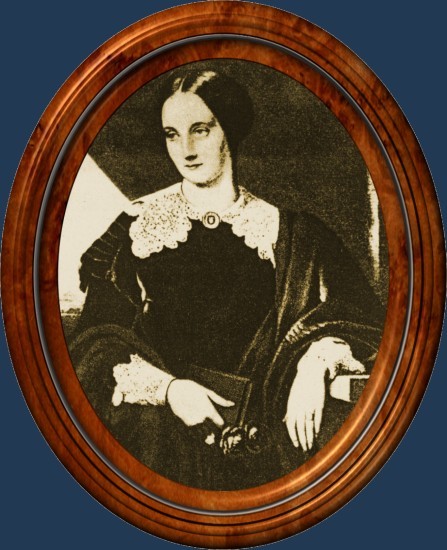
Reichardt, Johann Friedrich (born in Königsberg, 1752; died Giebichenstein, 1814). German composer, conductor, and writer. Court composer and conductor to Frederick the Great and Frederick II, 1775–94. Instituted many reforms. Visited London and Paris 1785 and again some years later. Dismissed from court post for sympathy with French Revolution. Conductor Kassel Opera (Germany) 1808. Wrote at least 12 operas, Singspiele, setting of Milton's Morning Hymn, over 1,500 songs (incl. setting of Erlkönig, highly praised by Felix Mendelssohn-Bartholdy), and much chamber music. Author of several books on compostions.

Thursday, February 12, 2015

Nine Film Scores We Can't Believe Are Not in the Hall of Fame

Superman, John Williams

Is it a bird? Is it a plane? etc. etc. Superman  (1978) is surely one of John Williams’s classic movie scores. His music for Star Wars,Saving Private RyanJurassic ParkE.T. and Harry Potter have all made it into the top 300. But for reasons which are frankly a mystery to us, Superman is nowhere to be seen. 
The Magnificent Seven, Elmer Bernstein
Elmer Bernstein’s 1960 score for the Western classic The Magnificent Seven is a Classic FM favourite, but glance at last year’s Hall of Fame and the iconic music for John Sturges’s film is nowhere to be found. Let’s fix that.
Raiders of the Lost Ark, John Williams
The score for everyone’s favourite (and completely daft) American adventure film is right up there with the best movie music ever written –and yet it’s missing from the Classic FM Hall of Fame. What gives? 
Gone with the Wind, Max Steiner
This iconic 1939 score is notably absent from the Hall of Fame. Max Steiner’s music provides the sweeping musical backdrop to the fiery romance between Scarlett O’Hara and Rhett Butler. Frankly, my dears, we think it should be in the top 300 this year.
Lawrence of Arabia, Maurice Jarre
Peter O’Toole and his amazing blue eyes star in this epic re-telling of the life of T.E. Lawrence. Maurice Jarre’s atmospheric music includes not one but two overtures. If that doesn’t merit an entry in the Hall of Fame, we don’t know what does.
The Good, the Bad and the Ugly, Ennio Morricone
Arguably, the most iconic score for a Western ever written, the music for this Clint Eastwood classic is unforgettable (sorry in advance for the earworm…). Surely that iconic whistle warrants a Hall of Fame vote?
Cinema Paradiso, Ennio Morricone
Can you believe the only Morricone score in last year’s Hall of Fame was The Mission? No. Neither can we. What about the completely charming Cinema Paradiso? If the film and the delightful score don't make you want to a) go to Sicily and/or b) become a projectionist, we’ll eat our standard-issue movie-director cap.
The Godfather, Nino Rota
But the most famous cinematic jaunt to Sicily is surely the trip in The Godfather . And Nino Rota’s score for Francis Ford Coppola’s American crime classic is surely part of the reason for its fame. Inhale the Sicilian atmosphere captured in Rota’s famous Love Theme and tell us you don’t want to immediately go and vote for this soundtrack.
The Piano, Michael Nyman
The 1993 film about a mute pianist and her daughter is as haunting a movie as you could wish for. Set on the coast of New Zealand, Jane Campion’s film is scored beautifully by Michael Nyman – and it’s a bit of a mystery to us why this wonderful score isn’t among the top 300 at the moment.
(C) 2015 by CLASSIC FM London

Wednesday, February 11, 2015

Arnold Schoenberg - His Music and His Life

Arnold Schoenberg (September 13, 1874 - July 13, 1951) was one of the founders of musical Modernism, an incredibly influential figure from the early twentieth century to at least twenty-five years after his death – with Stravinsky, one of the two most influential composers of his time. Even those fundamentally antithetical to atonality were moved to see musical aesthetics very much as he did. As a composer, Schoenberg largely taught himself, sometimes relying on the advice of his friend, the composer Alexander von Zemlinksy. Zemlinsky's sister Mathilde became Schoenberg's first wife. The marriage came close to foundering when Mathilde left Schoenberg for an artist. She returned, but the marriage never recovered. Nevertheless, when she died in 1923, Schoenberg was devastated. Still, he remarried quickly, this time choosing the sister of the violinist Rudolf Kolisch, Gertrud. It was a love match.
From the early twentieth century, Schoenberg was considered a leading light of the younger generation, attracting the attention of no less than Gustav Mahler. He kept up a steady stream of composition, extending the language of the day as well as striking out in new directions. However, in 1912, he underwent an artistic crisis and for close to a decade completed no major new piece. For most of these years, he made very little money, mainly from private teaching, although he had achieved international fame. During World War I, he was rejected from military service for health reasons. However, his students were called up, and he had to stop teaching for a time.
The Twenties saw a change in his fortunes. He began to compose again, this time in a new compositional language he had worked out, which he called "the method of composing with twelve tones" – what today is known as dodecaphonic serialism. He founded the Union for Private Performance, a subscription organization dedicated to new music and intended only for interested parties, rather than for the general public. Orchestral works were given in chamber arrangements, and the composers played included Claude Debussy, Mahler, and even Charles Ives. He received conducting engagements in major European music centers, as well as several honors in Germany and in Austria. He was put in charge of the composition master class at the Berlin Academy of Art and elected (supported by Kurt Weill) to the Prussian Academy.
When the Nazis came to power in 1933, Schoenberg left Germany for France and, later, the United States, where he eventually settled in the Los Angeles area in 1934. Schoenberg, of Jewish family, had converted to Protestantism in 1898, but he never was formally religious. Nevertheless, he saw the swastika on the wall and got out – surprising, when one considers his unworldliness in practical matters. He also formally converted back to Judaism, mostly as a protest against anti-Semitism. He became a professor at UCLA and an influential teacher in the country. For composers, southern California became a major musical center, mainly because Schoenberg taught there. However, the United States proved hard ground for his music. His health, never robust, deteriorated sharply. Nevertheless, he felt so out of place that as late as the Forties, he still considered leaving for somewhere else. Health problems forced him to resign his academic appointment, and he and his family lived on his small pension. To make ends meet, he resumed giving private lessons. The circumstances of earning a living as well as extremely high artistic ambition kept his output small – only fifty opus numbers. He died in 1951.
Schoenberg began plying the post-Wagnerian super-chromaticism typical of Vienna in the mid-to-late 1890s. The music is tonal, but highly chromatic. Major works include the String Quartet #1 (1904), the Chamber Symphony #1 (1906), the lush choral Friede auf Erden (1907), the string sextet Verklärte Nacht (1899; probably his most popular piece), and the massive, Mahlerian Gurre-Lieder (1900-1911). Toward the end of the decade, he began to move toward a free atonality – that is, music with no key center, usually exhibiting an Expressionist aesthetic. The String Quartet #2 (1908) is literally a transitional work – the early movements in the older style, the final movements in the new. Other highpoints from this time include the song cycleDas Buch der hängenden Gärten (1909), the mini-operas Erwartung (1909) and Die glückliche Hand (1910-1913), 5 Orchestral Pieces (1909), and Pierrot lunaire (1912). In many of these works, Schoenberg not only tests and throws away tonality, but defines modern orchestration, especially in the 5 Orchestral Pieces and in Pierrot lunaire.
In the Twenties, Schoenberg produces scores in his dodecaphonic serial method. About this, many writers, pro and con, have misinformed their readers and missed the point of Schoenberg's achievement. Fundamentally, it's a very simple idea. A composer arranges the twelve notes of the chromatic scale in an order of his choosing. This arrangement is called the row, or series (hence, "serial"). Everything that happens in a classically-dodecaphonic score depends on this order, although certain manipulations are allowed: you can transpose the row to begin on another note but keep the intervals, play it backwards, play it upside-down, and play it backwards and upside-down. You can even break the row up into two, three, or four parts and manipulate each of the parts. It sounds easy to the point of simple-minded, but its very conceptual simplicity made it an extremely flexible and powerful compositional tool. It makes no sense to consider all twelve-tone music as monolithic, any more than it makes sense to treat all traditionally tonal music as the same. Good composers have their own personalities and their own sounds. It is no more difficult to distinguish Schoenberg from Berg than to pick out Haydn from Mozart. It comes down to an experienced ear. Serial Stravinsky doesn't differ all that much from tonal Stravinsky. Schoenberg's procedures don't lead all by themselves to the New Jerusalem, and to Schoenberg's credit, he never claimed that they did. Composers still need the poetry and vision they always needed. According to Schoenberg himself: "Of course, a soul you have to have." His own masterpieces of this period include the Wind Quintet (1924), 3 Satires (1925), Variations for Orchestra (1926), the Third and Fourth String Quartets (1927, 1934), the grand opera Moses und Aron (1932), and the Violin Concerto (1936). In the late Thirties, Schoenberg began to seek a stronger rapprochement with the German classical tradition, writing pieces that made analogies to sonata form, for example, as in the Piano Concerto of 1942, the String Trio (1946), and the choral Dreimal tausend Jahre and De Profundis (1949, 1950).
One should also note that Schoenberg sprinkled "wrong pieces" throughout these phases. For example, he never gave up writing tonal music even after he came up with his serial technique. He was blest with a powerful talent for harmony – indeed, one of the great ears of Western music. Such scores include the tender Weihnachtsmusik (1921), 3 Folksongs (1930), the cello and string quartet concerti (both from 1933), the magnificent Suite in G (1934), the Chamber Symphony #2 (1916; 1939), and the Theme and Variations for Band (1943).
Why did Schoenberg feel compelled to pursue thorny paths? He believed that the harmonic freedom of the late Nineteenth Century had led to a crisis in compositional form. The traditional classical forms – sonata, rondo, scherzo and trio, and so on – depended on the establishment of a key center and a modulation or change to another key center in order to articulate structural components. If you had an A-B-A form, for example, changes of key would mark the beginning of the B section and the return of the A. However, music after Wagner tended to change key far more often than the music before. Indeed, keys morphed so quickly, that it was hard to say whether a key had even been established. No established key meant that structural boundaries blurred, and the listener got lost in an aural swamp. Schoenberg's solution was to find principles of organization other than tonality. By removing tonality, Schoenberg also emphasized the independence of each musical line and the importance of a set of intervals, rather than what most listeners thought of as themes. It was a radically new way of perceiving music, while remaining curiously faithful to fundamental principles of the classical tradition. Indeed, one can view Schoenberg's compositional method as remarkably similar to Beethoven's. One also grasps an emotional complexity – from the same intellectual milieu as Freud, Benjamin, Schiele, and Kokoschka, especially in works like Moses und Aron, the Piano Concerto, and the gripping A Survivor from Warsaw (1947).
I must admit, however, that many listeners don't see things in this way. Schoenberg's music has the same appeal to the general public as broccoli to a six-year-old. On the other hand, one must also admit that most people haven't heard anywhere near all of Schoenberg's catalogue and very often a work not more than once. Furthermore, until recently, good performances have been few and far between. It took even professionals decades to grasp this music. Pioneering recordings, like those of Robert Craft, notable mainly for the fact that they exist at all, have been superseded by those of a younger generation. Schoenberg is gradually becoming less a twelve-tone composer and more a great one. ~ Steve Schwartz

Saturday, January 31, 2015

Jean-Philippine Rameau - His Music and His Life

A legendary composer who transformed the face of French opera, Jean-Philippe Rameau was ahead of his time, his theories and works inspiring such succeeding operatic innovators as Gluck and Wagner.

Jean Philippe Rameau
Who was he? The most distinguished French composer of the late baroque.
Why is he important? He revolutionised French opera and was a leading theorist
What are his most famous works? Hippolyte Et Aricie; Castor Et Pollux; Les Indes Galantes; La Poule; Les Cyclopes; La Triumphante; Gavotte Variée

Rameau was one of the most profoundly gifted of all French composers. At a time when the finest musician in Spain was an Italian (Domenico Scarlatti) and England’s most celebrated composer was German (Handel), Rameau stemmed the tide of popular Italian operatic imports with a series of bracing theatrical masterpieces.
He shunned trends towards showpiece arias sung by the latest stars charging exorbitant fees and put the focus firmly back on dramatic tension and pacing.
“I conceal art with art,” was his maxim, and his desire to unite all the arts in one magnum musical opus led to the operatic reforms of Gluck and, most notably, Wagner.
Considering Rameau’s importance, it is surprising how little we know with any certainty about his personal life. He was extremely tall and thin: “more like a ghost than a man” attested one contemporary, another that “he had a sharp chin, no stomach and flutes for legs” and that he “resembled a long organ pipe with the blower away”.
Those who knew him in childhood remembered a lively, outgoing personality. Yet as time went by, while his music retained a boyish sparkle and vigour, he personally became more withdrawn and introspective as he dedicated his energies exclusively to composing and writing learned treatises.
As one close friend put it: “His heart and soul were in the harpsichord; once he had shut its lid, there was no one home.”
Rameau was notoriously careful with money. Having amassed a small fortune, by the time of his death he owned just a few clothes, a single pair of worn-out shoes and a harpsichord that was seriously in need of repair. Yet he supported his family generously – he set up a large dowry for his daughter when she took holy orders – and helped a number of promising musicians, most notably Claude-Bénigne Balbastre.
Above all his belief in the power of music – what he described as “the language of the heart” – remained absolute, and woe betide anyone who disagreed with him. He made personal enemies of a number of influential people whose views he opposed and avoided intimacy at all costs – yet he seemed quite content in his own skin.
“The emptiness he found in society made him avoid it,” observed the artist Jacques-Fabien Dagoty.
Rameau belongs to that select group of composers – alongside Bruckner and Franck – who produced little of any real significance before they were 40 years of age. Although he could play the harpsichord before he could read or write and was actively encouraged by his father (along with 10 other siblings!), Jean-Philippe was enrolled in a Jesuit school with the ultimate aim of his becoming a lawyer.
However, his heart was never really in it and eventually he was asked to leave. Having finally received his parents’ blessing to make music his career, he made his way to Milan with a view to making up for lost time.
Rameau stayed in Italy just a few months before returning to France and joining a troupe of wandering players as a violinist. His wanderlust continued as he accepted a series of organist posts in fairly quick succession around Paris and the provinces, including five months in Avignon, four years apiece in Clermont and Dijon, and two years in Lyons.
All the while he was refining his composing technique and in 1706 he produced his Premier livre de pièces de clavecin, the first of his works to roll off the printing presses.
However, it was only after Rameau finally settled in Paris in 1722 that his career took off in earnest. That same year he published his Traité De L’harmonie, which immediately won him the respect and admiration of his peers.
Meanwhile, his books of harpsichord pieces, with such characterful titles as La Villageoise, La Joyeuse, Les Cyclopes and La Triumphante, had become all the rage. His newfound happiness was compounded when in 1726 he married a gifted pupil of his, Marie-Louise Mangot, who bore him four children.
Not all was plain sailing. Rameau tried repeatedly to gain an organist’s post in the French capital, but finally threw in the towel in 1727 when he lost out to Louis-Claude Daquin – composer of that delightful keyboard charmer Le Coucou – for a job at St Paul.
As if to rub salt in the wound, his trailblazing second treatise Nouveau Système De Musique Théorique (1726) was witheringly dismissed by traditionalists, the first of a series of musical controversies that would haunt the remainder of Rameau’s career.
Rameau was already 50 when he produced his first opera, Hippolyte Et Aricie, in 1733. Its searing dramatic urgency and unprecedented attention to orchestral detail and colouristic effects caused a sensation.
Immediately lines were drawn between the staunch supporters of the well-established Lully tradition, with its unmistakably French poise and reserve, and those who preferred the red-blooded passion and intensity of Rameau – or as the Lullyists put it, his “grotesque, discordant music” replete with “noisy instrumentation”.
Nowadays it is difficult to hear quite what all the fuss was about, but at the time it was akin to the storms of protest that greeted another infamous Paris premiere – that of Stravinsky’s The Rite Of Spring. As time went by, so the initial furore gradually died down.
Between 1735 and 1753 Rameau served as the Maître de musique to the wealthy financier La Pouplinière. This was something of a dream appointment, for it not only gave him the opportunity to mix with the cream of Paris’s writers, artists, musicians and even the infamous libertine Giovanni Casanova (!) at La Pouplinière’s various residences, but it also brought him into direct contact with the French court.
He became Compositeur de la musique de la chambre du roy in 1745, the same year he was invited to compose a comédie-ballet in collaboration with the great writer-philosopher Voltaire – La Princesse De Navarre.
The same team went on to produce Les Surprises De L’amour for the Théâtre des Petits-Cabinets of Mme de Pompadour in 1748. Also that year, working alongside his favourite librettist Louis de Cahusac, he scored a hit with Zaïs, whose overture features a heart-stopping depiction of the world’s creation, complete with atmospheric rustlings, swirling explosions and an ominous tolling drum.
With his position at court now unassailable and his reputation soaring, Rameau was at the very height of his career when on April 22, 1749 he premiered his three-act pastorale-heroïque Naïs.
Another Cahusac collaboration, it was composed in celebration of the Treaty of Aix-la-Chapelle signed the previous year. This highly evocative story of a nymph’s love for a stranger (Neptune in disguise), luxuriates in the simple pleasures of life and features an enormous cast of giants, gods, goddesses, zephyrs, sea-divinities, nymphs and shepherds.
This groundbreaking work inspired a wave of nostalgia for the Arcadian ideal amongst the Parisian elite, which rapidly spread to all the arts.
Just as it seemed as though nothing could go wrong, Rameau unwittingly found himself embroiled in fresh controversy. In 1752, a visiting opera troupe staged a performance of Pergolesi’s La Serva Padrona in Paris that hit the musical scene like a thunderbolt.
Now it was Rameau’s turn to be declared old-fashioned by the likes of Rousseau and Diderot, although he retained some powerful allies including the loyal Voltaire – who passionately declared “Rameau has made of music a new art” – and the King himself.
With 12 years remaining to him and with his creative powers in decline, Rameau deeply regretted that he had not spent more time composing earlier in his career rather than dedicating himself to theoretical tracts – much to his own amazement he had composed only half-a-dozen solo keyboard pieces since 1728.
The last of his works to be performed appears to have been Les Paladins, a delightful comédie-ballet premiered in February 1760.
Despite his deteriorating health, Rameau remained active almost to the end. He secured for his eldest son, Claude-François, a highly paid sinecure as valet de chambre to the King and was ennobled just four months before his death in Paris from “a fever” on September 12, 1764.
He was buried at St Eustache, Ile de France, and although a bronze bust and red marble tombstone were erected in his memory there by the Société de la Compositeurs de Musique in 1883, the exact site of his burial remains a mystery.

Featured Post

The Most Overtly Erotic Works in Classical Music

  by  Emily E. Hogstad    May 28th, 2026 Western classical music is often thought of as cerebral or abstract, but throughout its history, co...