Friday, December 5, 2014

Aram Khachaturian - His Music and His Life

Armenian Russian classical composer An outstanding representative of the Russian school of composition, Khachaturian was a unique artist for whom folklore was the inspiration for his music. His ballets, symphonies, and other works are permeated by the intonations and rhythms of folk songs and dances of the East. They brought a fresh voice to the Russian music of the twentieth century.

Born: June 6, 1903; Tbilisi, Georgia, Russian Empire (now in Georgia)

Died: May 1, 1978; Moscow, Russia, Soviet Union (now in Russia) 


Also known as: Aram Ilich Khachaturian (full name) Principal works ballets (music): Schast’ye, Op. 43, 1939 (Happiness; scenario by Gevorg Ovanesian; choreography by Ilya Arbatov); Gayan?, Op. 50, 1942 (scenario by Konstantin Derzhavin); Gayan? Suite No. 1, Op. 53, 1943; Gayan? Suite No. 3, Op. 55, 1943; Gayan? Suite No. 2, Op. 54, 1945; Spartak, Op. 82, 1956 (Spartacus; scenario by Nikolai Volkov; choreography by Yuri Grigorovitch); Gayan?, Op. 89, 1957 (scenario by Boris Pletnev). cello work: Sonata-fantaziya, Op. 104, 1974 (Sonata-Fantasy in C Major). chamber works: Elegy in G Minor, Op. 4, 1925 (for cello and piano); Pesnya stranstvuyushchego ashuga, Op. 2, 1925 (The Roaming Ashug’s Song; for cello and piano); Dance No. 1, 1926 (for violin and piano); The Dream, Op. 3, 1926 (for cello and piano); Pantomime, Op. 13, 1927 (for oboe and piano); Allegretto, Op. 18, 1929 (for violin and piano); String Quartet, Op. 23, 1931; Mass Dance, Op. 25, 1932 (for bayan); Sonata, Op. 29, 1932 (for violin and piano); Trio, Op. 30, 1933 (for clarinet, violin, and piano). choral works: Mer Hayrenik, Op. 60, 1944 (Our Fatherland; national anthem of the Armenian Soviet Socialist Republic; lyrics by Armenac Sarkisyan under the pseudonym A. Sarmen); Oda radosti, Op. 88, 1956 (Ode to Joy; for female soloist, chorus, violins, harps, and orchestra; lyrics by S. Smirnov); Ballada o Rodine, Op. 97, 1961 (Ballad of the Motherland; for soloist and symphony orchestra; lyrics by Ashot Garnakerian). orchestral works: Baghdasar akhpar, 1927 (Uncle Baghdasar; incidental music for Hakob Paronian’s play); Arevelian atamnabuzh, Op. 17, 1928 (The Eastern Dentist; incidental music for Paronian’s play); Khatabala, Op. 15, 1928 (incidental music for Gabriel Sundukian’s play); Dance Suite, Op. 32, 1933 (Tantseval’naya syuita); Macbeth, Op. 33, 1933 (incidental music for William Shakespeare’s play); Symphony No. 1, Op. 35, 1935; Piano Concerto in D-flat Major, 1936; Violin Concerto in D Minor, Op. 46, 1940; The Widow of Valencia, Op. 45, 1940 (incidental music for Lope de Vega’s play); Masquerada, Op. 48, 1941 (incidental music for Mikhail Lermontov’s play); Symphony No. 2 in E Minor, Op. 56, 1943 (Simfoniya s kolokolom; The Bell Symphony); Russkaya fantaziya, Op. 59, 1945 (The Russian Fantasy); Cello Concerto in E Minor, Op. 65, 1946; Symphony No. 3, Op. 67, 1947 (Symphony-Poem); Oda pamyati Lenina, Op. 71, 1948 (Ode in Memory of Vladimir Ilich Lenin); Stalingradskaya bitva, Op. 74, 1949 (The Battle of Stalingrad ); Macbeth, Op. 84, 1955 (incidental music for Shakespeare’s play); Spartacus Suite No. 1, Op. 82a, 1955; Spartacus Suite No. 2, Op. 82b, 1955; Spartacus Suite No. 3, Op. 82c, 1955; King Lear, Op. 92, 1958 (incidental music for Shakespeare’s play); Privetstvennaya uvertyura, 1958 ( Salutatory Overture); Suite from Lermontov, Op. 94, 1959; Concerto-Rhapsody in B-Flat, Op. 96, 1962 (for violin and orchestra); Concerto-Rhapsody, Op. 99, 1963 (for cello and orchestra); Concerto-Rhapsody in D-flat Major, Op. 102, 1968 (for piano and orchestra). piano works: Poem, Op. 1, 1925; Andantino, Op. 5, 1926; Waltz-Caprice in C-sharp Minor, Op. 8, 1926; Waltz-?tude, Op. 6, 1926; Poem in Csharp Minor, Op. 12, 1927; Toccata in E-flat Minor, Op. 24, 1932; Dance No. 3, Op. 31, 1933; March No. 3, Op. 34, 1934; Khoreograficheskiy val’s, Op. 58, 1944 (Choreographic Waltz); Children’s Album Book I, Op. 62, 1947; Waltz from Masquerade, 1952; Sonatina in C Major, Op. 93, 1958; Sonata in E-flat Major, Op. 95, 1961; Children’s Album Book II, Op. 100, 1965; Seven Recitatives and Fugues, Op. 101, 1966. The Life Aram Ilich Khachaturian (ah-RAHM IHL-yihch kah-chah-TOO-rih-ahn) was born on June 6, 1903, in Kodjori, a suburb of Tbilisi. He grew up in an environment filled with folk music, his first musical impressions formed by the artistry of Ashugs, folk poets and singers of the Caucasus who fused all the best stylistic traits of Armenia, Azerbaijan, Georgia, and Persia. His first encounter with classical music, at the age of sixteen, was an opera, Abesalom and Eteri (1918) by Georgian composer Zakharia Paliashvili. At that same time, he began to play the trumpet by ear in an amateur band. In 1921 Khachaturian moved to Moscow to attend the university as a biology major.Hesoon realized his uncontrollable attraction to music and left the university to enroll in the Gnesin Institute of Music, studying cello with Andrei Borisyak and composition with Mikhail Gnesin. In 1929-1934 he studied composition with Nikolai Myaskowski at the Moscow Conservatory, acquiring the best of Russian and Western European traditions. During his graduate studies (1934-1936) his tendency toward a virtuosic style was evidenced in concerti for piano (1936) and violin (1940) with bright harmonic “colors,” emphatic rhythms, and expressive melodies. At the same time, he began an active performing career and became a member of the Composers’ Union. The 1940’s were associated with a great Soviet patriotism, as demonstrated in The Bell Symphony, a tragic piece depicting terrible times. He also composed a cello concerto, the Gayan? ballets, and Our Fatherland, considered the national anthem of the Armenian Republic. In 1950 Kachaturian became a professor at both the Moscow Conservatory and the Gnesin Institute and began his conducting career. In 1951 he was awarded the title of National Artist of the U.S.S.R. During a trip to Rome, Khachaturian conceived an idea that led him to compose the ballet Spartacus, for which received the Lenin Prize in 1959. He received many honorary titles thereafter. In the 1970’s, as Khachaturian’s health began to decline, he often spoke about wishing to be buried in Yerevan, in his Armenian homeland. After his death on May 1, 1978, his wish was fulfilled. The Music Khachaturian was first to use Asian themes in large, symphonic forms, thus enriching Western music. His music is marked by modern images and means of expression based on the folk motifs of the peoples of the Caucasus. Early Works. Khachaturian’s first compositional attempts were combined with great challenges: his lack of training in music theory and his age (he entered the conservatory at twenty-six). However, his hard work and purposefulness prevailed. His early works include a toccata for piano, a clarinet trio, and an orchestral dance suite, in which Eastern colors merge with academic strictness of form. His Symphony No. 1, a graduation project, won a gold medal. Violin Concerto in D Minor. The Violin Concerto in D Minor marked the composer’s artistic credo: brightness of musical images, an emphasis on folklore sources, a distinct foundation in dance, and a lack of dramatically emphasized conflicts. Thiswork, filled with musical materials resembling Armenian folk songs and dances, depicts scenes from people’s lives and poetic sketches of Armenian nature. Dancelike, ecstatic outer movements surround a lyrical second movement. The concerto premiered on November 16, 1940, conducted by its dedicatee, David Oistrakh. Gayan?. Composed in 1942, this ballet was the first Armenian work in the genre. It features three main elements: dance, drama (bordering on tragedy), and lyricism. The main characters are farmers and Red Army soldiers. Their happiness, resulting from the nation’s prosperity, is boundless. Through difficult struggle against evil and unfairness, Gayan? finally finds her happiness. She exposes the perpetrators (among them her husband) who set fire to a collective farm’s warehouse, an act that almost costs her her life. The ballet concludes with a national celebration. In Gayan? Khachaturian used the best numbers from his first ballet, Happiness. Perhaps Gayan? is most famous for the fiery “Saber Dance” of the fourth act. Arranged for various instrumental ensembles, this piece would become a standard in concert programs. In 1943 Khachaturian received the State Prize for Gayan?. Spartacus. Inspired by ancient Rome, Khachaturian composed this ballet, in which he shows the conflict between the opposing forces of Spartacus and the gladiators, and the aristocratic world of the Roman patriarchs. This opposition is heard in the prologue as Thracians pull the victor-commander’s chariot. Heavily, with somber solemnity, sounds the march of the victors. This is Rome, a powerful, imperious, and brutal empire. Opposing it is Spartacus’s heroic theme, conveying strength, nobility, and, at the same time,worry and sorrow. Premiering in 1956, Spartacus became one of the most prominentworks of the Soviet ballet. Later Khachaturian created three suites using this ballet’s most important fragments. Musical Legacy The stylistic individuality of Khachaturian’s works lies in the inseparability of what is his own music and what is borrowed. Since even the authentic folk melodies are altered, it is nearly impossible to detect where traditional motifs end and the composer’s work begins. Most of Khachaturian’s works are saturated with centuries-old motifs of Armenian culture. The traditions of folk music were sustained and developed by many national composers, such as Armenian Soghomon Soghomonian (Komitas) and Georgian Paliashvili, but Khachaturian was the first of the trans-Caucasian composers to weave these motifs into large, symphonic forms and, by enriching these classical forms with ethnic music, elevate the latter in the classic

Friday, November 28, 2014

The 16 Worst Classical Christmas Album Covers


(C) 2014 by ClassicFM London

Thursday, November 27, 2014

Christoph Willibald Gluck - His Music and His Life

Christoph Willibald Gluck was a famous opera composer of the classical period. Read on to know more about Christoph Willibald Gluck’s profile, childhood, life and timeline in this biography.

Born on
02 July 1714 AD 
Zodiac Sign

Died on
15 November 1787 AD
Christoph Willibald Gluck

A prolific opera composer of the classical period, Christoph Gluck was credited for bringing in concrete reforms to the opera's dramaturgical practices. His opera compositions were spread over various operatic genres. Born to a Bohemian (Czech) father in 1714, Gluck learned music at a tender age of three. After completing his studies in Prague, he moved to Milan to gain practical knowledge of all the instruments. His passion for music took him around the world such as London, Prague, Vienna, and Venice. He was also awarded the 'Order of the Golden Spur' in 1756 by Pope Benedict XIV. His musical legacy includes around 35 complete operas and numerous other compositions. He was also widely credited for his countless ballets and instrumental works. His disciples ardently followed his styles of music throughout the Revolutionary and the Napoleonic period. The composer died in 1787 after he suffered a stroke. Read on to know more about this great opera composer and his life. 

Early Life & Childhood 
 

Christoph Gluck was born on July 2, 1714 to Alexander Johannes and Maria Walburga in Erasbach, Germany. A few years after his birth, the family moved to Bohemia in 1717. At a very young age, Gluck was introduced to music by way of the church choir. It is also speculated that he studied logic and mathematics in 1731 at the University of Prague, but failed to receive his degree for the same. And up until 1737, there are no records that talk about his whereabouts, as the accounts are very vague and ambiguous.
 
Musical Career
 

Gluck moved to Milan to study and gain practical knowledge of all the instruments under the guidance of G. B. Sammartini in 1737. He moved Sammartini with his sacred music and symphonies. Gluck was also taken aback by the vibrant operas and formed an association with opera houses, such as the Teatro Regio Ducal. In 1741, Gluck’s first opera ‘Artaserse’ was performed here. Gluck was also given the opportunity to perform the same opera for the open of the Milanese Carnival in 1742. Due to its raving success, he continued to compose operas for each of the next four Carnivals in Milan. He was later offered the post of house composer at London's King's Theatre in 1745. But due to the ‘Jacobite Rebellion’, the theatre was closed for a year. After four years, Gluck’s operas, ‘La caduta de'giganti’ and ‘Artamene’ were performed.
 
The next year Gluck was bestowed with two great opportunities. The first was a commission to compose an opera for Dresden, performed by Pietro Mingotti's troupe. This was for the royal wedding between the Bavaria and Saxony families. The success of his work brought him to the attention of the Viennese court and he was selected to compose ‘Metastasio's Semiramide riconosciuta’ to celebrate Maria Theresa's birthday. He then continued to tour with Mingotti's troupe. After he left the troupe he joined another group in Prague. The second opportunity arose when he was asked to compose an opera for the Prague Carnival in 1750, called the ‘Ezio’. Then, in 1752, he was asked to perform ‘Metastasio's La clemenza di Tito’ for the ‘nameday celebrations’ of King Charles VII of Naples. He composed the famous aria ‘Se mai senti spirarti sul volto’ and was praised for the same by various musicians. When Gluck finally settled in Vienna, he became the ‘Kapellmeister’ in 1754. Christoph was bestowed with the honor of ‘Knight of the Golden Spur’ by Pope Benedict XIV. After he received this honor, Gluck started using the title "Ritter von Gluck" or "Chevalier de Gluck." He began to write ‘opéra comiques’ and with the collaboration of Gasparo Angiolini (choreographer), Gluck produced his revolutionary ballet, ‘Don Juan’. In 1774, Gluck’s influence in Paris started a huge controversy, where the town was divided into "Gluckists" and "Piccinnists” after the famous Italian composer, Niccolò Piccinni. After a period of brief turmoil, Antonio Salieri, Gluck’s protégé, collaborated with him on ‘Les Danaïdes’, which premiered on April 26, 1784.
 
Important Compositions
 

Gluck’s music style was criticized by a lot by people who still preferred traditional Italian compositions. Due to influences from various teachers and important musicians, his operas symbolized the beginning of modern, musical dramas that marked the end for ‘opera seria’ styles. Most of Gluck’s compositions were influenced by Italian sacred music. Apart from his major compositions, Gluck composed a few arias, solo motets, and chorals. He also composed 9 symphonies, 6 trio sonatas and 2 trio sonatas.
 
Personal Life
 

When Gluck lived in Prague, he married the 18 year old daughter of a rich Viennese merchant on September 15, 1750. She was Maria Anna Bergin.
 
Death

While rehearsing for ‘Echo et Narcisse’, Gluck suffered his first stroke after which he moved to Vienna. During his last years, he lost interest in composing for opera houses, despite countless offers. His health continued to deteriorate and he suffered three more strokes. On November 15, 1787, Gluck suffered another fatal stroke and passed away a few days later. He was interred at the ‘Matzleinsdorfer Friedhof’ before being moved to a tomb in the Vienna Zentralfriedhof as the former cemetery was converted into a park in 1923. 

Saturday, November 22, 2014

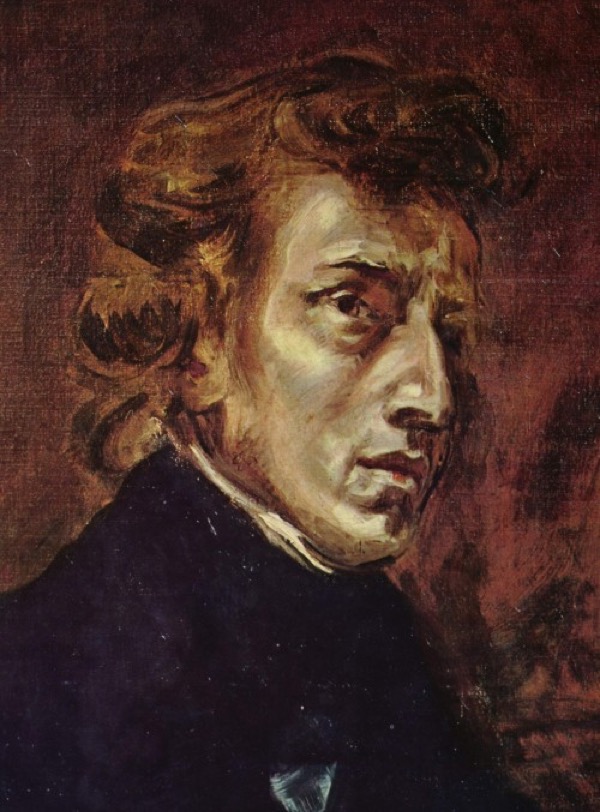
Chopin's Heart Exhumed in Secret Ceremony at Warsaw Church

Scientists, politicians and the Archbishop of Warsaw have exhumed the preserved heart of Frederic Chopin in a midnight ceremony. 

Plaque marking the pillar holding Chopin's heart
The official inspection of the Romantic composer's heart was organised following warnings that the organ might have started to deteriorate.

When Chopin died in 1849 his body was buried in Paris but his heart was taken to Warsaw, as requested by the composer on his deathbed. The heart was sealed in what is believed to have been a jar of cognac and smuggled into the Polish city before being interred in a pillar at the Holy Cross Church (pictured above ).

A team of experts, including scientists, officials and the Archbishop of Warsaw, went to the church just before midnight on 14 April this year to remove the heart for an inspection.

The 13 people present at the exhumation were sworn to secrecy and details of the unusual gathering were only released in September.

Tadeusz Dobosz, a forensic scientist present at the inspection, said: “The spirit of this night was very sublime.”

The team took hundreds of photographs, carried out an inspection of the composer’s heart and added hot wax to the jar’s seal to prevent further evaporation of the original preservative liquid. The Archbishop said prayers over the heart before it was returned to its resting place in the pillar.

Chopin experts have long been keen to carry out tests on the composer’s heart to try and find out whether he died of tuberculosis, as is generally believed. But the Polish church and government have been reluctant to give permission. This inspection was only sanctioned after a scientist warned that the alcohol containing the organ might have evaporated after all these years.
None of the photos taken at the exhumation have been released, however. “We don’t want this to be a media sensation with photos of the heart in the newspapers,” explained Artur Szklener, director of the Frederic Chopin Institute. But a reporter for Associated Press was shown the photos which they described as showing the organ: "an enlarged white lump submerged in an amber-coloured fluid in a crystal jar”.

Some experts have been critical of the lack of transparency surrounding the exhumation. Steven Lagerberg, who has written a book on the composer, told Associated Press he wished genetic tests had been carried out on the heart. “The mystery of this man's illness lingers on — how he could survive for so long with such a chronic illness and how he could write pieces of such extraordinary beauty,” Lagerberg said. “It's an intellectual puzzle, it's a medical mystery and it's an issue of great scientific curiosity.”

But the culture minister present on 14 April, Bogdan Zdrojewski said: “We in Poland often say that Chopin died longing for his homeland. Additional information which could possibly be gained about his death would not be enough of a reason to disturb Chopin's heart.”

Curious scientists will now have to wait until the next inspection - due in 50 years' time. 

(C) 2014 by ClassicFM London.

Thursday, November 20, 2014

Georg Friedrich Händel - His Music and His Life

Born February. 23, 1685 in Halle, Germany. Died April 14, 1759 in London, United Kingdom. 


The king of opera, Handel’s exceptional disposition for music was evident from a very early age. A barber-surgeon and chamberlain for the Duke of Saxe, Handel’s father was opposed to the solid musical tuition the young musician received in Halle from Friedrich Wilhelm Zachow, (1663-1712). Handel consolidated his reputation from city to city, from the harpsichord to the organ and through his encounters with Telemann and Buxtehude before settling in Hamburg.

After composing two operas, the young composer decided to leave for Italy to perfect his style and meet Domenico Scarlatti, Corelli and Pasquini. The composer had his operas performed in Florence, Rome and Venice. A great traveller, Handel went to Hanover and London where his opera Rinaldo was a triumph. He took English nationality in 1726 and composed for the British numerous Italian operas, which were very in vogue. A victim of plots and conspiracies, Handel skilfully managed to remain venerated by the British public who made him rich and renowned. Berlioz noted, “The heavy wigged head of this barrel of pork and bear named Handel”. 

Although Handel composed over forty operas, sometimes conventional with mediocre librettos, his genius was particularly evident in his oratorios and keyboard pieces. His sense of the melodic line was unequalled and thanks to the company of the great singers and castratos of the time, Handel wrote eminently vocal music with natural curves and refined, elegant eloquence. His pieces for keyboard displayed this same art with a sharp sense of counterpoint. A clever man, Handel ingeniously drew from German, Italian and English styles. He is no doubt the first great European composer.

Werner Egk - His Music and His Life


Werner Egk, a prominent German composer, died of heart disease Sunday in Inning, West Germany, his family said. He was 82 years old. 


Mr. Egk's music, cast in a personal, essentially conservative fusion of 20th-century influences, Stravinsky chief among them, was full of translucent textures, lively rhythms and a mordant sense of irony. He was chiefly a composer for the theater, principally opera and ballet, but his catalogue includes orchestral and chamber works, as well. 

Among his better-known operas were ''Die Zaubergeige,'' ''Peer Gynt,'' ''Der Revisor'' and ''Die Verlobung in San Domingo.'' ''Der Revisor,'' based on Gogol, was given its American premiere under the title ''The Inspector General'' by the New York City Opera in 1960, with the composer conducting. Ross Parmenter, writing in The New York Times, admired its ''wry cleverness'' and ''meticulous craftsmanship,' but dismissed it as ''thin gruel.'' 

Donal Henahan, reviewing ''Die Verlobung in San Domingo'' in 1974, thought Mr. Egk ''a skilled workman in the genre'' and felt that the St. Paul Opera production ''lighted considerable dramatic fire.'

Mr. Egk was born in Auchsesheim on May 17, 1901. His original last name was Mayer. Some said his adopted acronym stood for ''ein grosser Komponist'' or even ''ein genialer Komponist'' - ''a great composer,'' or ''a great genius of a composer.'' But he always explained the name as a tribute to his wife, Elisabeth Karl, with the g added ''for euphony.'' 

The composer studied music in Munich, where his teachers included Carl Orff. Mr. Egk participated in avant-garde festivals before 1933, but afterward he played an active role in German musical life during the Nazi period. He was commissioned to write a piece for the Berlin Olympic Games of 1936, conducted at the Berlin State Opera between 1938 and 1941, and served as head of the German Union of Composers from 1941 to 1945. He was permitted to return to public life after a de-Nazification trial in 1947. 

In 1948, a ballet on the ''Faust'' theme, ''Abraxas,'' with a text based on Heinrich Heine, was banned by the Bavarian Ministry of Culture as obscene. Mr. Egk served as director of the Berlin Hochschule fur Musik from 1950 to 1953, and in 1968 he became president of the German Music Council.

Monday, November 17, 2014

Francois Couperin - His Music and His Life


François Couperin, known as le grand to distinguish him from an uncle of the same name, was the most distinguished of a numerous family of French musicians, officially succeeding his uncle and father as organist of the Paris church of St Gervais when he was 18. He enjoyed royal patronage under Louis XIV and in 1693 was appointed royal organist and, belatedly, royal harpsichordist. As a keyboard player and composer he was pre-eminent in France at the height of his career. He died in Paris in 1733.

Church Music
Couperin composed church music for the Royal Chapel under Louis XIV. The surviving Leçons de ténèbres are possibly the best example of this form of composition—settings of the Lamentations of Jeremiah for the Holy Week liturgy. The first two of the three are for soprano solo and continuo (the vocal part of the second pitched slightly lower than that of the first), and the third is for two sopranos and continuo.

Chamber Music
Couperin’s chamber music includes L’Apothéose de Lully (‘The Apotheosis of Lully’), a tribute to the leading composer in France in the second half of the 17th century, Jean-Baptiste Lully. A tribute to the Italian composer Corelli, L’Apothéose de Corelli, is part of a larger collection of ensemble pieces under the title Les Goûts réunis (‘Tastes United’). It was an exploration of the rival French and Italian tastes in music, a quarrel in which Couperin remained neutral. The Concerts royaux represent another important element in Couperin’s music for instrumental ensemble.

Harpsichord Music
Couperin’s compositions for the harpsichord occupy a very important position in French music. His 27 suites, most of them published between 1713 and 1730, contain many pieces that are descriptive in one way or another. These richly varied suites, or ordres, represent the height of Couperin’s achievement as a composer and arguably that of the French harpsichord composers.


Featured Post

Debunking the Top 5 Myths About Chopin

  Over time, selective anecdotes, early biographies, and nineteenth-century ideals of the “suffering artist” have hardened into familiar cli...